Borneo Adventure – Sarawak
On 17th April we hurtled through the sky, leaving behind the hotness and dryness and aesthetic purity of the award-winning skyscrapers of Doha, and landed in Kuala Lumpur where we were at once engulfed in steam and heat and dripping wetness. The rain had stopped and the moisture hung in clouds as we ventured forth to sample some local food. I always feel the tug of familiarity with KL, the city of my birth, and can easily find my way through the streets in spite of all the modern developments.
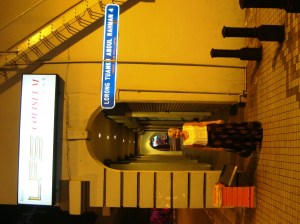
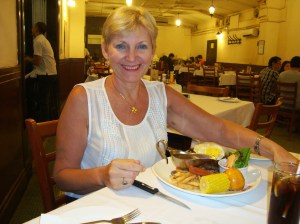
John and I ate at the Coliseum and studied the old photos of planters in the days of yore. We walked round the Globe Silk Store and then walked down Batu Road towards the Selangor Club. We could easily have been in the pages of ‘Where the Golden Oriole Sang’. It was so good to smell the smells, and walk over the traces of what I once wrote about.
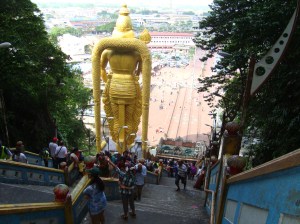
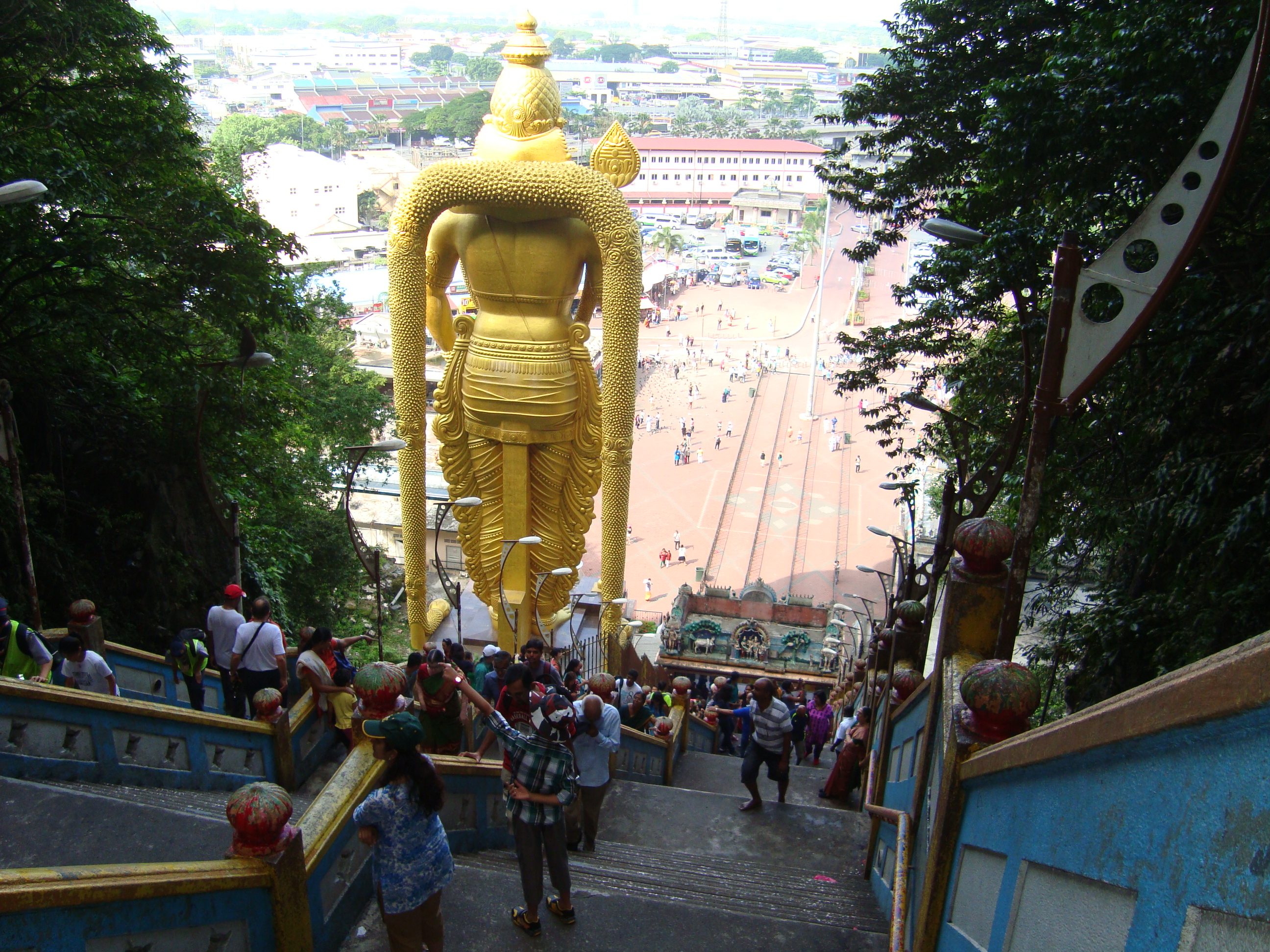
The next day we visited the Batu Caves – an exhausting climb up 270 steps to the Indian temple whilst trying to avoid the monkey mafia – and then enjoyed a more subdued visit to the Selangor Pewter Factory.
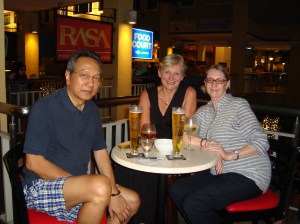
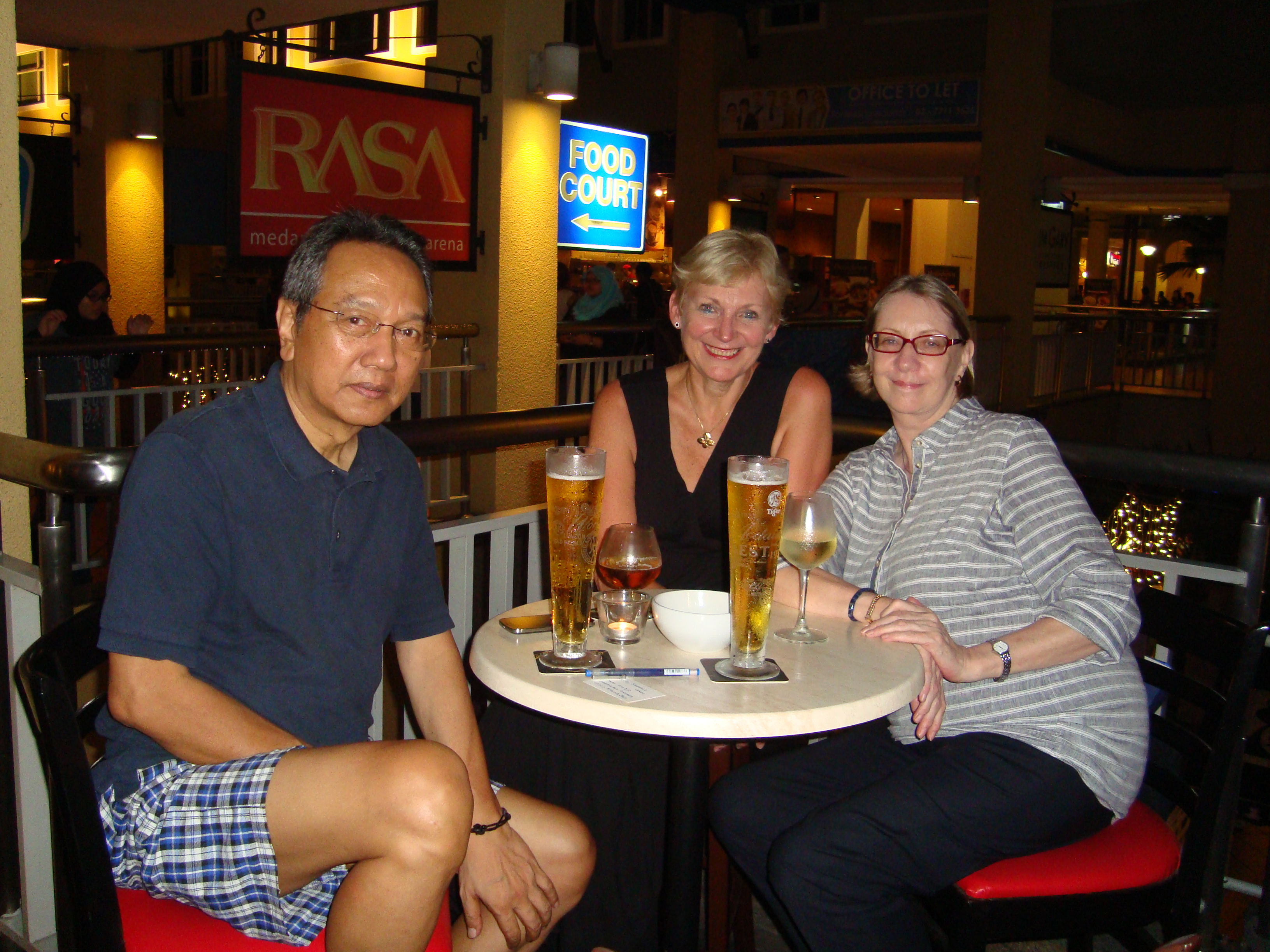
We met up with Marie and Bakar in Petaling Jaya, and ate nasi lemak and drank beer whilst it rained again. It felt like only yesterday that we had all been in Hanoi together.
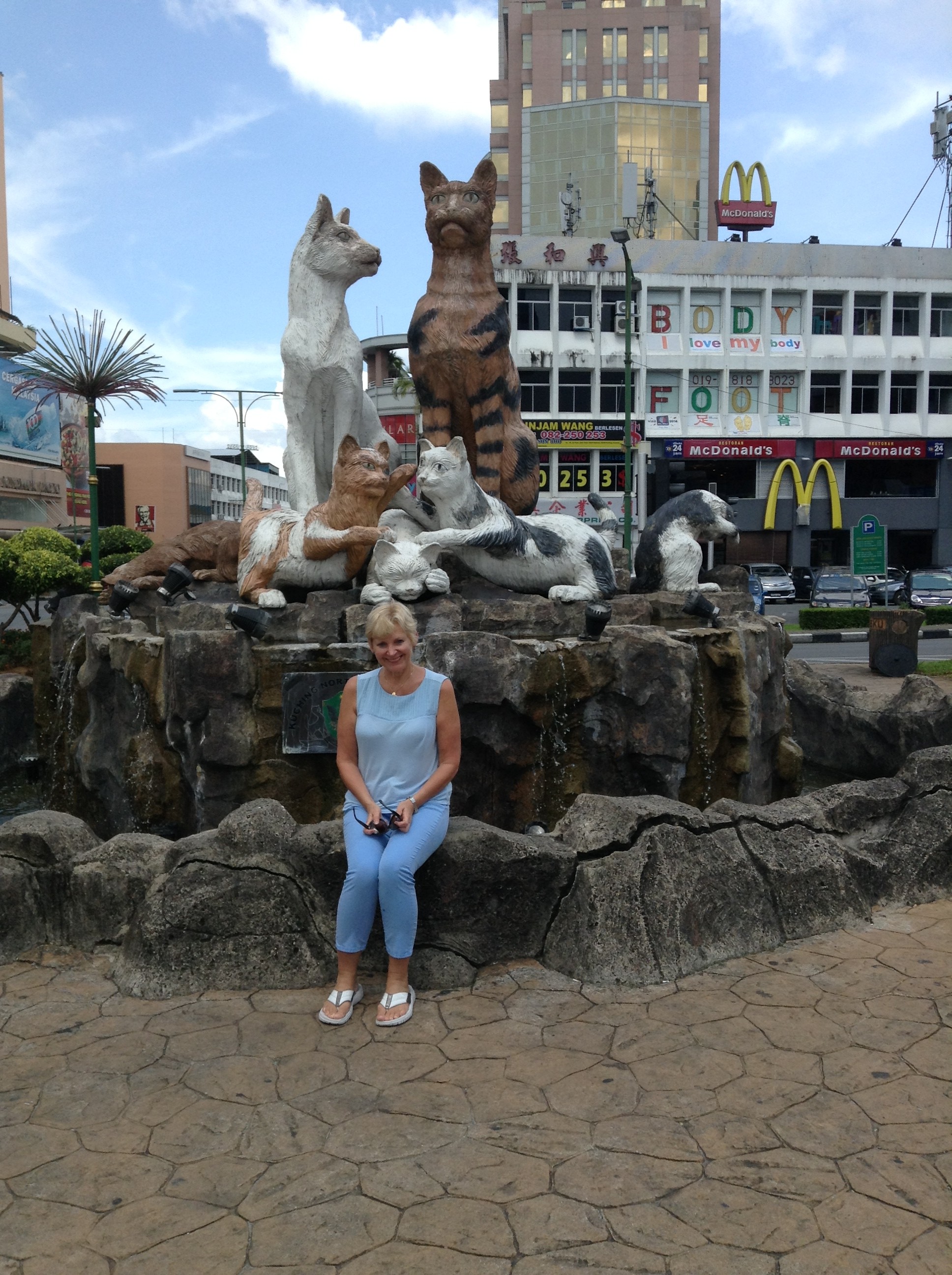
Then a short flight to Kuching, the cat city, capital of Sarawak in North Borneo.
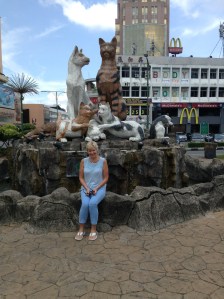
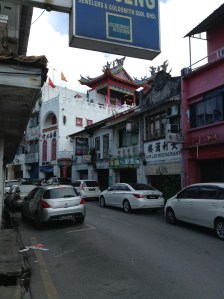
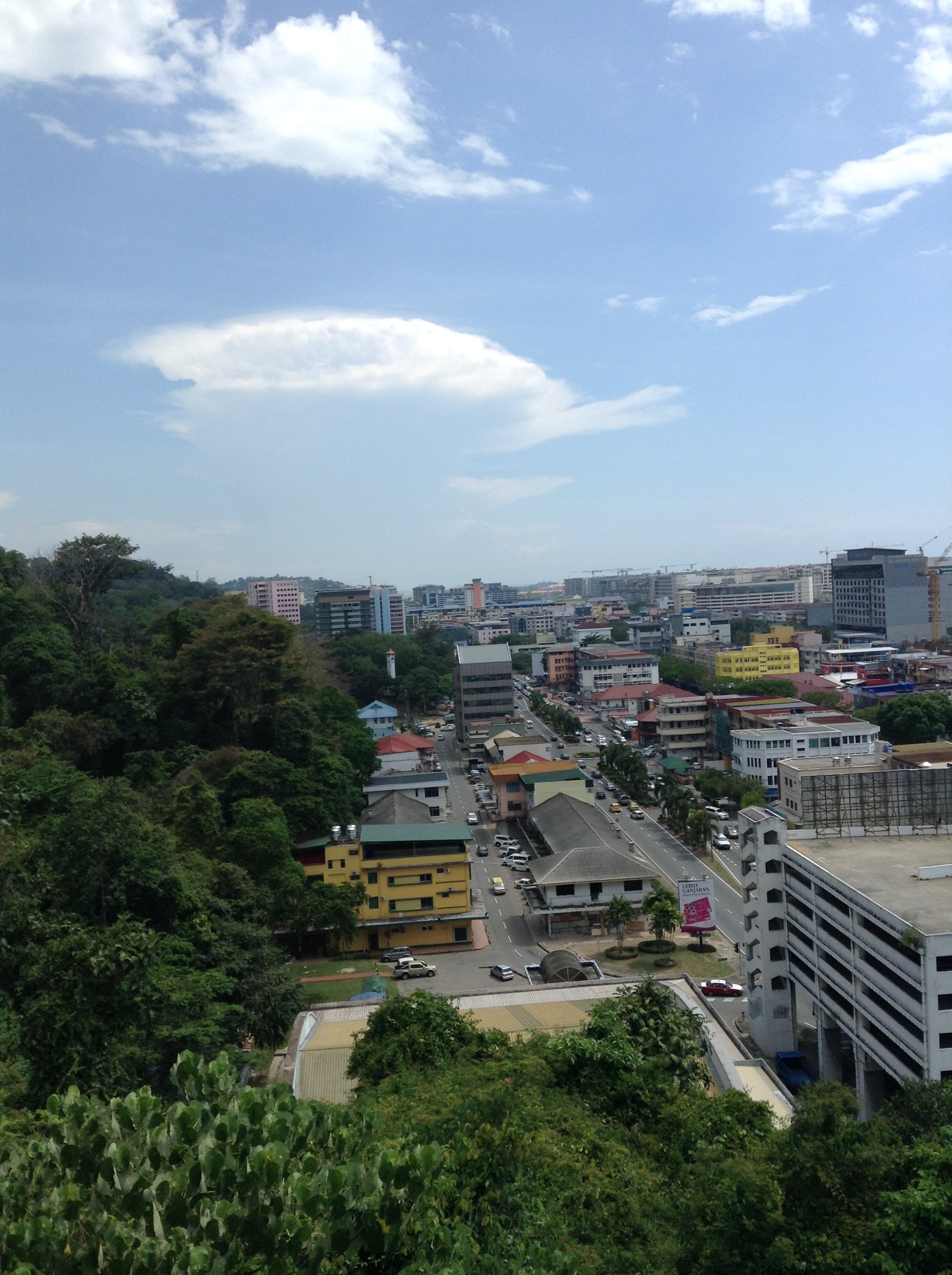
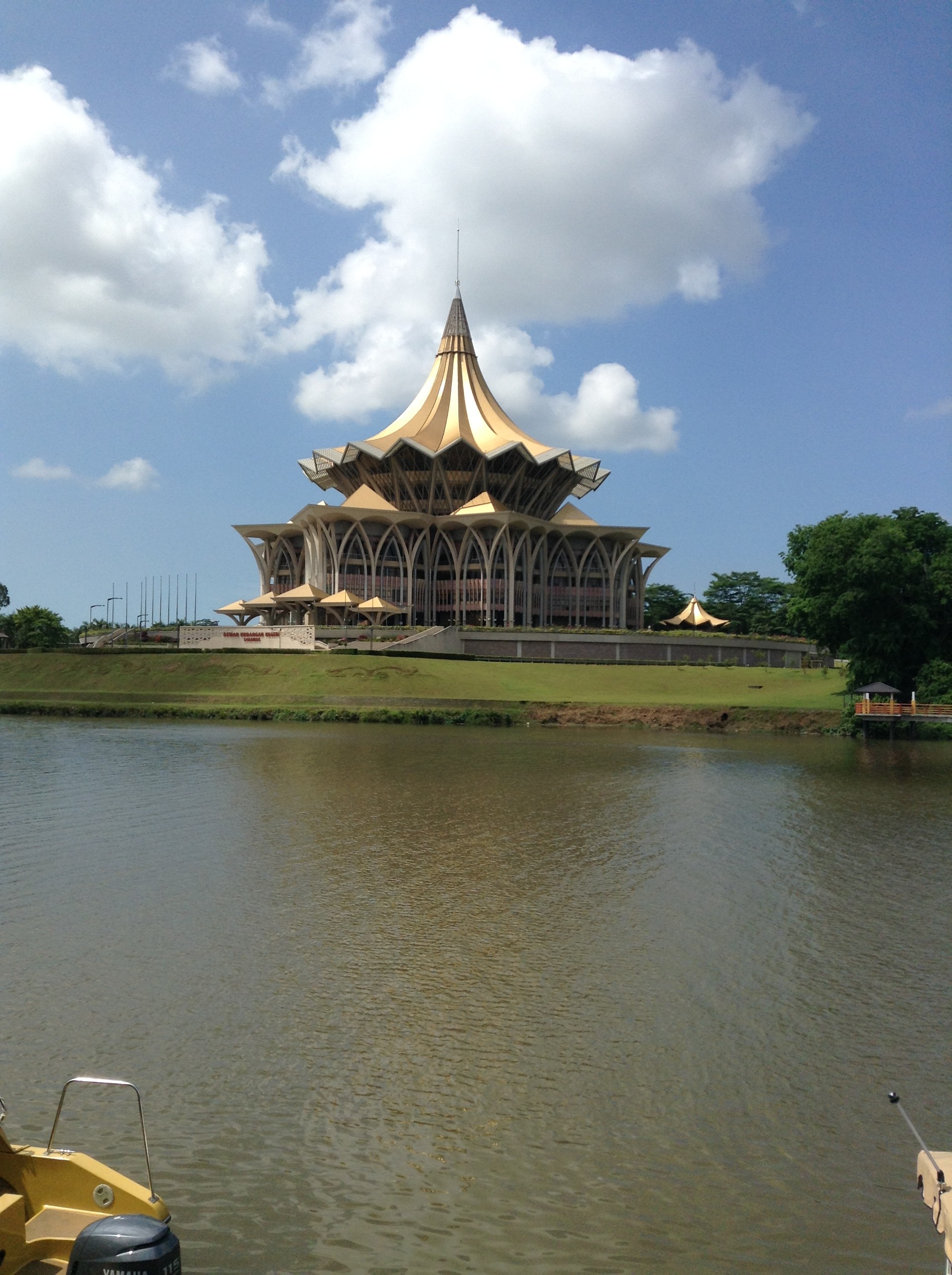
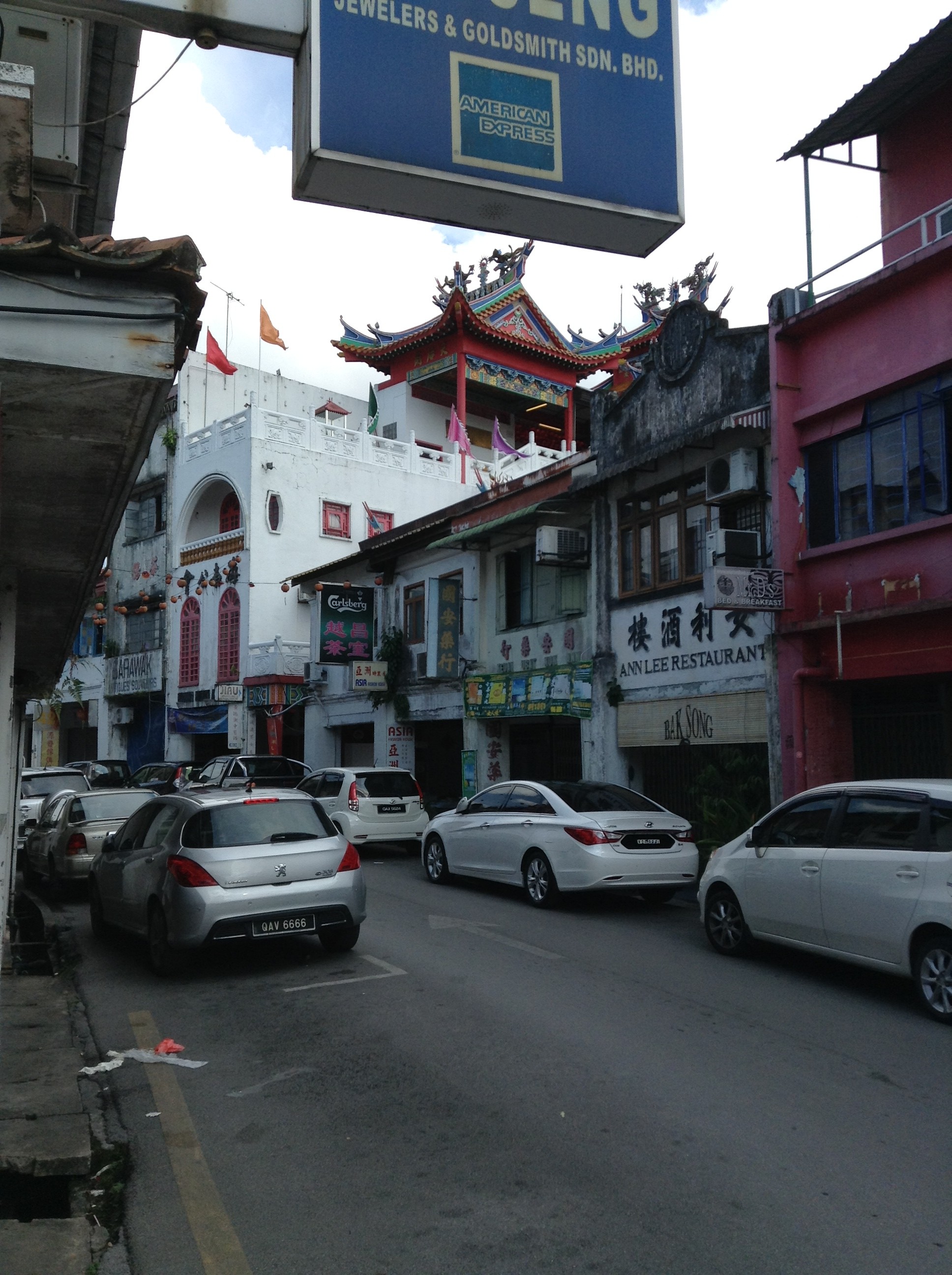
Here we were in the land of James Brooke, the white rajah, pristine rainforests and killer crocodiles. We walked along the river around to the museum, and I couldn’t help thinking how lovely it all was, the shop-houses were quaint and beautiful, and there was a calm feel about that part of town which incorporated the Chinese sector. It felt like KL fifty years ago. Kuching was never bombed in the war so the city’s quaint architecture has been preserved.
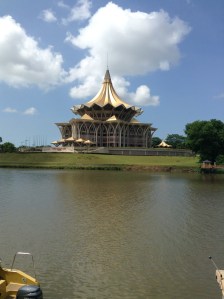
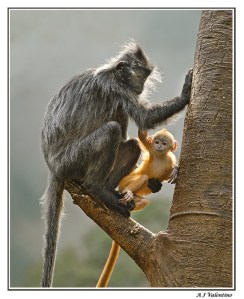
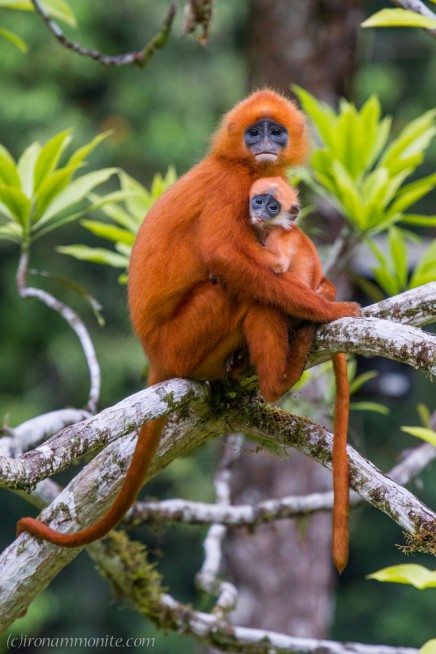
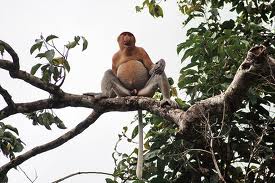
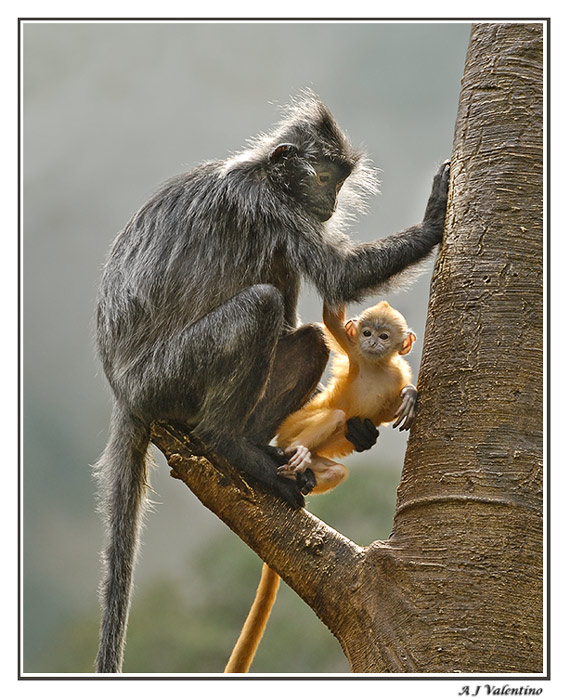
I became friends with Ming and Francis Frey in Hanoi, and since then they have settled and retired in Kuching. When I told her that we were coming to Borneo she arranged for me to give a book talk for Friends of Sarawak Museum. I agreed and packed the copies of my books that I had here in Doha and thought I would think about it later. We carried on with the tour and made the boat trip to the Bako National Park where we tramped about in the mangrove roots, viewed the proboscis monkeys with their snorkel-type noses, silver tail langurs that looked like miniature cheeky David Beckhams,
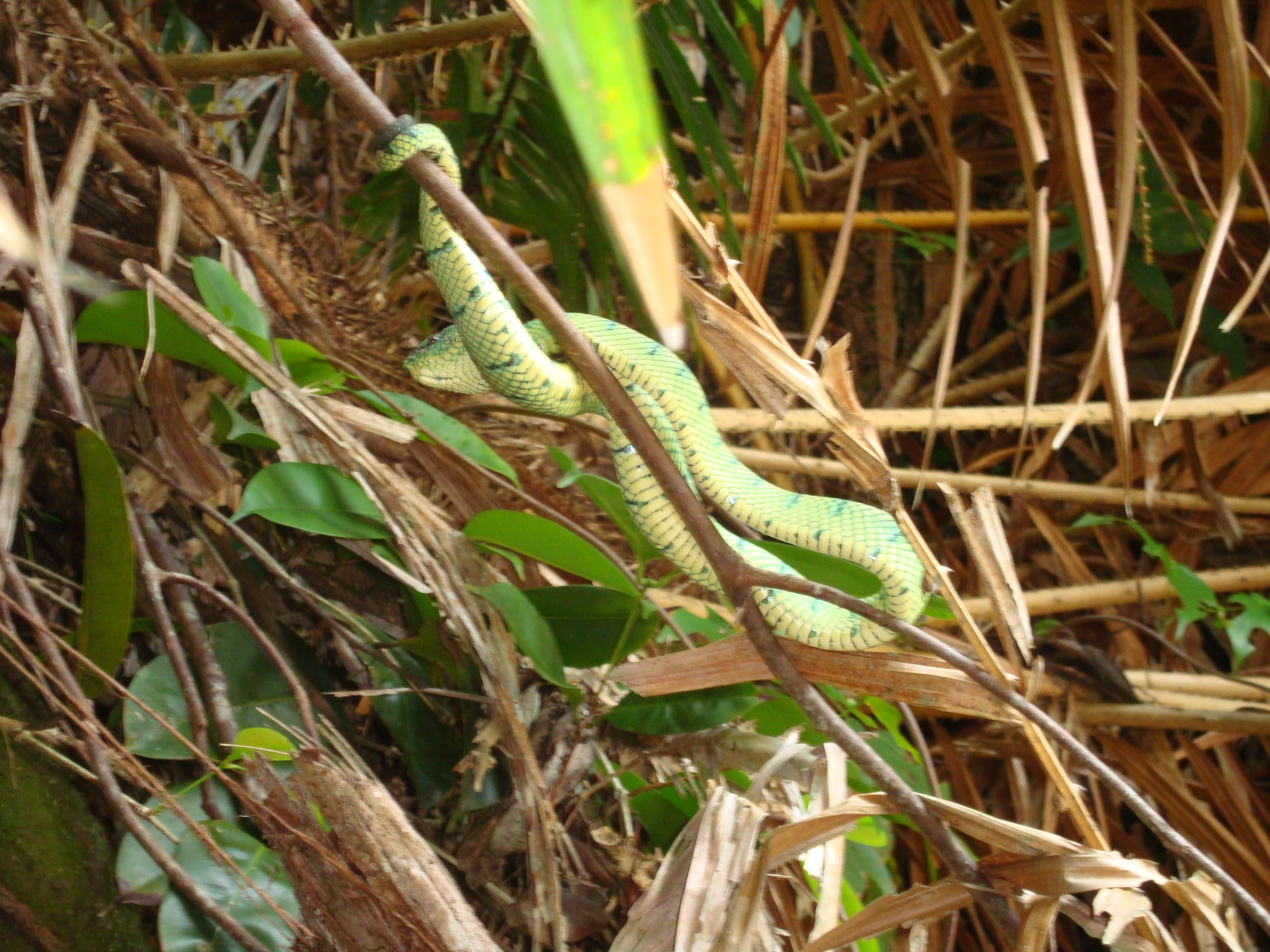
and had lunch just beside a green pit viper that was snoozing on a branch.
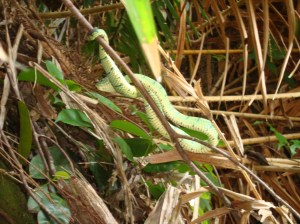
Luckily our guide (who we found out had just had an op. on his kidney a week ago, his wound must still have been raw and ragged) had amazing eyes. On the way I crunched over the side of my foot, so my ankle was quite sore. It didn’t blow up till later, probably the shoe held the swelling in. I had to wear a bandage for the rest of the holiday. Still I was luckier than the unfortunate girl from Singapore who died the day before in the park. She had to be carried out at dawn by several rangers as her weight was reported as around 120 kg. Not enough water, probably an office worker and seriously overweight. The jungle is merciless.
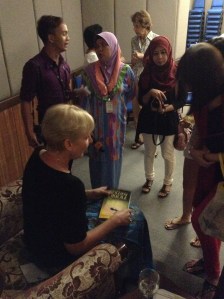
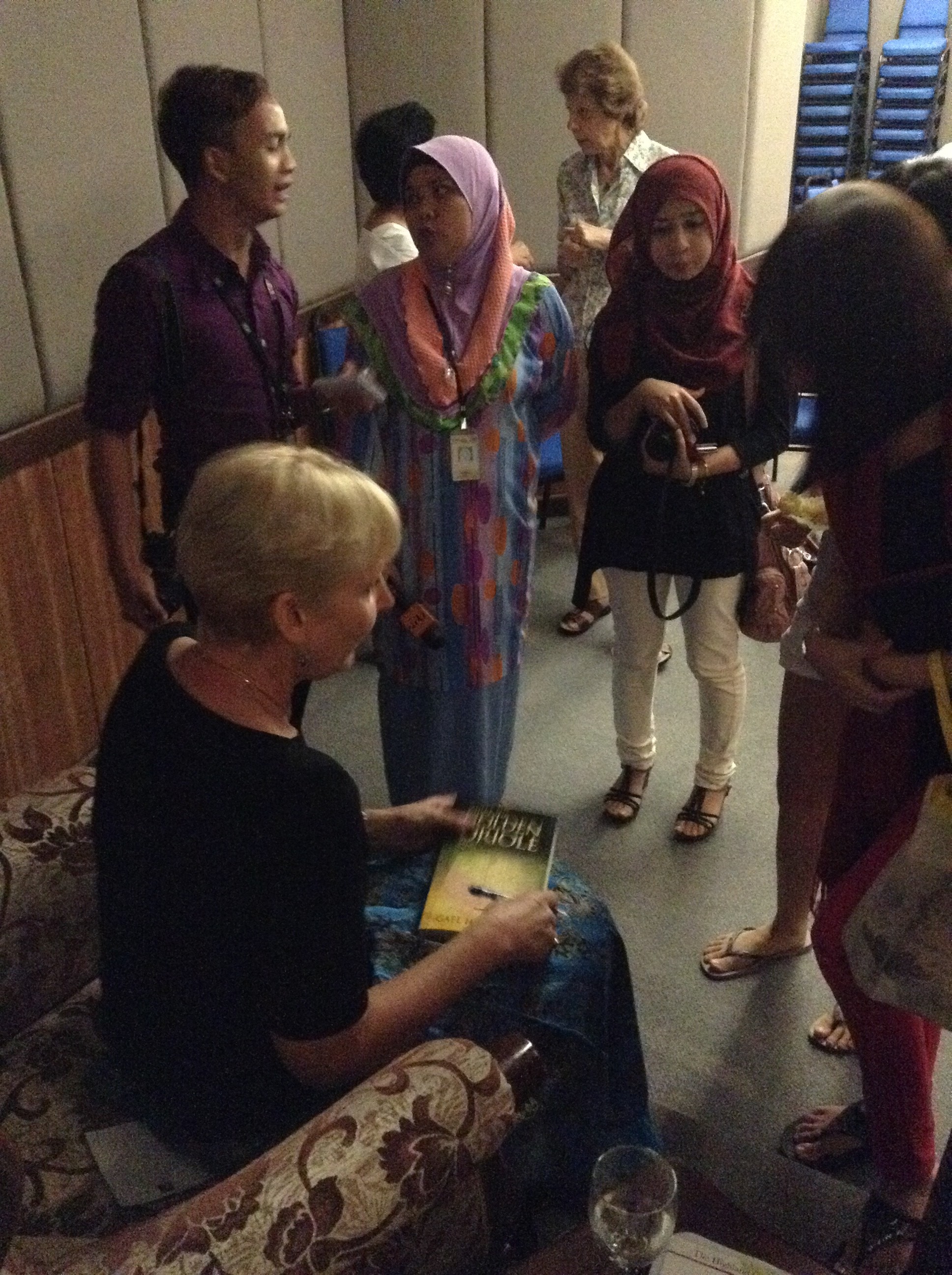
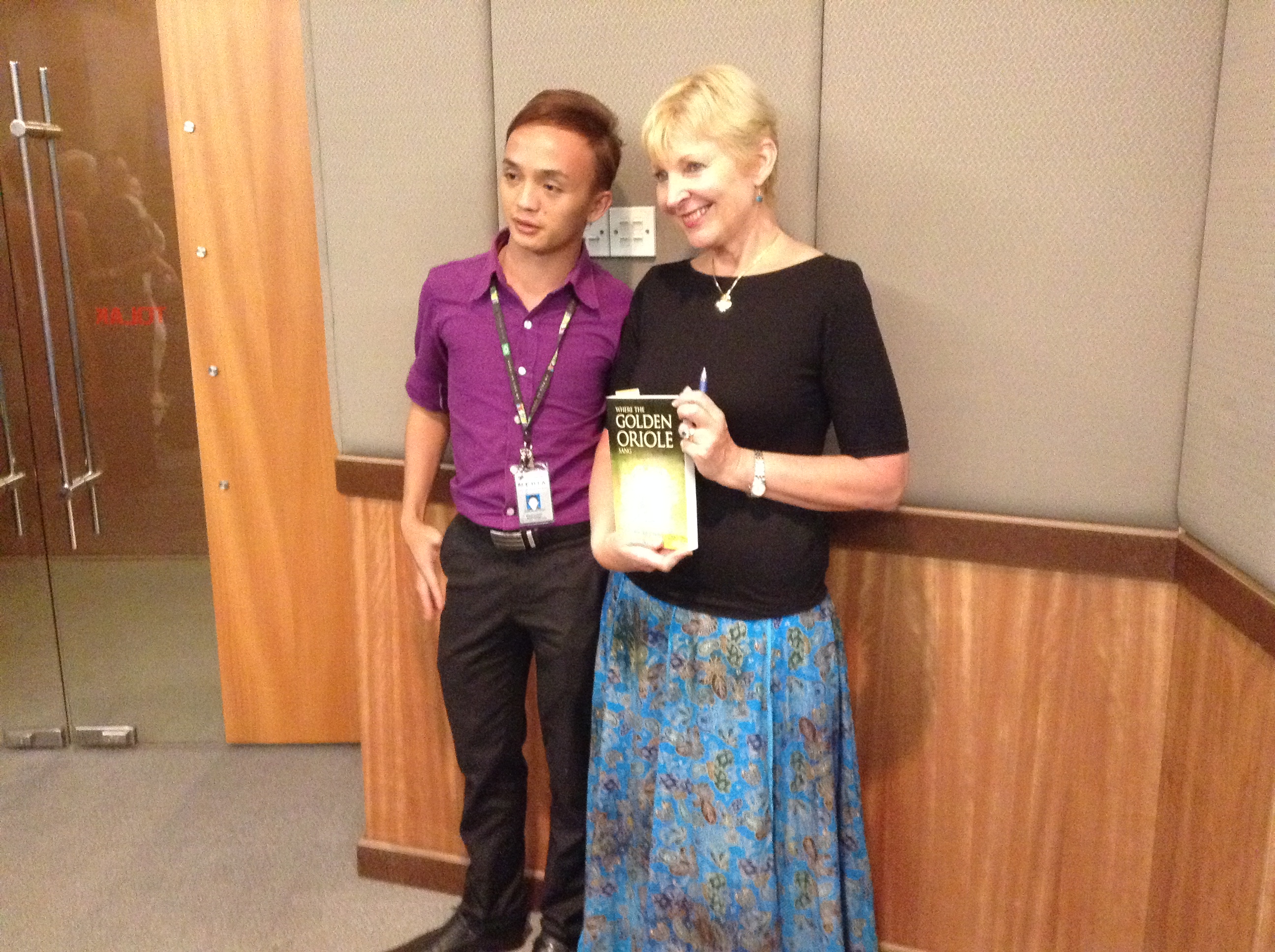
Anyway we were happy with our walk and the animals we saw, and it was a good introduction to the forest, so back we went to the hotel where we both scrubbed up in readiness for my talk. Ming and Francis collected us and suddenly I was facing about 50 people all sitting in rows. There was an armchair on the stage and I was asked if I would like some water and then off I went. I chattered on for about an hour, and then did some book signings. Imagine my horror when I was approached by two local young people and asked if I would give an interview. I said yes, and got up and went with them… and there – all set up -was a TV camera! I have no idea what I said, but it was an experience. Francis was joking about CNN and was concerned that a battery of electric plugs on the wall framed my head. He felt they could have arranged a better back-drop. One of the reporters wrote a fabulous review of the afternoon in the Borneo Post. I shall treasure it.
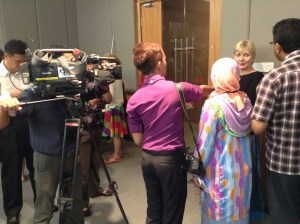
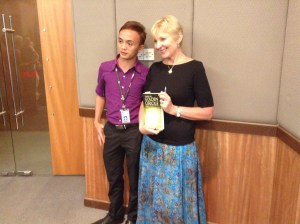
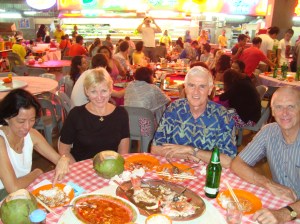
We met some wonderful people in Kuching, ate good food with Anita and Colin in the local stalls and listened to stories of other peoples’ lives. People who have chosen to make Kuching their home.
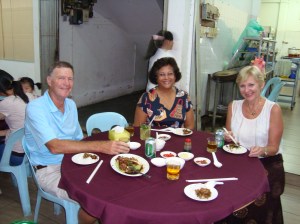
I was particularly entranced with Philip Yong, whom I met with Ming and Francis and who is the founder of Borneo Adventure (the tour company we used for our holiday), and the son of Tan Sri Stephen Yong.
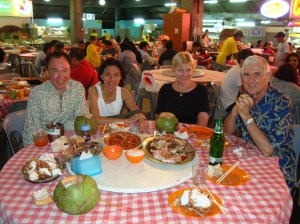
I have since read Philip’s father’s biography and learnt of a life during the final years of the White Rajahs, the Japanese Occupation, British Colonial rule and finally to independence with the formation of the Federation of Malaysia. A very inspiring man, born into poverty with little chance of ever achieving anything, and yet he did. He even went to Nottingham University and studied law, got drunk in Burnt Island one New Year, was involved in all sorts of business deals back in Kuching – he made me laugh out loud while flying across the country that he loved.
I shall add the story that cracked me up… In 1948 Stephen was given a racing pony by one of his Turf Club friends. He named the pony ‘Puck’ after the imp in Midsummer’s Night’s Dream, as he was a mischievous and high-spirited little chap. Anyway he was hopeless at the start of races – he would just stand there and wouldn’t budge. His friends reckoned he should be donated to the satay vendors. Then Stephen’s friend’s jockey, Then Thau En, did some training with him, and proposed one final race. Stephen agreed. Now I shall use Stephen’s words:
‘On the day of Puck’s final race, Thomas Dunbar was also at the races. As I was Puck’s owner he bet 10 dollars on him to win, no doubt a gesture intended to give me moral support. But then a miracle happened. With Then Thau En in the saddle, when the starter’s flag went down, lo and behold, Puck sped off at the head of the pack. Rounding the first bend, Puck was neck and neck with the two hot favourites. My pony was making a run for it and this caused a great excitement among the spectators, the punters and the race commentator. As the ponies thundered down the home stretch, we heard the commentator mispronouncing Puck’s name. In his excitement he was shouting, “Coming into the home stretch it’s Phuck … Phuck is coming. It is Phuck, Phuck, Phuck!” When Puck passed the finish line, winning by a length, the commentator gave praise to my little pony with one last comment, “Oh Phuck, what a performance.”
From ‘A Life Twice Lived’ by Tan Sri Stephen Yong and edited by his son, Philip.
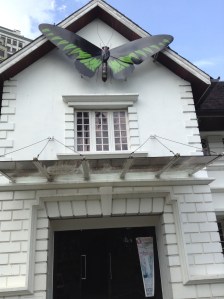
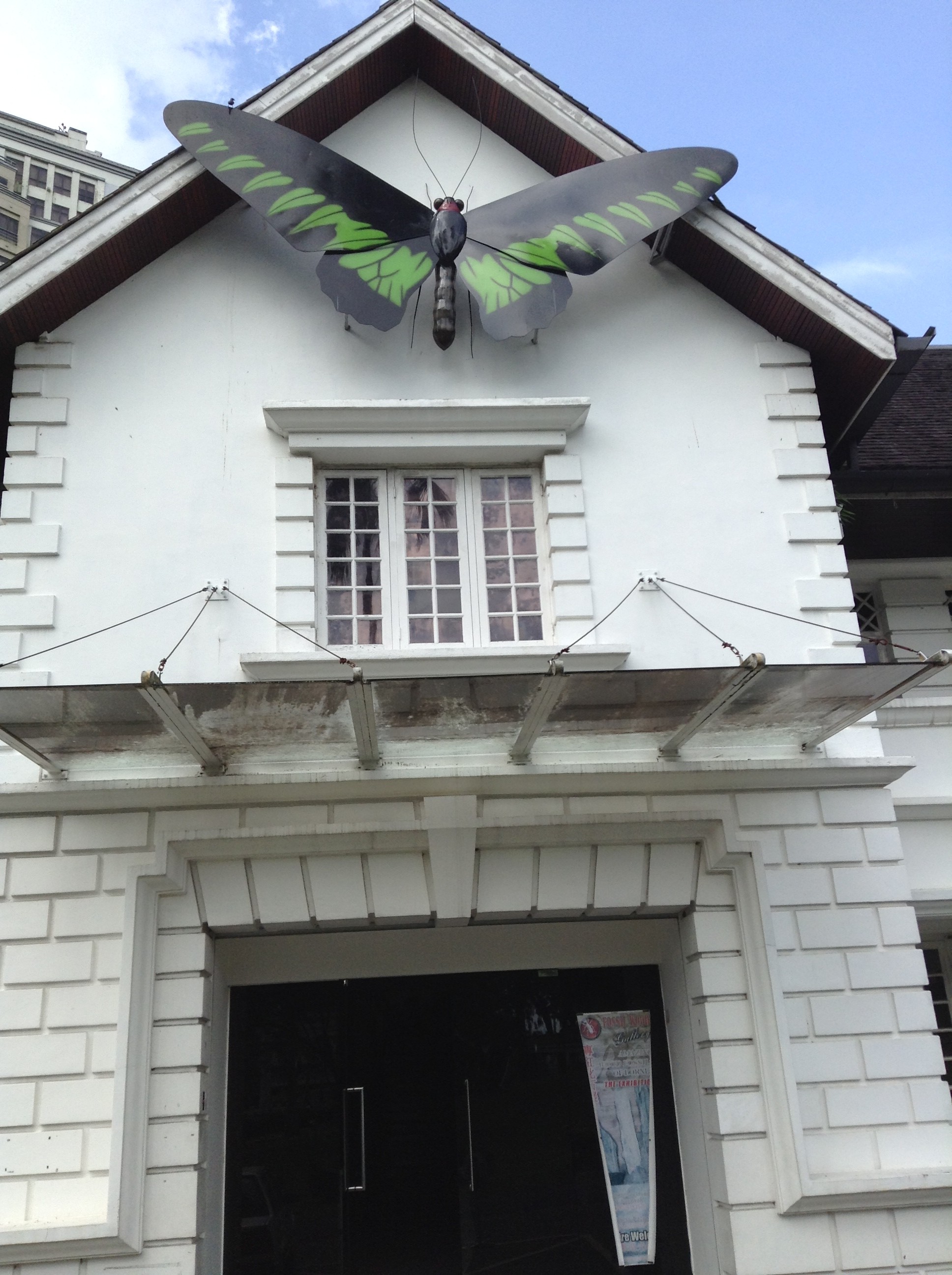
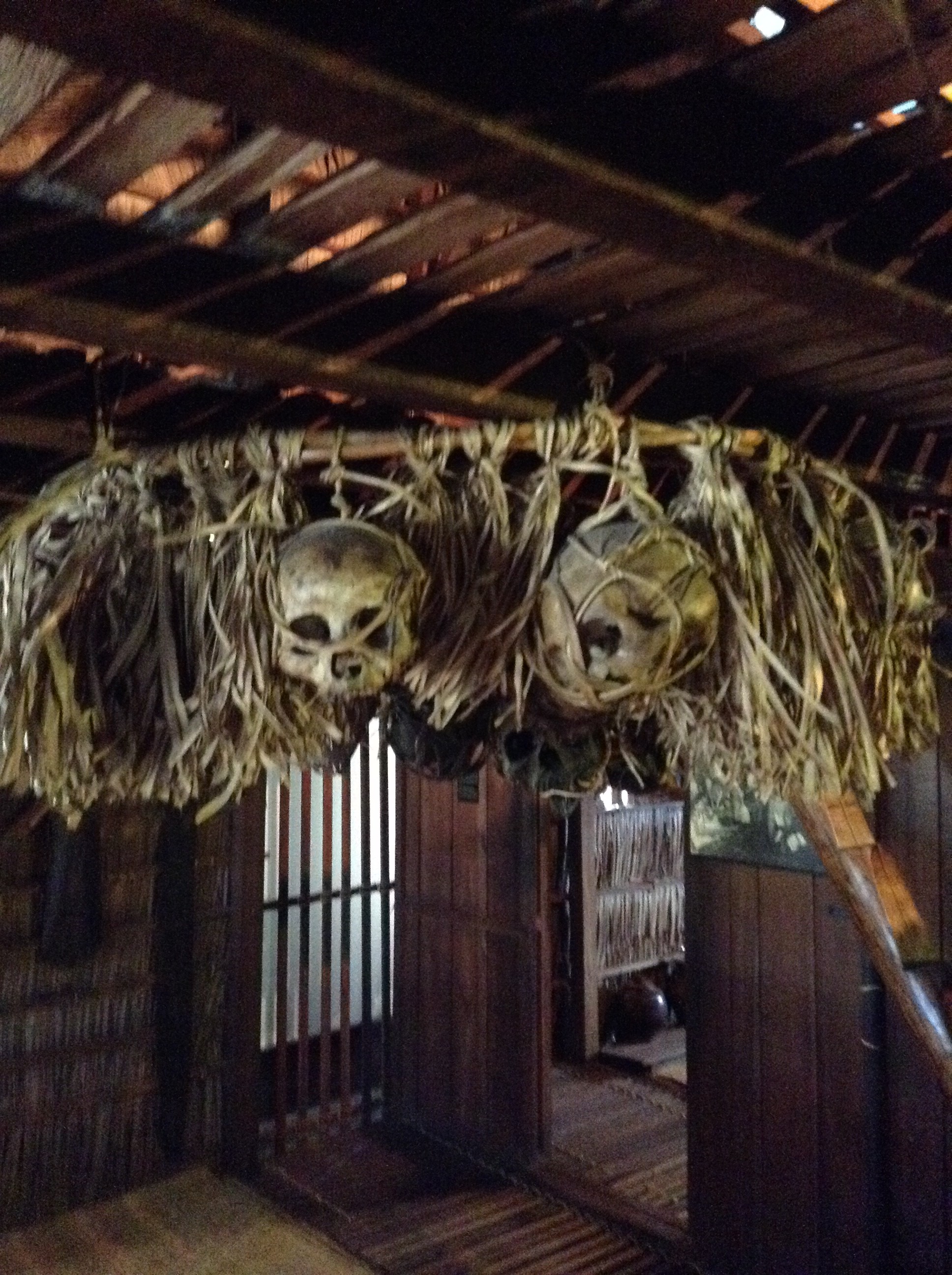
We did have a quick whirlwind tour of the Museum graced with a large plaster Rajah Brooke butterfly on its side, and we saw all the anthropology, ethnology, zoology and geology that have been collected. We were quite enthralled with a giant fur ball that had been removed from a 15ft man eating crocodile. It had a dental plate still attached. There was also a watch that had been removed from the stomach. There were replicas of flora, fauna and longhouses, complete with skulls hanging to deter invaders.
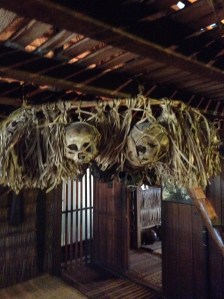
There were details of native customs like tattooing and the infamous palang penis piercing. I am all the better for knowing all this.
So, all ‘knowledged up’, we set off on a VERY LONG day.
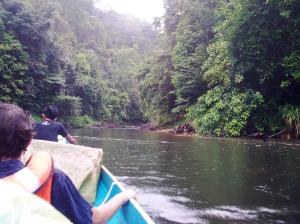
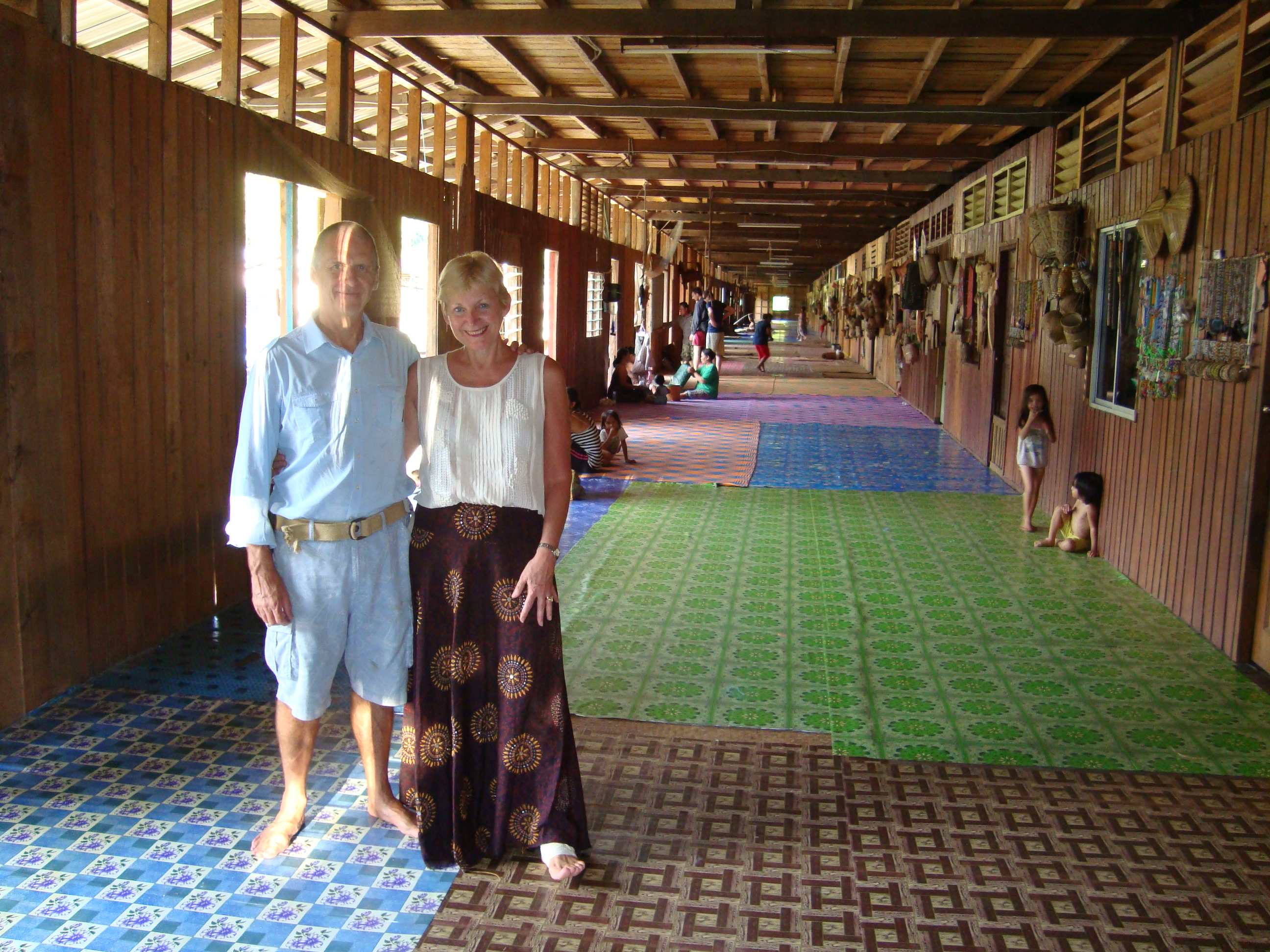
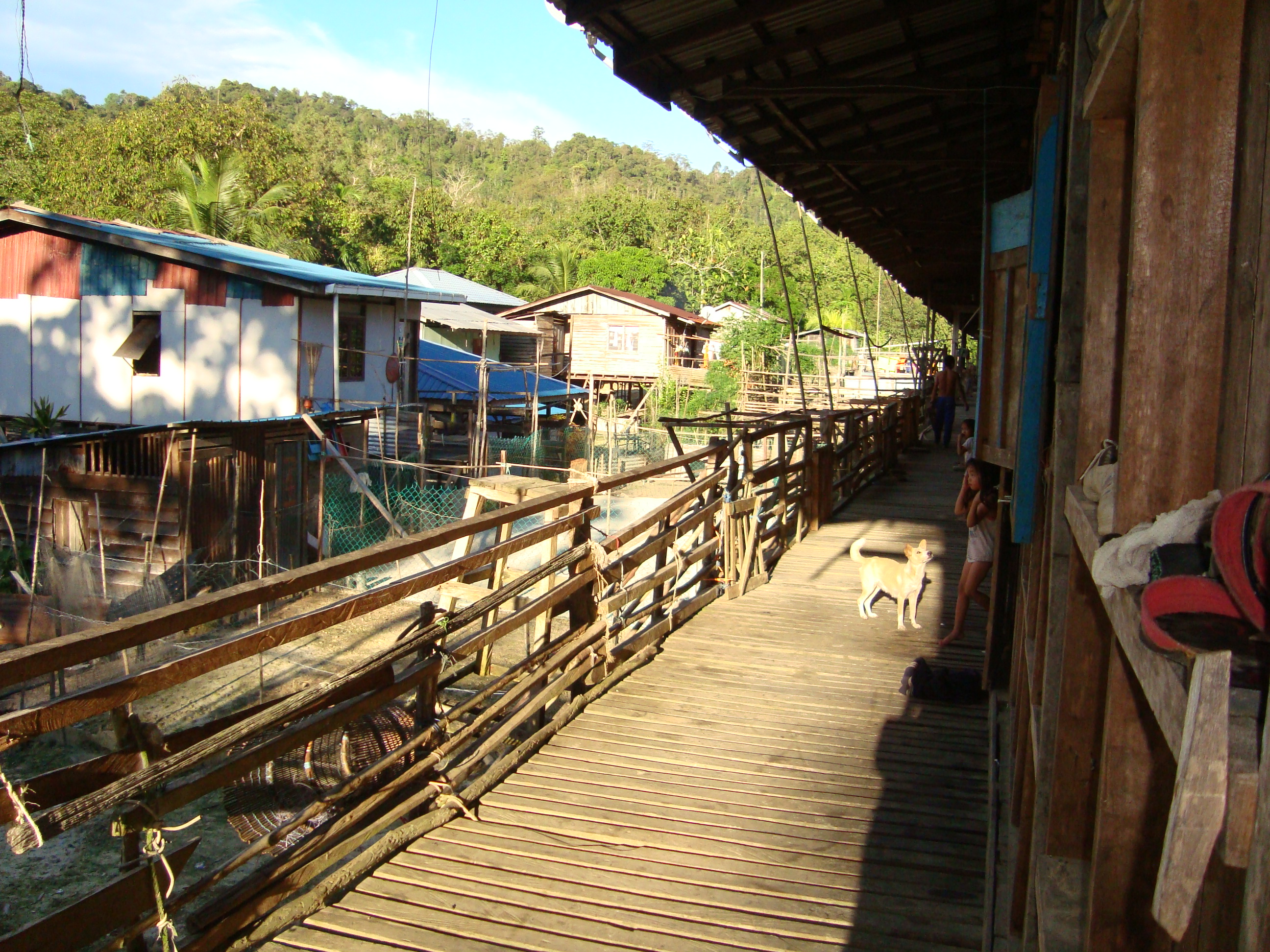
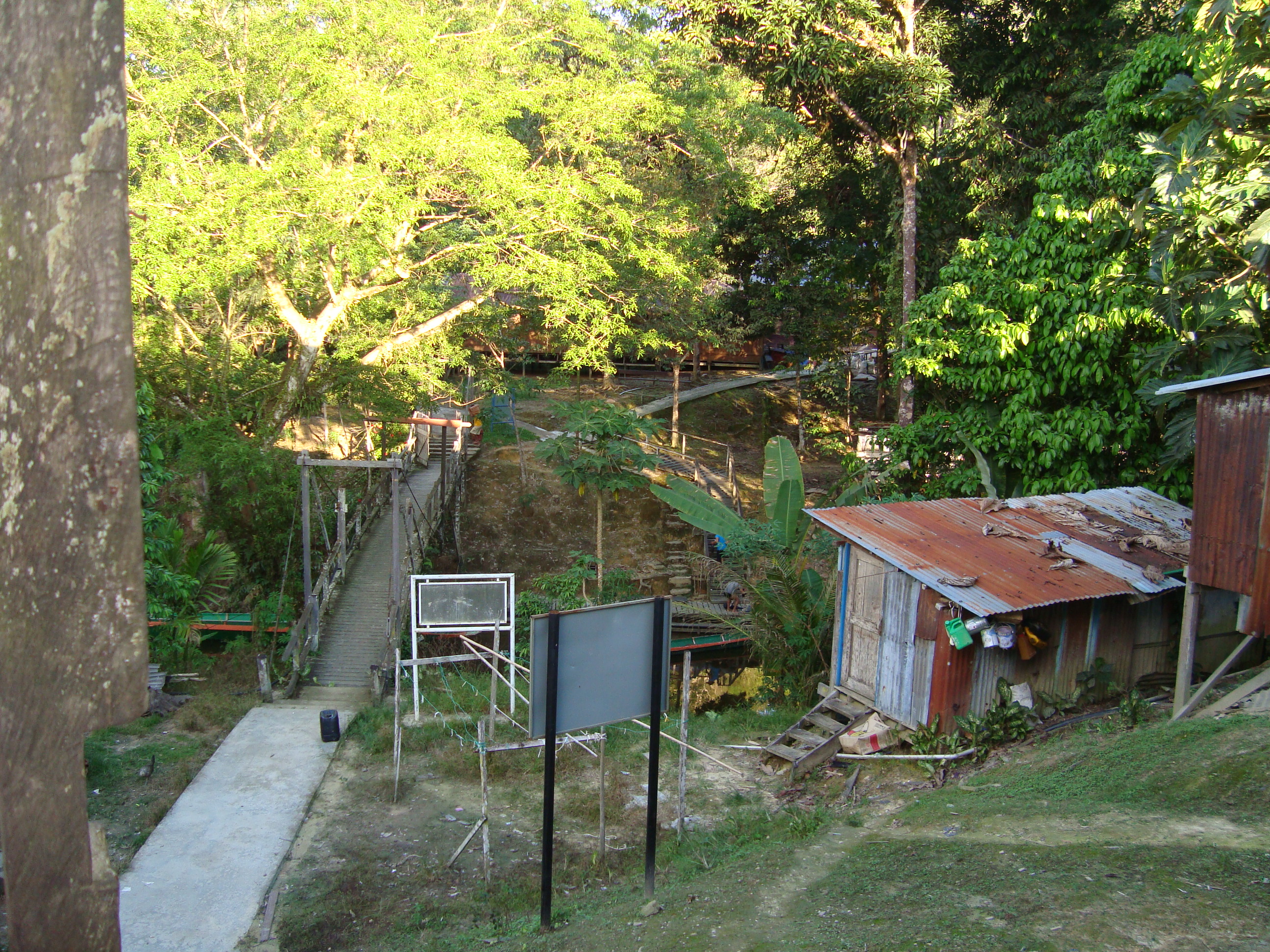
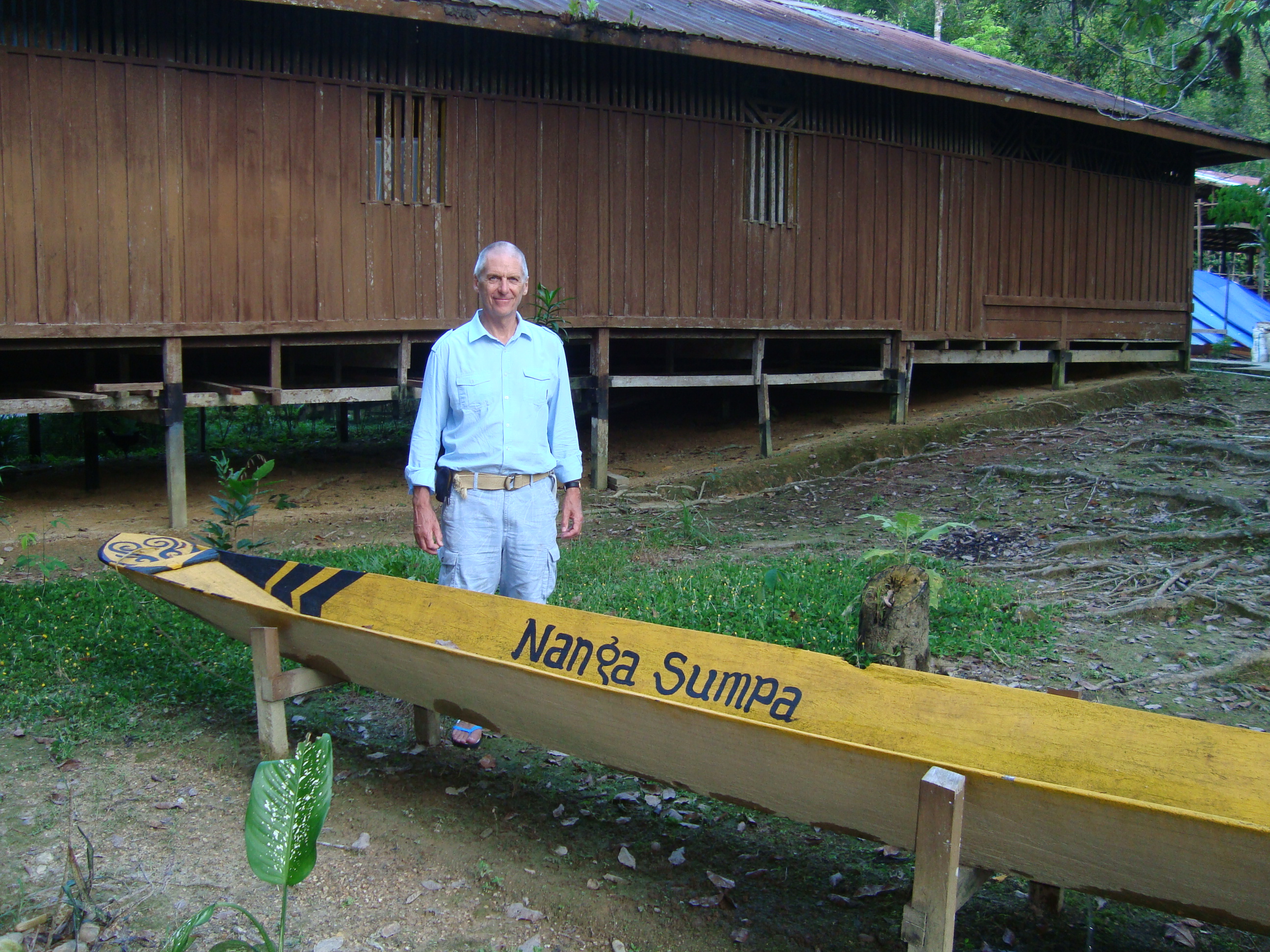
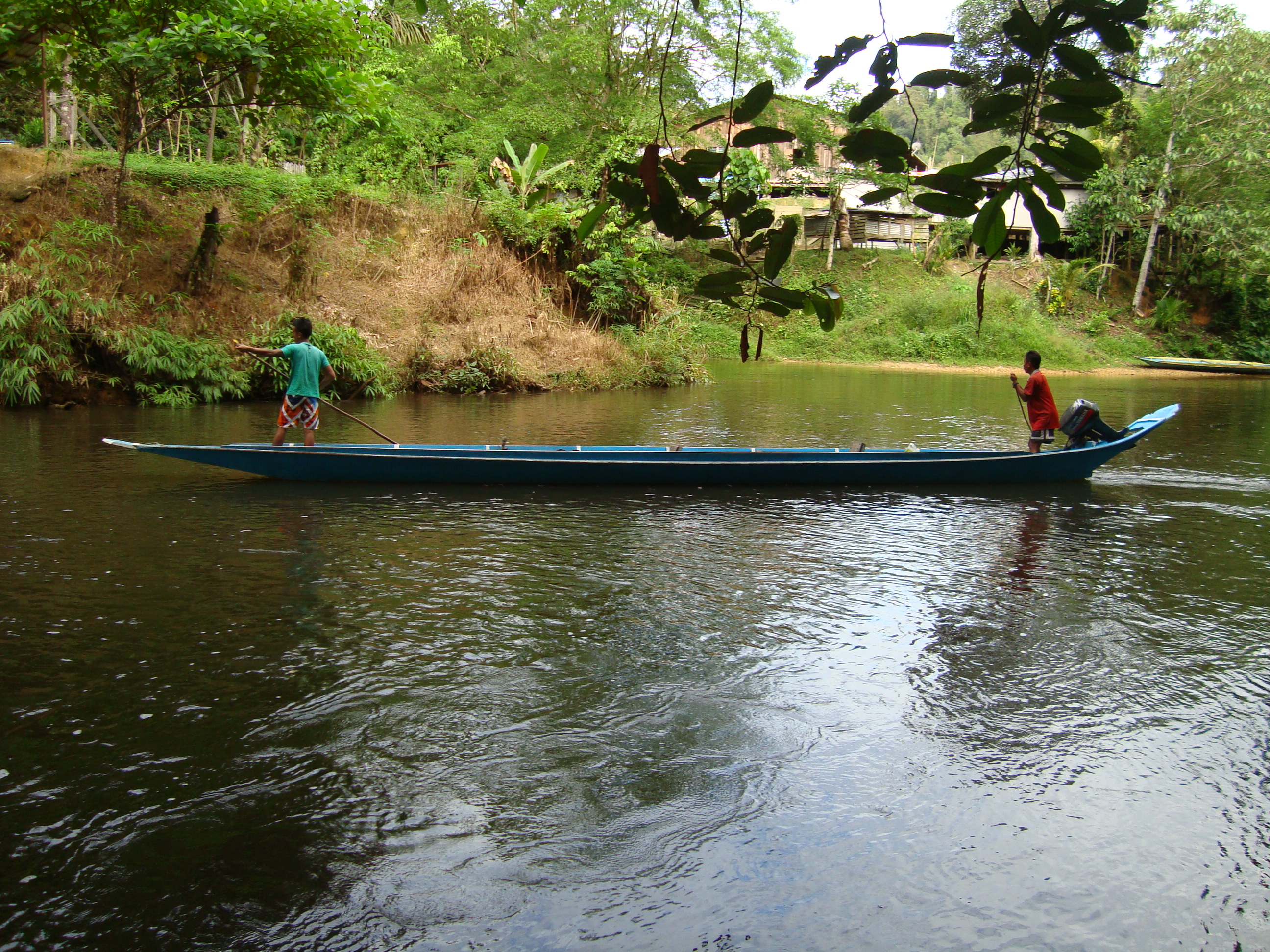
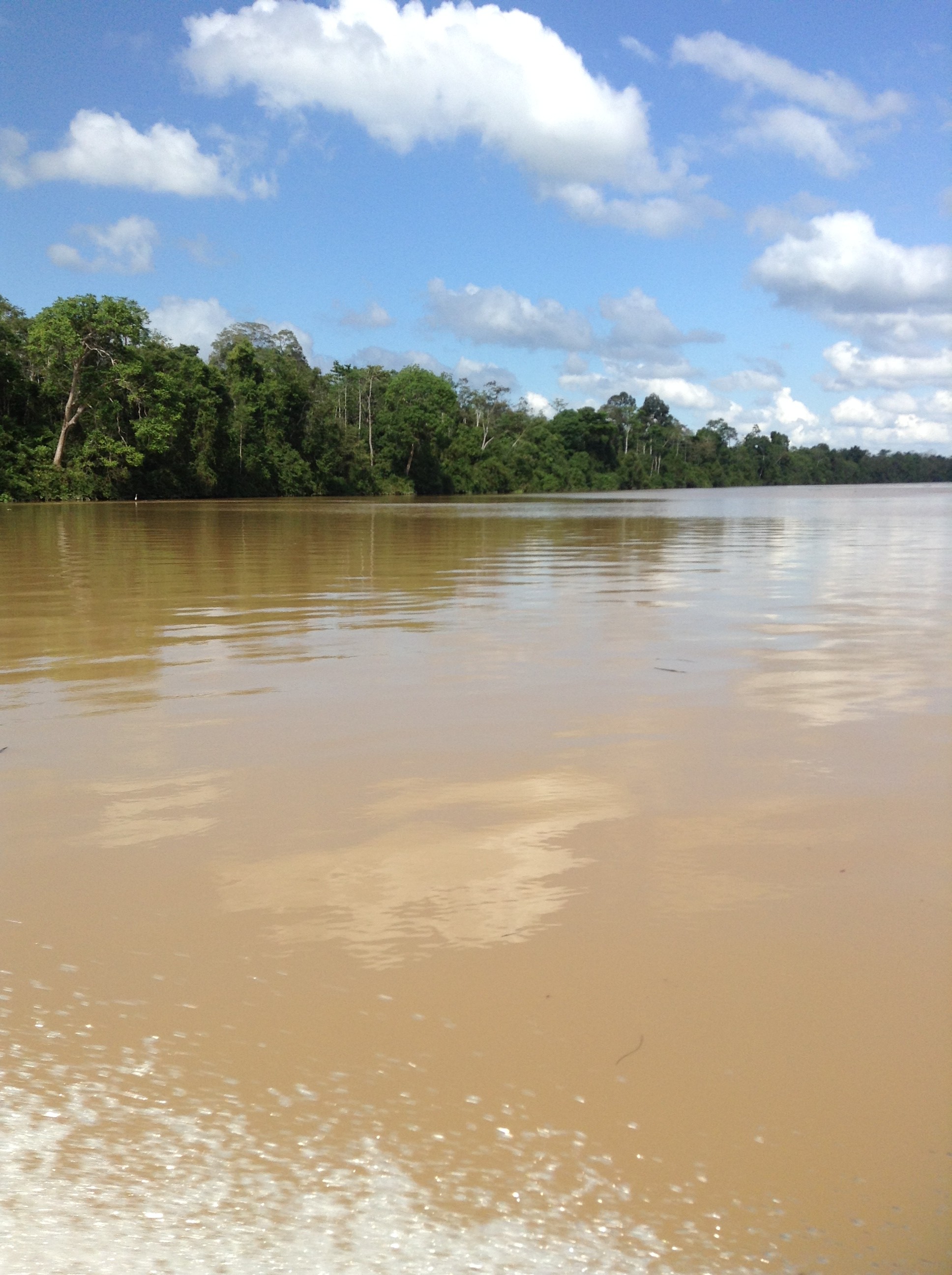
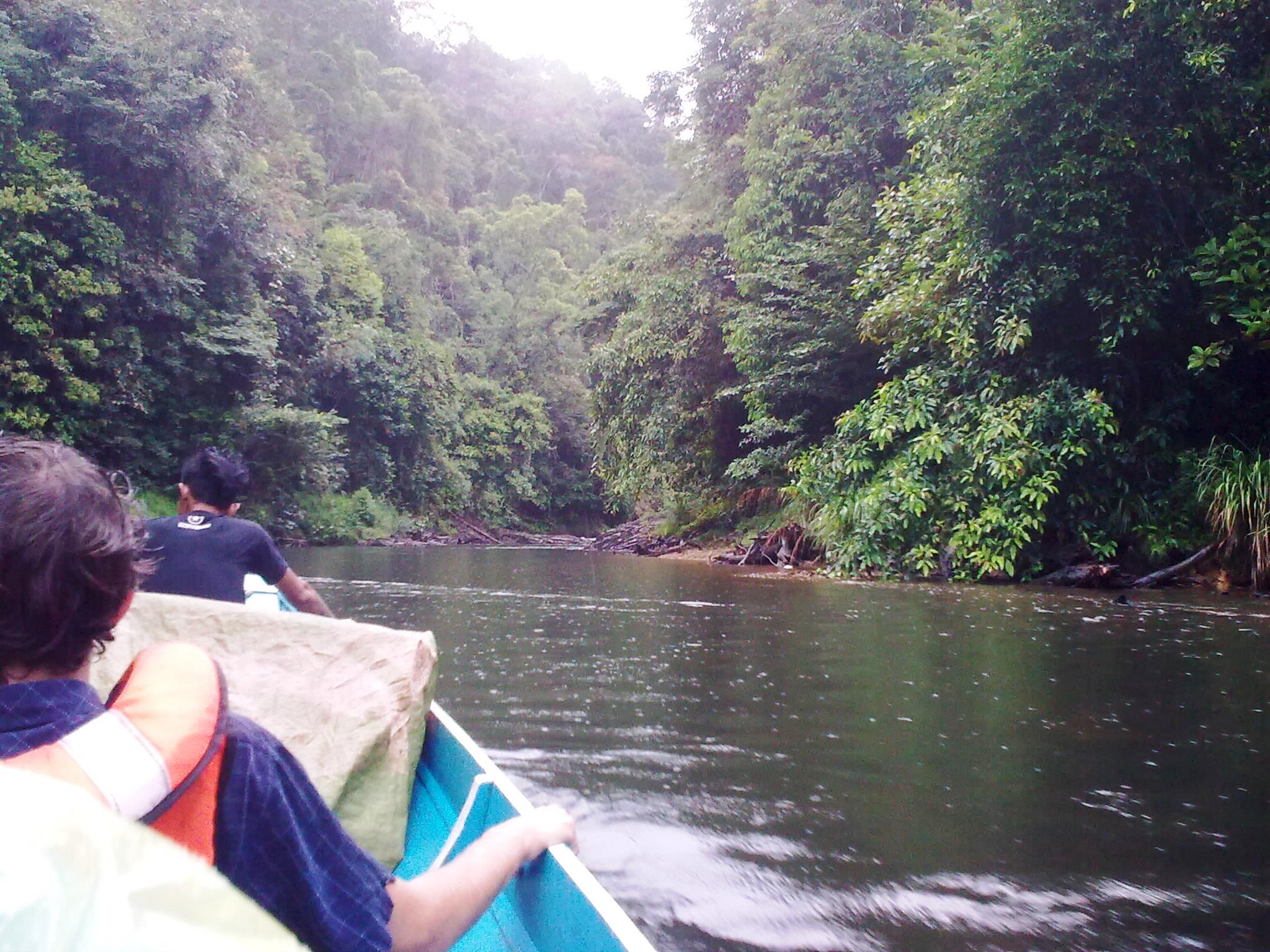
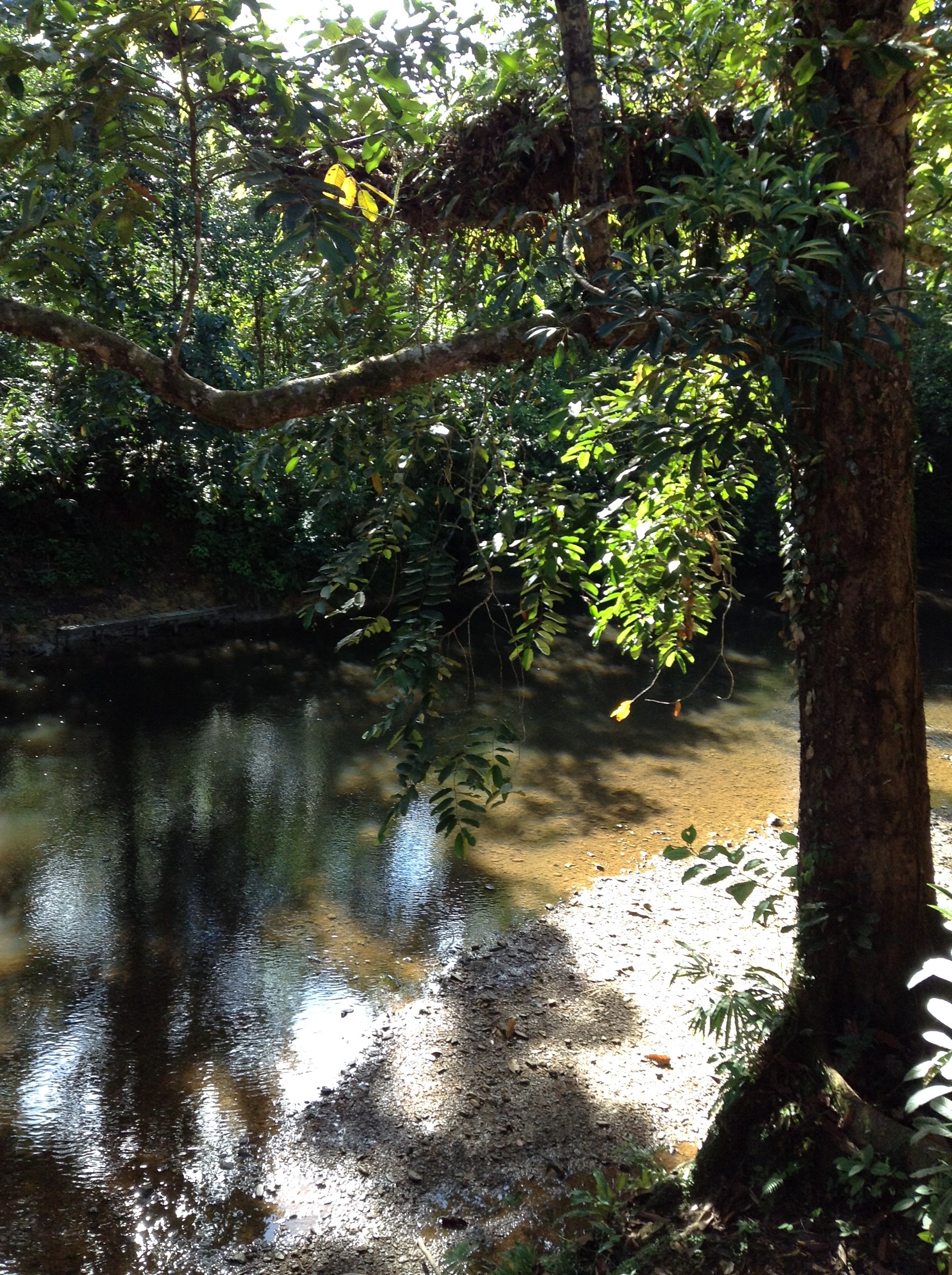
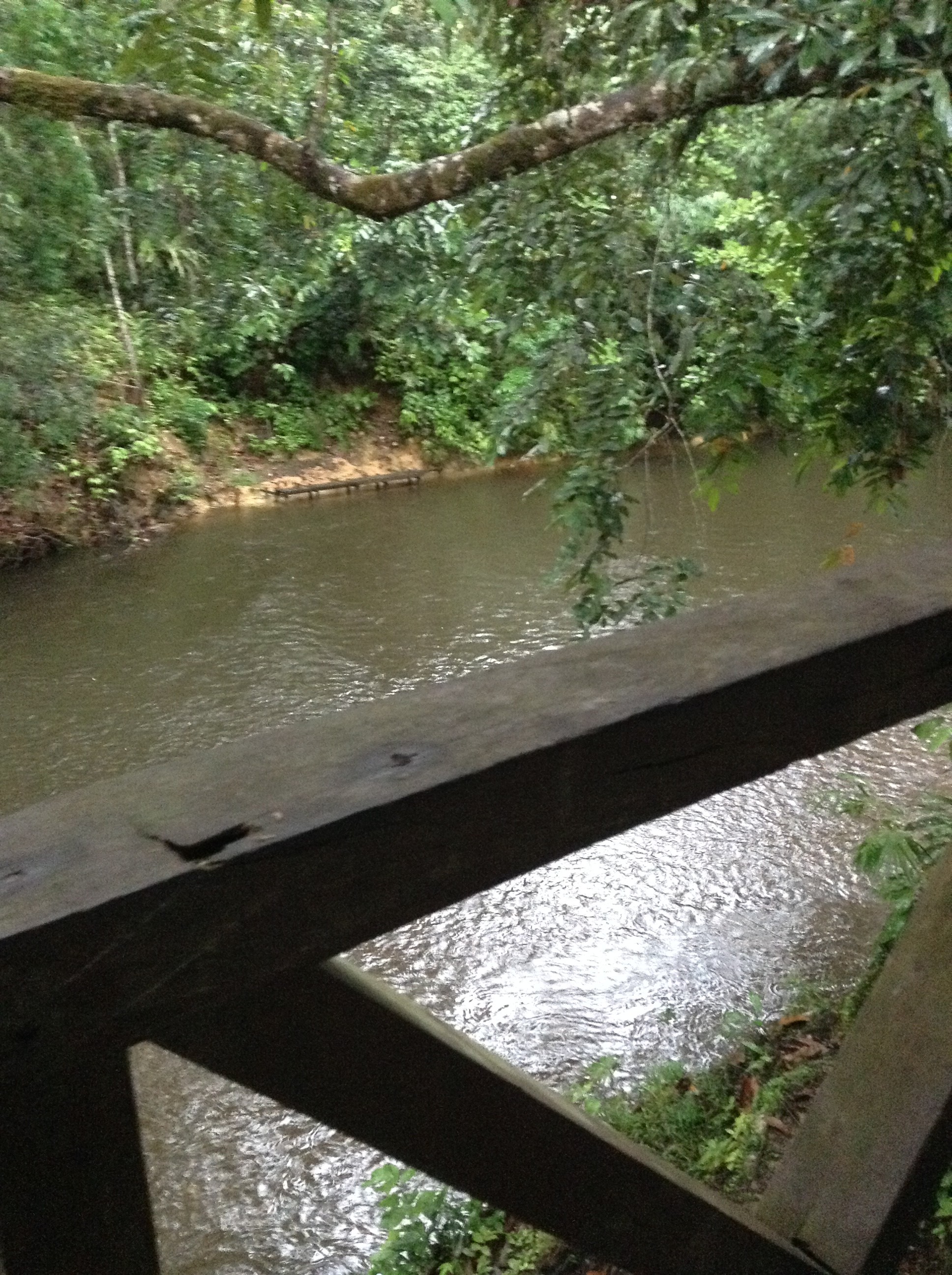
A five hour long car journey to the jetty of the Batang Ai River, a further two hour journey on a longboat up the river to the middle of nowhere, where the LONG house is situated at Nanga Sumpa.
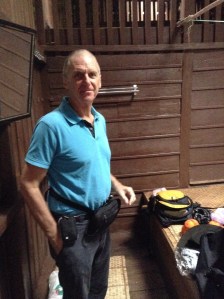
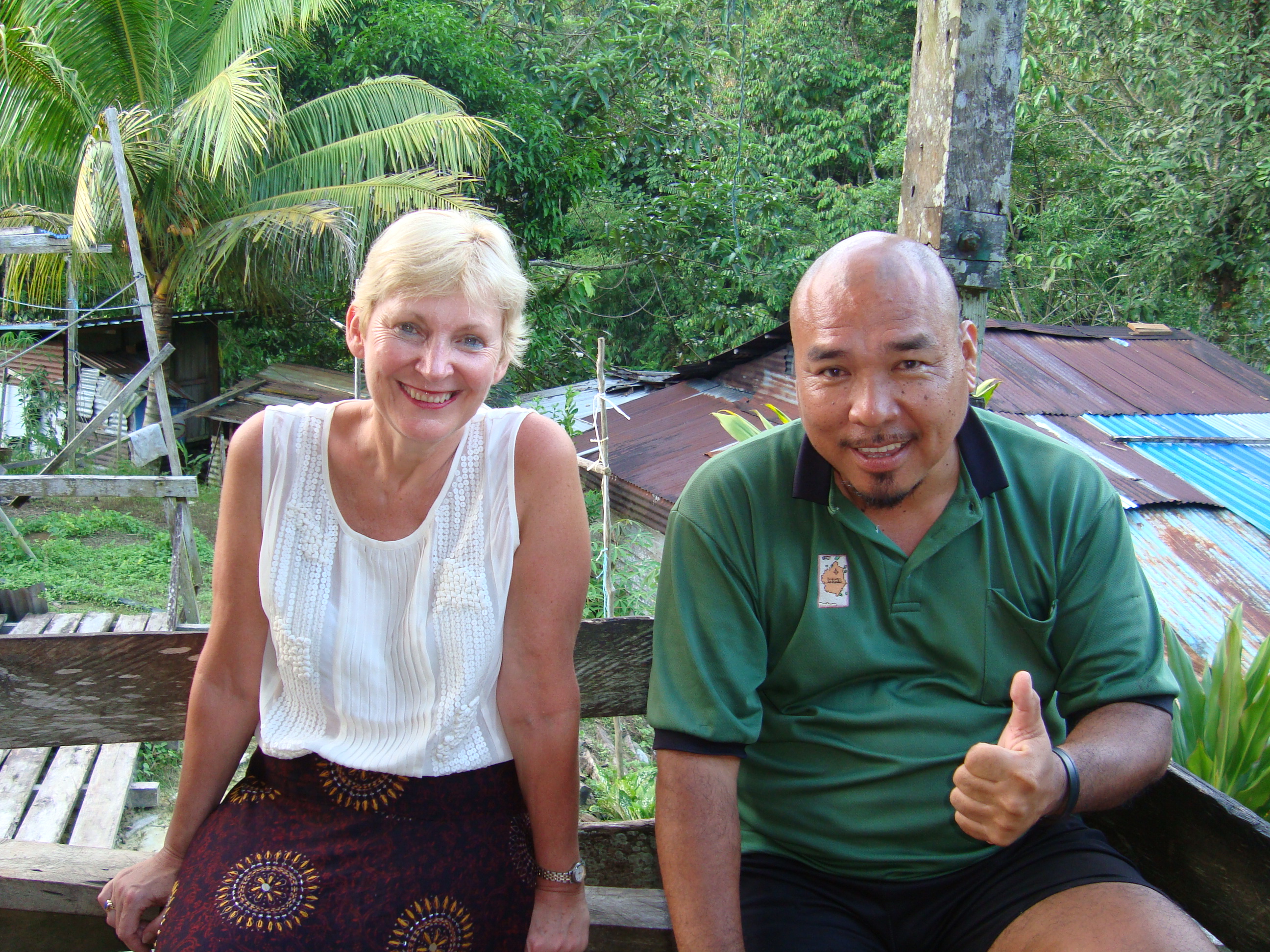
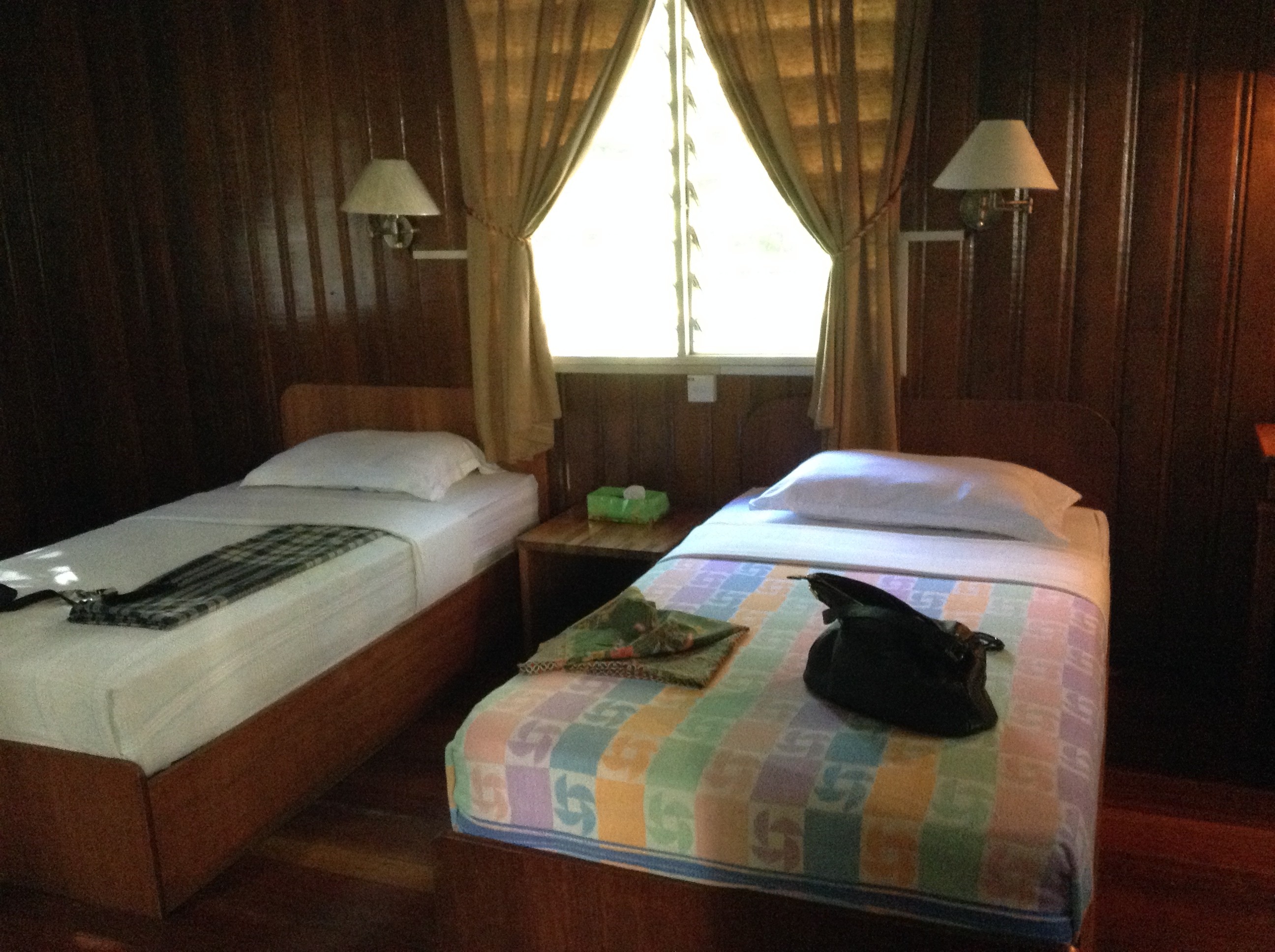
We were shown our room, very basic but comfortable, and relaxed with our funny man guide, Paul, who had such a brilliant command of English.
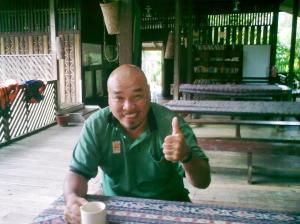
Paul took us over to meet the chief, a gentle soul who offered us rice wine,
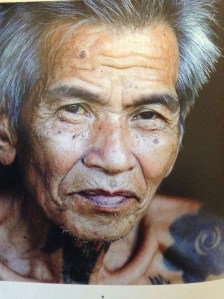
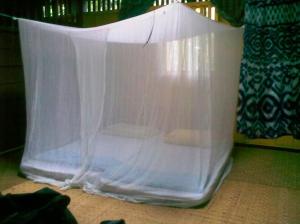
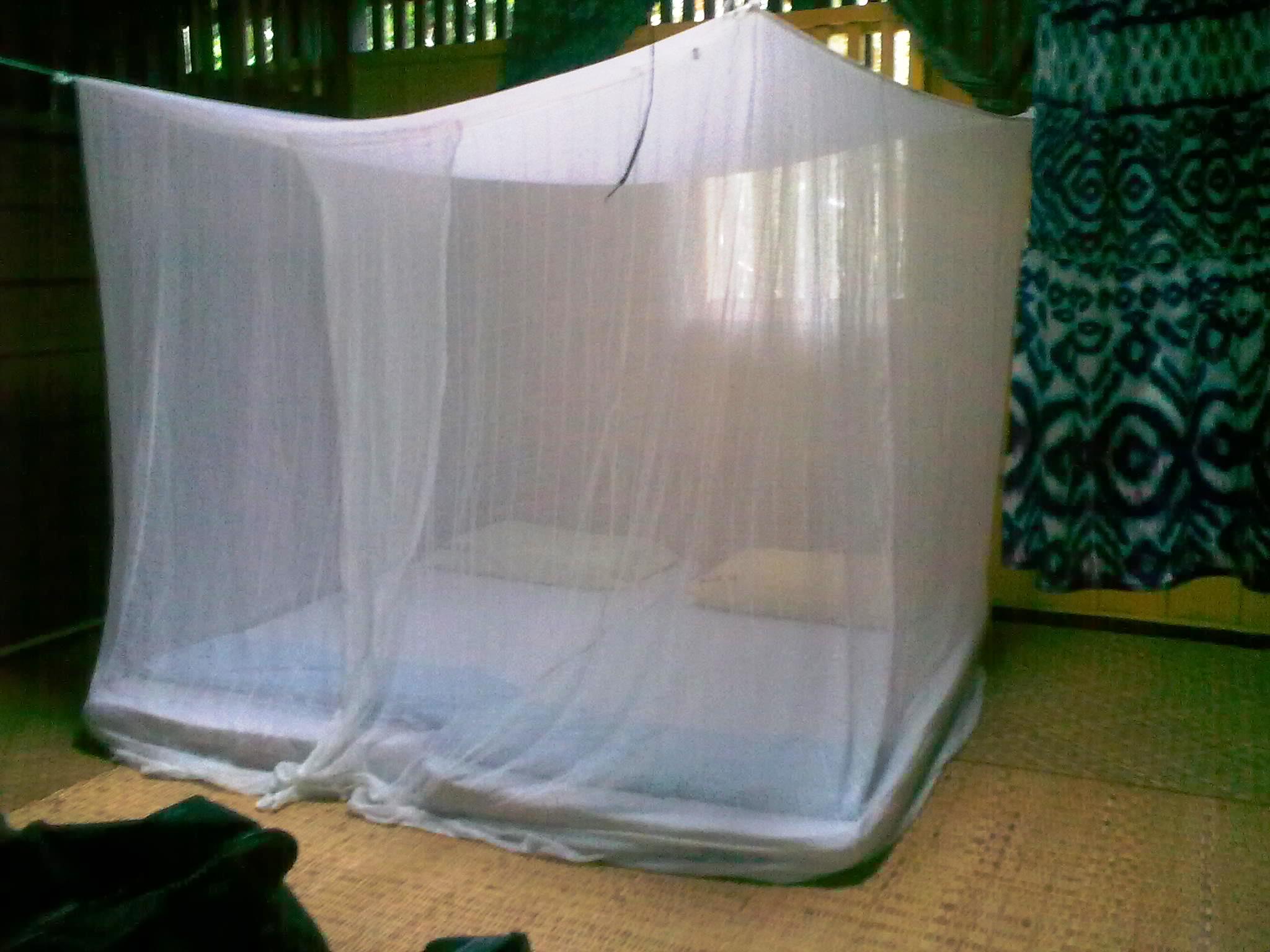
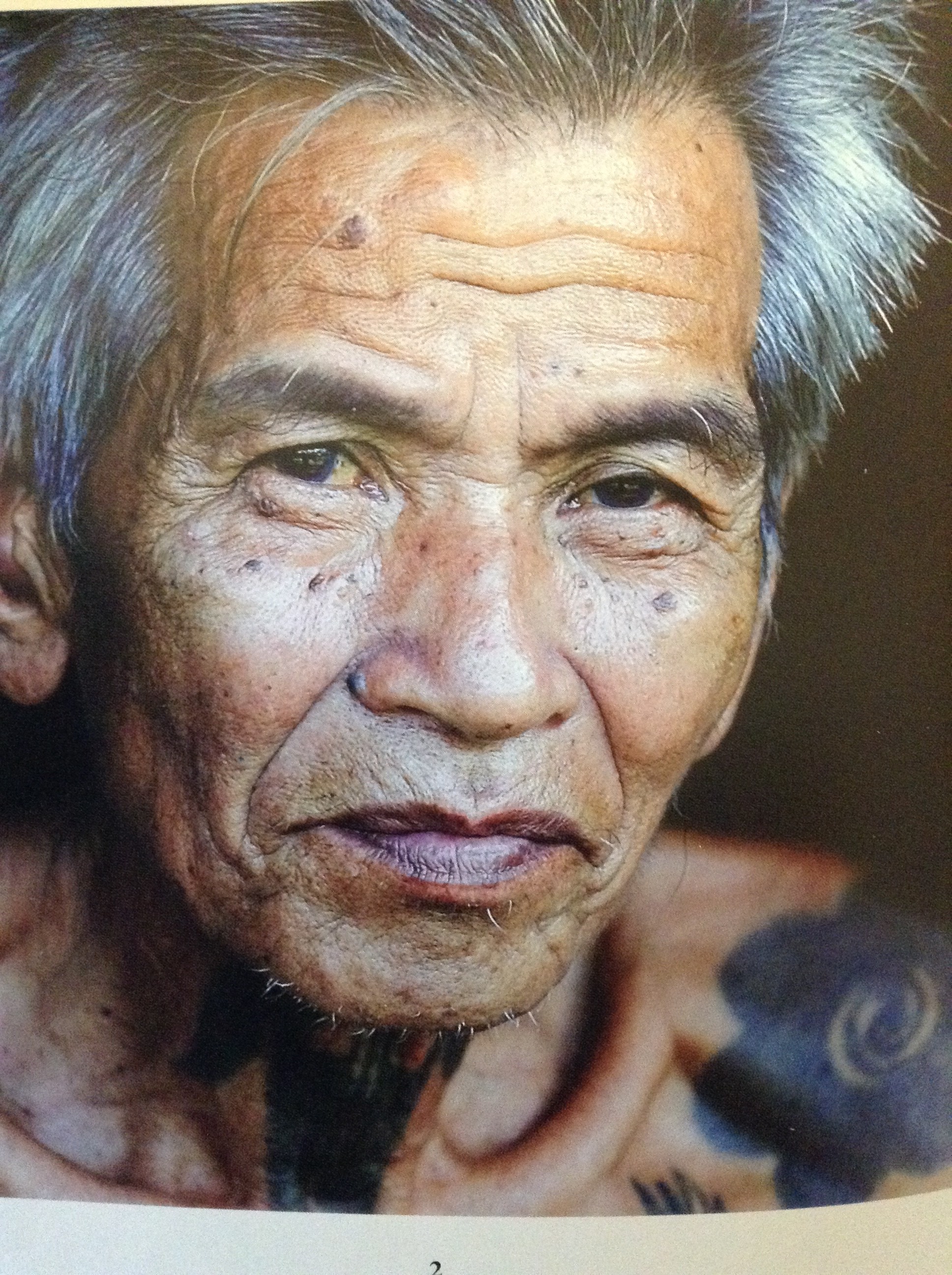
and we sat and conversed with the many people who inhabit this dwelling. If a son is away working, a chair is suspended on the wall opposite his door. Some of these men have been in Glasgow, Norway, Germany, often as riggers or rough-necks working on oil rigs. They have all returned to their jungle homes. Head-hunters no more, but still wanting to preserve their way of life. How sustainable that is, with TV and temptation, who knows? The younger generation holds the future in their hands. As for us we slept under our mosquito net, listened to the cicadas and warbling birds, woke at dawn to the roosters crowing, and later John discovered a scorpion lurking under his bag. Oh the joys.
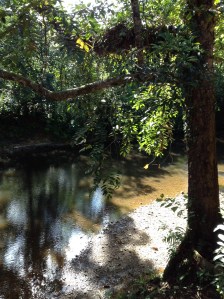
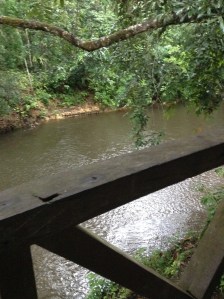
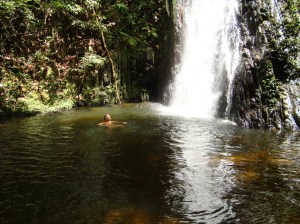
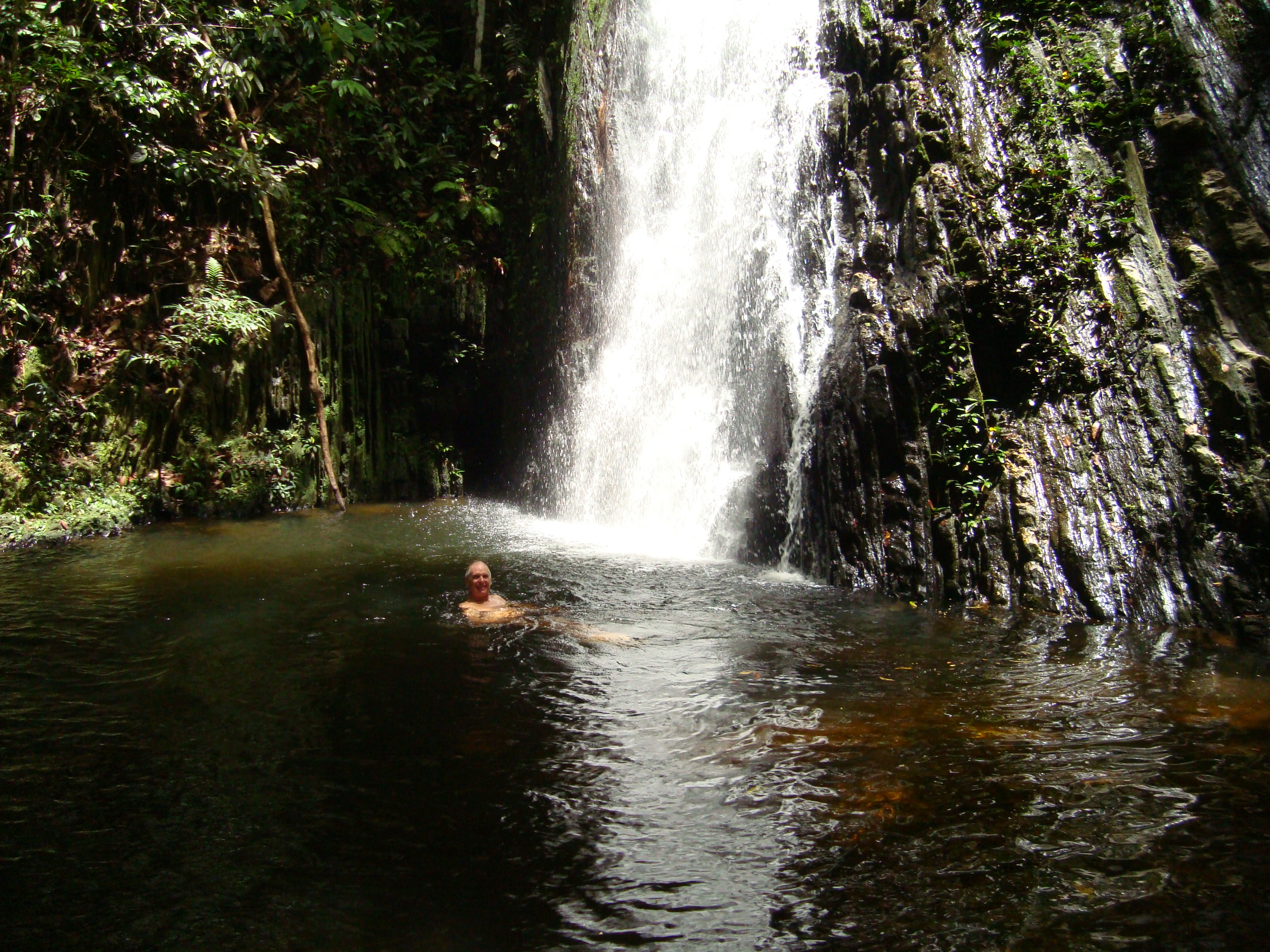
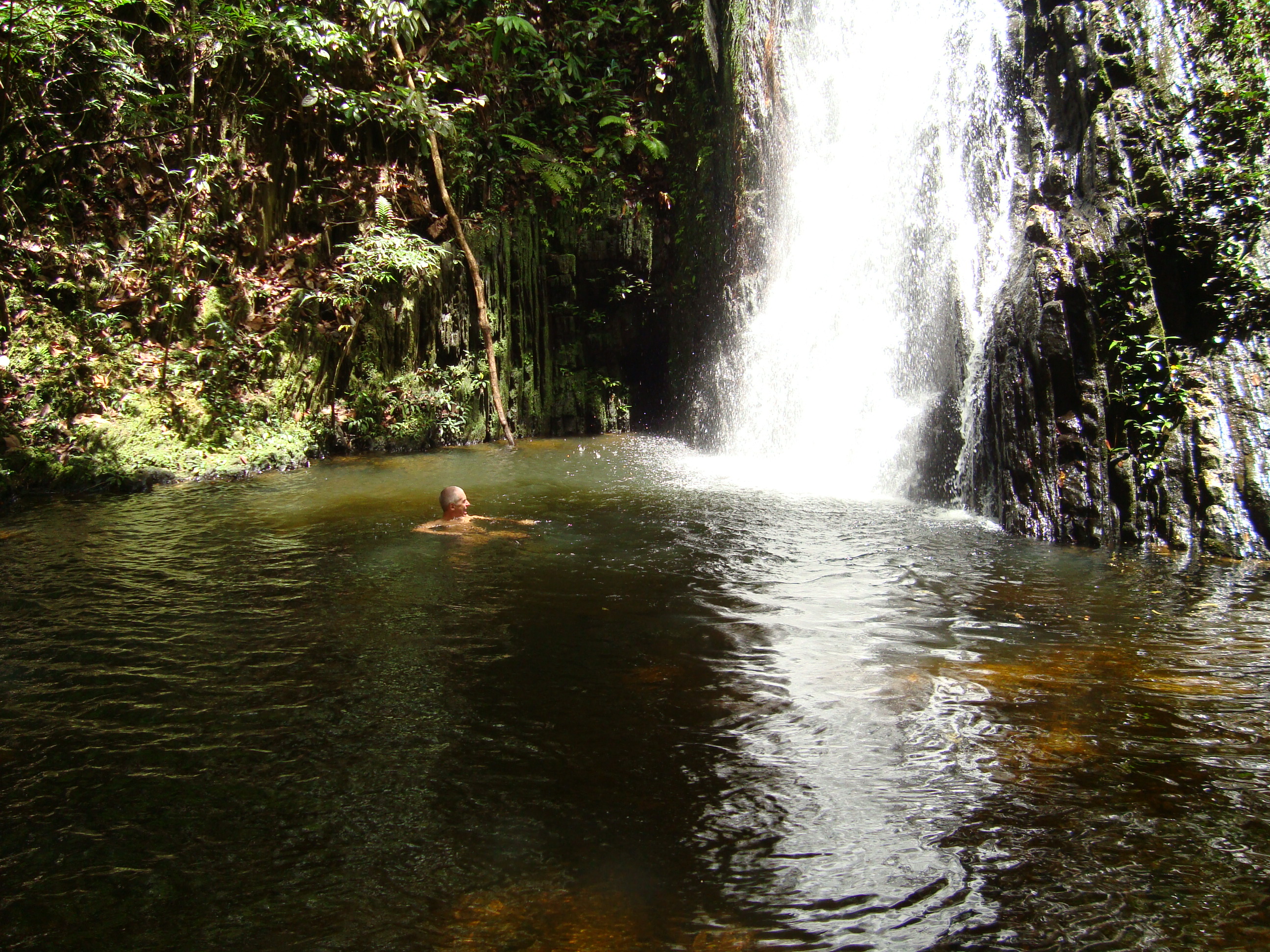
We later went further up river and the boat men prepared a barbecue whilst we frolicked in the waterfall, with fish nibbling our feet. I felt like a person in an advert for Menthol Cigarettes. I seem to remember a waterfall and crystal clear water and a couple splashing about. I think it must have been in the 1960s.
Before flying to the Mulu Caves, we had one final dinner with Ming and Francis in their most exquisite house, with a river of Koi Carp running through the middle. How relaxing is that? We chatted around the table, and John and I, who had just spent two nights in the jungle (seeing very little wild life) listened to Ming describe the four cobras that had taken refuge in her garage to get away from the torrential downpour, and to Philip who had to wait patiently for a giant python to move off his driveway as he tried to get home. He eventually drove over it. It wouldn’t have felt a thing.
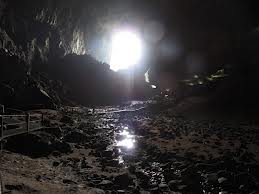
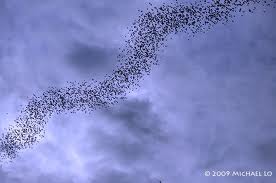
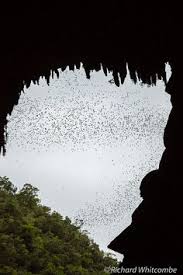
At the Mulu Caves we met Noah, our guide. He was a quiet, gentle sort of man, who urged us to drink our coffee, which had a gritty honesty to it, and then he led us patiently the three miles to the Deer Cave where we witnessed about four million bats hurtling out at sunset, whirling like a black doughnut at the entrance of the cave before heading off to find their dinner. The guano in the caves themselves looked like mountains of black snow, covered in cockroaches and scorpions – natures answer to the vacuum cleaner.
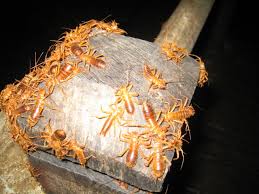
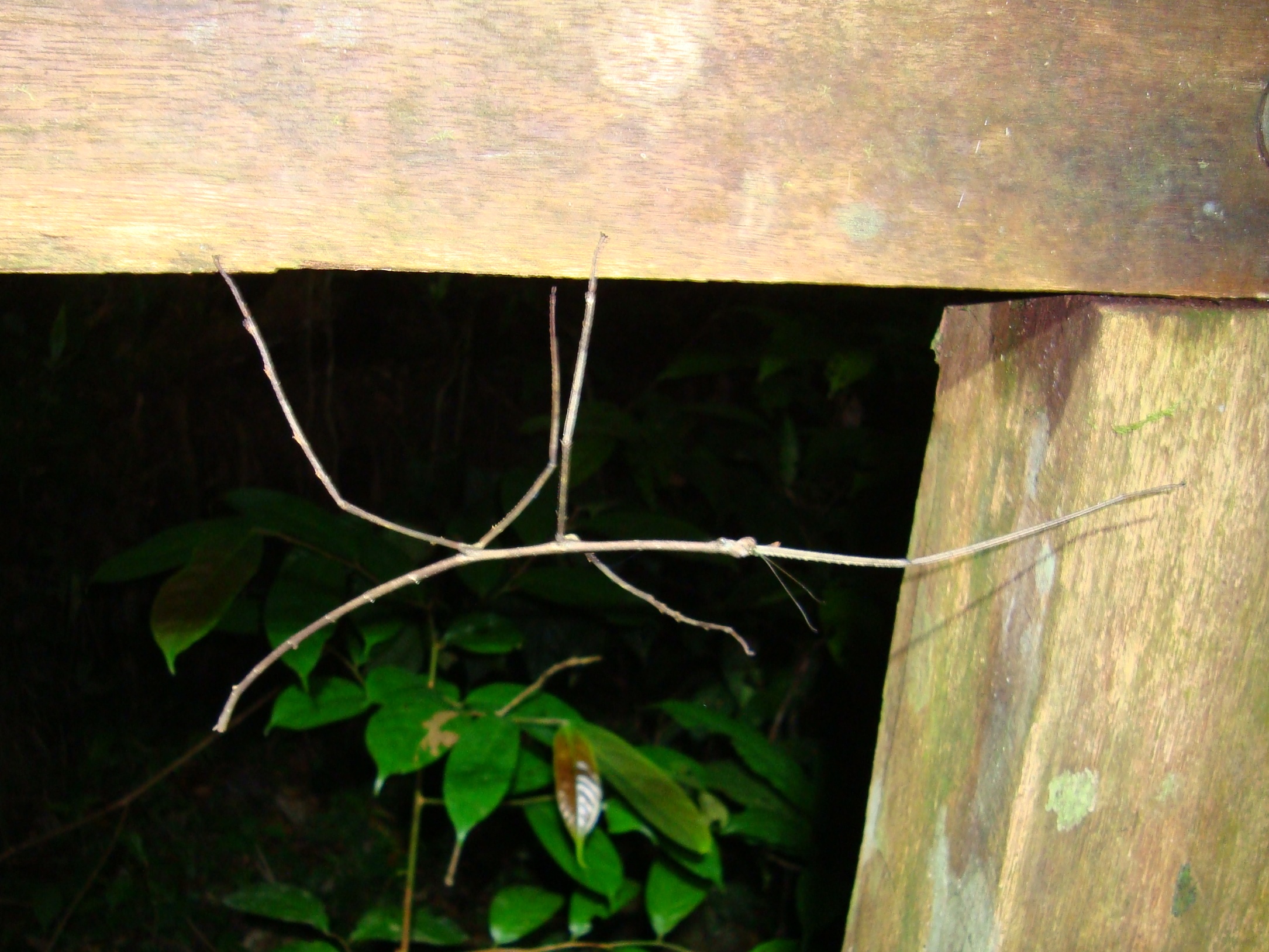
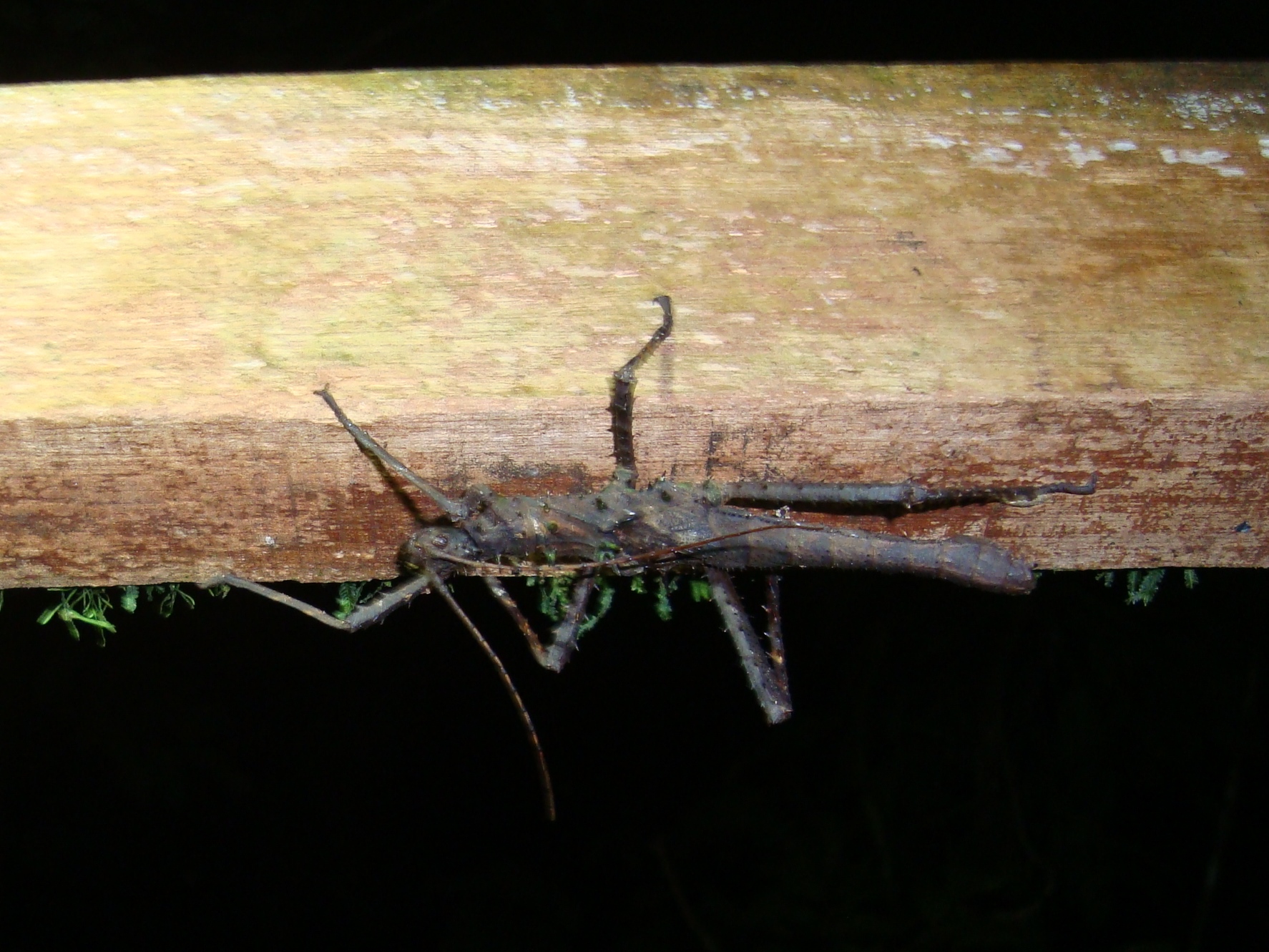
Outside, we saw the Ipoh tree that the head-hunters used to cut the bark for their poisonous darts. We learnt that a thorn from the Rotan vine, dipped in the venom of the cobra, can be used as an assassination tool and was used on soldiers in the Vietnam War by the children that they hugged. We saw stick insects about a foot long, and huge hairy caterpillars.
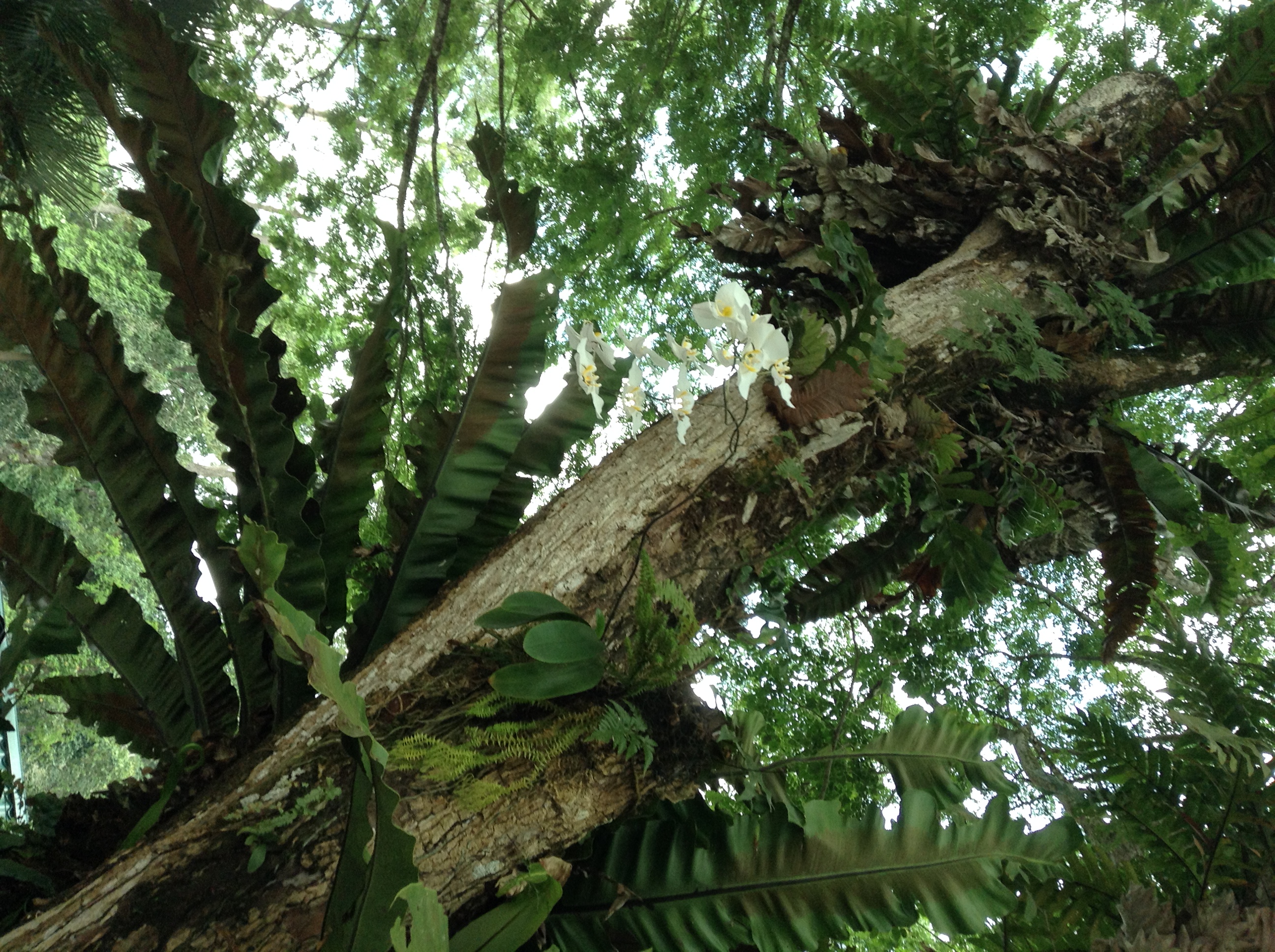
To the naked eye, the jungle looks like a myriad of greenness, with no obvious signs of life, just the constant orchestra of cicadas, BUT… at night! Oh dear Lord.
After some Dutch courage which consisted of French white wine, John and I put on our head torches then we ventured out alone along the pathway into the forest. The forest suddenly became alive with a thousand eyes.
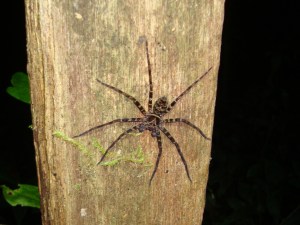

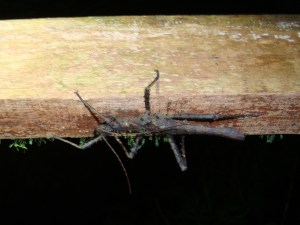
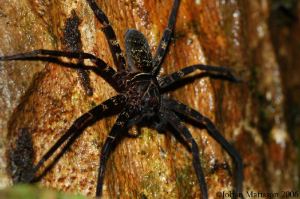
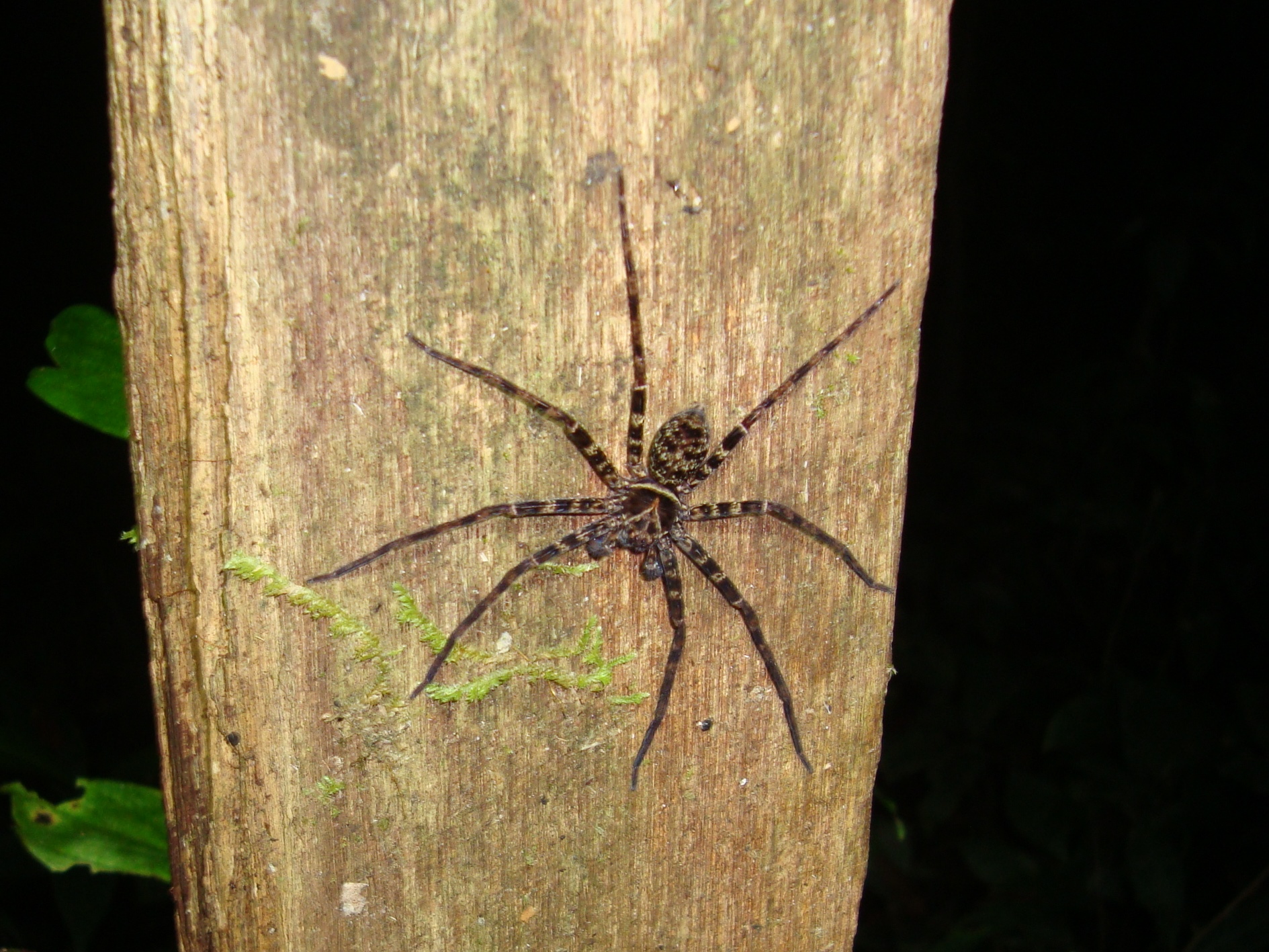
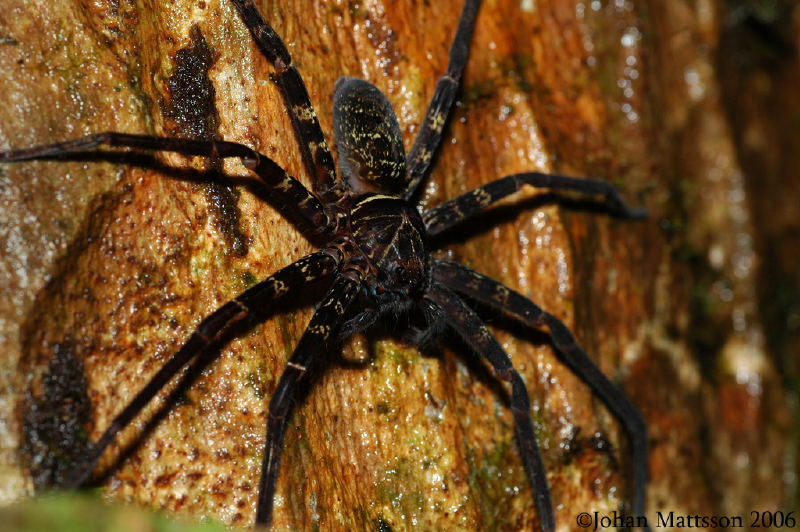
The torch glare made spiders freeze in their tracks and we saw stick insects that should have been in the Guinness book of records. We stayed for a while, mesmerised by the sounds and the fear, and I think we were both glad to retreat and return to the relative safety of our wooden cabin.
Noah took us down into the depths of the Clear Water Cave and he quietly told us that he had been the guide for the scientists that discovered these caves 15 years ago, and indeed had discovered one himself. He told us about swimming in the dark through a dark tunnel and getting out and suddenly two snakes wrapped themselves around his legs. Whilst crawling through another gap he put his hand on a hunter spider which is HUGE (but not poisonous) and all this was done with torches.
We are quite fortunate walking on iron-wood pathways with electric light illuminating all the sculptures formed from stalactites and stalagmites. Arriving by longboat at the airport, we said goodbye to Noah and I changed into some dry clothes. Imagine my horror when I discovered that I had lost a ruby earring. For fifteen frantic minutes I searched the ladies’ restroom and retraced my steps back to the river, and I was at the point of having an emotional melt-down, when John said why don’t you check your little jewel box in your hand bag… and there it was! Phew! I had forgotten to put it on. Senility is definitely setting in. Oh the joys.
Now, rubies in place, and John’s newly purchased head-hunter’s blow-pipe (they wouldn’t sell him the poison) checked in on board (not allowed in the cabin!), and we were on our way to Sabah: The Land Below the Wind.
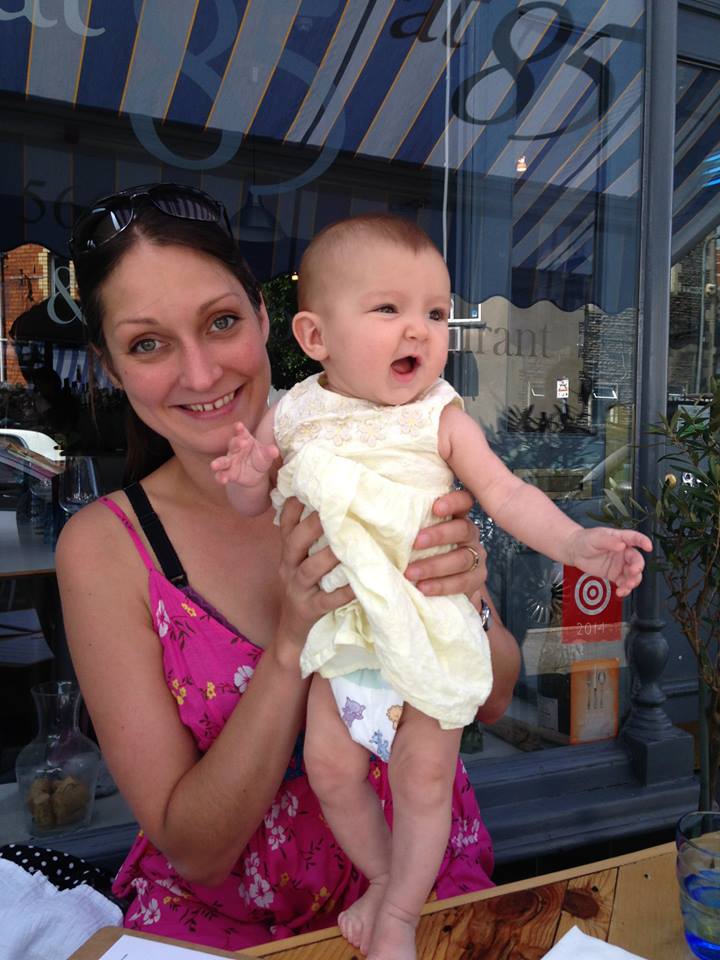
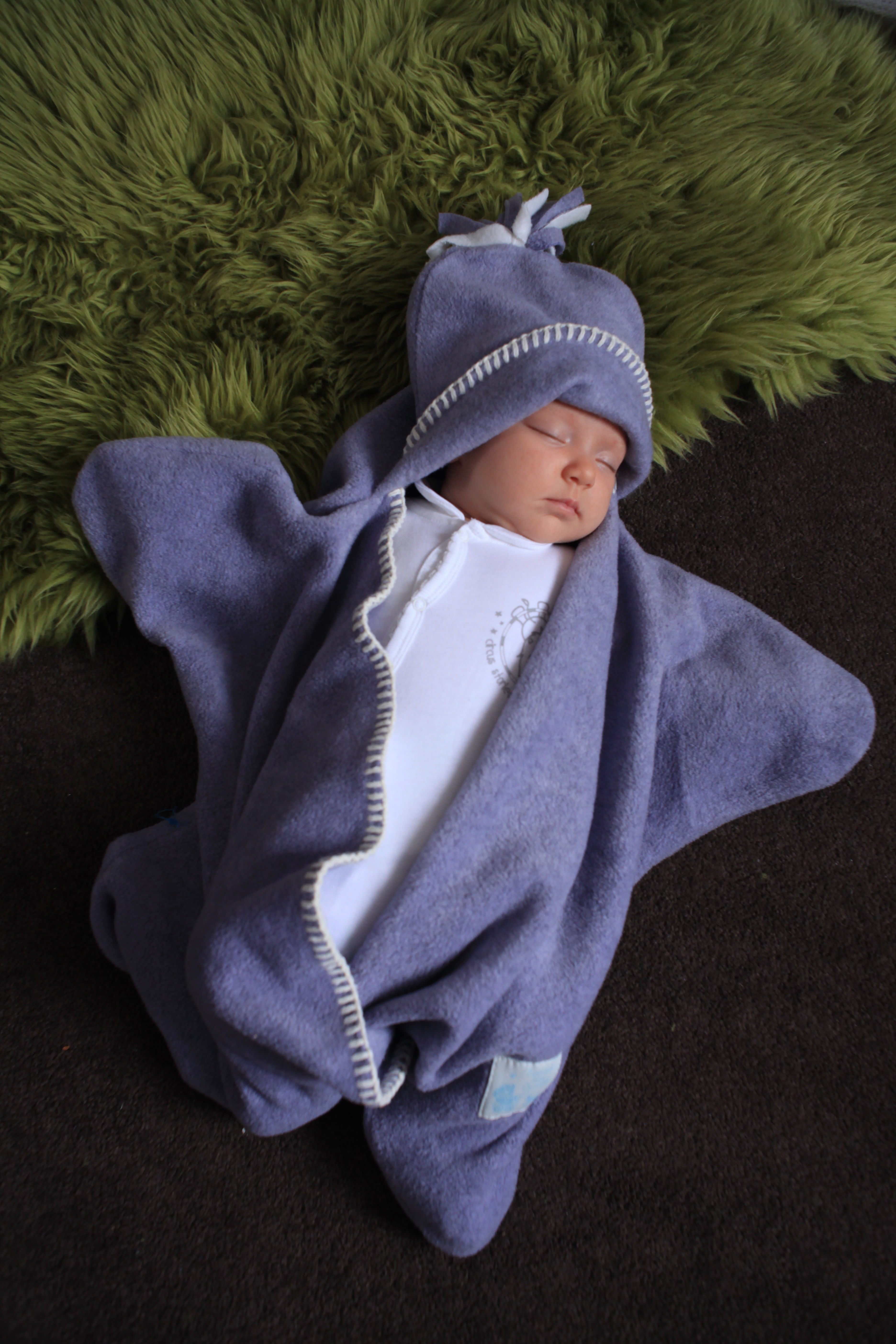
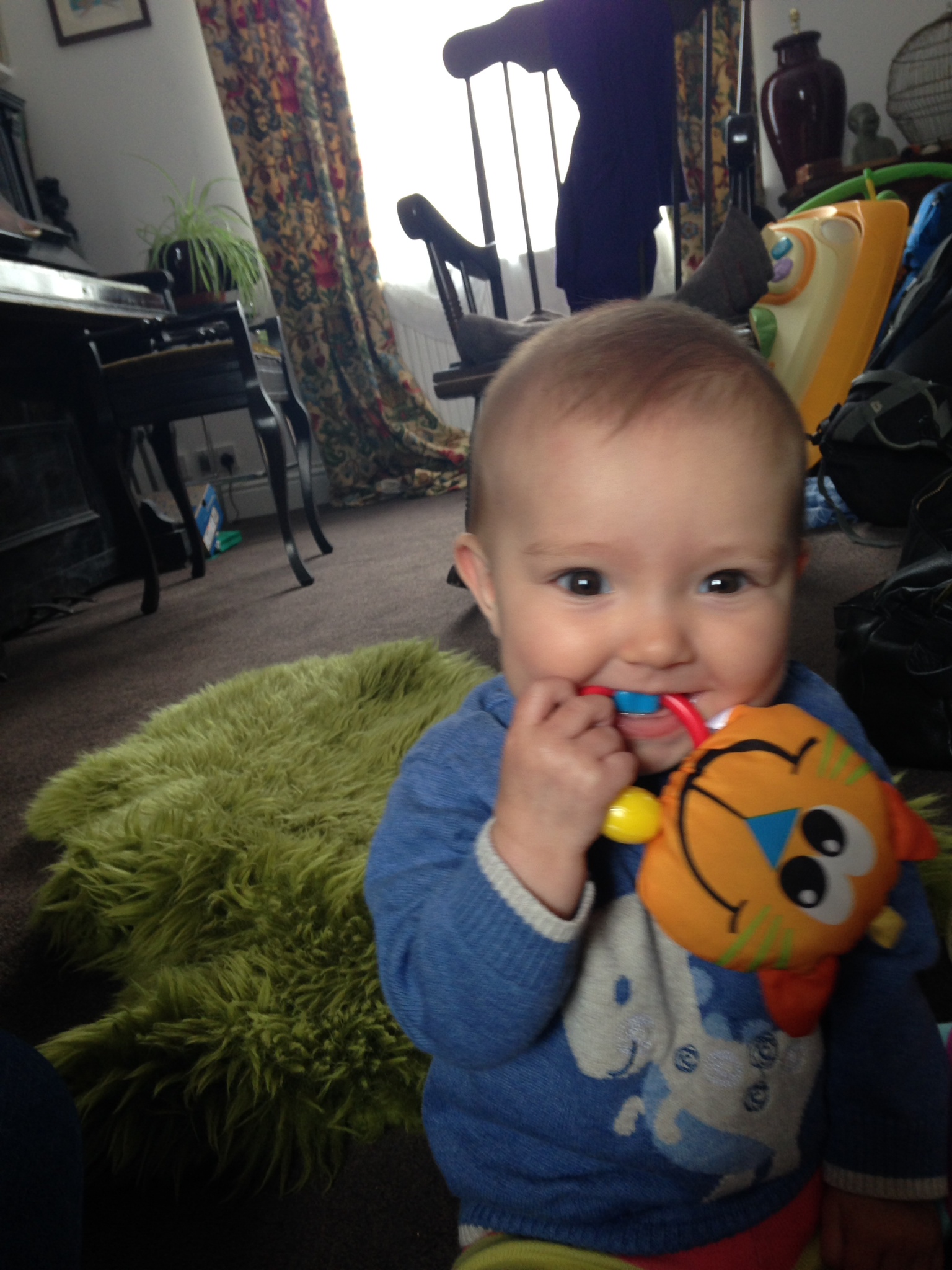 She is such a cute little baby, with a very infectious grin. I loved listening to her babble from her cot when she wakes up to a new day. Peeping in one morning, I watched as she greeted her toys and teddies and cloth books as though seeing them for the first time!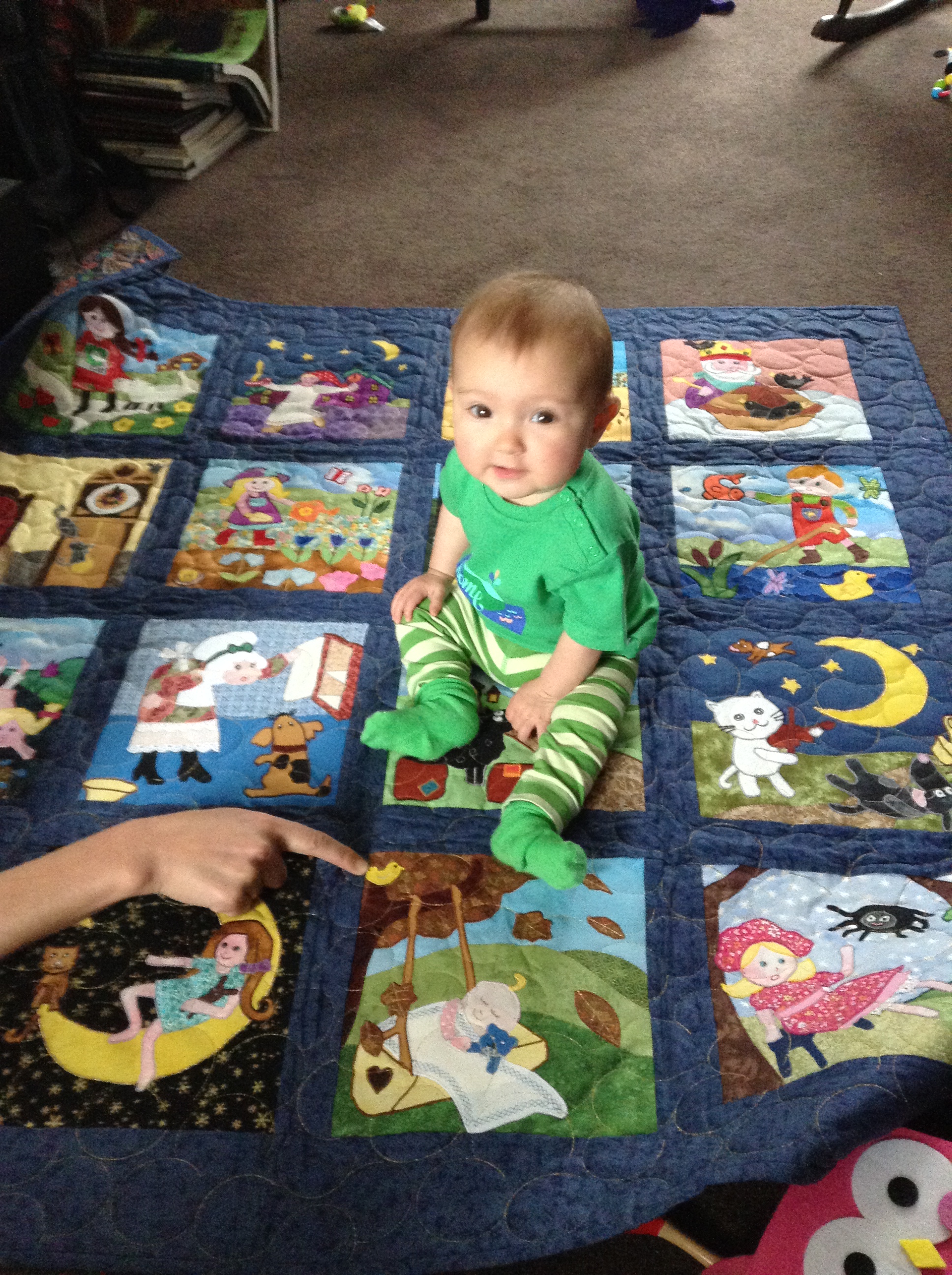

 Natasha had me out foraging in the countryside for autumn berries in order to make healing potions. We were like witches, with the poor baby forgotten under a hawthorn tree, as we battled with brambles and nettles to pull the elderflowers off the branches in fat satisfying bunches.
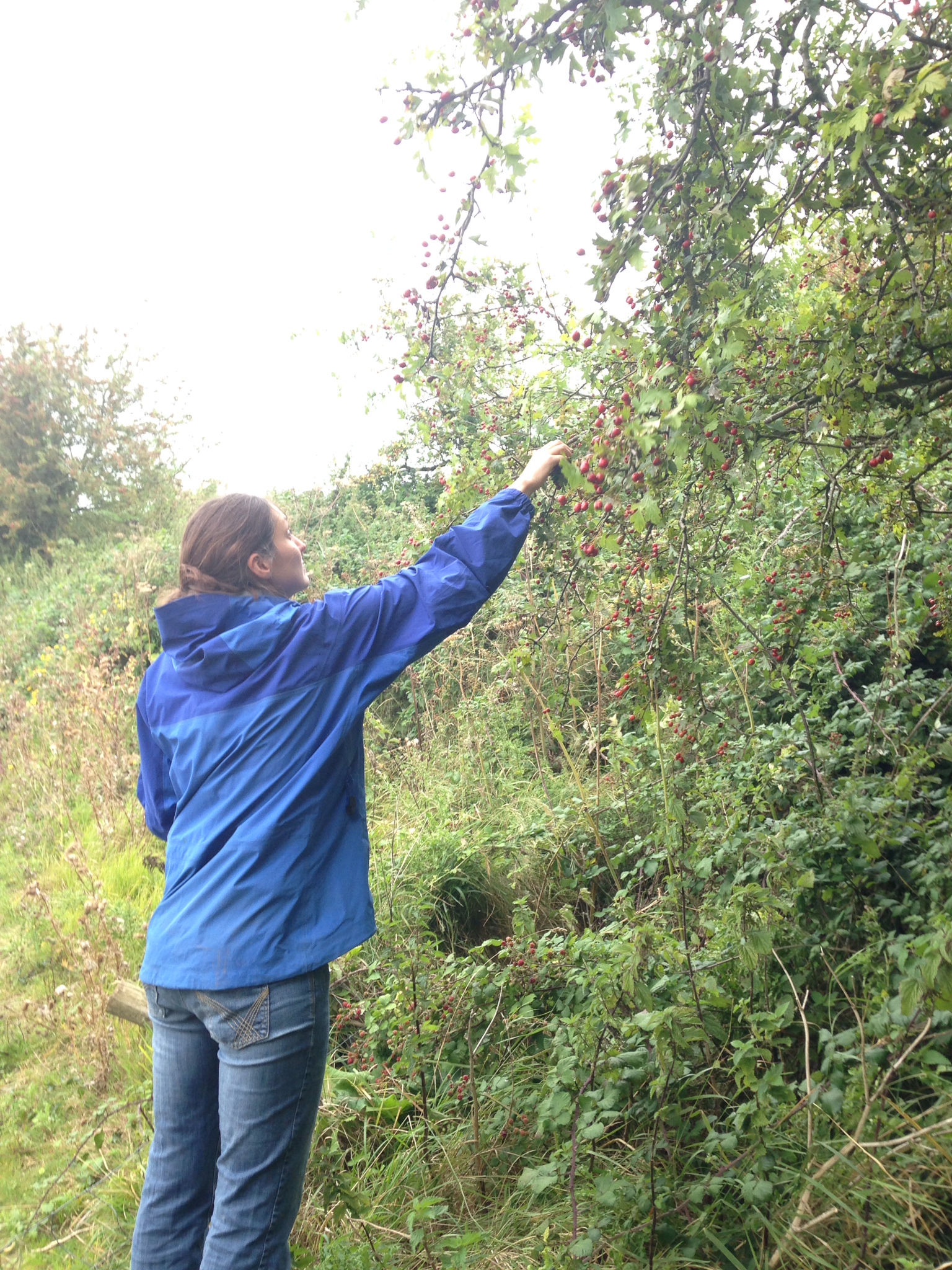 We also stopped to collect Self heal and red clover, and ate stray wild plums. Back home we turned the kitchen into a scene from Macbeth, with pots simmering blood red, and a pungent aroma filled the house. Finally the tincture was bottled and Natasha was just on full alert for anyone to have a mere tickle in the throat. The witch was at hand!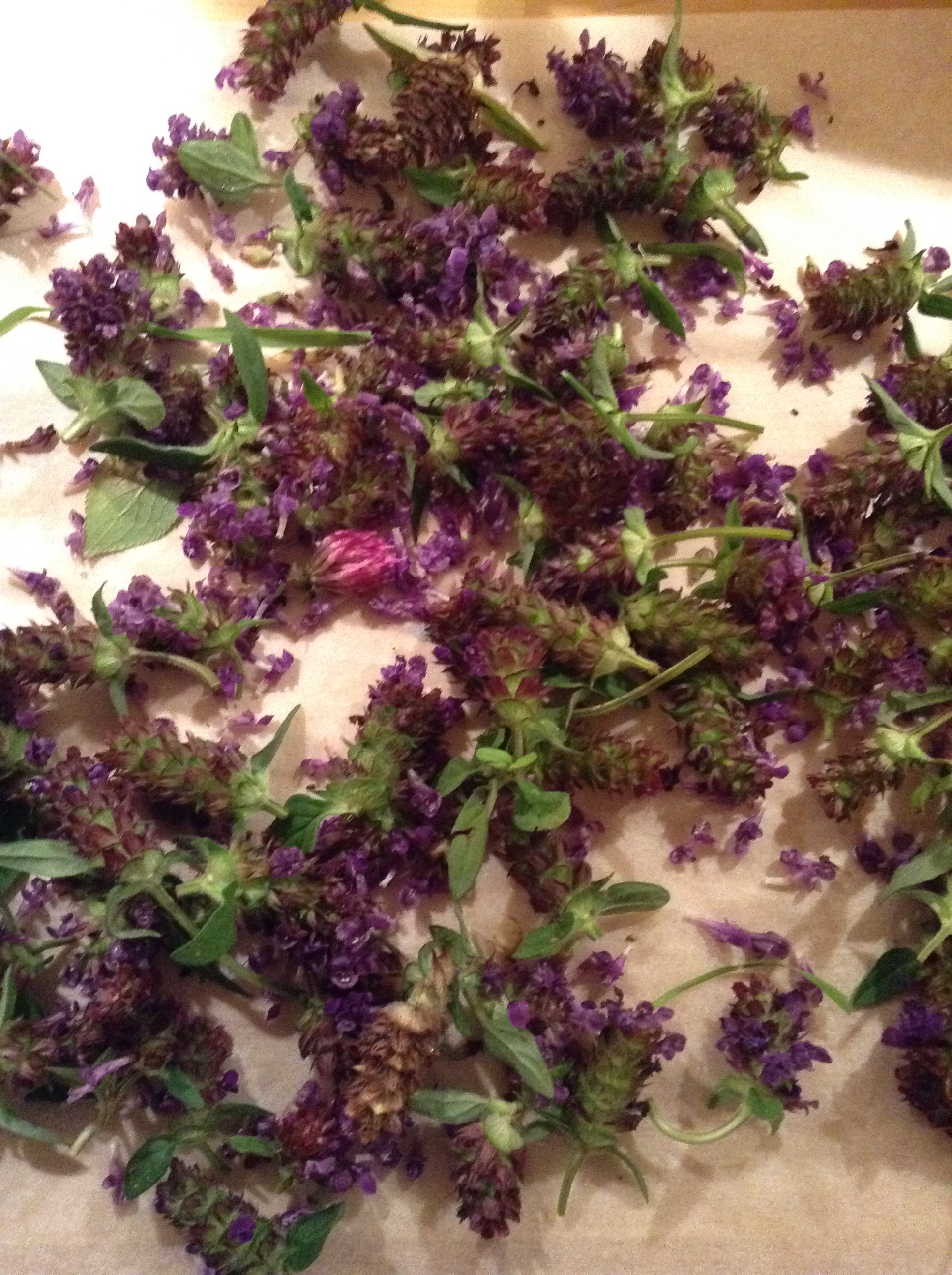
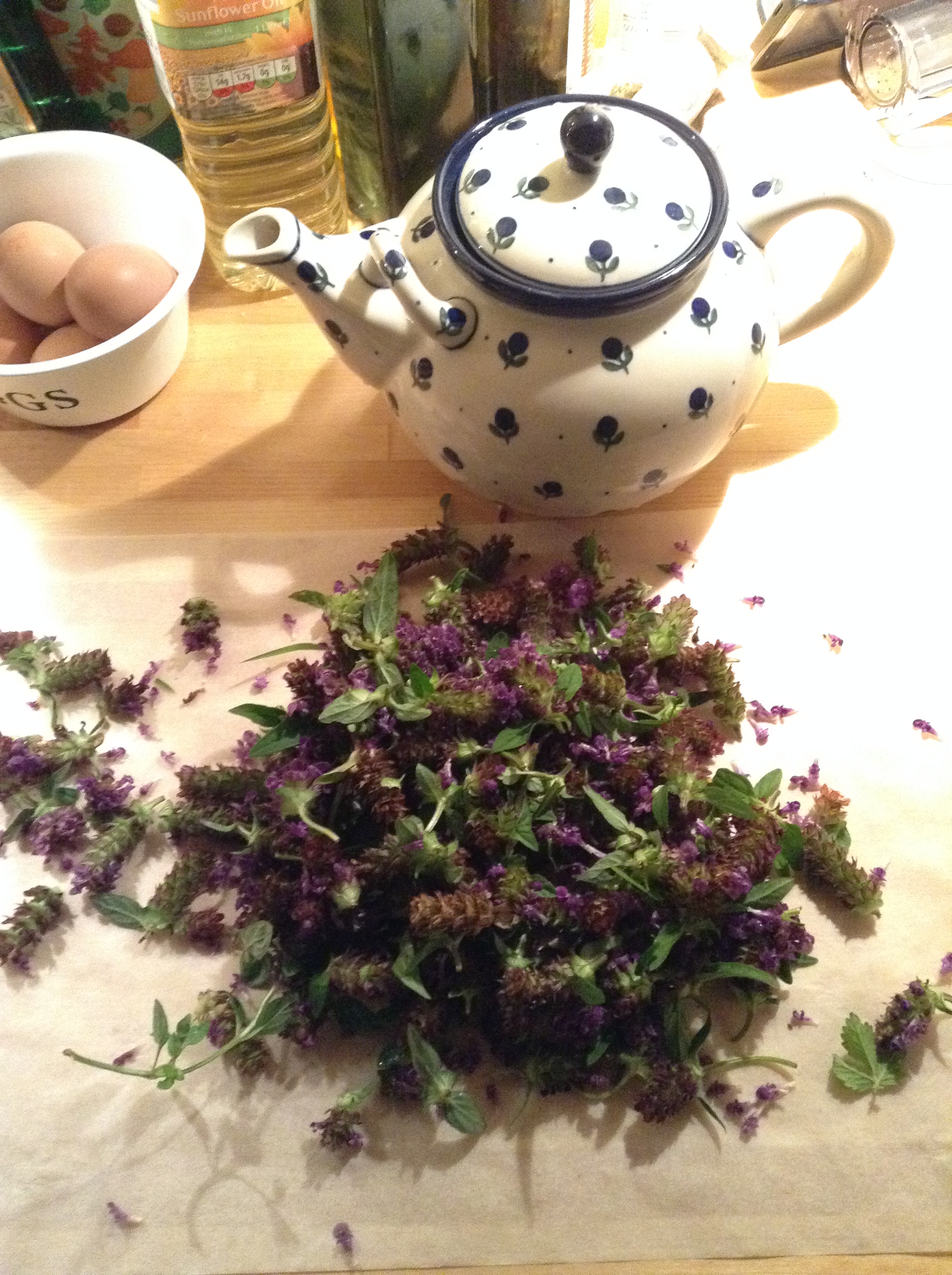
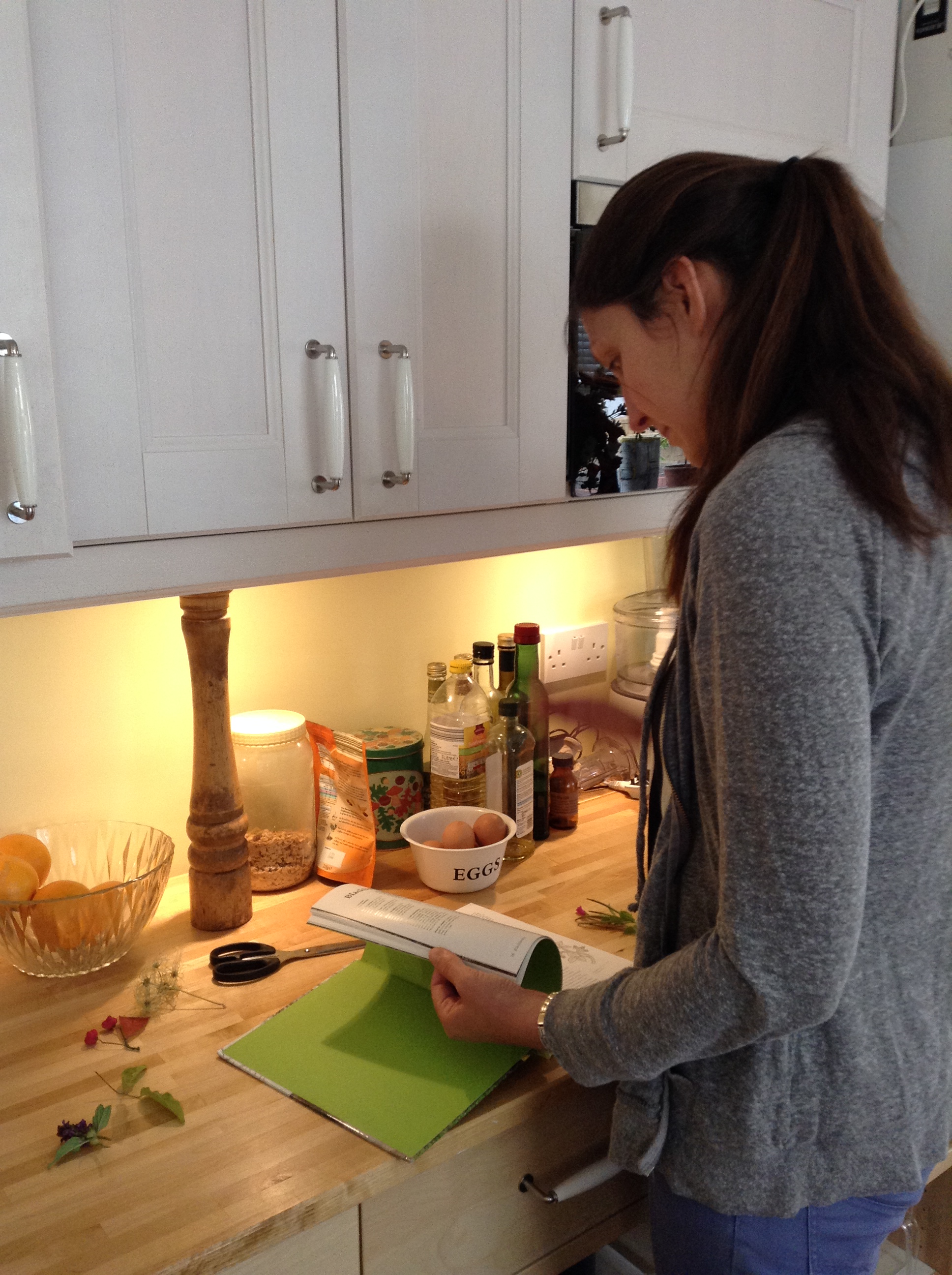
 The following day we waited for a heavy shower of rain to pass then we ventured forth again, with pram, baby, plastic bags and a coat hanger to trap hawthorn. We walked along the cliff with the silvery grey sea beneath us, and the canopy dripping on Bonnie’s plastic cover. Hawthorn is one of the greatest things for getting rid of ‘build up’ in the arteries of the heart, and our mission was to collect, boil, strain and then cook the berries for 12 hours in a cool oven, and produce hawthorn leather. This would then be chewed each day in small portions. (Mine turned out like crisps…very crunchy). I do love all this flower and mystic nonsense, it is just so satisfying to breath the air, smell the rank perfume of torn grasses and feel that you might be following some ancient tradition. The Elder tree is just a story in itself, its hollow stem was said to have been used by Prometheus to bring fire to man from the gods, it was also used as an ancient flute. Great things might happen if you are in the company of the tree on Midsummer night, you might see the Faery King ride by. (How scary would that be, in today’s world!!) And there is a belief that it is connected with the Earth Mother. Is said that if one is planted in your garden you will have protection against lightening and it would keep your cattle from harm.(or cats or dogs???) Christ was said to have been crucified on an elder tree and Judas to have hanged himself on one. It seems a bit iffy that, as the branches are a bit skinny and weak, but God apparently had cursed the elder by making its once large berries small and its straight branches twisted. That explains it then. It doesn’t have a very nice smell, and it is bad luck to have the flowers in the house. ‘Hawthorn blooms and elderflowers Fill the house with evil powers.’ So there we go, the apprentice witch has now got a remedy for colds and flues, a leather that will fight cholesterol and lovely memories of a satisfying day with daughter and granddaughter foraging the fruits of autumn. John and I have bought a car and garage, which was all very exhilarating, and so we went on a trip over to the West Coast, and stayed in Oban for the night, and drank in the beauty of the mountains and the sea and the heathery hills. Could we live so far from the city conveniences? Would we survive with only a view? At this point in our lives, I think not. But with the car we can visit and then we can always come home!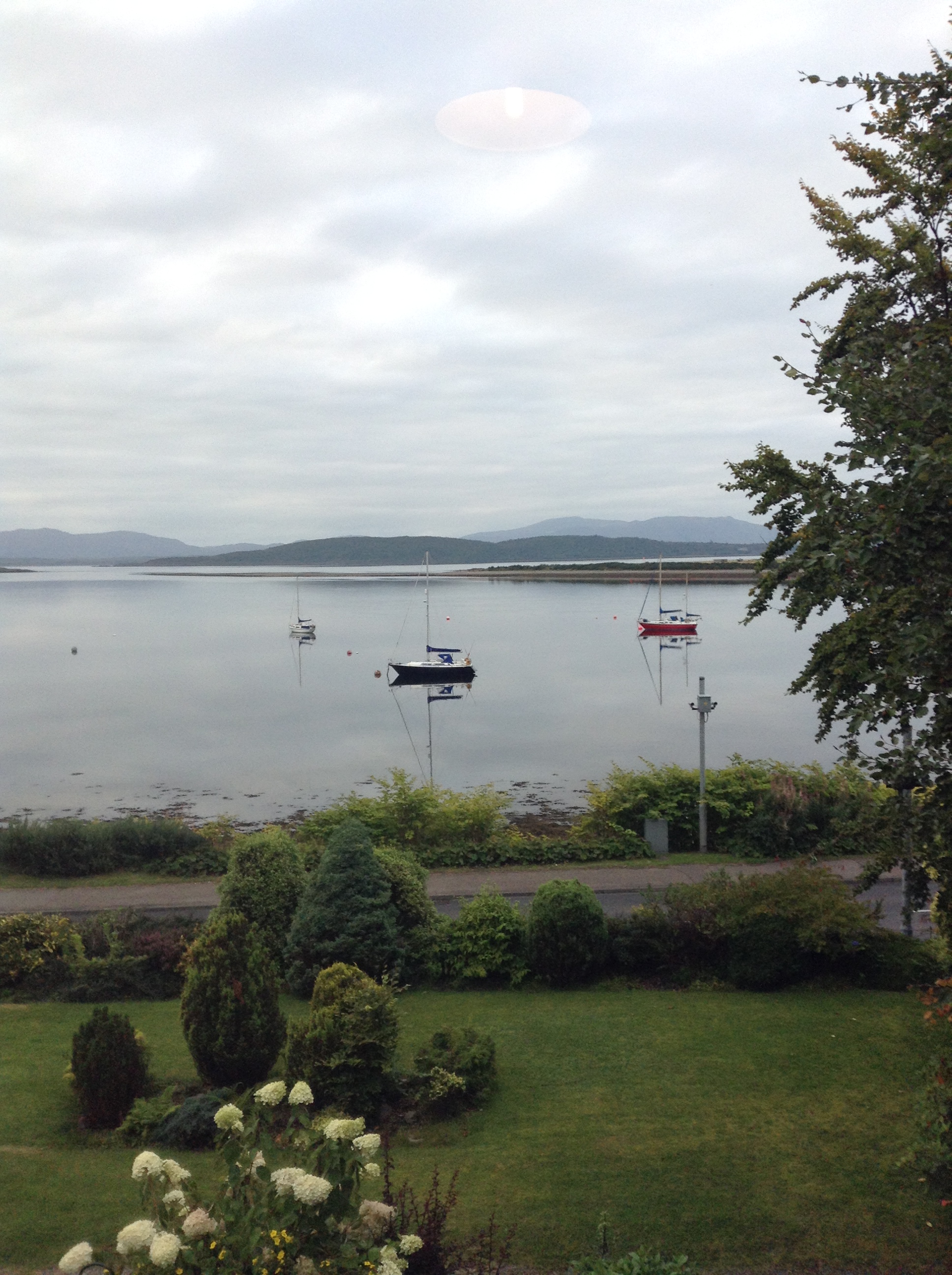











































 Tales from the Gael