Chengdu – Sanjijang – 26thMay
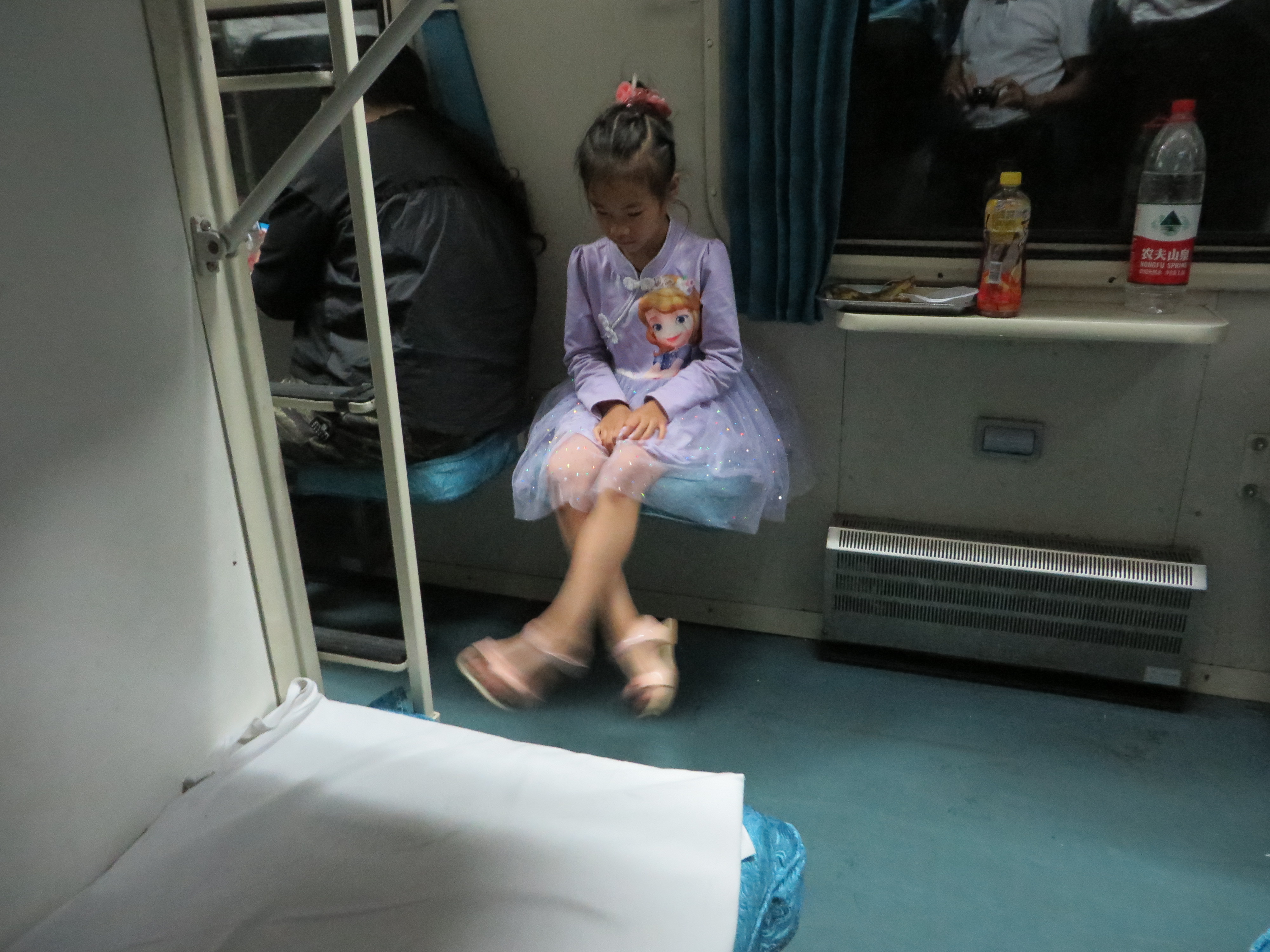
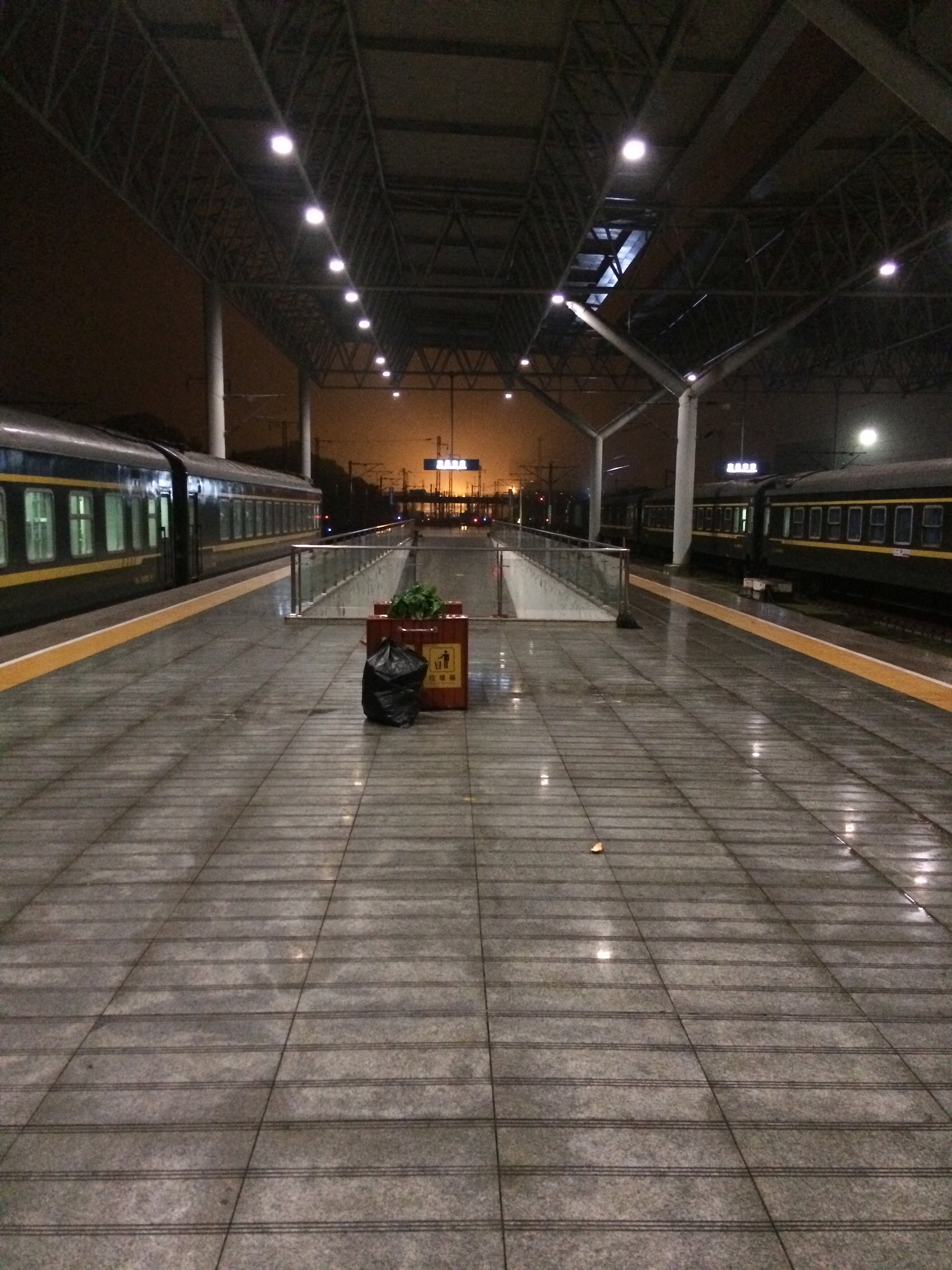
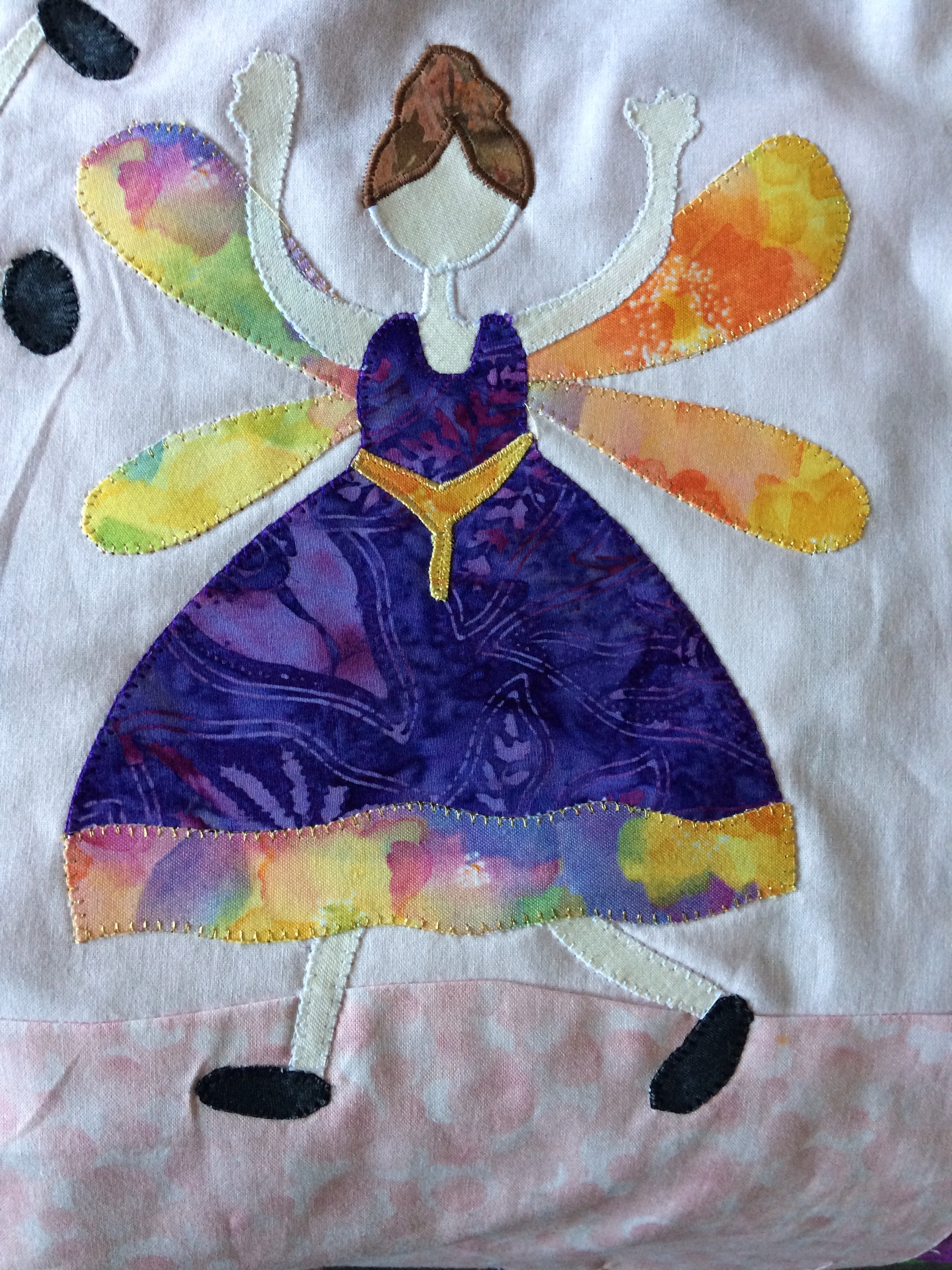
Another train – 18 hours of hell. Noise, snoring and insomnia. Hours passed, so difficult even to toss and turn when on a thin bunk with a long drop down. The only highlight was a little fairy girl who charmed us all. She was so excited to be sharing a compartment with us, and she was right on the top.
Dawn broke and John and I made tea and ate a squashed almond croissant that was pure heaven. Baby wipes freshened me up and a splodge of lipstick was applied with the swaying of the train and I was ready for our new destination. We were now in the south, in Sanijang, where rice fields have replaced the wheat fields and pumpkins have been planted in every nook and cranny.
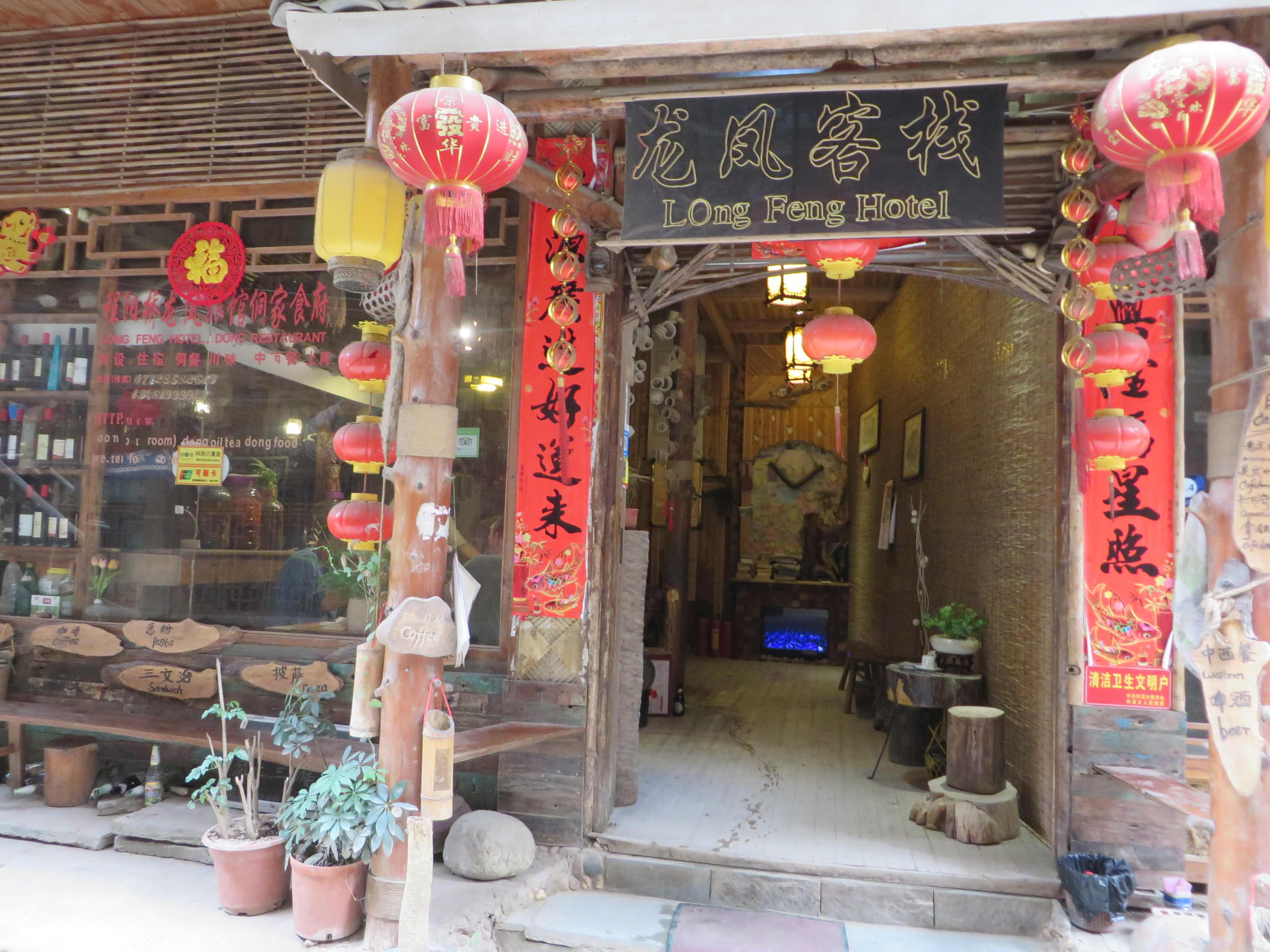
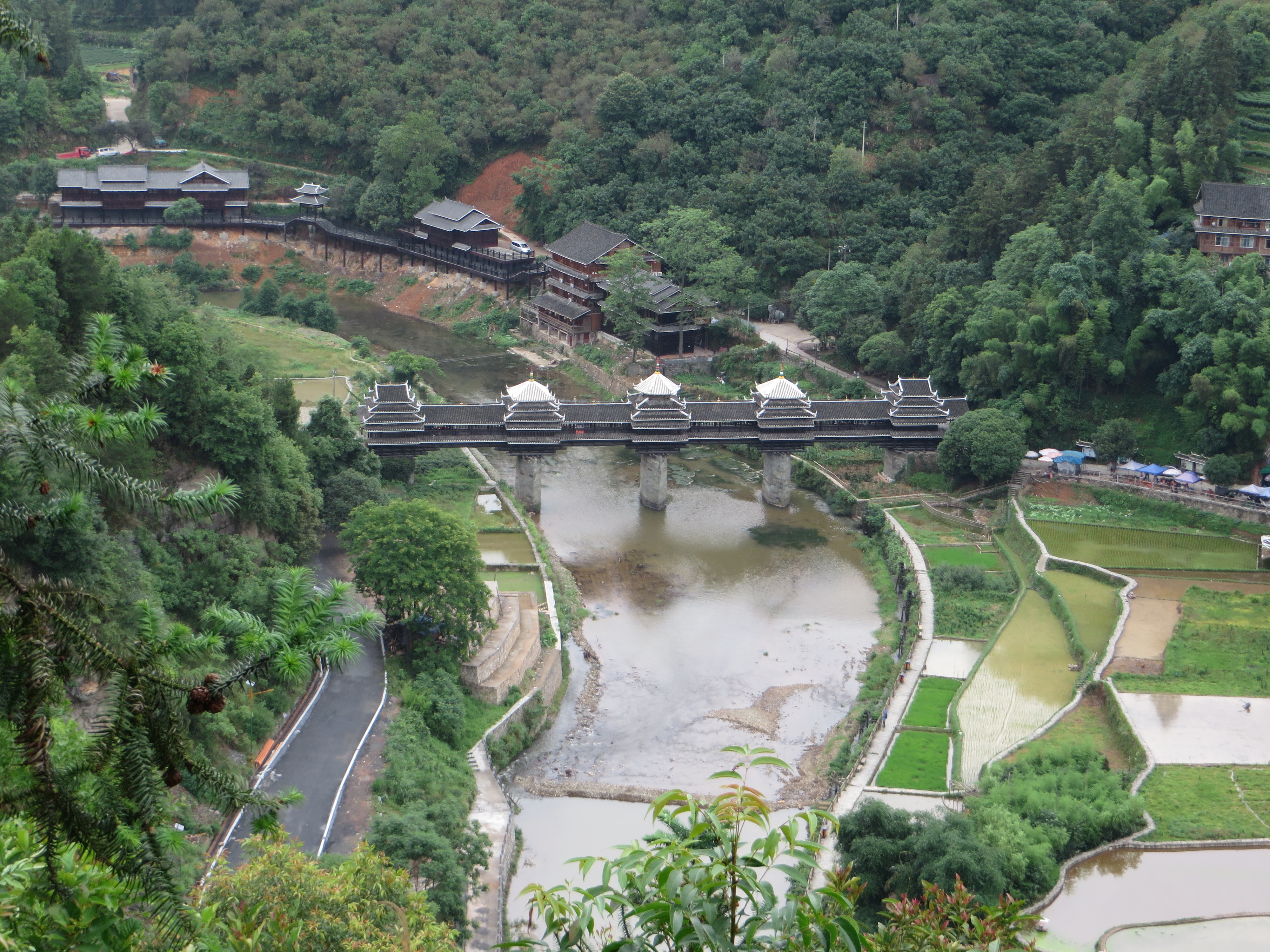
When we left the train we were driven for miles and miles, past towns and villages and then up and up, round snaky corners where vegetation was dripping with moisture. We were in the land of the ethnic minorities. We were going to a Dong minority village that lies amidst the forested hills along the Hunan-Guizhou-Guangxi borders.
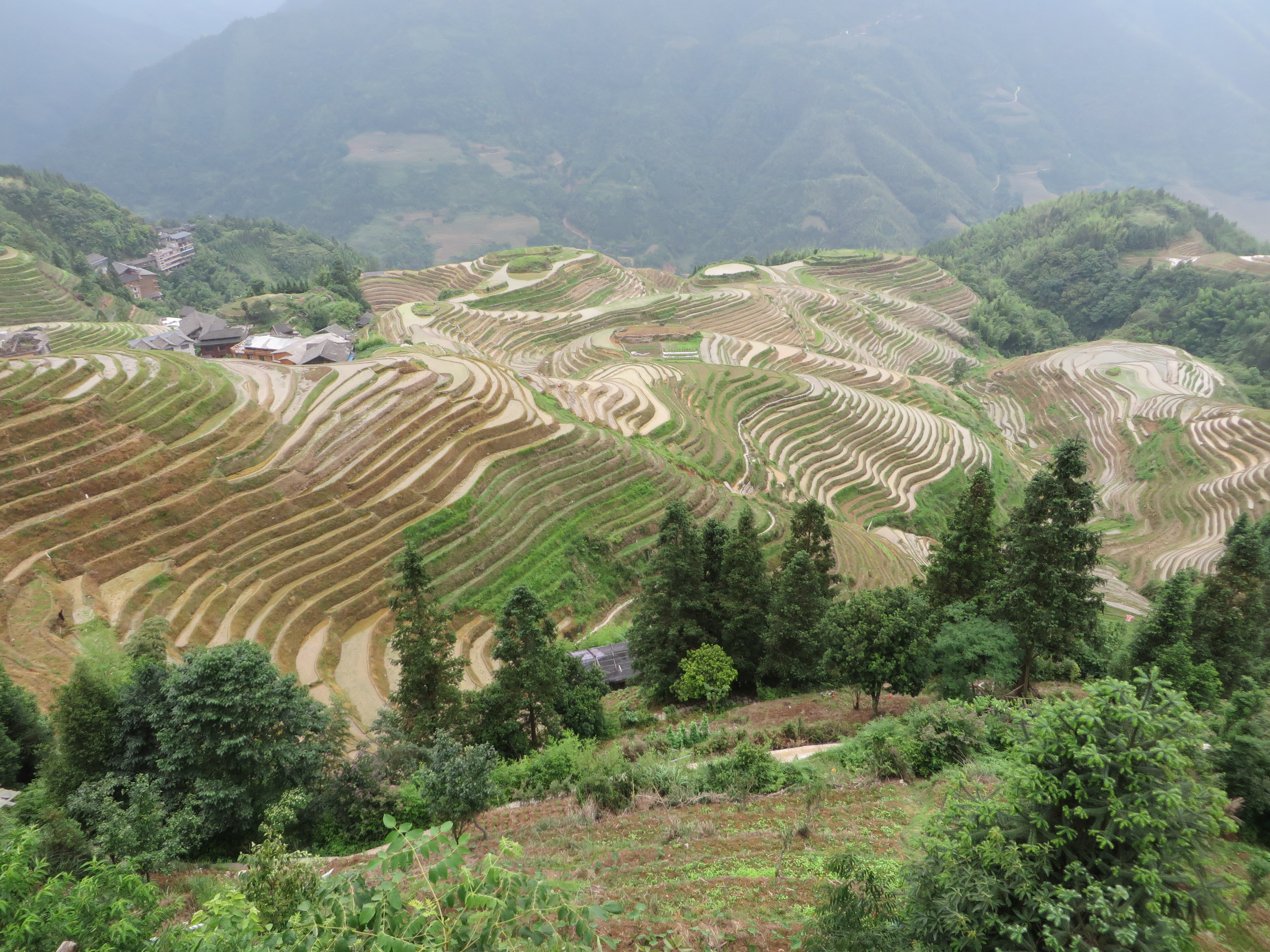
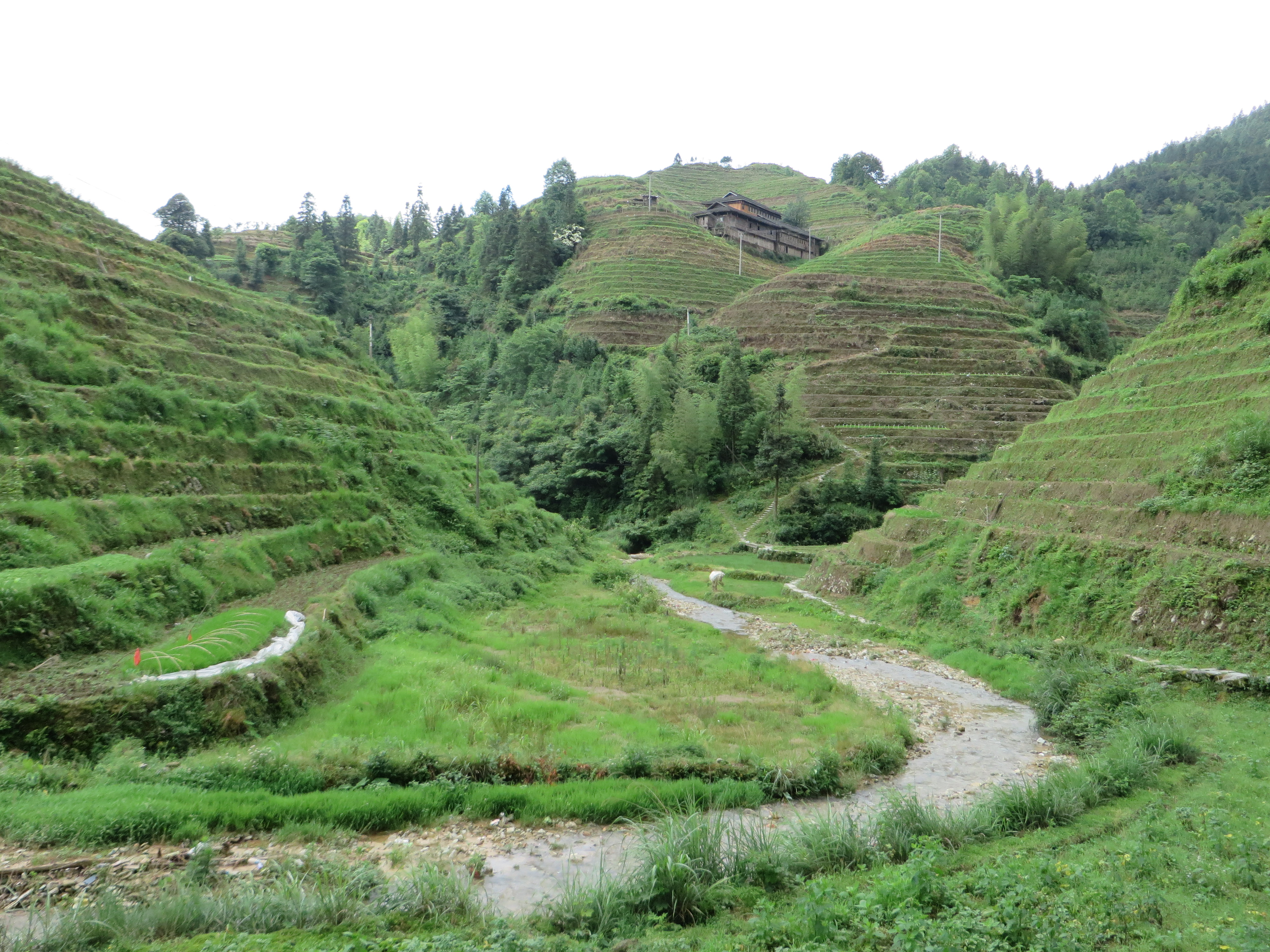
People were once banished here 900 years ago to the so called Blue Sky Prisons, where they suffered inhospitable conditions -murderously hot in summer and bitterly cold in winter. The Emperor thought he was issuing a death sentence, but he didn’t take into account the resilience of these people. Instead of dying, they carved the mountains to their own designs, forced the vegetables and rice to grow and they survived and thrived. A hill wasn’t really a hill, it was just a way of growing rice vertically!

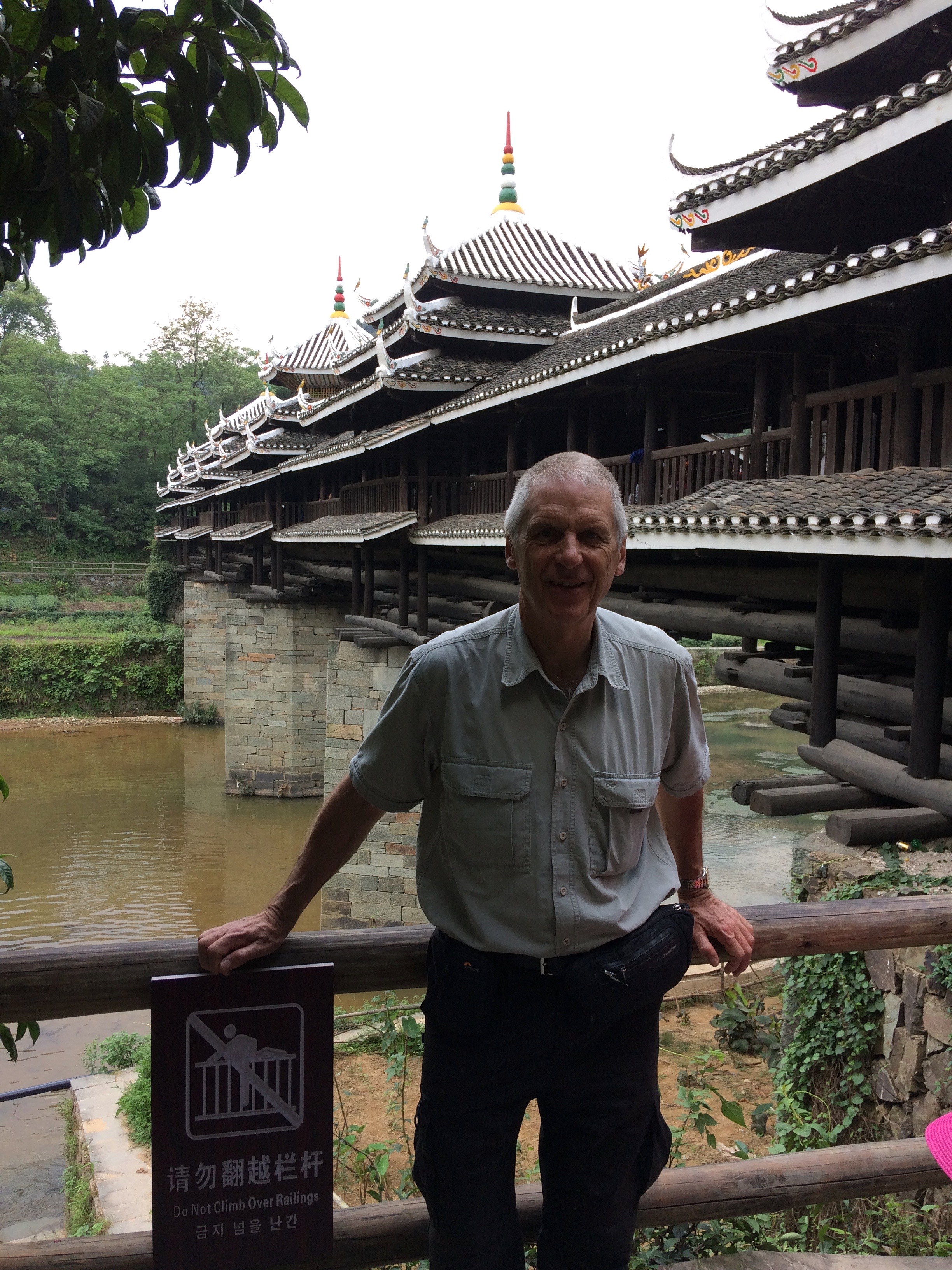
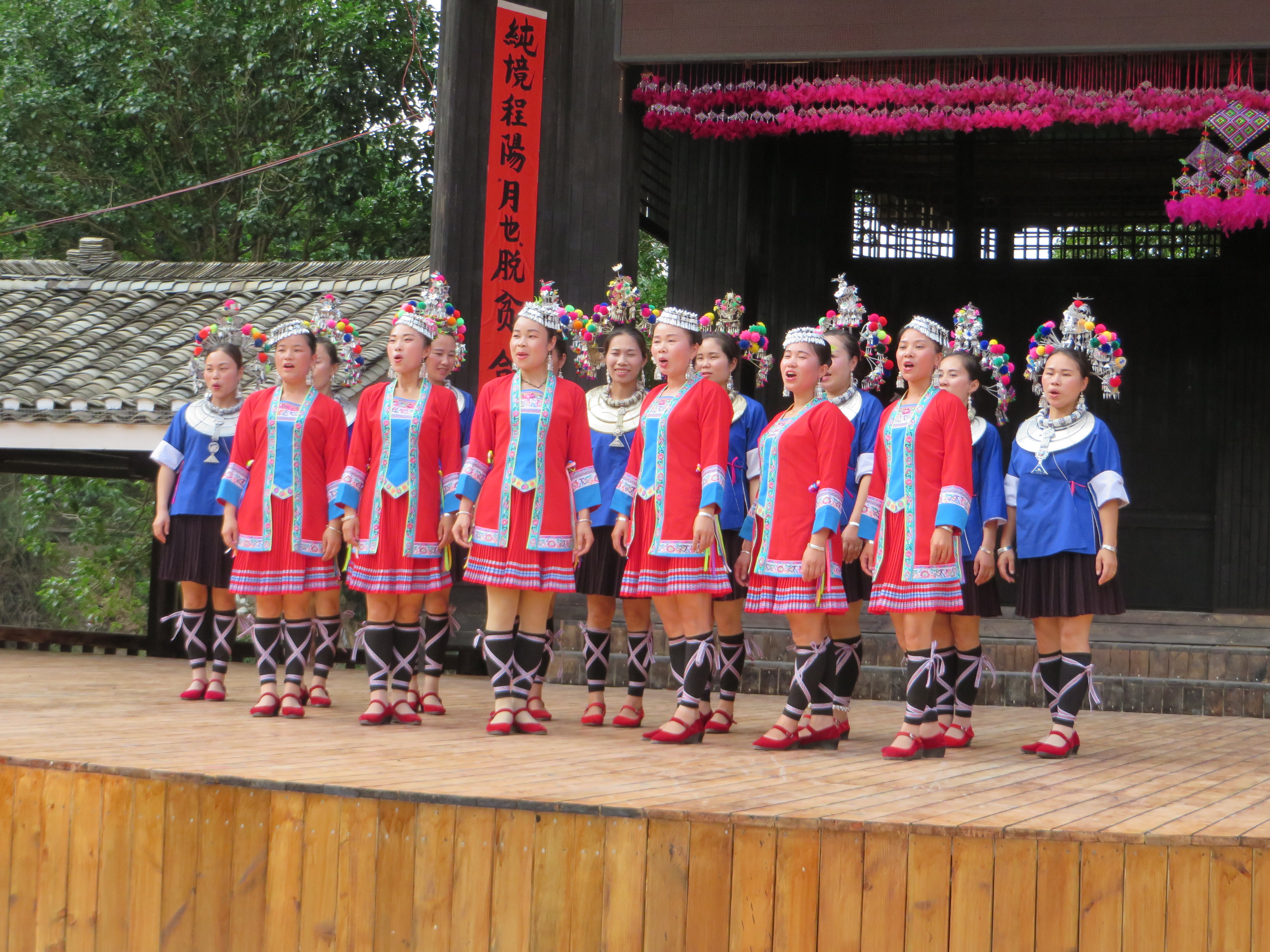
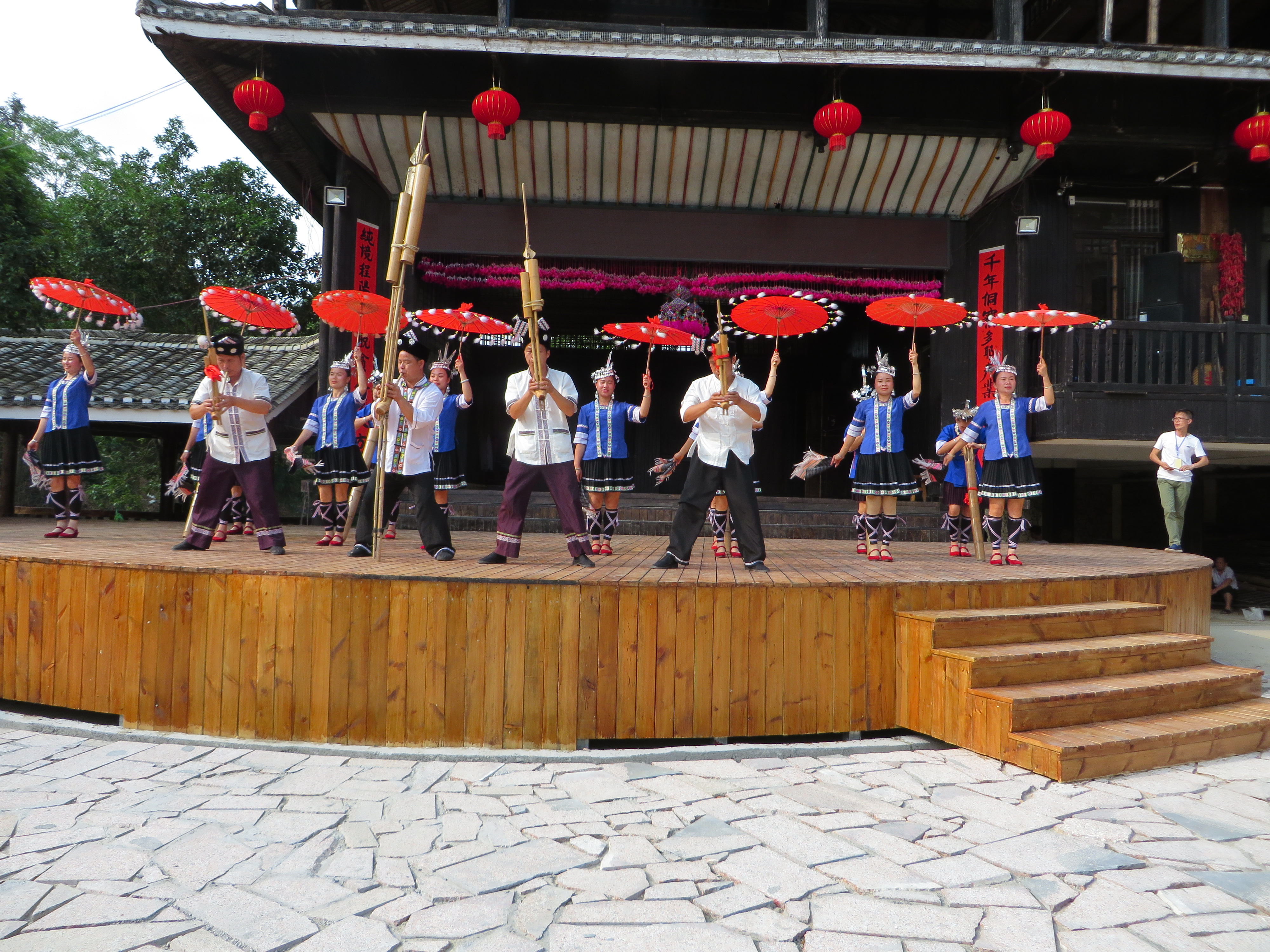
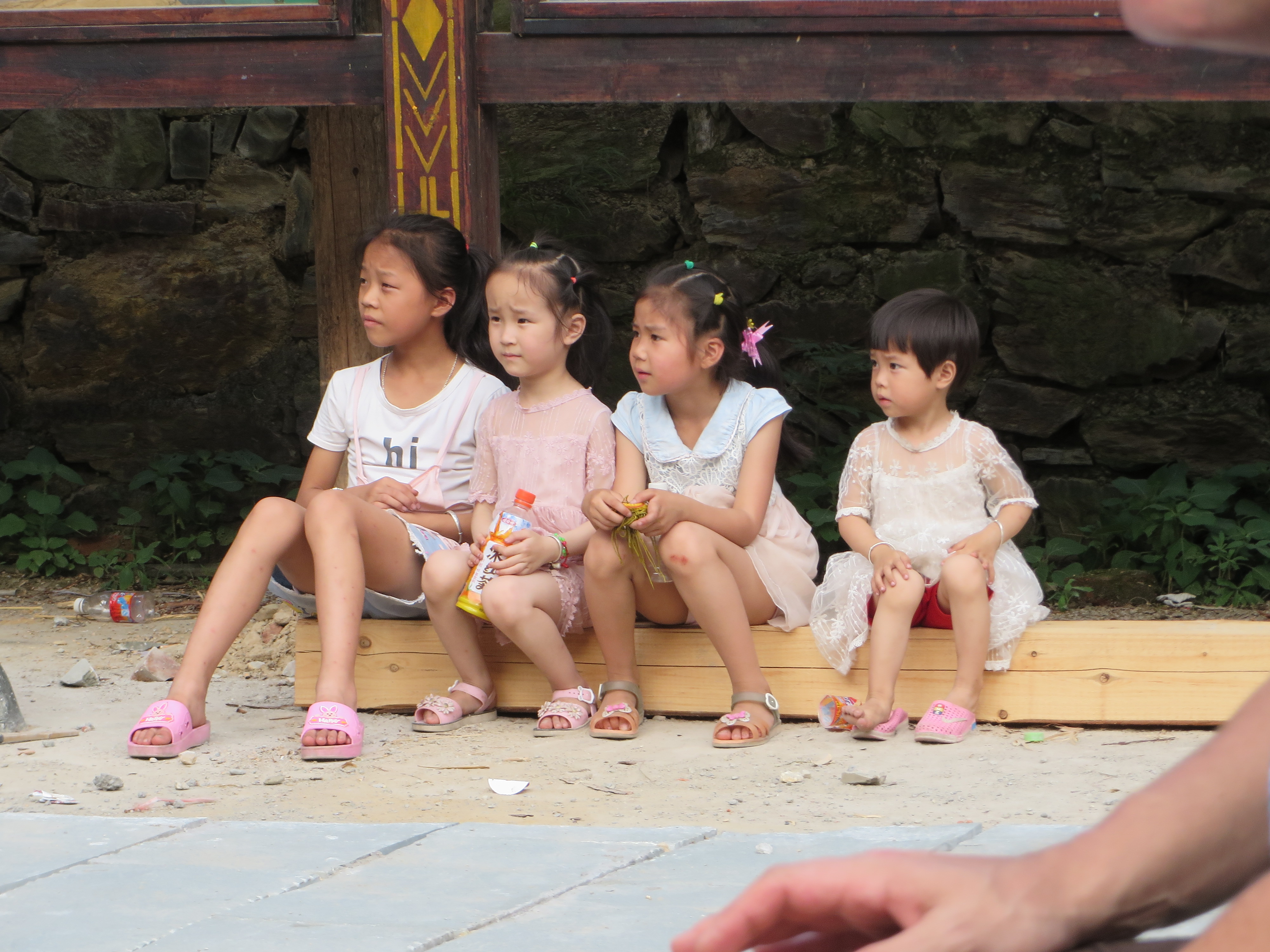
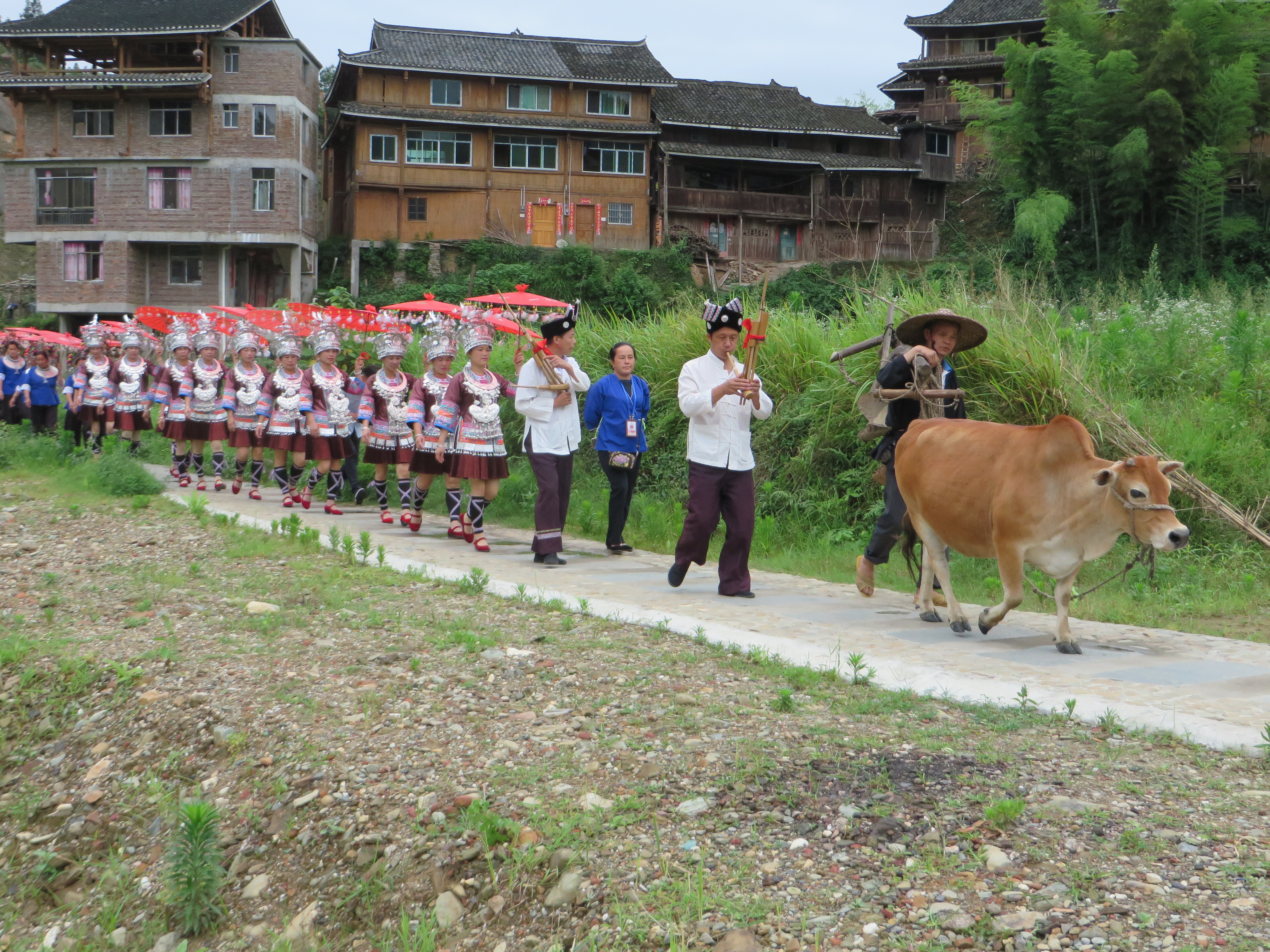
We went along and watched these modern people dance to the traditional tunes of their ancestors, John photographed children and I photographed grannies.


We looked in Drum Towers,
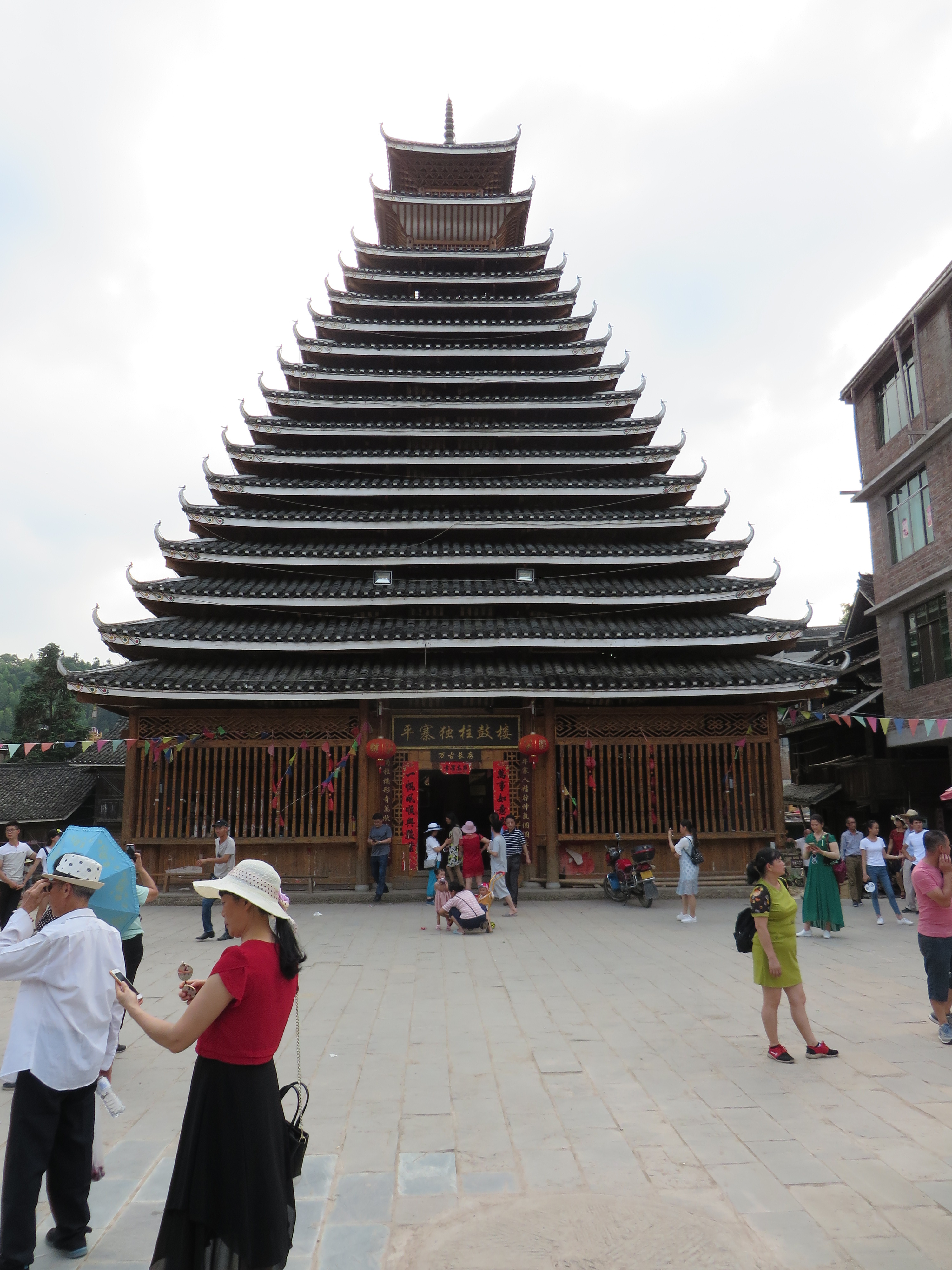
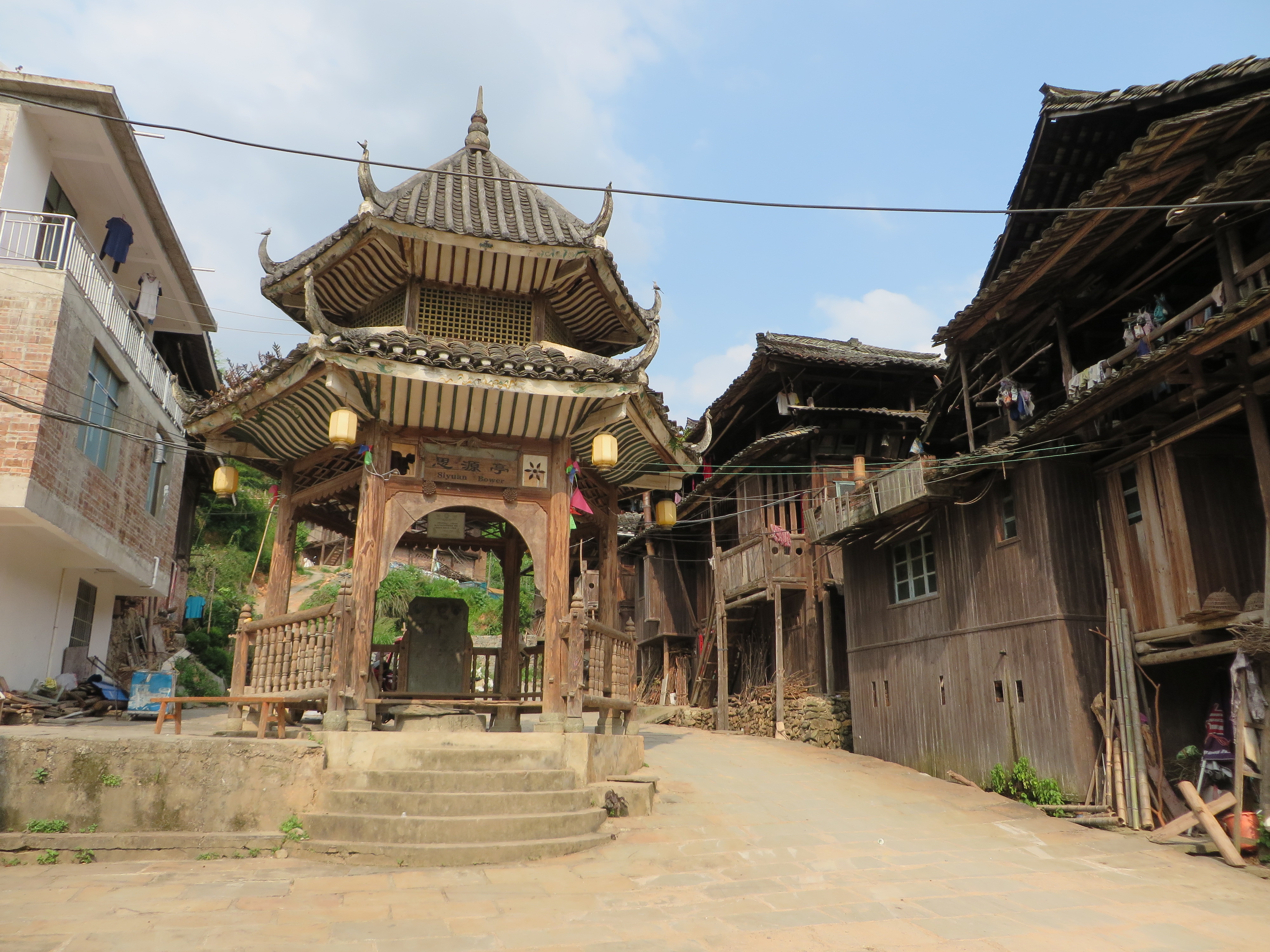
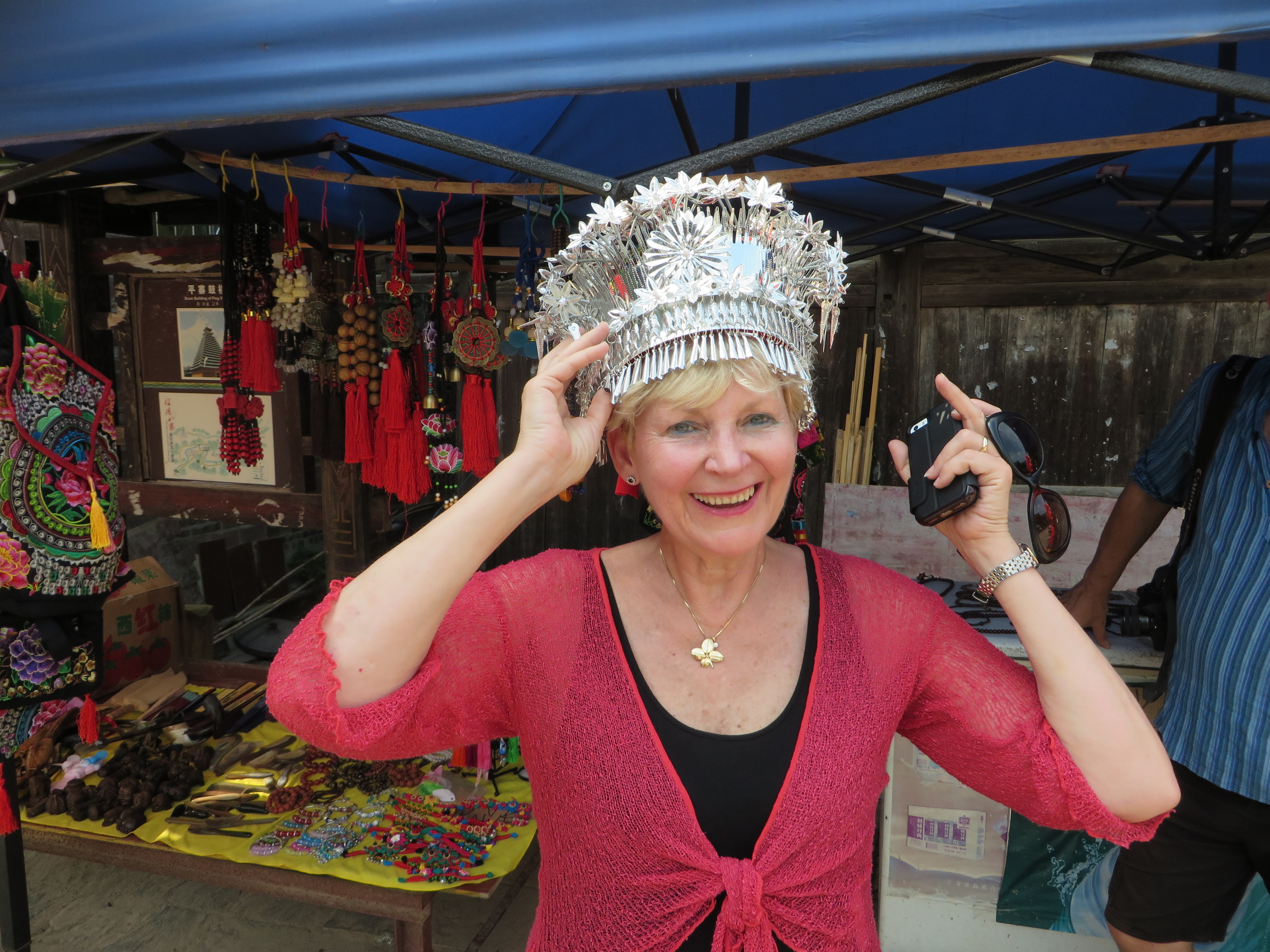
the communal village meeting houses where people watched TV together, played ping pong, or gossiped and paraded around with crystal chandeliers on their heads.
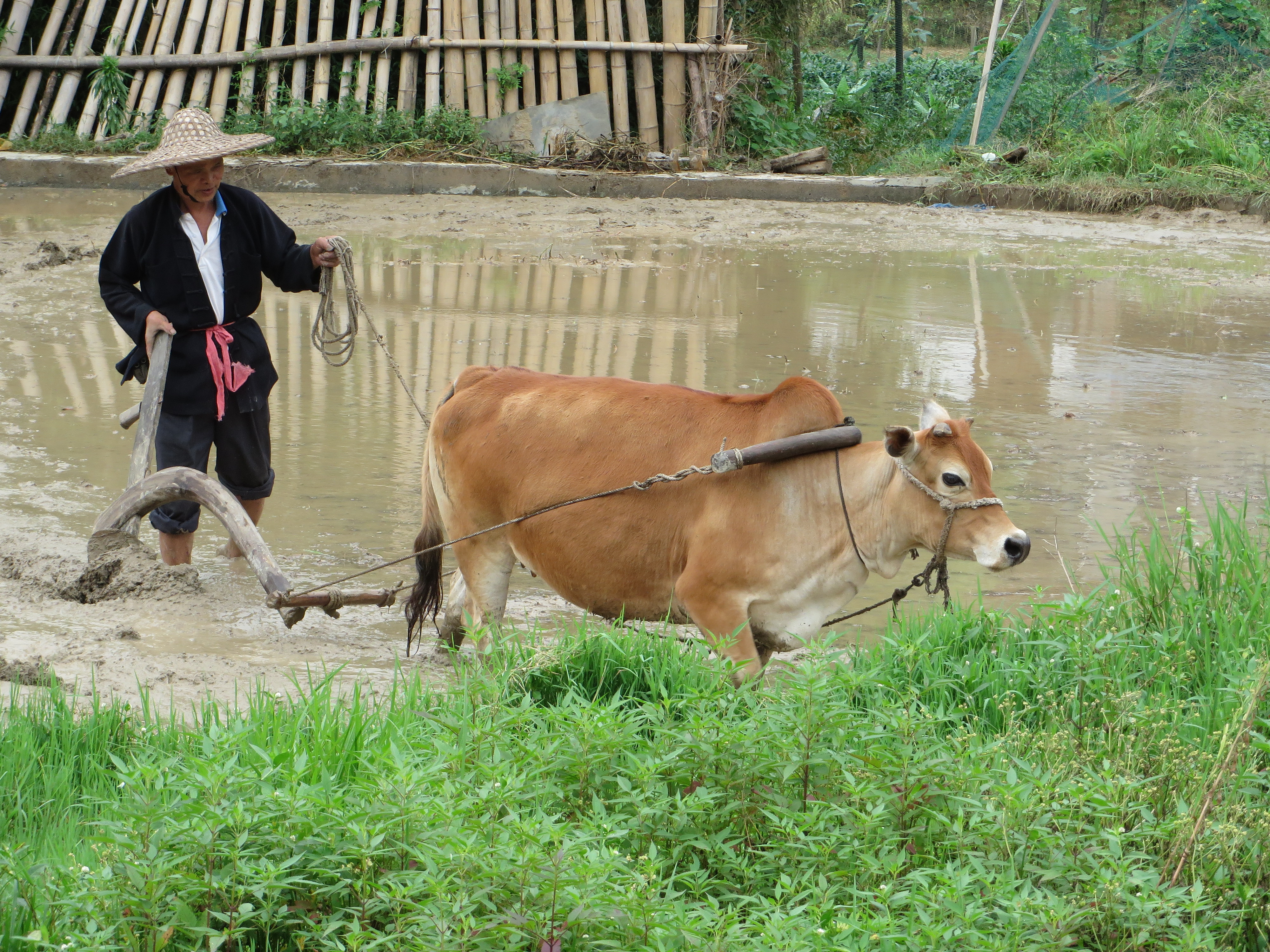
The next day Frank announced that there were to be no more busses – instead we must hike, up to 2000 m across the ‘Dragon’s backbone’ – way into the mists and swirling rice fields where lonely farmers bent and hoed the muddy clay earth,
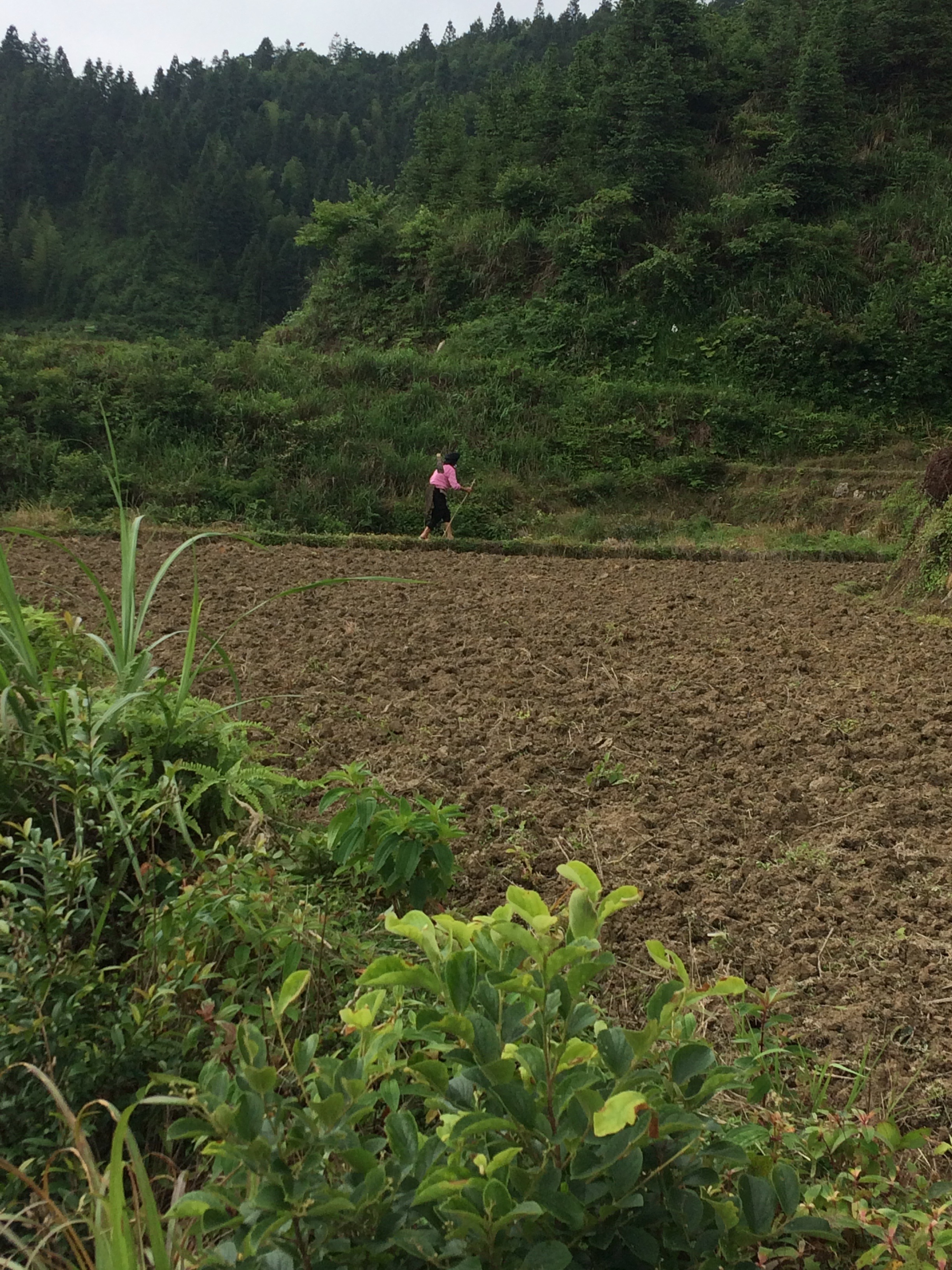
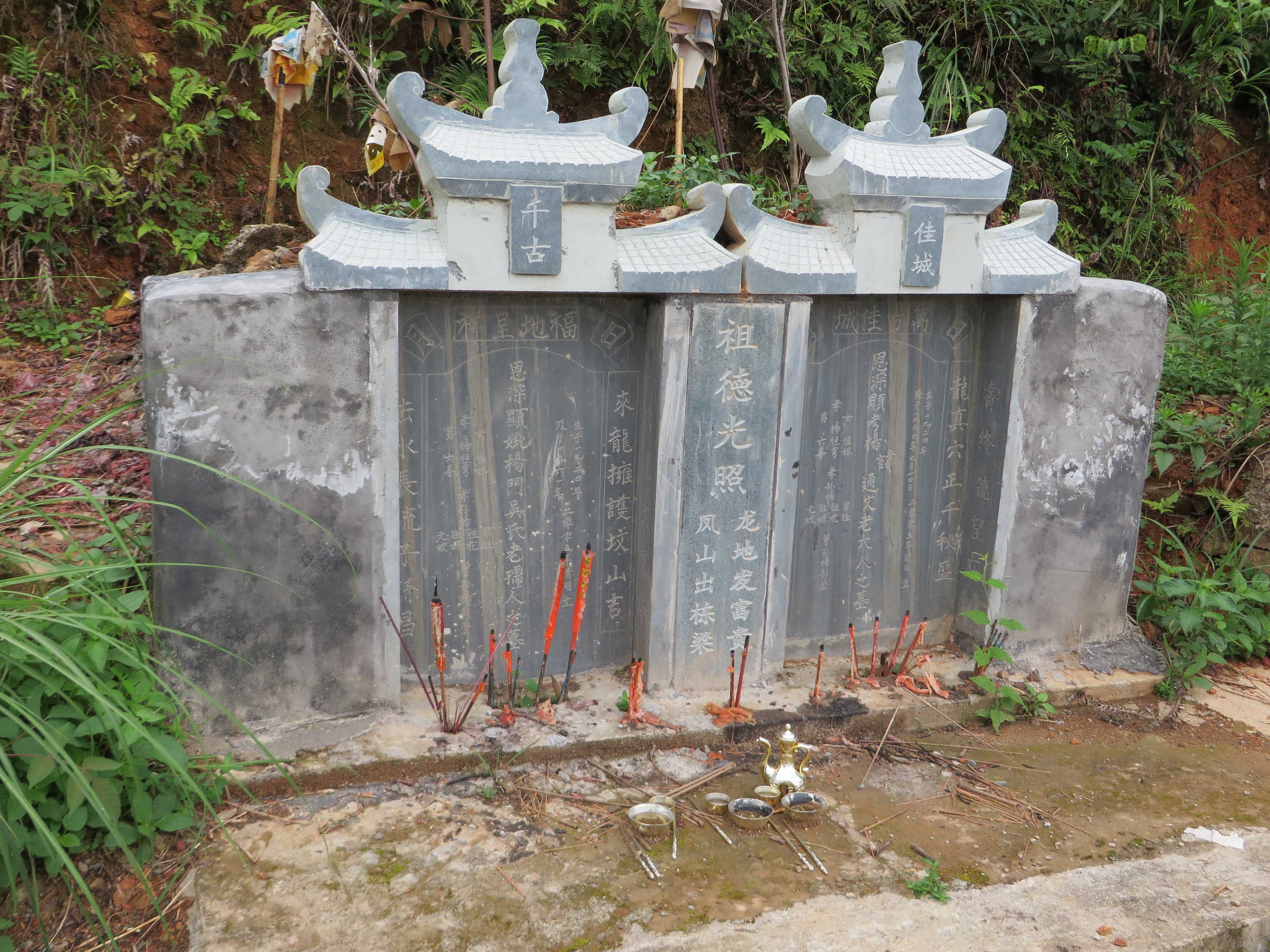
and where the graves of their relations nestled into the hillsides, adorned with paper money and flowers.
These Zhuang people, the largest of China’s minority groups, can trace their ancestry back to the Tai, who migrated south from central China some 5000 years ago.

Valiantly we followed our leader.


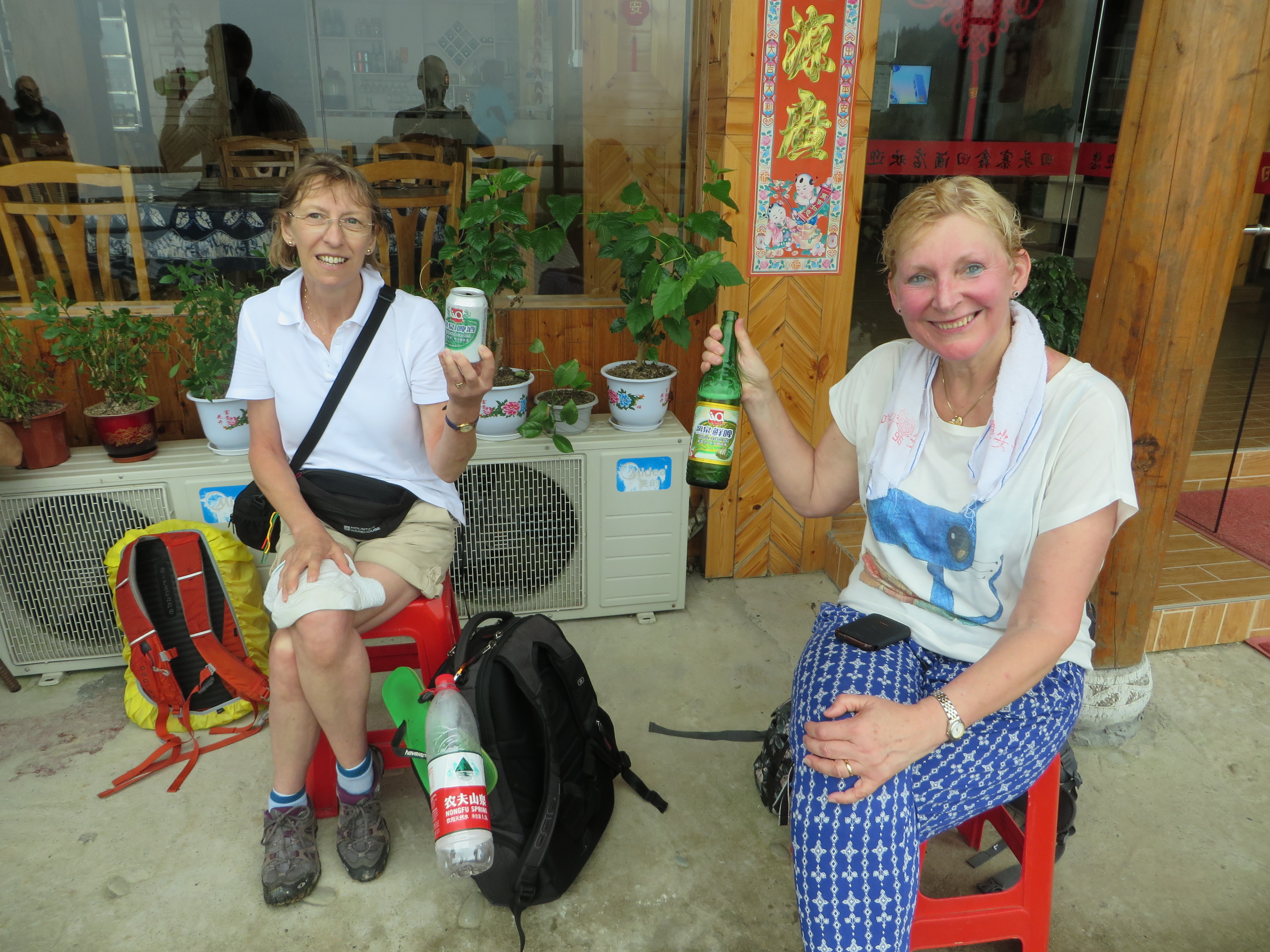
When we arrived at our guesthouse, panting with exertion, suddenly spread below us was a scene from Shangri La. The mists swirled, before finally settling, and we ate vegetables and pork and chicken and drank cold Chinese beer. We slept soundly before waking to a world of cloud. Could this be heaven?
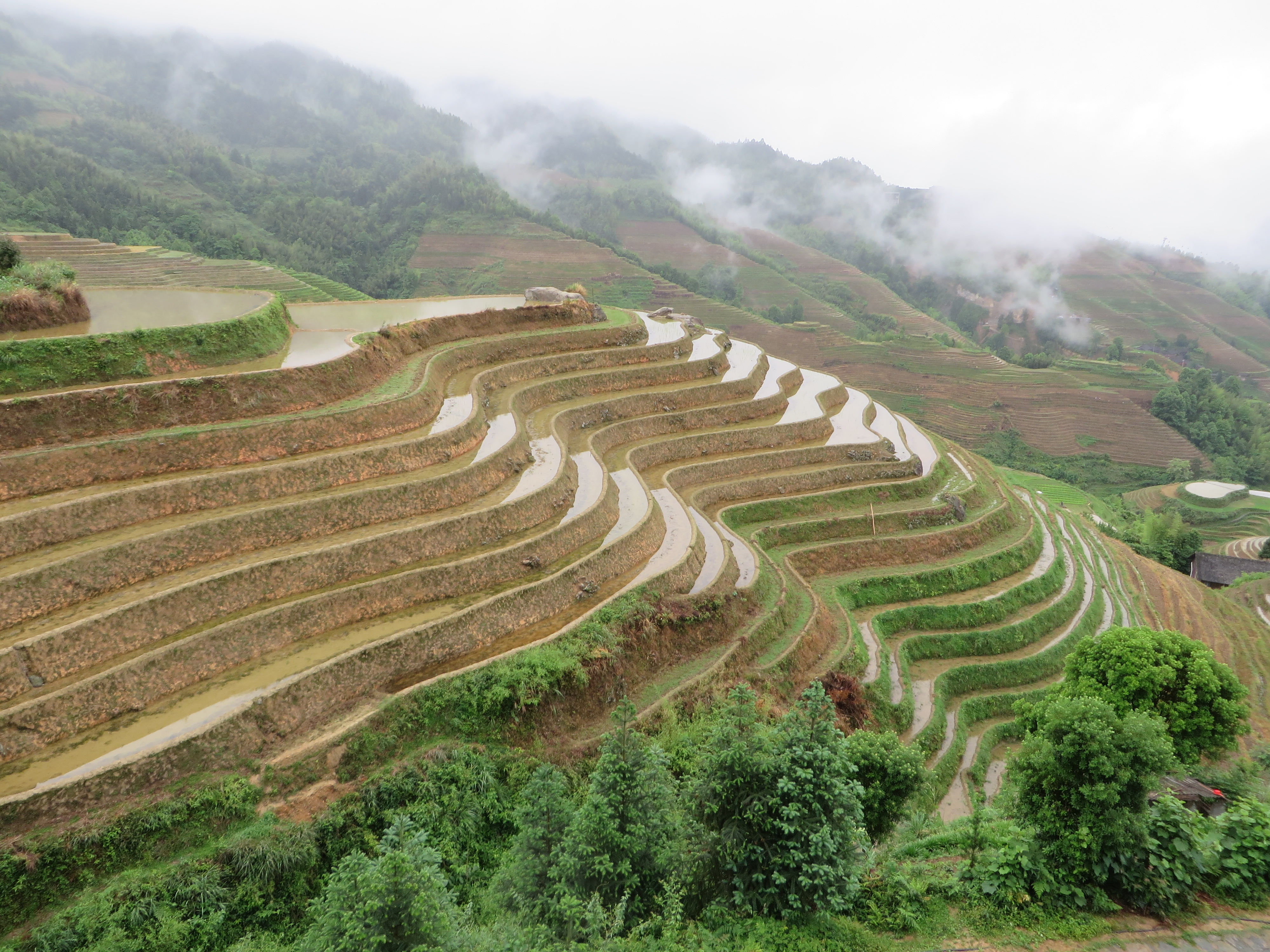
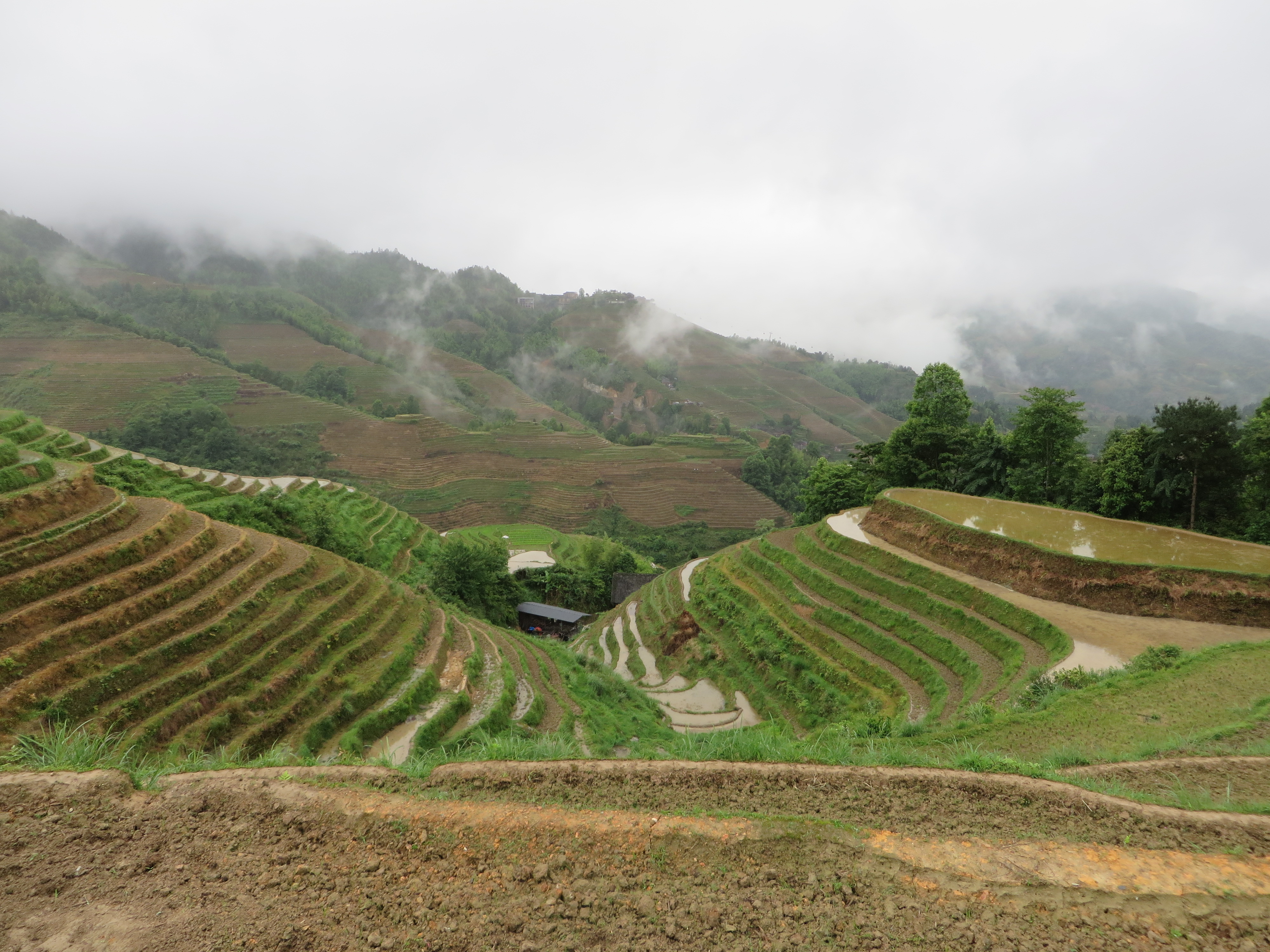


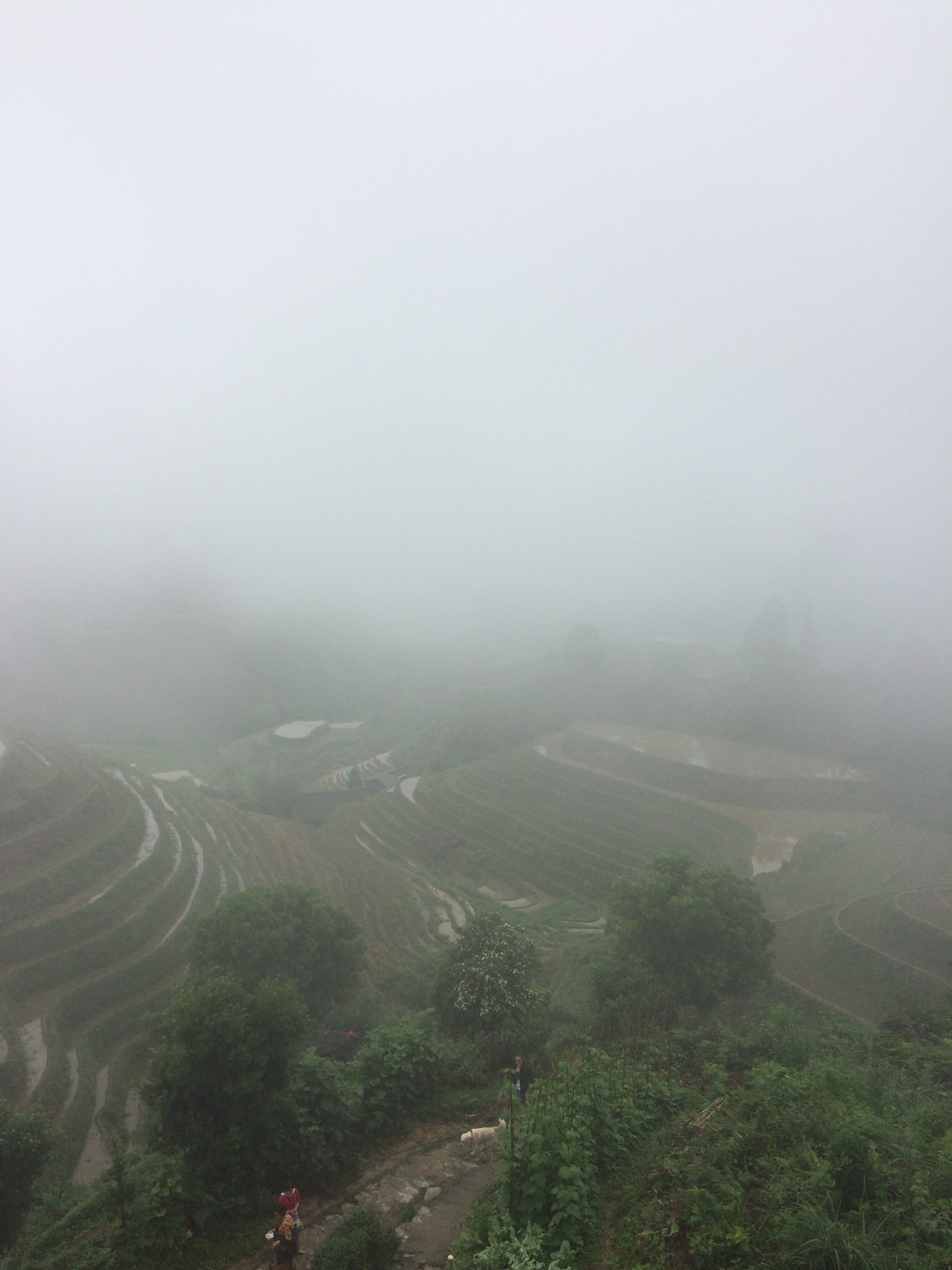
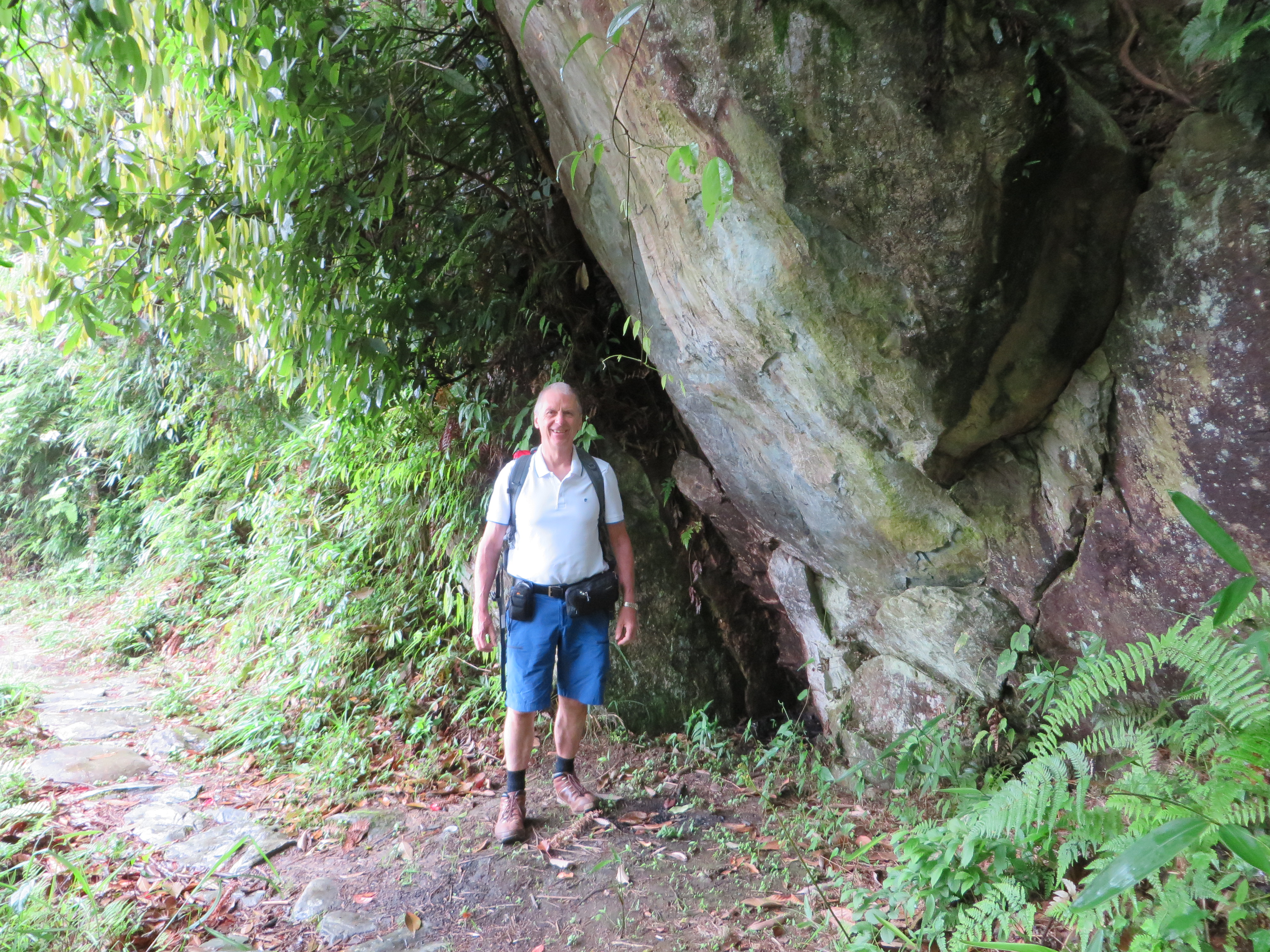
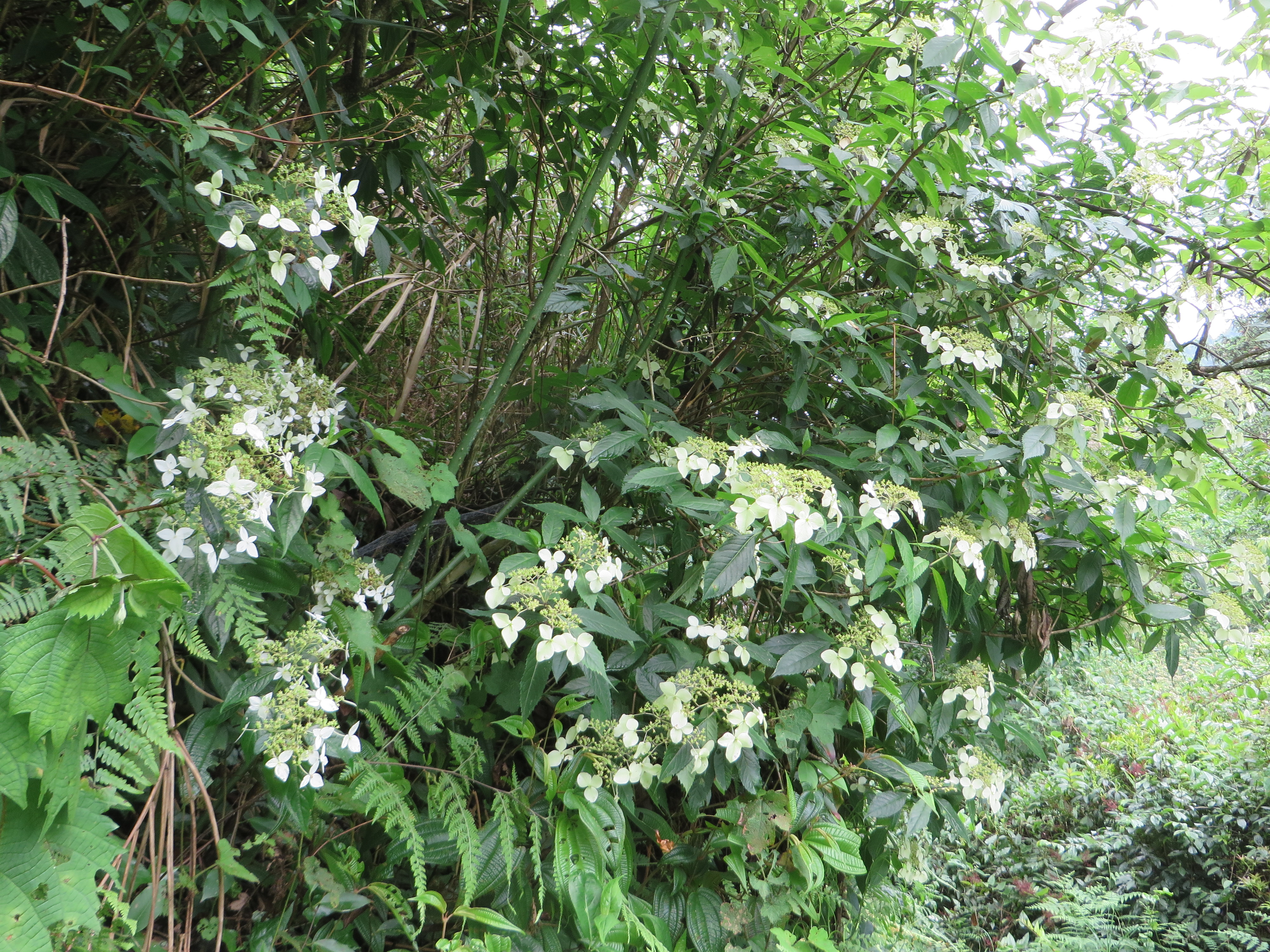
We set off again, hiking up peaks and down, stopping to admire a butterfly, a rice field or a grave. We saw white hydrangeas growing like weeds and still we climbed, muscles screaming, up into the sky and still the rice paddies circled around us.


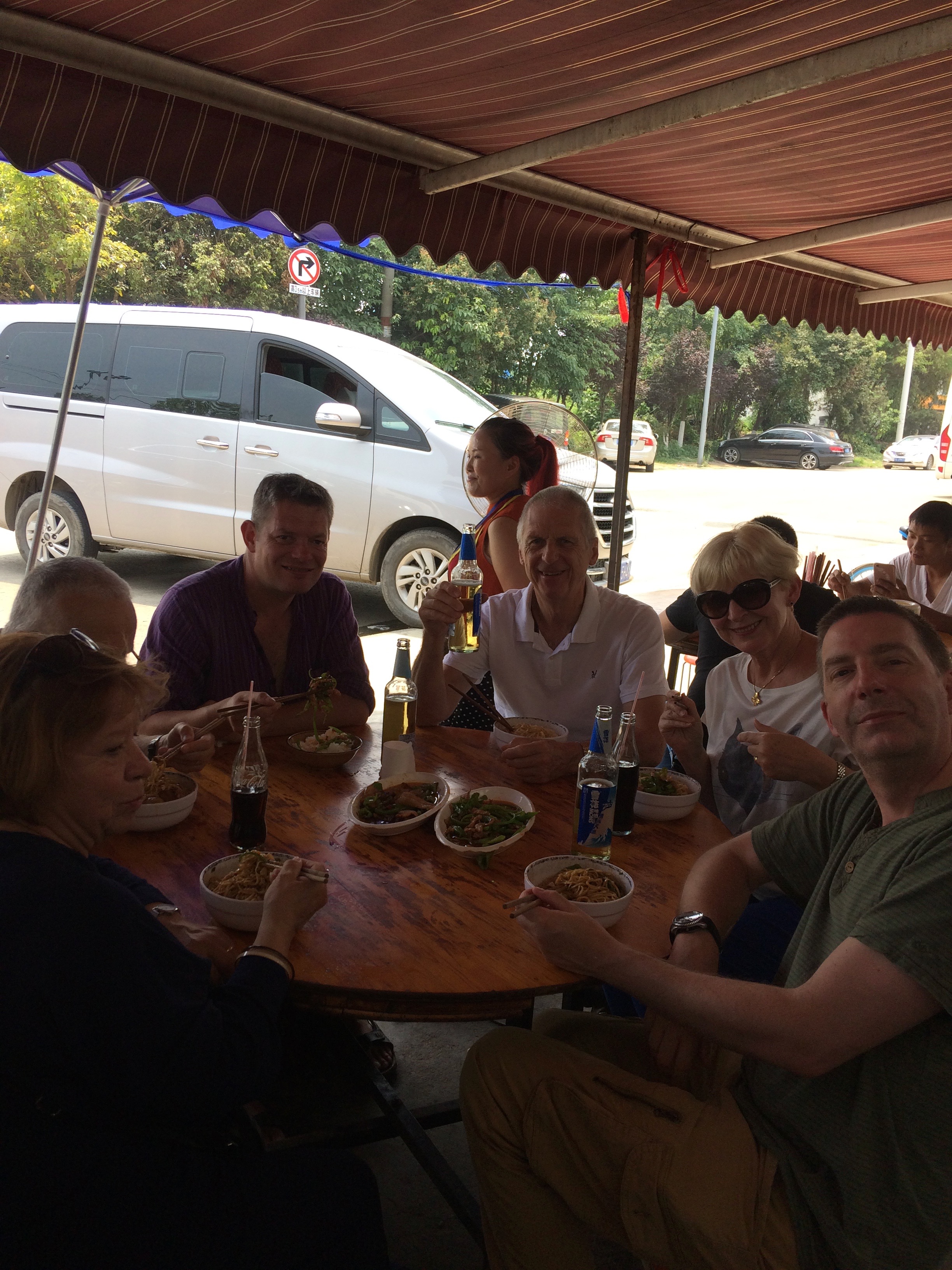
It may once have been the blue sky prison but now this region attracts tourists from all around the world. That night in Ping An, as we ate around our Lazy Susan, we shared a dining room with Dutch and German tourists. They had come up another way, by bus. They had only to walk about half an hour to get to this lofty elevation.
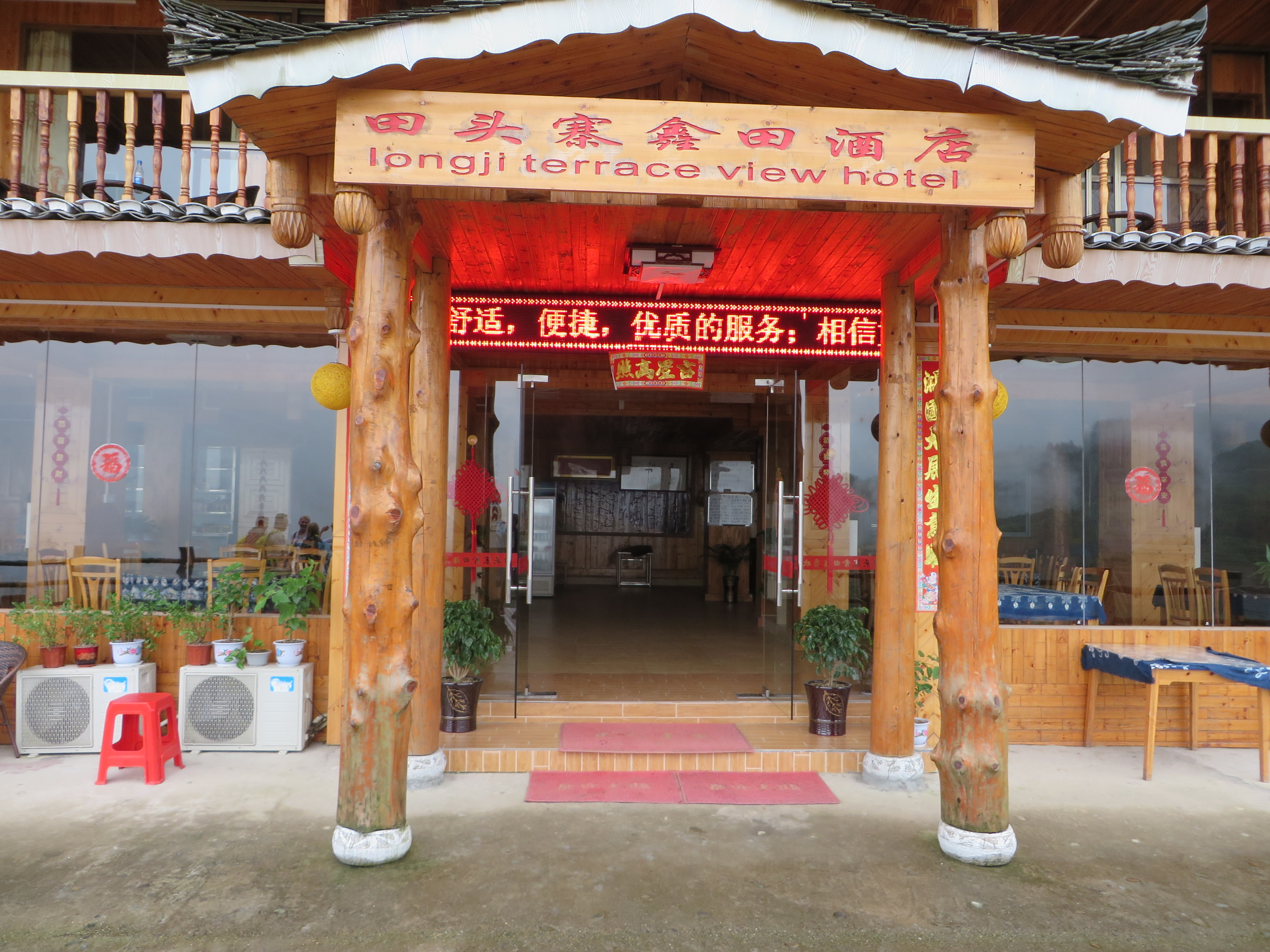
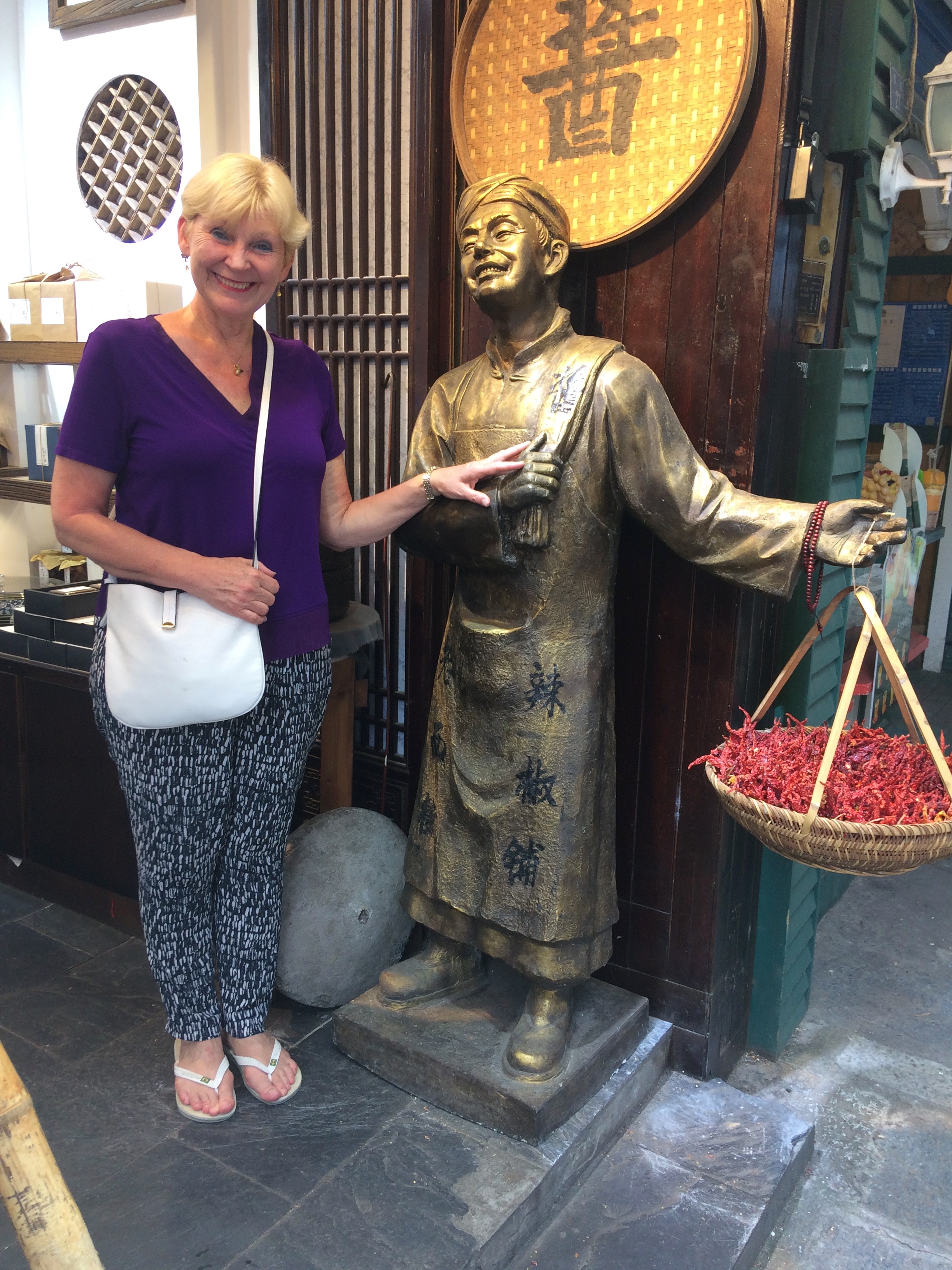
We bought silly knickknacks from gorgeous grannies and stunning girls. The Sichuan pepper man was dressed in military uniform as though he had just deserted. He was about eighty. He shook John’s hand mightily. It was only a small transaction, just a pouch of pepper but – ‘let’s shake on it!’ I asked Frank if he had made friends with the ethnic minority people, after all he had been bringing groups to these parts for the last seventeen years. He said, ‘Not really, I am Han Chinese, the majority group in China; the ethnic Dong tend to keep to themselves, they are friendly but they don’t take you into their hearts.’
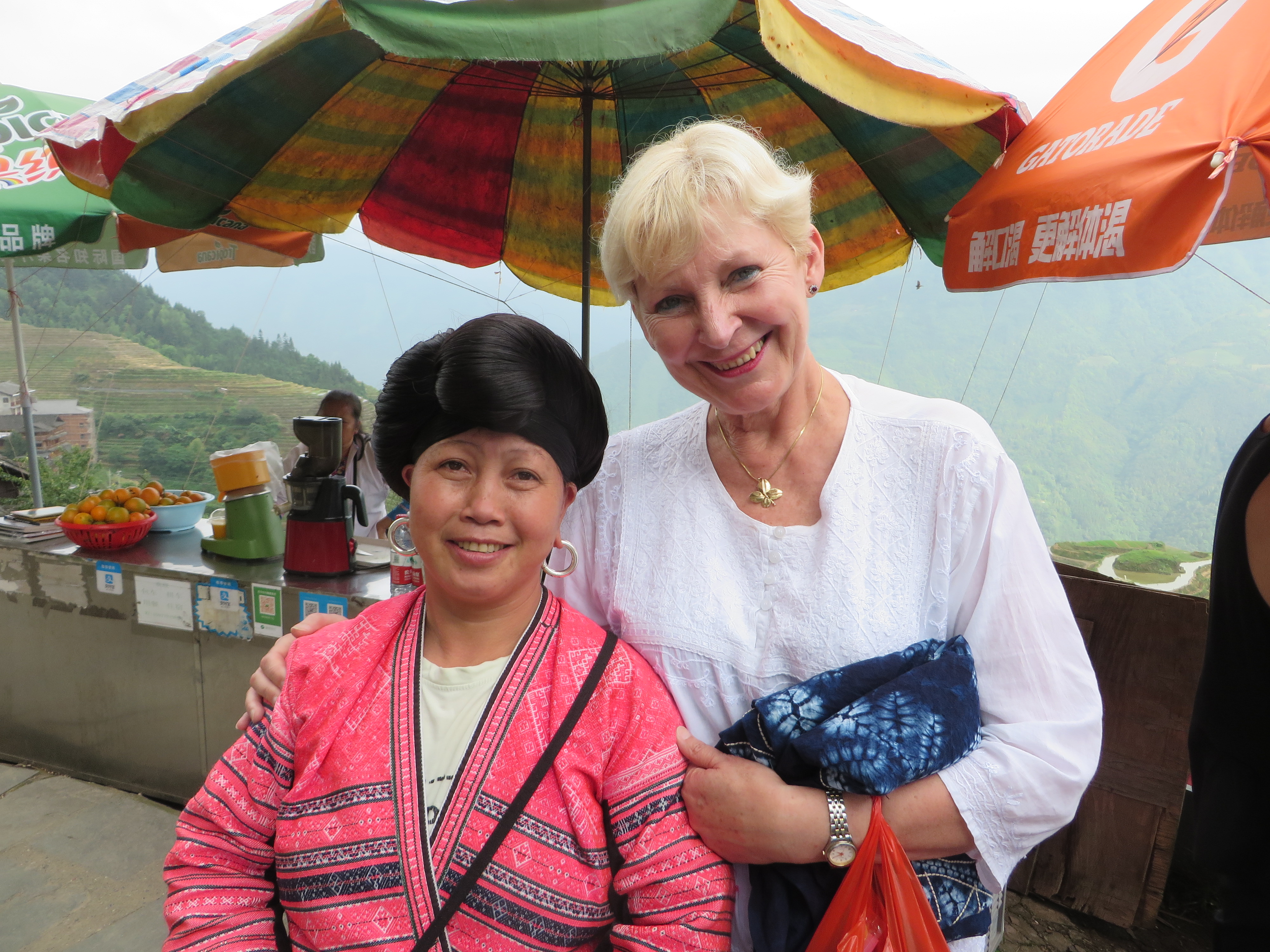
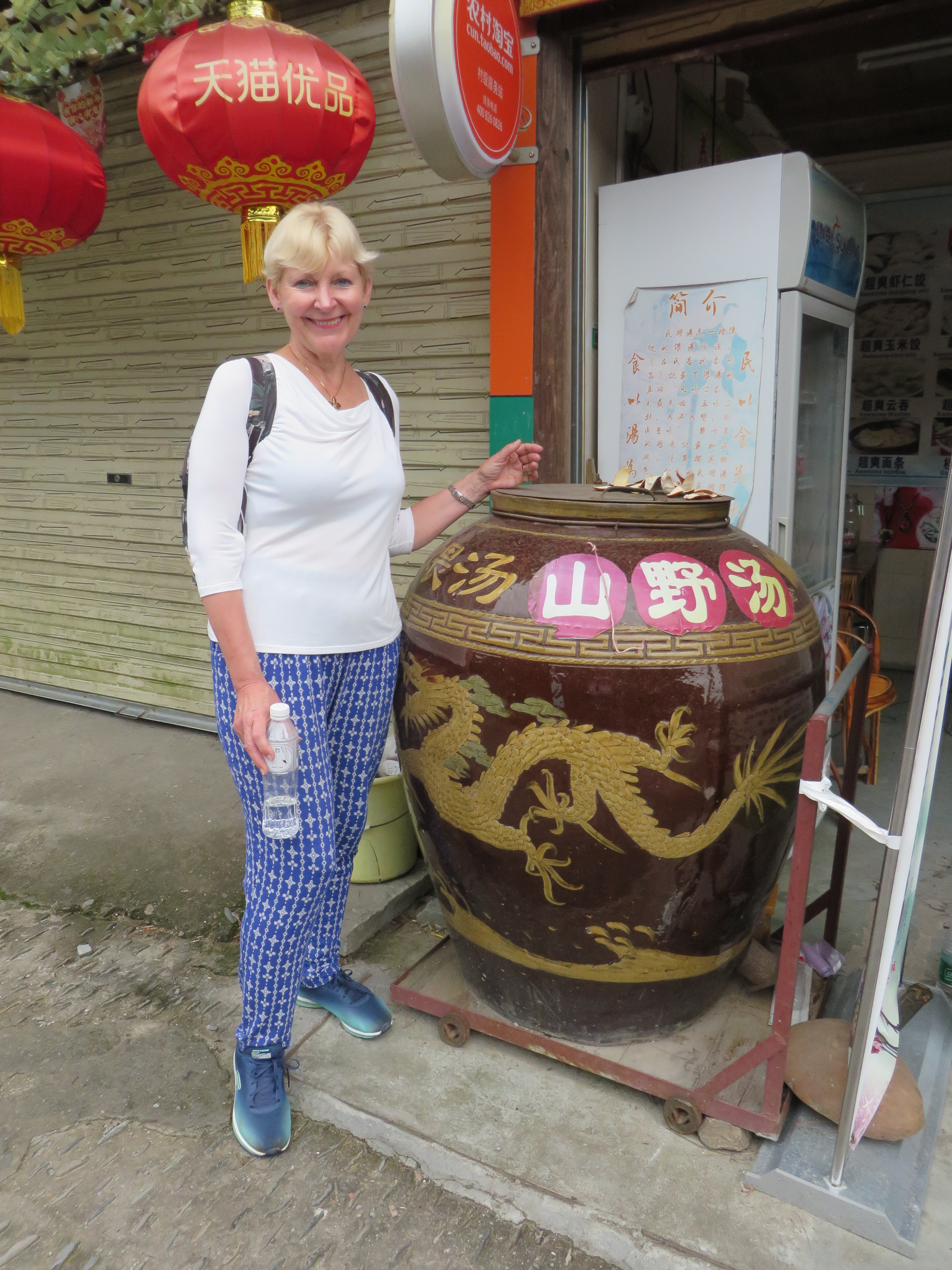
I was quite sad to leave Ping An. We snaked back down the mountain and then drove for three hours to Yangshuo. We drove through towns with shop names that said “Happy Life, Happy to have YOU”. We drove down avenues of larch/pine for miles and miles, passed verdant agriculture and pristine orchards. The trees standing as though they were on parade and in the distance there were more trees, like lollipops silhouetted against a washed out sky.
Chinese painters have such a perfect, endless canvas of choice. Distant mountains receding in hues of emerald through to eau de nil.
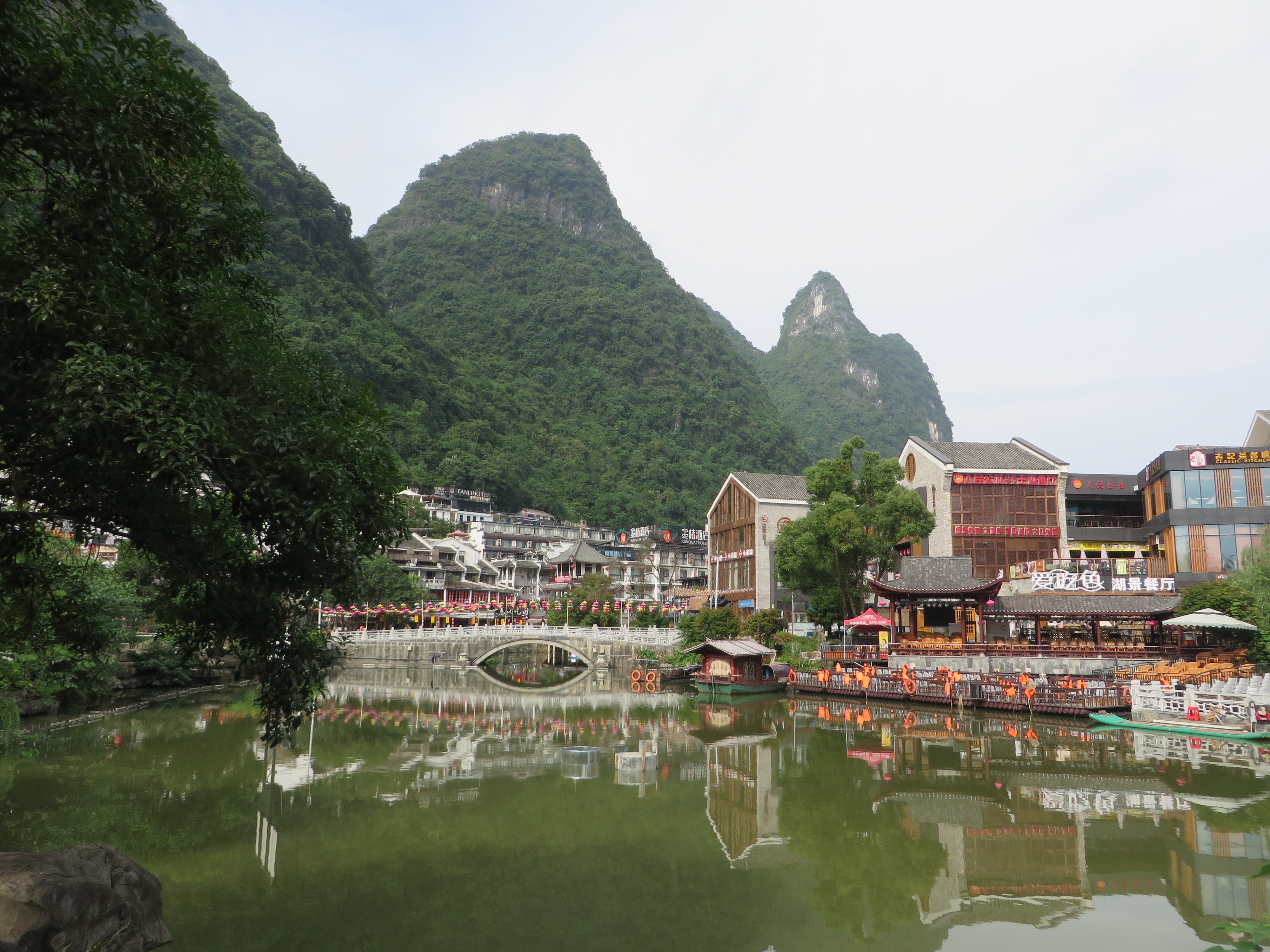
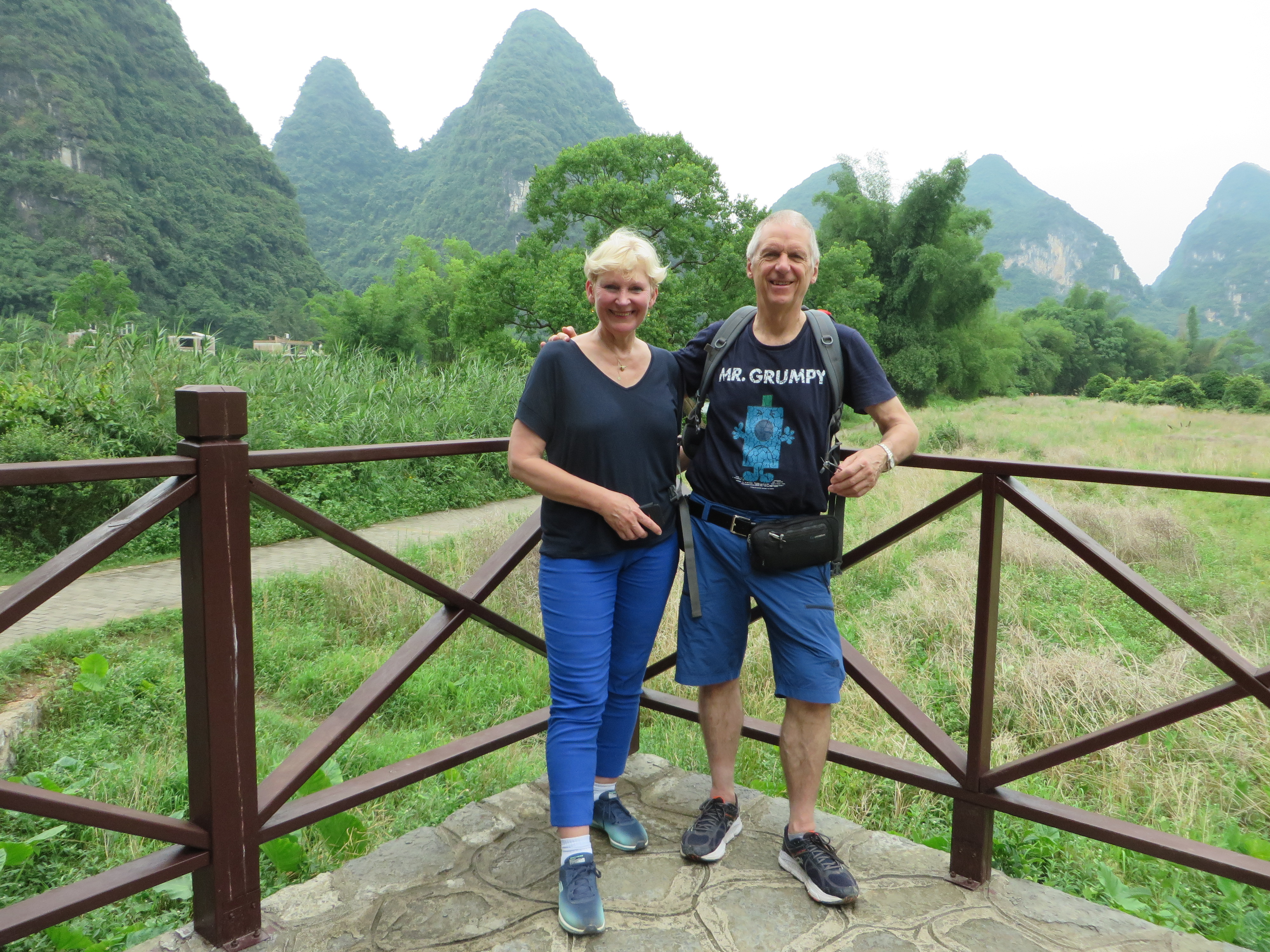
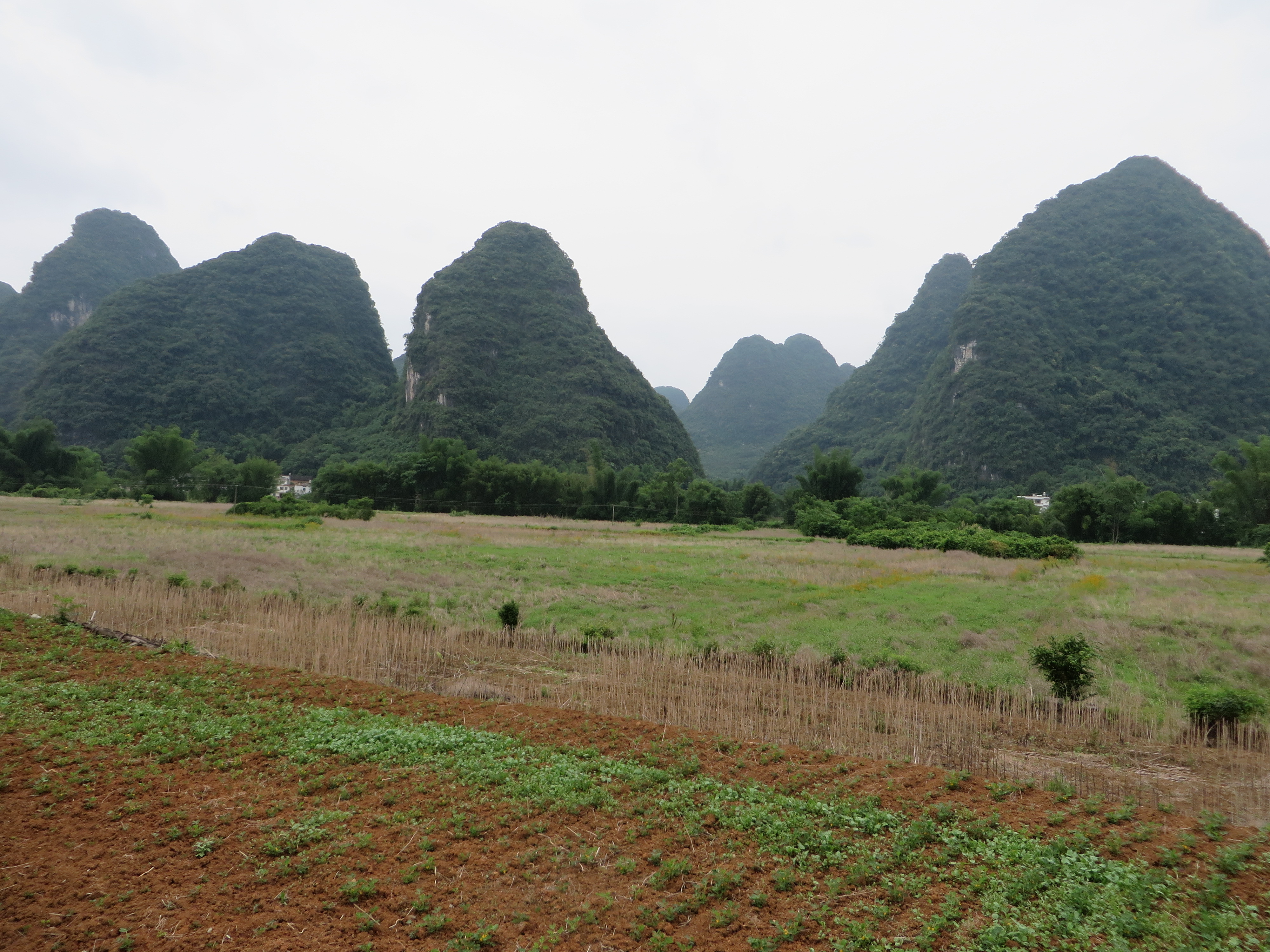
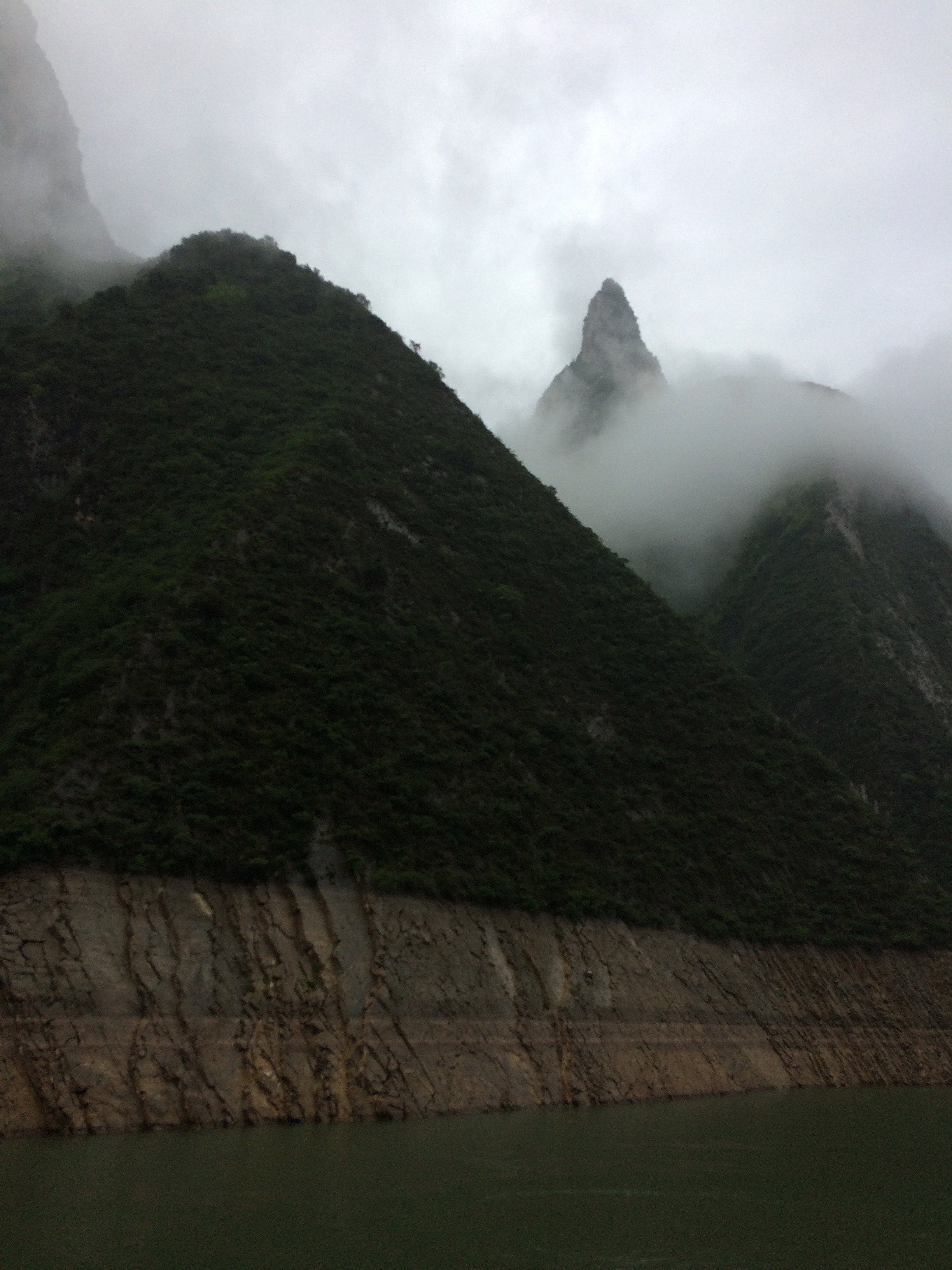
And then finally we came to Yangshuo, set beneath a backdrop of towering karst mountains amongst some of the most scenic landscapes that China can offer. The bizarre array of dome-like pinnacles and towers are of the same family as those in Halong Bay in Vietnam. Oh wow!
Yangshuo – 29thMay
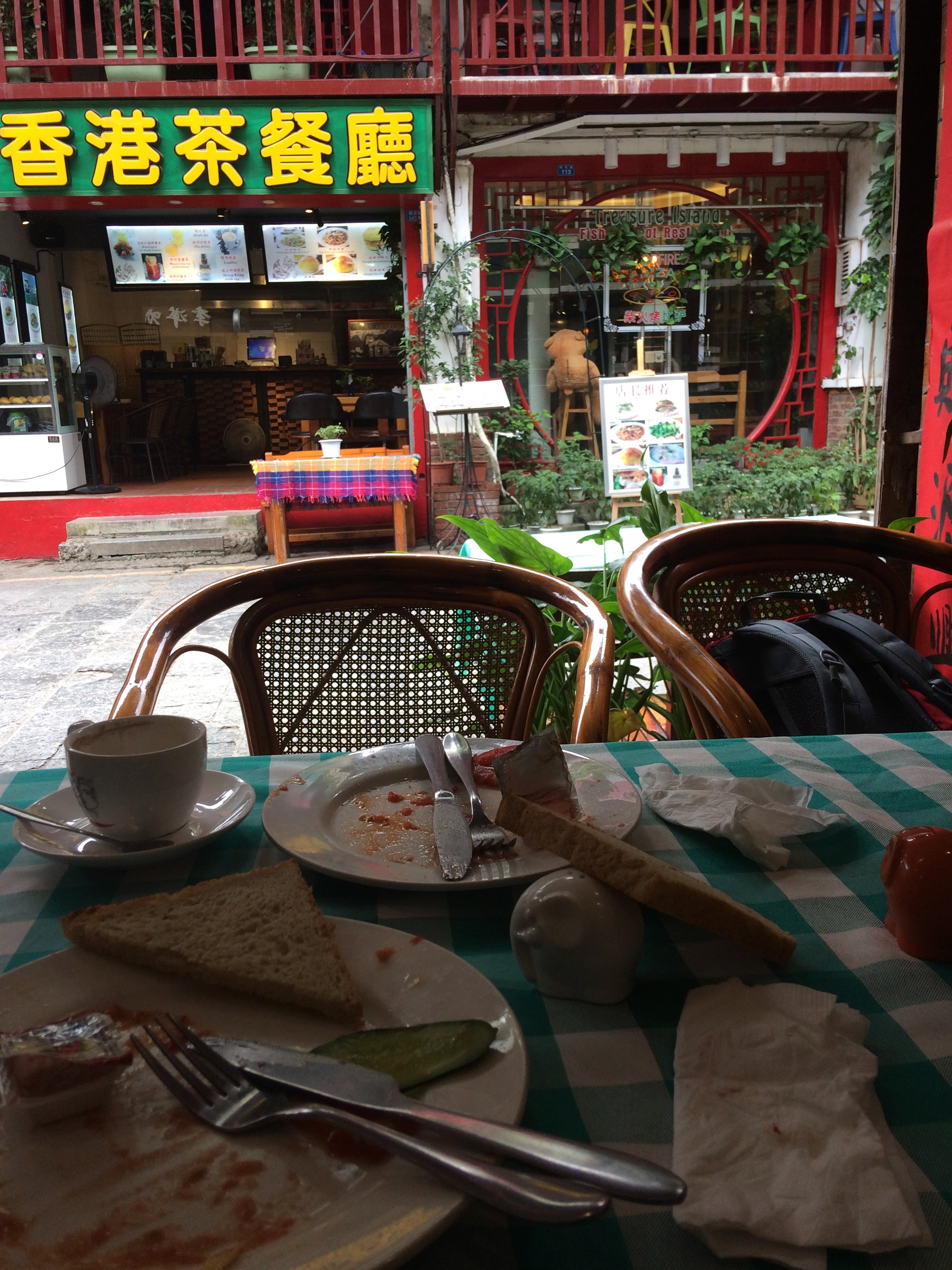
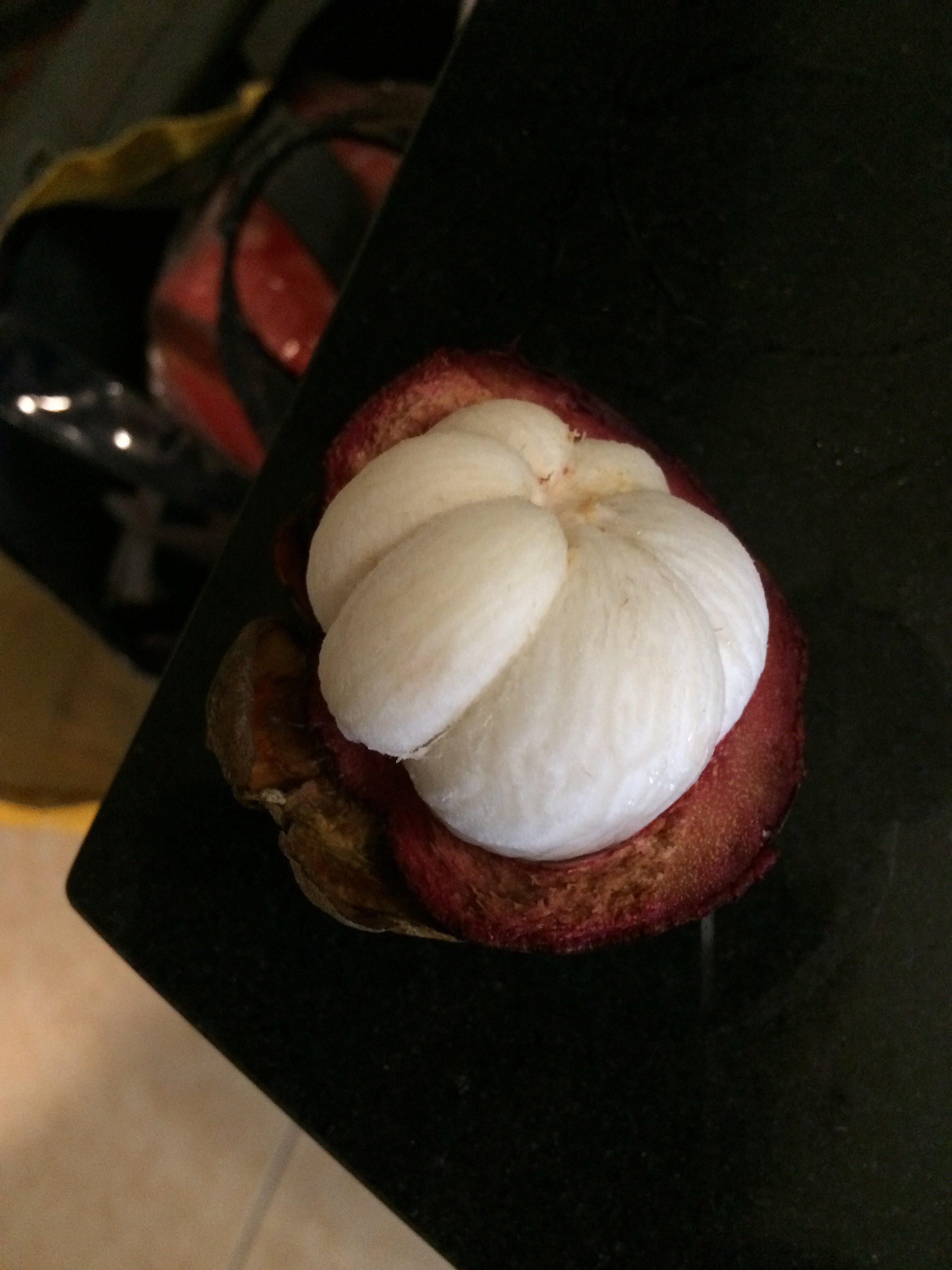
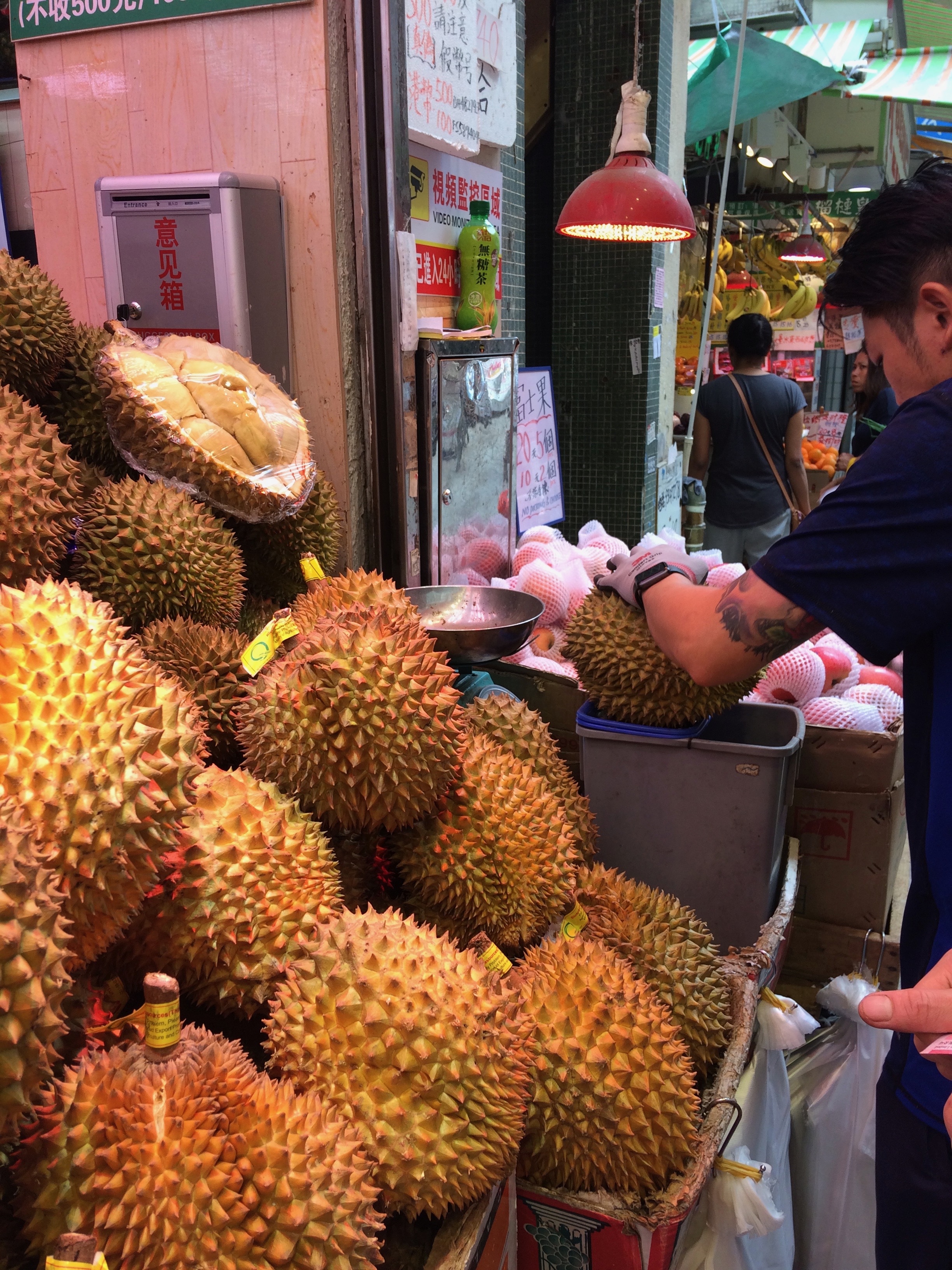
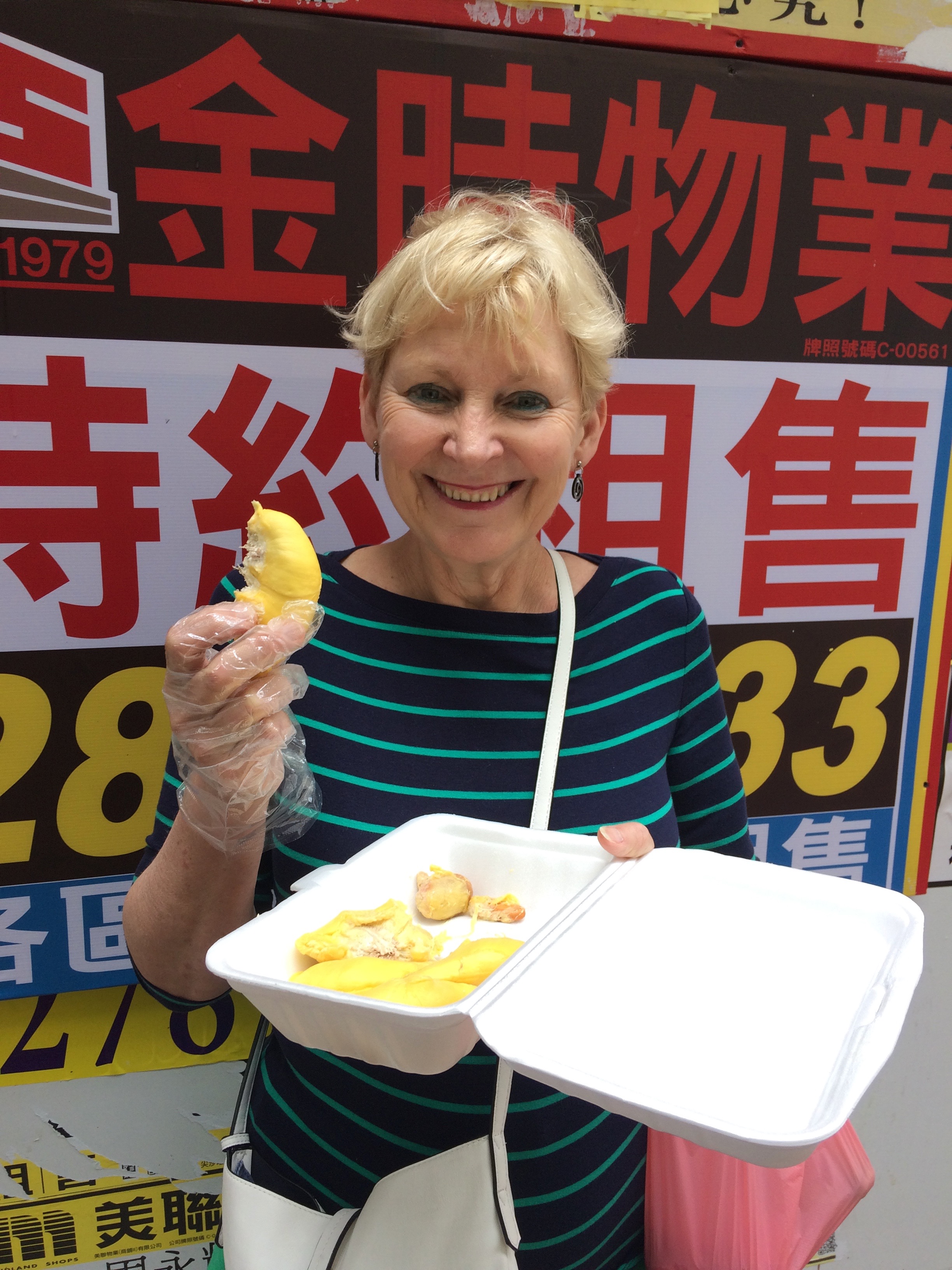
Yangshuo is like a popping sherbet town – fizzy, vibrant and touristy. It was settled by Western backpackers years ago and sports a West Street and a legacy of muesli and French Toast and English breakfast and New Zealand steaks. And of course pizza. I even had a durian pizza, that was just too wonderful to describe!
We suddenly found ourselves in a holiday town.
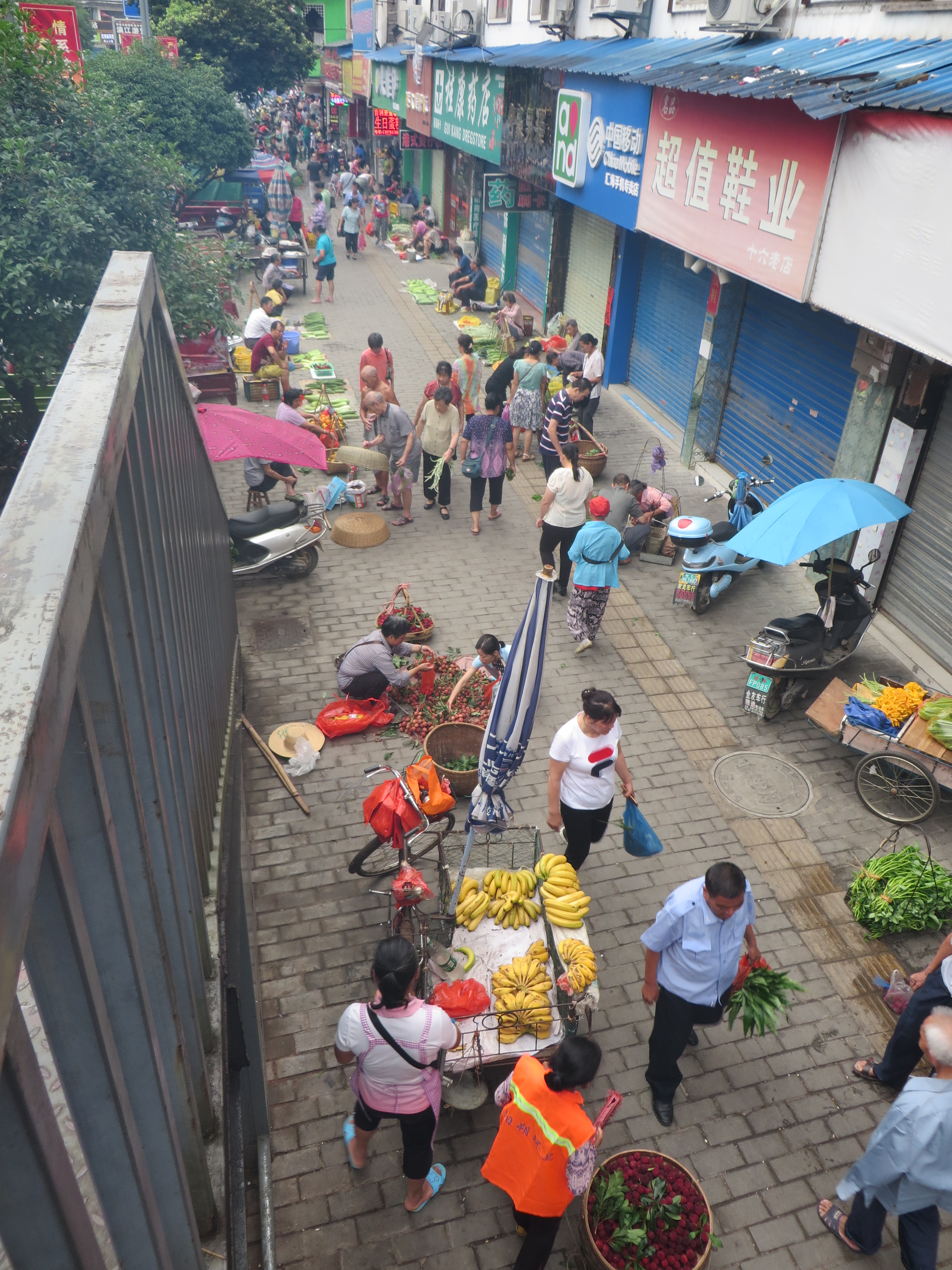
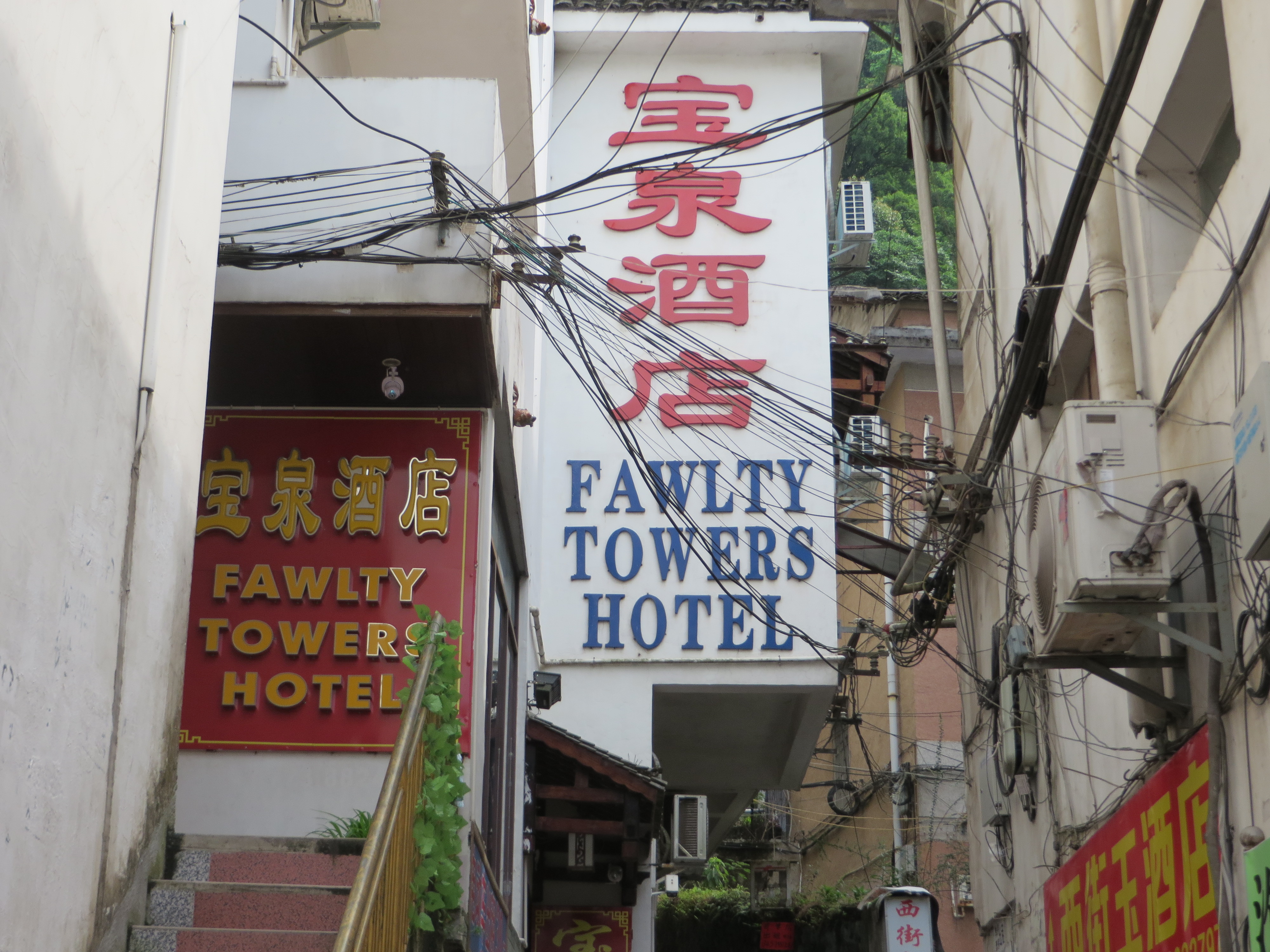
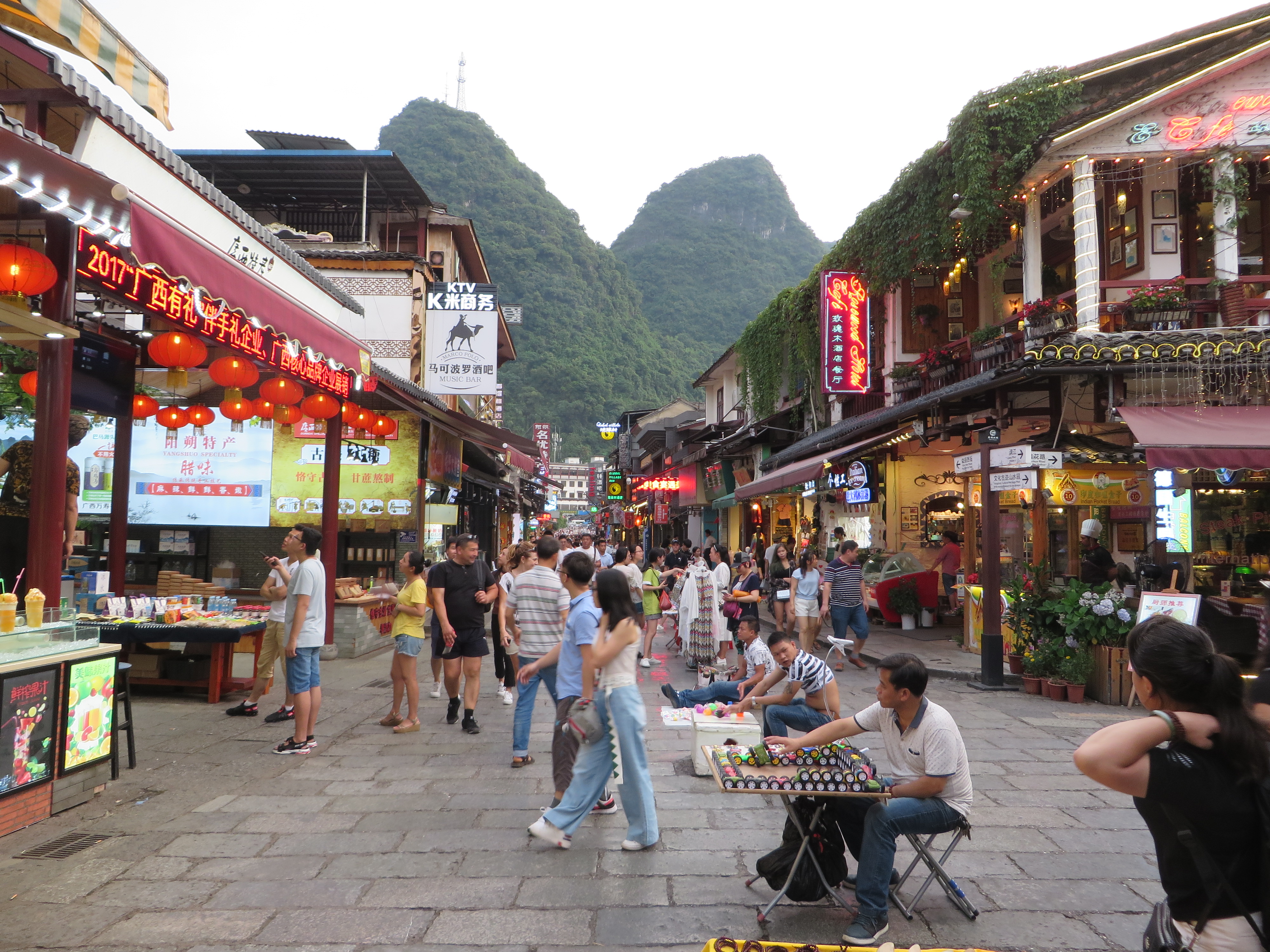
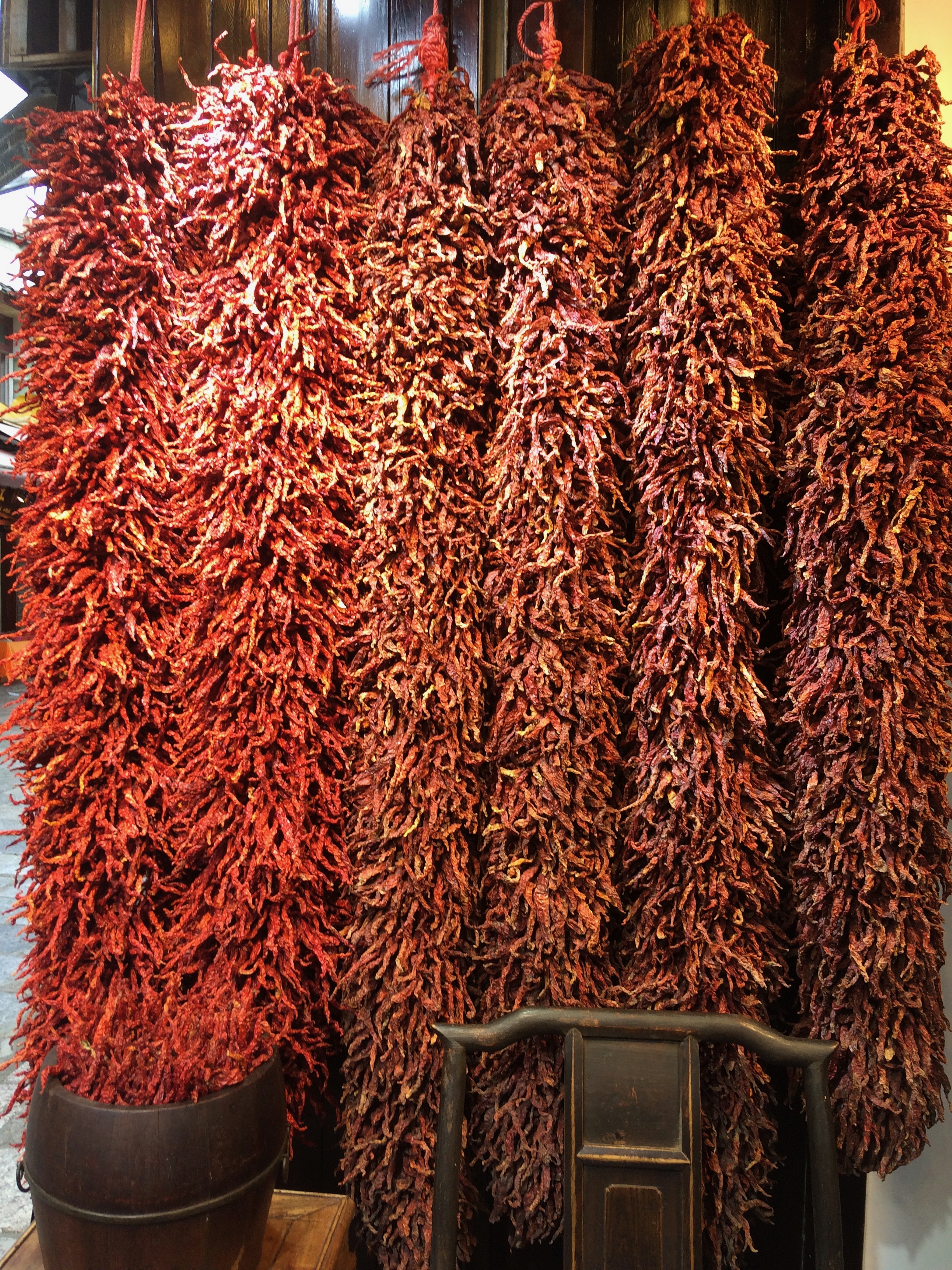
I signed up for a cookery class with three others from the group. We found ourselves in the company of a female Ghengis Khan.
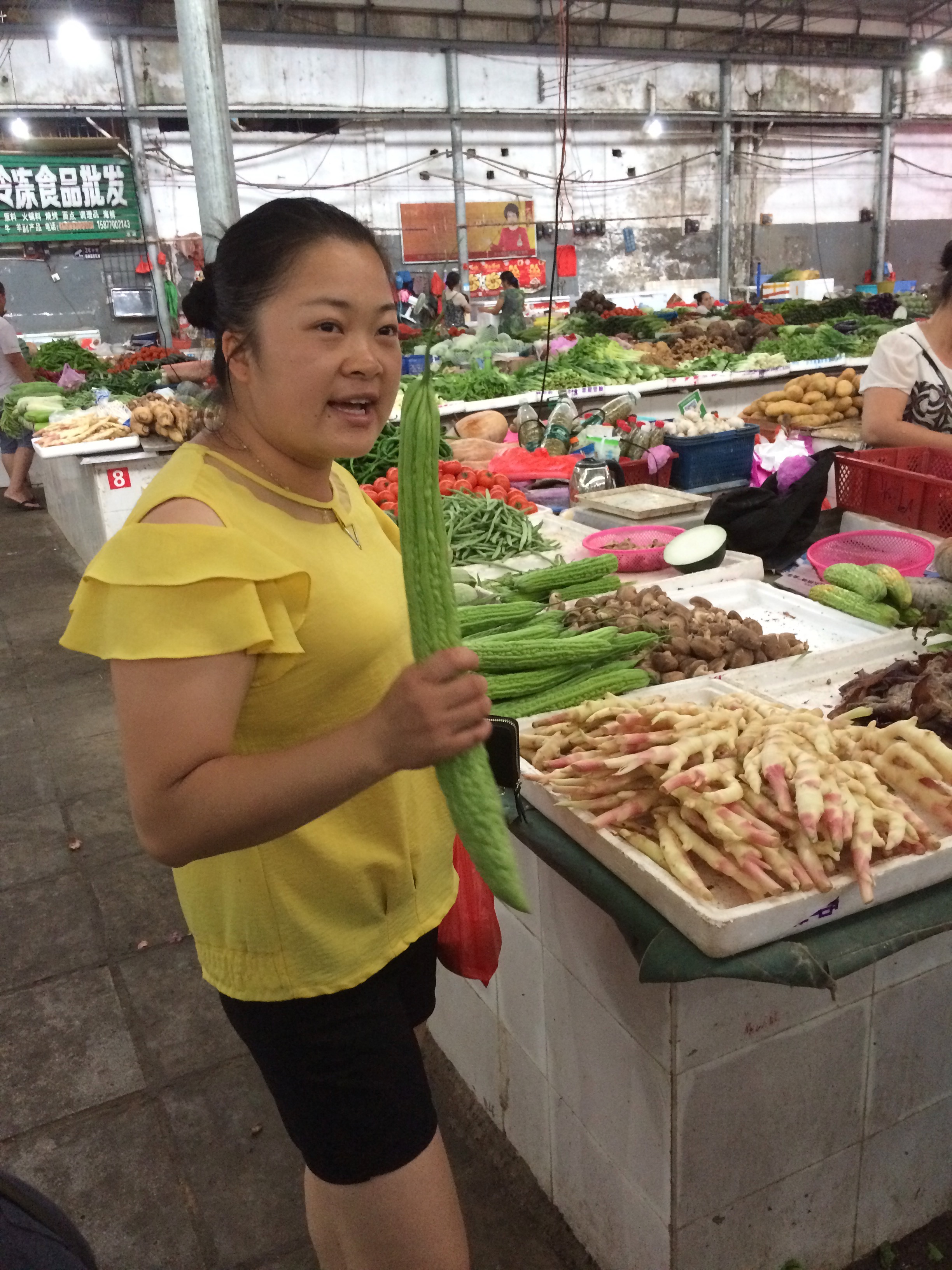
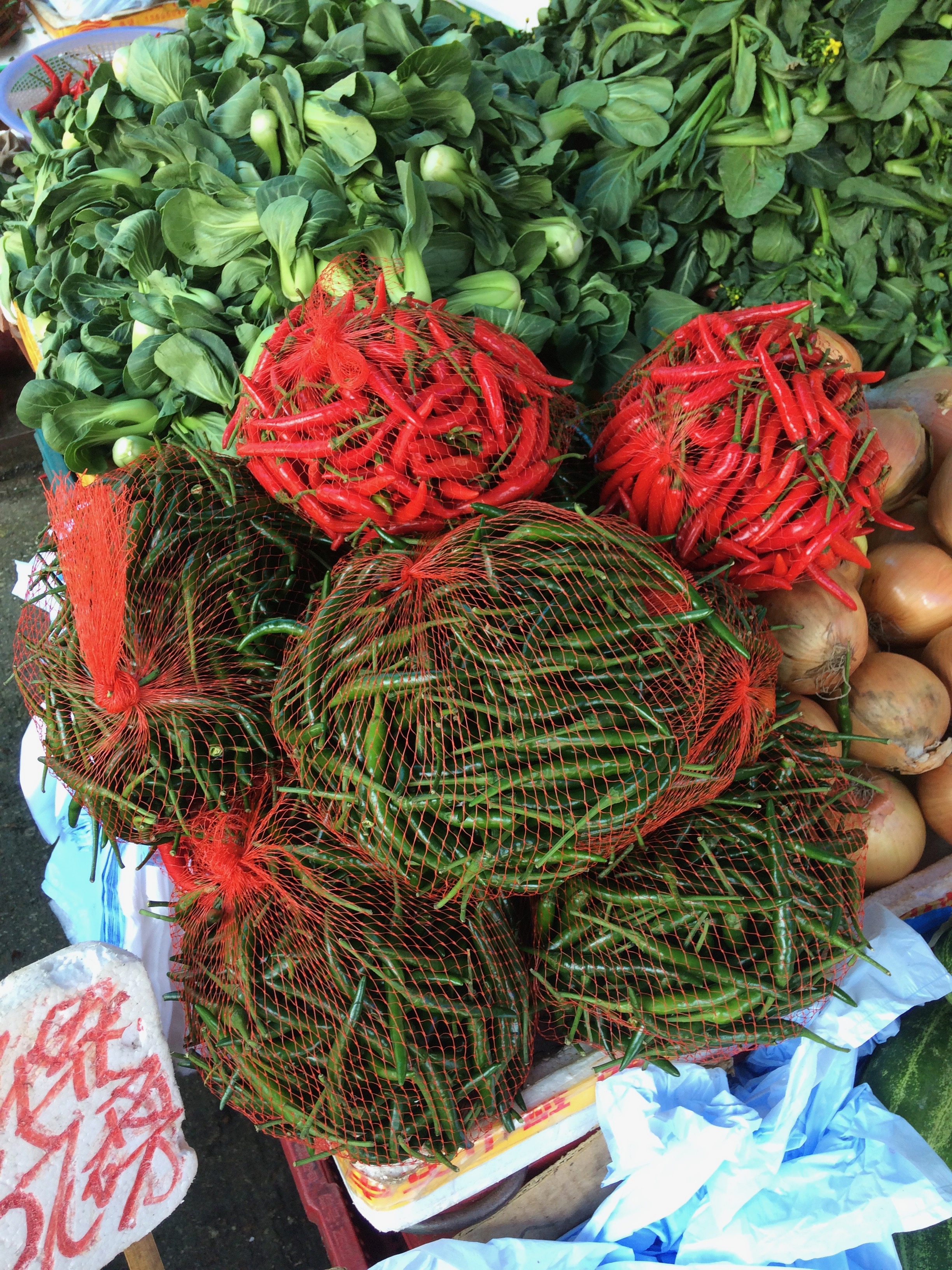
First we went on a trip to the fruit and meat market, where we saw turtles, frogs, snails, snakes, rabbits, dogs, cats, intestines, snouts, ears and eels.
‘And over here,’ Mrs Khan shouted, ‘we have pumpkins and squash – we used to feed them to the pigs, but now we feed them to the foreigners. They seem to like them.’
Our woks, cleavers, chopping boards and little gas stoves were in place.
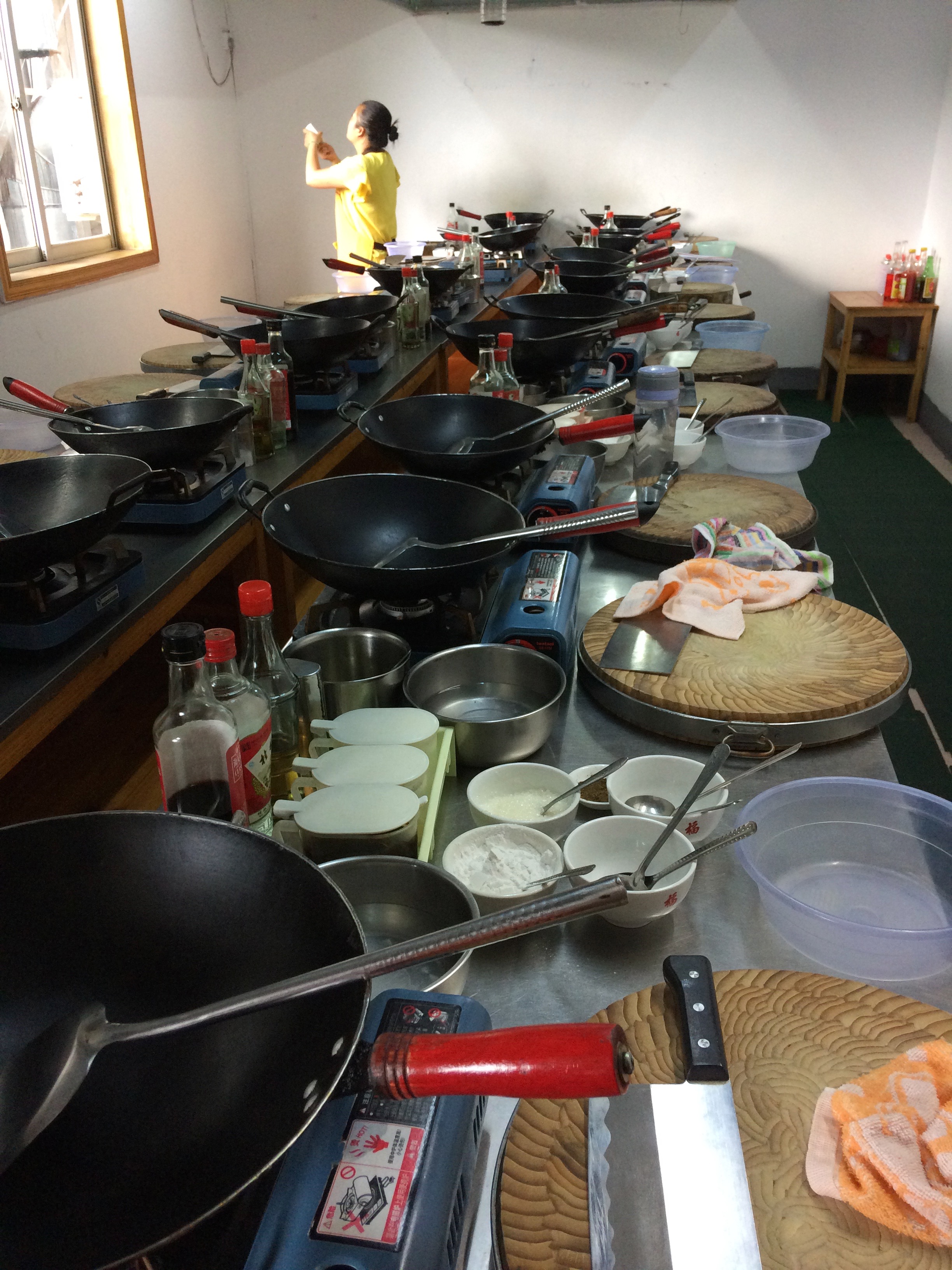
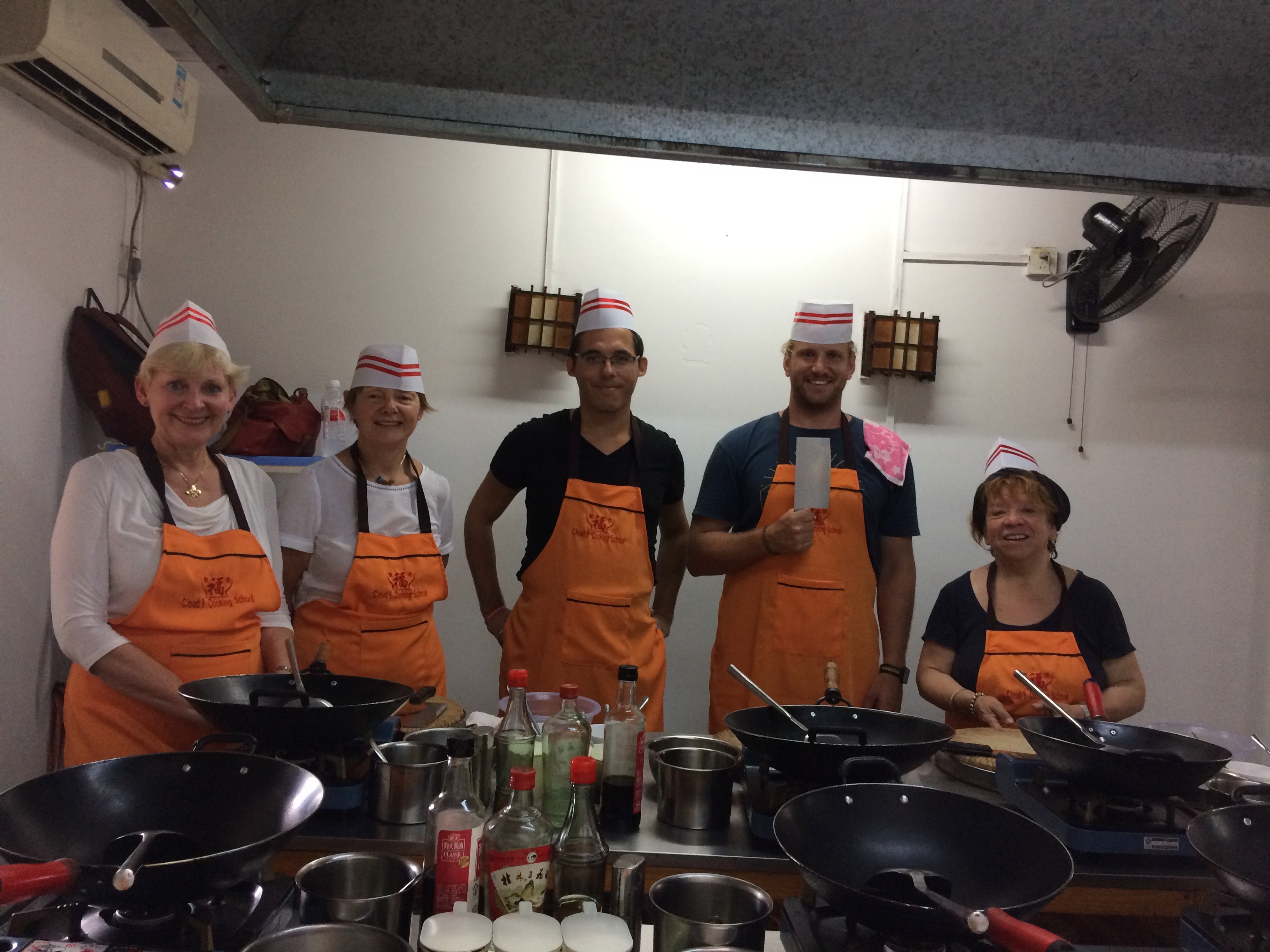
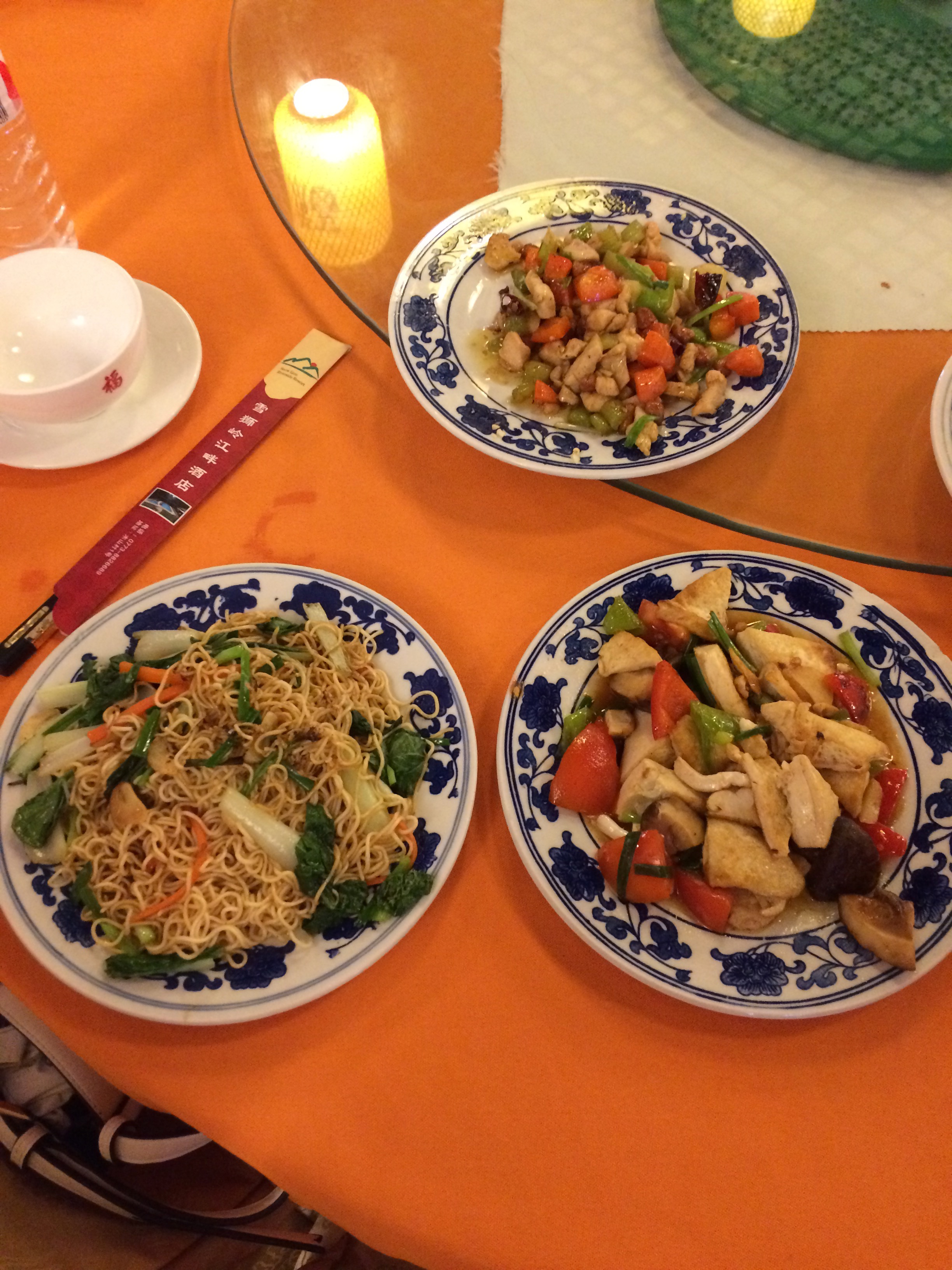
Our teacher kept up a constant tirade, ‘Chop carrot, chop pak choy, fry garlic – heat on! Heat off, add soy, add oyster sauce, heat on, add ginger, heat off.’ I was absolutely terrified. I looked around at Gill – her hat was all askew, Patty was pink in the face, Terrence was tweaking his dumplings, and we all had that look of total concentration and fear! Somehow we served up four dishes each and ate them. I cannot tell you how delicious they were! Gong Bao Chicken, steam dumplings with pork and vegetables, fried noodles with mixed vegetables, and braised tofu with mushroom. Phew! Yes Chef, no Chef, at once Chef!

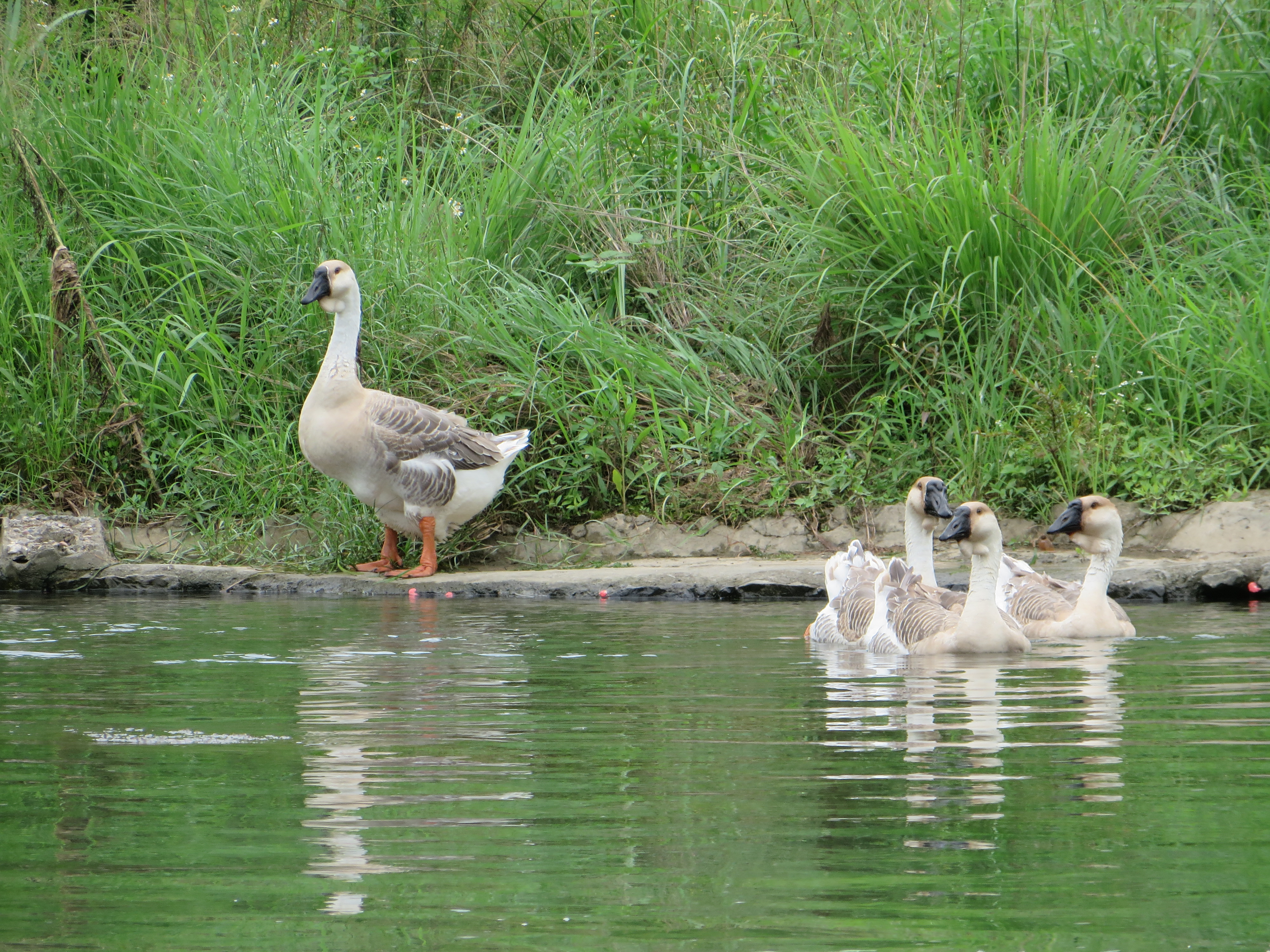
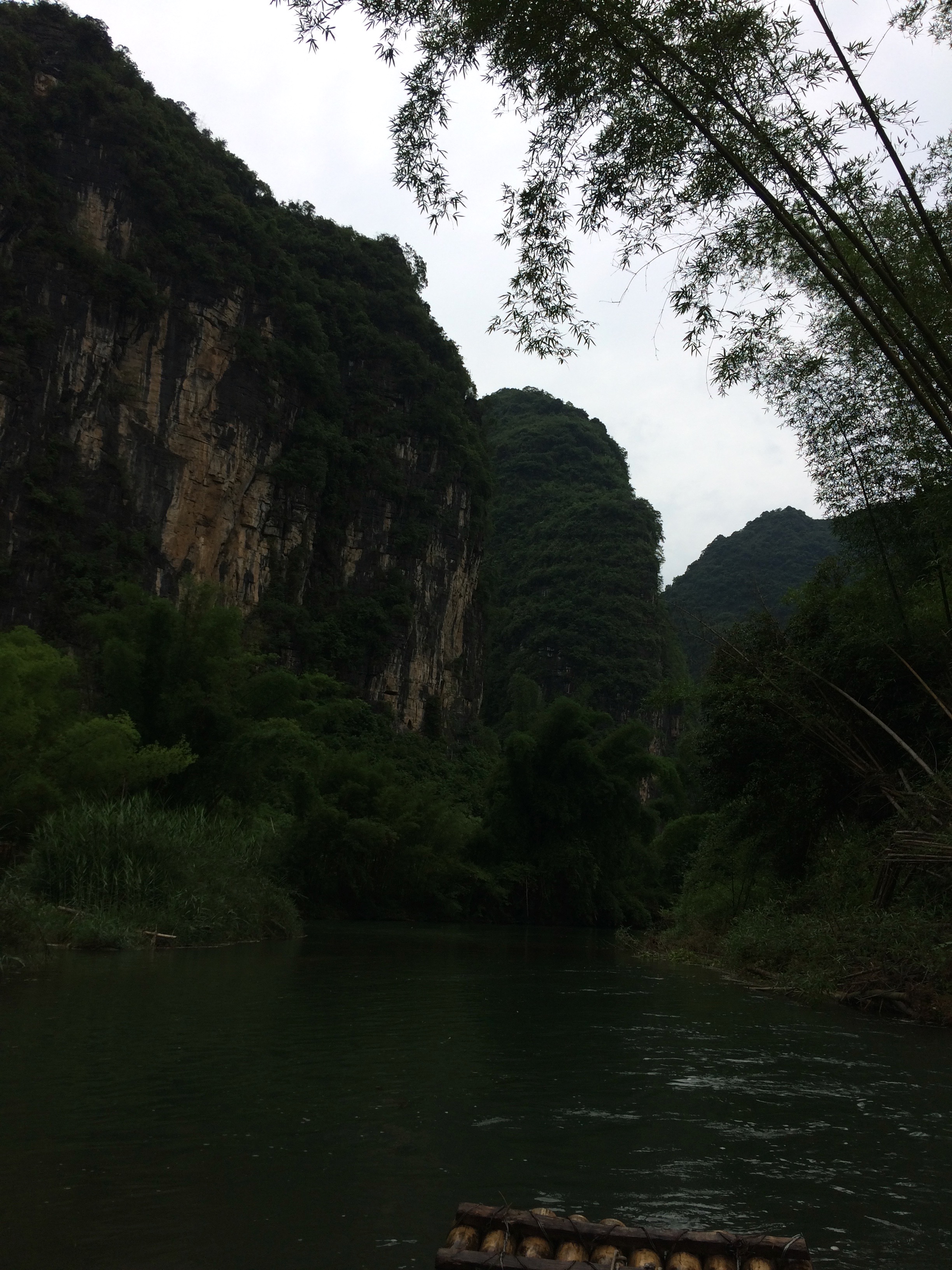
This town is surrounded by limestone mountains. I feel as though I have been transported to Halong Bay. I was happy to look and admire, but Frank had other ideas. ‘Much better to get up close.’
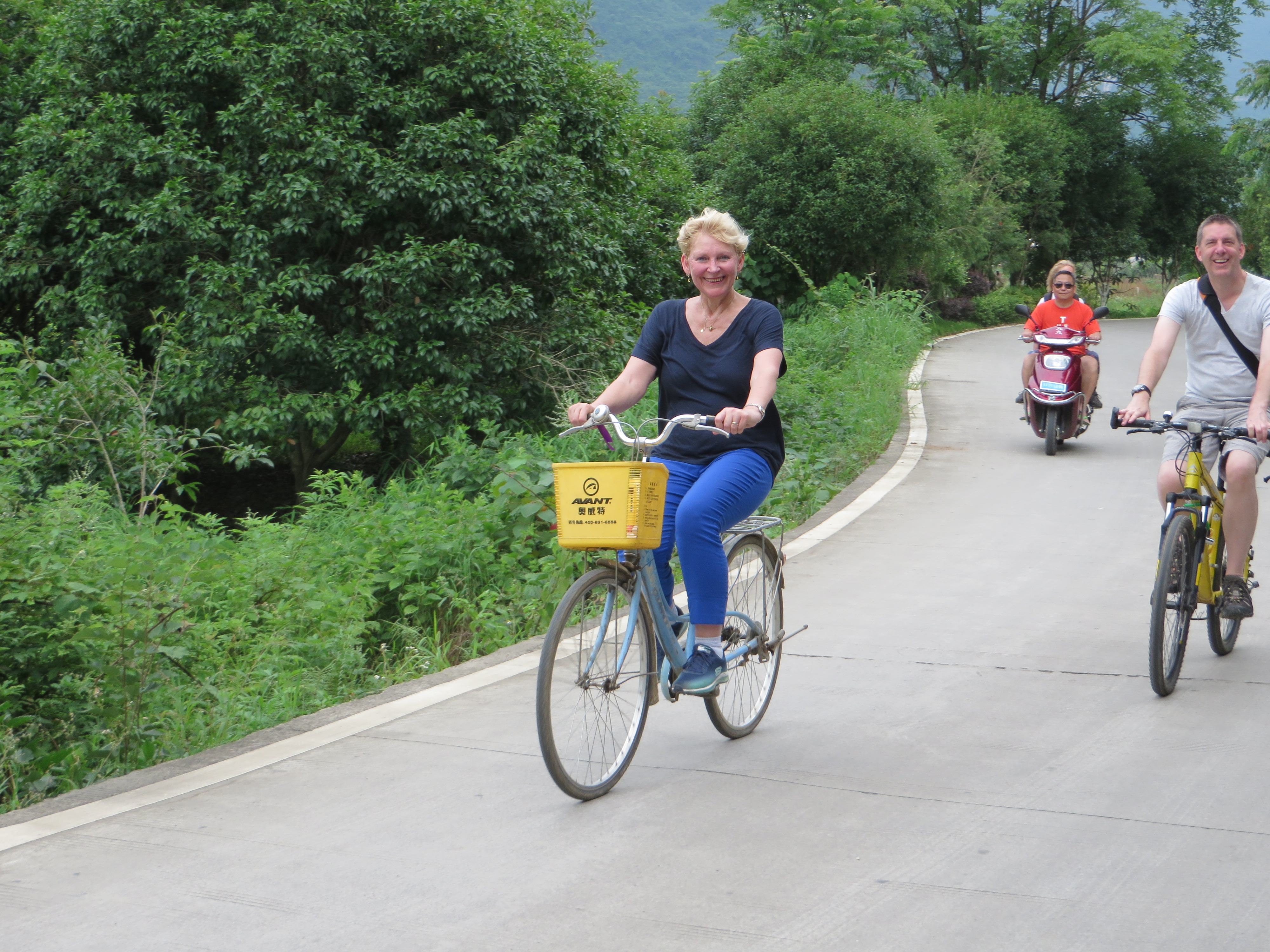
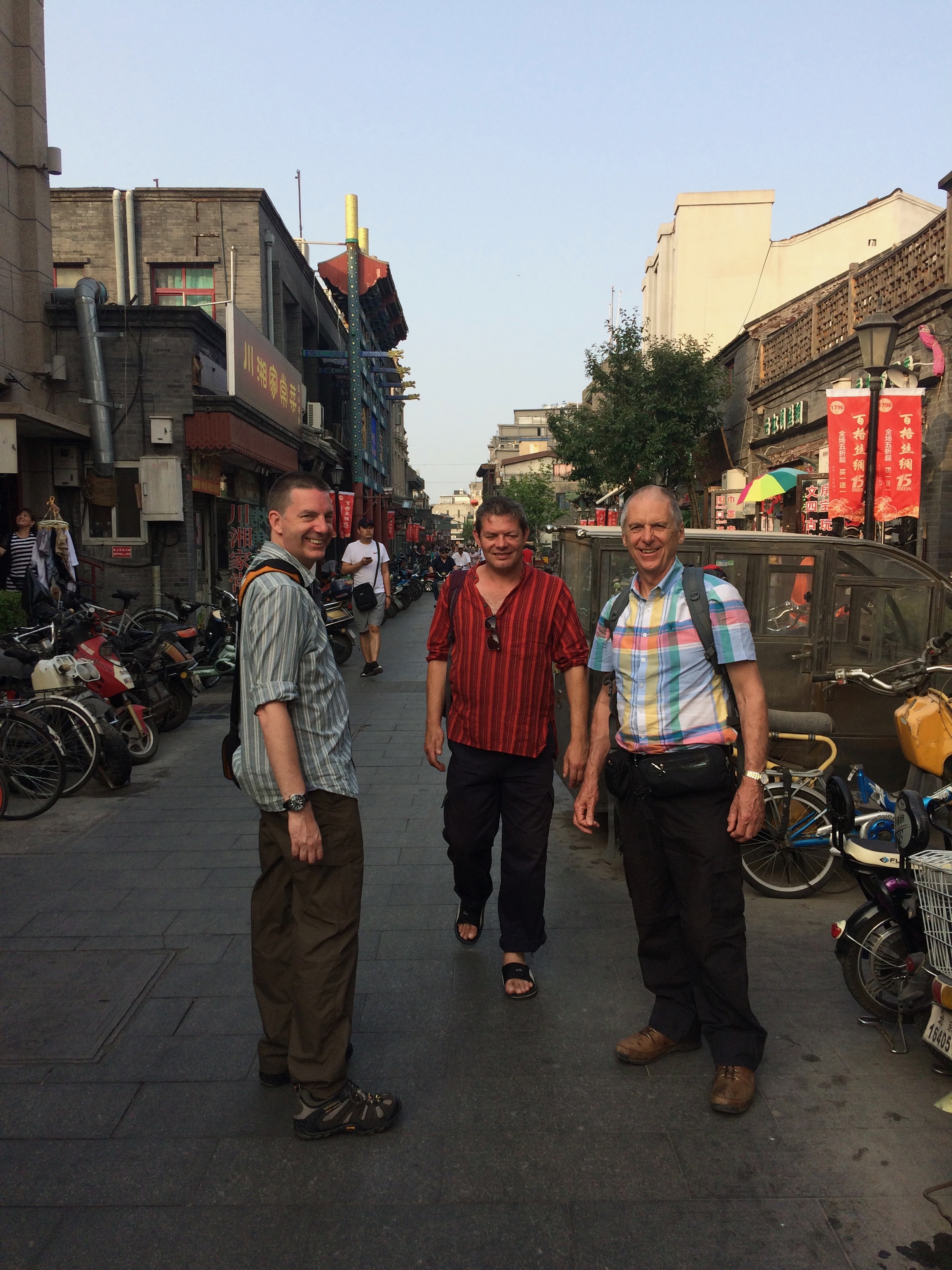
We hired bicycle – I was beautifully coordinated with a blue ‘shopper’ bike with dodgy brakes and a bell with a mind of its own. John raced about on his red devil with 24 gears, only one of which worked – his brakes didn’t work at all!
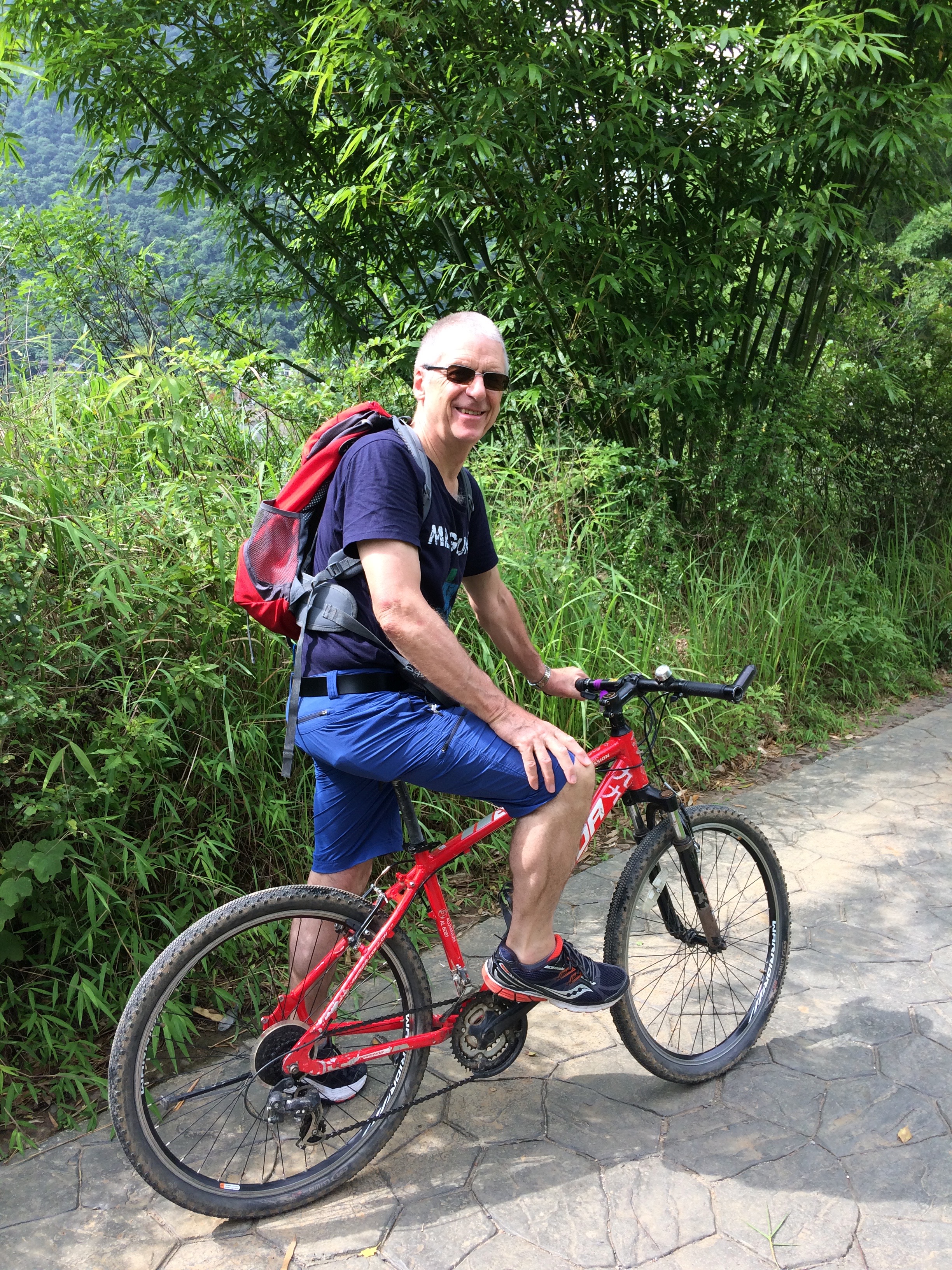
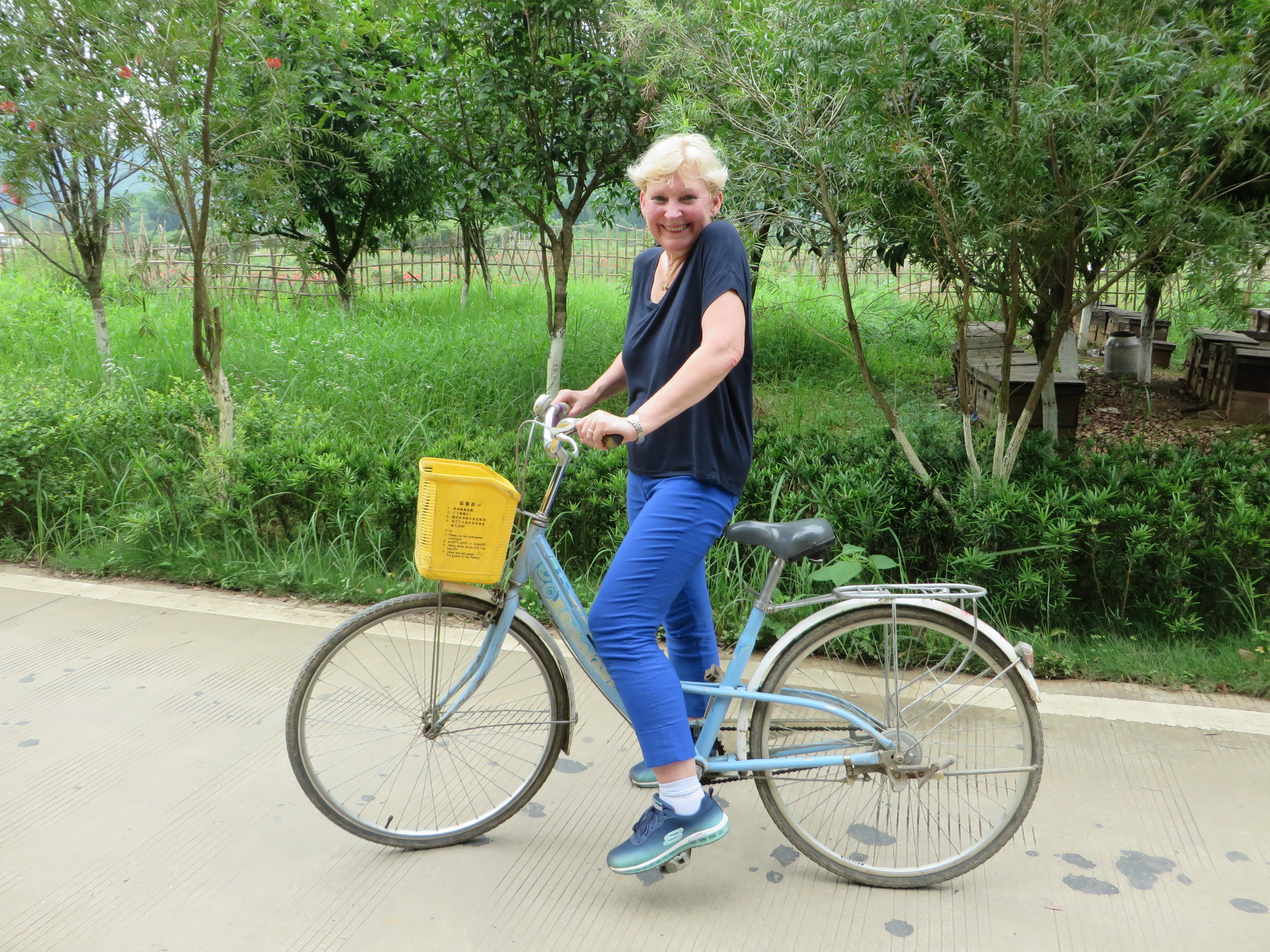
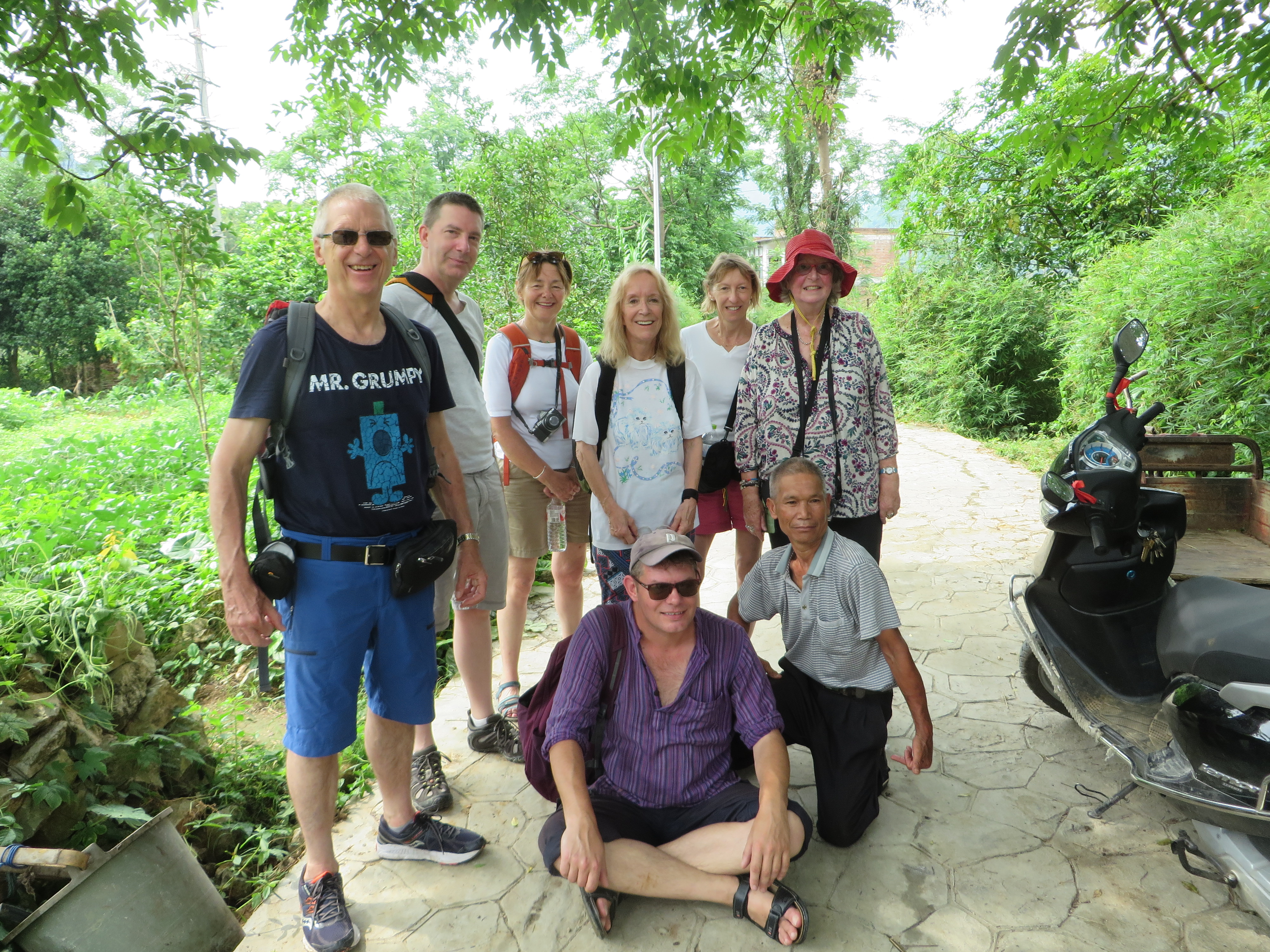
Our group cycled along the river, admiring the pink lotus, rice paddies and mountains; it was all so quiet and rural all through the country back lanes.


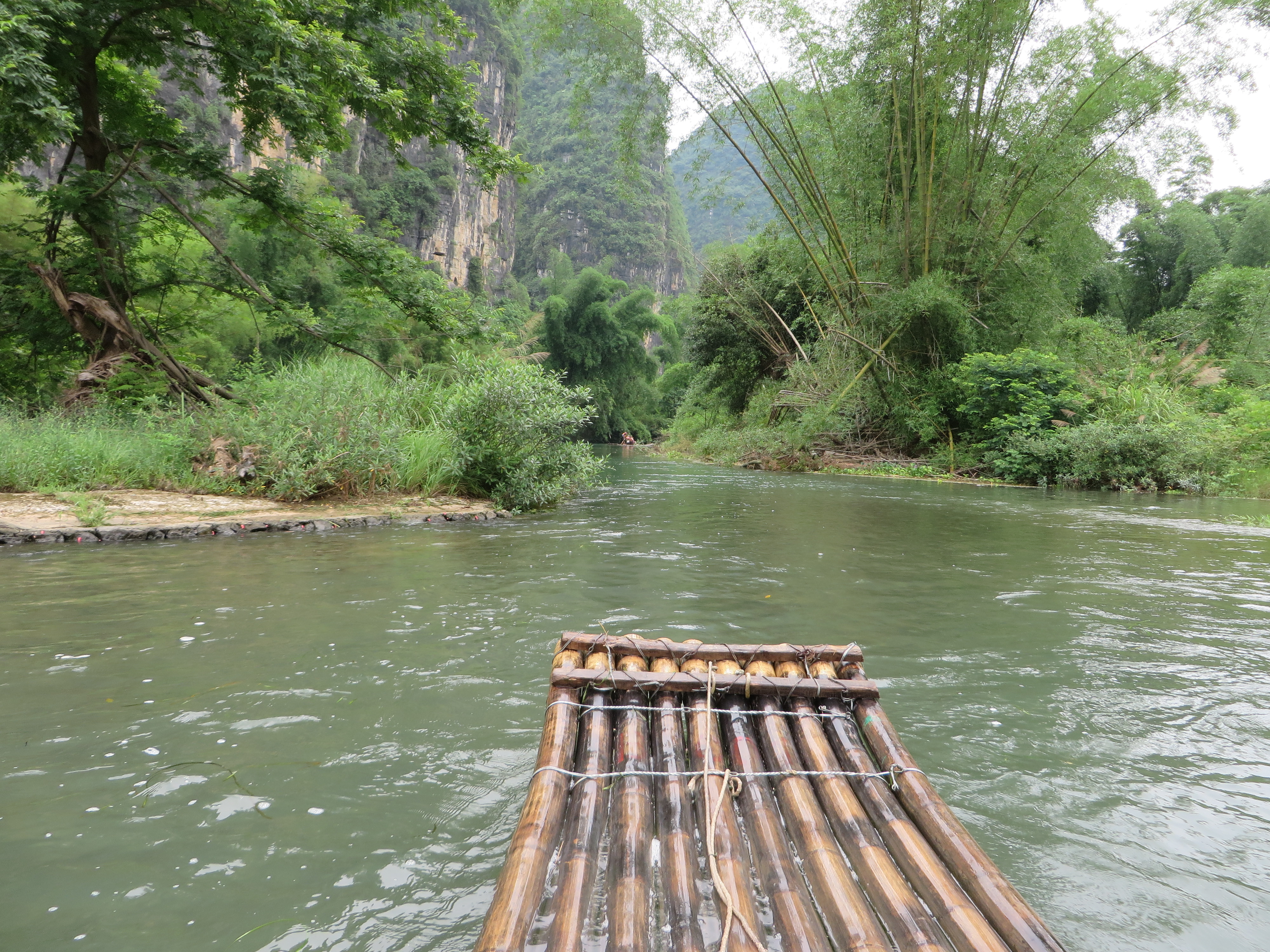
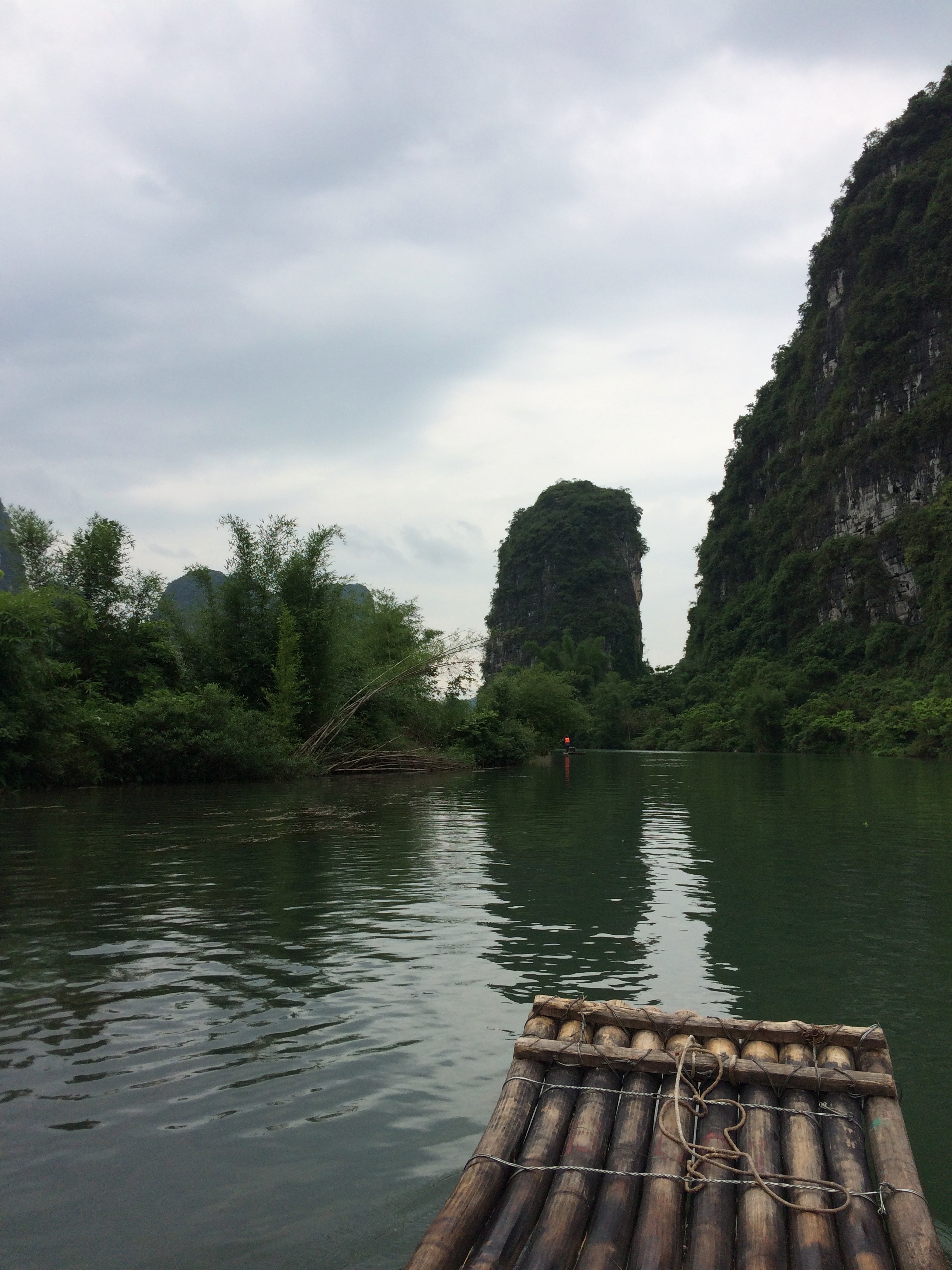
Later we transferred on to bamboo rafts and sat like an emperor and empress on rickety chairs as a punter pushed us along and down the rapids.
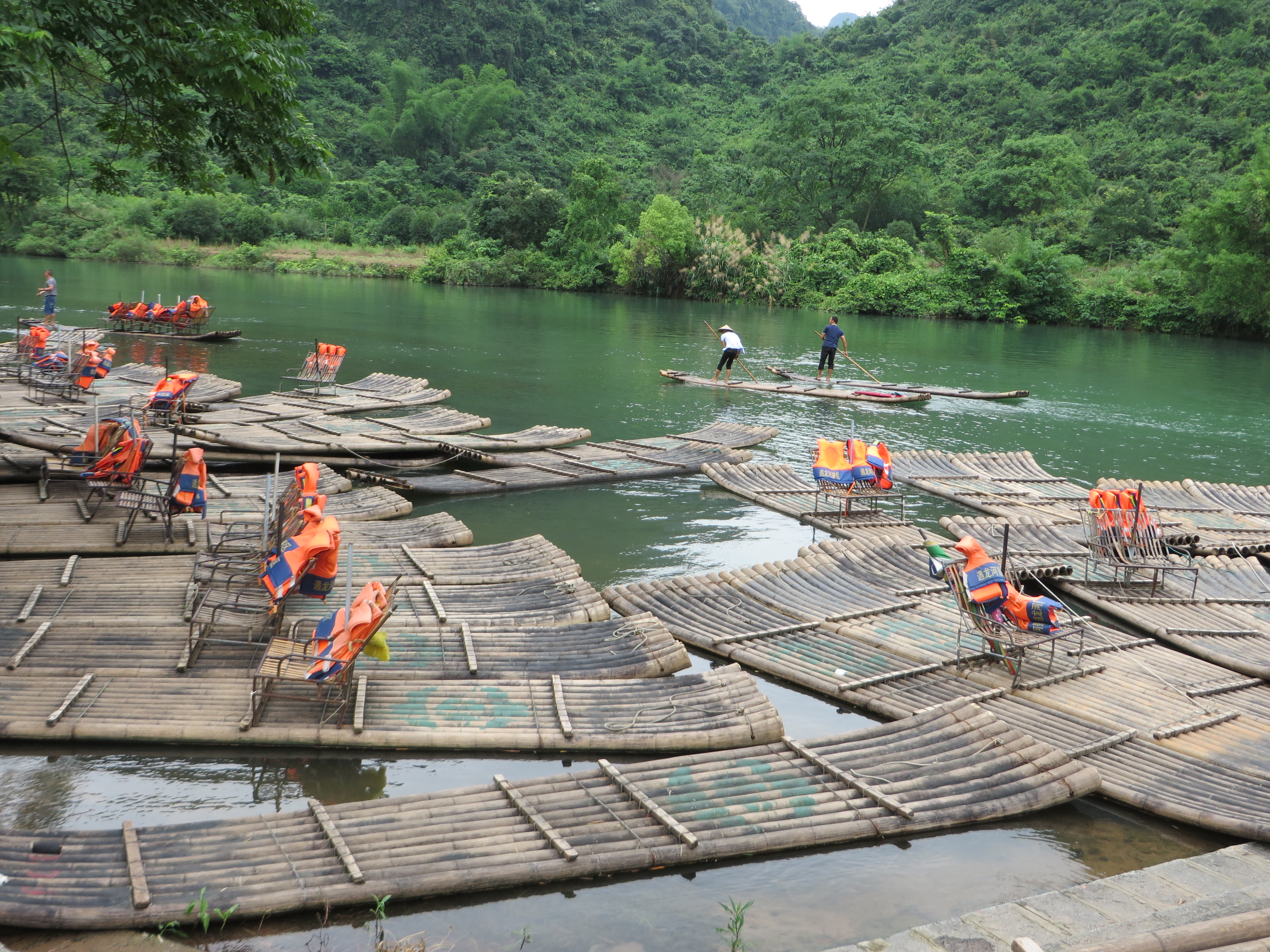
China has a population of 1.4 billion people, but for that hour as we sailed down the river, surrounded by unique mountains and feathery bamboo we were ALONE. It was quiet, there was no shouting, no music, no one yelling on the phone. Just tranquillity. It was perfect.
And then the climb. Vertical steps in red hot humidity up to the summit of Moon Mountain.
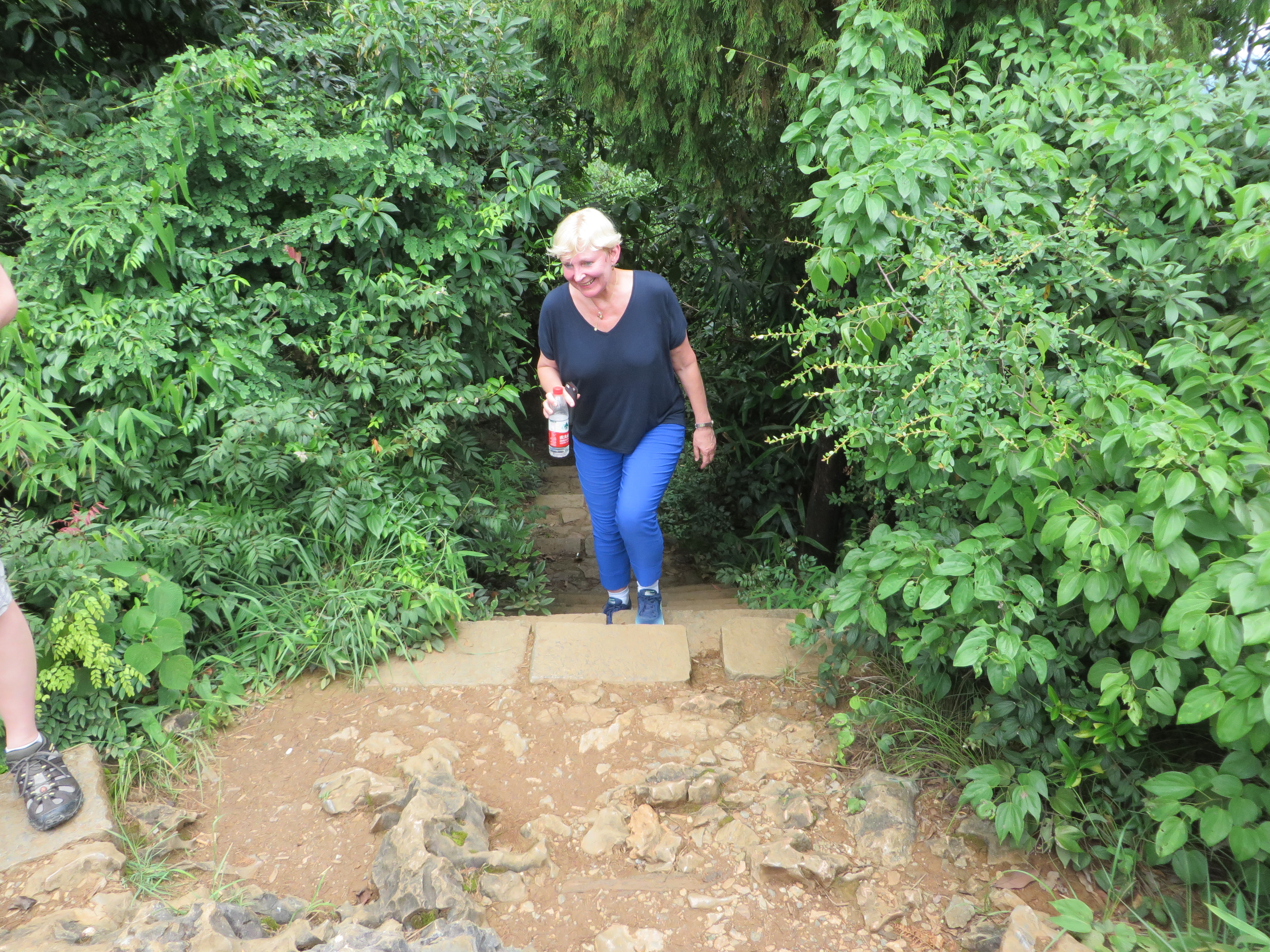
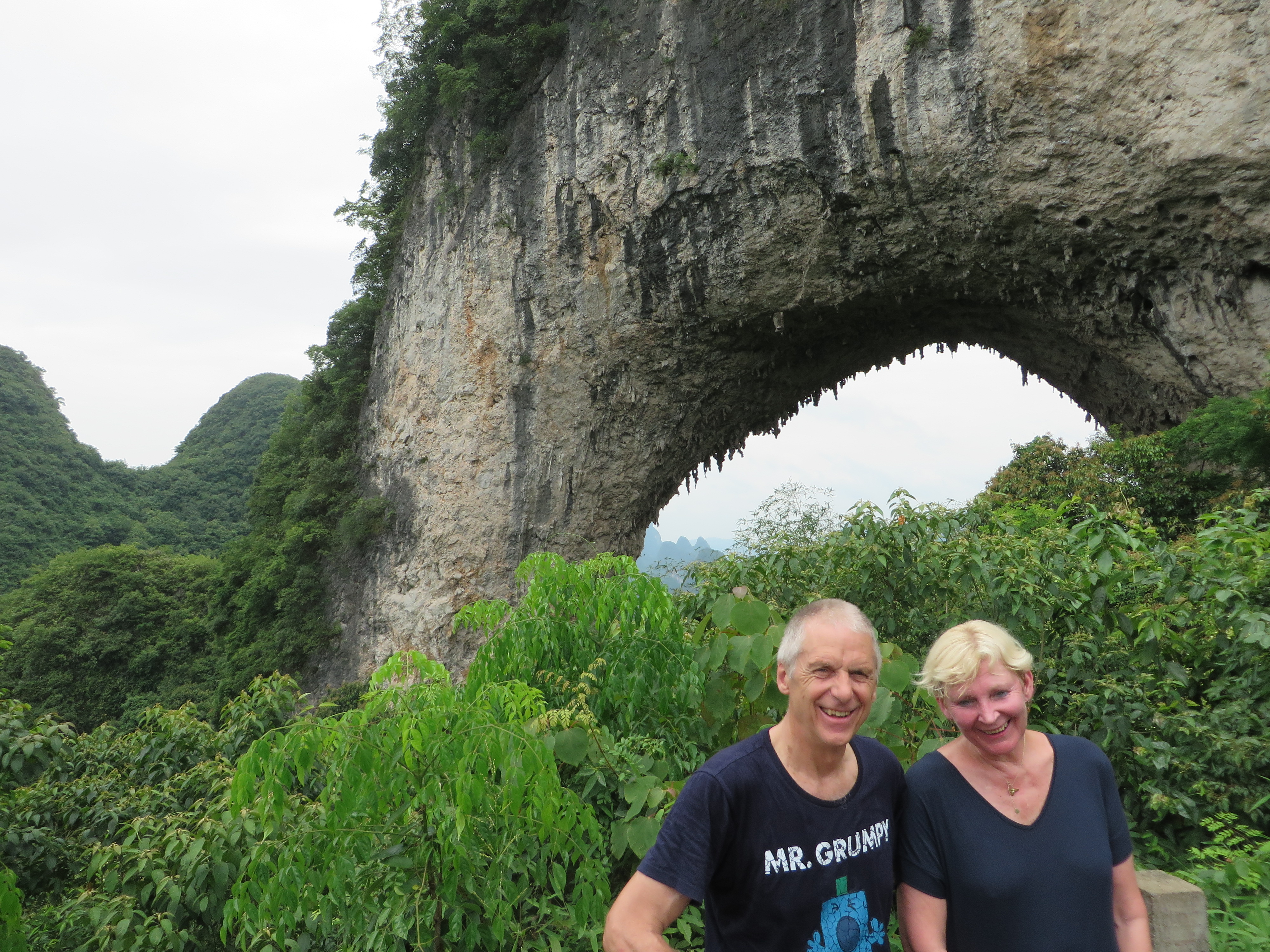

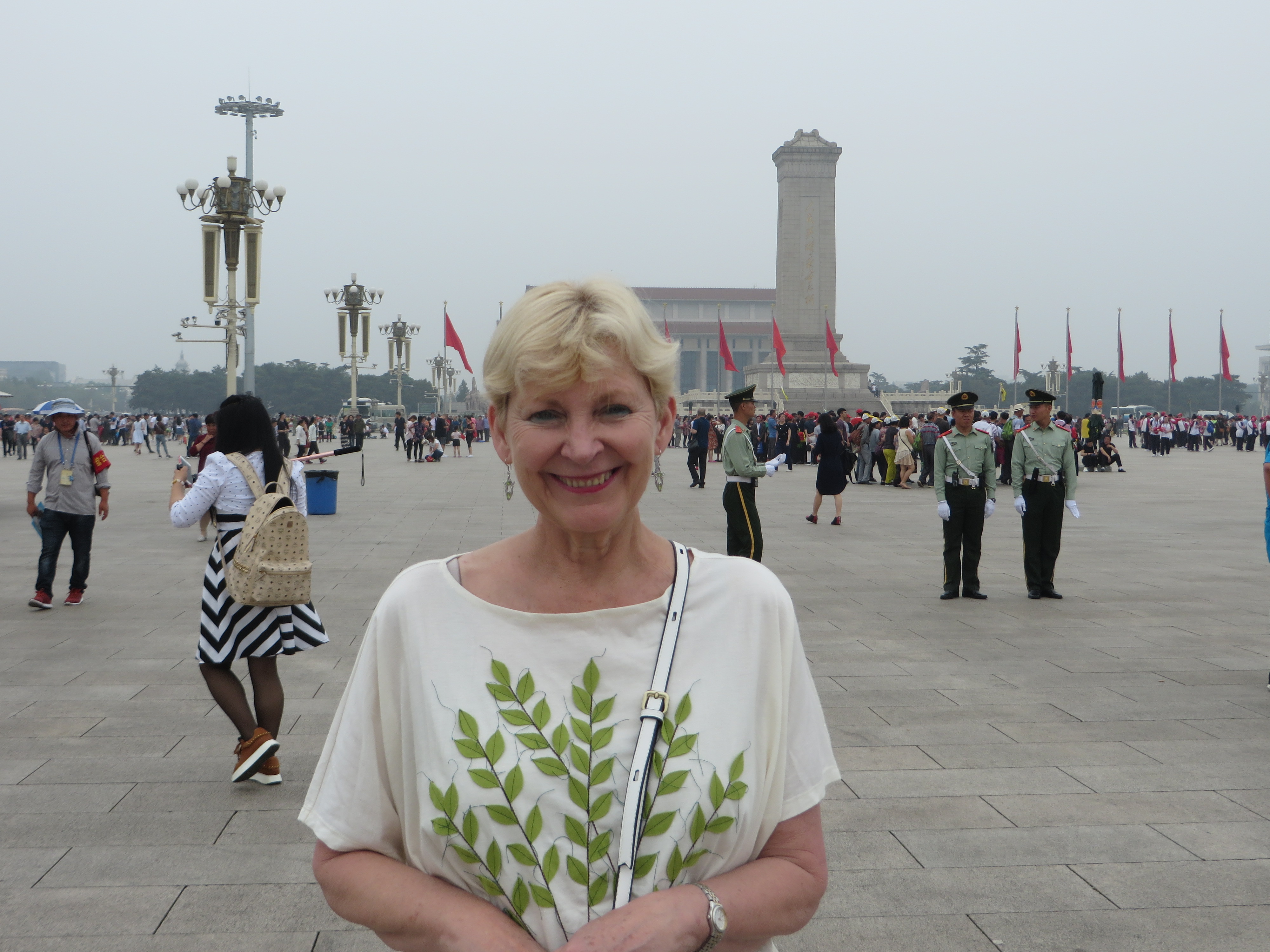
Our ascent coincided with a pretty Chinese girl in a pretty dress. At the top, I posed beside her. She was hot – but appeared as cool as a cucumber. We smiled together. Martin was convinced she smiled at him too. She probably did!
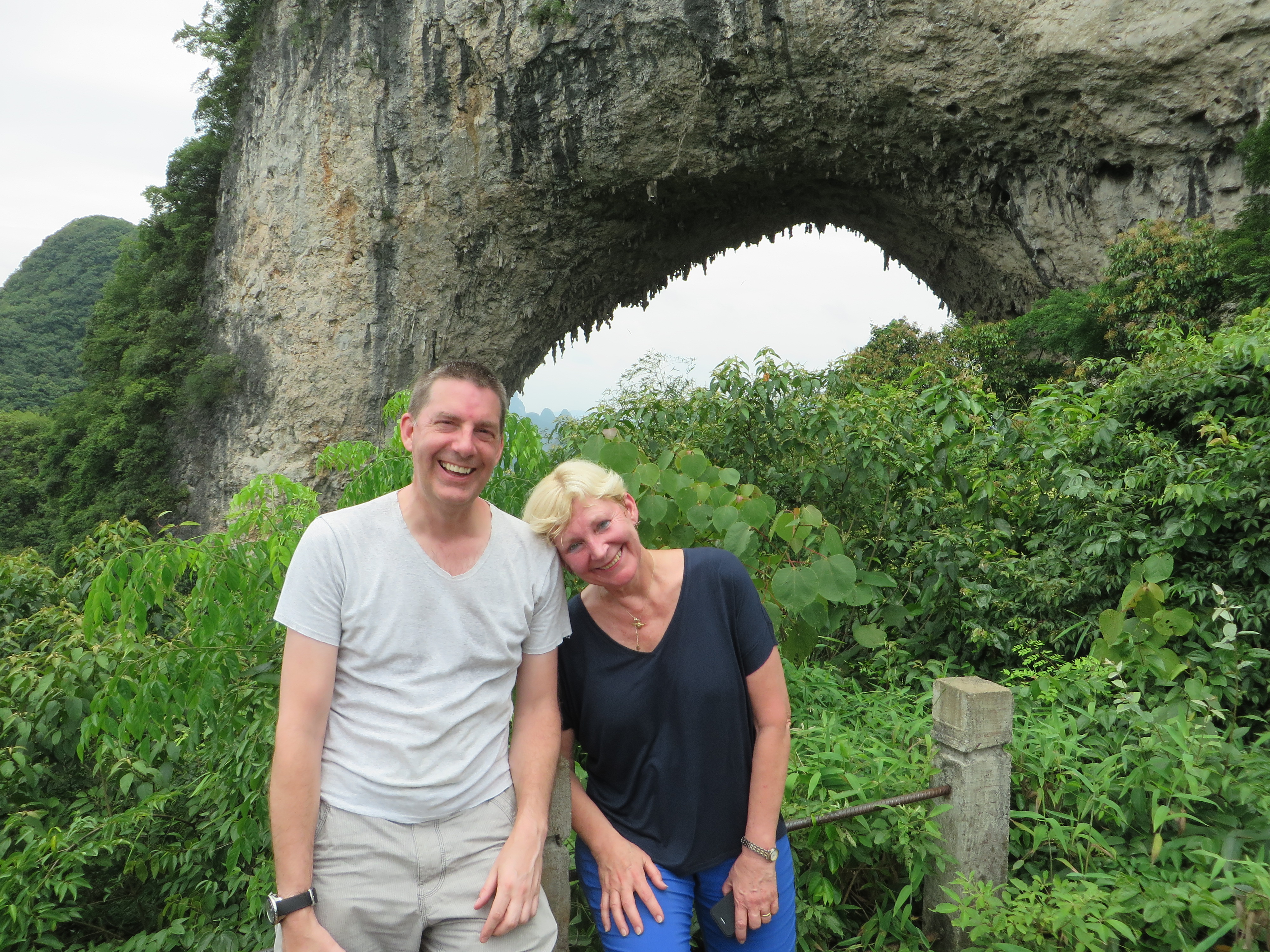
And then the horrific descent on the slippery path. I fell (of course) and it was scary, but thank goodness, all was well.
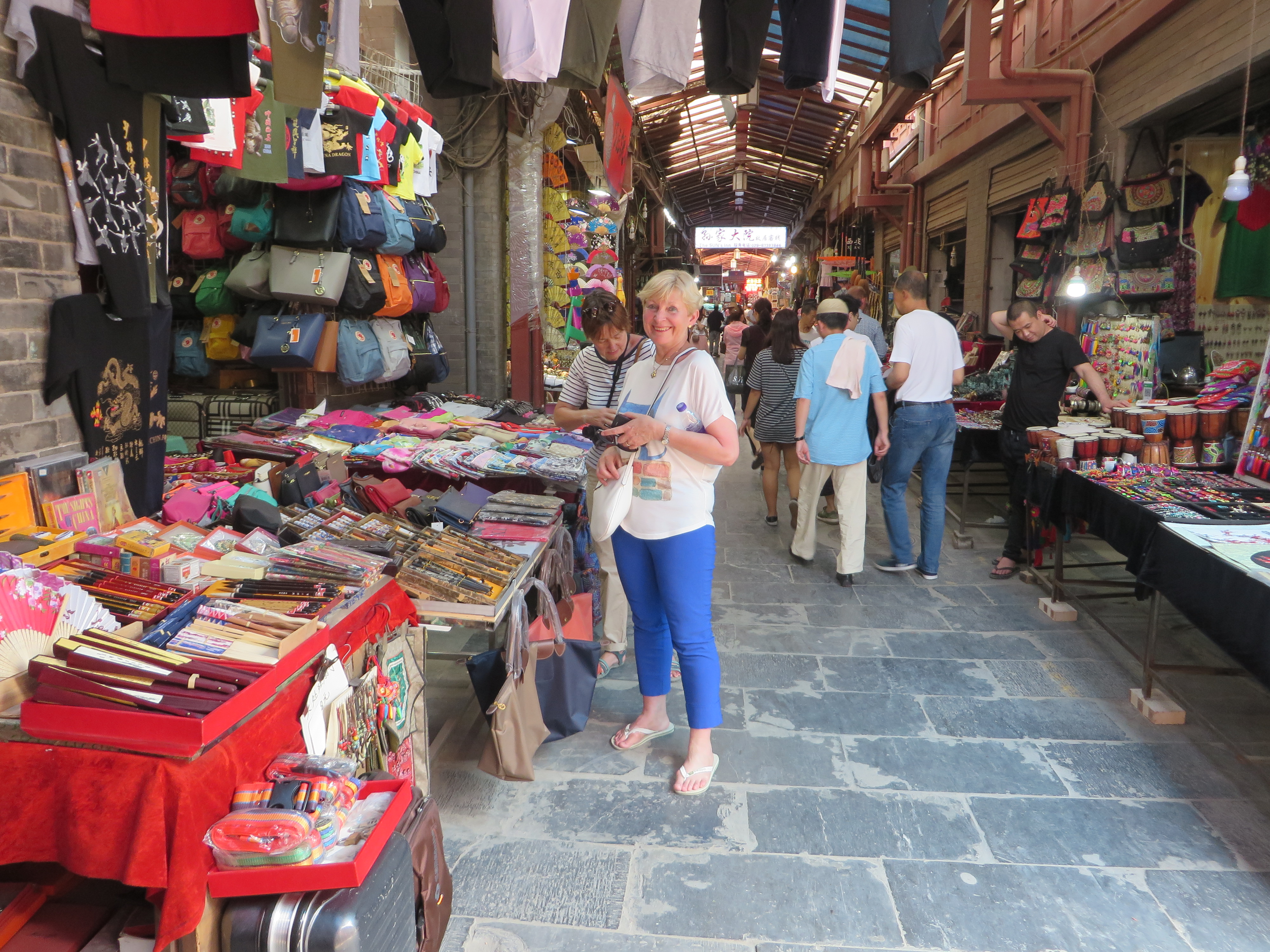
John was very chuffed in the night market as he bartered for a Picasso ‘silk’ scarf for me. It was 180 yuan, which he go down to 30. Turning the corner they were selling the same scarf for 20! Oh dear, never mind, I shall wear it with pride, a beautiful kaleidoscope of colourful memories.
And now another train. We are in Guilin, people are fussing, bags are being stored and I write. We have 18 hours ahead of us before our destination in Shanghai.

A journey in a train tends to make me sentimental – the rattling along past fields, towns and stations manages to make me indulge in a saccharine sort of sadness. I look out of the window and must appear sad, but I am really happy. I just love the quickly changing panoramic view of the country as I see it sliding swiftly by and I myself being hurtled forward; it is like a flight of time, the eternal flux.
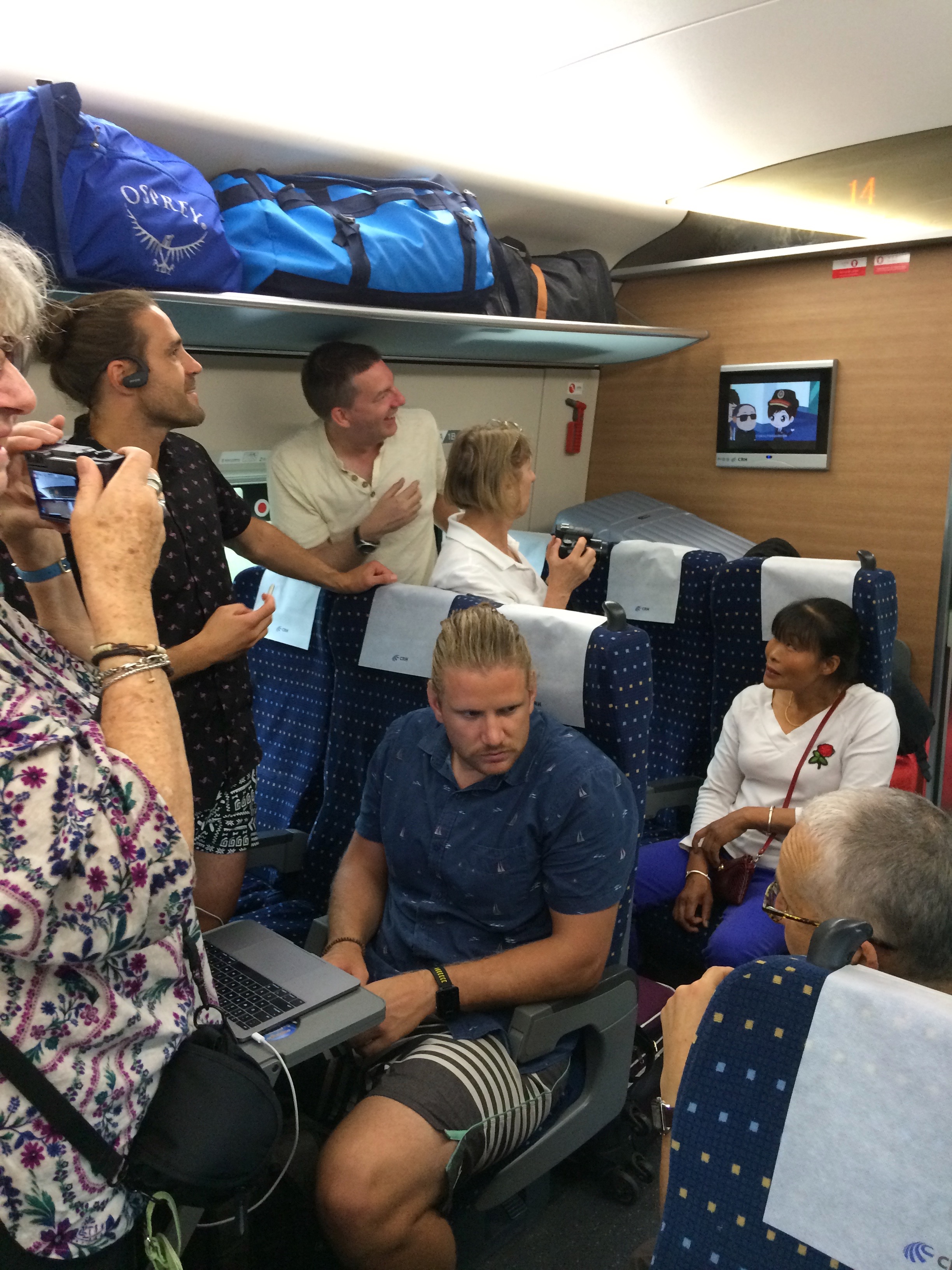
The train is well on its way now. Marcus is on the rice wine (a more blended brew) and Terrence is singing ‘I shot the sheriff’ and Janet is teaching Dijon how to juggle. (She once did it on the stage – but she was not so good in a pitching carriage.)
There is a hum of conversation. The light is going. We have had two beers and I feel vaguely mellow. Last night I drank the last of my own rice wine, bought from the Dong people in the mountains. It had an exquisite colour – like clouds at sunset and the taste of port with just a touch of tartness.

Now it is time to get back to ‘The Golden Lotus’ – the story and language is getting more colourful:
‘You thievish turtle – I’ll beat his turtle face till its green. I won’t have a rapscallion like that behaving in such a way – he is full to the brim of vice.’
‘You rascal, you little oily mouth.’
And so on. Life in 14thCentury China!





































































 Tales from the Gael