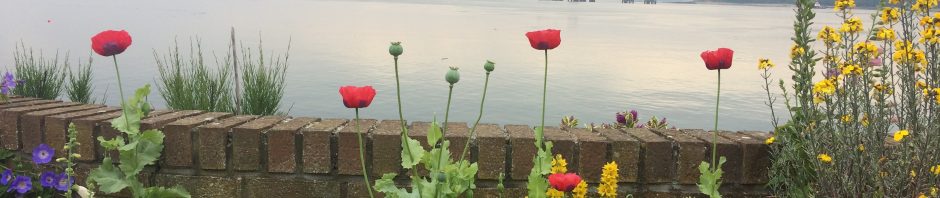
August in the South of France – probably madness for the temperature was high and the earth baked and the bushes and cacti dusty and in need of a good wash. The sky and buildings of soft pink and ochre seemed to blend in soft pastels, and the street smells were different somehow; warm pungent peaches and apricots and the intoxicating aroma of fresh bread and patisseries emanating from shops as we passed by.
Bonjour! Bonjour! How lovely. Everywhere we went. Marseille was everything and more than we imagined. A city surrounding an ancient port, dating 2,600 years, and with the proximity to North Africa, the streets reflected the mixture of different races. A true melting pot of humanity.
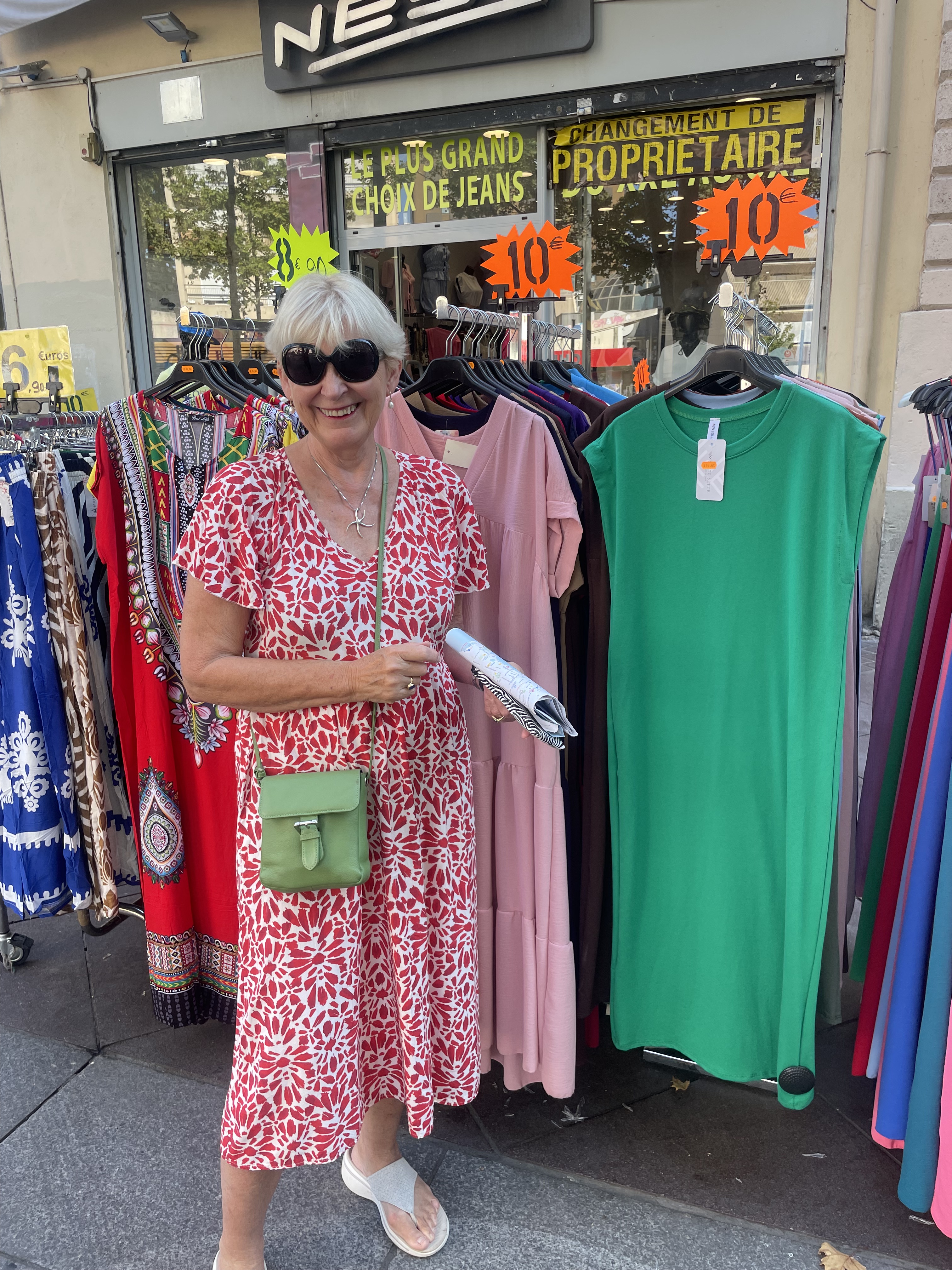
We walked down to the old port, under the plane trees and beside the dress sellers, everything on the rack for 10 euros!
And we purchased our tickets for the toy train that takes people through the town, past the island of Chateau D’If where Alexander Dumas based his story of The Count of Monte Christo and finally up the steep hill to the church that symbolises the city. The Basilica Notre Dame de la Garde. The commentary was in French, followed by a loose translation in English. Imagine my surprise when we were told to look out for the gilded ‘Holy Virgin and the Kid’ on the roof! I had to turn to the American lady behind me and ask, ‘Did she really say that?’
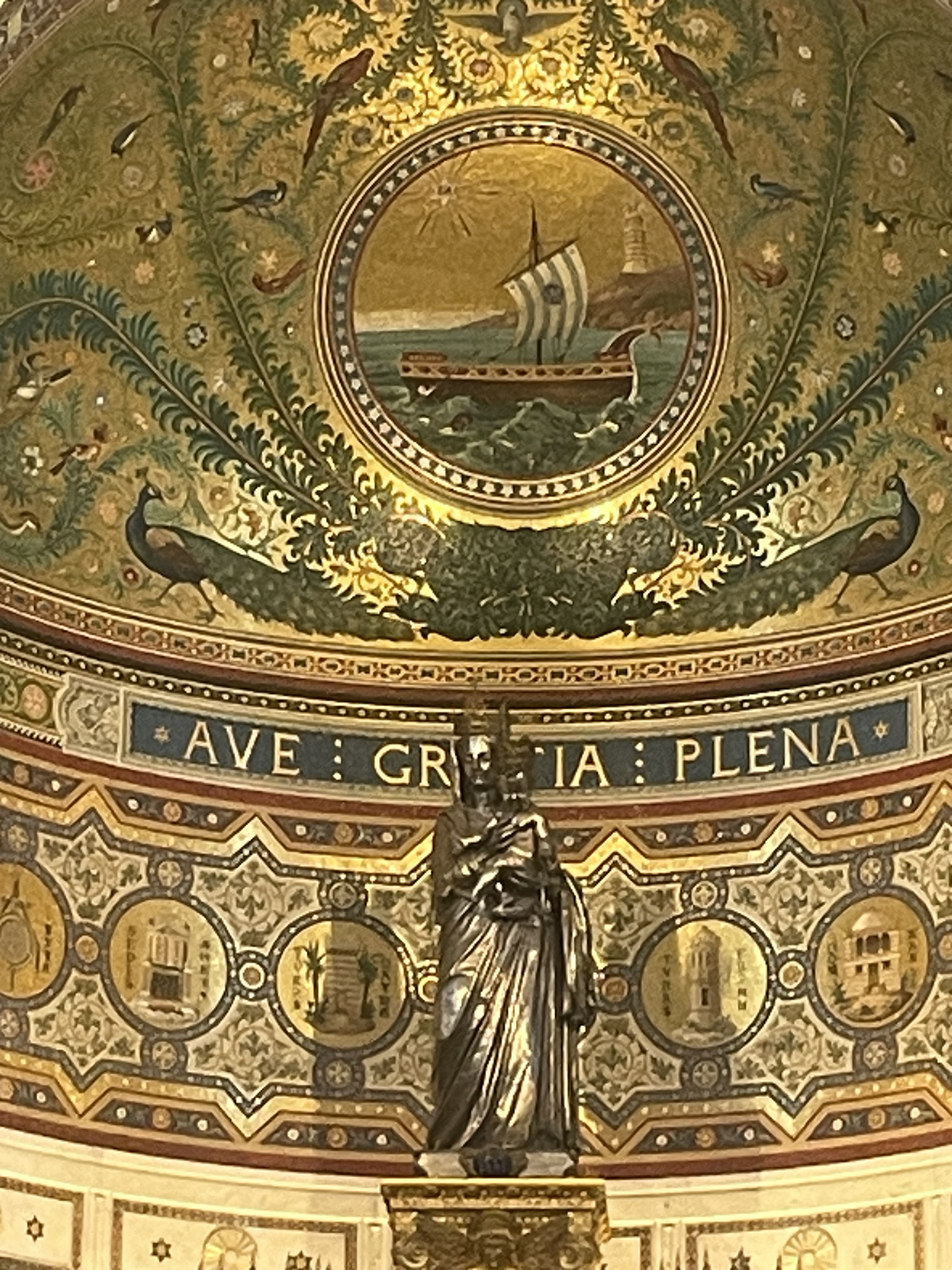
The church was impressive, and the golden domes and artwork were heavily gilded in golden mosaic. John and I sat down to spend a few moments of quiet. We had to smile as we watched two nuns photograph themselves. They were obviously having a nice day out, maybe they were pilgrims from far away and wanted to show their sisters their travel snaps. Not what Audrey Hepburn would be doing in the Nun’s Story.

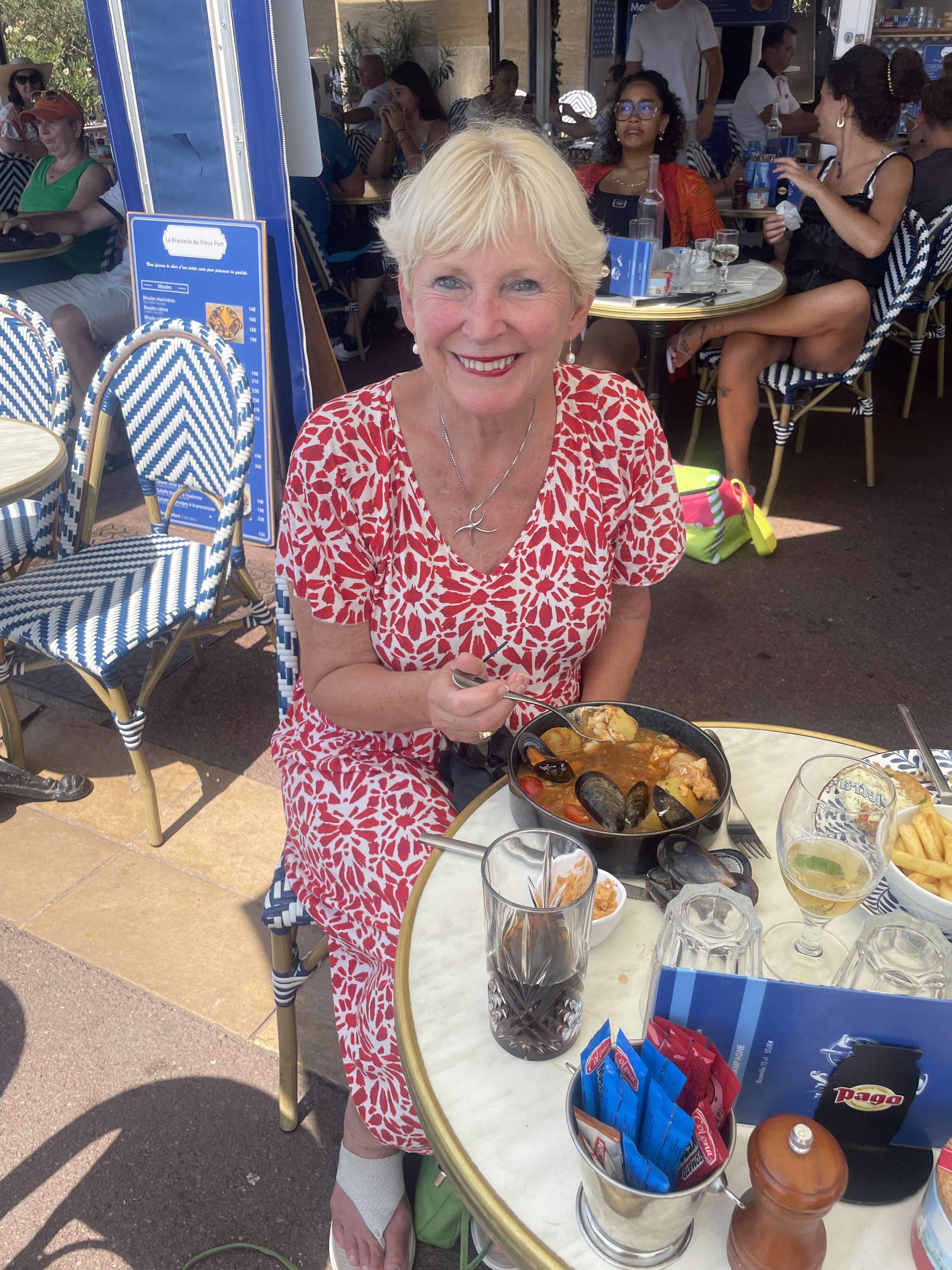
We dined on bouillabaisse alongside the marina; it was so good that afterwards we had to retire to our hotel to have a sleep and escape the heat for a few hours.

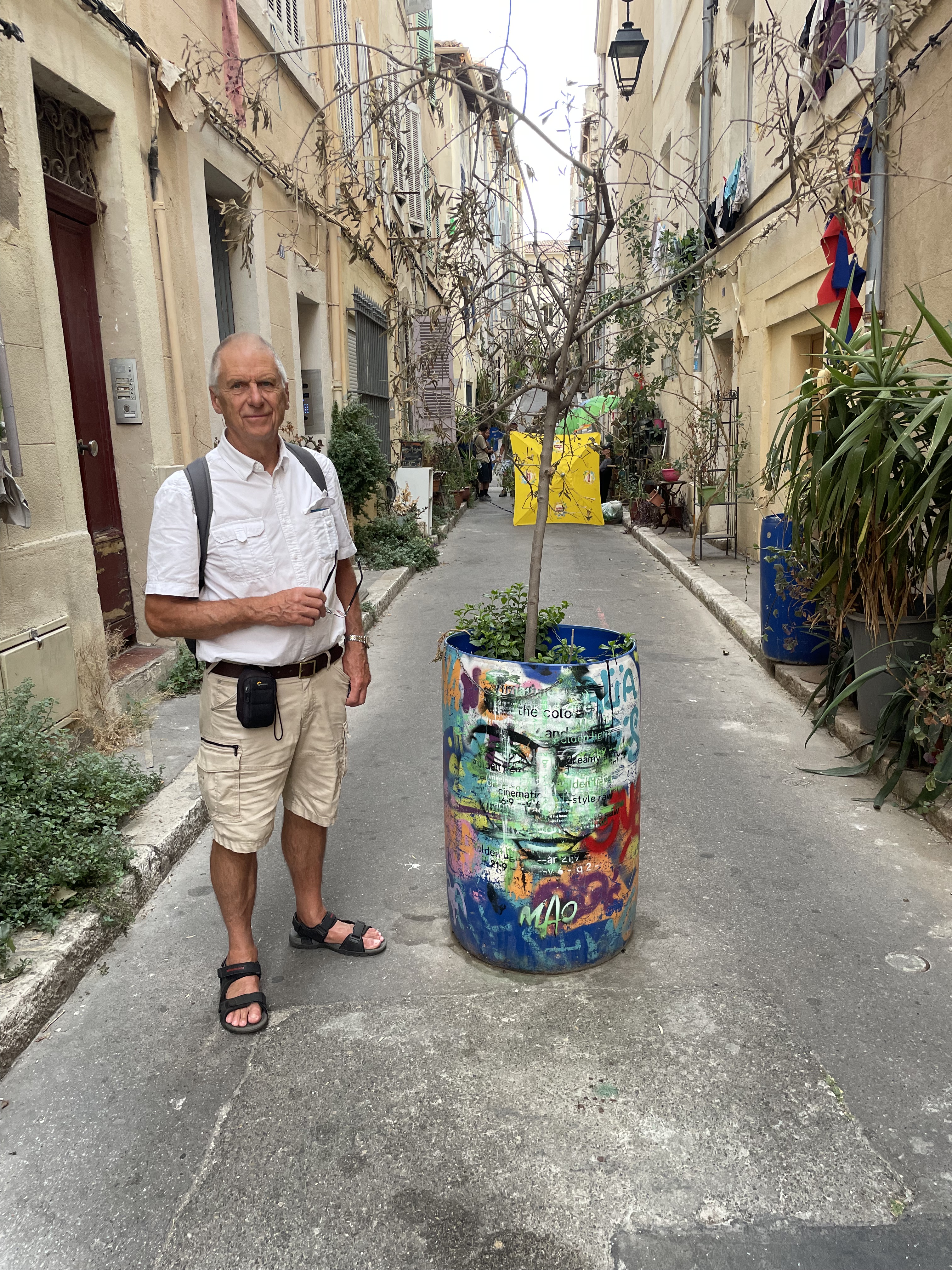
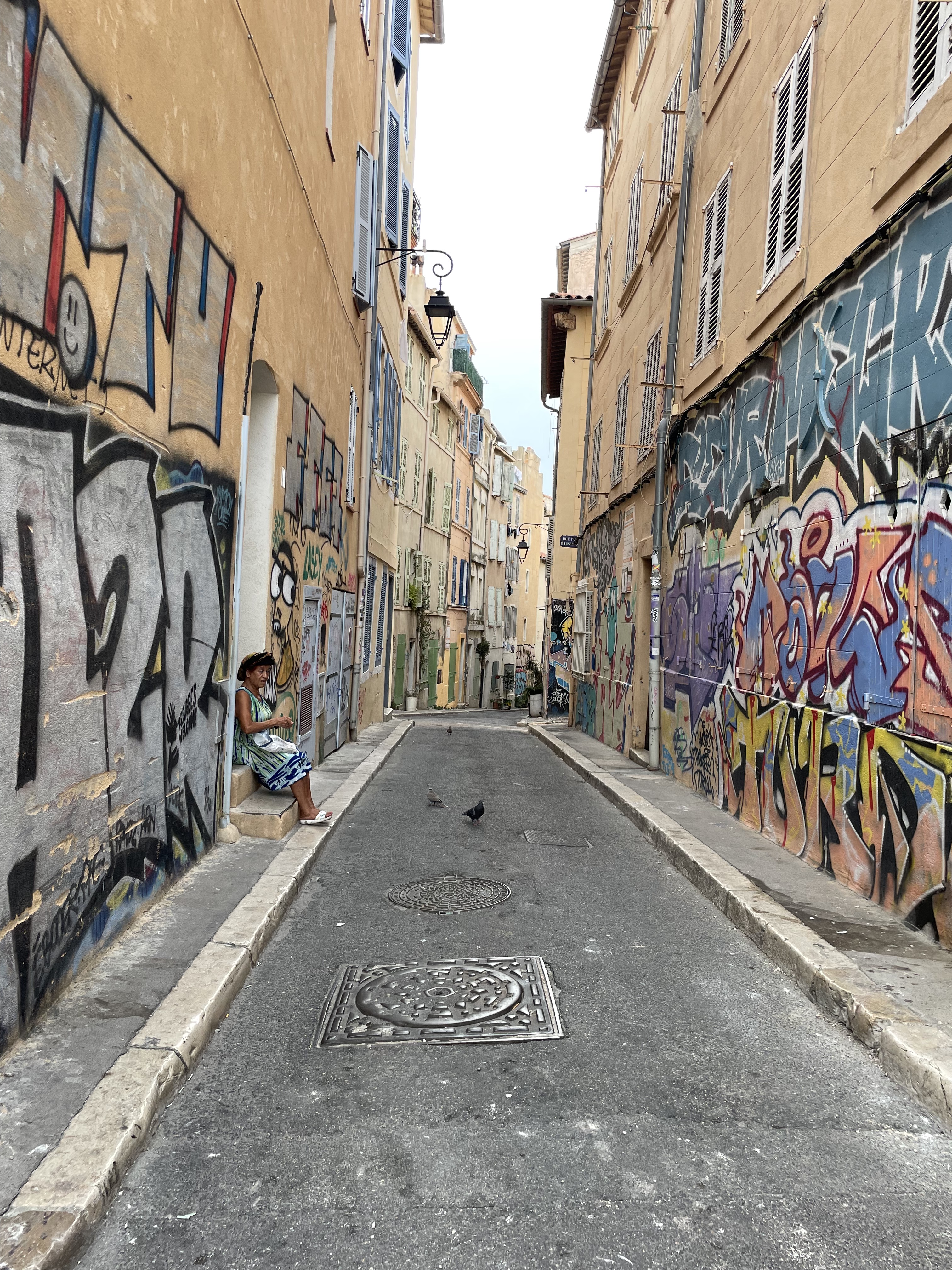
We ventured out later to explore the once dodgy area of Marseille, The Panier, which is the oldest part of the city. It was just so picturesque with amazing street art, restaurants and curio shops. I saw a shirt in a vintage shop with all the characters from the once famous Twin Peaks. Another shop held relics from all over the world including a pair of riding boots from 1812. I touched them reverently, just in case they had marched with Napoleon. We got lost but somehow found the Cathedral and the fortress that guards the harbour. We were exhausted. We had walked 12km and the temperature hadn’t dropped below 35C. We gobbled a crepe to end the day. It was a good beginning.
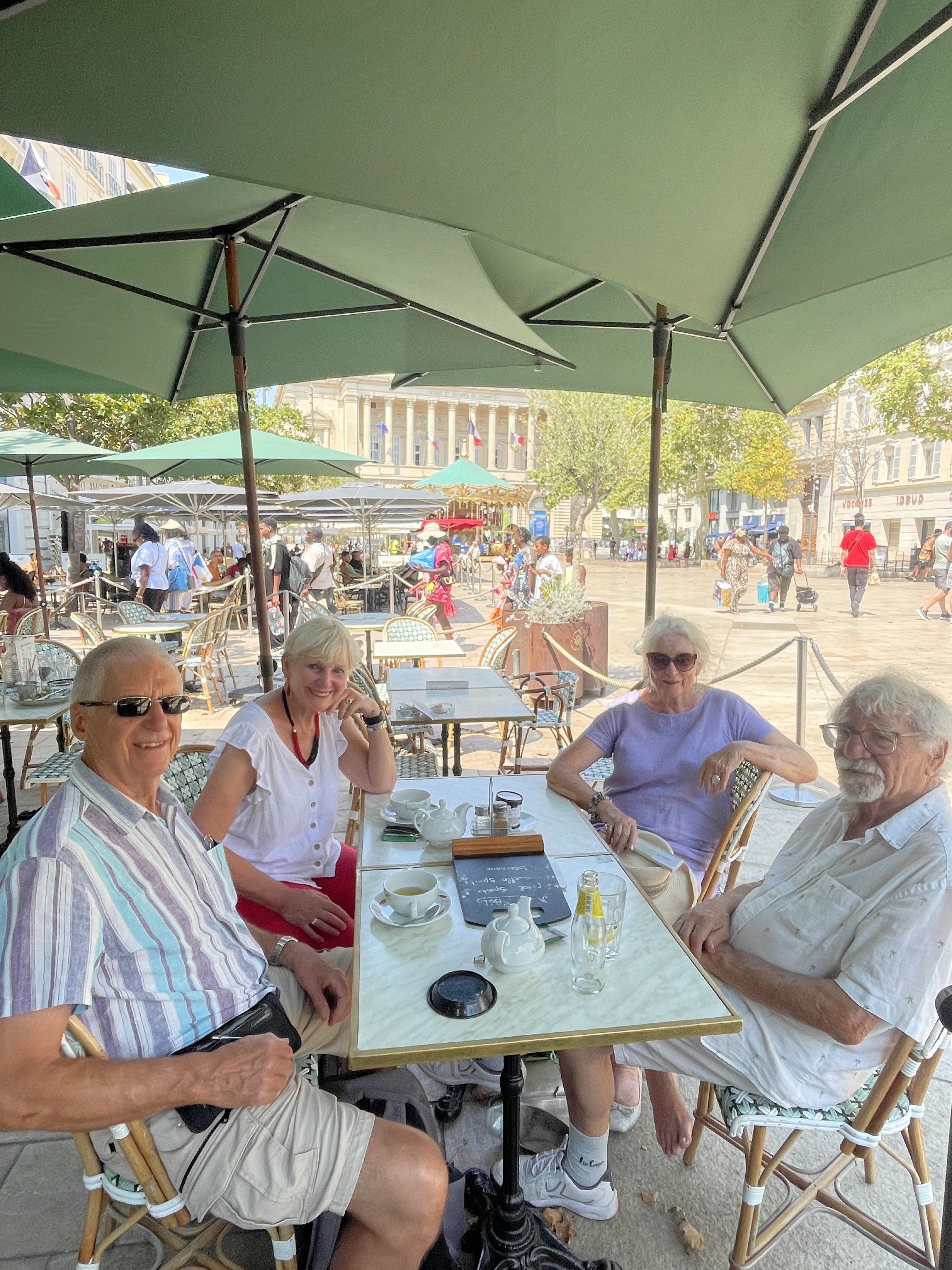
The following morning, we found a market and had a coffee. All around us people swarmed. I felt as though I were in Africa, Morocco or the Middle East. Spices, dates, peaches lay alongside cakes of lavender and almond soap. Of course we bought them all. Then on to meet our friends Trysh and Marcel and pass over the exquisite necklace that we had brought back from Malindi in Kenya. A gift from Gerry to her sister. We ate in a Tunisian restaurant and learnt about Trysh and Marcel’s life in the south of France and how latterly they had been event planners in Marseille, welcoming groups of dignitaries from afar. The best story was of an event organised for a group of Japanese businessmen. Mikhail Baryshinov danced for them exclusively in the Opera House in Paris. The Japanese men were so jet lagged they slept through it all so Trysh and Marcel were treated to the most exquisite performance of Debussy’s L’Apres Midi d’un Faune.
Later in the afternoon we got the train for Sete. What a nightmare! The train broke down so we were all decanted out and transferred to another one, then a huge electric storm damaged overhead cables and phone lines and the signals weren’t working. All the way through the drama, the conductor, who had the diplomatic skills of a saint and a spontaneous translator from the UN. He rushed to tell us what was happening and of the latest catastrophe and how he had his doubts if we would make our connection. People were stressed; there was a feeling of panic and unease but all the way through this conductor kept rushing back to give us all the updates (in English). He had managed to communicate with the Perpignan train, and he was quite jubilant that it was going to wait for us. He treated us as though we were members of the British Royalty, it was quite amazing, though a little disconcerting as he had a chunky golden torque through the end of his nose – yes, his nose, he had a ring at the end of his nose!
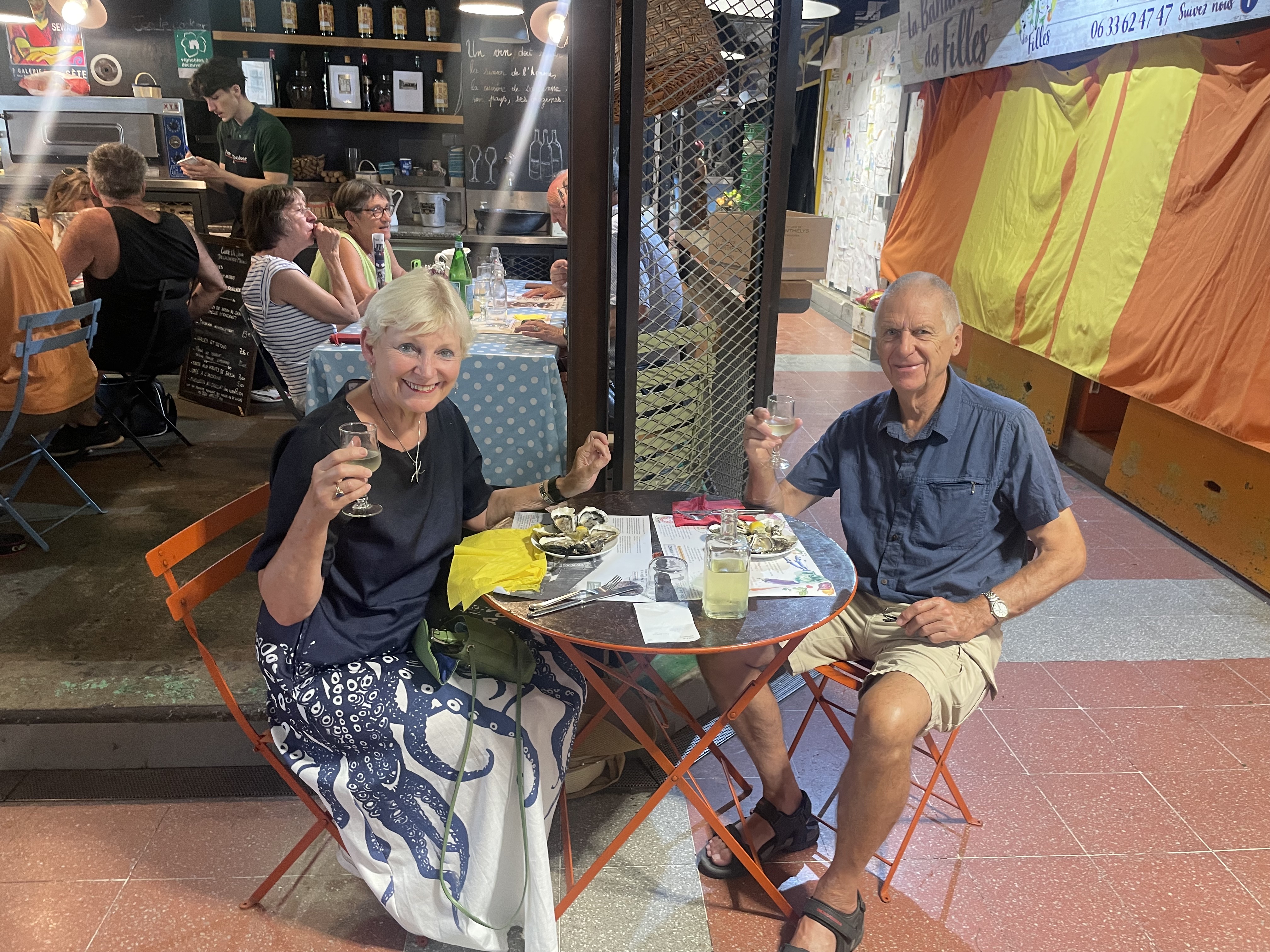

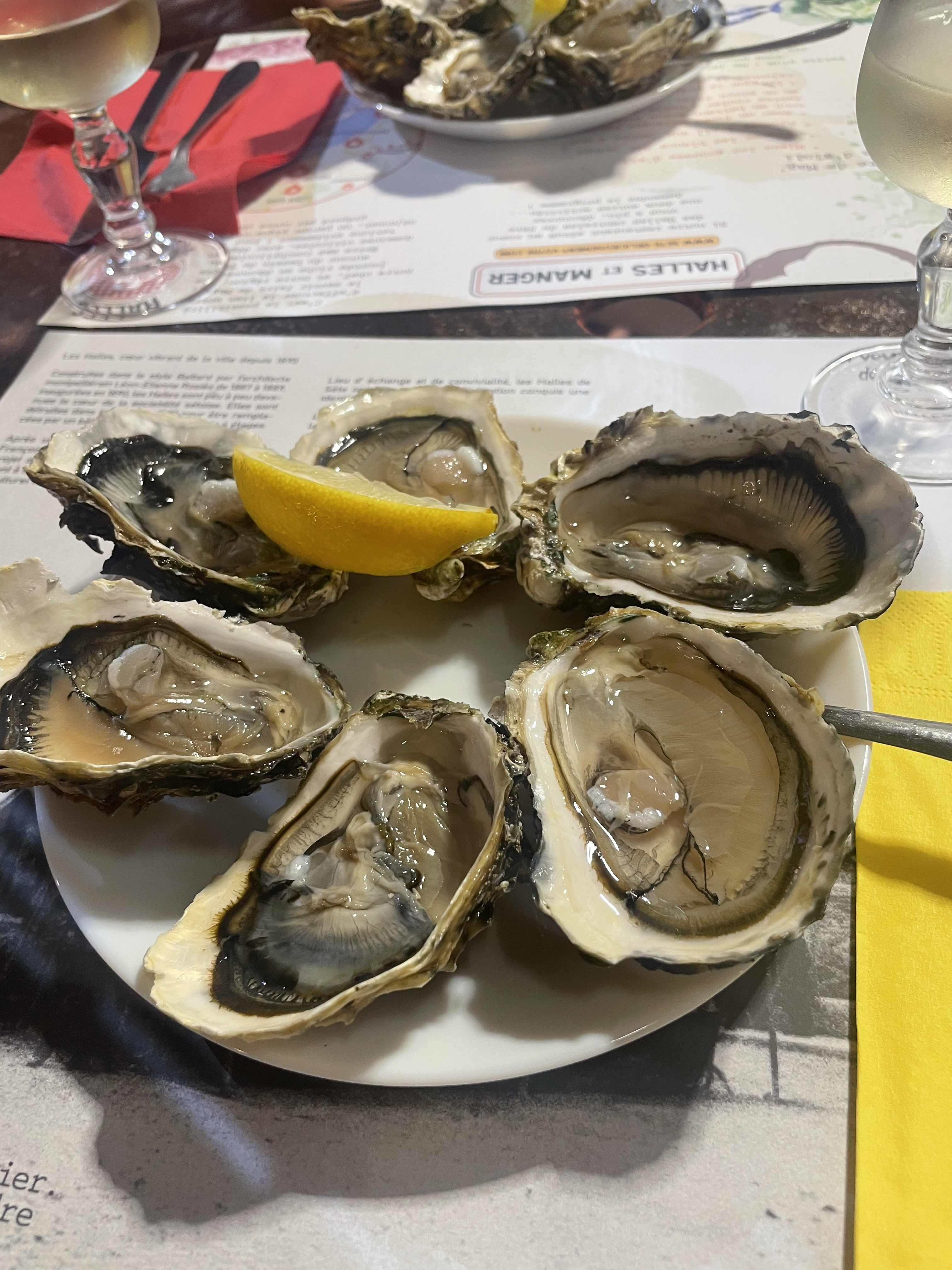
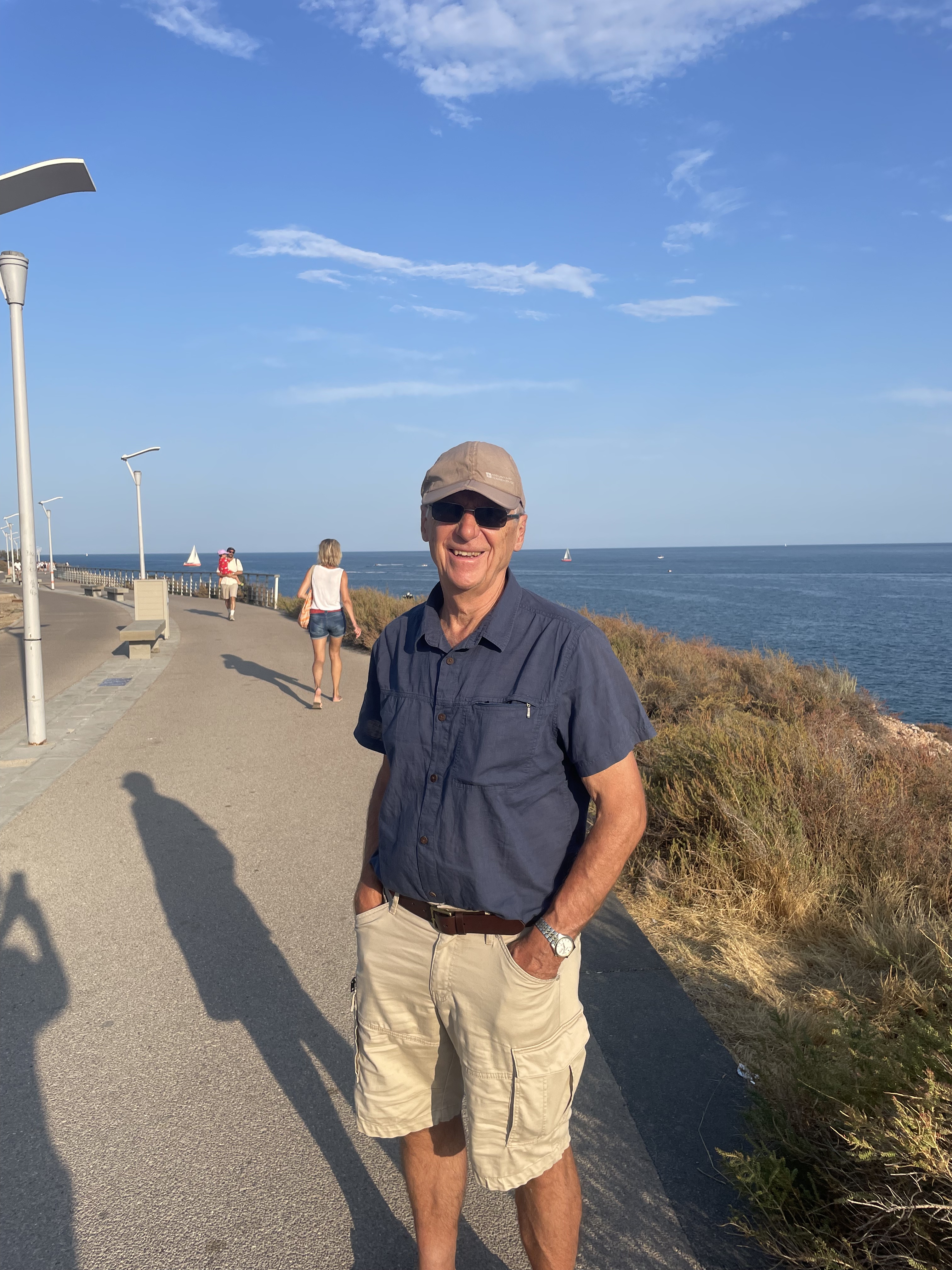
We finally arrived in Sete, the busy harbour city that is so reminiscent of Venice with all its canals and boat traffic. We had stayed there two years ago so it was nice to return. Of course, our first mission on the first morning was to rush to Les Halles market and see all the fish and tomatoes and olives and smell the freshness of the produce. We decided to have oysters for lunch, as Sete is the biggest producer of oysters in the whole of France. A little white wine would go nicely.
‘Wait! Attendez 10 minutes, I must clean!
We waited as the maestro smeared a damp cloth across the table. The restaurant was run by ‘Joe the Cooker’ – could this be him?
‘Sit! Now what you dreeenk?’
‘Wine.’ I said.
‘Yes, yes, but what?’
‘White.’ I replied.
‘Oui, I understand, but what?’ He tsked with his tongue.
‘Cold,’ I said, ‘White and cold.’
‘Oh la la!’ He flounced off and came back and plonked a bottle on our table. The label read: ‘Addict’…
Hmmm. Anyway, it was good, as were the oysters. Then we met a middle-aged couple eating stuffed squid; they were Scottish and celebrating. They had just completed a cycle run from Switzerland following the route of the Rhone to the sea. It had taken them seventeen days, travelling 60-90 km a day in scorching heat on hired bikes. I was impressed. I also couldn’t help admiring the lady’s bronzed biceps.
In the next few days, we walked and walked in sizzling heat; it was as though we were training to be Spartans, frequently rewarding ourselves with glasses of icy cold citron presse.
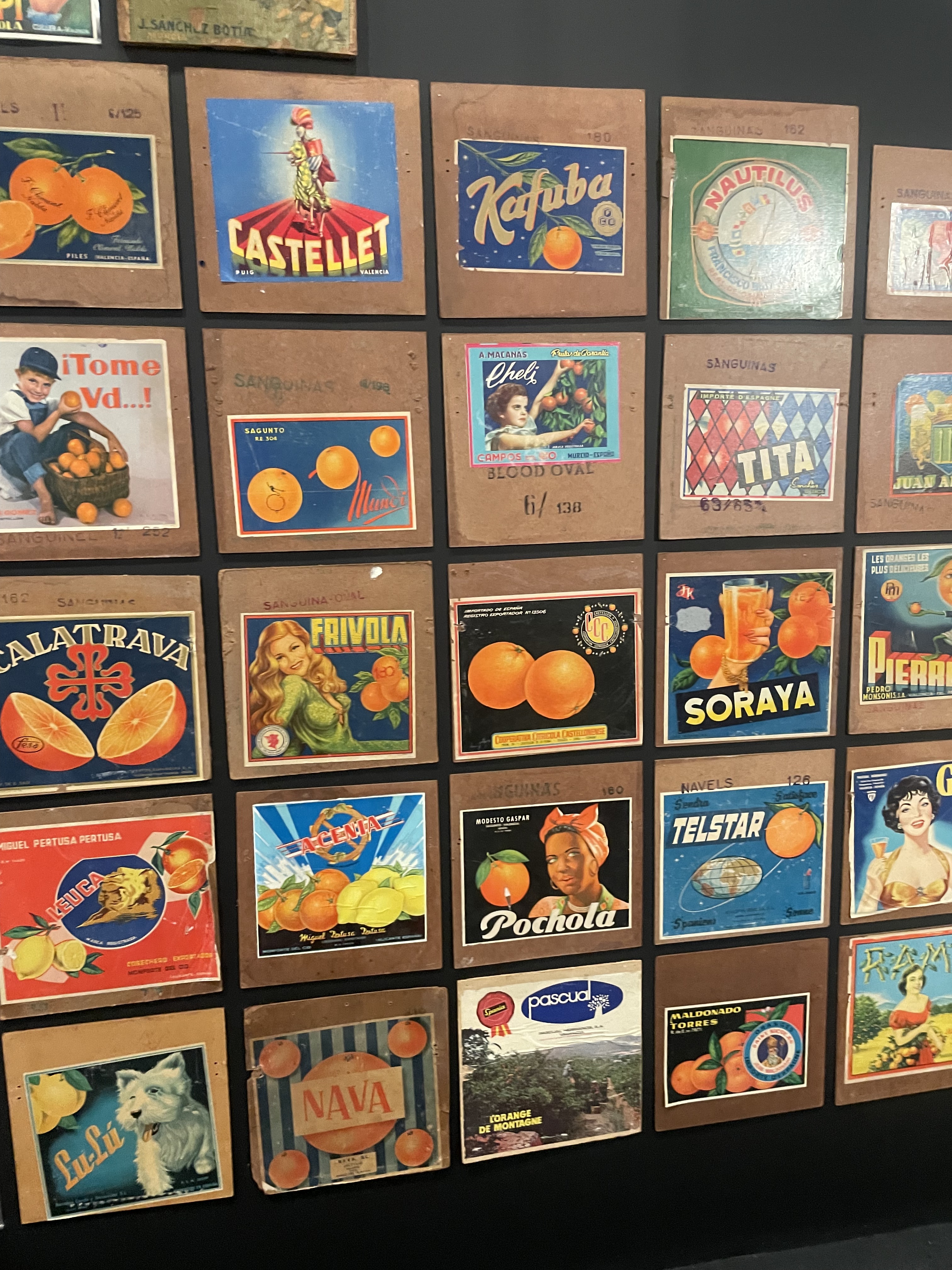
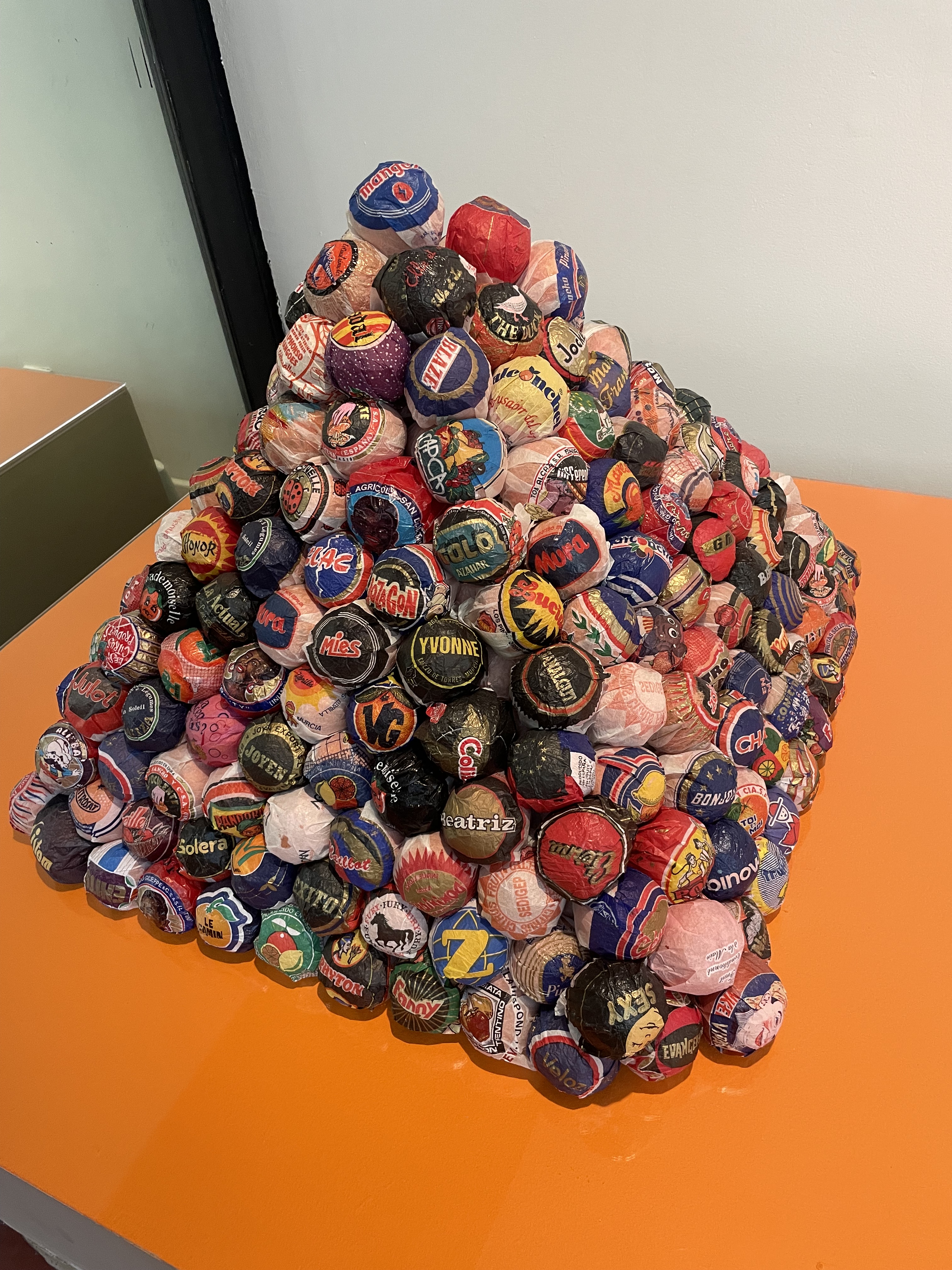
We visited an art gallery where the main exhibition for the summer months was focussed on the tissue paper that wraps oranges. I had no idea there were so many, from so far afield and with such pretty designs. There were also the boxes the oranges were transported in, the trucks and their advertising logos. Why had I never given these a thought before?
I found a shop specializing in Madeleines, and immediately I thought of Marcel Proust and his epic work, In Search of Lost Time. We bought six of the little cakes and later nibbled them with some tea. To me the texture and taste reminded me of Madeira cake, the kind I always used as a base for making trifle. To Proust, the taste of Madeleines transported him back to Combray, where he used to go as a child. He explores the effect of smell, taste and sounds that bring back emotional memories of long ago. So begins the first book, Swan’s Way. I nibbled my madeleine and was taken immediately to the afternoon I started reading his first chapter, that was the beginning of a major time in my life.
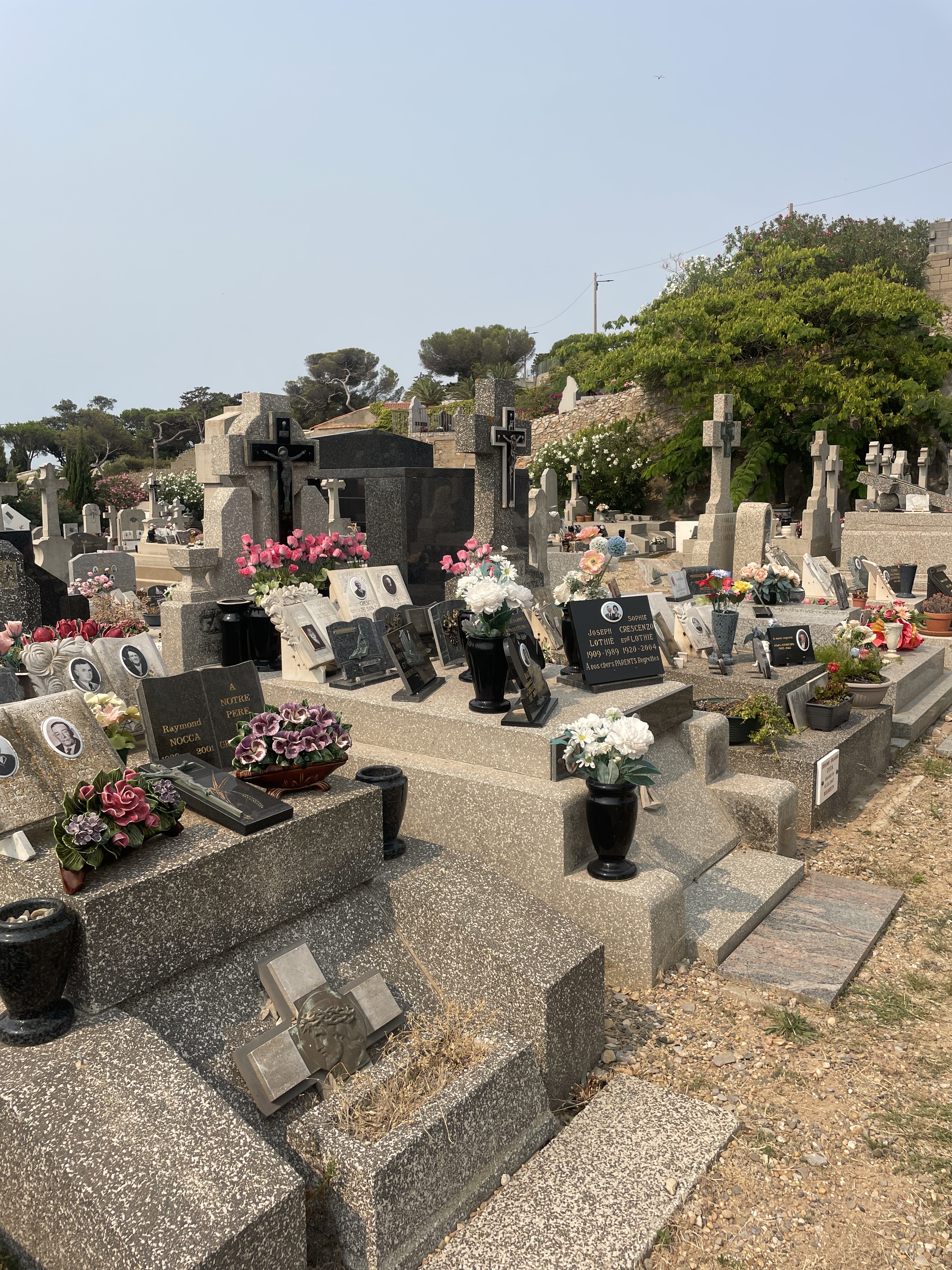
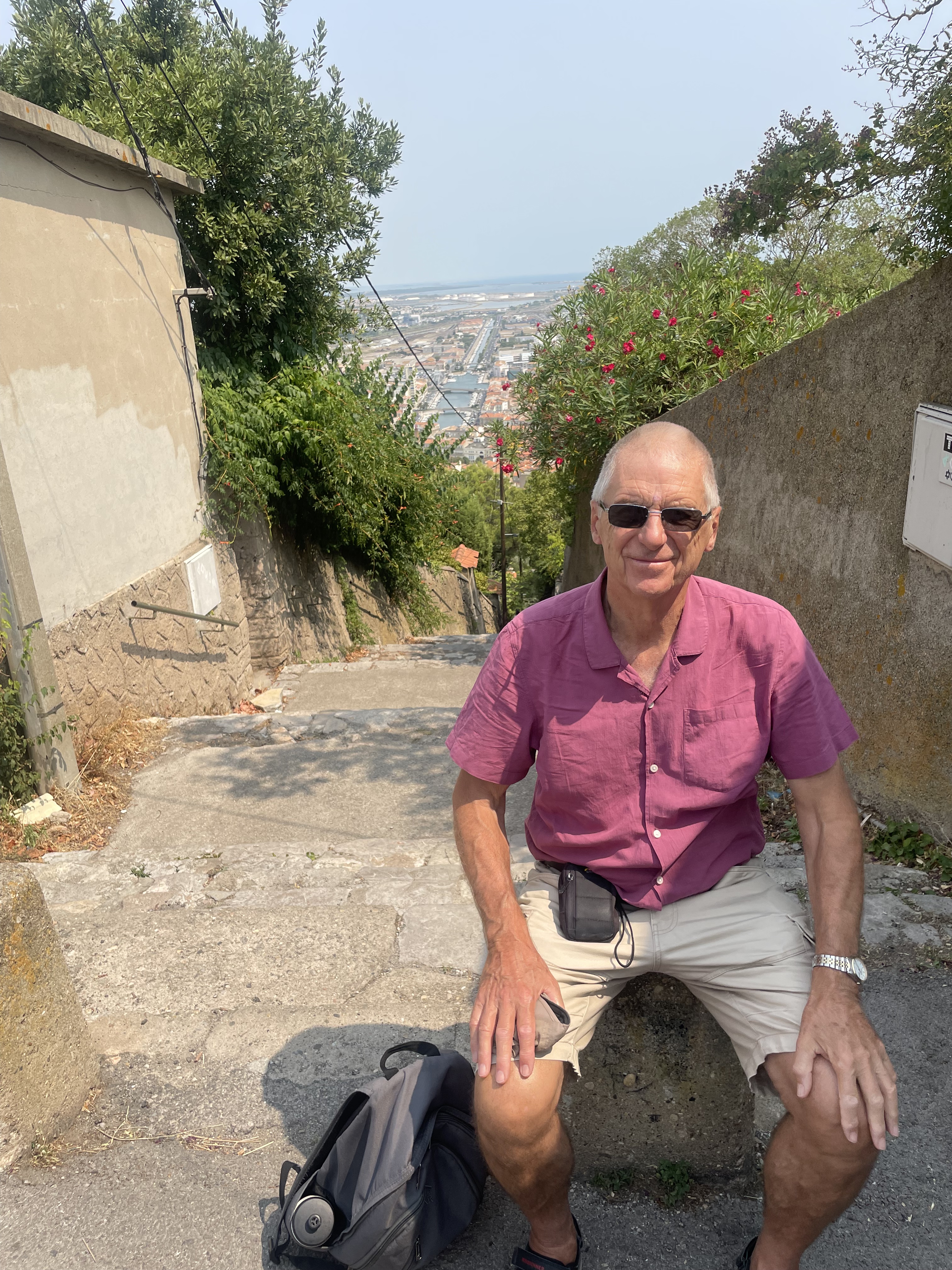
We did climb up Mont St Claire, stopping off to visit the Marin Cemetery. I was intrigued at the warmth and intimacy of the tombs, with family groups all together, complete with photographs. Laughing ladies, handsome gents, and there was a proud picture of ‘Michel’ playing boules or petain. Real people, not the sombre stones of olden day Scotland that we have been visiting recently with their skulls and crossbones and hopeful messages to the Almighty and austere quotations from the Psalms.
Each morning, we would walk the walk to the square dominated by the giant octopus and eat petit dejeuner surrounded by street art. Pigeons were often a nuisance, especially when they discovered the crumbs of discarded croissants. Our waiter was quite the vigilante and would come running at a large group of the birds with a vengeance, aiming the odd kick, like the professional pigeon kicker that he was. He so reminded me of Doris Lessing in the Golden Notebook. I will have to look it up again.


I loved the beach in Sete, of course it was too hot, but the sea was perfect, and we both swam and skulled under a perfect sky. The next few days my stomach was protesting from the effort; the neglected muscles had been forced to work. Not such a bad thing.
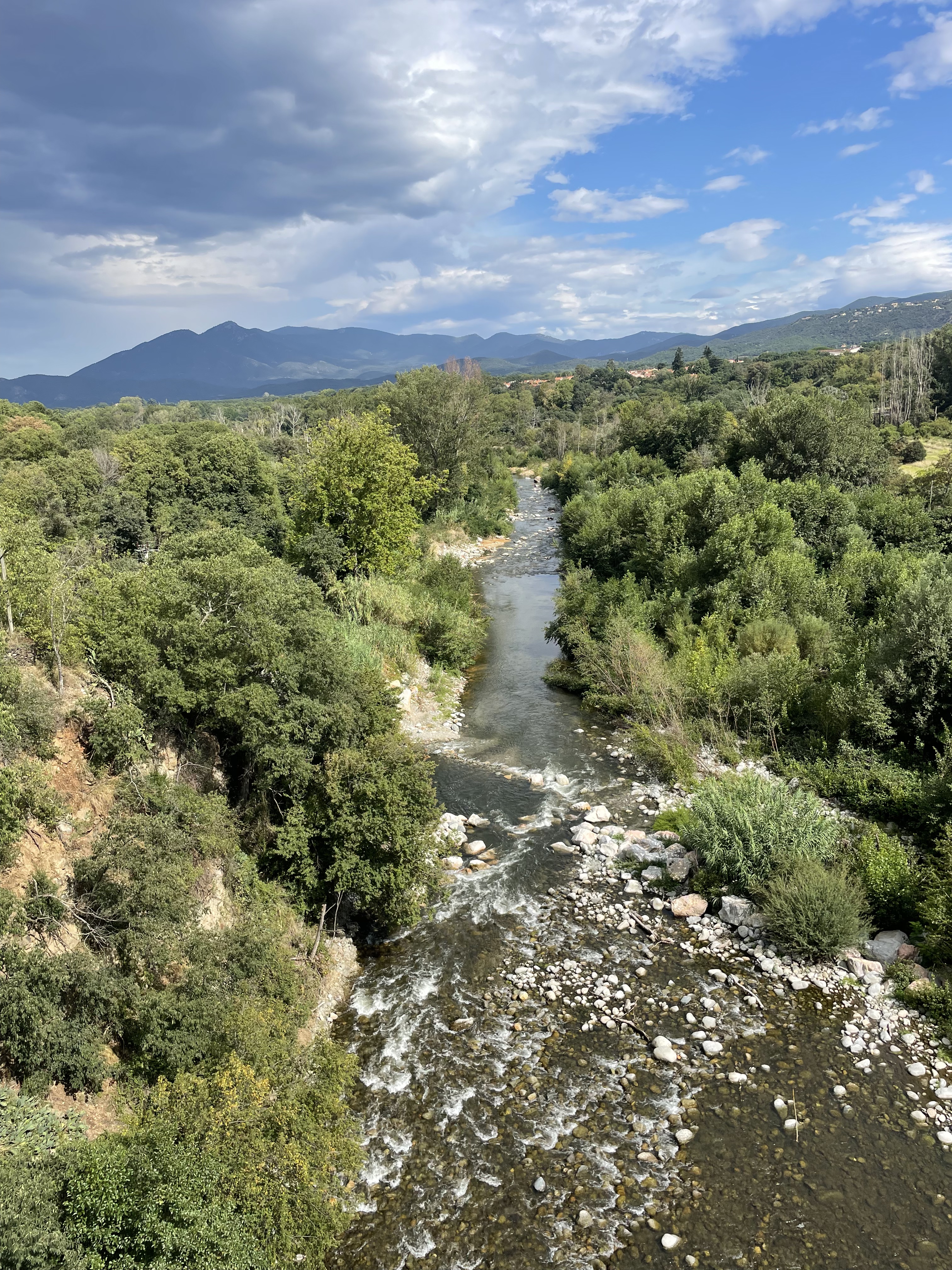
We finally left Sete on the Perpignan train, which was uneventful this time, there were no helpful conductors, and no incidents where we needed running translations. Instead, we found our way to the bus station and caught the bus that took us to Ceret. A jewel of a town, set in the Pyrenees Orientales. Mountains, pointy Mediterranean Cyprus trees and a myriad of streets replaced our sea views. It was all quite magical. Our apartment was on the third floor with panoramic views and overlooking the ‘Pont Diablo’. Of course we walked along the river, explored the streets, drank coffee and ate what we thought was a ‘beeeg cheeeken’ but translated as a guinea fowl with a forest sauce (mushrooms).

The Art Museum boasts pictures by Picasso, Dali, Chagal and Matisse – all who lived and worked here, when taking a break from Collioure on the coast. Nowadays modern artists are still ‘arting’ away and are given great respect. We browsed the Saturday market and bought anchovies, tomatoes, bread and peaches and took them back to our apartment to drink with cold Collioure rose, not at all the drink of an Addict!
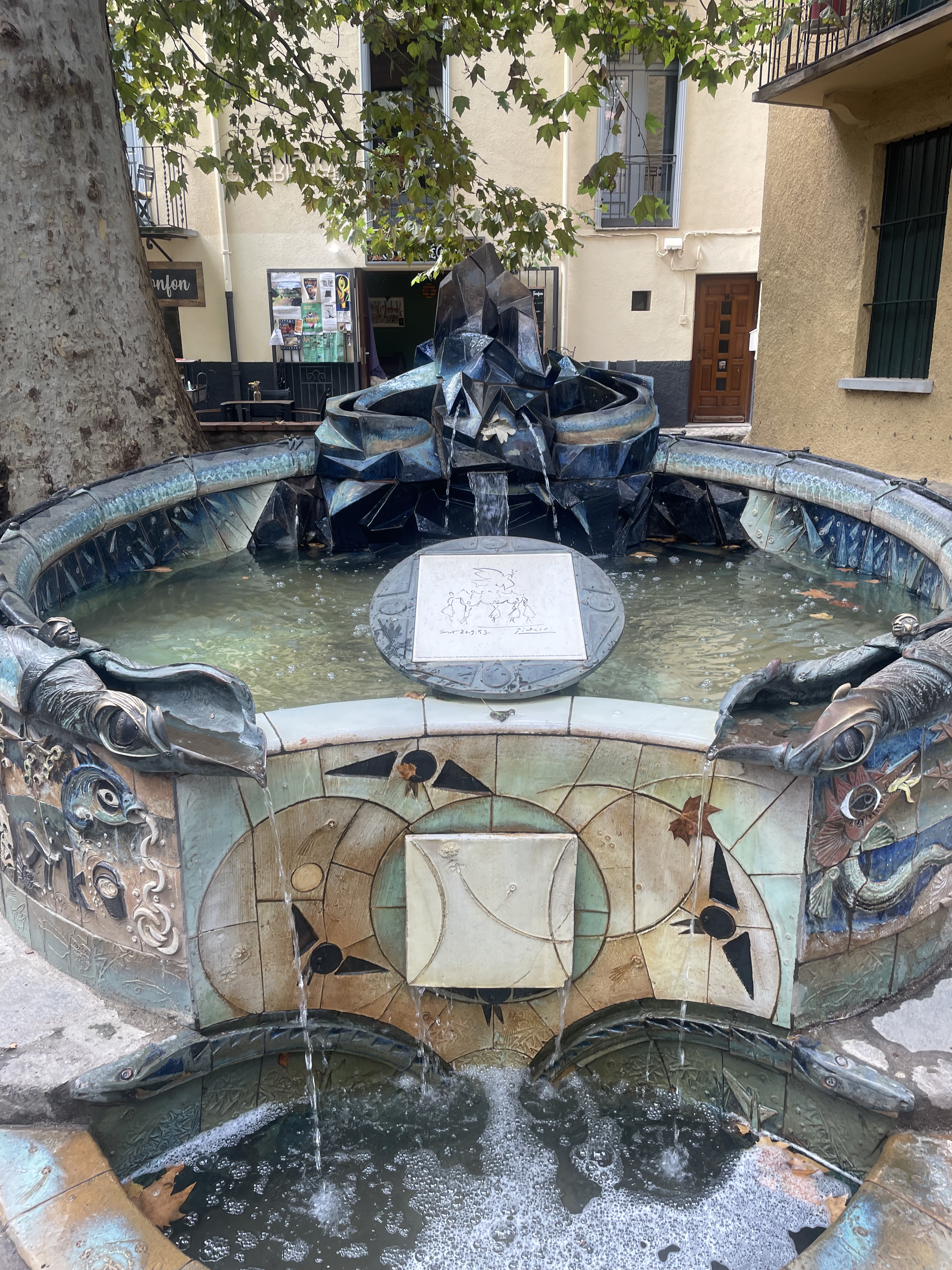
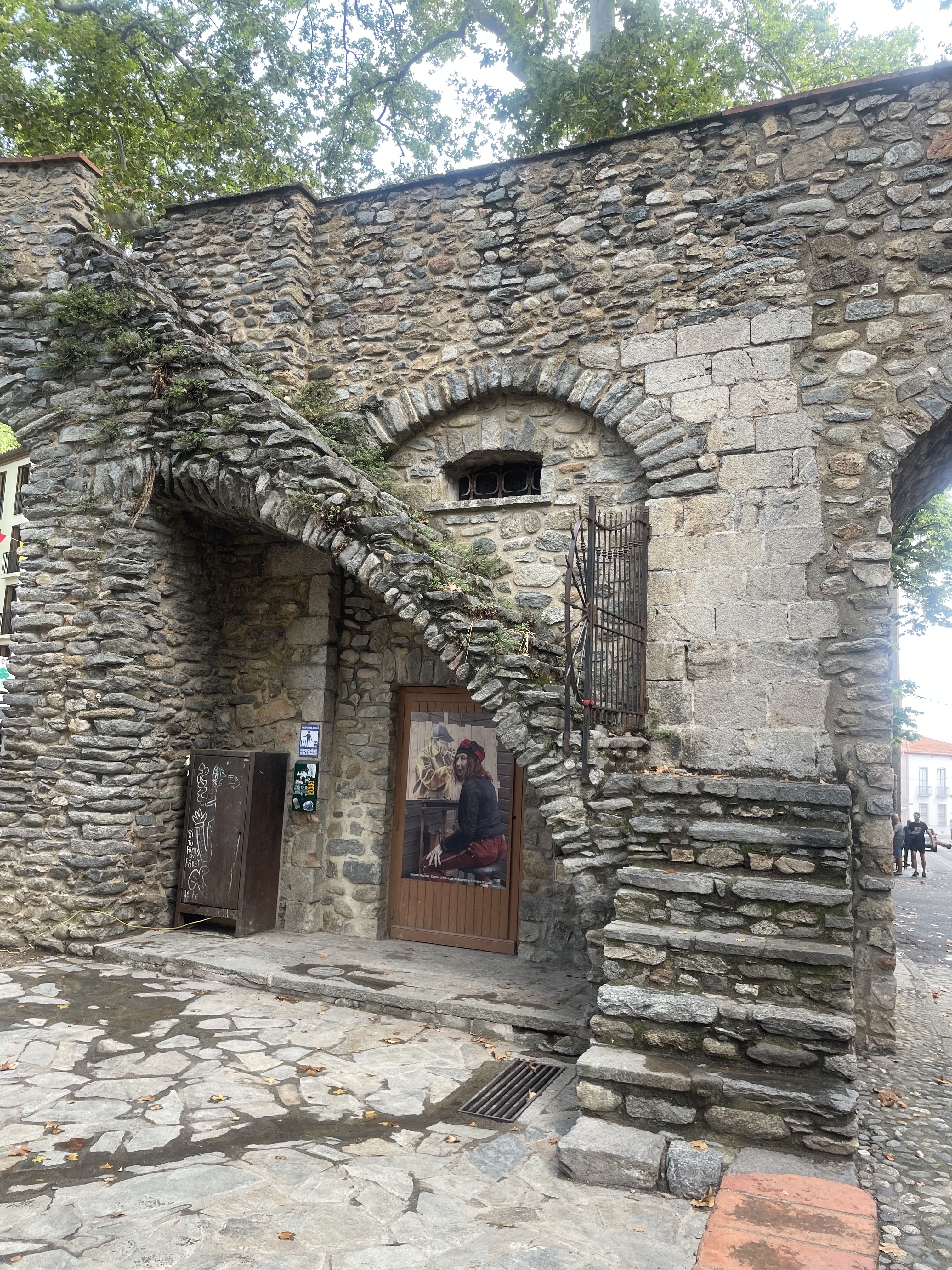

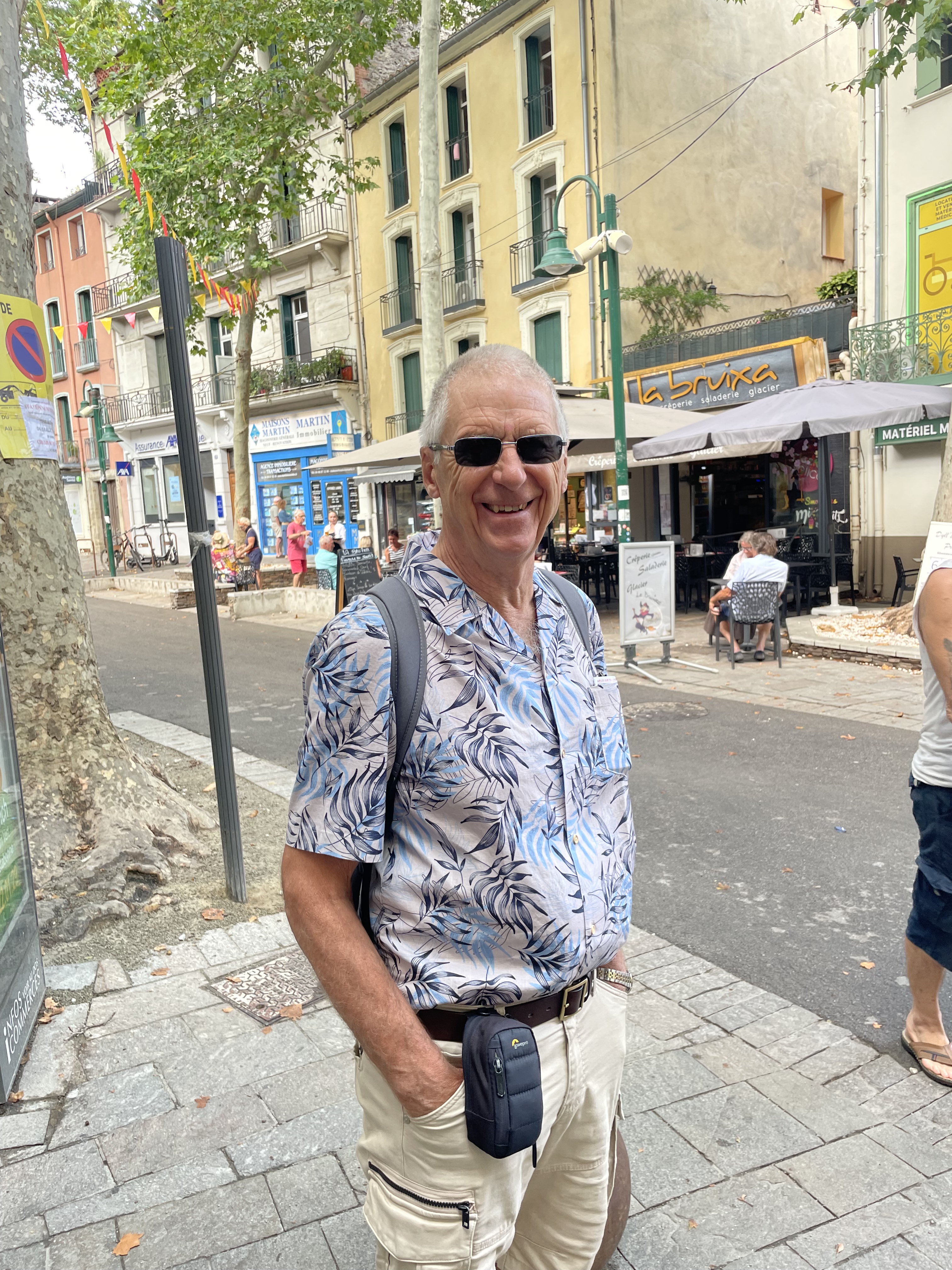
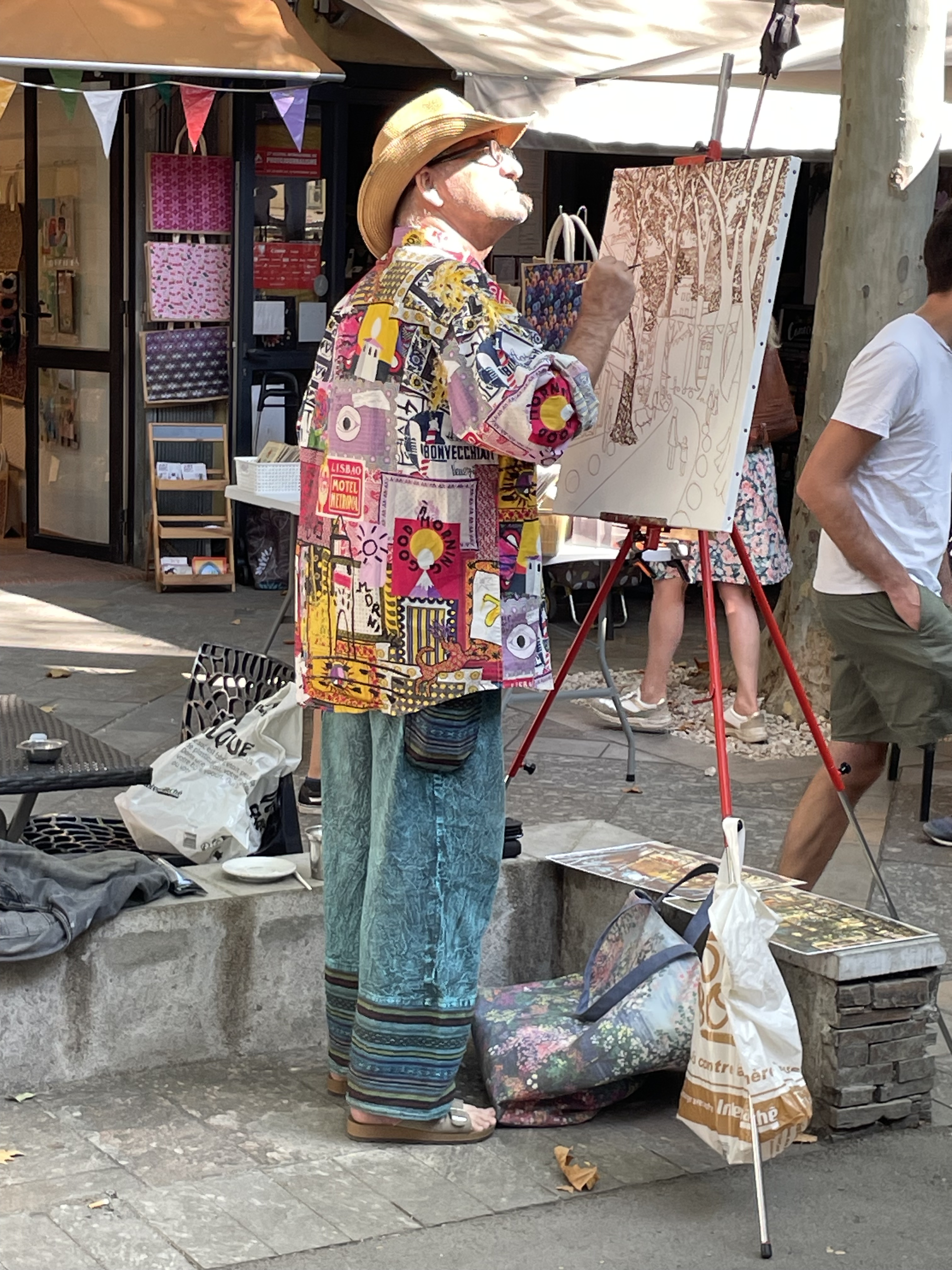
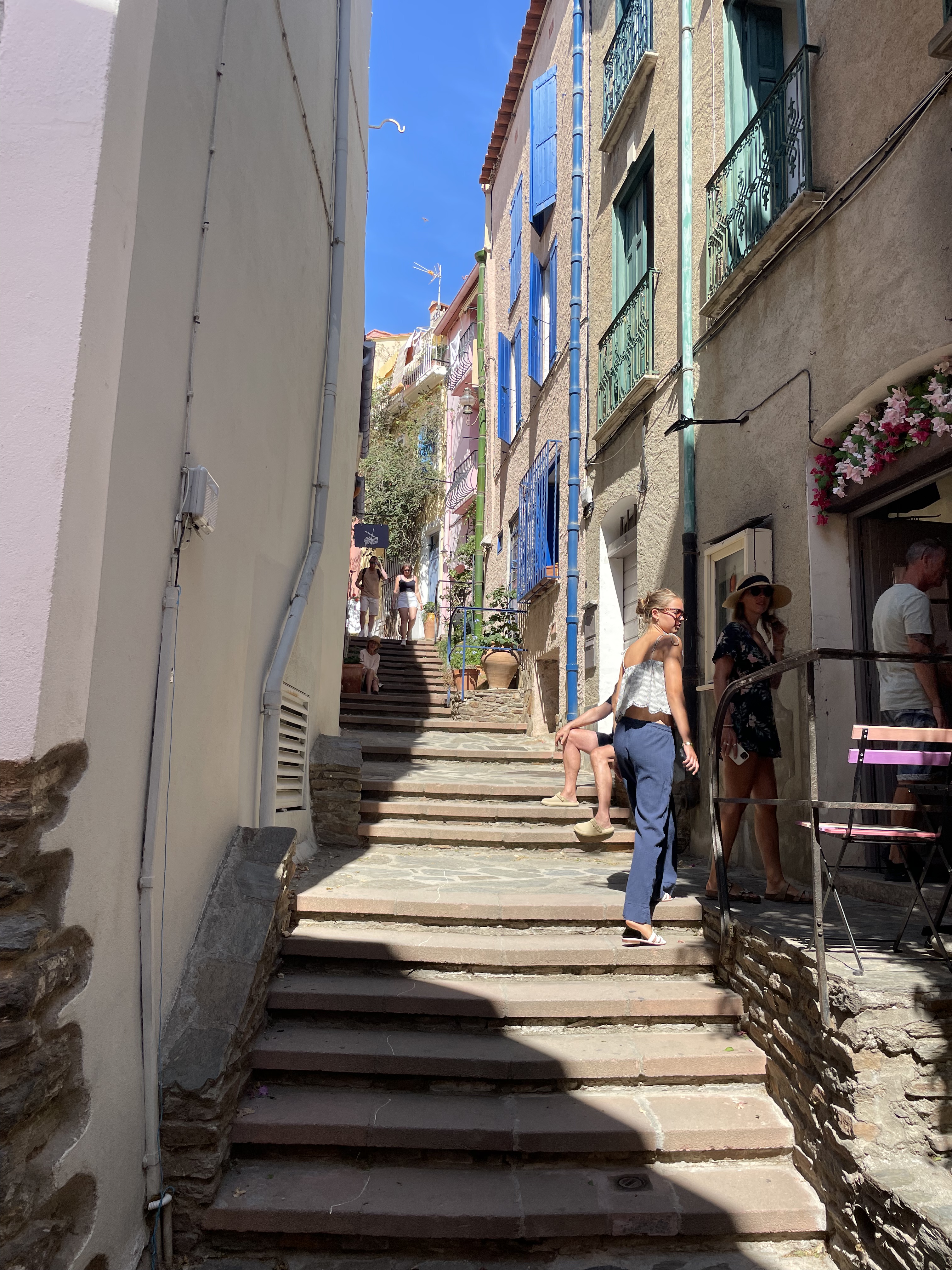
We did visit Collioure for John’s birthday and were utterly bowled over by its beauty, busyness and charm. Shops with dresses, soaps and jewellery and a hundred other temptations wove themselves into the tangled streets.
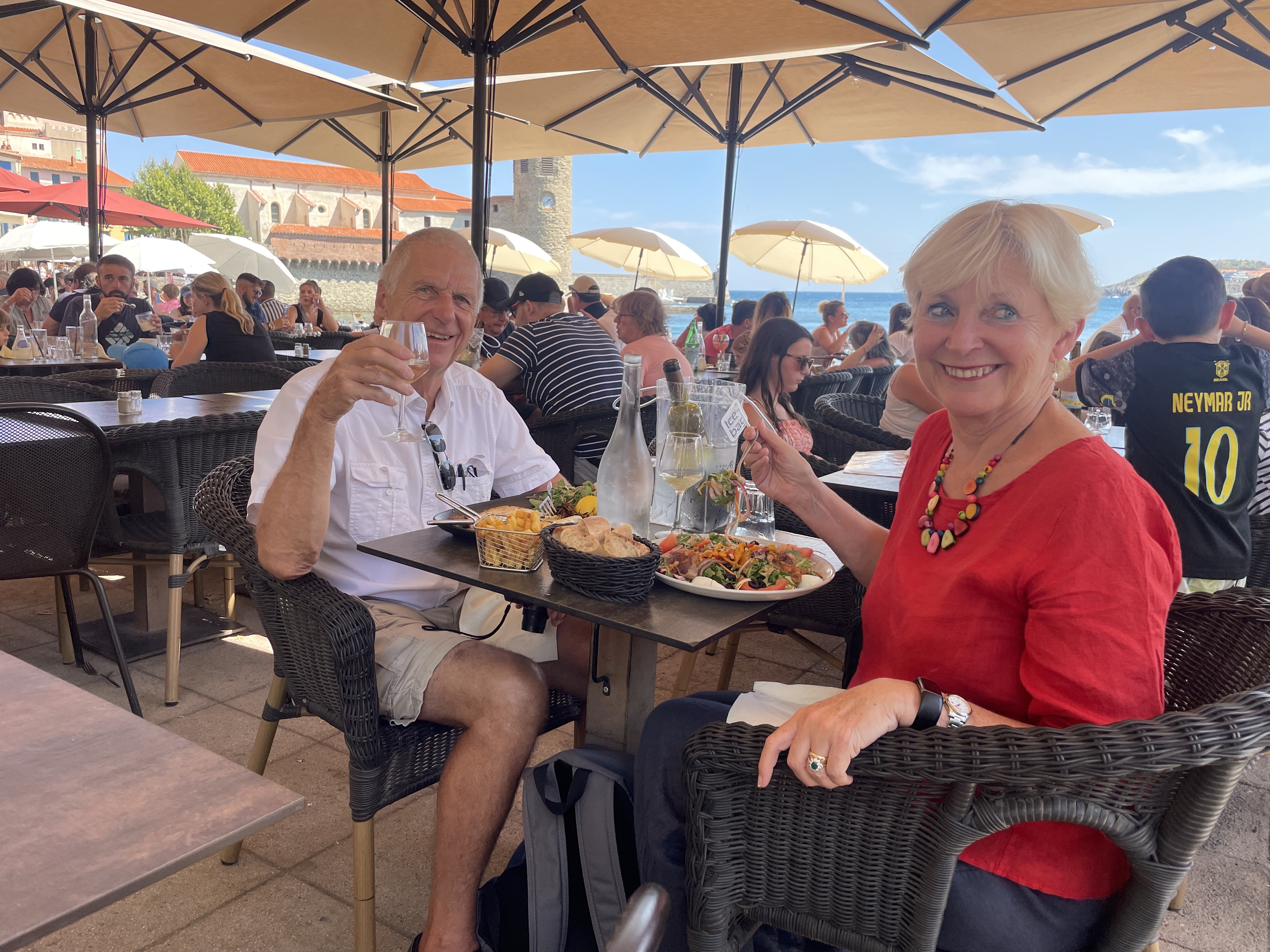
We ate the birthday lunch beside the deep blue waters of the Mediterranean. We had heavenly fish, loup and thon and salads and wine, served by a waiter who made us laugh. It was hard to leave such a perfect place. I remember having been there thirty years ago but had only had time for a coffee. I was bewitched then as now, and I even wrote about the town in ‘When the Golden Oriole Sang’ giving Freya and Amina a house up on a hill overlooking the sea. John and I didn’t even look at house prices – way out of our league I would say.


We came back to the quiet of the Pont Diablo and watched the sun set over the mountains of the Pyrenees and the pointy trees turn into a black silhouette. There was a quietness and serenity about the place.
Before we left, we did succumb to buying an oil painting of sunflowers by a Ceret artist. It is quite beautiful, painted in 1989. The artist is Adrien Puig and he was well known in the town and in France. We hauled it up to the third floor and admired it in the afternoon light. The problem was to get it home safely. It was oil on canvas and needed protecting for the flight home. John decided that he would somehow construct a covering for it with cardboard and bubble wrap. He set off on a mission to buy rope, plastic carrier bags and to find some stiff cardboard. Before he left, he looked up the French word for cardboard. It was ‘boite en carton’. Well, when he got back to the flat, he was hysterical. Apparently, he had gone into Carrefour supermarket and asked the young man at the till for ‘un boite en carton’. The lad looked at him strangely and asked, ‘petit?’

‘Non, non,’ said John, stretching his arms wide, ‘Grande, plus grande!’. The lad scurried off then proudly presented him with a box of Durex, Large size!
John nearly collapsed laughing, ‘Non, non, I want cardboard box!’ By this time everyone in the shop was in stitches. John left the shop laughing his socks off, only to see a skip outside full of discarded cardboard boxes, dry and clean. He lugged some back to the flat and taped the cardboard around the painting. Thankfully, the picture made it home, and now we are looking around for a frame.

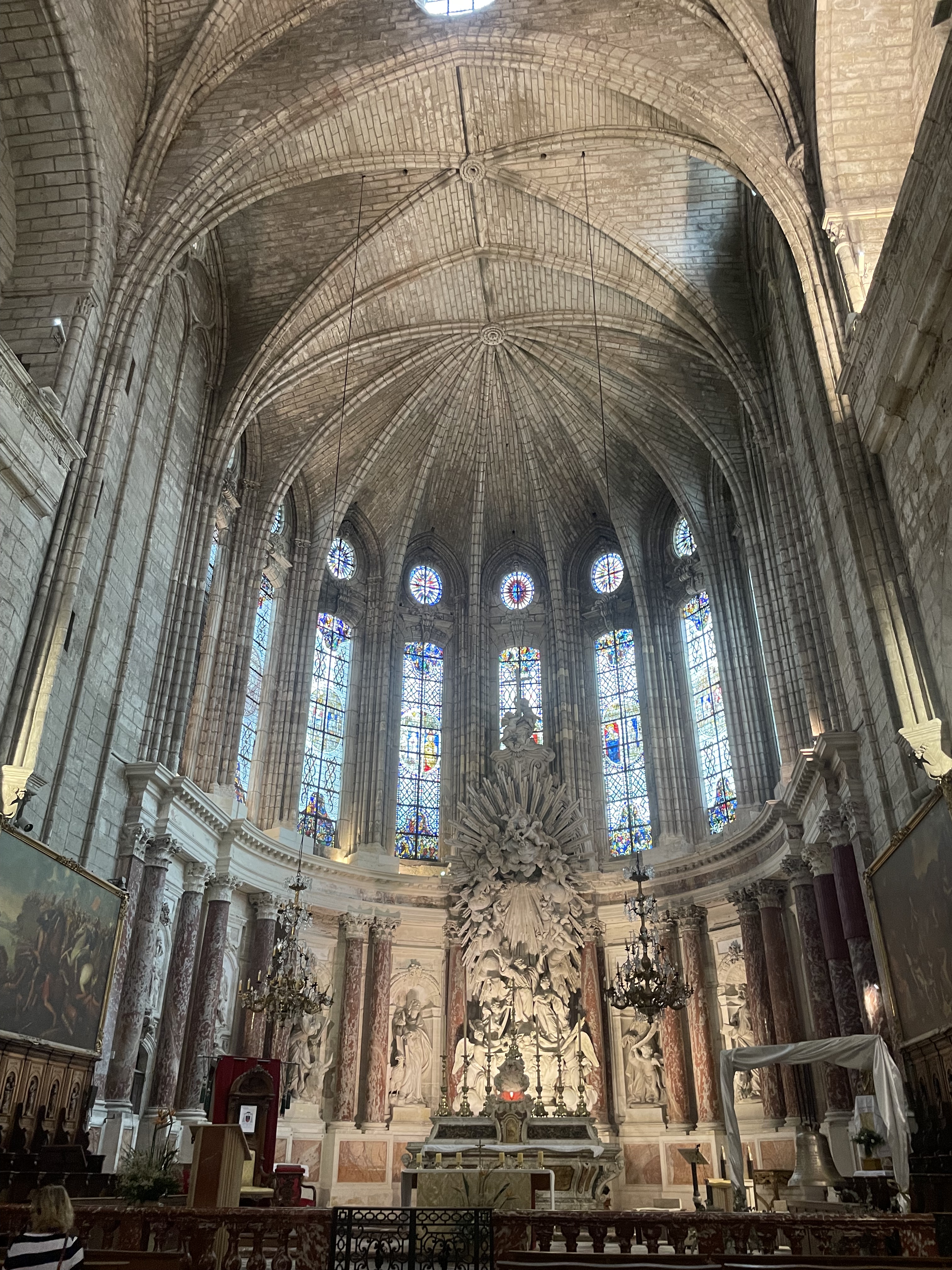
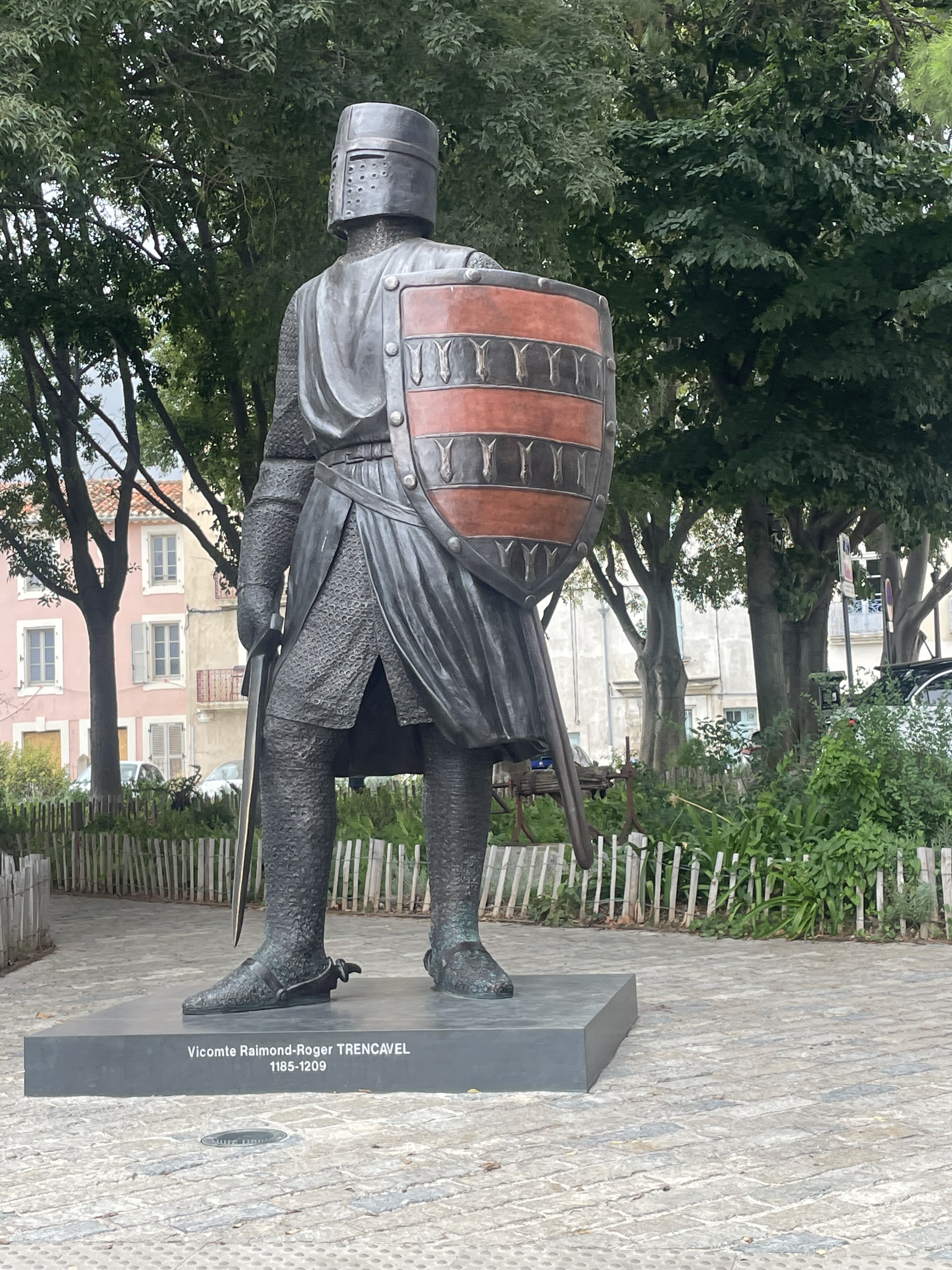
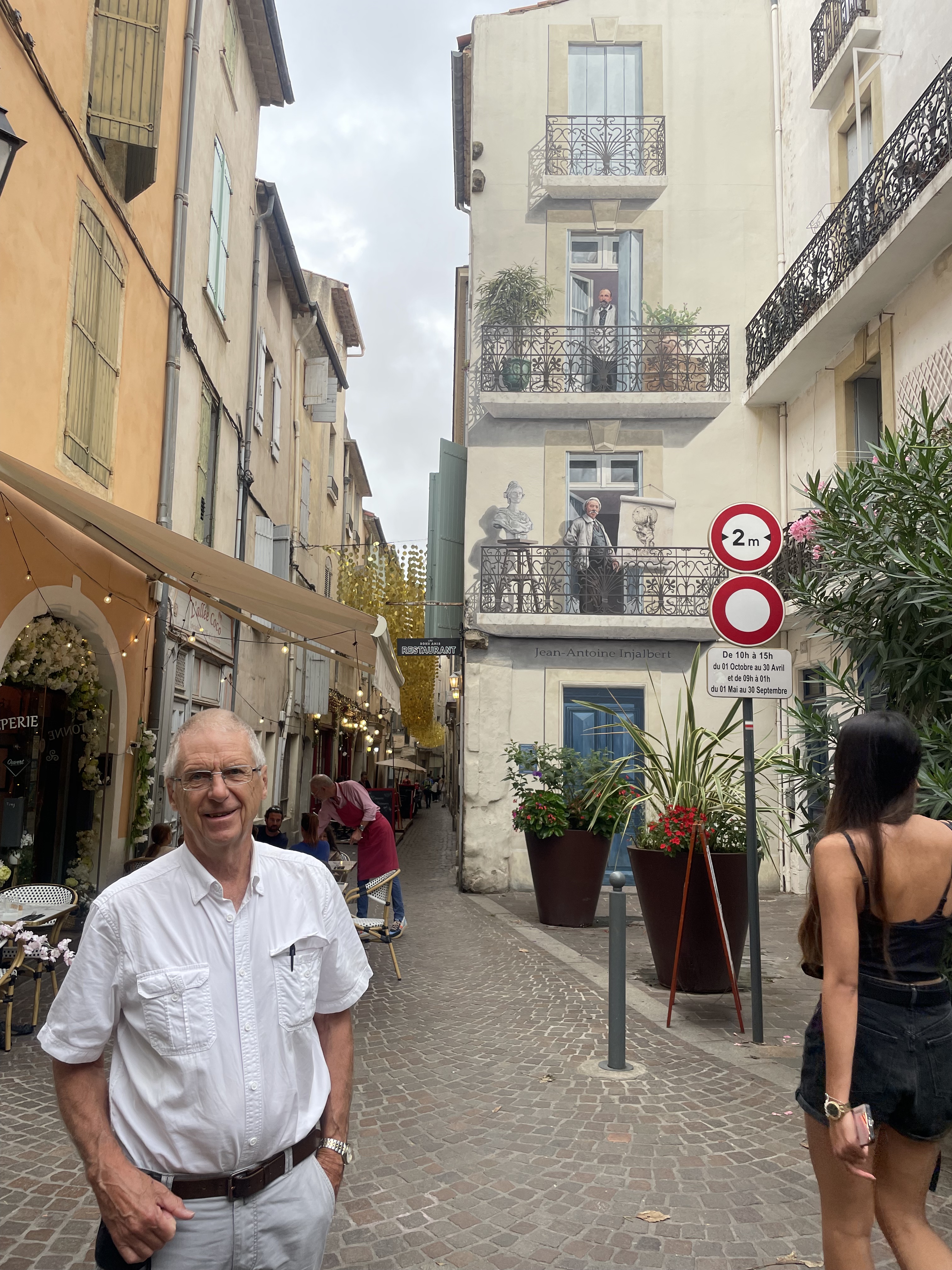
We left Ceret with our added luggage and retraced our steps to Perpignan and then on to Beziers. Oh my! What a beautiful city, so grand and elegant with plane trees and a cathedral to swoon over. Sadly, the history is a little dark, as Beziers saw its fair share of bloodshed during the awful murders and sieges due to the Cathar and Albigensian Crusades. The church of the Magdalene was the scene of one of the bloodiest events of the crusade and it is said the crusade army massacred 7,000 people in 1209.
The famous quote ‘Kill them all; God will know his own’ was uttered by an abbot before the massacre of Beziers. He didn’t know how to distinguish between Cathar heretics and Catholics so they were all slaughtered – the city’s entire population.

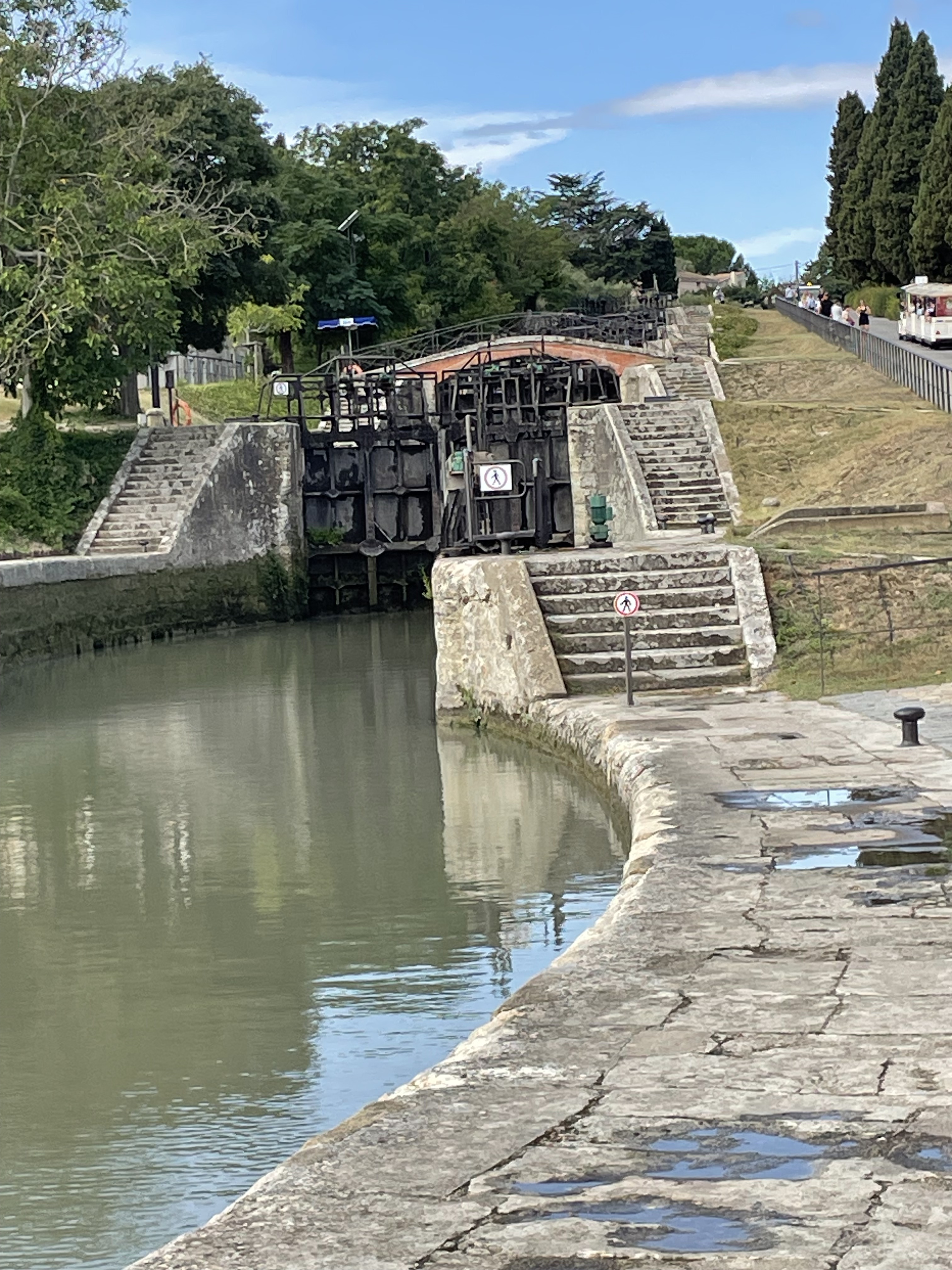
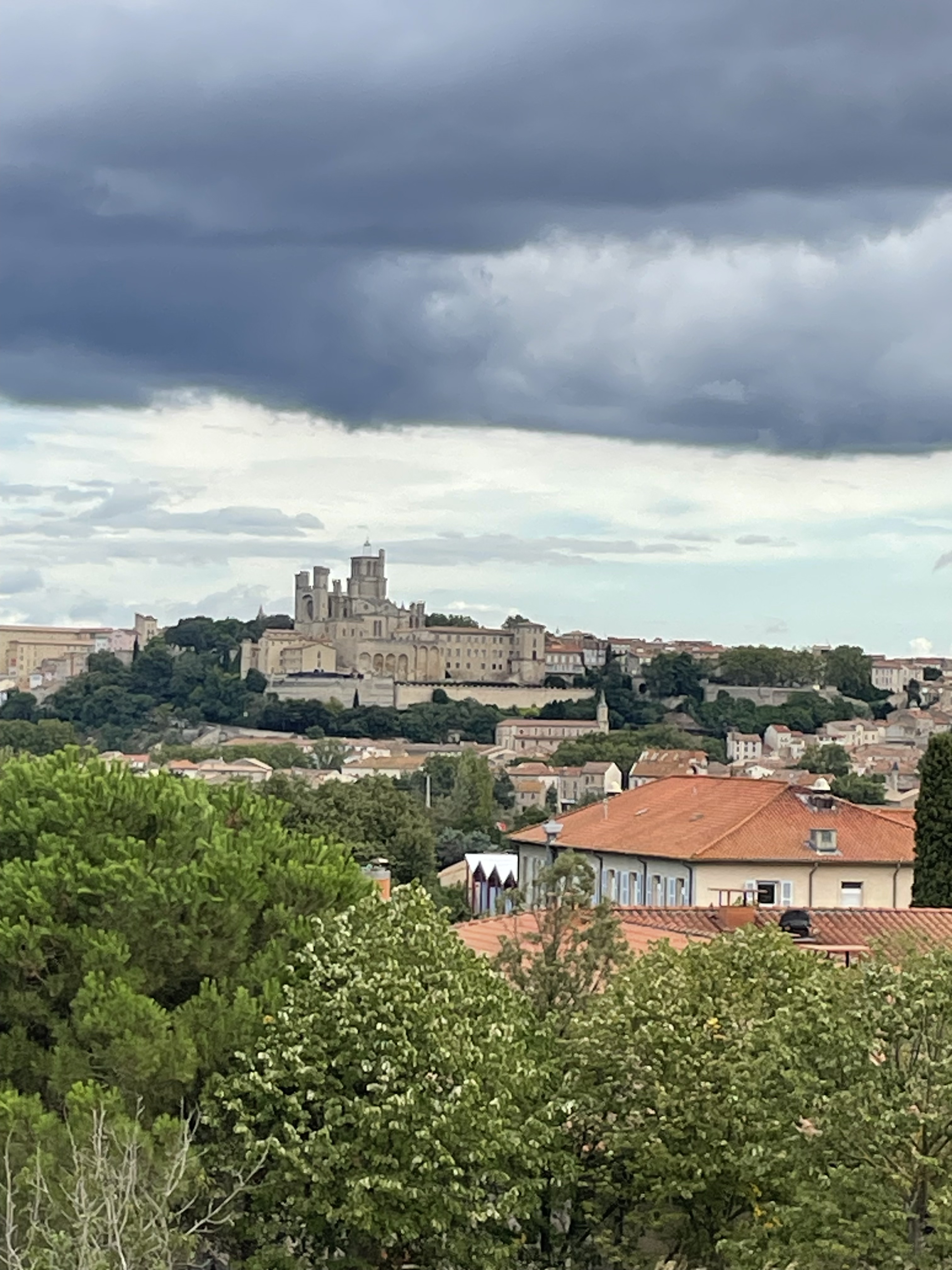
We also discovered the amazing Canal du Midi, built in the time of Louis XIV linking the Atlantic to the Mediterranean. Our Beziers man Pierre-Paul Riquet was responsible for the design of the nine locks. We stood, us modern day tourists, and marvelled at one of the most amazing feats of engineering of the 17th century. We idly walked along part of the way, and in the distance, we saw the huge cathedral of Nazaire dominating the landscape under a dark, moody sky.



We had seen so much. We had walked and shopped; swam and learnt about the places we visited. We were charmed by the warmth and kindness of the people we met. And now we have our painting, some lavender soap, and so many photographs. The South of France in August? Yes please! I would do it all again!

 Tales from the Gael
love this blog and I can’t wait to go to France and experience some of the things you write about! You always manage to bring everything to life !