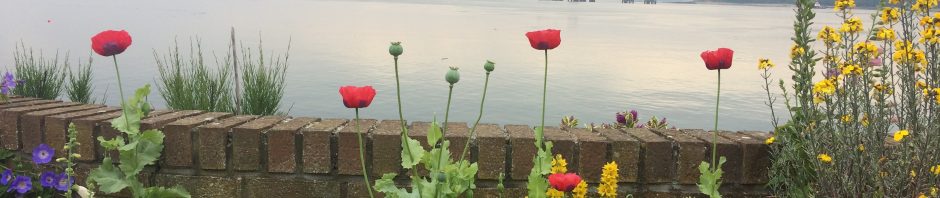
I am home. The laundry is done, the garden has been tamed and finally I can look at the notes I have been keeping over the last month. Here I look outside at the sea, calm as silk, with an ominous dark cloud on the horizon. The garden is loud with the sound of bees. Poppies are dense in the flower beds. Summer is not complete without them. I find my notebooks.
Thursday 12th June.
I am lying beside the pool in the most beautiful hotel in Mombasa where we ate breakfast by a tree full of African yellow weaver birds. The man-made river that runs through the hotel is teeming with Koi carp and the sea and silver sands are fringed by coconut palms. This could be the start of a romantic novel, instead it’s the conclusion of a long arduous journey.

There is no rush this morning, no need to get to the truck by 7.30 a.m. Instead I look back through my photos and there we are, just arrived in Nairobi full of excitement. A new adventure: Kenya and a safari in three major national parks.
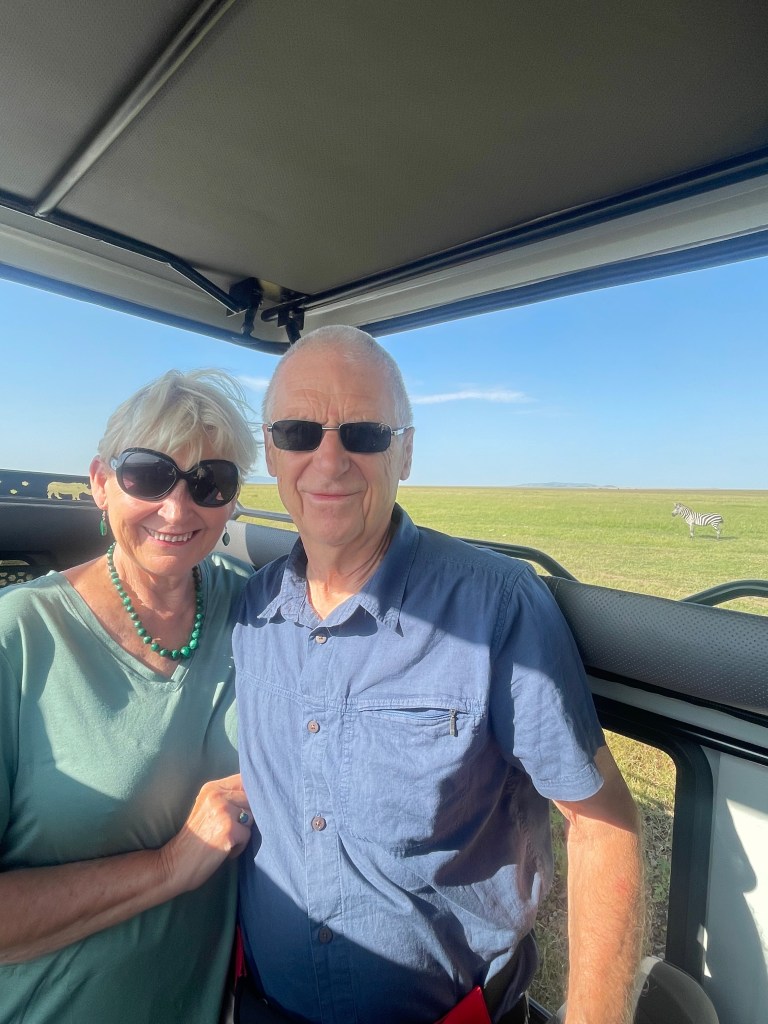
We woke at dawn on our first day and after breakfast we met Aziz, our tour guide, and our fellow travellers. We were eight in all, split between two large Toyota Landcruisers. We were given a crash course in basic Swahili – jambo (hello), hakuna matata (no worries) and assanti sana (thanks very much) and already familiar to us, courtesy of The Lion King.
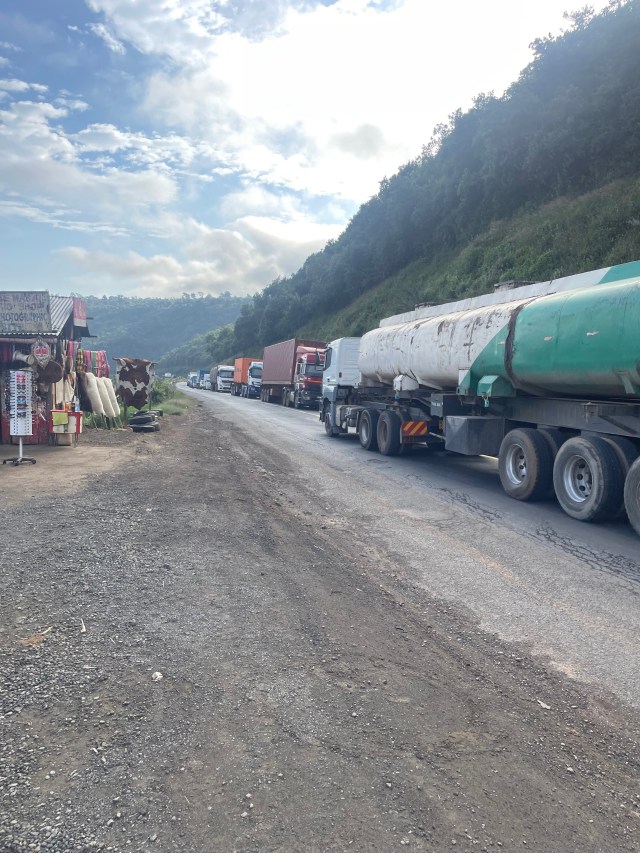
Leaving Nairobi (a city of five million people, Kenya has fifty million in total), we started on the main highway north. The traffic was intense with lorries laden with cargo from the busy port of Mombasa, all driving in convoy taking goods to all the neighbouring landlocked countries, Uganda, Rwanda, Congo, Ethiopia and Sudan.

As we drove north of Nairobi it was cold and we passed kids in bobble hats and warm jackets on their way to school.
Advertising billboards along the road were in English, the main language, although most people speak in many dialects of Swahili. We smiled at the shop signs as we passed: ‘The Lord’s Super Butchery and Restaurant’, a rickety wooden shack in a street which also boasted ‘God’s Favourite Hotel’. Further along we saw a sign for ‘Furniture and Funeral Support Shop’, whilst another proclaimed ‘Welcome to Slaughter House’. The road climbed higher into the hills and Aziz finally stopped and we clambered out to behold the Great Rift Valley, some call it the cradle of humankind as a skull was once found there from a million years ago. What kind of X-Ray machine measures such information? The road itself was built by Italian prisoners of war and they added a little chapel to keep their spirits up whilst they were toiling. That reminded me of Orkney. These Italians have a gift for leaving their artwork for us to enjoy. From the very mighty creations in Rome to the very humble creations of prisoners. Nice.
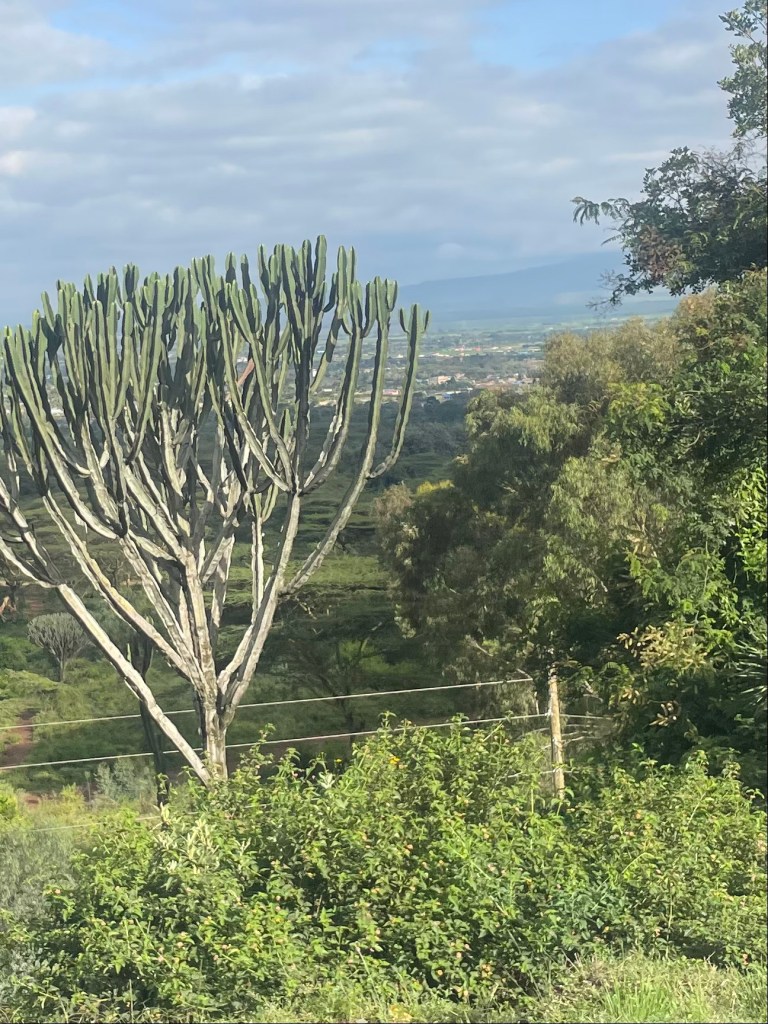
Aziz recognised early on my interest in trees. ‘That is the euphorbia candelabra tree, and I duly noted it down. Along the way I would see hundreds of them, some against sunset skies and some framed against the dawn but one of the first I remember was where two elderly gentlemen were sitting beneath the branches. They seemed somehow elegant, with their legs crossed demurely on a makeshift bench. They might have been having a smoke. Beside them was a goat and there was a tin shack a little way away. I wondered about them and what they had seen and experienced over their long lives. It looked a nice place to sit and watch the world pass by.


On the outskirts of Narok, a busy little town sporting a Kentucky Fried Chicken and a large supermarket. One of the hoardings advertised ‘Ready to Ride and Kiss Condoms’. Mannequins in the shops were built to mirror the African ladies of traditional build which is comforting. I see Marks and Spencer are now copying this trend and modelling a more realistic shape for women to buy their clothes. The shop with the models on parade outside was called, ‘Upholding of God’s Boutique’.
We continued north passed fields of maize and there was a steady stream of farmers herding cows, sheep and goats. Then suddenly in a field beside such ordinary animals we saw our first zebra! It reminded us of why we had come.
Finally after six hours of driving we arrived at the Muthu Keekorok Lodge in the Maasai Mara Game Reserve.
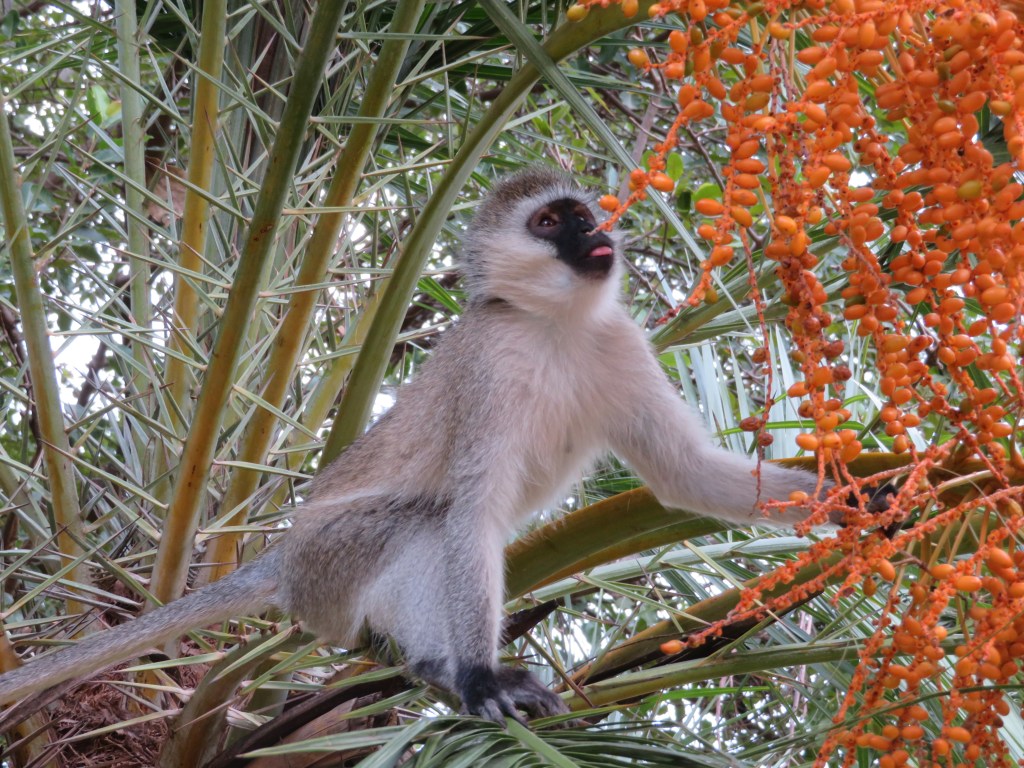
Hot towels and juice preceded lunch then we walked to our chalet-style house through a verdant garden alive with cheeky monkeys. There was no fencing and wild animals apparently roam free at night. We had to be accompanied to and from the restaurant by an elderly Maasai retainer with a torch and a feeble looking stick. As John and I looked about in the darkness, just a little bit wary, our warrior scanned the paths and bushes. We didn’t realise then but he was on the lookout for puff adders, a nasty snake that lurks about and you only have about fifteen minutes to live if it attacks you. Saying that, as John put the key into the door, he was savagely stung by an African paper wasp. The raised sting lasted the whole seven days we were away.
That afternoon we went on our first safari. Aziz shouted the names of the acacia trees we passed (there are eighty three species) and we searched across the waving lush grasses at a massive sky. Where do you start looking for animals? Then it became clear. Other safari trucks passed each other, rather like ants passing on their information in their column. ‘Jambo bro – blah blah blah. And Aziz is suddenly very excited. ‘Leopard! Let’s go!’



And there it was, such a beautiful animal and you would think it was tame as it made its way through the pile up of parked vehicles with scores of eyes marking and photographing its every move. We are hunters still, but at least we don’t kill. The number of safari holidaymakers is increasing and it did make us uncomfortable the way we were corralling this beautiful animal, but without our money there would be no salaries to pay the Rangers and Conservation agencies and the poachers would have free range to shoot and kill.
I had to take comfort from that, and also the fact that the leopard genuinely didn’t seem to care less. It just walked off into the long grasses.
We turned away and the ‘Jambo Bro’ telegraph informed us that lions had been sighted about twelve miles from the border of the Serengeti National park in Tanzania. The animals are not aware there is a border and apparently it makes it difficult to record accurate numbers for elephants or lions in the Maasai Mara.
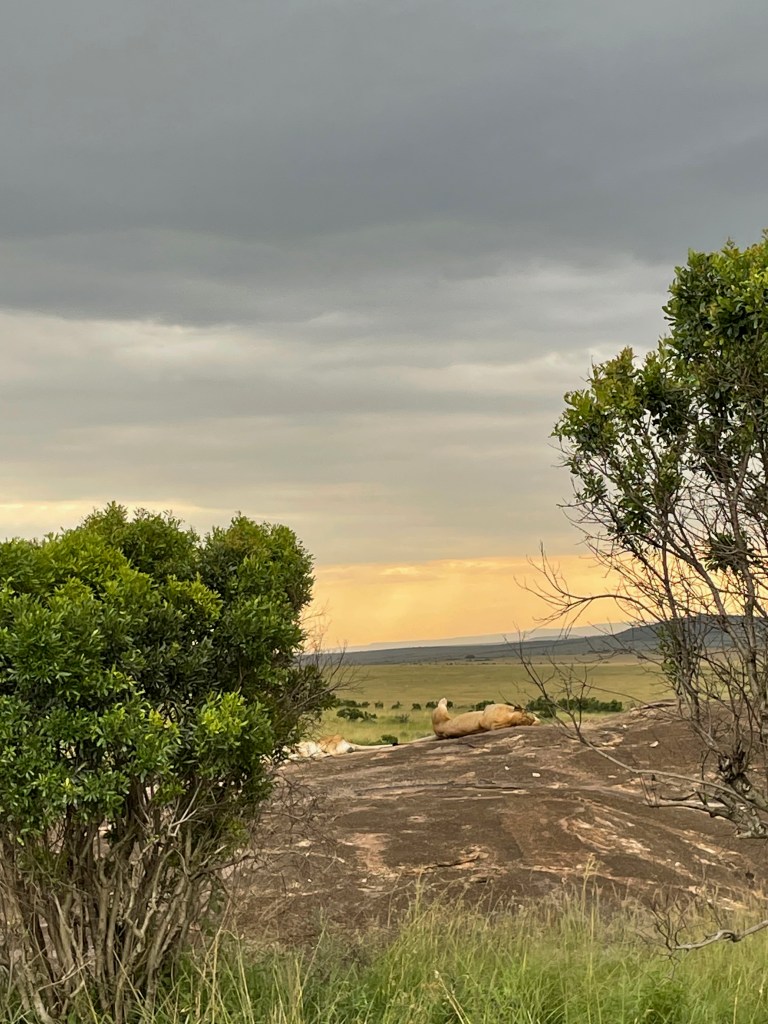
The lions we saw were quite elusive, lying on a rock in a picturesque way. A male and some females. My phone camera found it hard to capture them but John’s clever zoom was able to record in detail the male’s grooming practices. The big beast was totally relaxed, enjoying the sunset and giving himself a manicure and pedicure.
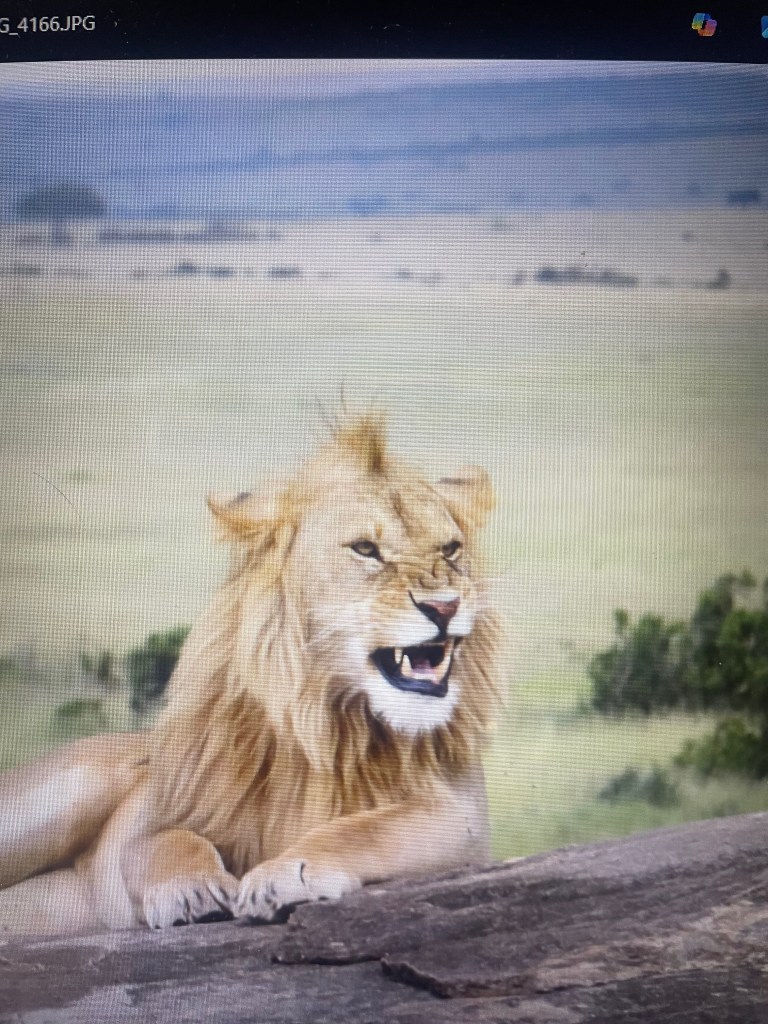
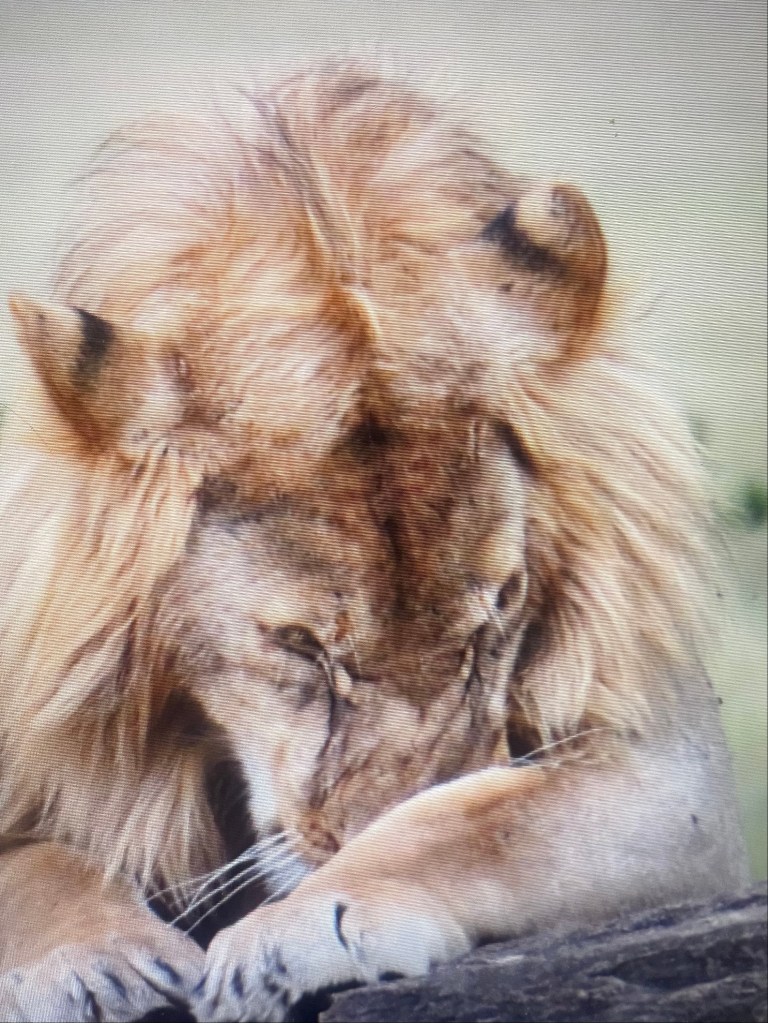


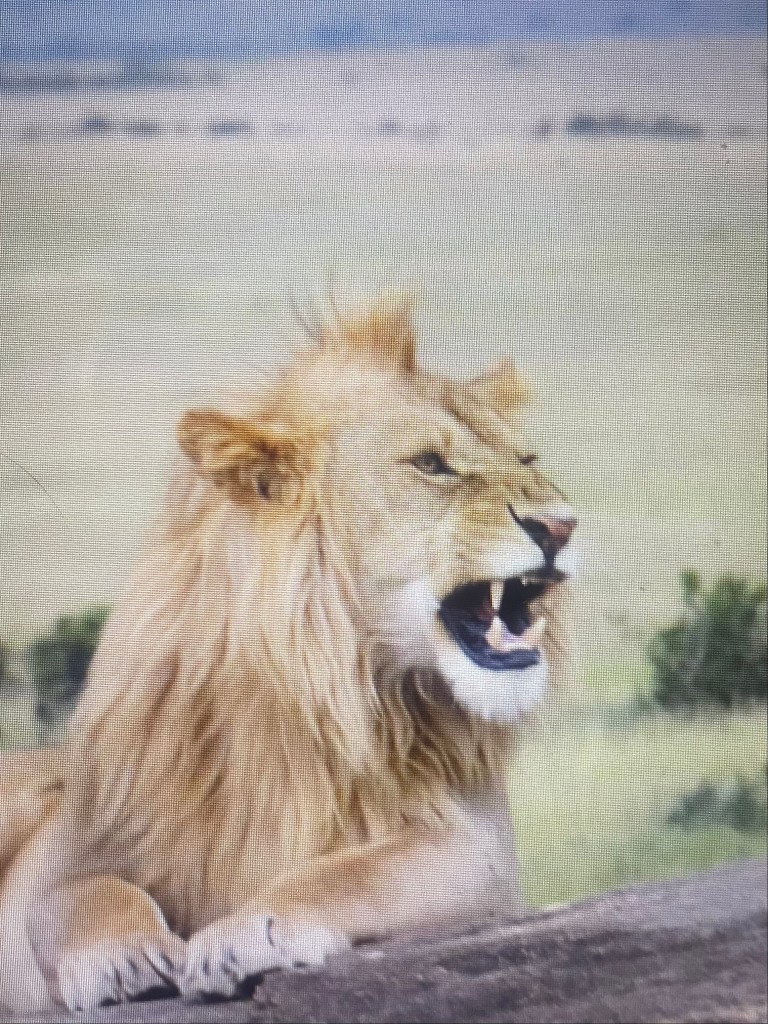
Aziz helpfully told us that the male lion has a fearsome sex drive, he will have a go every fifteen minutes over a period of three to seven days. He is definitely determined to impregnate the lioness of his choice while she is in a receptive mood. Impressive and probably explains why he looks so wiped out most of the time.
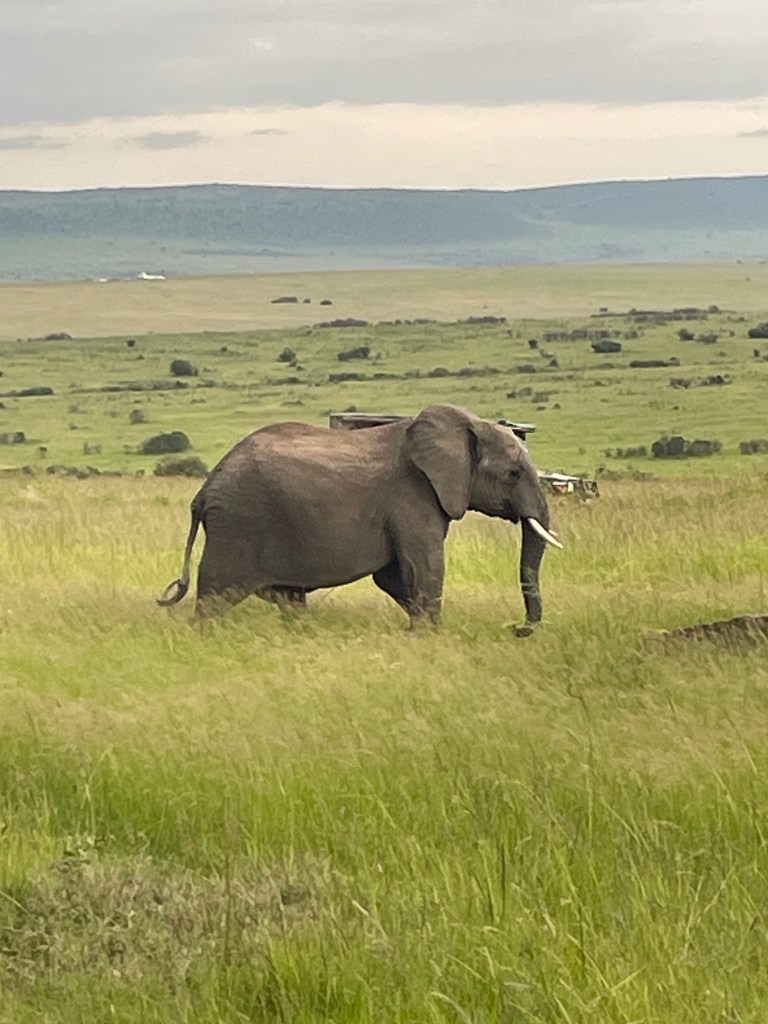
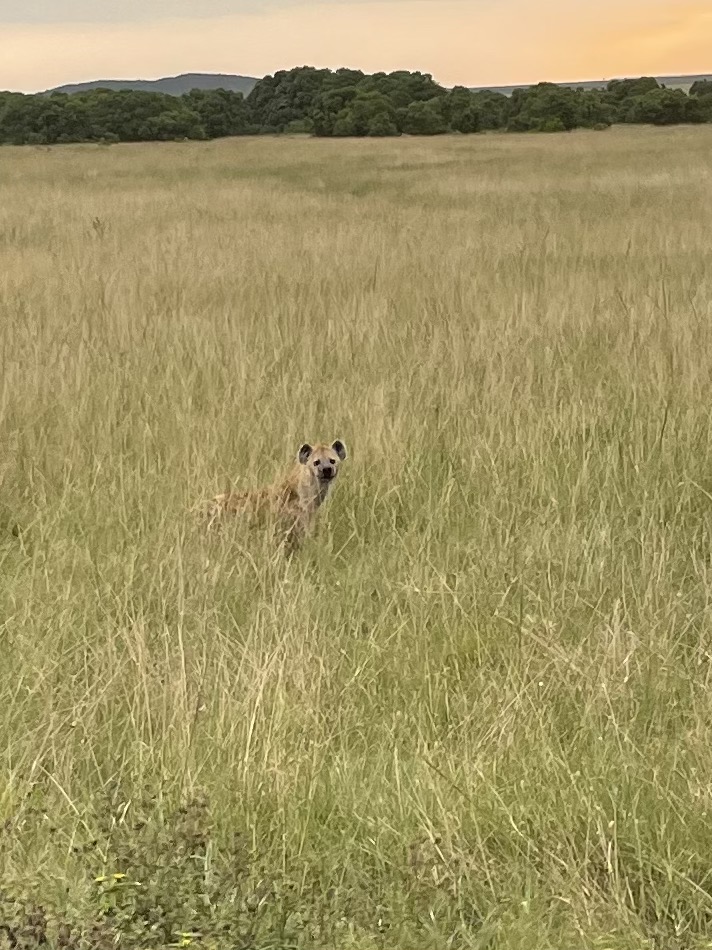
Absorbing all of this we headed back to our lodge as the sun was setting. Elephants stood framed in the grasses, two hyenas posed for us and two jackals leapt away from the truck. It was all just magical.

That night we lay and listened within the safety of our room. There was a snorting and a grunting noise… hippo? We were too tired to get out of bed to have a look.
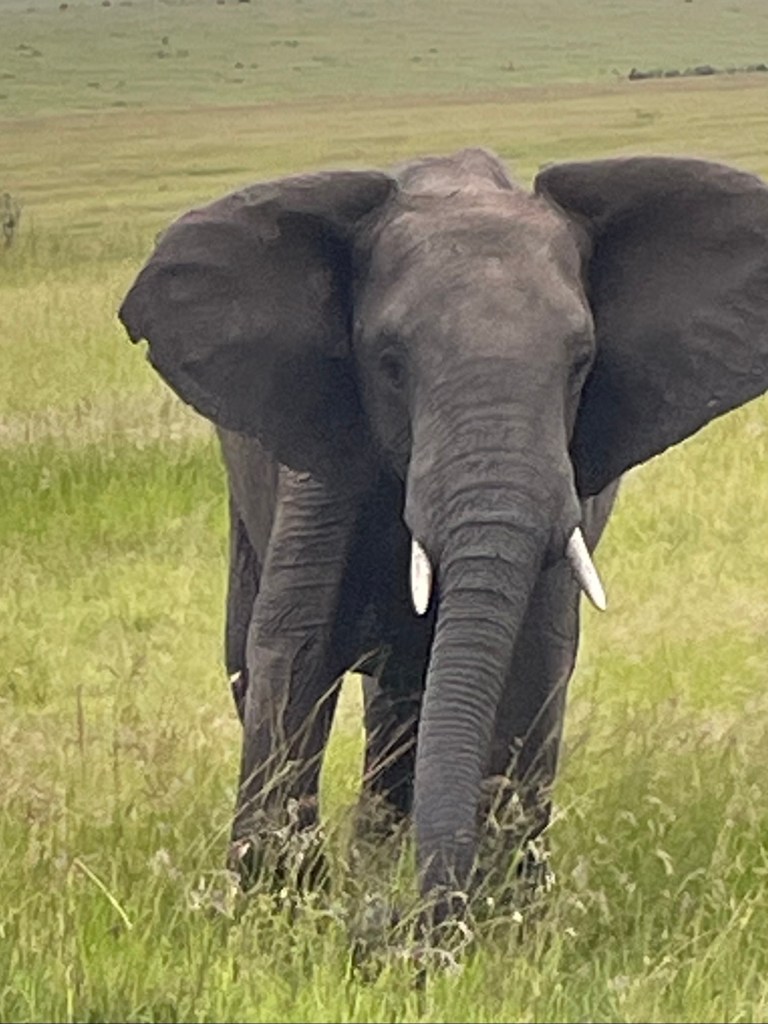
The paper wasp sting was red and raised but there were no other side effects. John just swallowed another antihistamine tablet whilst we passed the leaping monkeys and set forth to meet a new day and who better to meet it with but with Mr Elephant. Huge and mighty, it was as though he was wishing us ‘Good Morning.’
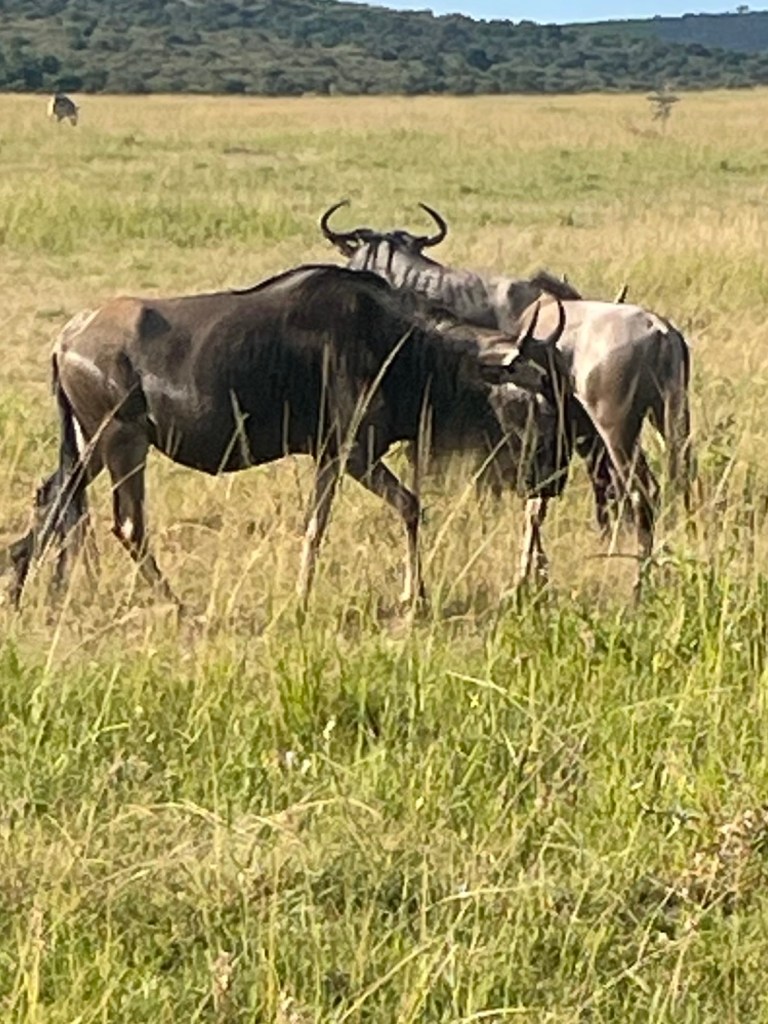
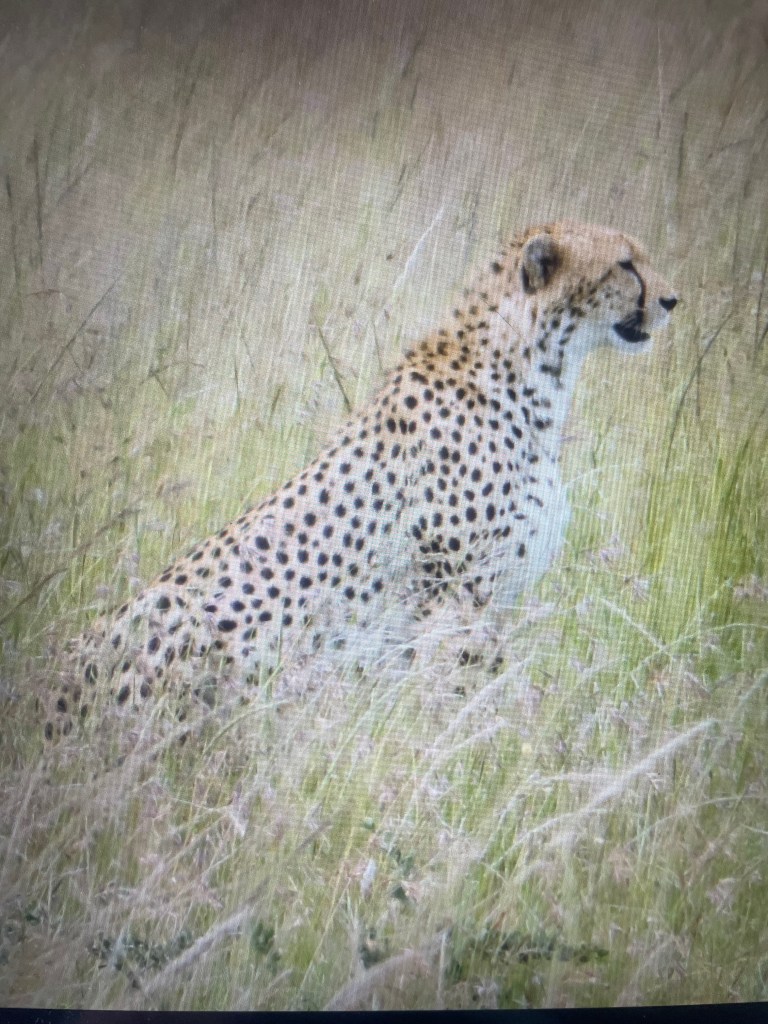
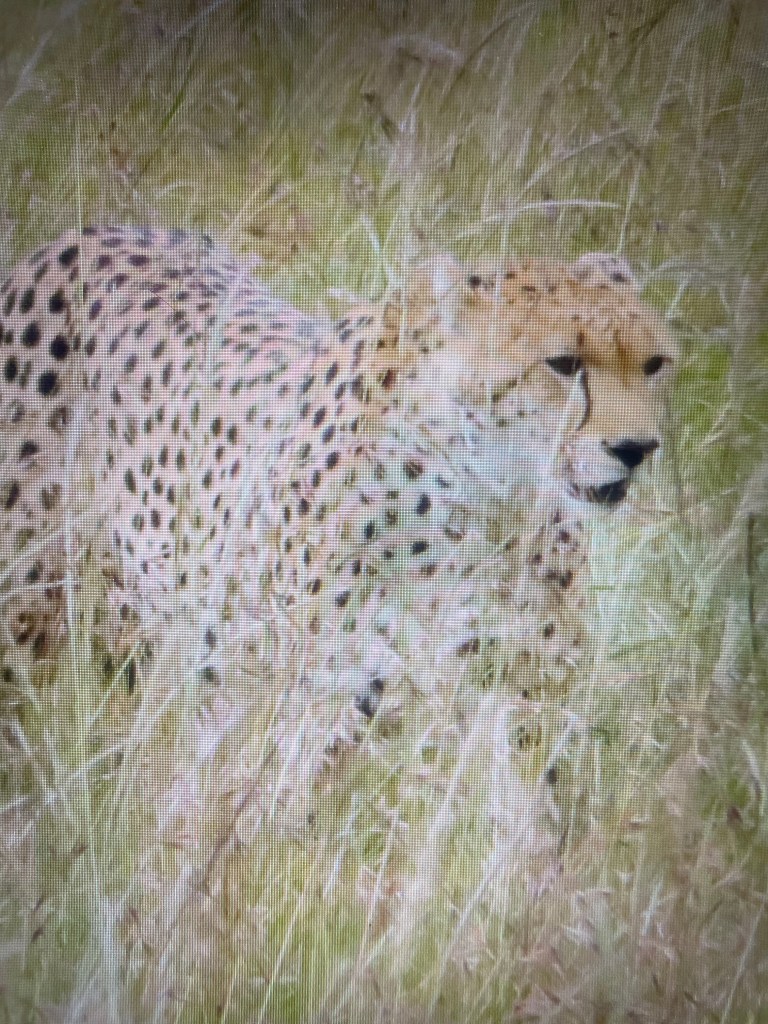
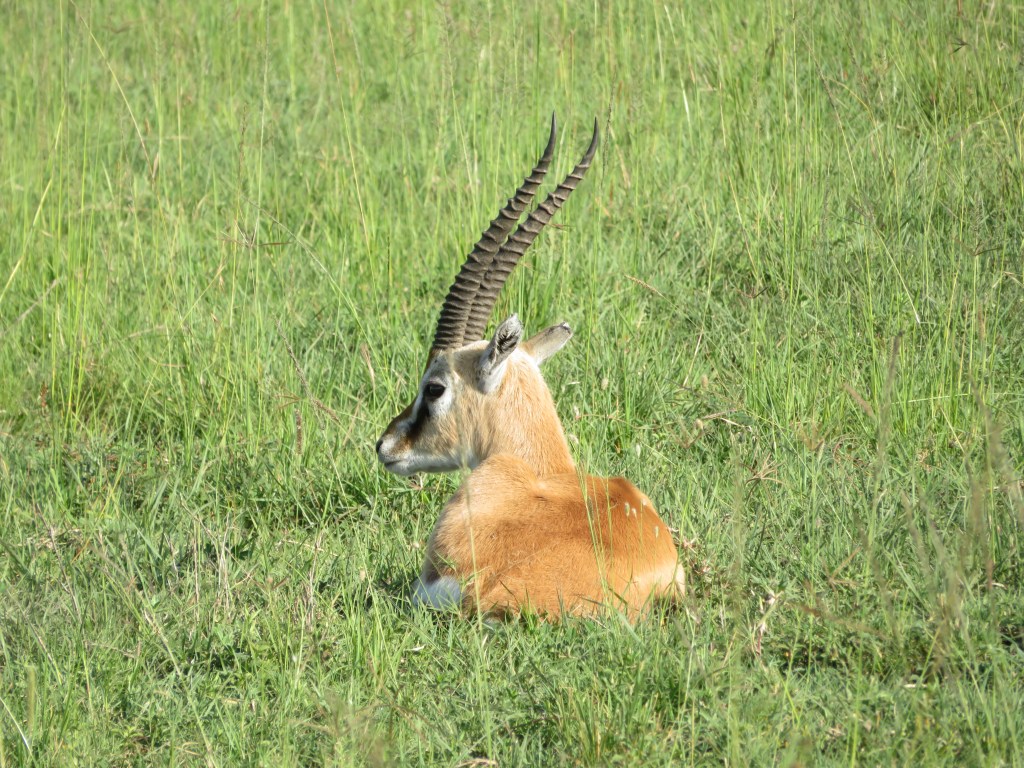
Then the bush telegraph began, ‘Jambo Bro, blah blah blah,’ and off we went. Cheetah had been spotted. We passed herds of Thompson’s gazelles, impala, giraffe, zebra, cape buffalo, all busy eating the lush grasses. The sky was blue, the area immense, only an umbrella acacia dotted the horizon. But there! Suddenly two heads popped up. Cheetah!


So beautiful. They looked about, curious then flopped down to sleep again. Luckily John’s zoom lens captured them.

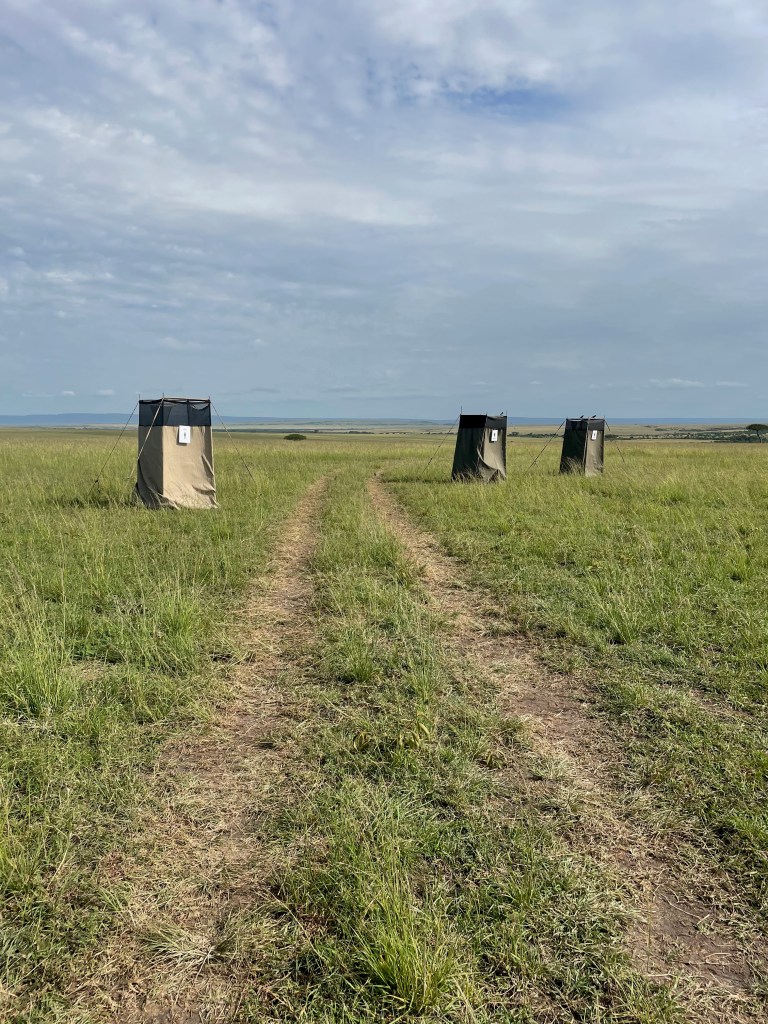
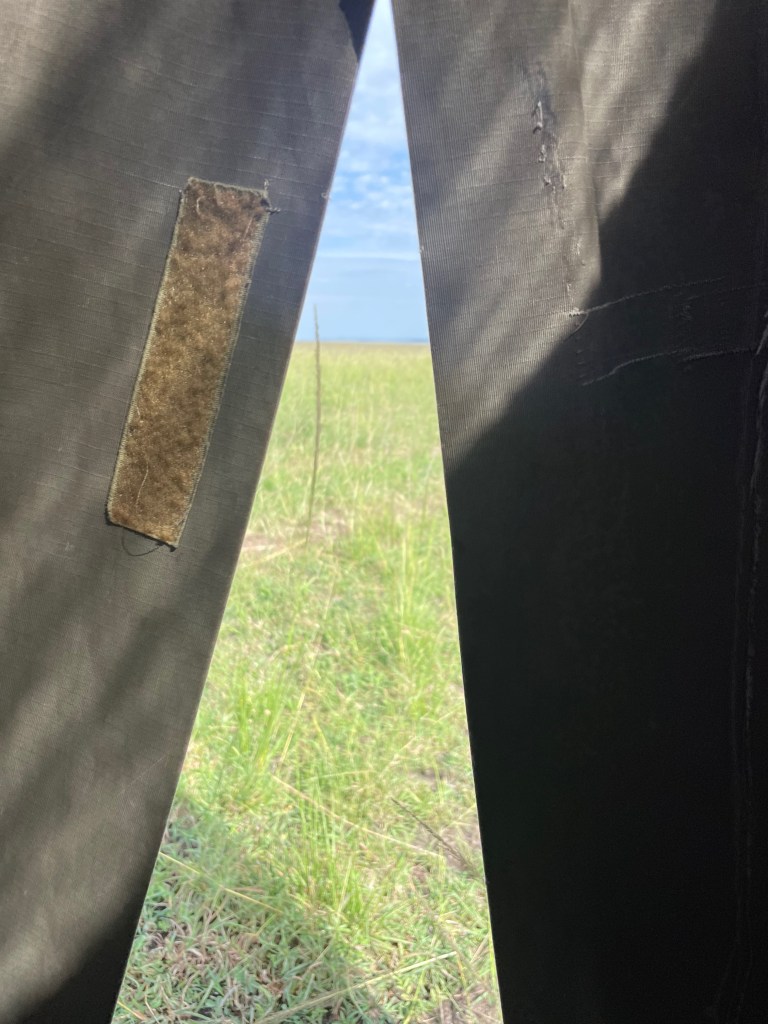
We drove on to meet two of our party who had gone on the Dawn Hot Air Balloon trip. They had been treated to a luxurious bush breakfast with champagne. We turned up very thankful to be allowed to use their temporary bush facilities. I stared out of the flap of the tent. A little room with the most perfect view. There was even a place to hand sanitize and an attendee to help. It was all so very civilized and very welcome.


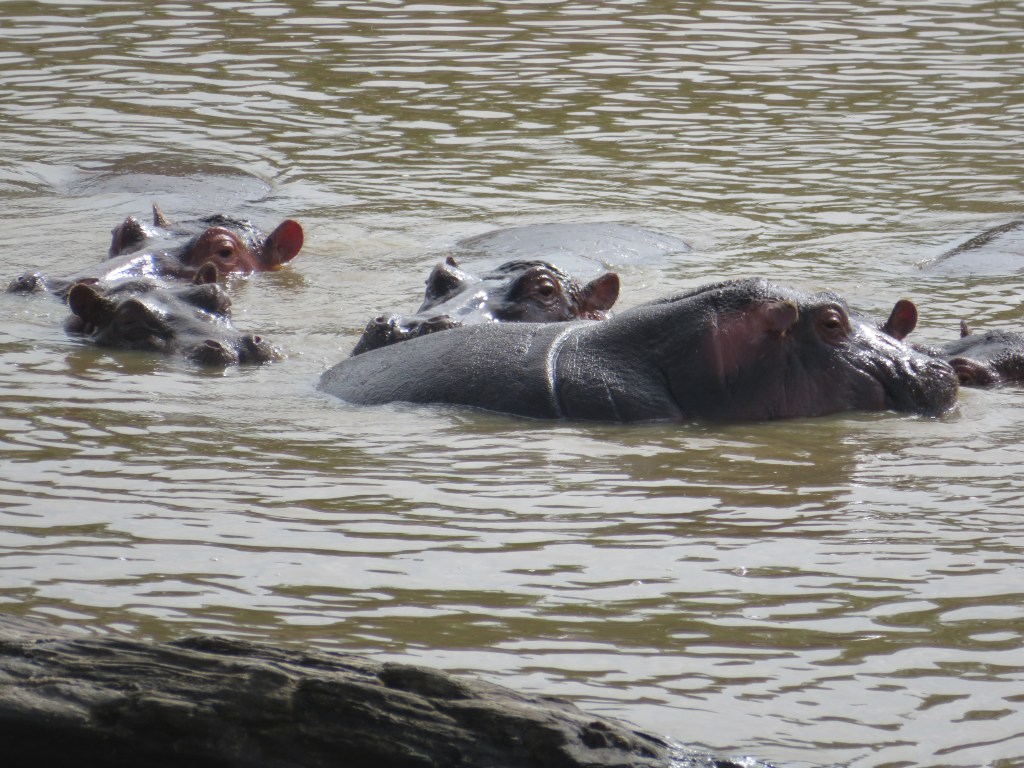
The grasses were bathed in pink light, swifts dived about and guinea fowl scuttled amongst the bushes. We drove past wildebeest and zebra and came to the Mara River where animals migrate in their yearly epic journey. Crocodile and hippo lurked in the shallow water. We posed, snapped and left.
Our friends in the car ahead spotted a massive black mamba on the side of the road. It took off like a streak into the grasses. Its name comes from the black colour of the inside of its mouth though I don’t think I would like to spend time checking, another case of one bite and you start counting. Aaargh!
I loved the emptiness of the scenery, the wide spaces and sage coloured grasses. I was in a dream when suddenly Aziz stopped the car.
‘Look! A leopard is coming towards us!’ And there he was, and like the big cat that he was, he dutifully sprayed the grasses on either side of the road. Then he disappeared into a clump of bushes and we lost him. He was totally camouflaged.
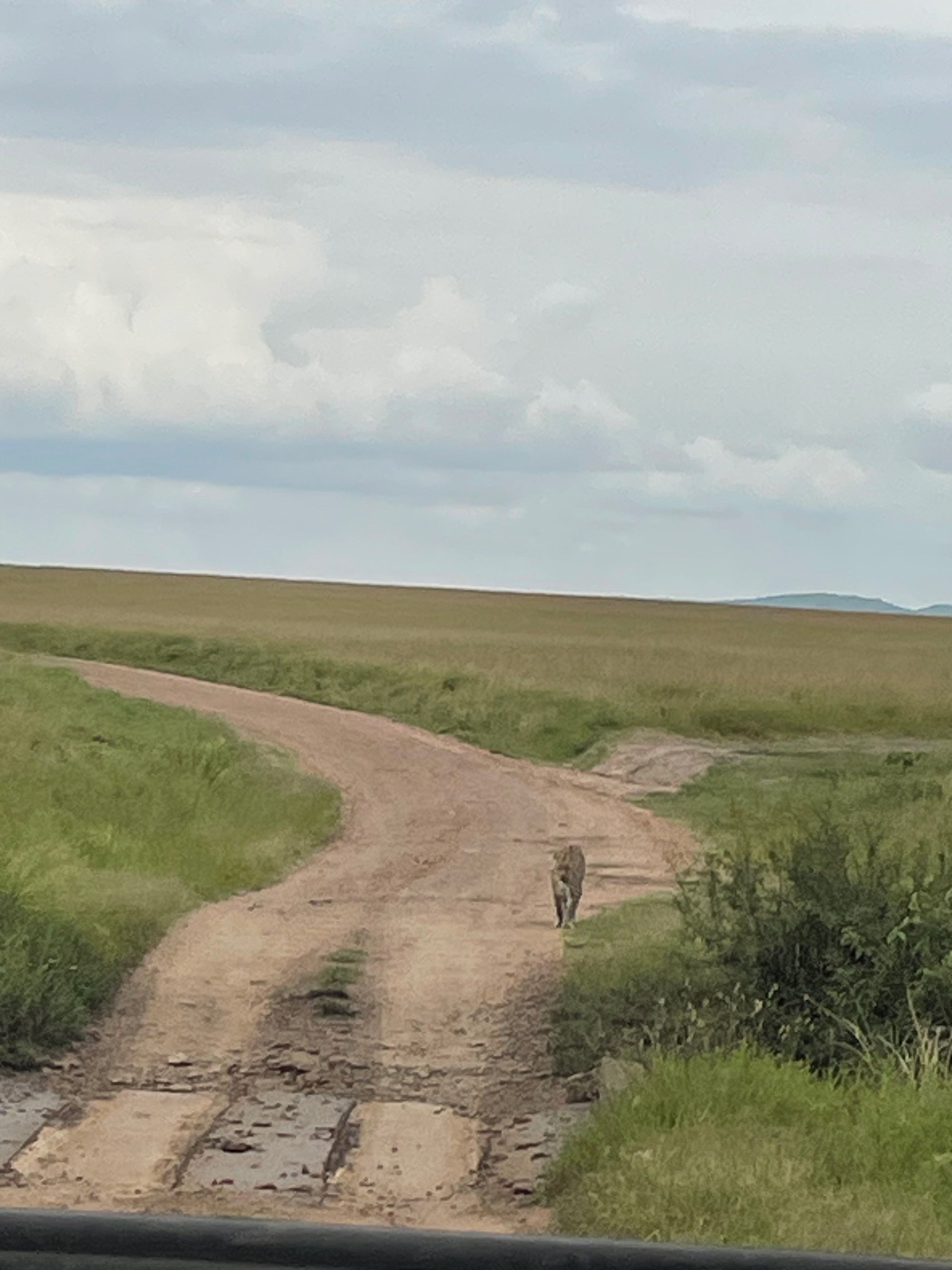
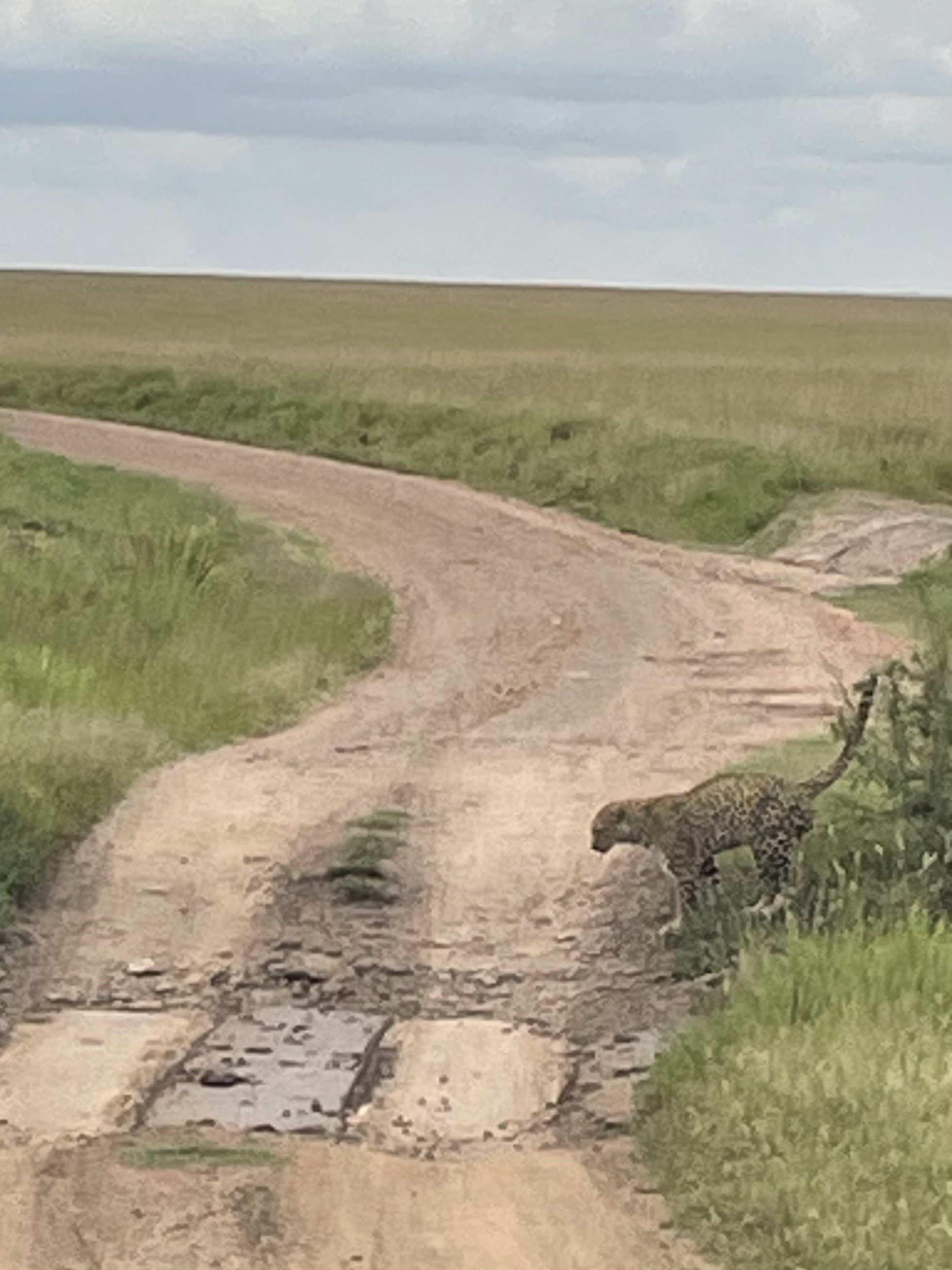
As I write this here by the pool, a domestic pussy cat just walked up to me… so uncanny.
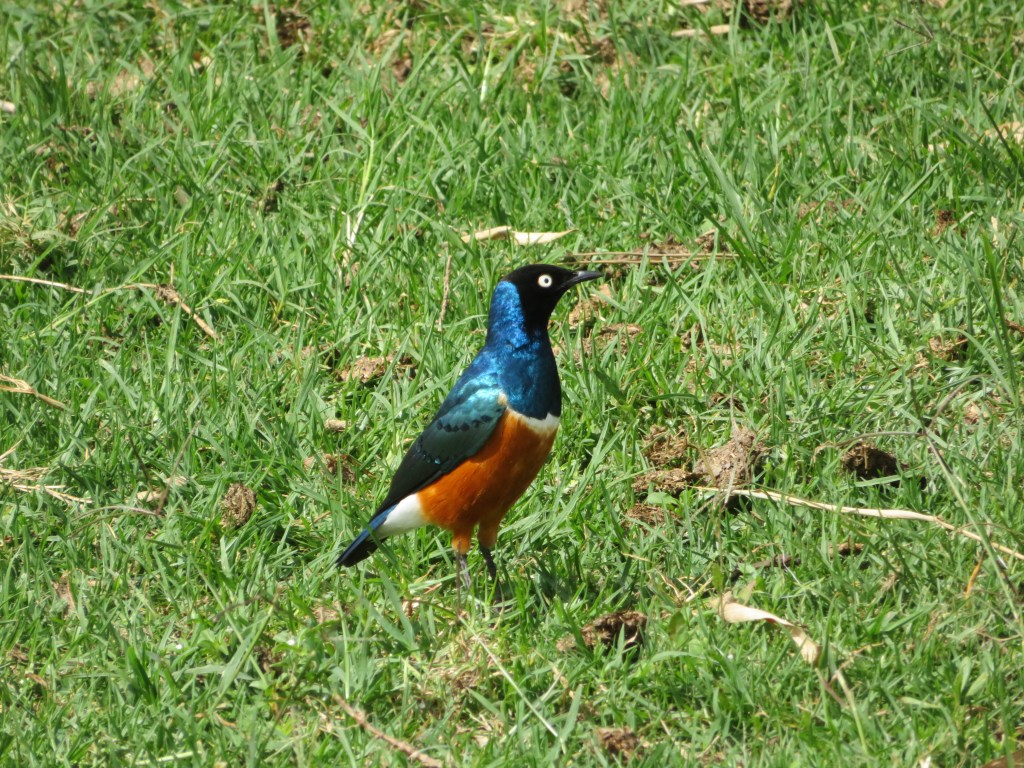
But back to the day where even the birds became exotic, from crowned cranes to ostrich, to abandoned weaver birds’ nests and always the pied crows. And best of all, the lilac-breasted roller bird. So beautiful.

I took photos of a picture hanging in the lodge depicting two jumping Maasai warriors in their red tartan table cloths and fancy glittery and beaded jewellery, and also of the ‘Big Five’ which are in fact the animals which are most difficult to kill whilst on foot, from the bad old days of the trophy head hunter.


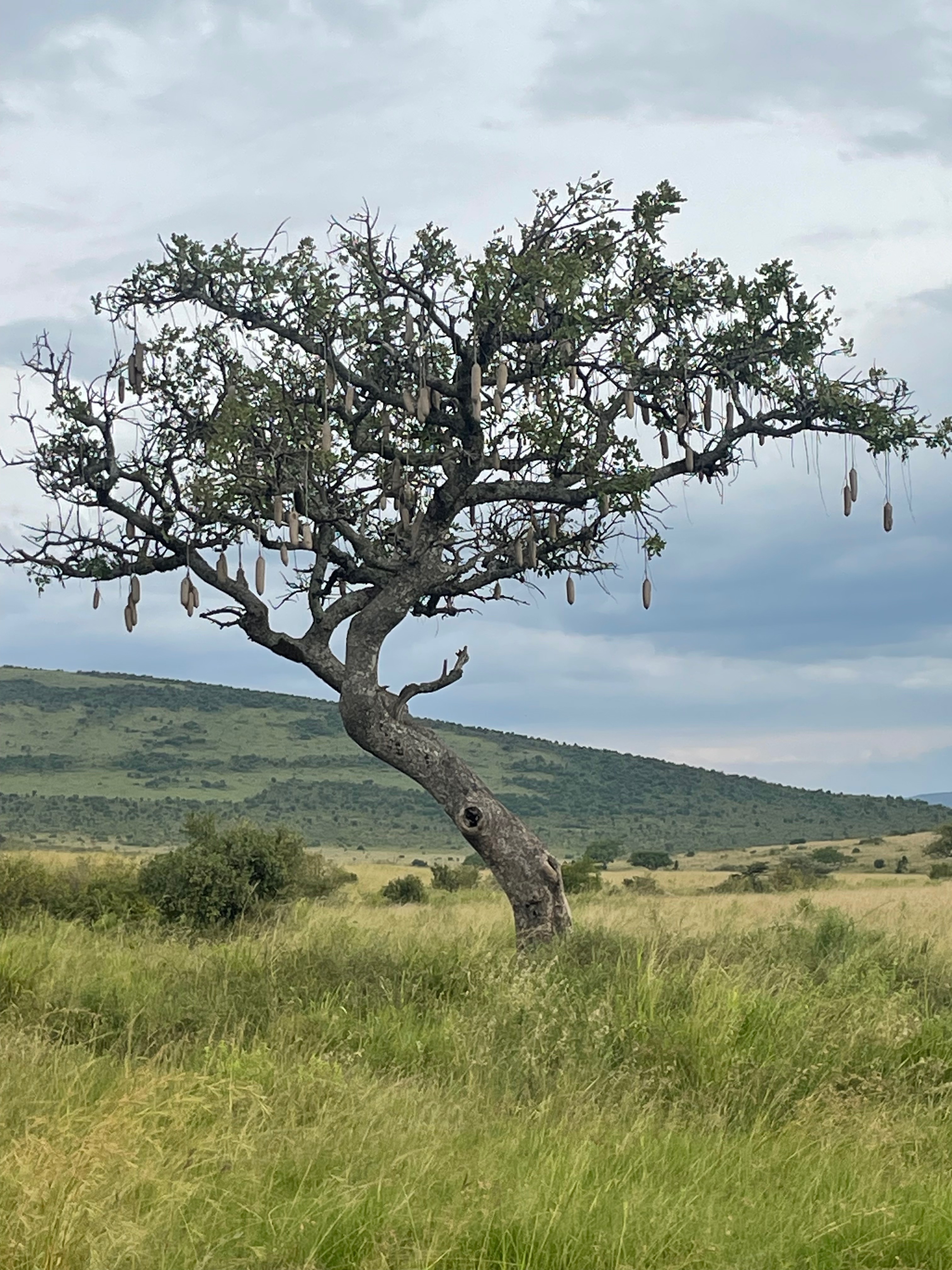
Then it was goodbye to the Maasai Mara and as we were driving Aziz shouted, ‘Gael, look! Look at that acacia, it is called a whistling acacia. The tree has small black balls on it, the residences for ants, and when the winds blow through the tree there is a whistling sound. The giraffes don’t like them so don’t eat them, so the tree is safe.’
We drove and drove and passed lands now cultivated by farmers. I looked out at washing thrown over bushes to dry, corrals for animals made from any old sticks hammered into the ground.
It was Saturday so it was market day. Goats and cows and sheep were herded towards the town, some tied on the back of motorbikes and some were strapped on to the tops of vehicles. It was chaotic, colourful, busy and just the place to pick up a bargain. Sandals, bras? Something for everyone.
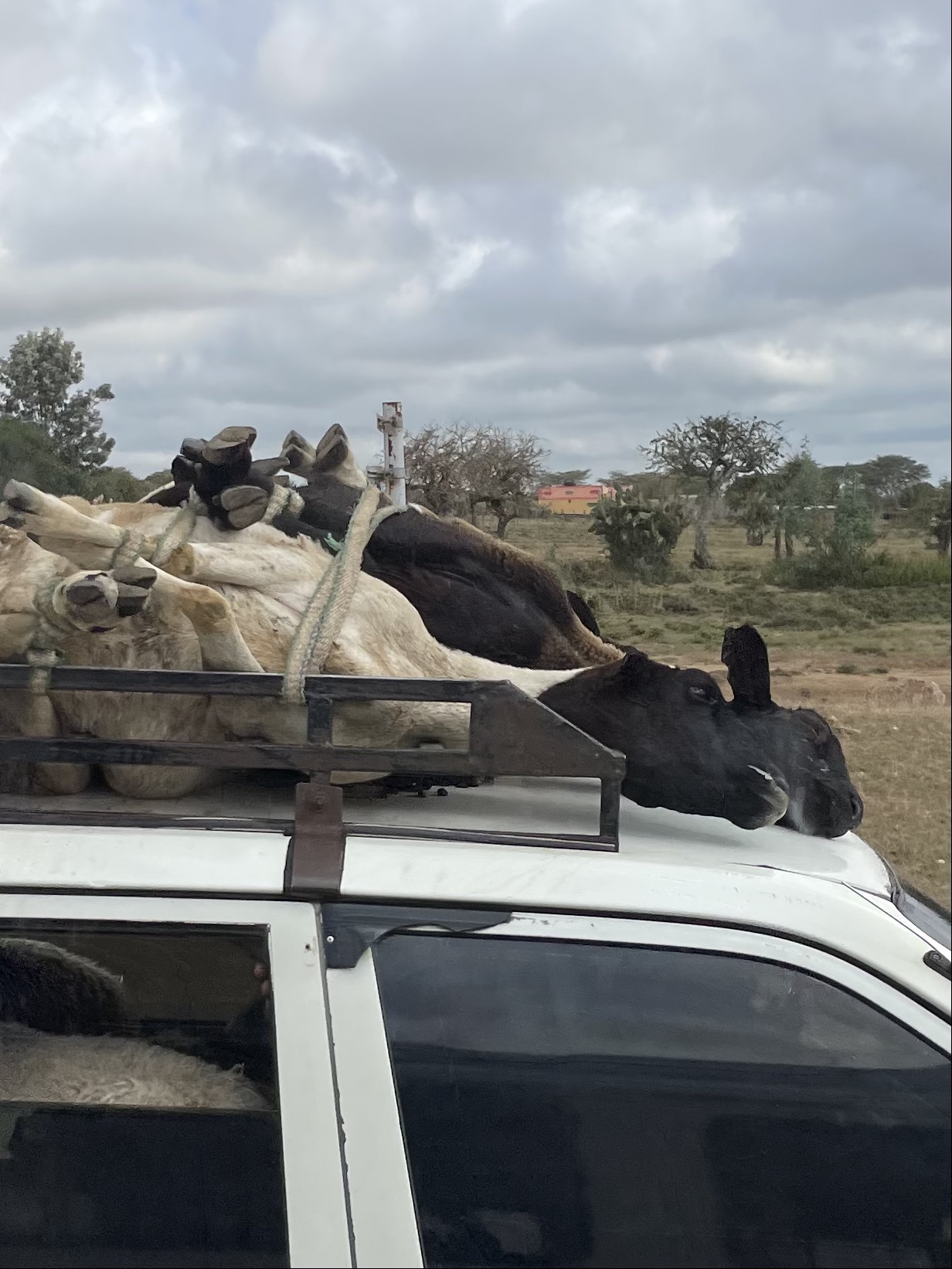
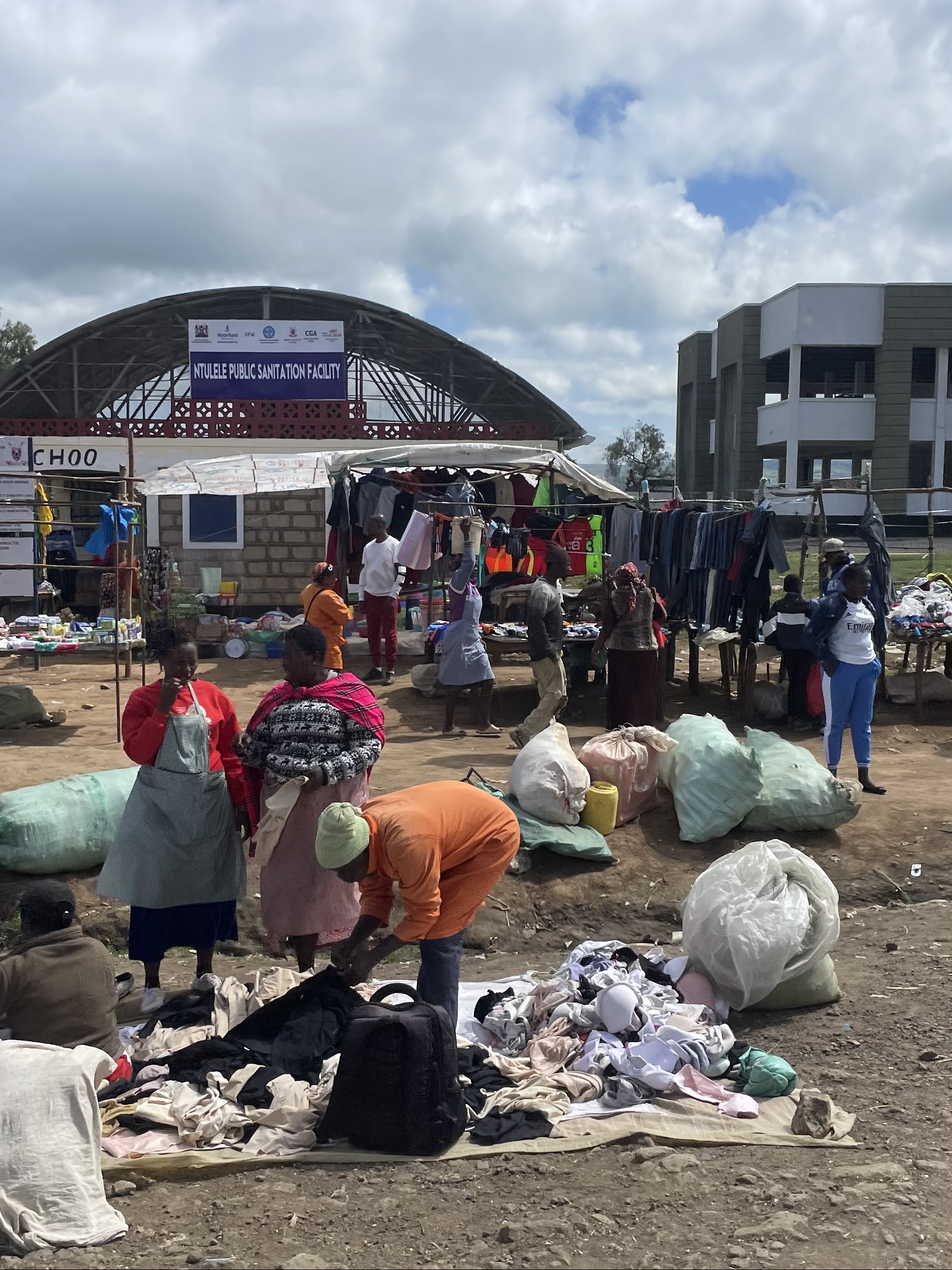
We drove back through Narok, stopping this time to get coffee and petrol and some sugary supplies from the supermarket. Then we were on our way, but as we left the town, on the outskirts I noticed the last brown shack had the sign ‘Hustlers Corner Hotel’ proudly above the door. Hope they had a good supply of the ‘Ready to ride and Kiss Condoms’!
We eventually arrived at our next destination at Lake Naivasha. Who knew that this area was home to the Land of Roses? There were greenhouses everywhere and it is the fourth largest flower grower in the world and 60% of the roses are exported to the UK. I shall pay attention when I buy my next bunch from Tesco.
In the distance the mighty Mount Longonot crater rose 2,700 m into the clouds. We were definitely at a much higher altitude. We pulled into the Lake Naivasha Country Club, an oasis of calm – well we thought that until we saw the signs peppered around the gardens. ‘Beware of Wild Animals’.


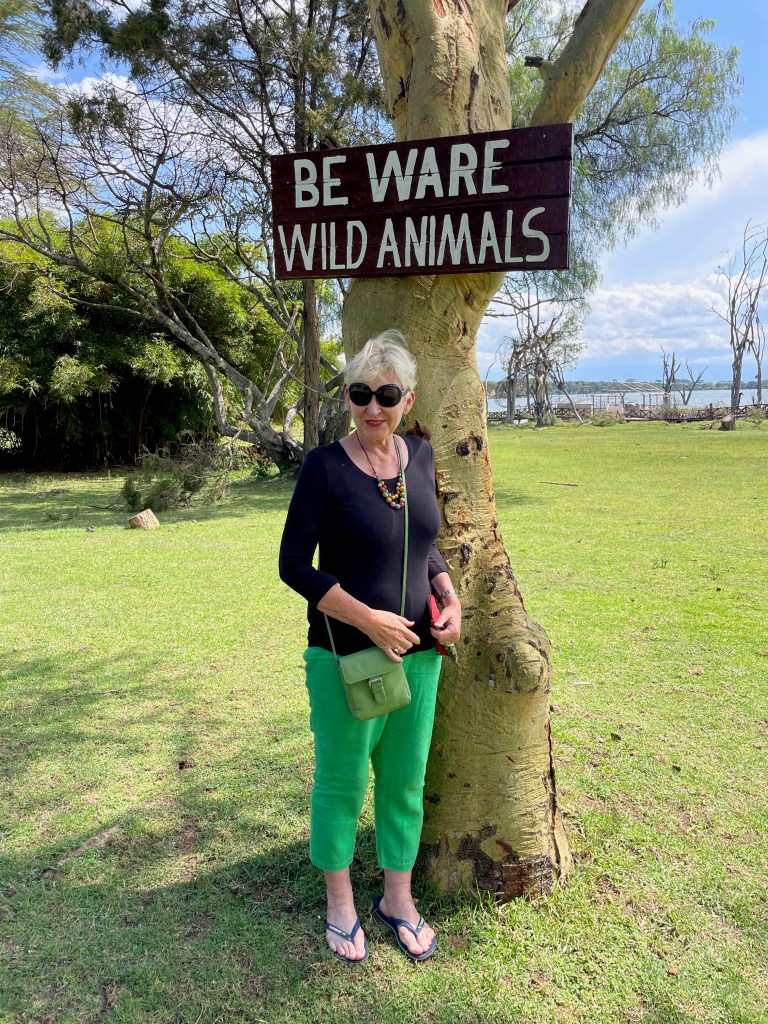

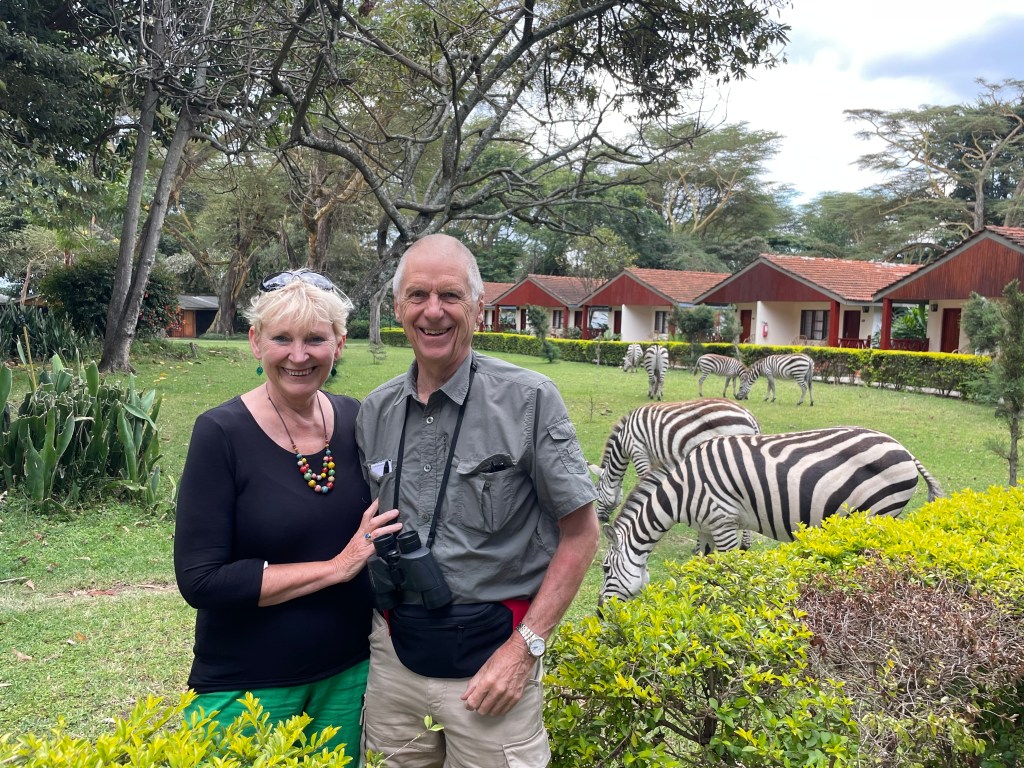
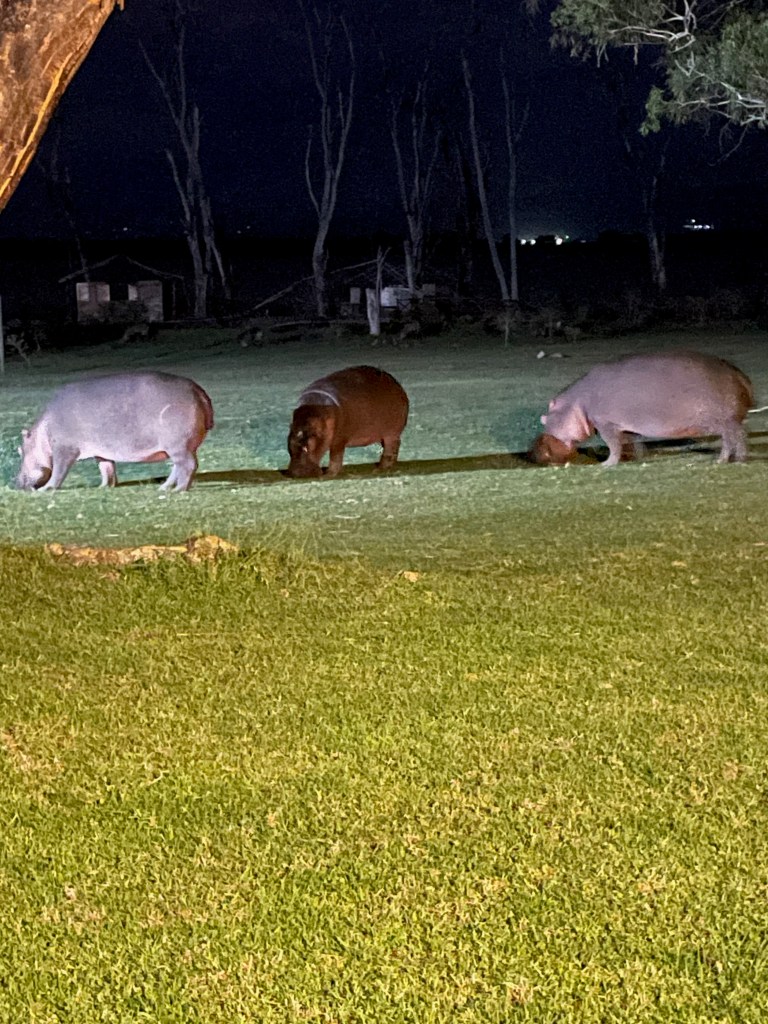
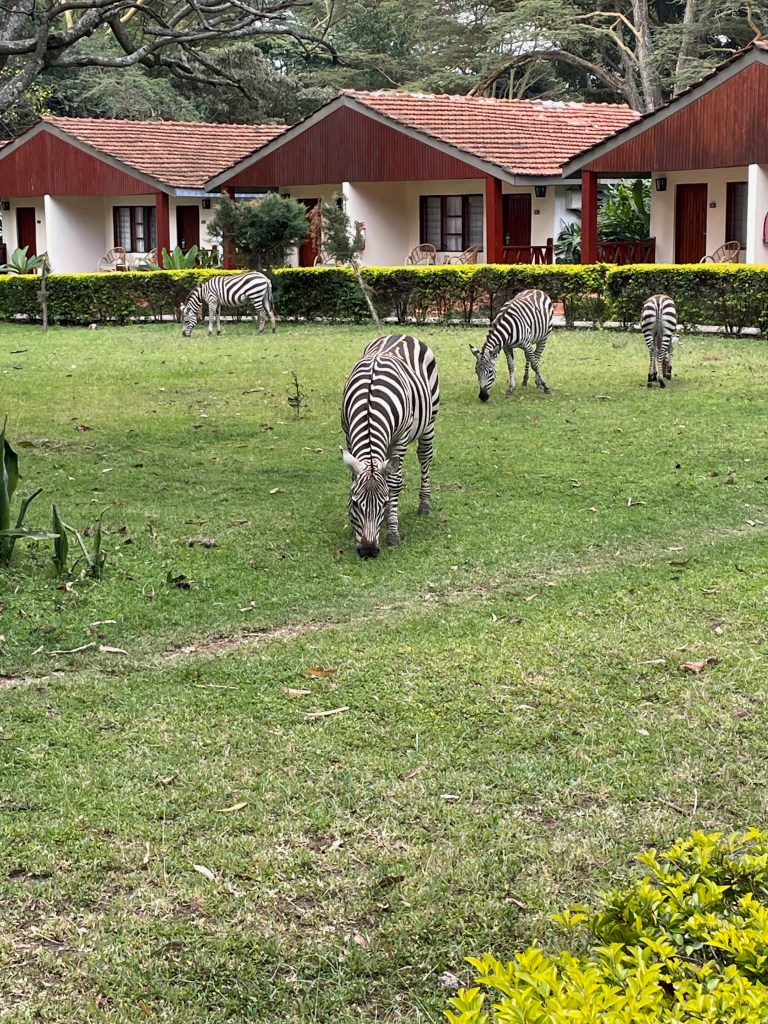
We took a boat ride out on to the lake to hopefully see hippo and fish eagles but the sky turned grey, the lake choppy and we literally saw nothing. Our boat man was very unforthcoming, just stating the obvious, ‘fish eagle’ and we duly snapped. I was glad when we returned to the shore and was a bit grumpy until someone said, ‘Zebra, loads of them in the garden!’ The lawn was covered in a small herd of wild animals and a herd of giraffe were milling about in the car park. Monkeys were frolicking everywhere and later as we ate dinner that night hippos lurched out of the lake to graze on the lawn. It was quite awesome. We had a guard to escort us back to our rooms at night. I sort of imagined that this trip would be free from any imminent danger.

The days were going so fast, suddenly it was Sunday and we were on the road again, heading south to Amboseli, passing the African tulip tree, heavy with orange blossoms, and the pepper acacia. ‘Did you see that, Gael? Shall I stop, take a picture?’
We passed people going to church and saw girls dressed in pink lace and white socks. Christianity is the major religion and everywhere there are churches, all very well attended. I had to smile as Aziz pointed out the Sodom apple tree with small yellow fruits. The Maasai use these as antidotes for snake bite and so many other remedies. John and I knew immediately the reference to the Biblical text of Sodom and Gomorrah but our two young travelling companions hadn’t a clue. These wonderful stories from the Old Testament are being lost.
And so we finally came to Amboseli. The place was a dust bowl, salty dust swirled down from the neighbouring Mount Kilimanjaro. We took refuge in the luxury of the Serena Lodge, pretty rooms with murals on the walls, lush gardens and wide open views. Our safari later in the afternoon passed birds, storks, zebra when suddenly the word was passed around, ‘Lion!’.
Off we zoomed and joined the crowd, hustling to find a good position to view. But where? ‘I can’t see anything.’
‘Maybe we wait,’ said Aziz, ‘best to be patient.’
The sun was setting. There was huge expectation. A hush.
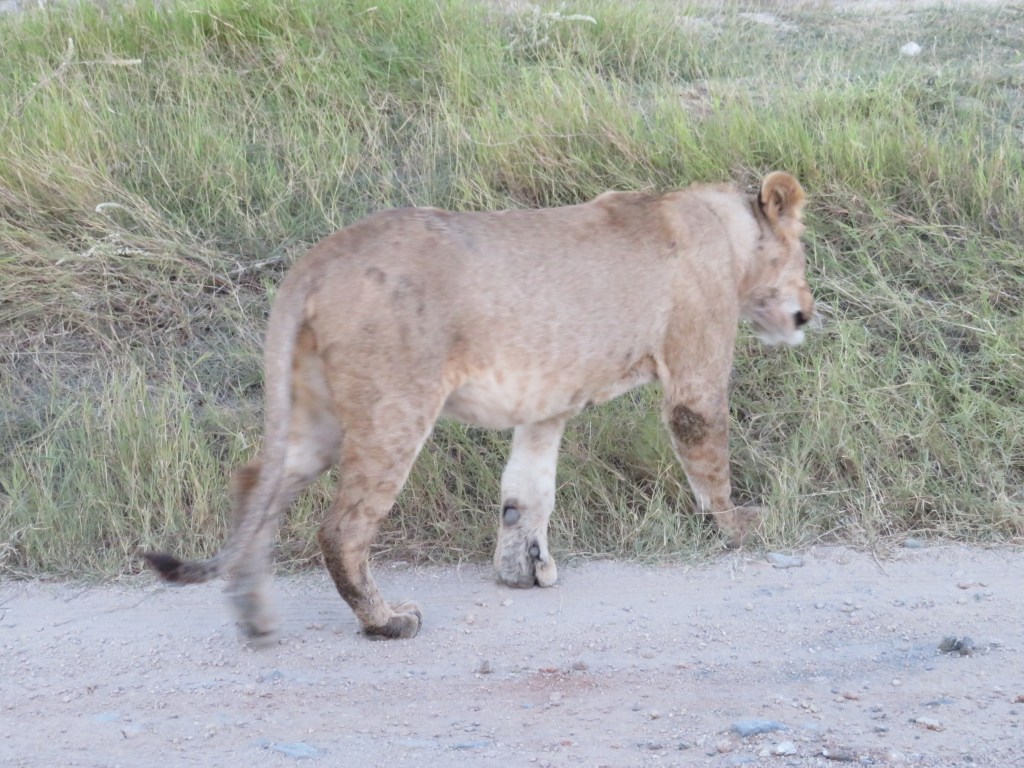
Then suddenly, there she was, a lioness.
She was followed by another, then another. Two more came, playing and pawing each other, they looked quite young. And finally one more. Six lions. I am so glad Aziz cautioned us to be patient.
The lions sat facing the sunset. Were they testing the wind, waiting for a signal? Who knew?
Then two hyena appeared. One of the lionesses turned and walked toward us then strolled past our truck and across the road to the wide expanse of grasses. She was followed by a mean scarred juvenile male, then the rest followed. I made a video. We were all in awe. Finally the hyenas crossed as well. The scene was set. Mount Kilimanjaro rose mightily in the setting sun. The lions kept walking. We had to go. As we returned towards the lodge a great herd of wildebeest came running, the sound was like thunder. They were literally running for their lives. Six lions need a big animal to eat.




And the sun finally set over the candelabra trees.

We can imagine the ending but for us it was time to shower and perhaps have a Tusker beer.
After visiting Amboseli we stopped for a visit to a Maasai village. We were welcomed by the deputy chief, the real one had just died (and was sleeping in the earth) and the heir apparent was in Tanzania. But our deputy was very enthusiastic and introduced us to his red tartan table clothed tribe (the red colour is to frighten wild animals). We were treated to a dancing show, first by the papas then by the mamas, they all ‘hoo hoo hood’ to a regular beat then did a community conga thing, then of course they invited us to join in. We were very willing, especially John, and we dance and hoo hoo hood with the best of them.
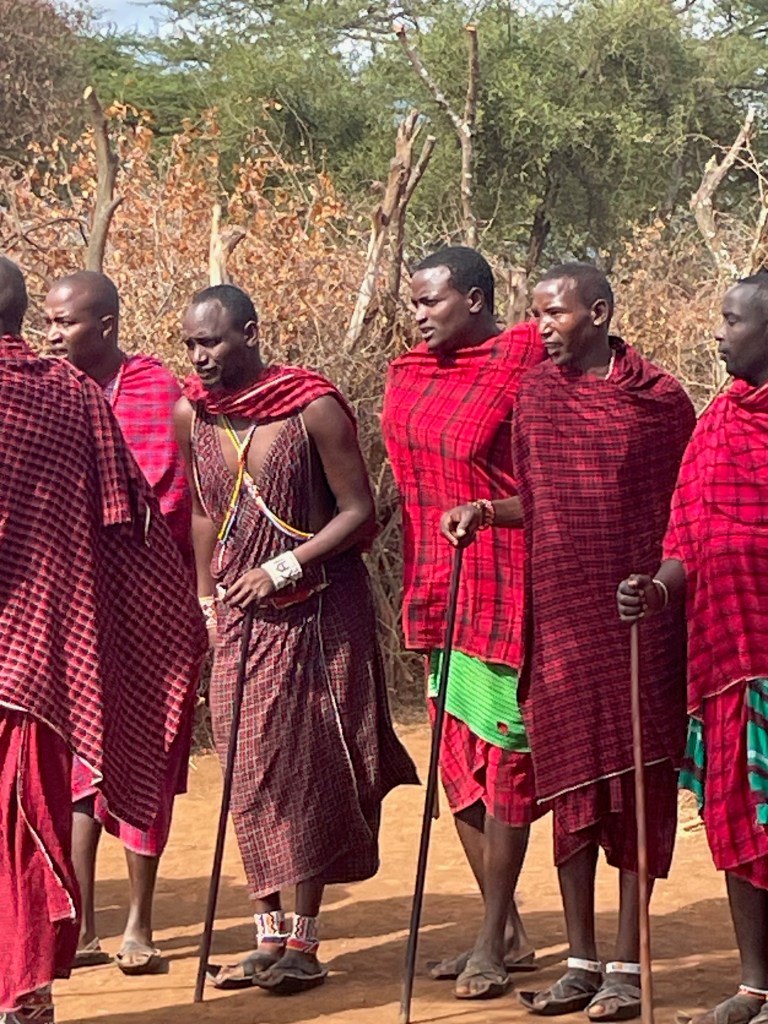
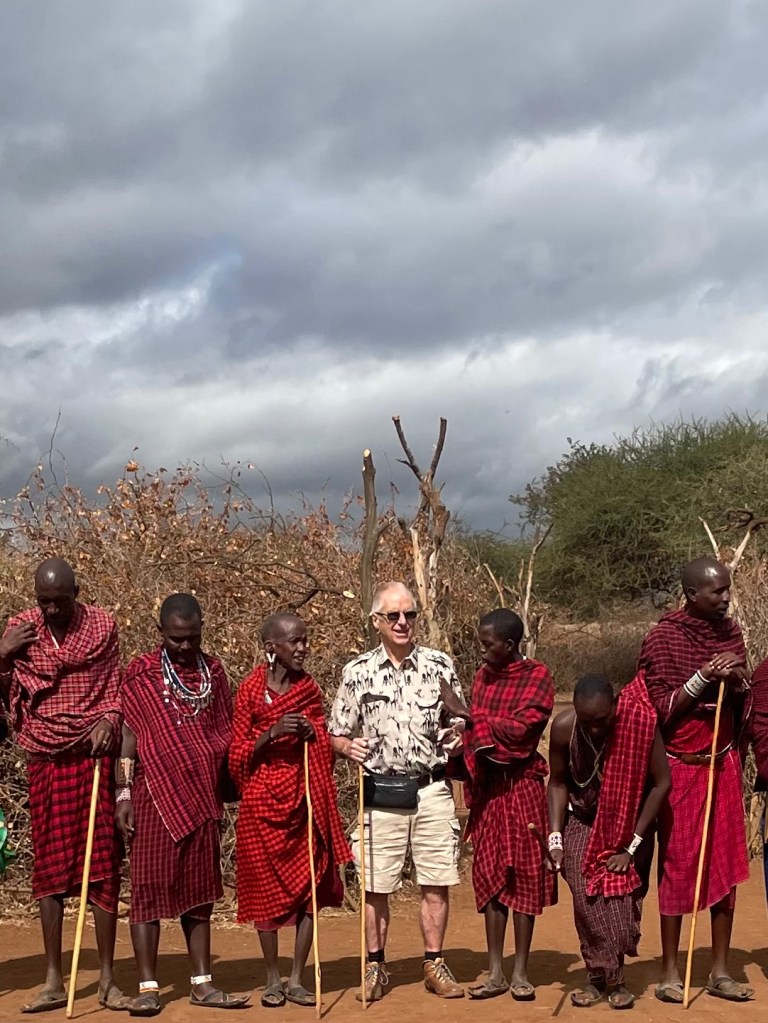
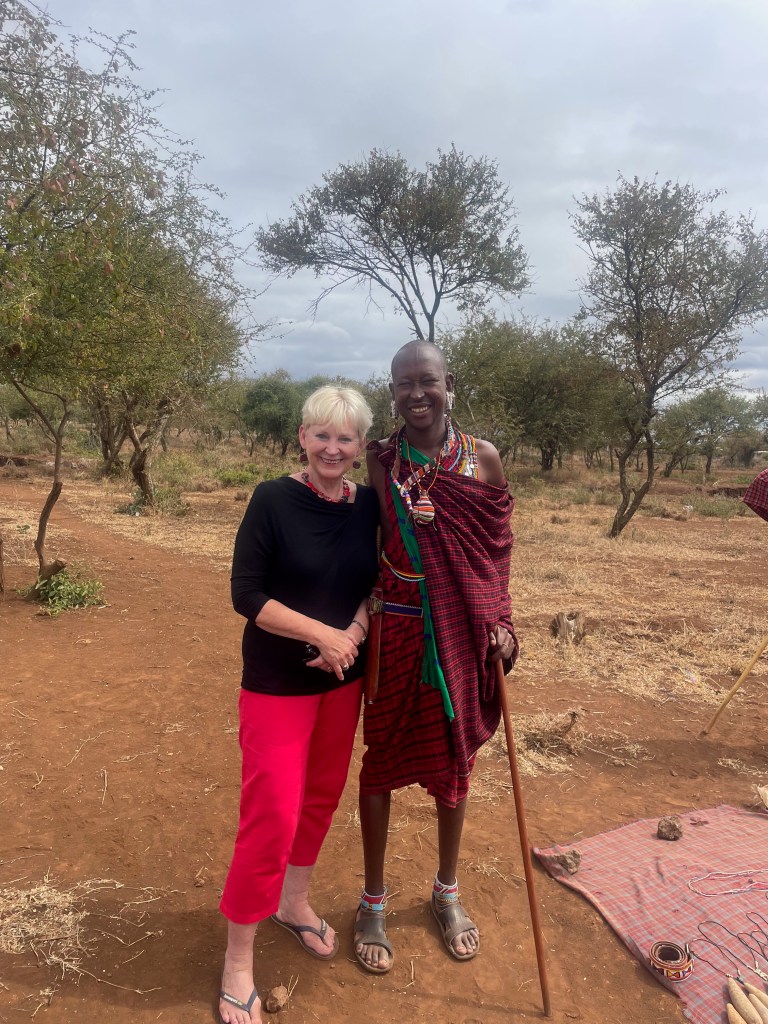
Afterwards we sat down under an acacia tree (naturally) where we met the medicine man who demonstrated the use of different tree barks. One for rheumatism, another which is similar to Viagra but we were cautioned that only one sip is sufficient. I did wonder about spells, but didn’t ask. I know they make potions to aid abortion and still birth and some for curing more serious illnesses. Our medicine man and his chum went on to make fire with sticks in the traditional way. I was just entranced with his ears.
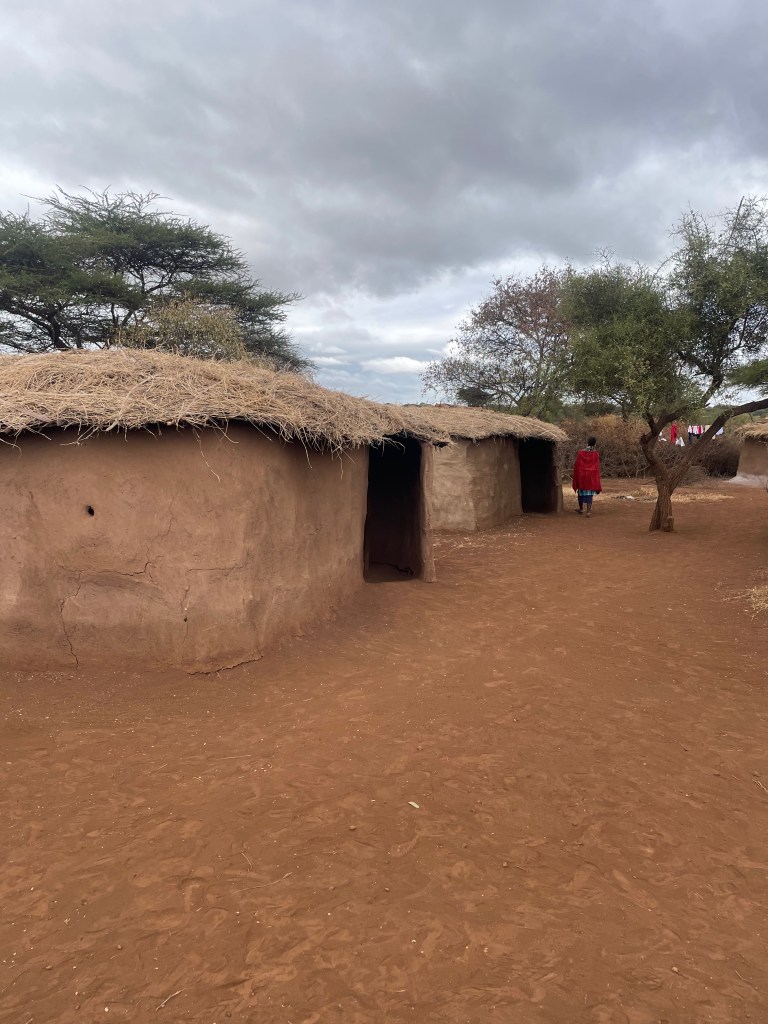
We visited their manyatta or houses made out of mud and cow dung and built in a circle, all enclosed by a thorny hedge. The precious cows of course were corralled in the centre of the village. We sat inside on a bed covered with cow leather and struggled with the smoke from an open fire. Only tiny slits in the wall gave any ventilation. We heard about their diet of blood and milk and our deputy dismissed our interest in a little kitten running in with a mouse in its mouth. We asked if it had a name. Well, he nearly cracked up, ‘You name your cats? Why?’ He was shocked that we named animals at all. ‘Name for cat! HA HA HA!’ Imagine how he would react if we told him about Bambi and Daisy and Primrose the cow.

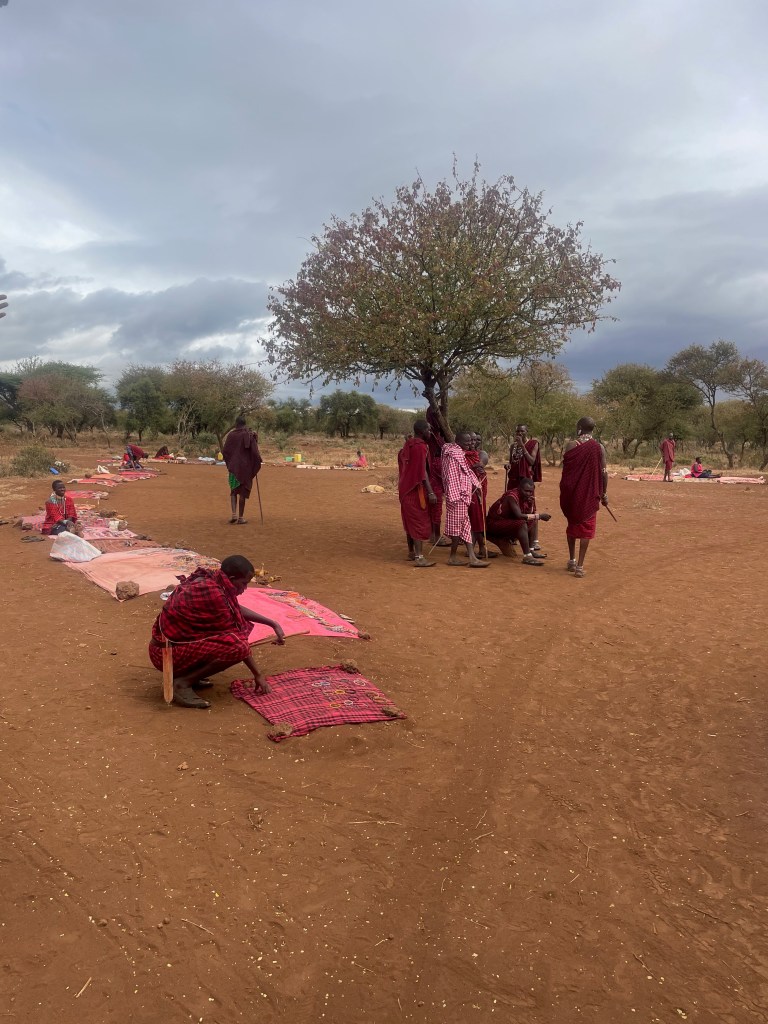
Of course we were treated to ‘the shop’. Handmade beaded necklaces and bracelets and trinkets were spread out for our inspection. I befriended a warrior and bought a necklace and earrings. John was bemused.
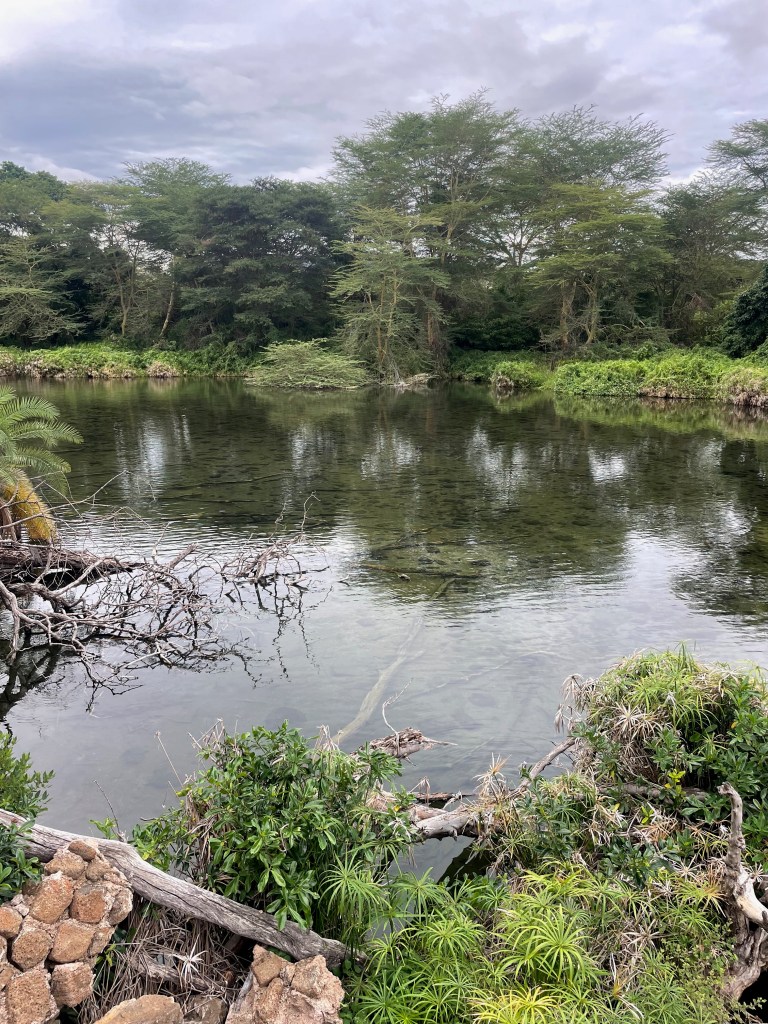
After the long drive along what felt like a dried-up river bed we came to the most tranquil idyllic place on earth, The Kilaguni Serena Safari Lodge in Tsavo West National Park.
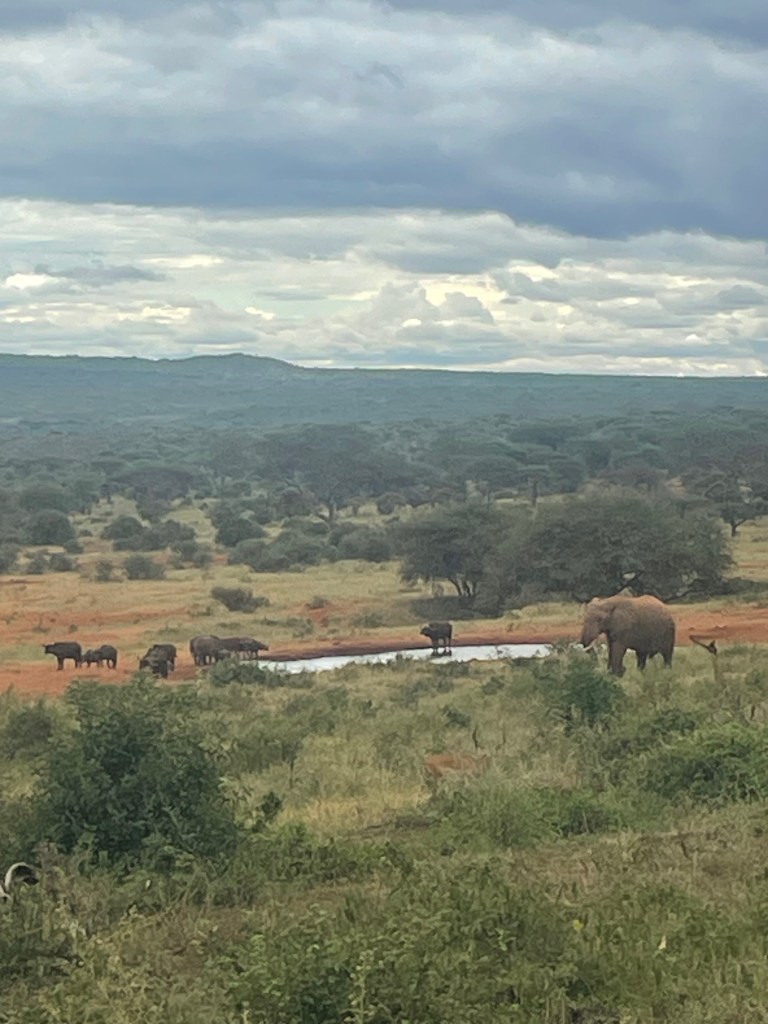
A man-made lake just below the lodge was framed by the Chyulu hills where zebra, elephant and wildebeest were drinking. Giraffes came and joined the party. It could have been a jigsaw puzzle.

We ate lunch, the usual – rice, dahl, vegetables and either meat or fish (same everywhere, maybe the same caterer?) followed by creamy deserts and exotic mousses. There was cheese cake and ginger sponge on the menu that day.
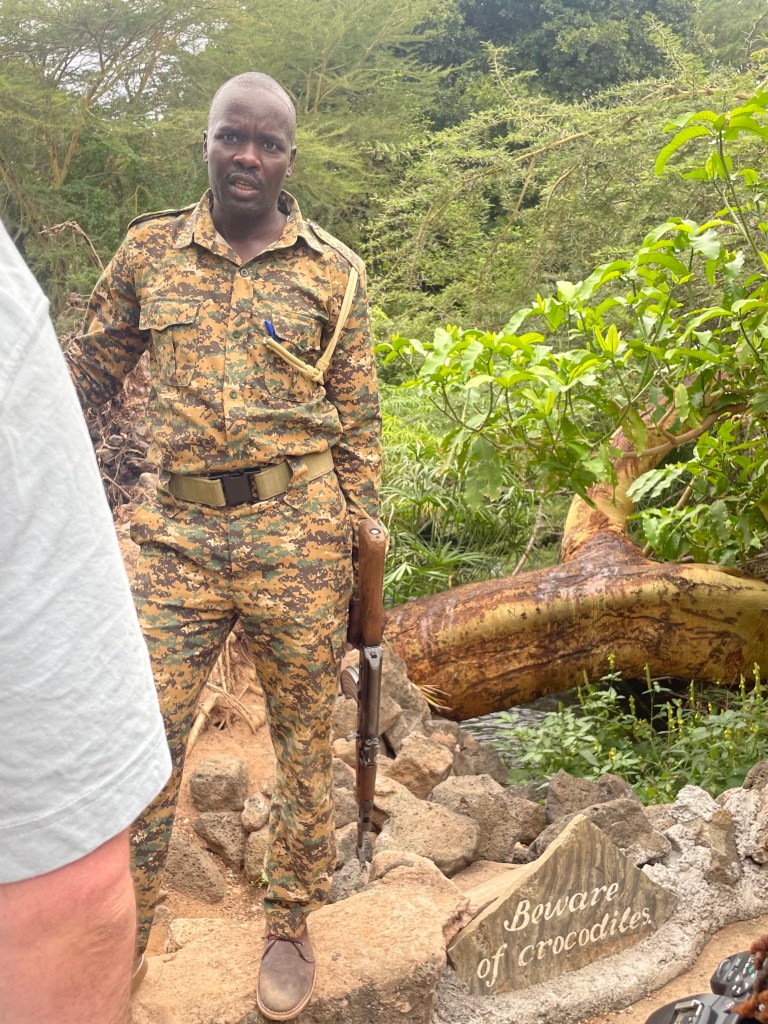
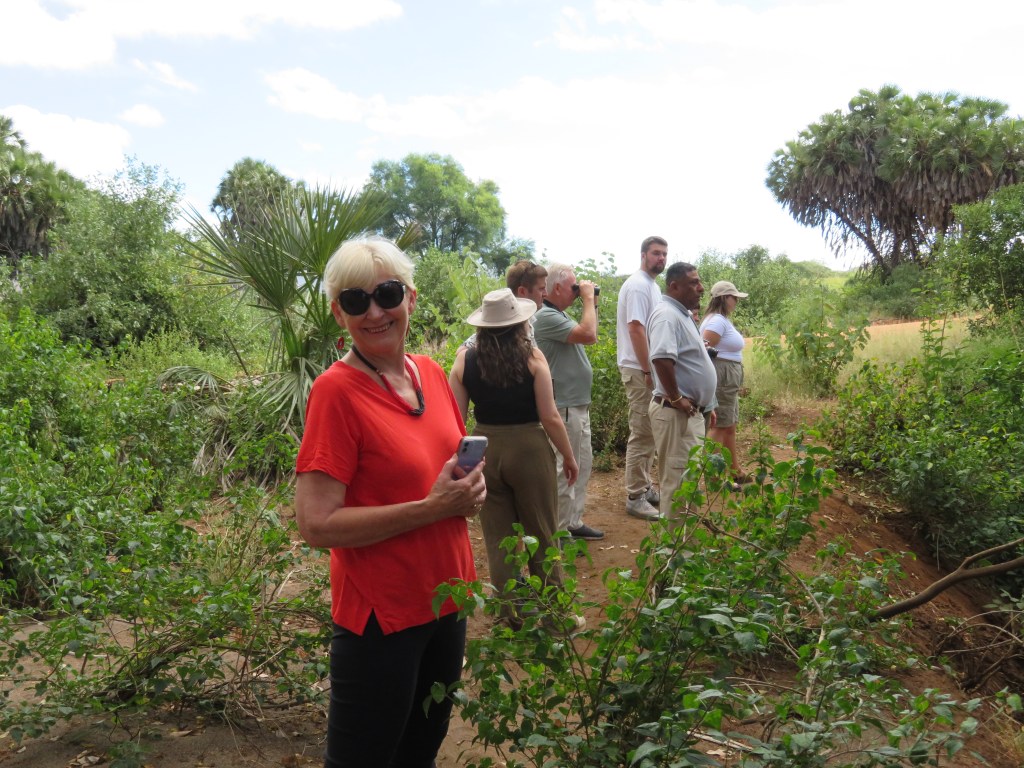
In the afternoon after a siesta (waking to see an elephant approach the water hole) we went on foot to visit the Mzima springs, a collection of crystal clear lakes and home to crocodiles and hippos (such unlikely bed fellows). We were led by a ranger who casually held his AK47 as though it were a twig – we felt a little vulnerable without the protection of the vehicle. I was enthralled by the yellow bark acacia tree (or fever tree). Apparently elephant rip the bark, insects move in and eat the pulp and inevitably the tree falls down. Two African ladies who were with a different group were chatting. The one in the denim with long dreadlocks looked very intense. I imagined she was discussing the huge crocodile just down from her, but no… it was, ‘Did you have the cheese cake? It was very good.’ ‘No,’ said her companion, ‘I tried the ginger sponge, maybe I’ll try the cheese cake for dinner.’
On our way back we came across the most beautiful leopard lying by the side of the road. I did wonder if it might jump onto the bonnet as they don’t seem to have any fear of our trucks.

When we moved on, with much regret from our paradise lodge, we were cheered to see that the day was beautiful with sunshine and blue skies and we were able to see Mount Kilimanjaro in all its glory, its snows glistening in the distance. A giant baobab tree stood sentinel in the foreground, about four to five hundred years old.
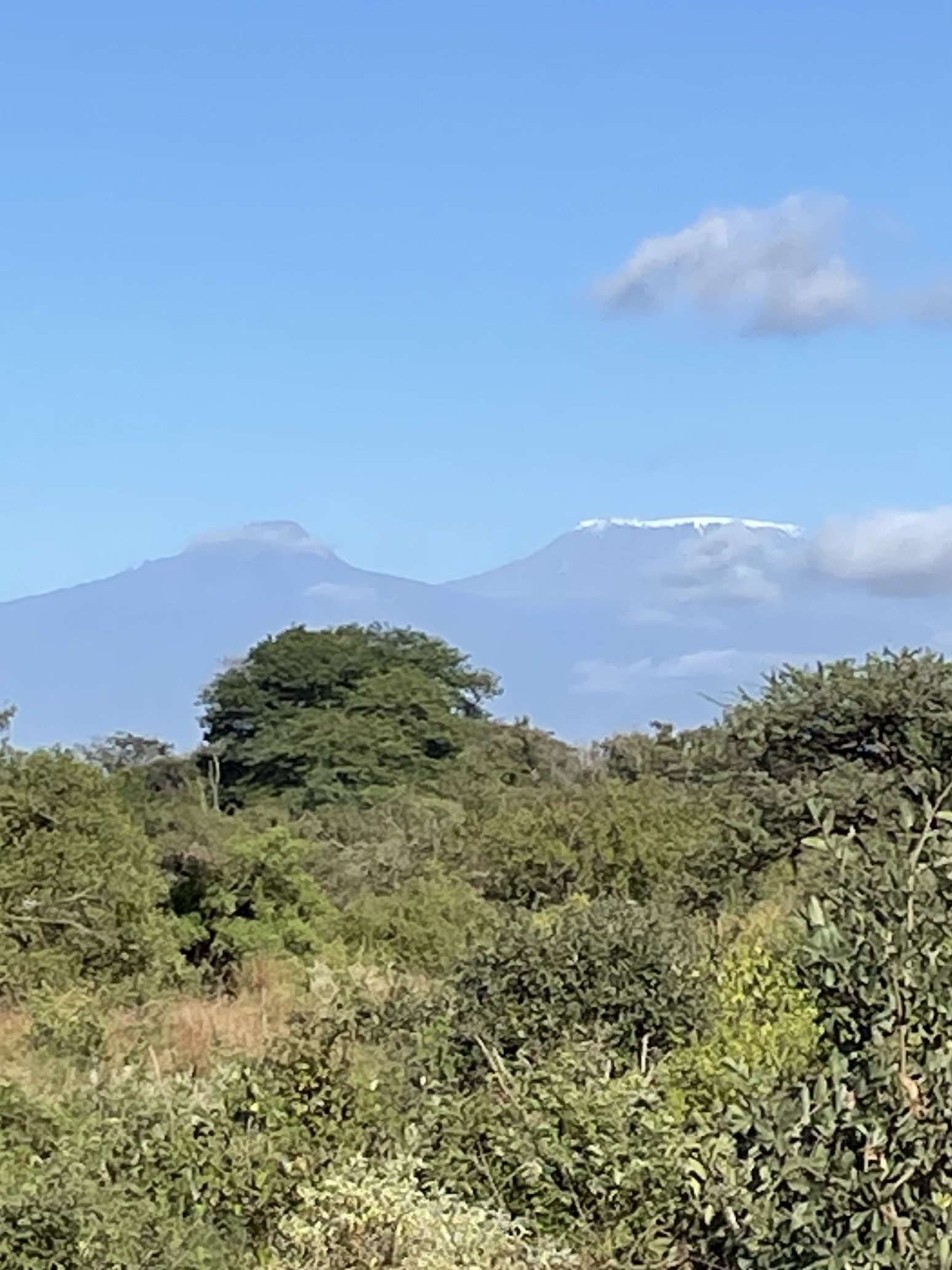
We were entranced with the Chyulu hills until we found they had been used as look out posts by the British during the first world war. Here I was, afraid to leave the vehicle, but those young men, British, African, Australian and Indian had clambered through the bush, fighting illness, disease, safari ants (that tunnel up the nostrils and into the eyes) and goodness knows what else, as well as avoiding German fighting troops with guns. And what about the leopards and puff adders? As I thought of all this we drove through a swarm of tsetse flies, many who had managed to get inside the van. Ugh Ugh Ugh!
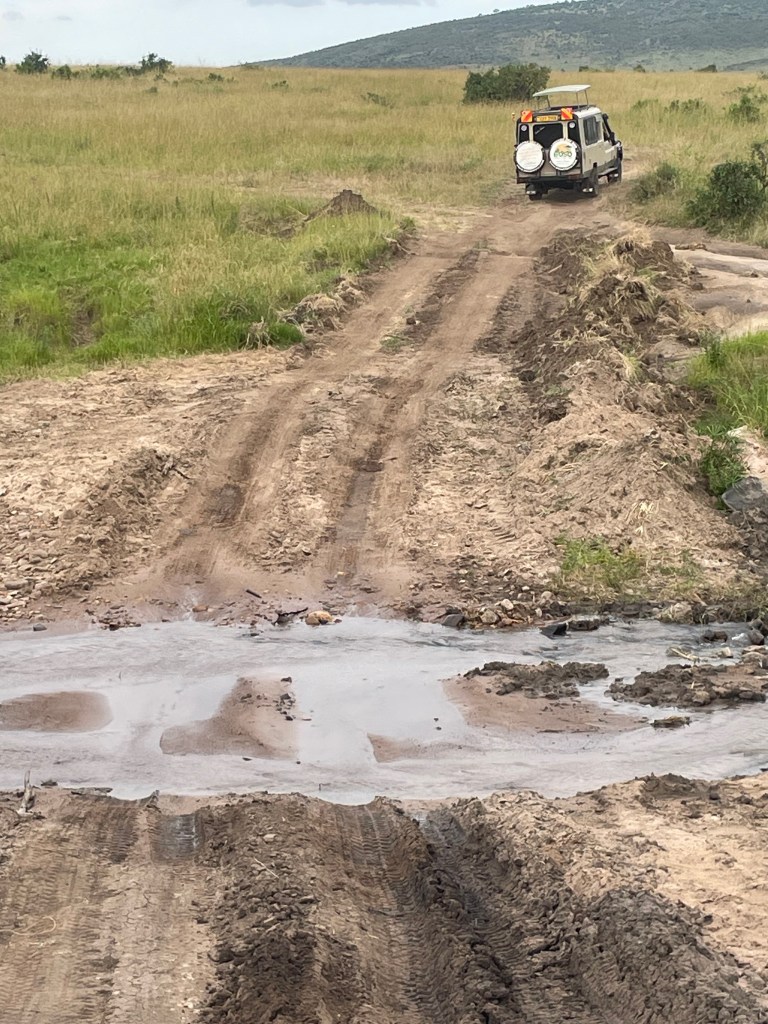
We drove on over the laterite roads surrounded by thick vegetation. Bushes and grasses in hues of sage to emerald. The road was dotted with elephant droppings and millions of animal prints of gazelles and cats.
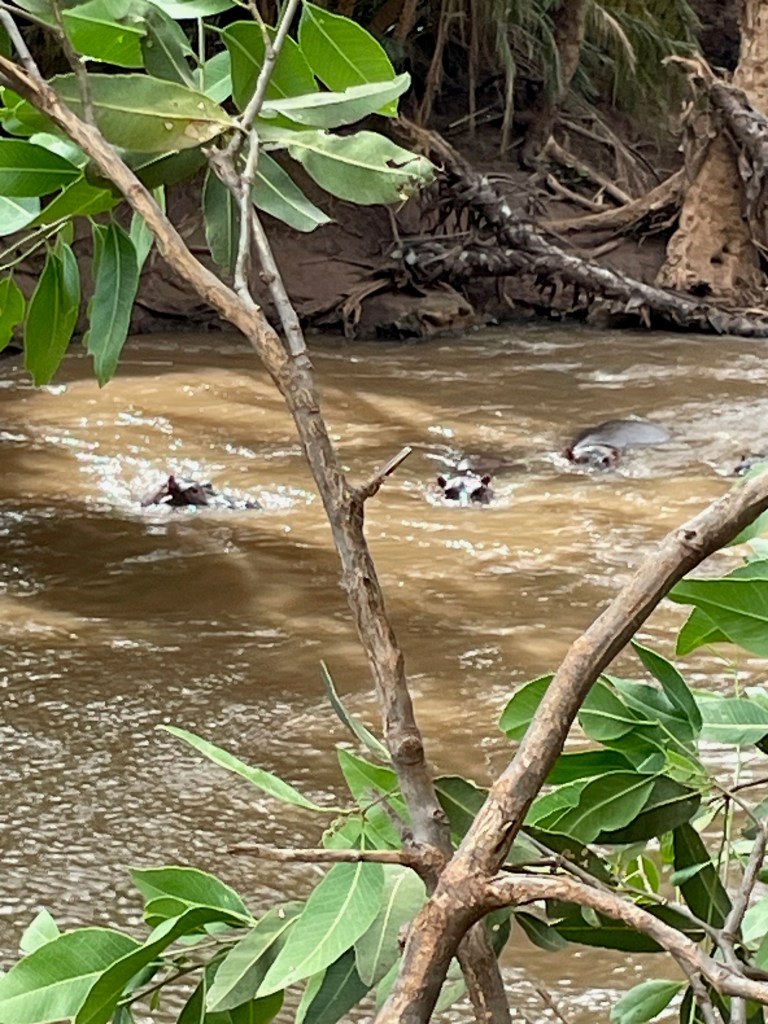
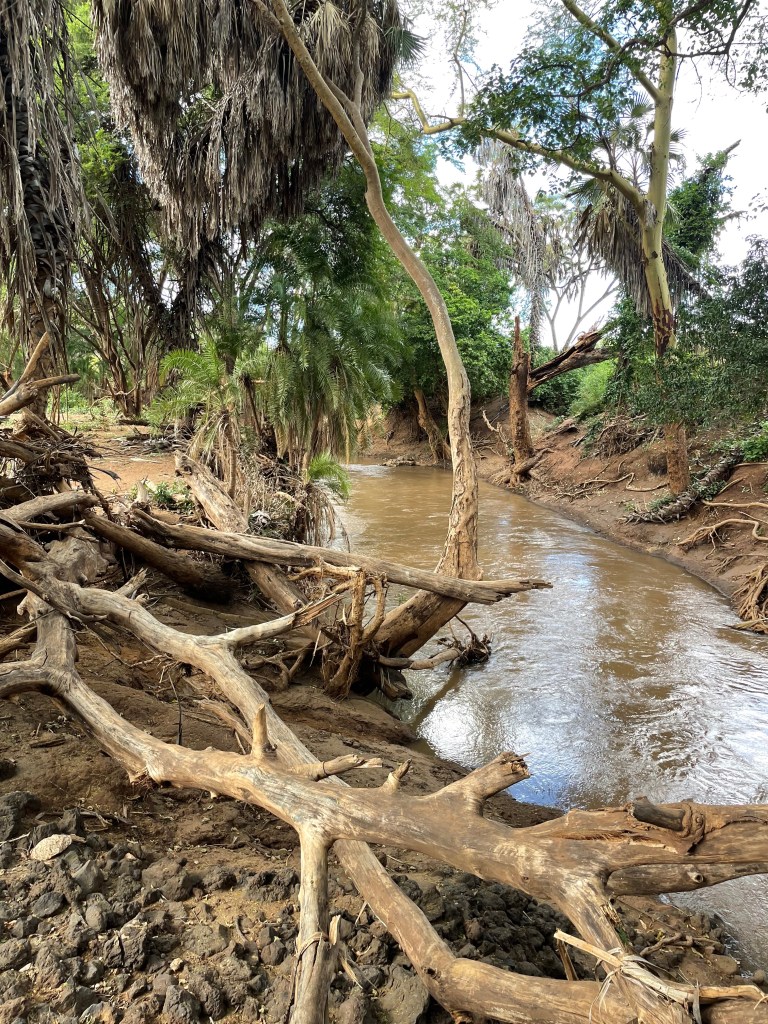
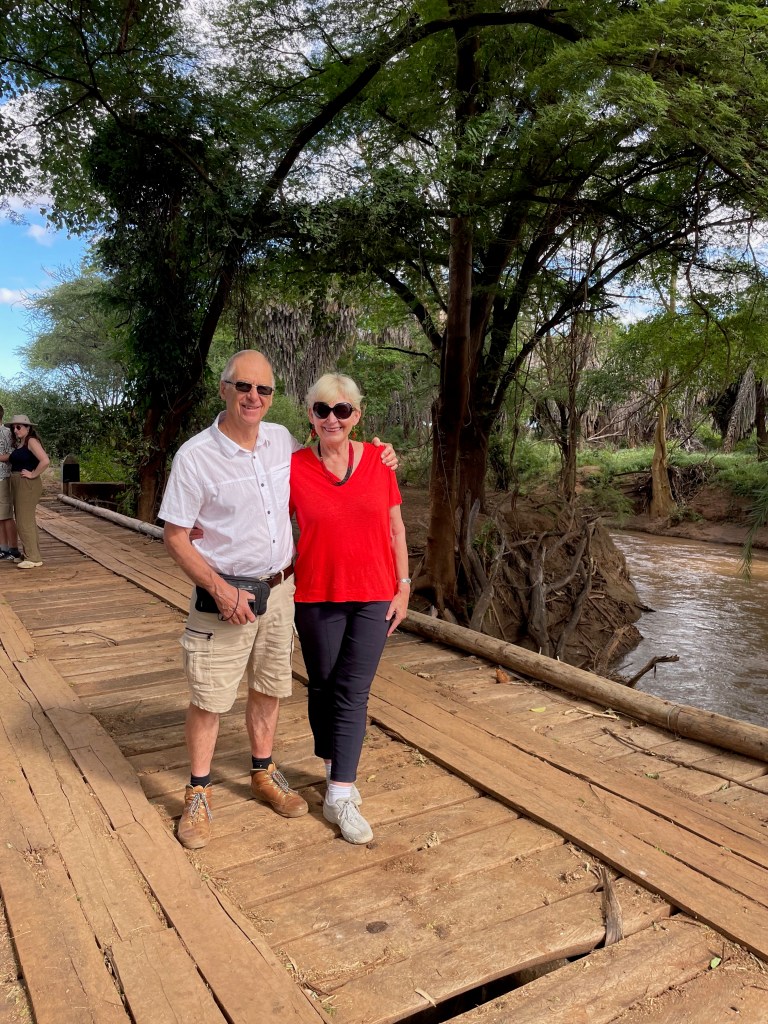
We stopped at Tsavo River Bridge, built originally in WW1, but the carnage of the heavy rains from last year had felled so many trees. It was peaceful, apart from the grunting and snuffling noises from five resident hippo.


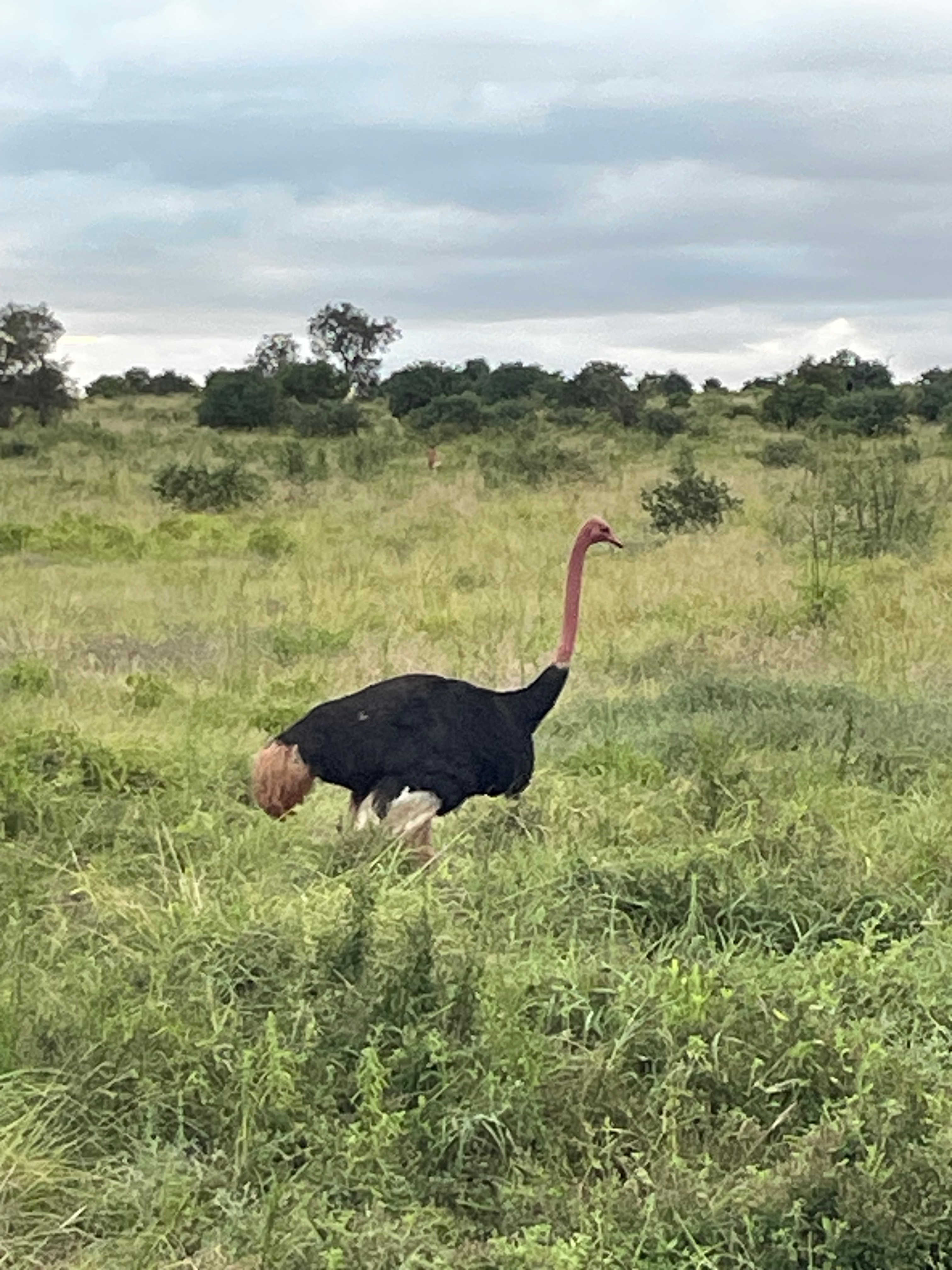
We spent the afternoon lounging by the pool at the Taito Hills wildlife sanctuary, then went on our last safari. We drove round and round in ever decreasing circles as the ‘Jambo Bro’ network was not working. There wasn’t even a zebra to be seen, just grey herons and an ostrich.
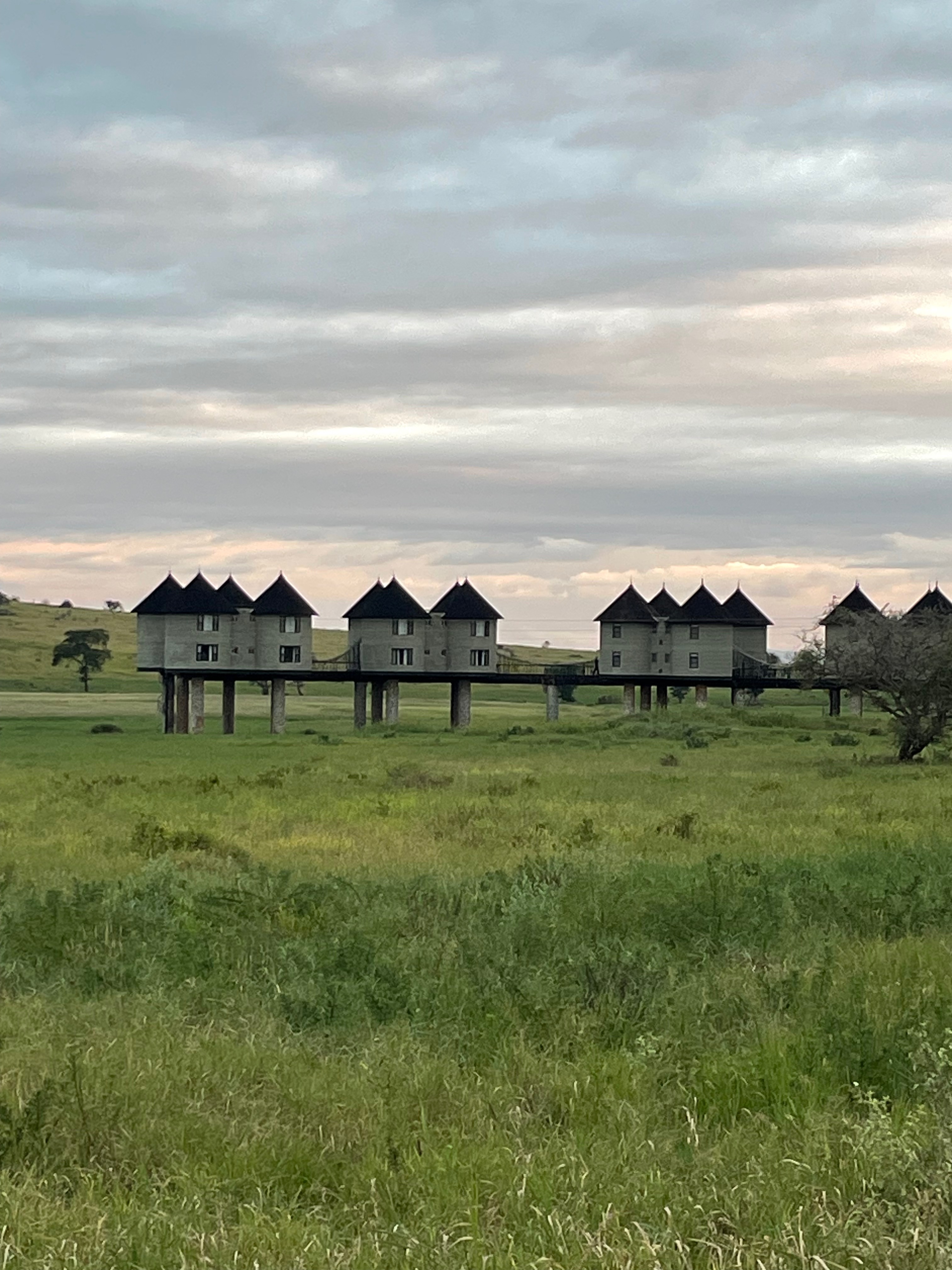
The Salt Lick Lodge in Tsavo West was a weirdly beautiful place and as we settled into our new lodgings Aziz was treated to five lions casually walking in front of him as he drove back to his camp.
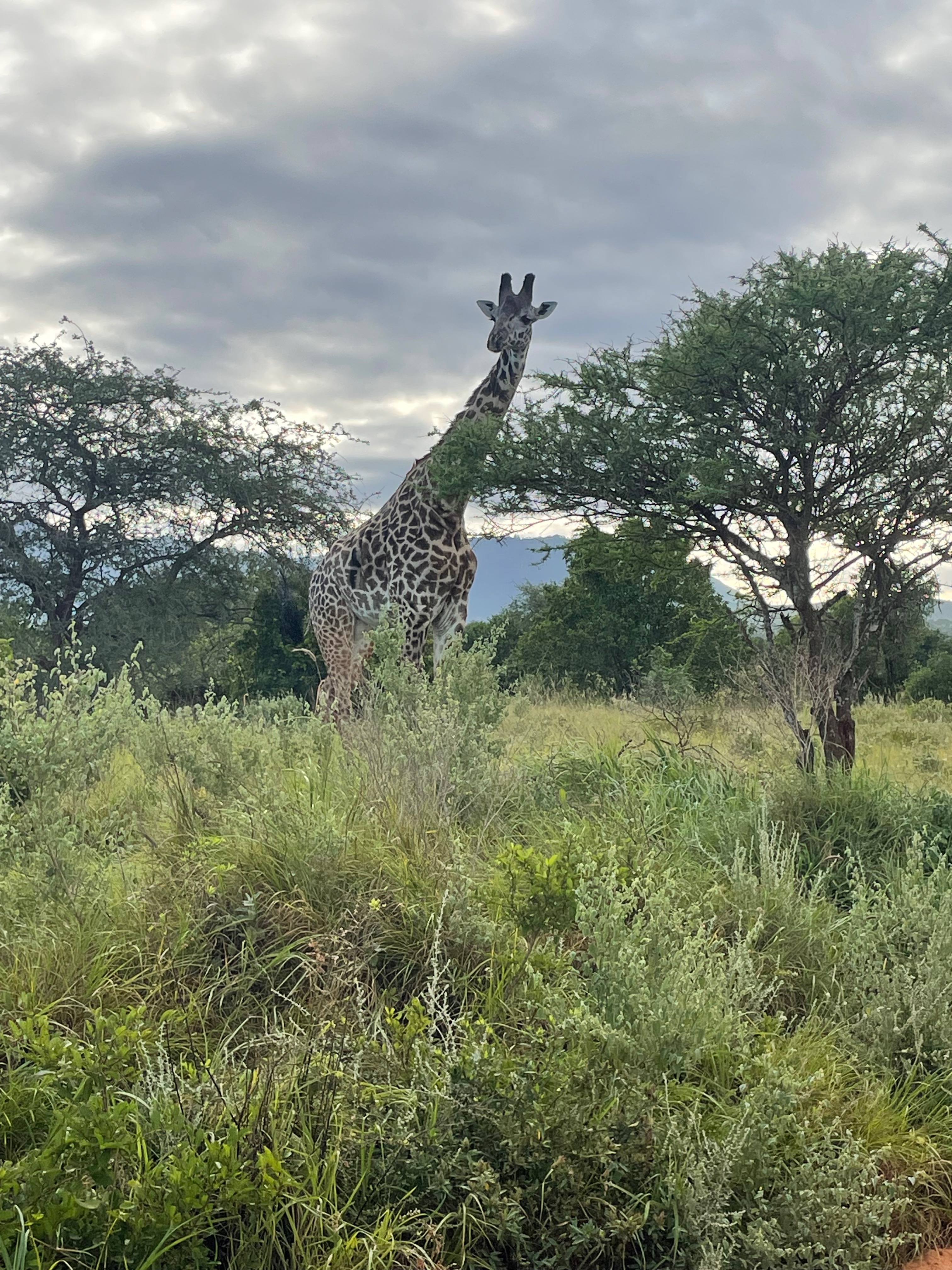
The last morning came and the sun rose over the vastness of the plain and two giraffes came to say goodbye.
After our trip it is easy to see how so many people have fallen in love with the wildness of this part of Africa. I only know of Karen Blixen from Out of Africa and Joy and George Adamson and the cub Elsa from Born Free but I do remember reading Something of Value and Uhuru by Robert Ruark who painted pictures of this vast wonderful place and the fight the people had to get their freedom. The love they had for this country shines through their writing.

A week of safari, dollars spent in gift shops, photographs taken and for a brief few days John and I too were part of it all, hopefully without doing any harm. For the last time we drove as a group south to Mombasa, past the signs, ‘Repent! Repent! Jesus is coming to judge the world’ and drove parallel to the railway that links Mombasa with Nairobi. We drove past fields of saisal plants used for mat weaving and rope, ‘Gael, have you got that? Write it down!’

And now here we are in this beautiful hotel where the palms are swaying and a gentle wind is blowing in from the sea. We shall drink a Tusker beer and relax, for tomorrow a new adventure awaits.

 Tales from the Gael