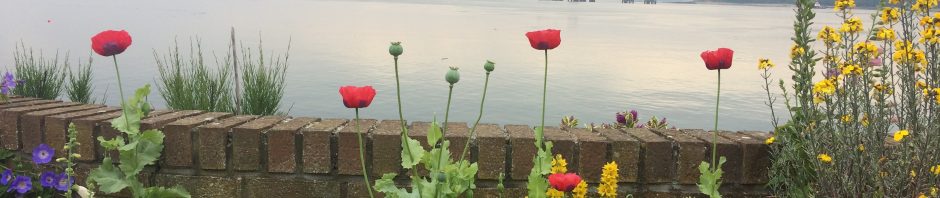
I walked 12km on Saturday, criss-crossing Edinburgh. The day was hot, ladies wore pastels and showed off their white legs, and the gardens frothed with blossoms and colour. Dogs of every breed were walking the pavements. It was all so summery. Such bliss after the cold winter winds.
I began what I now think of as a Pilgrimage, or perhaps more simply a walk down memory lane but with the aim not of visiting an ancient relic but to view a play by the Leitheatre group. I had to be there by 2.30.
Last week my friend Dilly and I attended a class at the University. It was about Pilgrimage in late medieval Scotland, taking in St Ninian, the island of Iona, Holy Island and of course the routes to St Andrews. We learnt about the reasons why many travelled to shrines or cities or even countries. What were their motives? Were they hoping to build up credits in order to stave of hell and damnation, or to make deals with God, perhaps to atone a sin, or save someone from a terminal illness? There are so many reasons and even now people still travel to Santiago Compostela in Spain, not just for the amazing walk through beautiful countryside but each with their own private motives. Some years ago when John and I completed the last 100 mile section and attended the Mass in the Church of St James in Santiago, there was indeed a very strong sense of the spiritual.
I have just acquired a book called The Fife Pilgrim Way which starts in the pretty village of Culross and ends in St Andrews. John and I have plans to complete this new challenge and will do it mainly for the walk, as we did the Camino, but there is no denying that when you do embark on such a challenge tramping along ancient ways where so many have gone before, being close to nature and talking to fellow travellers, the highlight is not the destination but the memories made along the way. I am sure we will find the same as we travel the less well known pathways of Fife.
But on Saturday as I said, my walk was one that encompassed my many previous years that I have spent in Edinburgh. I got off the train at Haymarket and walked down the path beside the Water of Leith, a walk I must have done hundreds of times in all weathers to school or to visit friends. I saw Anthony Gormley’s statue in the river, valiantly standing while the current of brown water rushes past him.

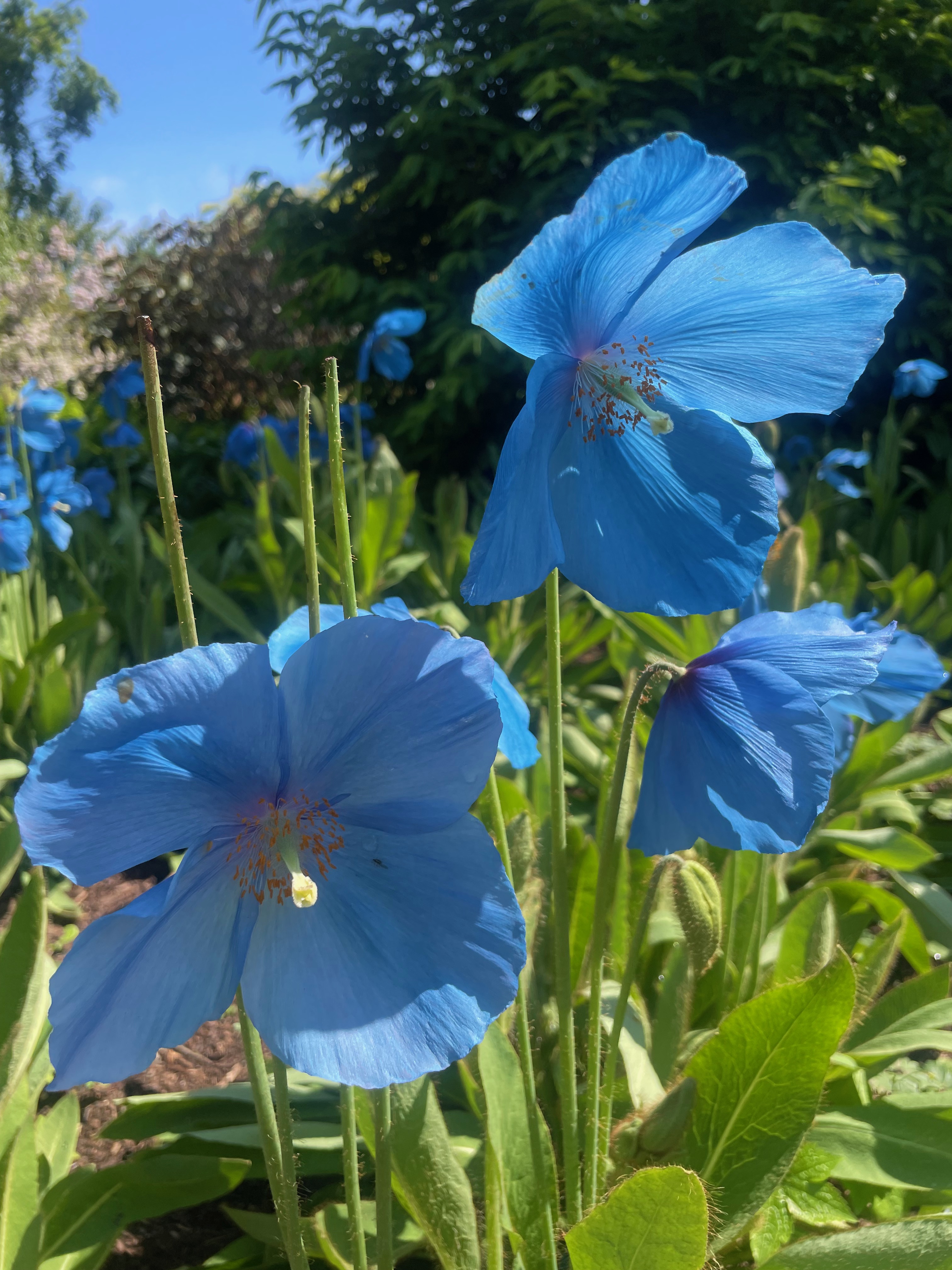
I wandered about Stockbridge and dipped into the odd shop before making my way to Edinburgh’s Botanic Garden where I got lost in azaleas and blue poppies and had to stop and gaze up at the mighty trees with their name tags pinned neatly to their barks.

Then up through the New Town, with the classically built houses of King Street and Royal Circus and Drummond Place, and on towards busy Princes Street, dominated by the massive statue of Walter Scott. He was so well thought of that they even named the busy mainline railway station after his novel, Waverley. I walked onwards and upwards, past the tourists wheeling their luggage to that very station and then up to the Royal Mile where I lunched on Eggs Florentine; it seemed apt since Edinburgh is twinned with that very pretty city in Italy.

Refreshed, I continued up past the Childhood Museum, John Knox’s house and past rows of cashmere and fudge shops. Street theatre was going on as always and beside the jugglers a lonely accordionist was playing Hallelujah by Leonard Cohen in the shade of St Giles Cathedral. I did stop and gaze up the statue of Adam Smith in his wrinkled tights and very stern face. A man from Fife and a genius in logic and metaphysics. He laid the foundations of the study of economics and showed how the interaction of mutual self-interest and competition can lead to prosperity.

Then on past St Giles Cathedral with its wondrous stained glass windows to the statue of David Hume, right outside the High Court Building. He is seen as a giant of the Scottish Enlightenment. Dressed partially naked in a Roman toga he dangles his big toe provocatively over the side of his plinth, encouraging visitors to touch it. The polished toe is a testament to the superstition that the action will bring good luck – rather ironically as Hume’s philosophical views on cause and effect and his scepticism towards superstition makes it a nonsense.
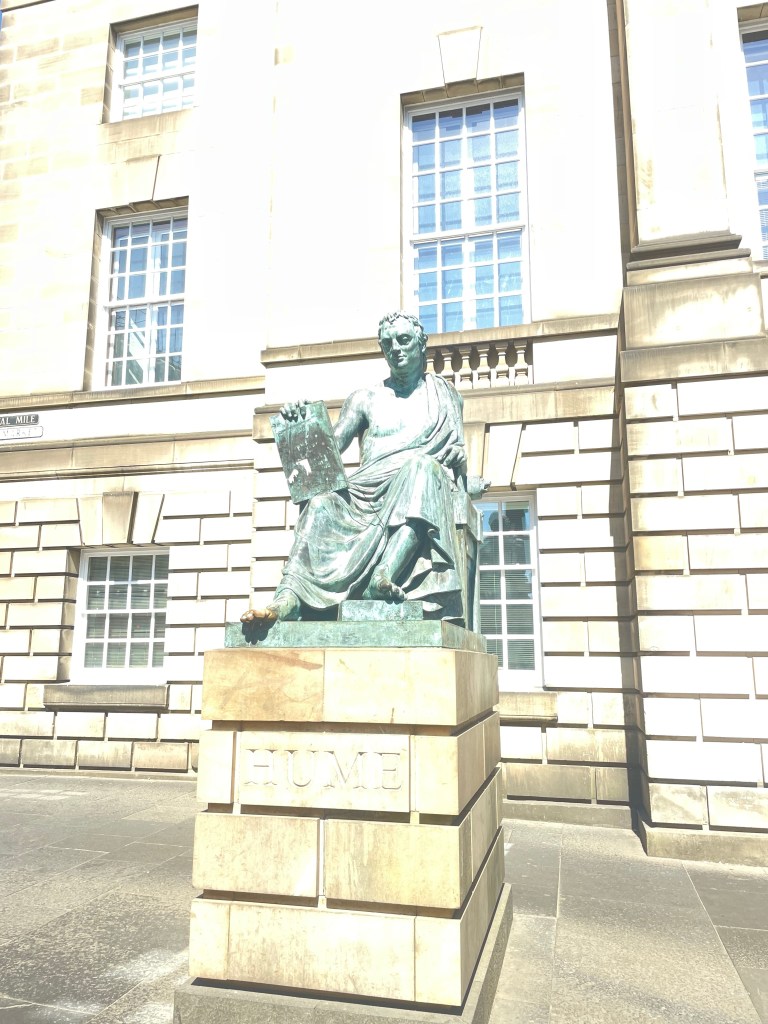
He argued that ideas are not innate and people only had real knowledge of things they directly experience. Ethics were therefore not based on a set of moral principles, but on feelings. He had a huge influence on Albert Einstein and Immanuel Kant.
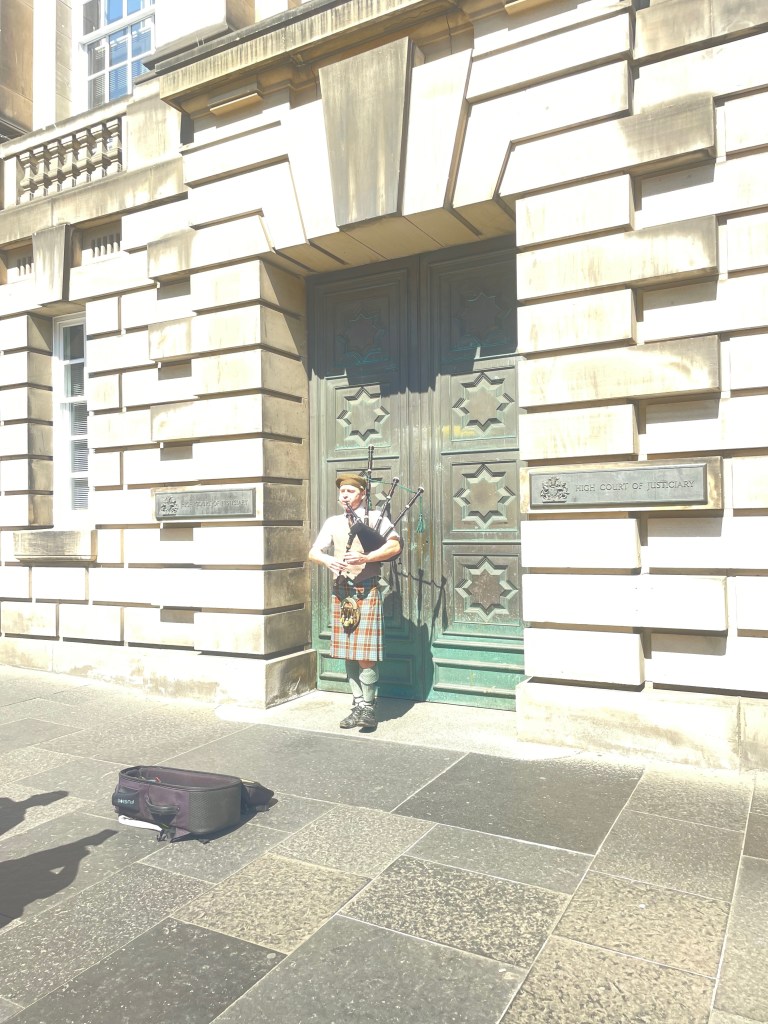
I pondered all of these things and imagined the criminals and bewigged judges who would pass through these doors in the coming week. A piper played a rousing tune and tourists clicked, a fleeting memory of their time in the capital.
I looked down the Royal Mile with its teeming crowds, the higgledy piggeldy high buildings and dark closes, the Palace of Holyrood at the bottom and the castle at the top. So much to look at but today I was on a mission, there was somewhere I had to be, and the clock was ticking. I kept going and passed over the George IV bridge taking in the Elephant House where JK Rowling once wrote about a boy wizard, and glancing in to see the statue of Bobby in Greyfriars Kirkyard then on down through Middle Meadows Walk. Cricket was being played, young people lay prone in the sunshine, hopefully with more sense than my generation. We too used to lie amongst the daisies smeared in baby oil and dollops of Nivea. Now we have the scars from the odd basal cell carcinoma to remind us of our ignorance.
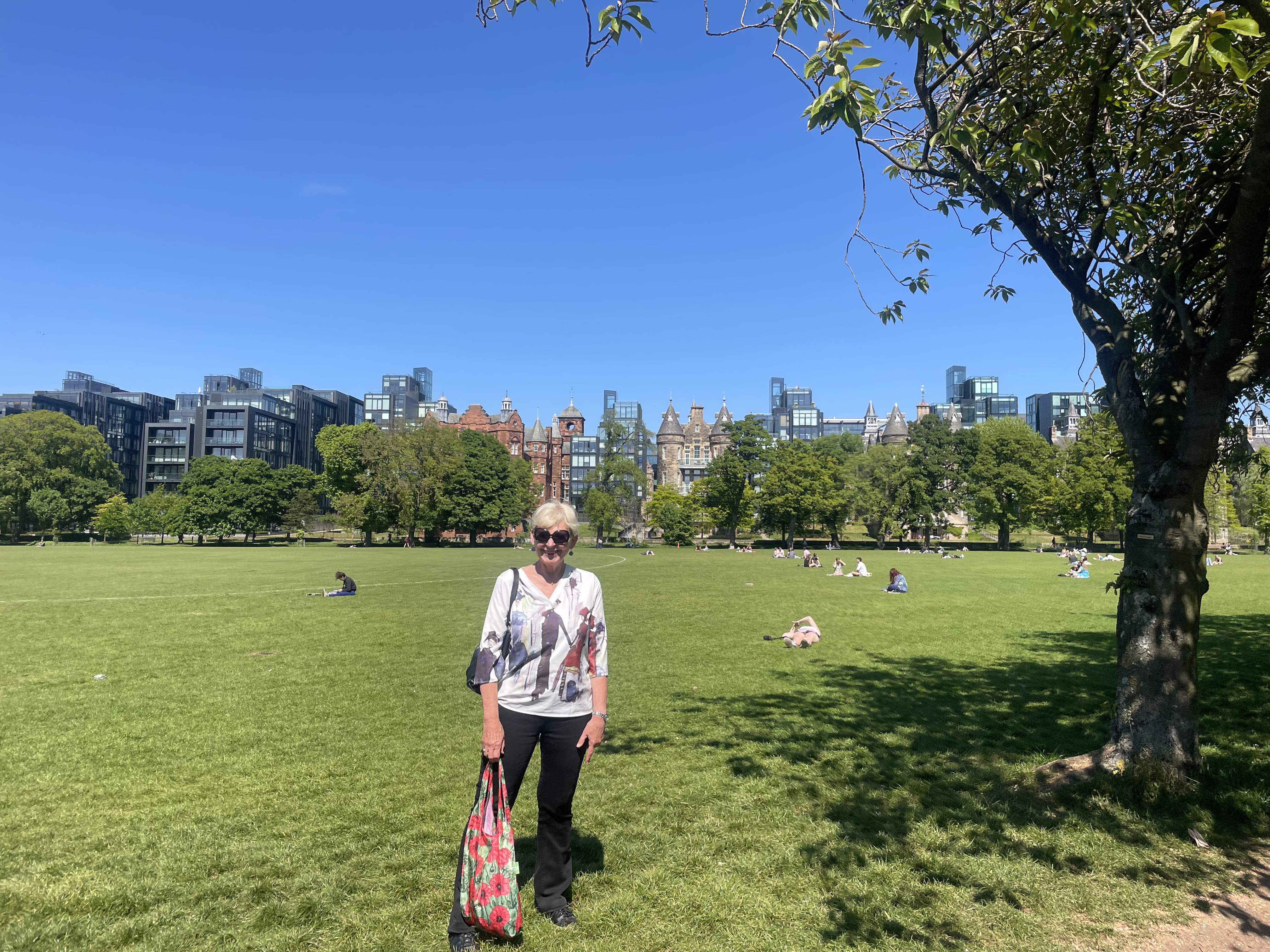
I came out of the green wonderland of the Meadows and walked through the streets of Marchmont, past James Gillespie’s High School, once the setting for Muriel Spark’s The Prime of Miss Jean Brodie and where two of my children once attended.
They had come down from schools in Portree and Glenelg where the Art Departments encouraged kids to draw what they saw, and they drew the Cuillen Ridge, old croft houses beneath the Quirang on Skye. In contrast the Art department in James Gillespie showed canvasses depicting the ancient stones of the Flodden Wall and the shadowy wynds on the Royal Mile – all Scottish subjects but each so different. What is the REAL Scotland? Is it the looming skyline with Edinburgh castle and the buildings on the Mound, or the windswept beaches of the west or fields of sodden sheep?
I walked through Bruntsfield and got lost in the streets of the Grange where the beautiful houses home some of the very wealthy inhabitants. Huge Scots pines and ancient Cypress trees grew tall within the walled gardens. There was a feeling of hush and respect as I passed the locked gateways. It was another world.
Finally I emerged on to the busy Morningside thoroughfare and reached my destination, the Churchill Theatre in time for curtain up. I was glad of the coolness of the theatre, and the play and friends who were caught up in the common group achievement of producing a live performance.
It was better than a pilgrimage, it was a journey of memories of friends alive and gone, of lives lived, houses that were once home and schools I once taught in.
I once wrote about Wordsworth’s poem to Lucy Gray, a beautiful tribute to a child who had gone out one evening in a storm and died, but how the narrator believed that she wasn’t gone, she lived on in the essence of the trees and in the wind. Imagine my surprise when talking about the poem to my friend Irene. We were sitting in her garden, the sun was hot, and her koi carp fish were swimming in their pond. We were remembering a friend who had recently died, and I mentioned Wordsworth and the poem. She suddenly sat up, cleared her throat and began reciting. She had remembered her mother reciting it to her. It was just too beautiful.
Yet some maintain that to this day
She is a living child,
That you may see sweet Lucy Gray
Upon the lonesome Wild.
Over rough and smooth she trips along,
And never looks behind;
And sings a solitary song
That whistles in the wind.’

 Tales from the Gael