NSW and Queensland
Part 1
A pause for reflection. It has been two weeks since I hit Sydney running and I haven’t stopped hyperventilating since I left that plane.
Today I am sitting in Belmont, a suburb of Newcastle, and outside the wattle trees are full of the neighbourhood birds fighting for their roosting rights. More than ten thousand miles from home, but suddenly a little bit of home is with me. I have hooked up with my son and we have just completed over two thousand miles of the most amazing road trip. Images, towns, mountains, farms, seascapes, cities, and miles and miles of road. Today he has returned to Sydney and I am alone for a while to catch my breath.
When I arrived in Sydney, I met up with Helen and Henry, friends I met in Doha and who had me to stay for a couple of nights. ‘Bring your cossie, the neighbours are away and said we can have a dip in their pool’ was my welcome!

How fantastic to sit submerged, sip G&T and chat. ‘Can you see the Southern Cross?’ said Henry, and we made it out amidst the billions of stars that were swathed above us. So, if I’m lost I now know how to get to Victoria or Tasmania.
I awoke in the morning to the kookaburra and the whip bird, laughing and whipping their heads off, and I lay there, totally disorientated, so far from the minus 3 temperatures that I had so recently left.
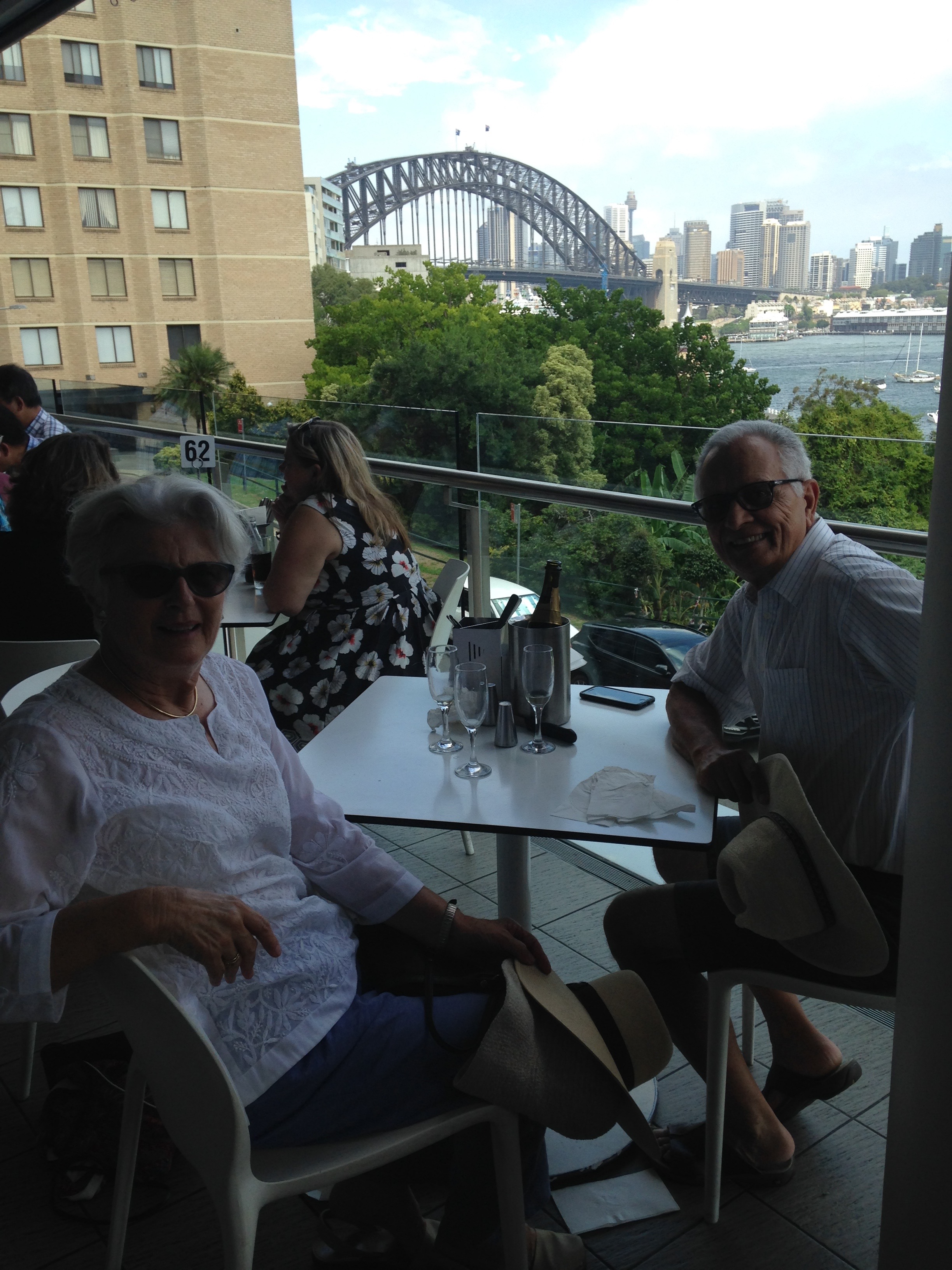
Helen and Henry took me out to lunch at the Kirribilli RSL club in Sydney. It sits overlooking the harbour bridge and is nestled in trees and shrubs. The real Kirribilli House is the home of the PM and sits further round in rolling green lawns and looks across to the Botanic Gardens.
After lunch, Helen introduced me to the Secret Garden, the exquisite creation of Wendy Whiteley, widow of the celebrated artist, Brett.
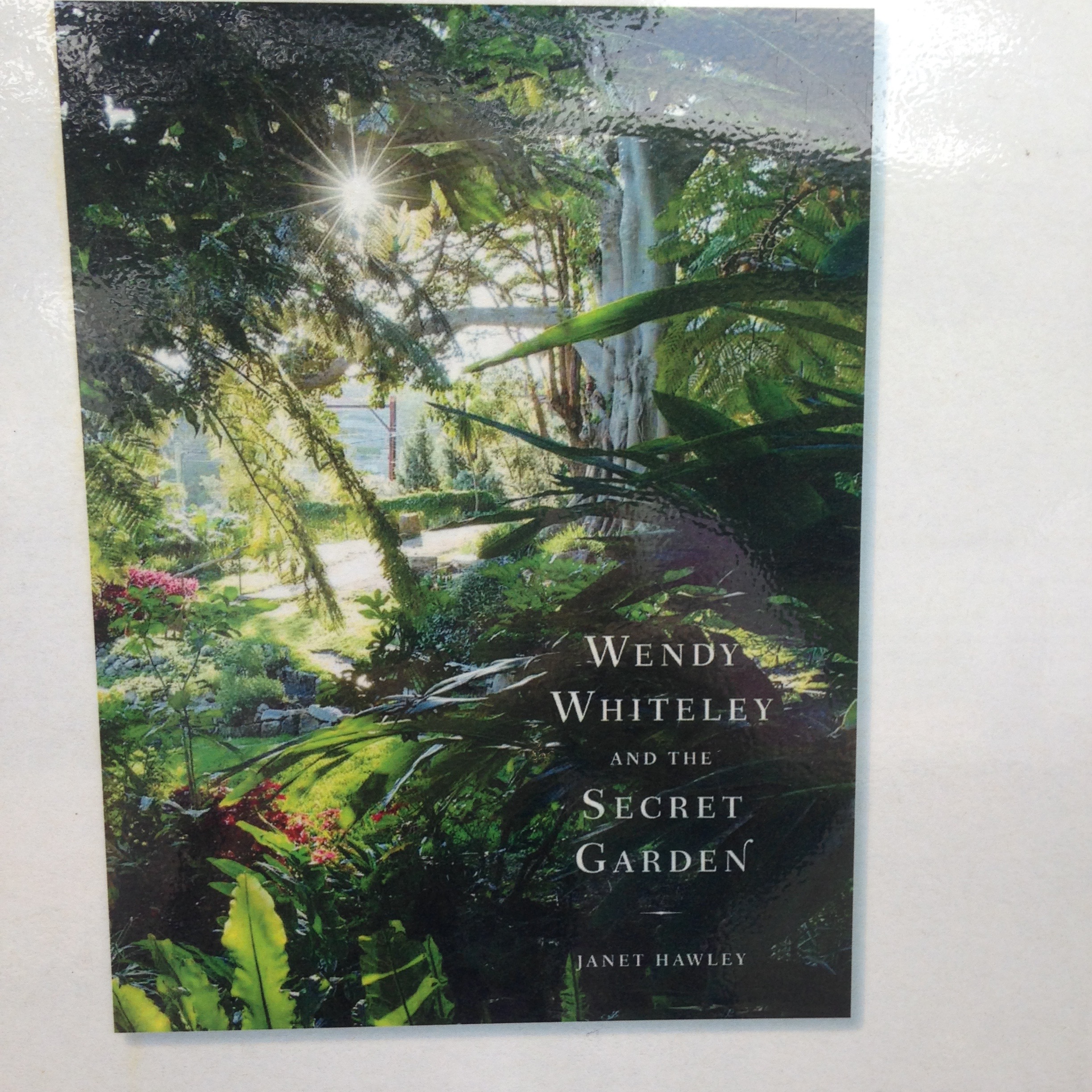
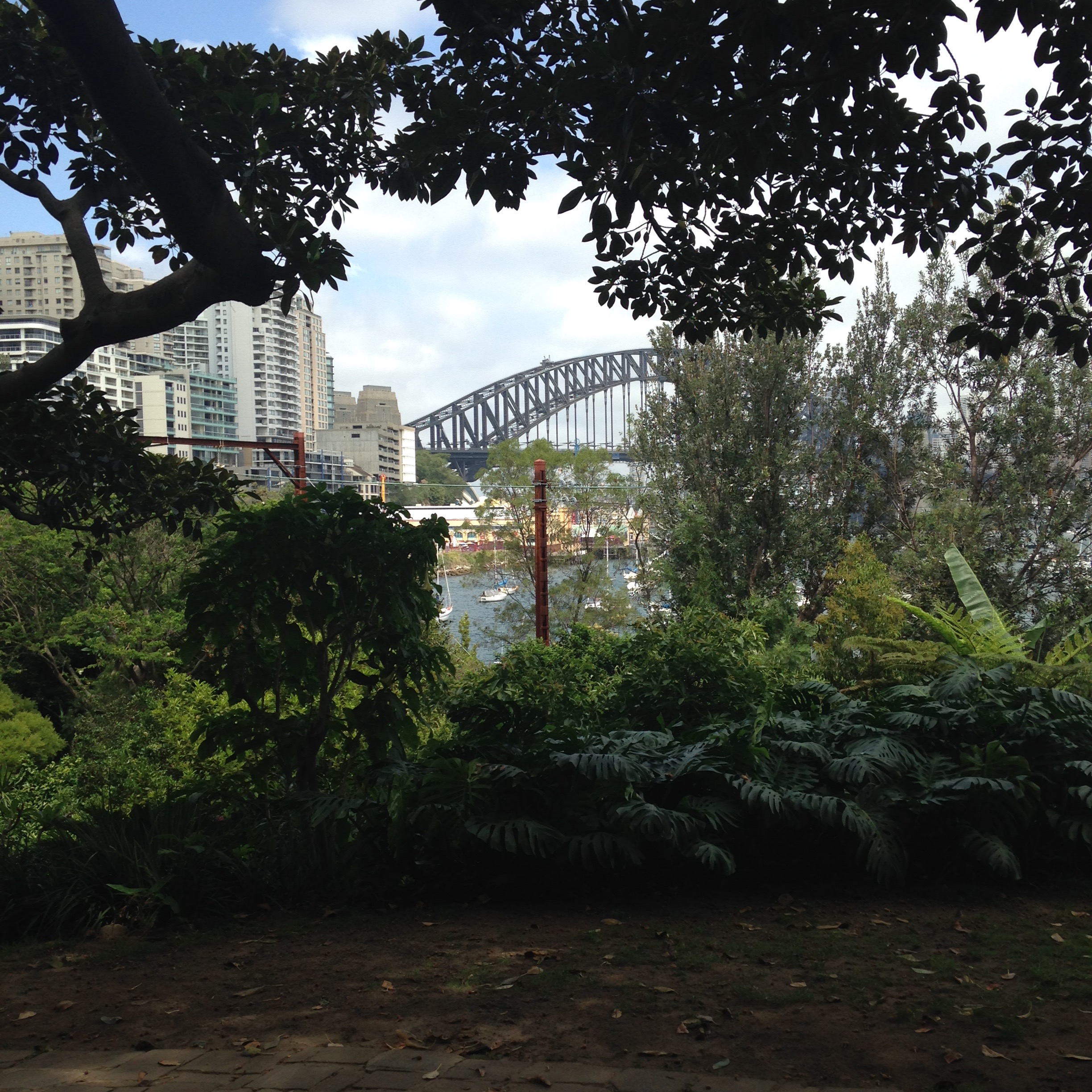
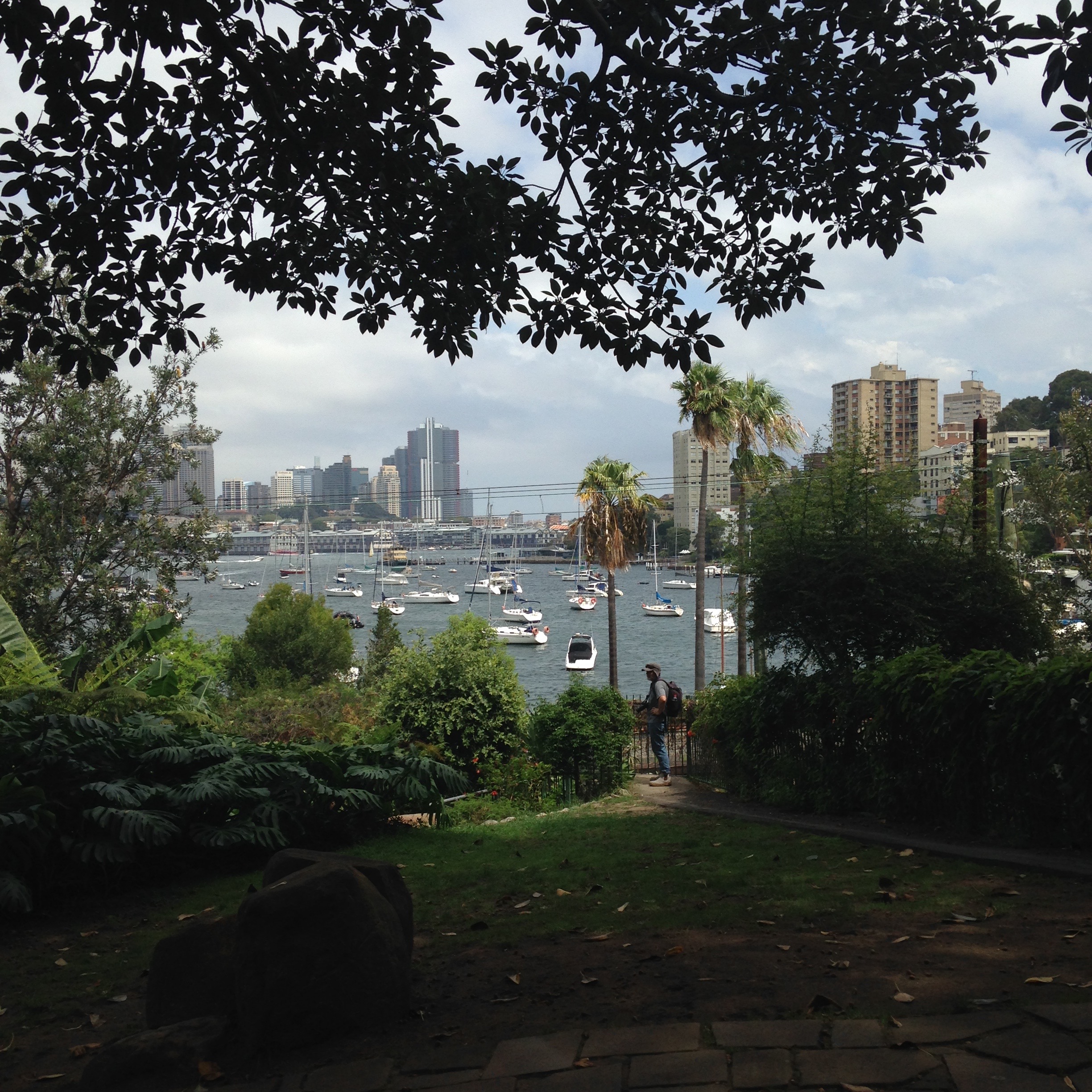
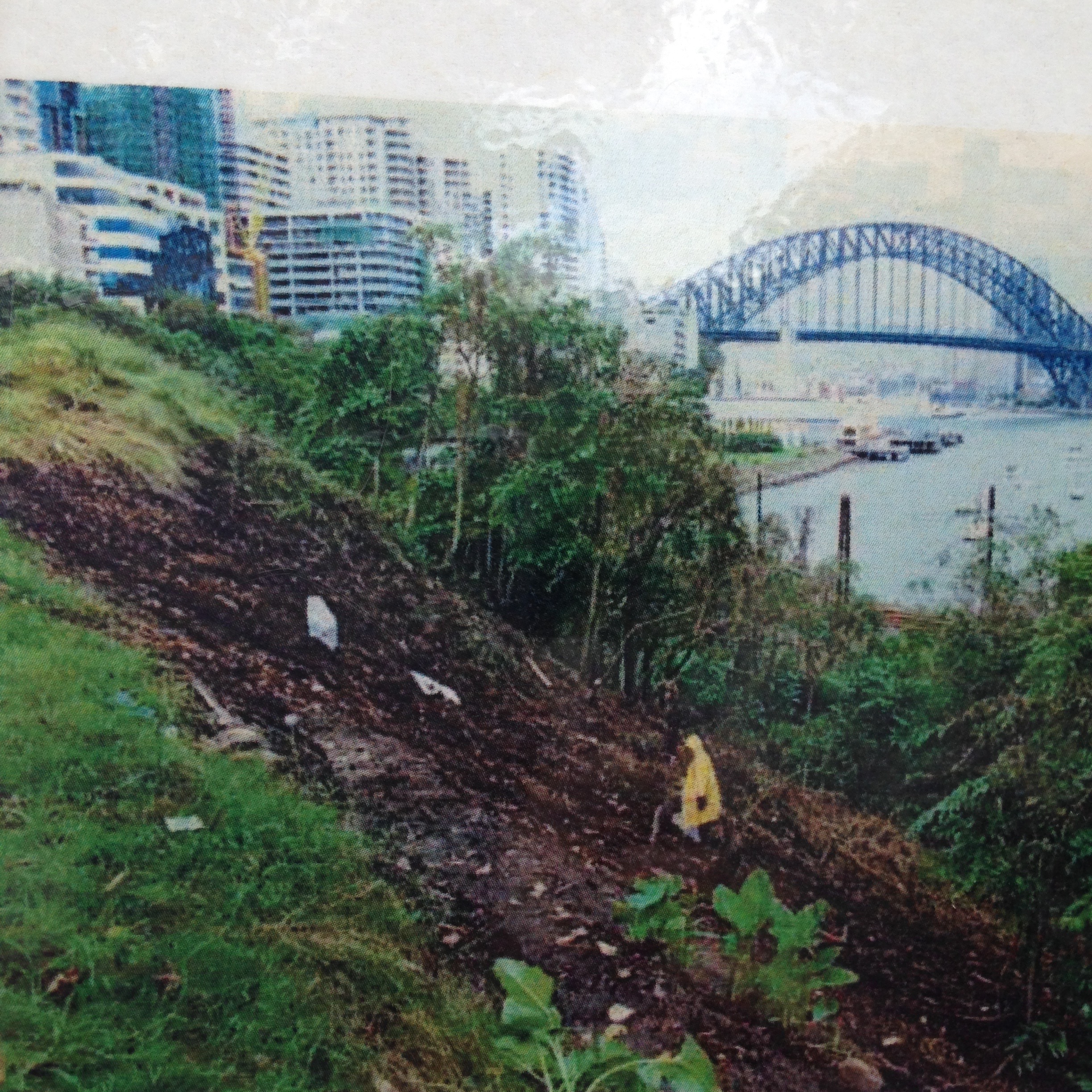
Nestled in the crook of Lavender Bay, Wendy planted native shrubs and trees, landscaped hills, and created windy walkways where office workers can escape for a coffee and be lost in nature for a while. It was so unexpected, an oasis amongst the business of the city. We walked along the edge of the water and passed funny little carvings depicting characters from nursery rhymes and stories,
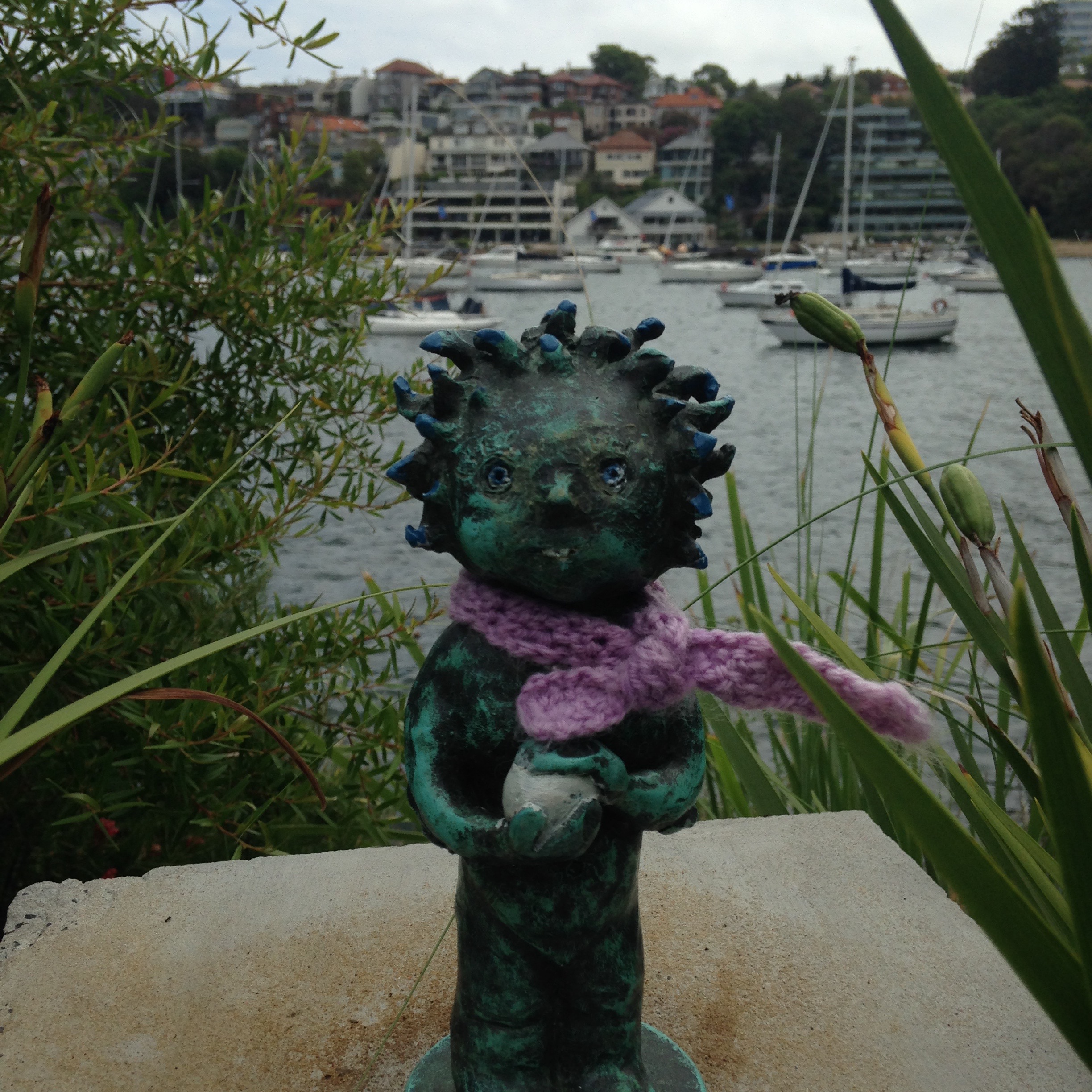
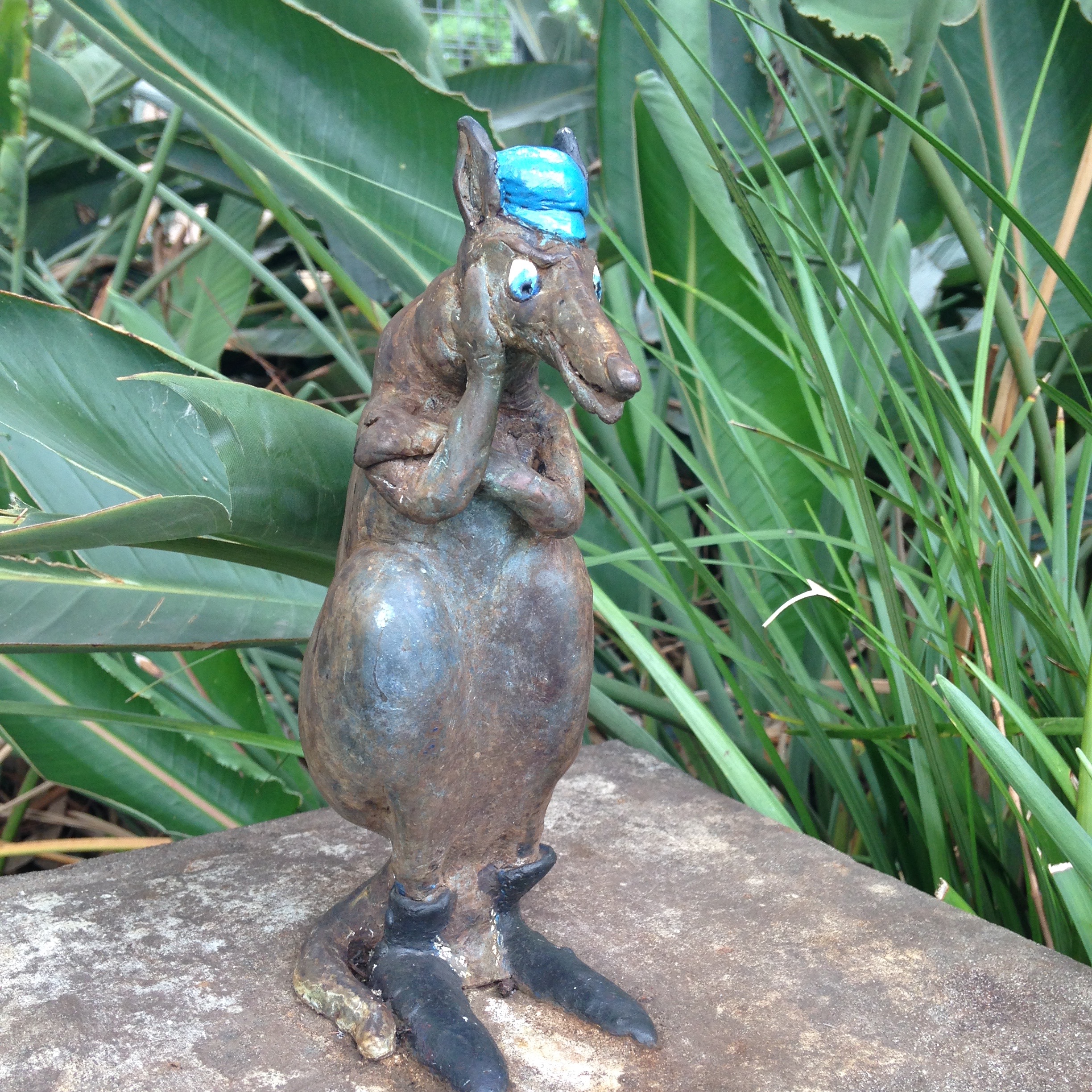
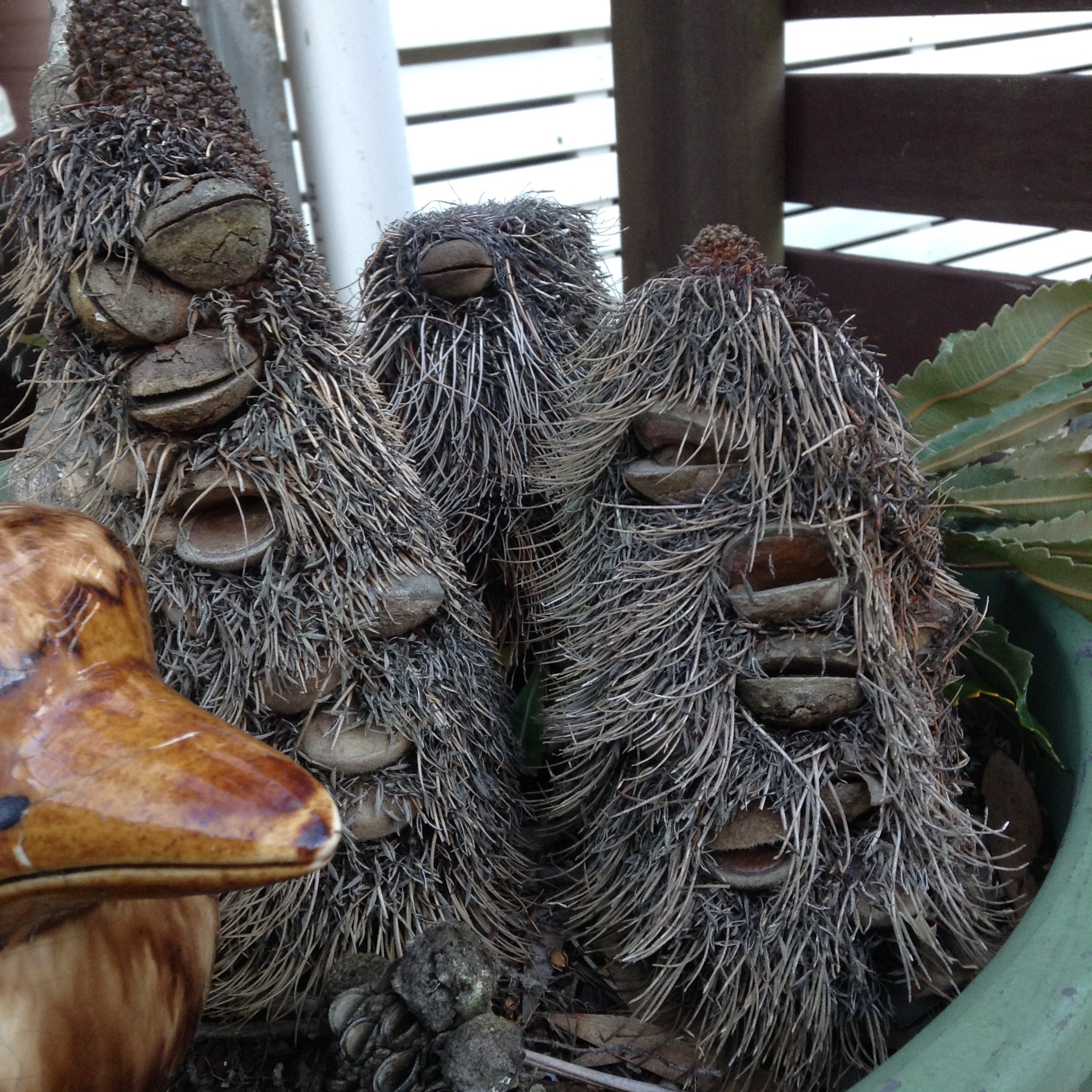
and suddenly I was introduced to The Banksia Man. A horrid monster creature from storybook land that terrorised innocent little pixies called Snuggle Pot and Cuddle Pie, the creations of May Gibbs. Then Helen led me to a bush and it was covered with the dead and bristly remains of the Banksia flower. They were dark and brown and hairy, with strange half closed eyes. Suddenly I could see it all, and I was on a mission… I had to find the book!
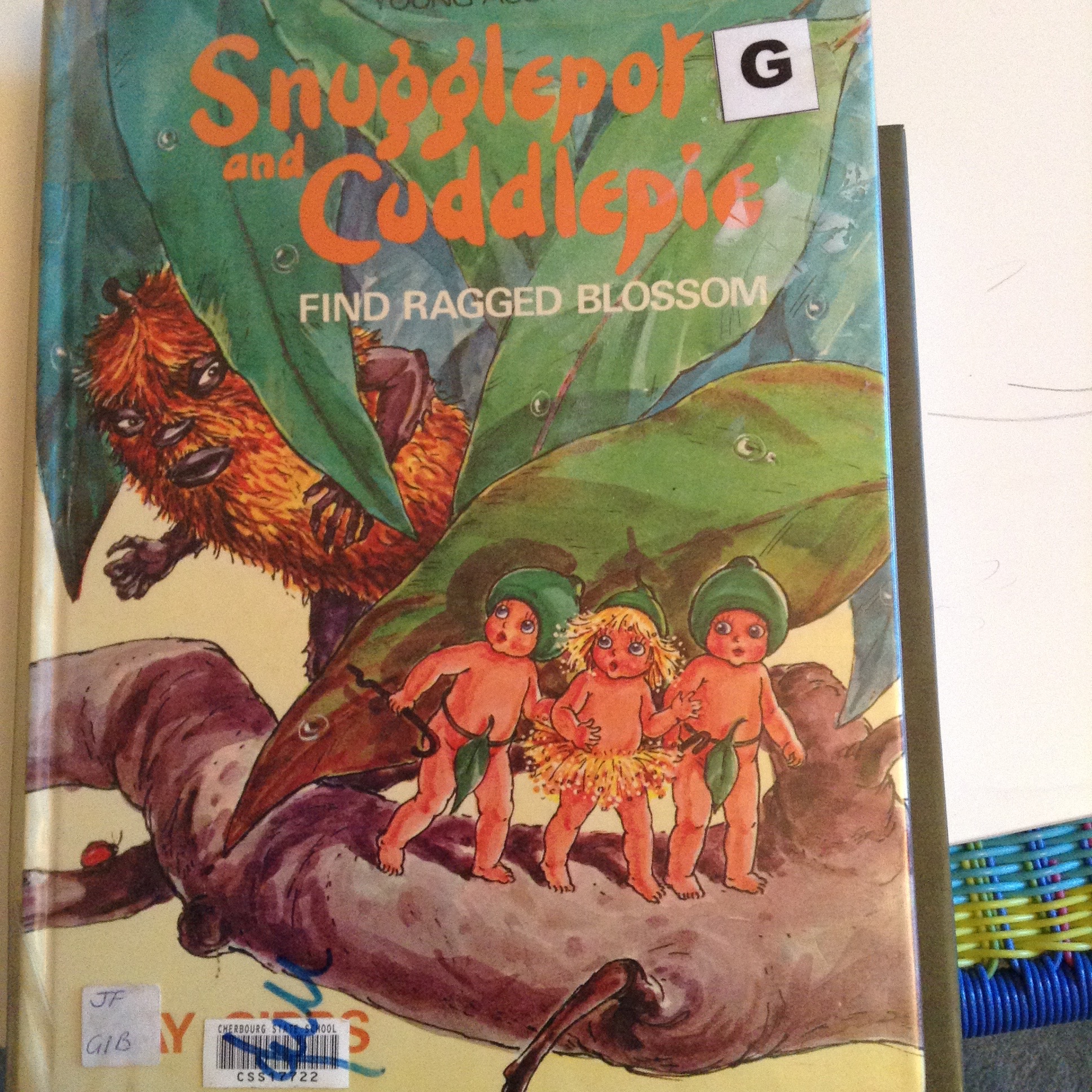
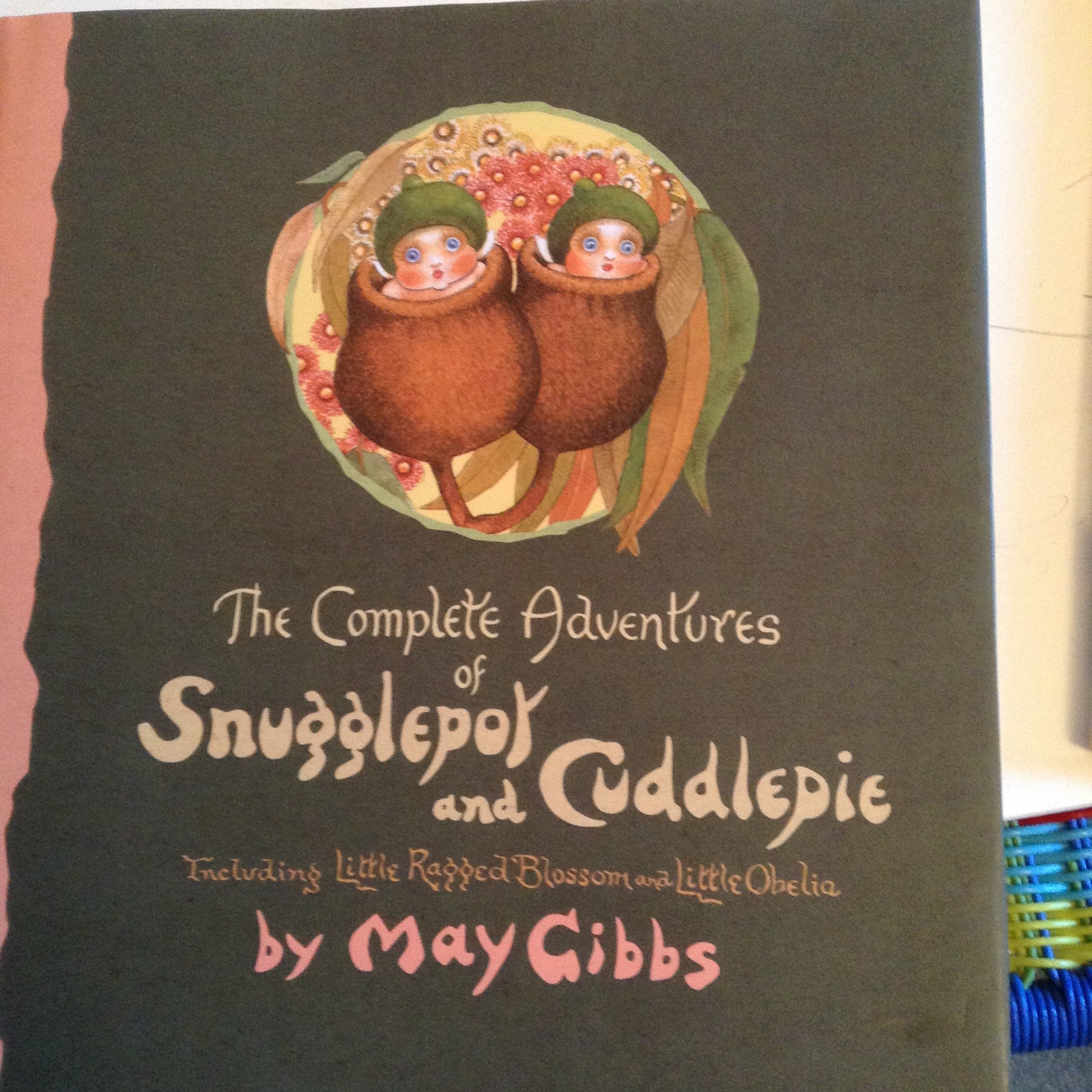
And here are the banksia seed pods just taken from the tree,
The three of us got ferried over the harbour to Circular Quay, passing under the bridge and skimming the Opera House.
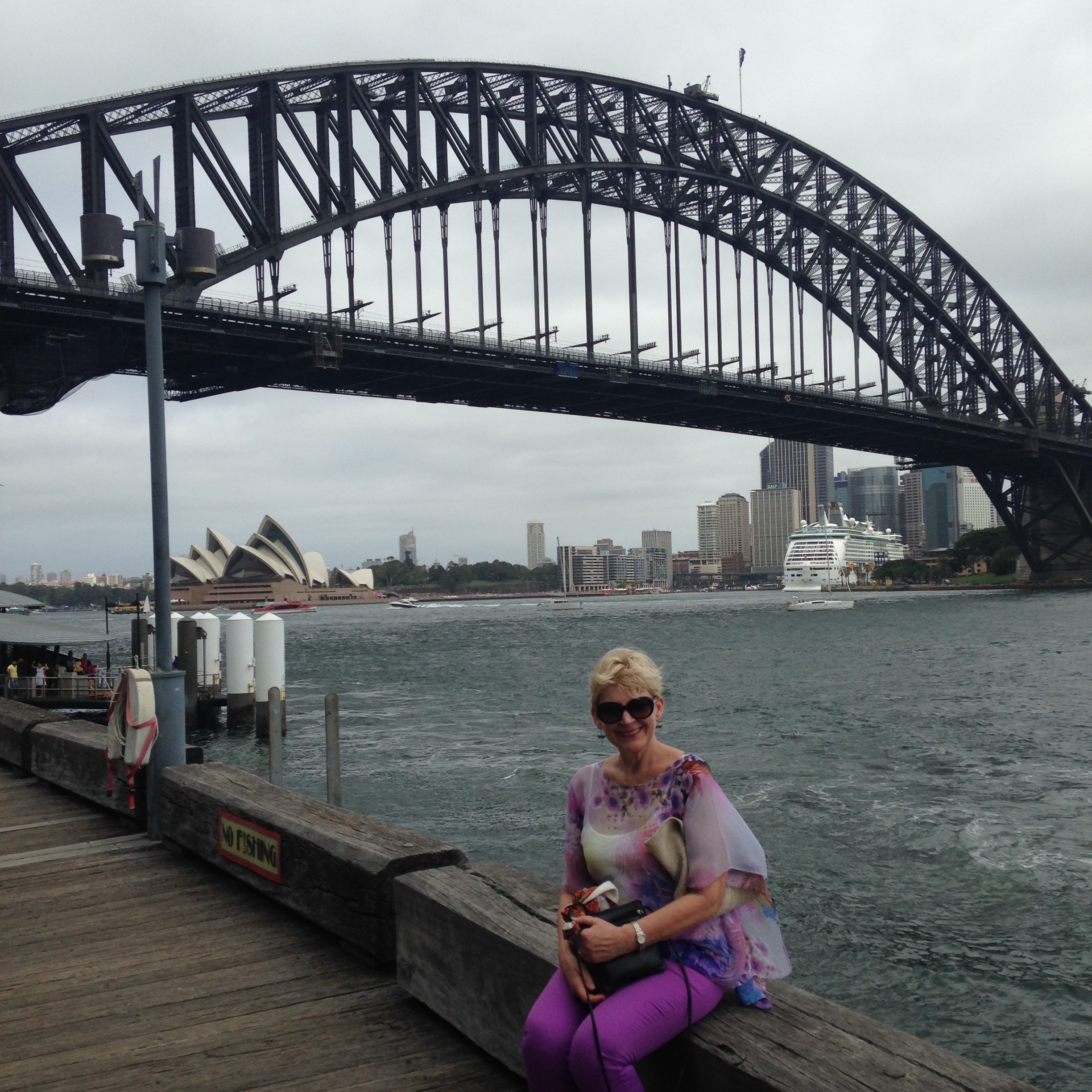
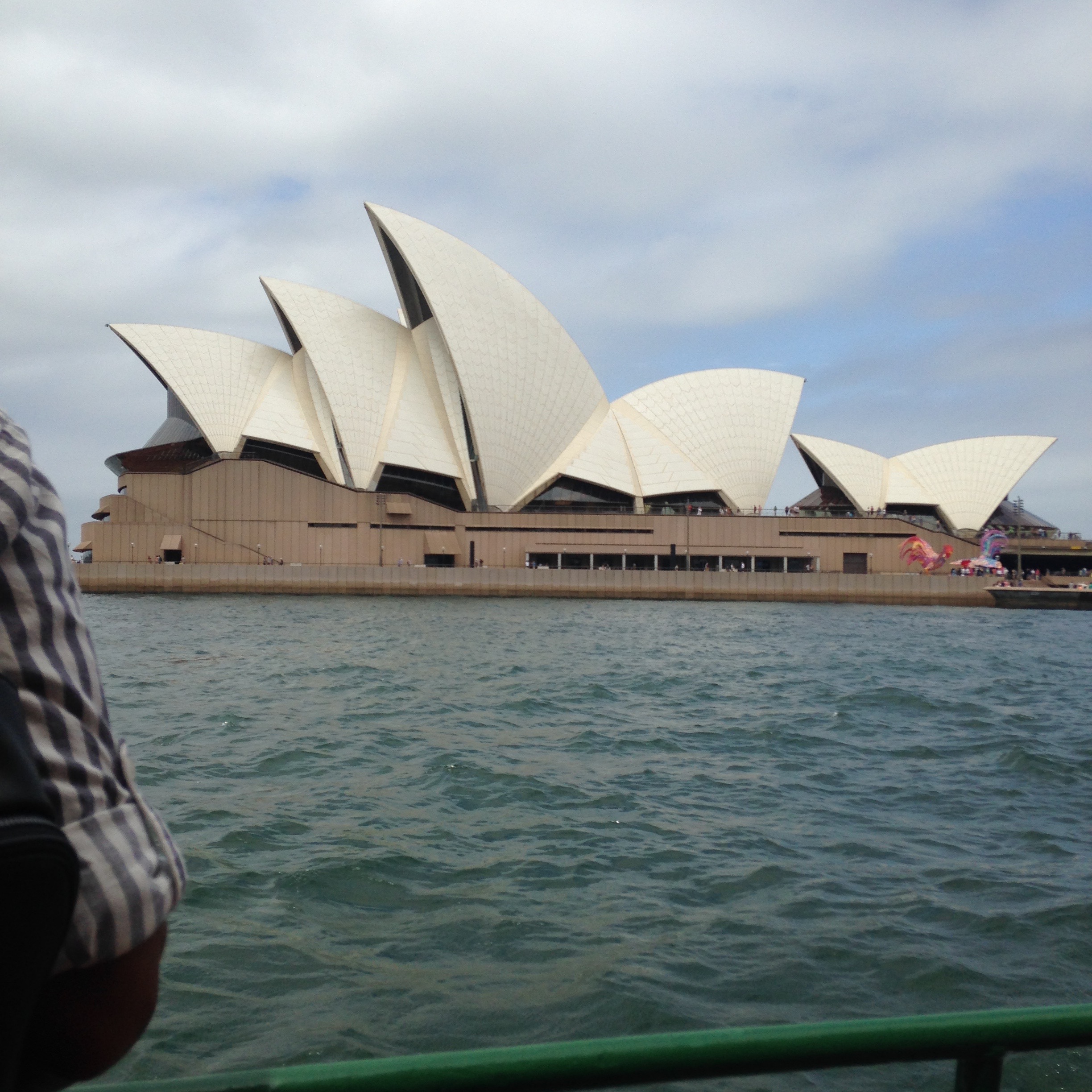
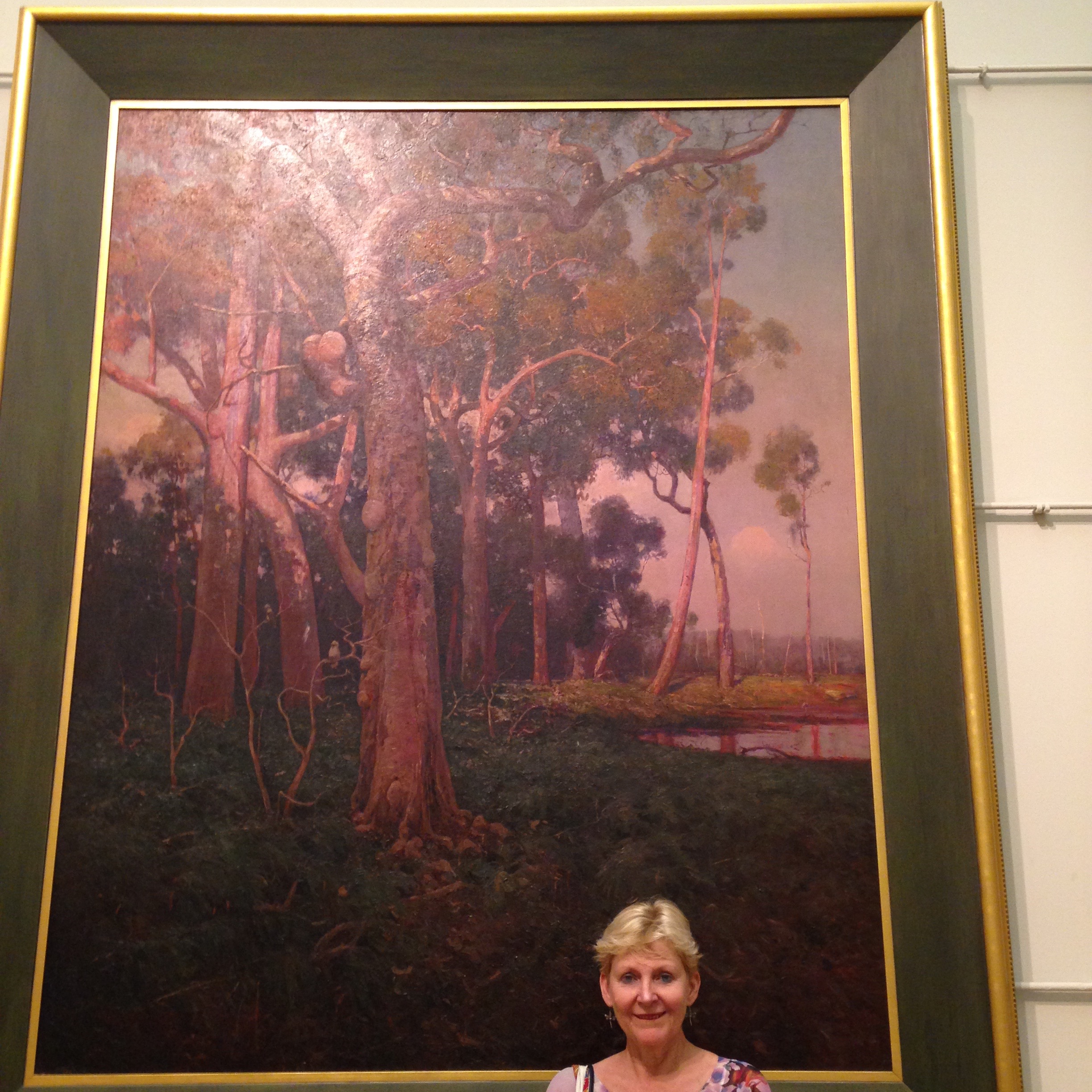
All familiar but so good to revisit. We walked through the Botanic Garden and came to the National Art Gallery. My next task was to find a Van Heyson, the man who painted gum trees and lived near Handorf in the Adelaide Hills. He also did fabulous work in the Flinders Ranges. And there, on the back wall was the man’s mighty masterpiece, and of course, its subject was trees. Henry put my head and shoulders in, like a little groupie that has to be in on the act!
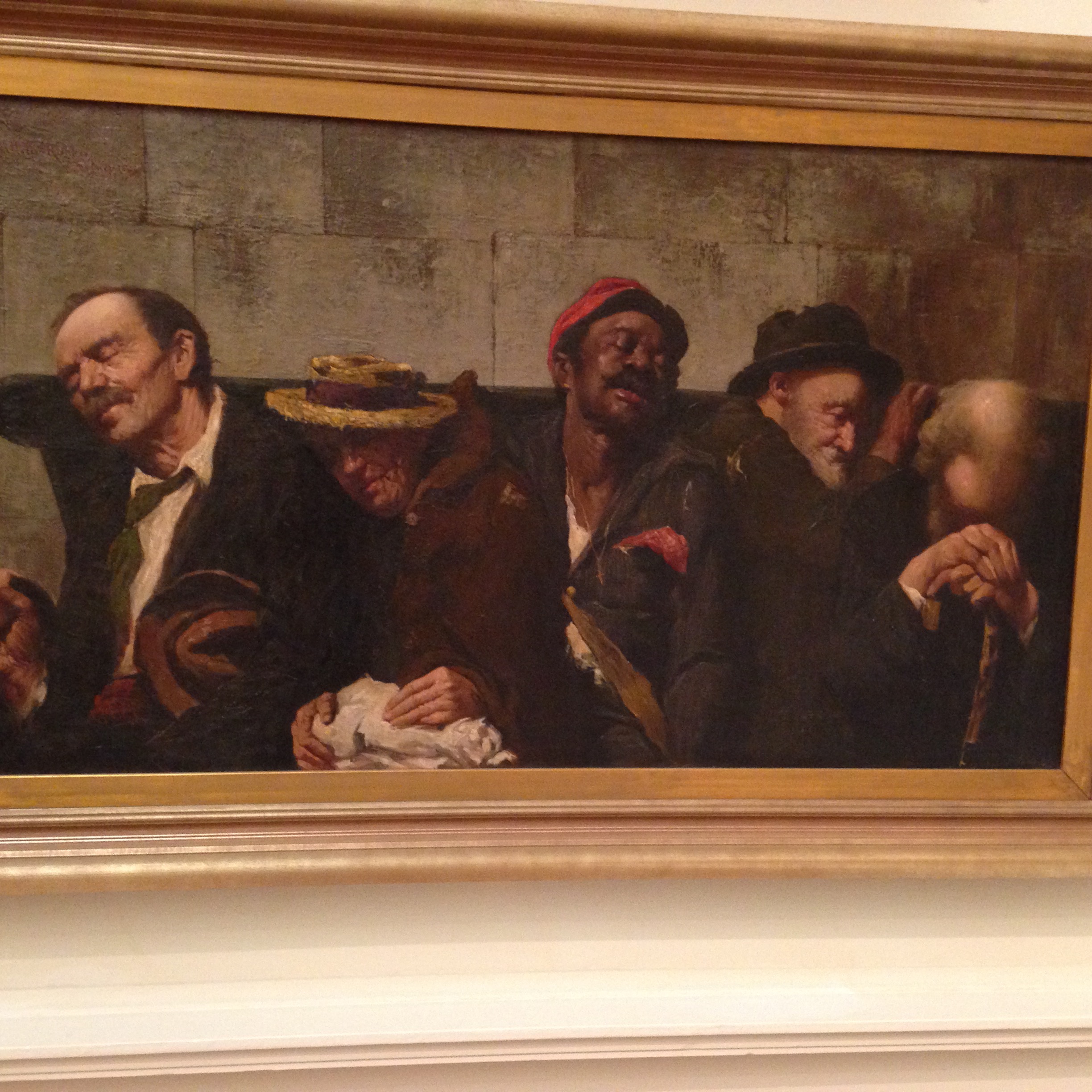
I liked another of five bums on a bench. Its subject was how poverty was a great leveller when it came to finding a place to sleep.
We looked at the Sixth Form Exhibition of schoolkids around the city. Talented, creative and showing the same teenage angst about their lives and the environment. Nice to see the world through young eyes.

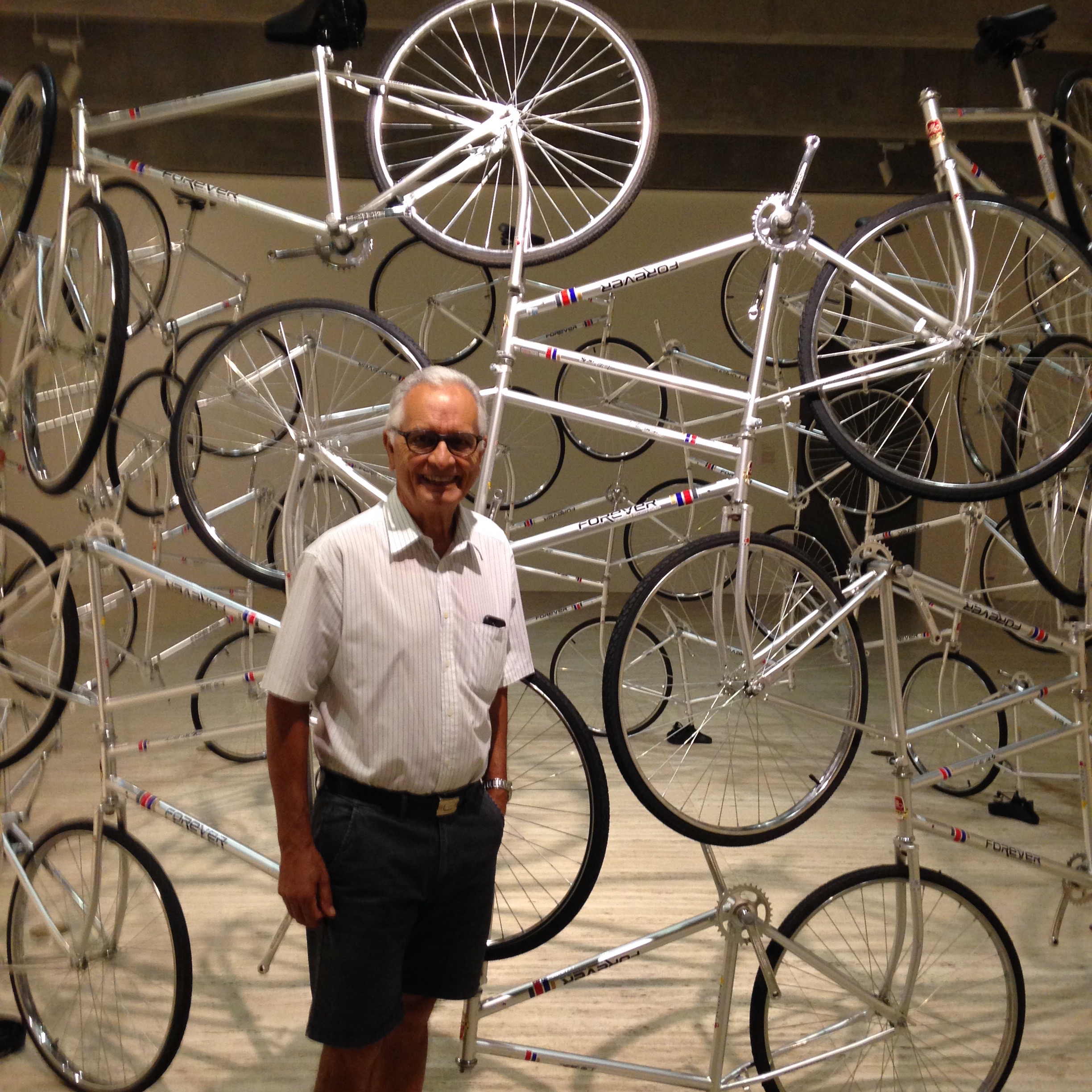
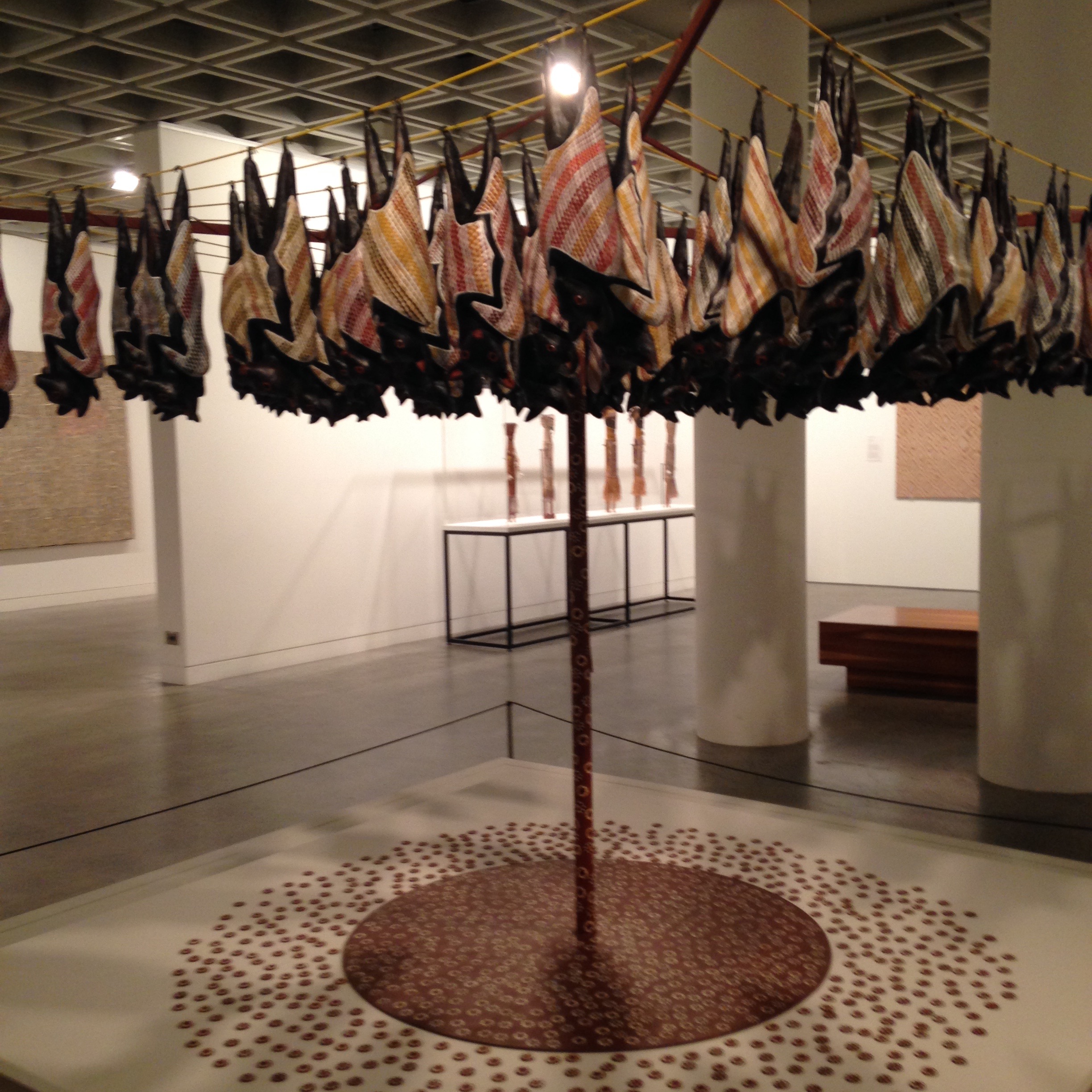
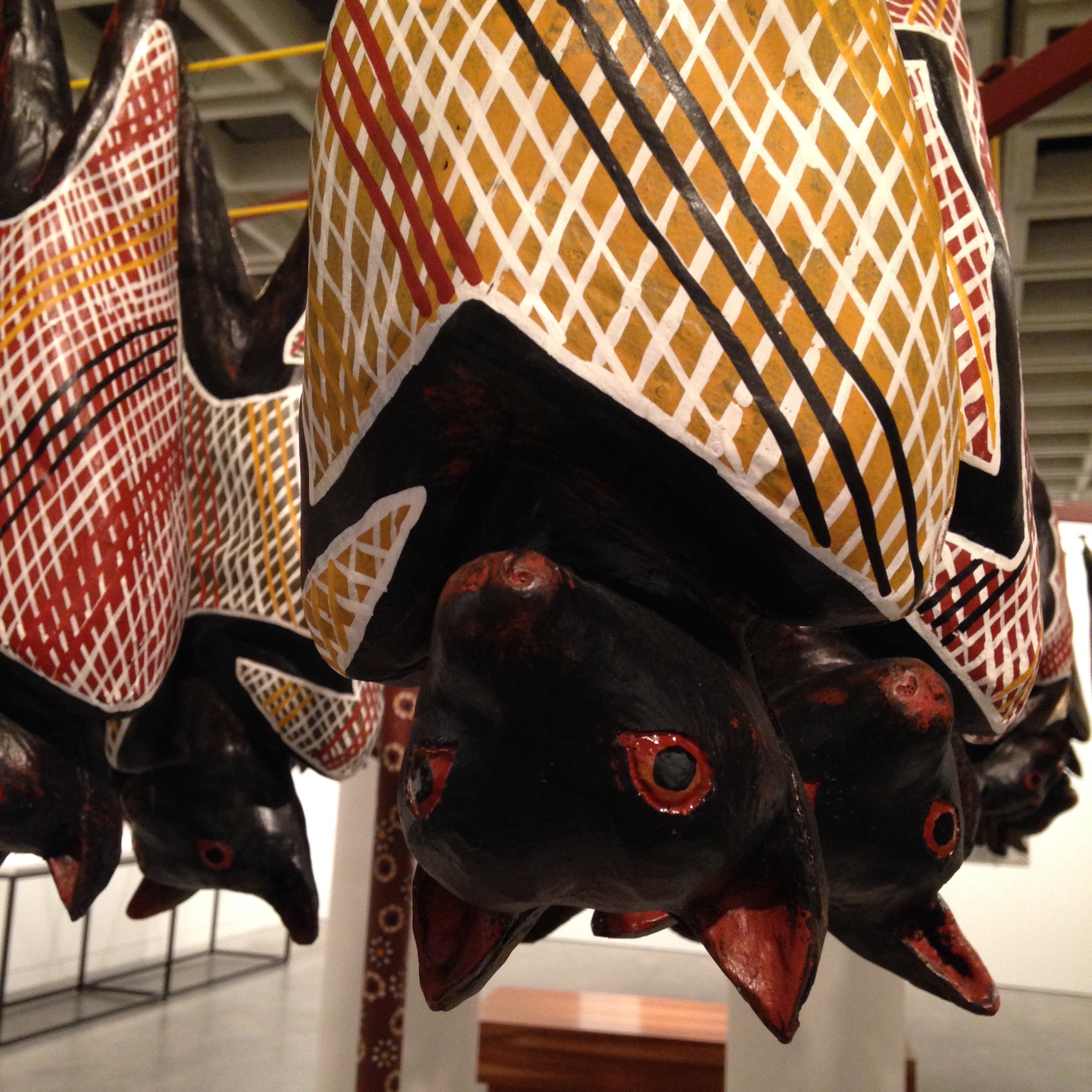
But best of all was the aboriginal sculpture of the fruit bats on a washing line. Each little face different, and quite arresting.
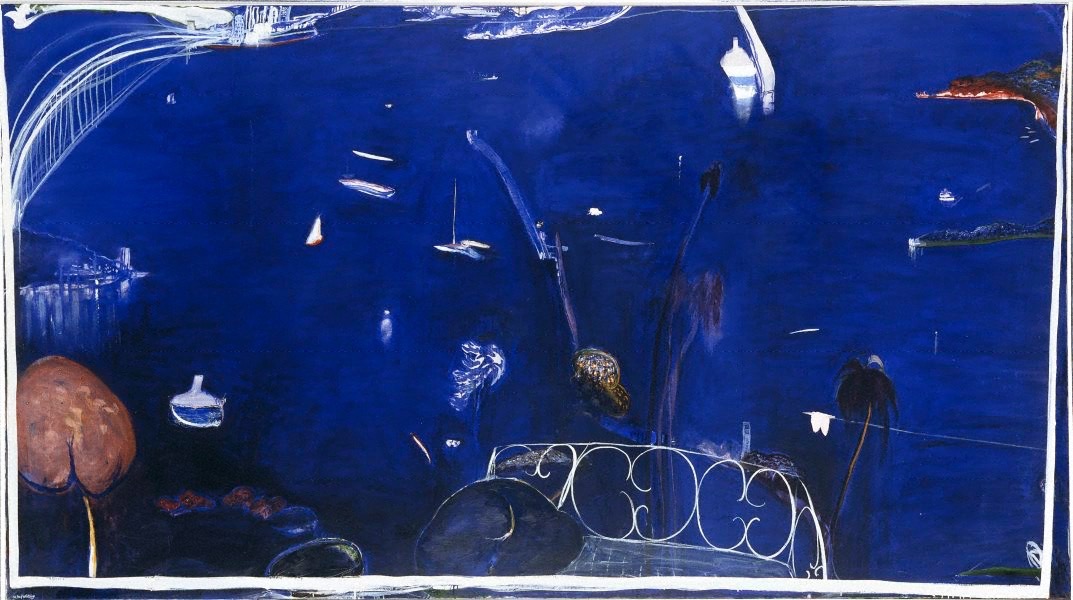
Helen also found the painting by Wendy Whiteley’s husband, Brett. A massive study of Sydney harbour in blue.
The next morning Helen and I sat out in her garden amidst trees and shrubs and drank tea. We talked of sewing and hobbies and what to do with an old broken dinner set. Helen had turned hers into a mosaic. A fabulous mannequin models the Spode china, and her work of art stands coquettishly at the front door, complete with red lips and high heels. Now Helen can gaze at memories of Christmas dinners and birthday parties every time she enters or leaves the house, as ‘Wendy’ stands modelling the plates of yesteryear.

Nick drove up in his ‘ute’ and whisked me away along the highway. I left the joys of calm reflection as we hurtled along the freeway to Belmont, a suburb of Newcastle, about 150 kms north of Sydney.
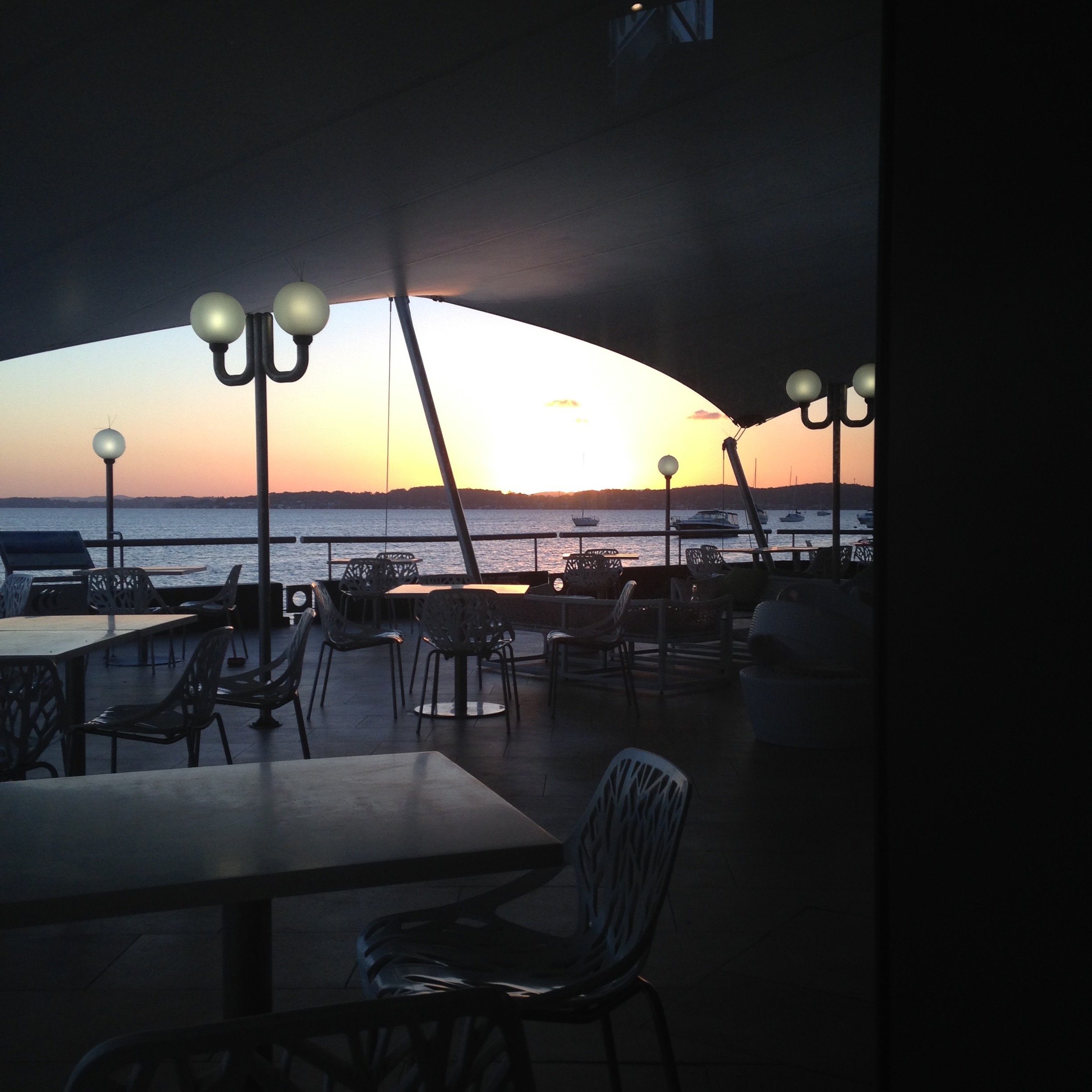
Geoff, an old friend of forty years, made us welcome and looked after us both for two days. We ate fish in another RSL club overlooking Lake Macquarie. The sun set on a loan kayak and Geoff said sharks were beginning to come into the lake now. They had ‘taken’ a lot of people this year up and down the coast, and he thinks it may be to do with over-fishing – the sharks are coming further in for their food. I kept an eye out for a fin.
I loved his girl friend, Laraine.
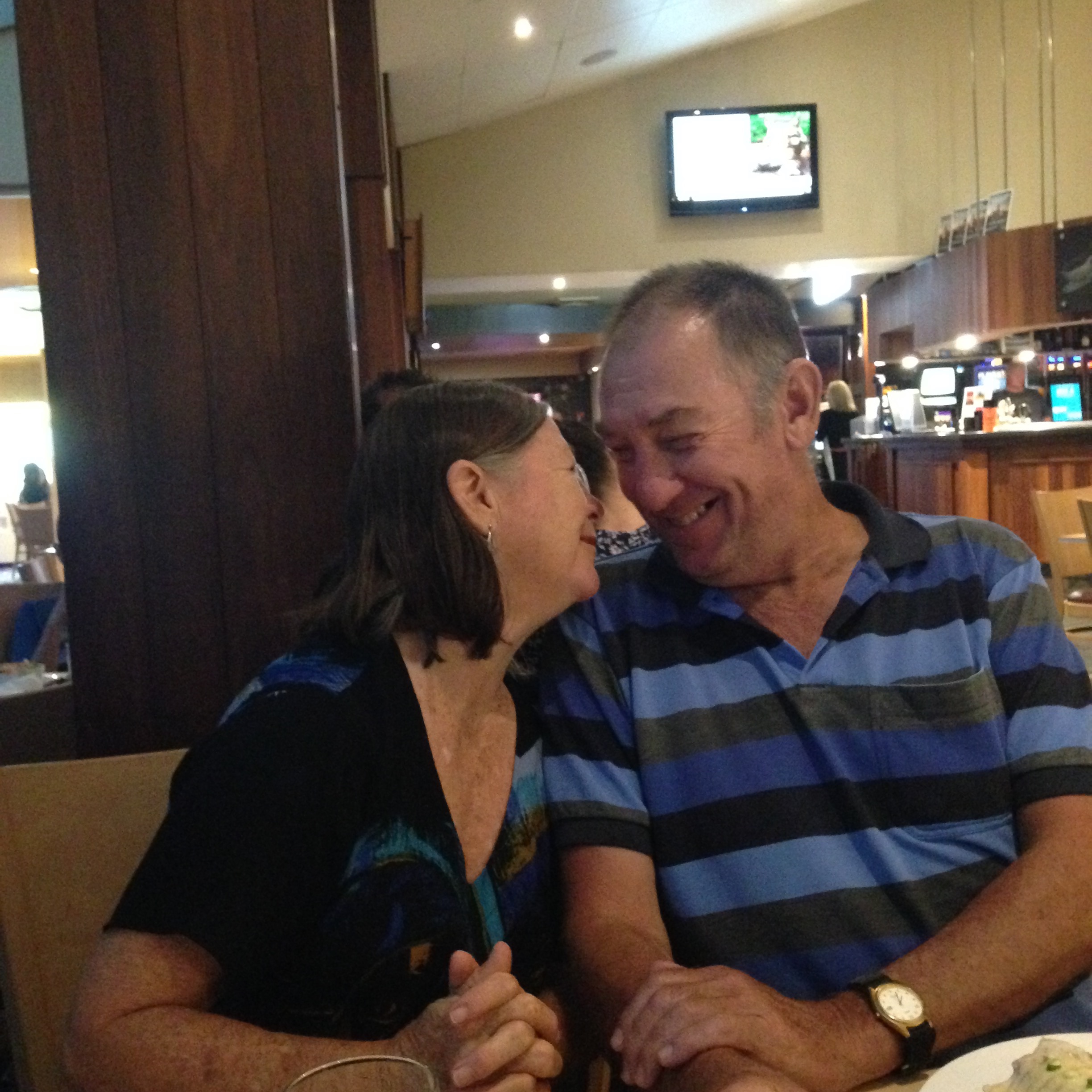
At seventy she is a driven woman with a world to conquer. She is a cyclist extraordinaire, and her latest trip took her across the Nullarbor Plain, a gruelling 1,194 km journey starting at Norseman and ending at Ceduna. She averaged 108km a day. Her actual trip in total was from Perth to Newcastle which was 4,300 km.
Geoff was Laraine’s support crew and he travelled ahead on his ‘Pearl’, a Suzuki V-strom.
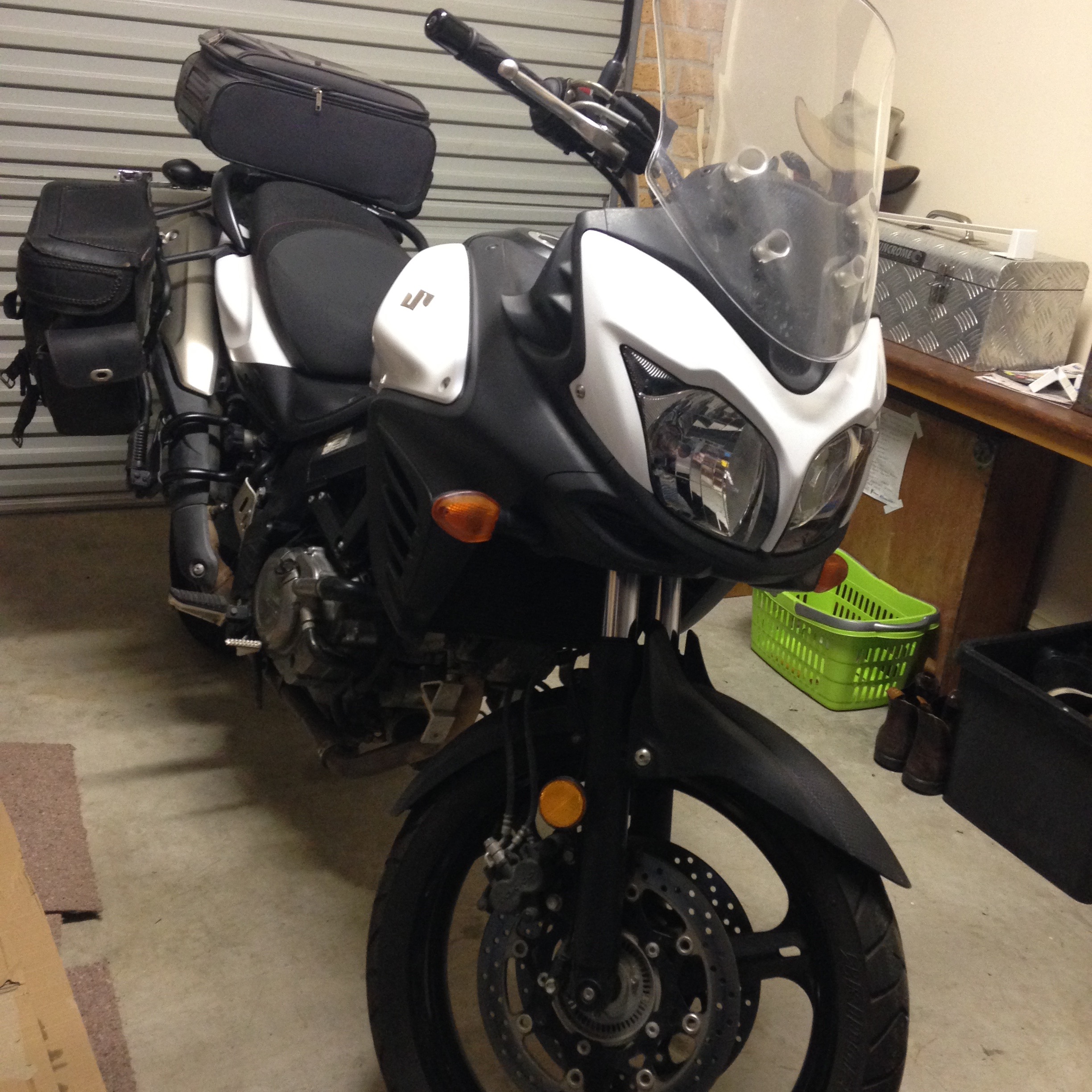
He joined her for the Nullarbor section of the ride as it was quite hairy sometimes being a woman alone. He would speed ahead finding basic hotels and road houses, and they camped on the Bunda Cliffs overlooking the Australia Bite. Way out to sea, the next stop was Antarctica.
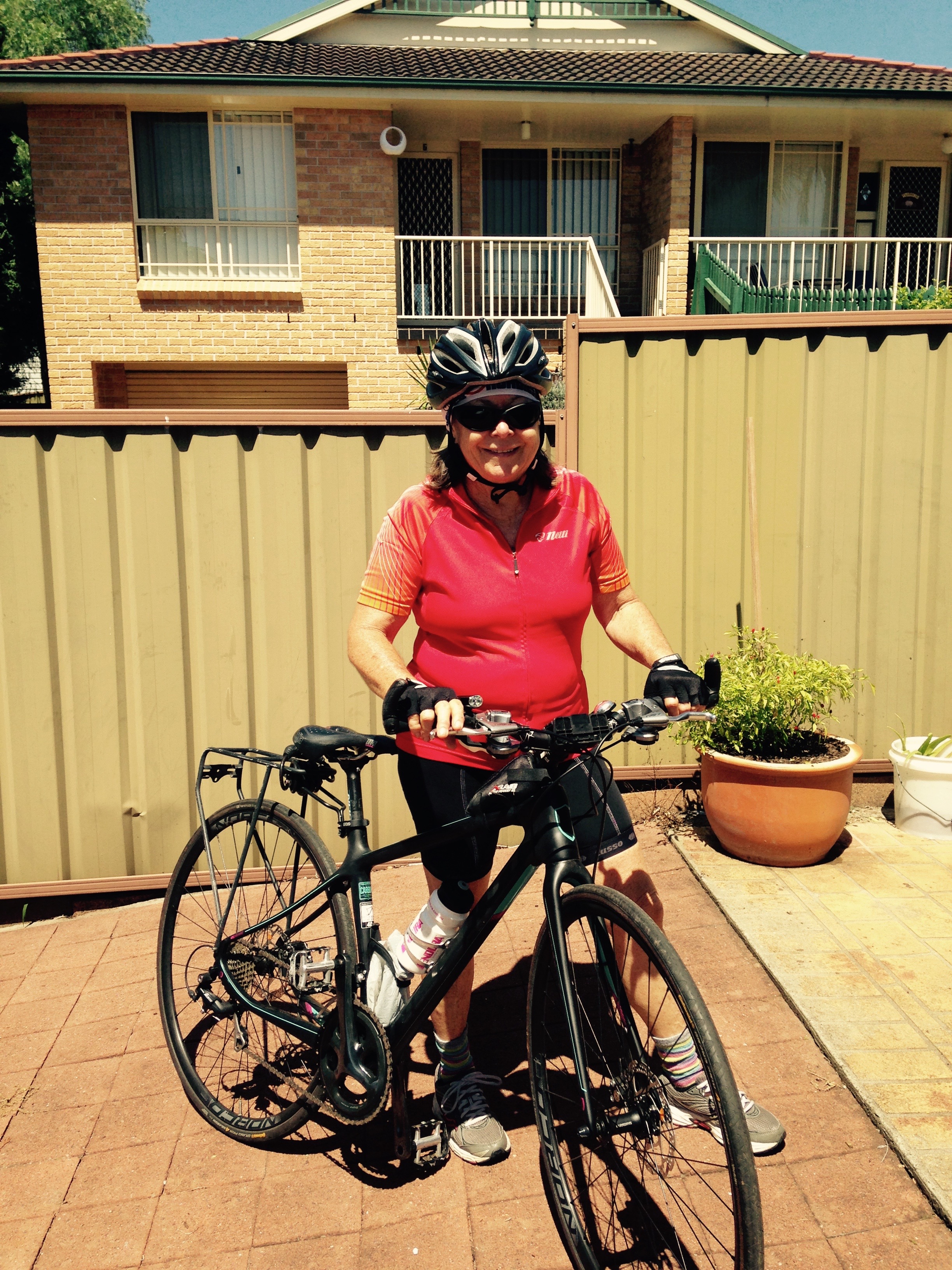

She told me of two snakes zipping out in front of her as she started out one morning. She had been keeping an eye out for a fox on her right, when the two wrigglers appeared. Not a good thing to get entangled in her wheels. And there was a creepy guy in a van, that slowed down and got out ahead of her. She was repairing a puncture at the time, but he made no offer to help. He just stared. She felt very uncomfortable, so made a point of photographing her GPS and using her phone. And the final little gem was when she and Geoff were in a road house place, coinciding with a huge police hunt for two fugitives who had killed someone on the road. When they were caught, Laraine realised they must have all been staying in the same place.
Anyway we ate barramundi and looked at Geoff’s photos and map of Australia, and his 14,575 km route he had taken for his amazing round-the-county adventure, that ended with a sweet love affair. Nice.
Part 2
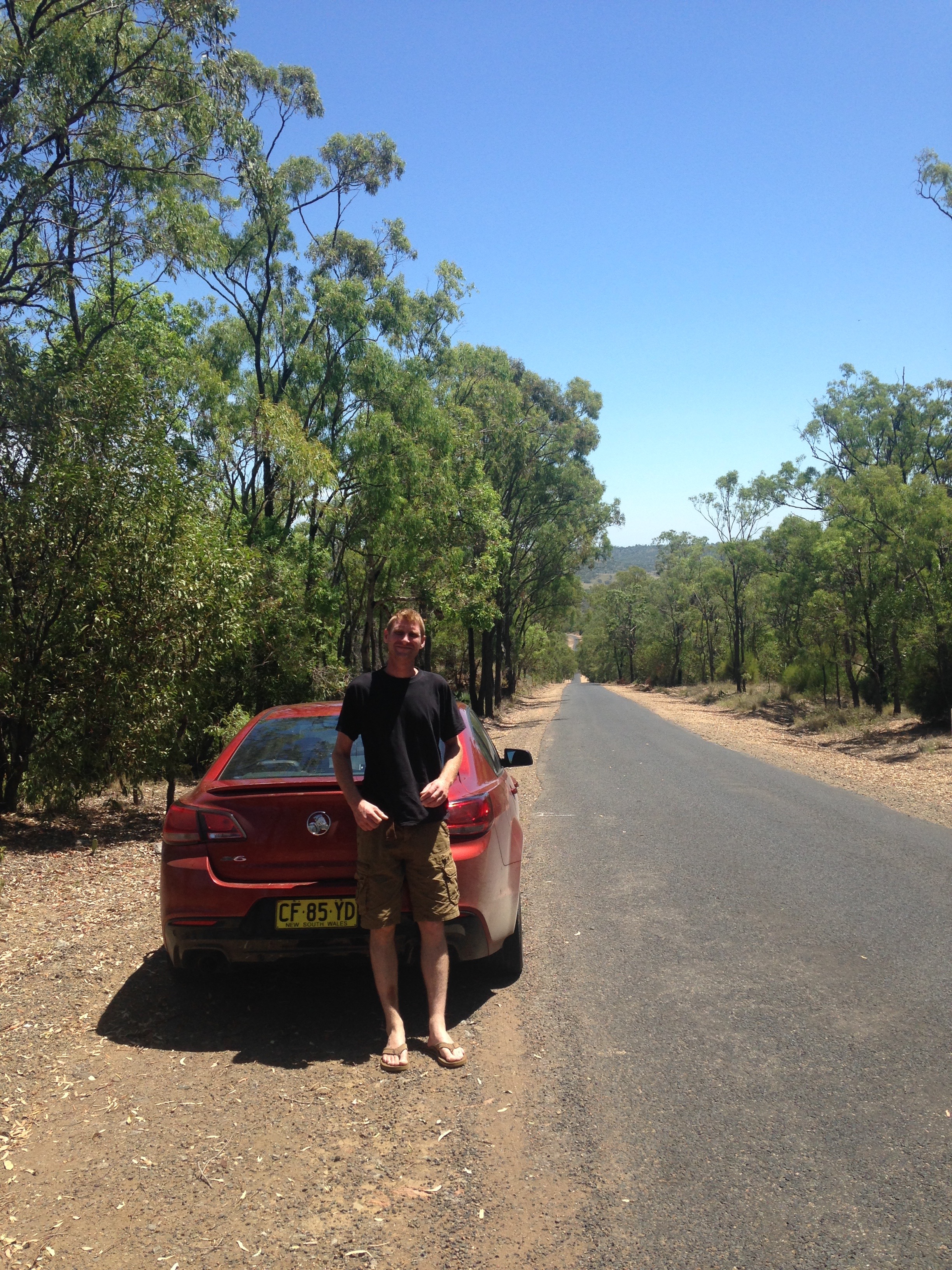
Nick and I set out on our own adventure. We hired a car, and drove off with the luxury of aircon and cruise control and watched the world of gums and gums and more gums whizz past.
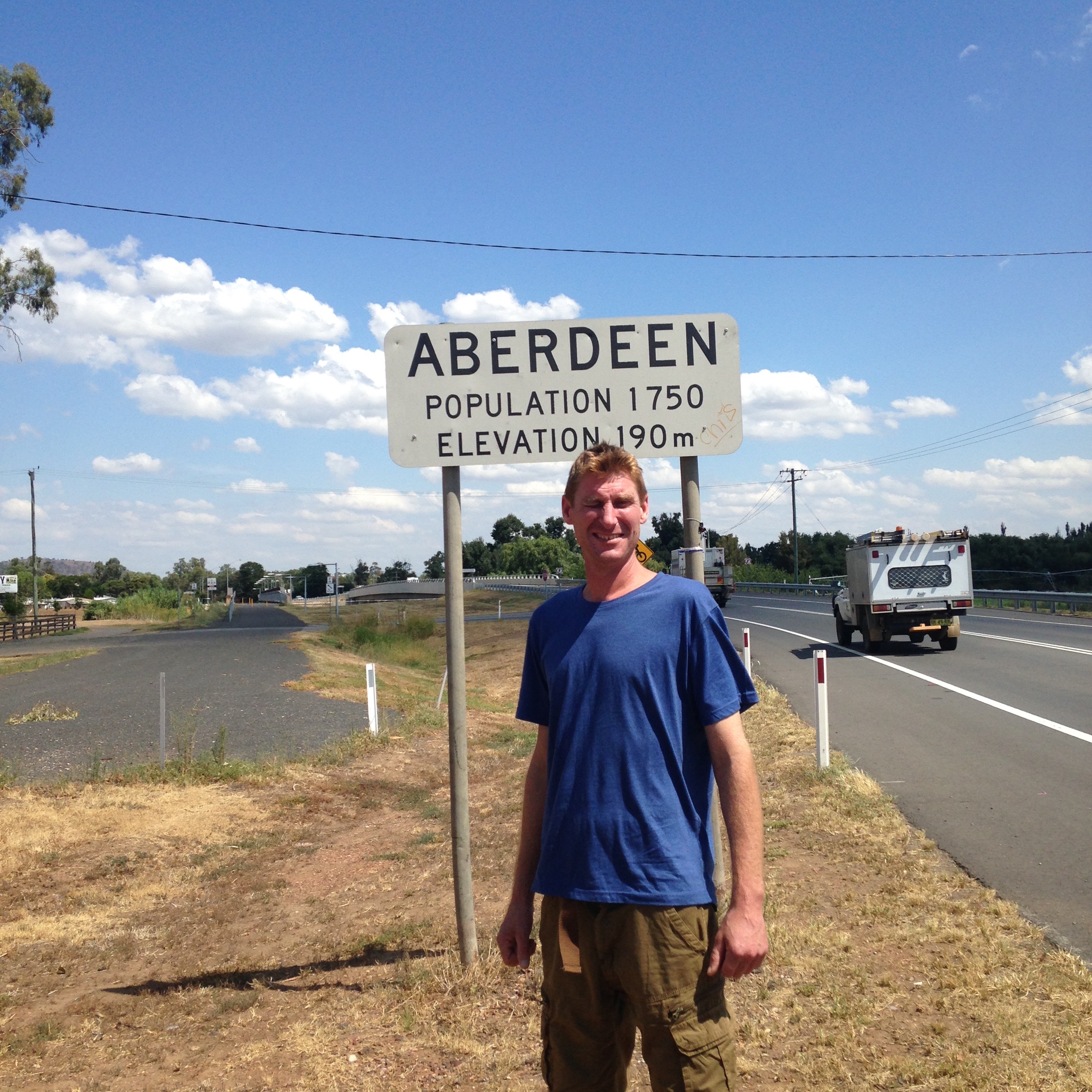
We headed up the New England Highway passing Tamworth, the home of the country music festival, horse ranches with glossy Arab stallions, and finally as the sun was dipping we arrived at the university town of Armidale.
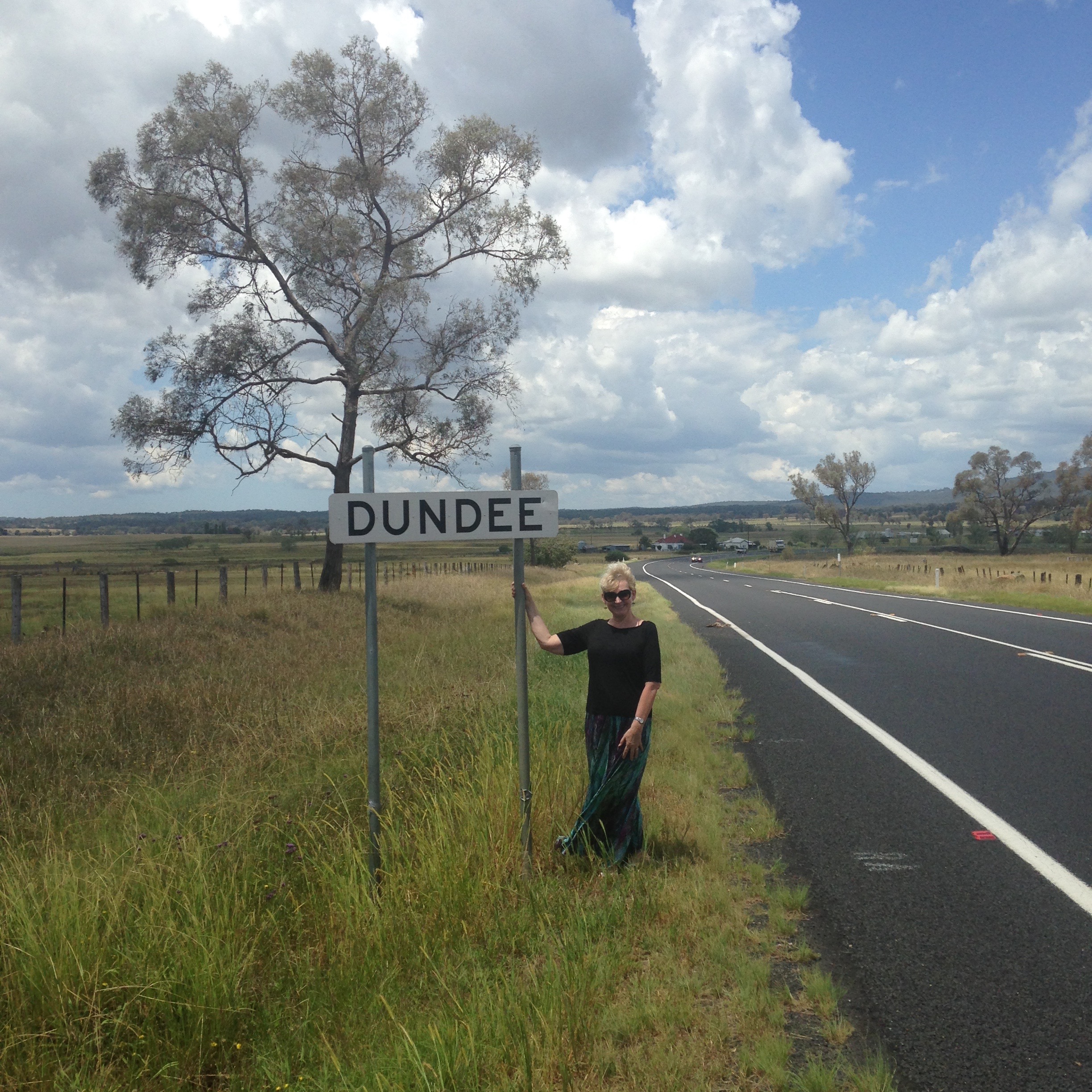
Here we met up with Nick’s ex-girlfriend’s dad. He had been keeping some tool of Nick’s up in his property.
We drove off track through windy roads and bush and came to a beautiful house, overlooking fruit orchards.
‘No problem, mate, I have it here, just where you left it, in this cupboard out in the shed.’
The shed was dark, the cupboard as dark as onyx and the two of them just rammed their naked hands into the blackness. I was appalled.
Everywhere was spidery and snakey. Webs were thick as woolly fleece. Great. I just imagined me as emergency nurse, coping with the emergency services.
But all was well. The tool had disappeared, probably borrowed or lost. After all it has been about ten years, and Nick was quite pleased really to have met up with Marie’s dad.
We drove on, through Glen Innes and up to Tenterfield and then crossed the border from NSW into Queensland at Wallangarra. We had planned staying somewhere near Toowoomba, but decided to keep going. Chinchilla sounded good, it was further west, so we pressed on.
We stopped at a railway crossing for a break and to stretch the legs and suddenly about one hundred white cockatoos rose from the trees, squawking and wheeling and making a right hullaballoo. Apparently they can live to be about eighty, and scientists have seen signs of dementia in some of the older ones, that’s why they sometimes go berserk and dive bomb cars. I visited the public conveniences in Brigalow, and had to disturb a great meeting of fairy wrens. They were spread out in front of the tin shack, like a blanket of grey and turquoise. I duly checked under the seat. No little red-back spiders hiding in wait.
We drove through great swathes of agricultural land, acres and acres of Mung beans, it must have been quite a task to keep them watered and free from predators.
The small townships that we passed had outlets selling farm machinery, and bottle shops for the grog that these guys must rely on. In the hinterland there are cattle stations the size of Belgium, and in previous years there has been devastating drought. Some poor guys have been driven to suicide. A newspaper reported a seven-year-old girl’s delight at the first rain she had ever experienced.
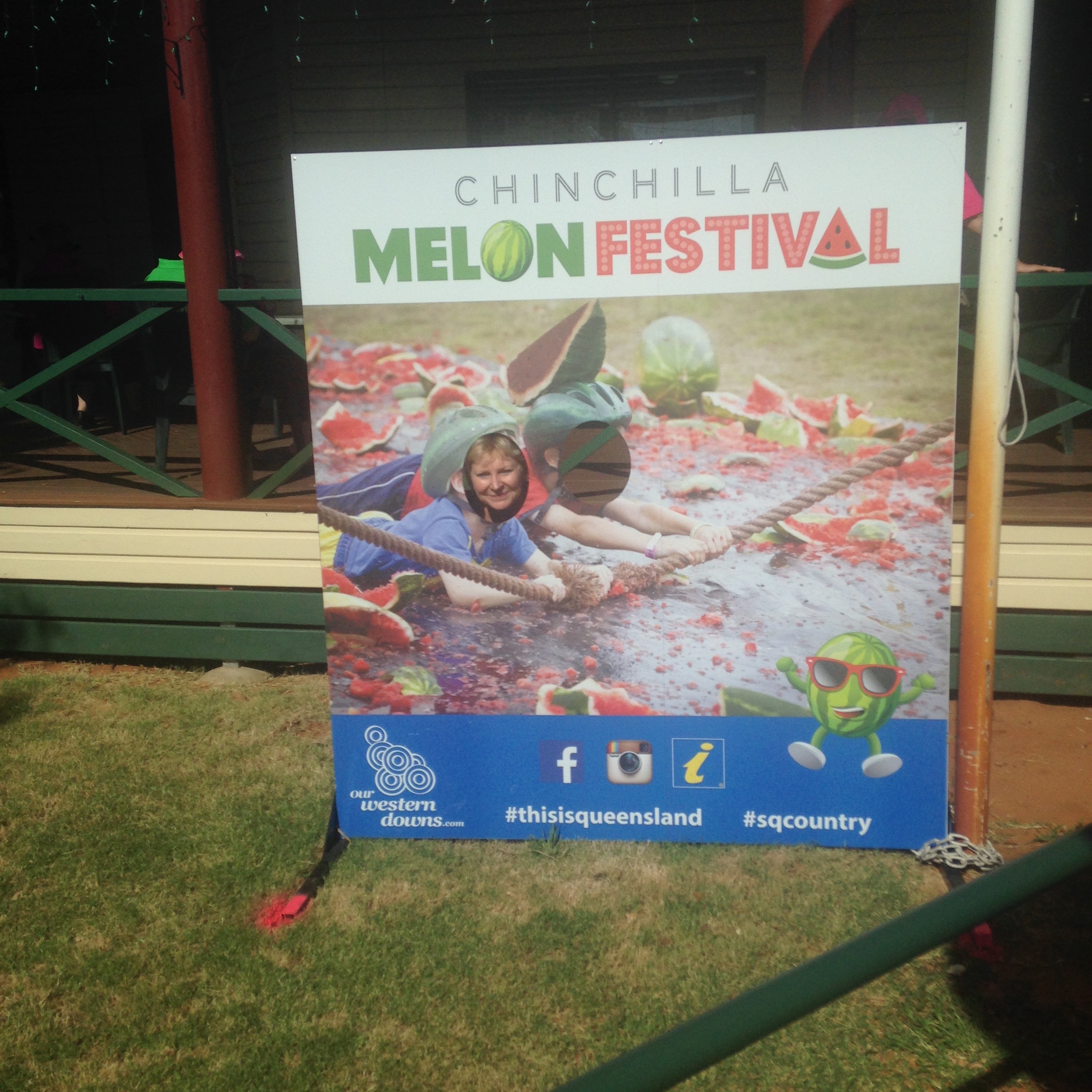
We arrived in Chinchilla; a sprawling but successful town, it has recreated itself from a mining concern to farming. Our visit coincided with the annual watermelon festival, and our landlady of the Acacia Motel informed us that 10,000 visitors were expected the next day.
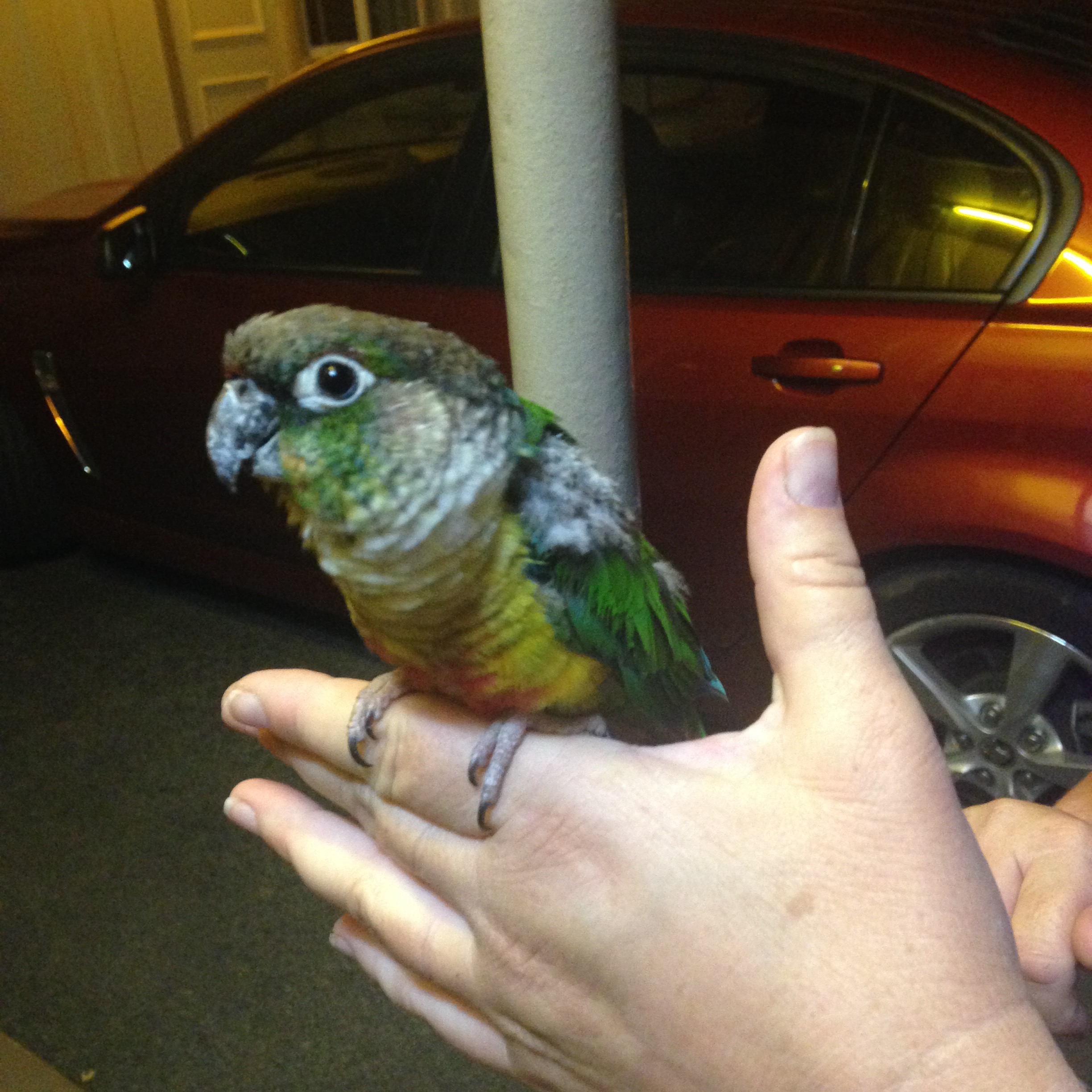
The TV news even had a reporter there. Our landlady walked about with a parrot on her shoulder.
Nick and I sat out in the evening and drank brandy and played with the ghost detector on his phone. So creepy, as it picks up radio-like waves and if a presence is detected it shows as a coloured ball. I was so relieved that the ball was silvery white, the best sort, apparently.
The next morning Nick got coffee served by a lady with watermelons drawn on her eyebrows. To pass the time as I waited, I chatted to a man whose shop had been flooded in 1981, 1983, 2011 and 2013. He showed me the water marks on his door. Looking about at the dried up creeks and rivers it was hard to imagine.
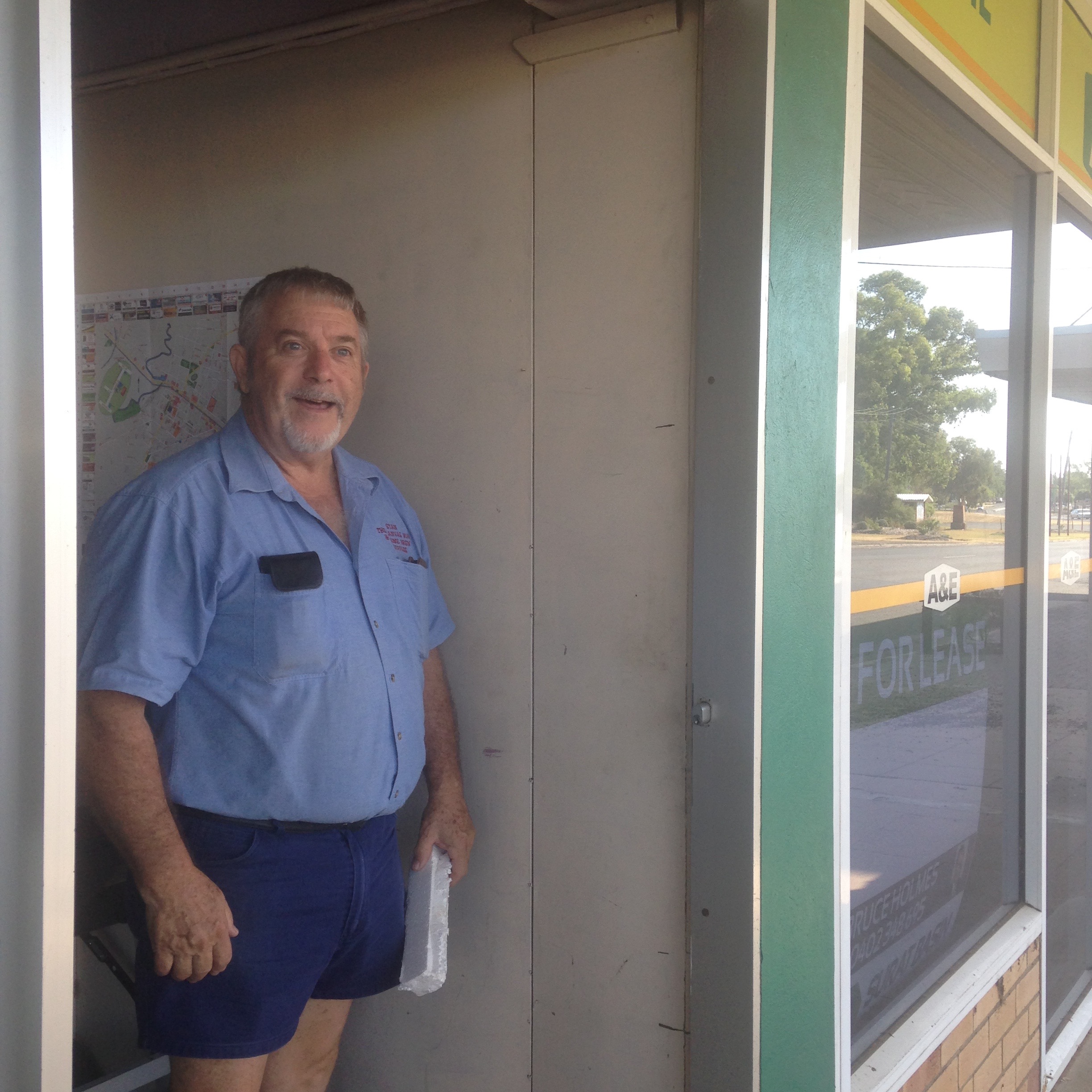
Further along we checked out the secondhand book stall, set up by Tim, who loved to talk.
‘Where are you heading?’
‘Wandai,’ I replied.
‘Whatcha want to go there for, nothing there, helluva place.’
‘My sister-in-law used to live there.’
‘Right, well go and get out as quick as you can. I went there once, heard a woman had run over the town’s pet emu, and they were commemorating it with a statue. There was talk of crowds and TV so I took six hours unloading my van, setting up the stalls with the books, and the bloody ceremony took fifteen minutes, and only forty people turned up. Bloody place, you don’t want to go there. Go to the Bunya Mountains, now that’s where you should go.’
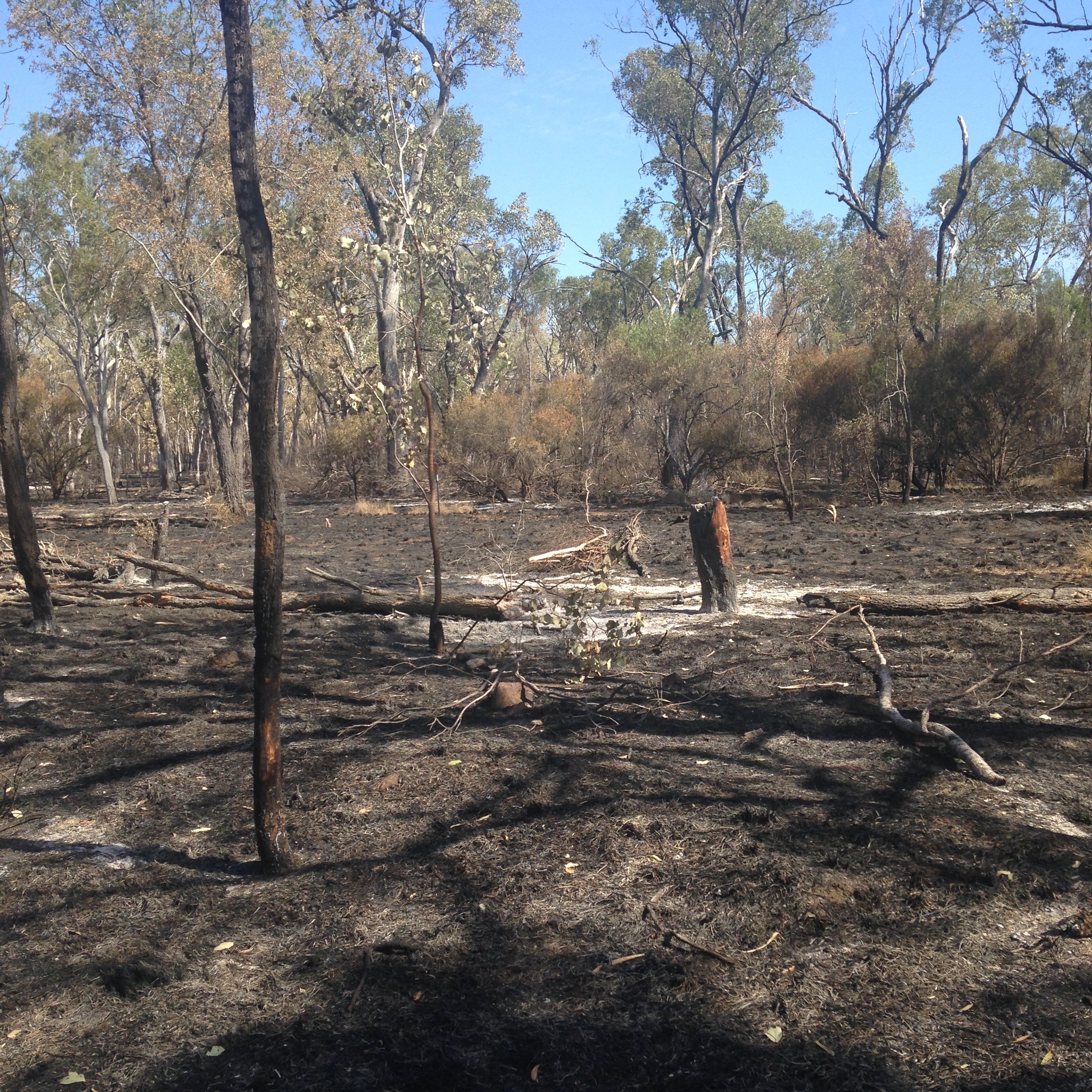
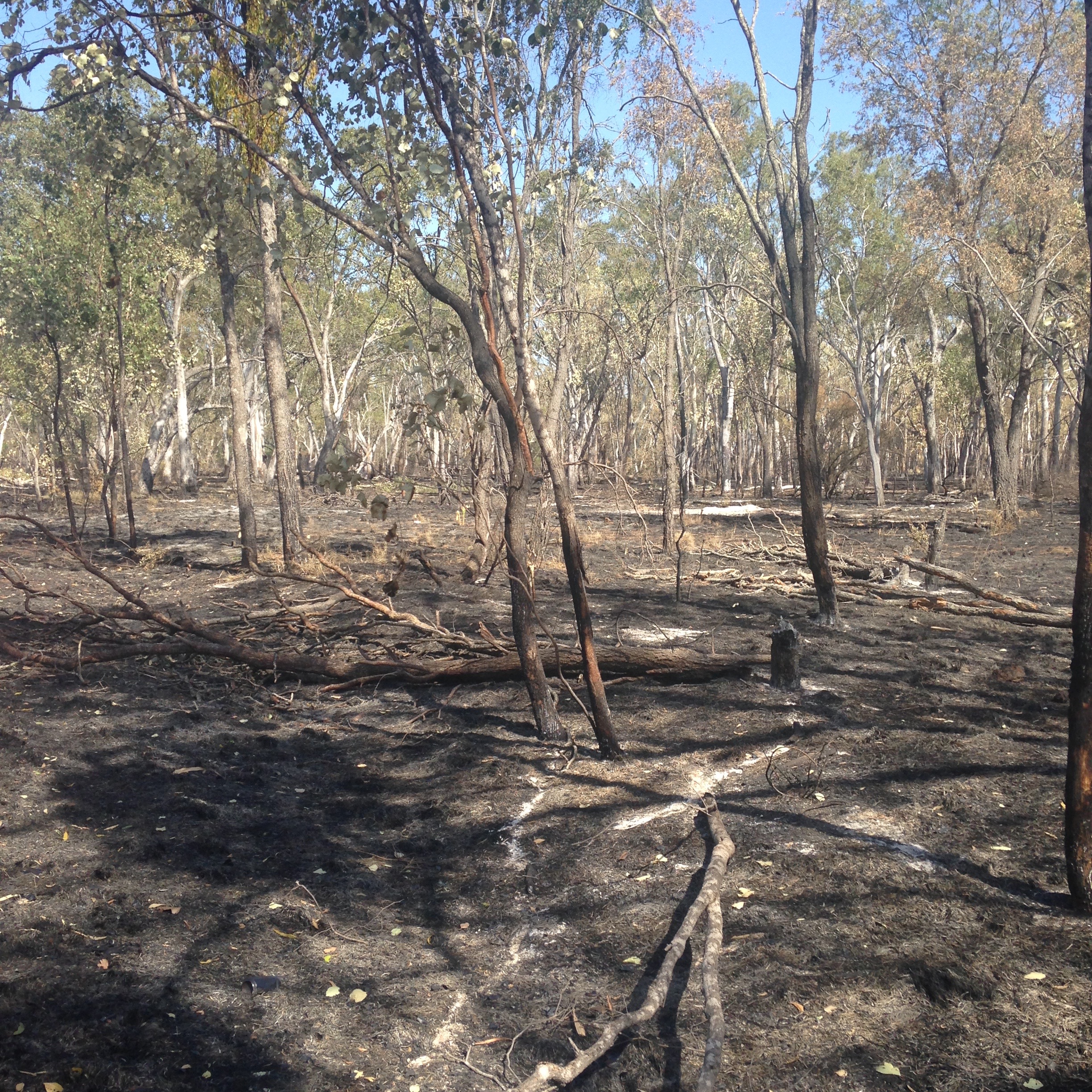
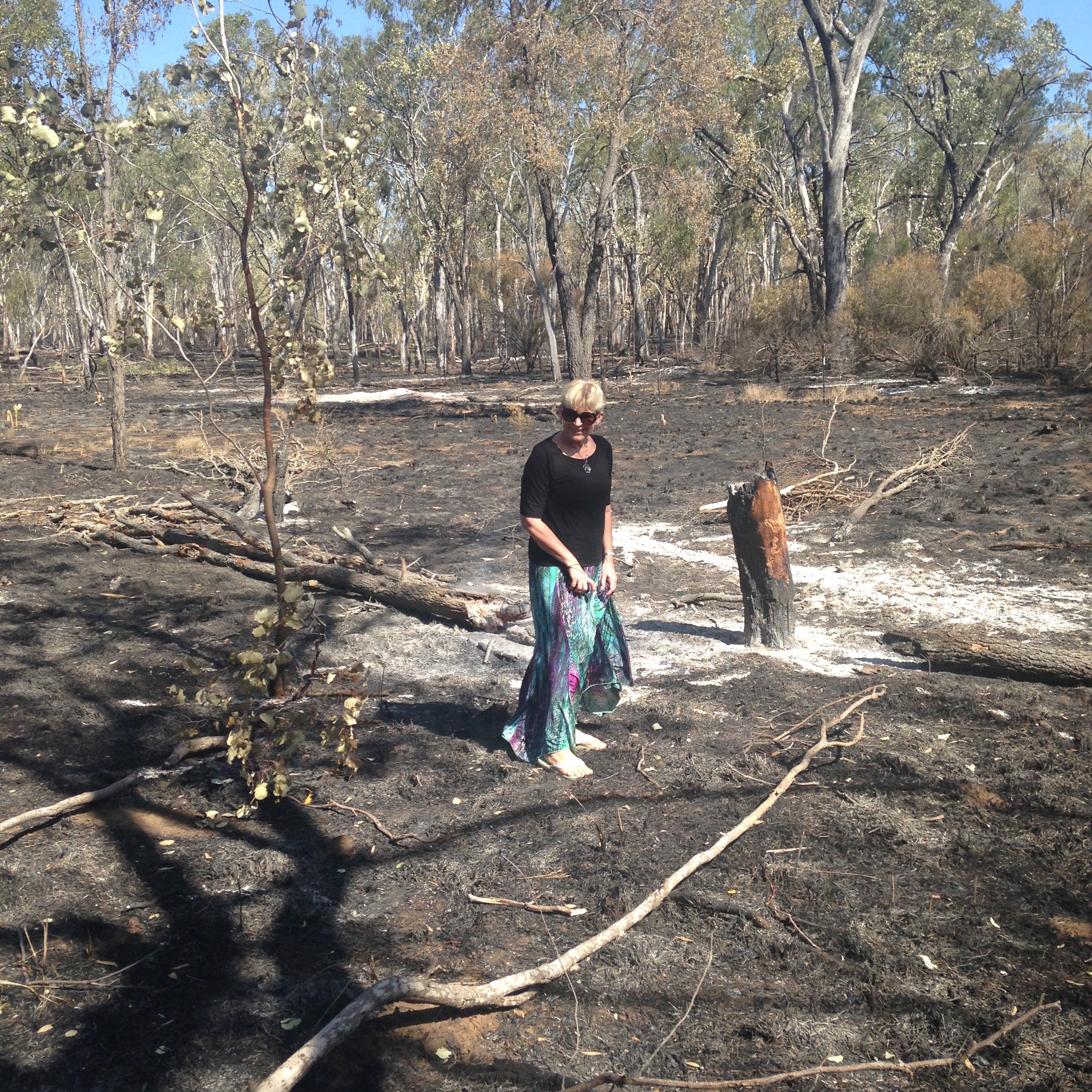
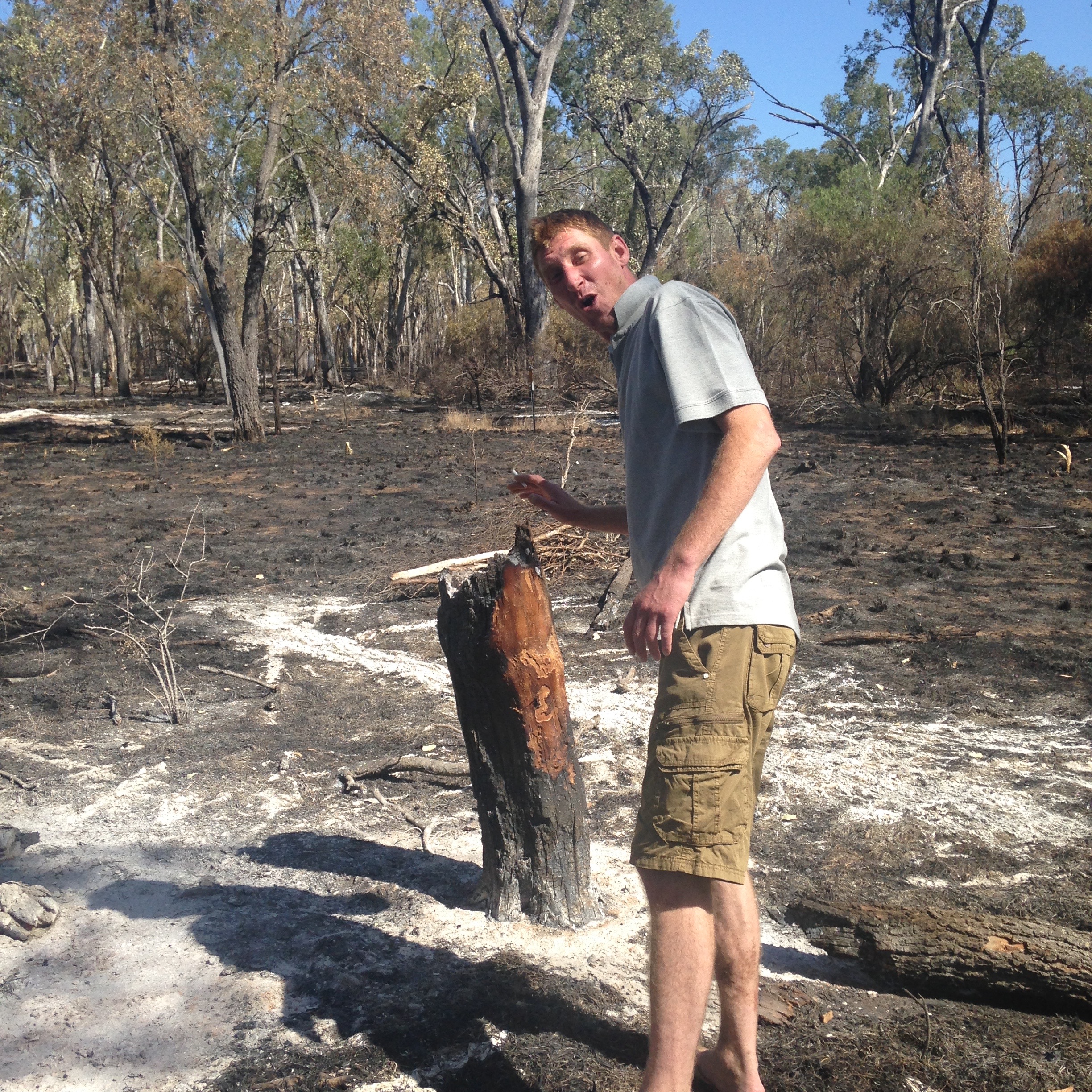
We drove on, leaving the water melon town to its excitements, and came across two live emus having a chat in the centre of the road. The road was beautiful, so good to get off the fast freeways. Smells came into the car and we were virtually alone. We did come across a stretch of blackened bush, the ground still white with ash and still smouldering. We had a look. Flames were still flickering, and I could imagine the aborigines in the days of yore carrying their fire to their next settlement. The trees themselves would soon regenerate, and we drove past others that had suffered and were already sprouting fuzzy green growth.
We arrived in Wondai. And there was the statue of the emu!
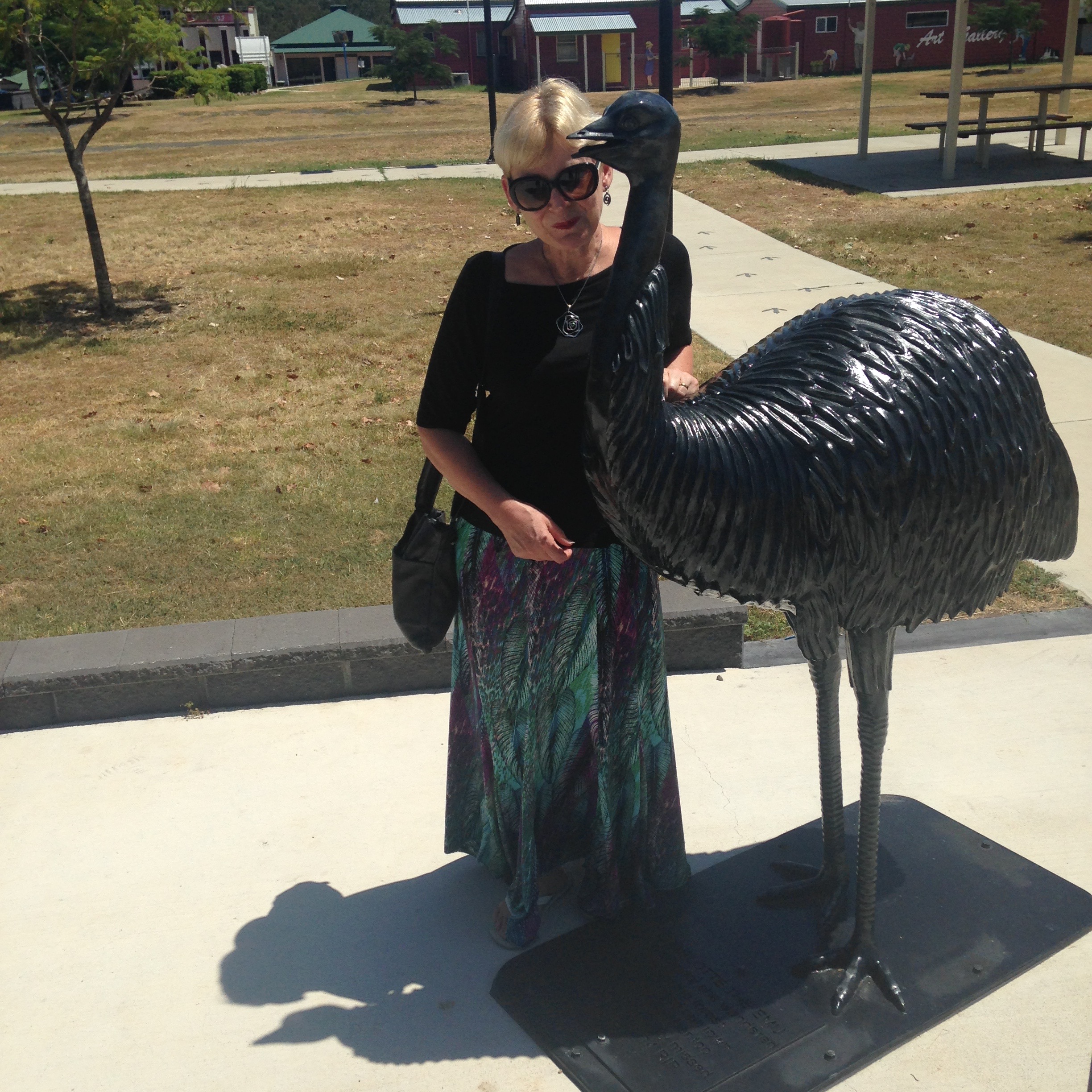

I could imagine Tim, with his thousands of books, ‘biggest waste of time,’ and read the plaque:
Charlotte the Emu
Wonda’d in and adopted the town as the town adopted her.
May 11 2014. RIP.
The poor woman who had run Charlotte over must have been devastated; I wonder if she had been at the ceremony!
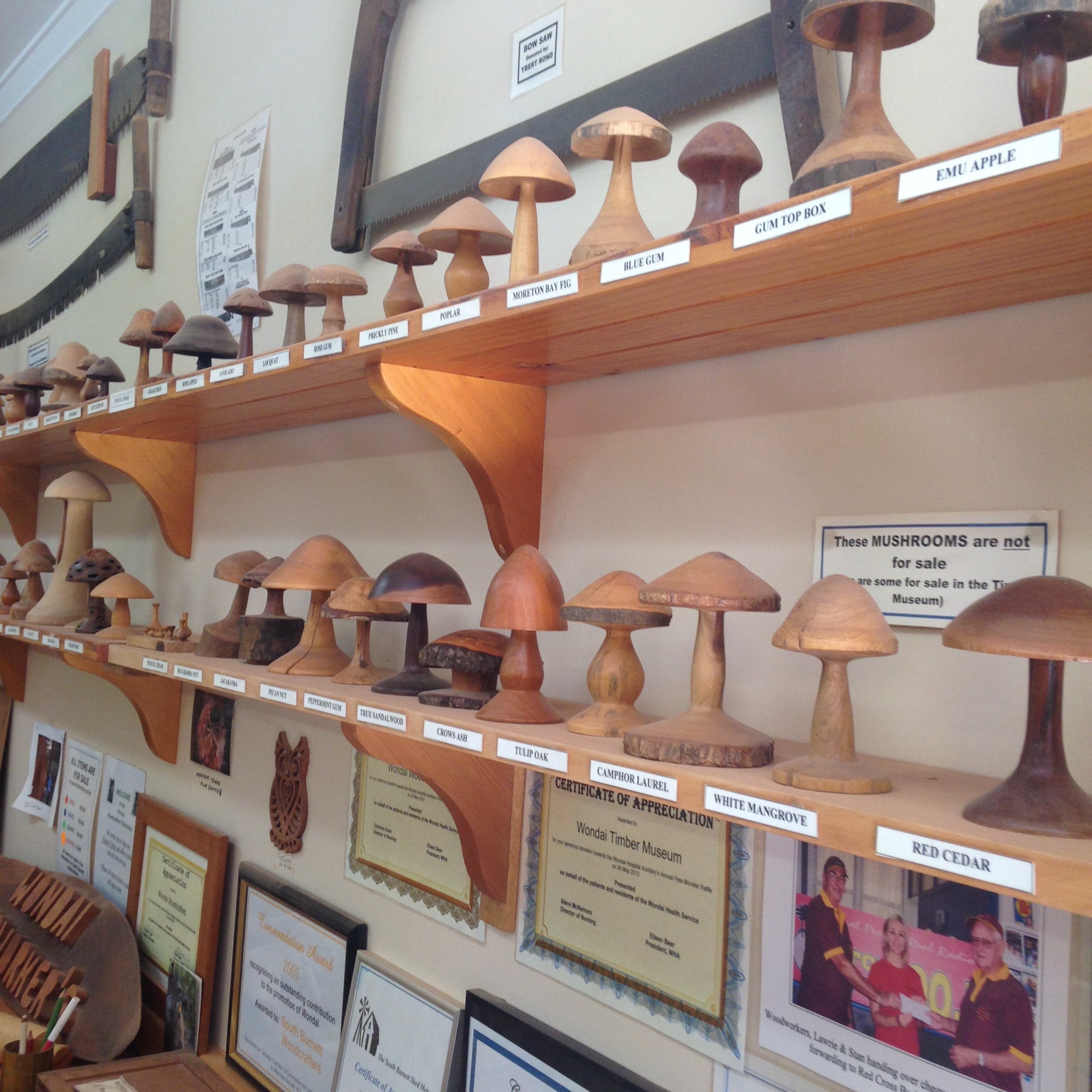
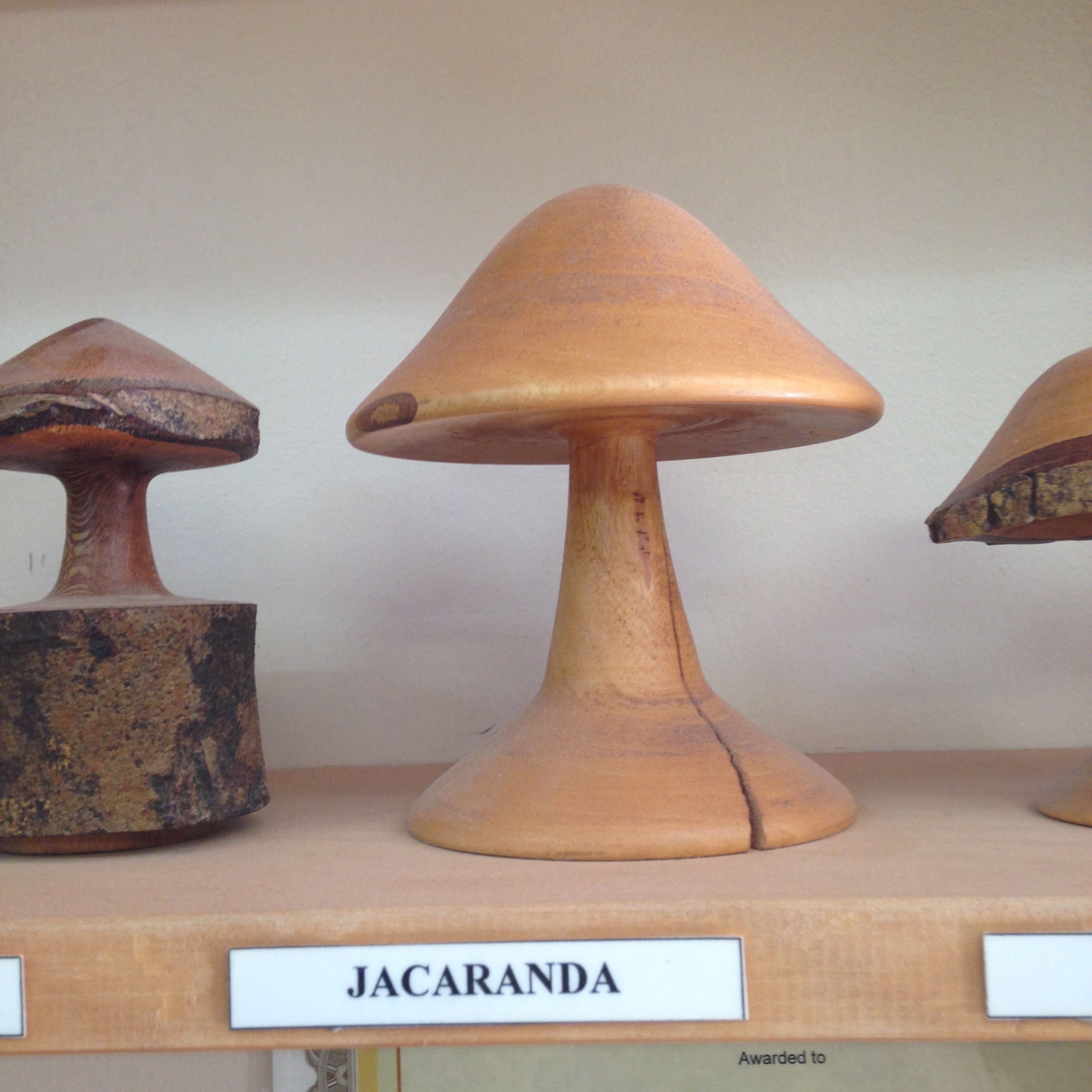
I did like the wood museum, and admired the shelves of wooden mushrooms made from every tree in Australia, including some from other countries. Pity the carver didn’t have any for sale.

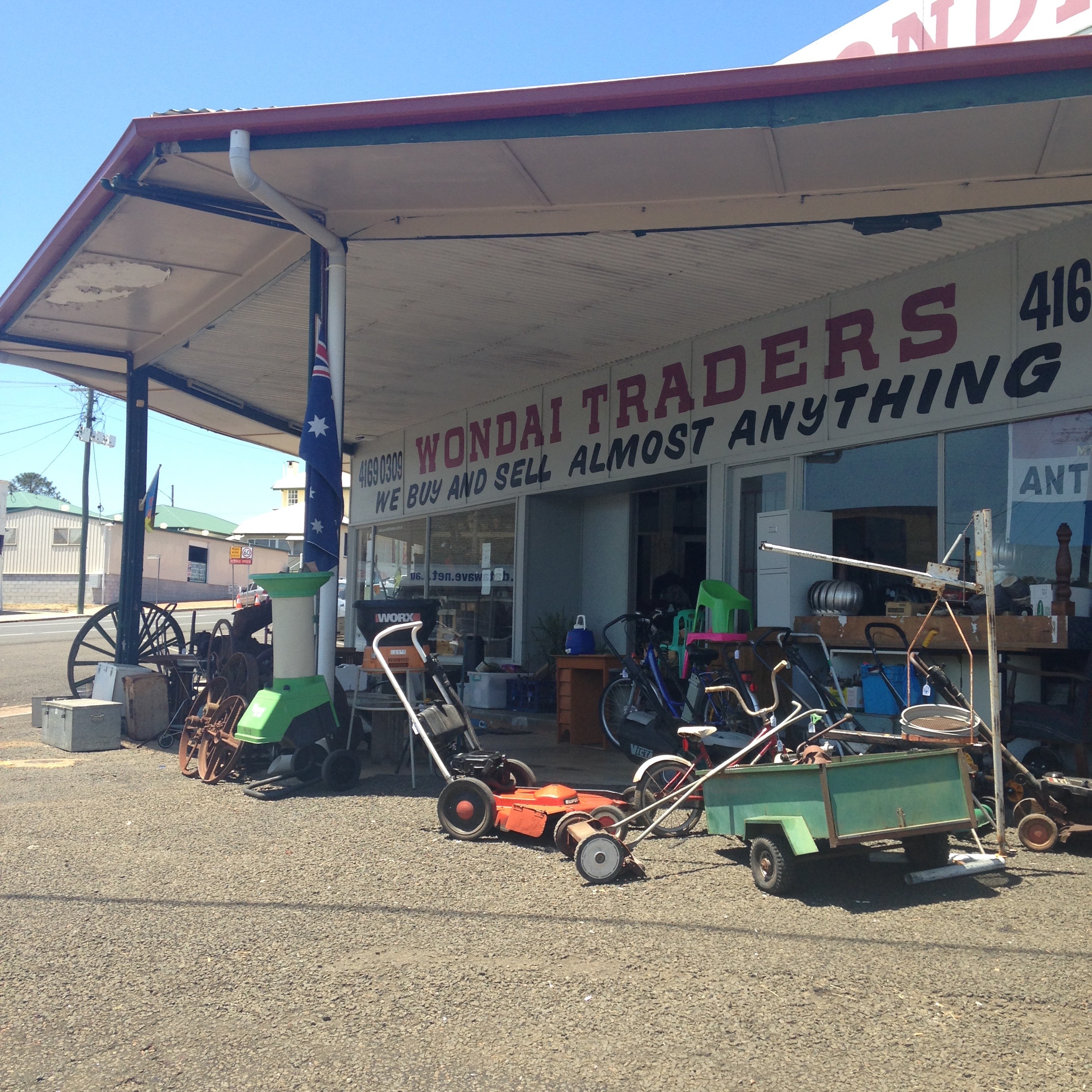
Nick met a real gun-nut in an old junk shop. His name was Brian Labuddo, and has written a comprehensive tome on the Lee Enfield Rifle. There is NOTHING this man doesn’t know about guns. He can tell you about rifles that had been used in Borneo during the war in 1945 and showed us the gun sights gone frilly and rusty from the mens’ sweat. He had a huge selection.


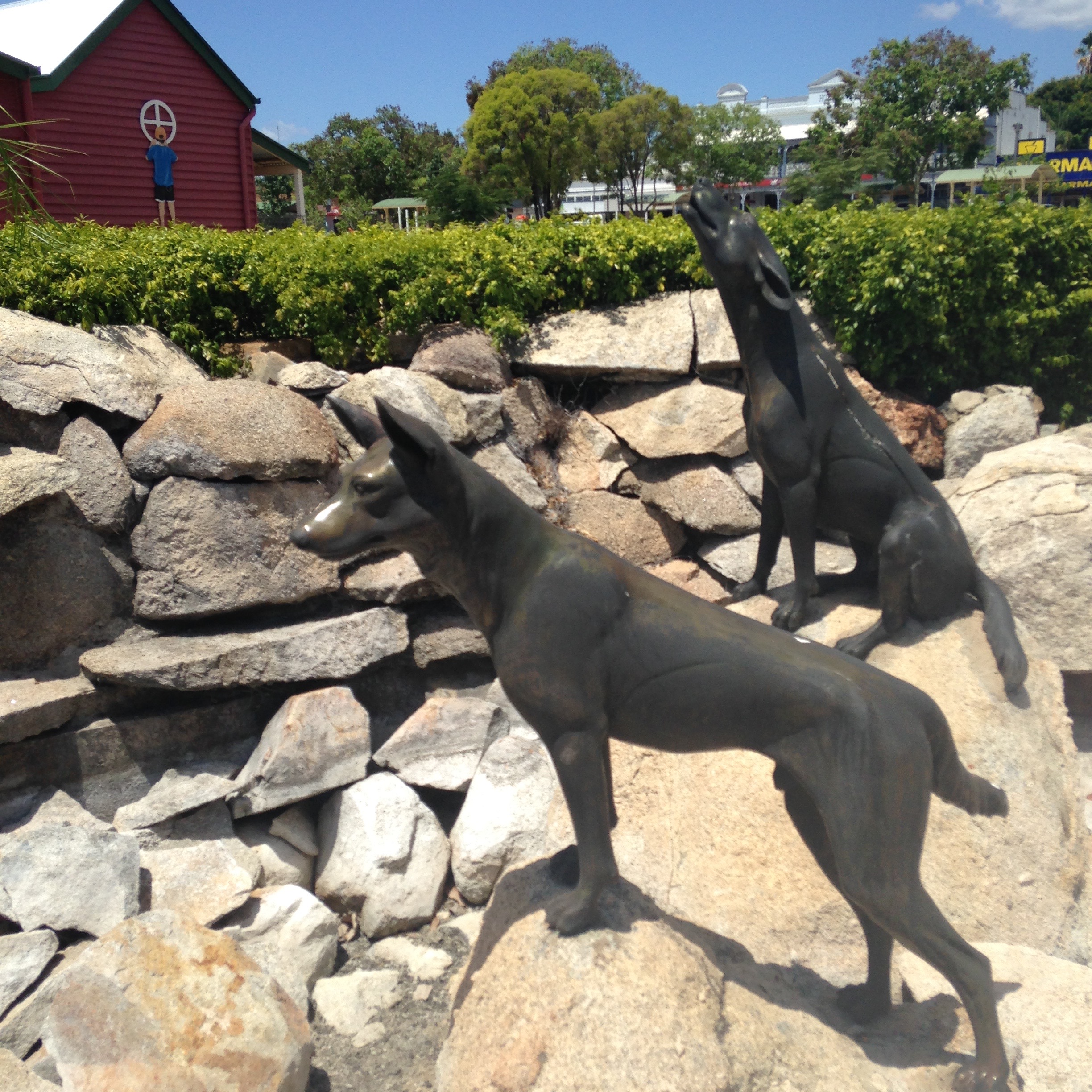
I was bored, so went to the Art Gallery and wandered up the street and stood for a minute outside the house that had been Ruth’s last home. For the life of me, I couldn’t see the attraction of Wanda. (The aboriginal meaning is place of the wild dogs).
So, on to the Bunya Mountains.
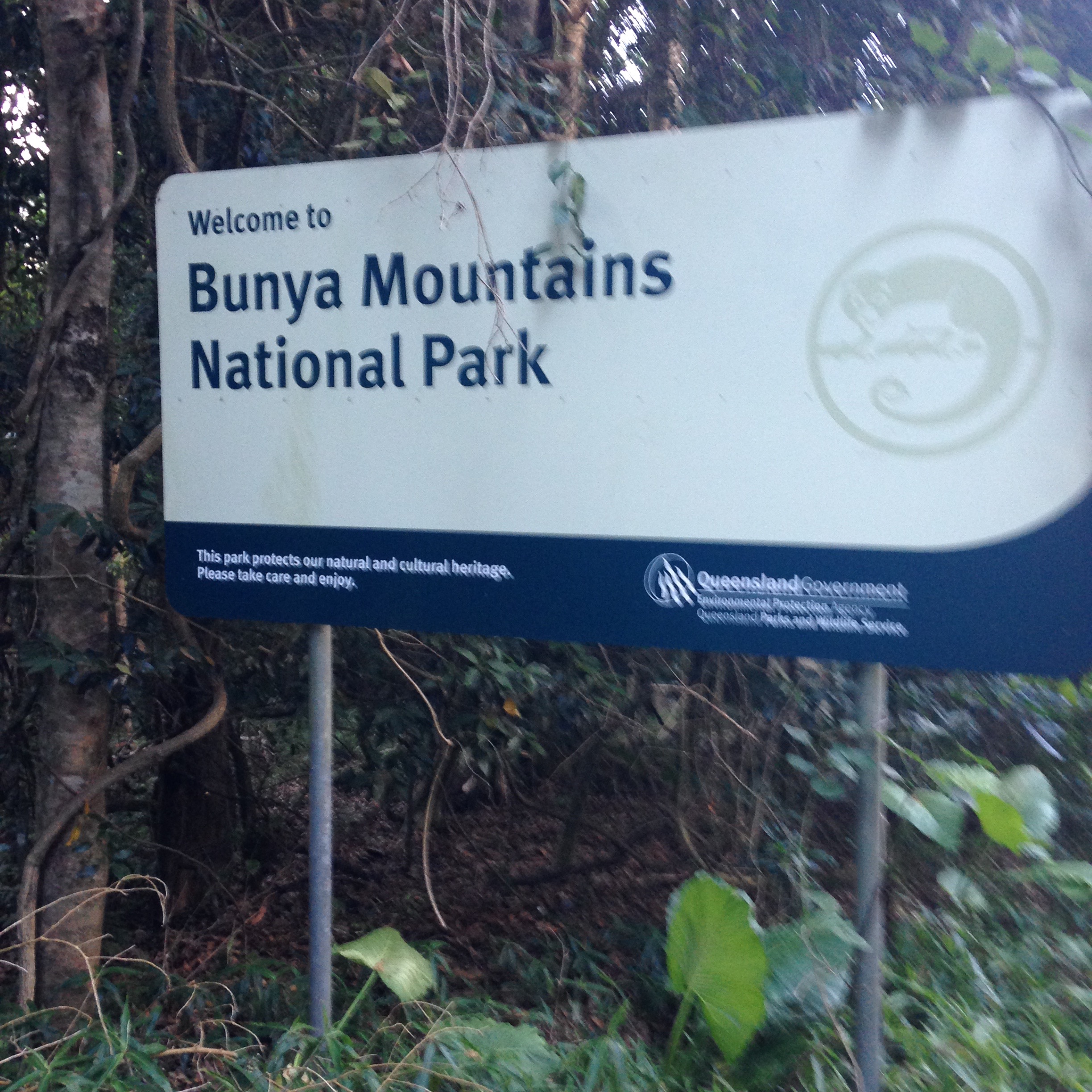
From flat flood lands the road wound and twisted higher and higher and suddenly we were in the rainforest. Dominated by the fabulous Bunya Pine. Seed pods are huge, and weigh about 8kg, and look like footballs. They are said to fall in February and so we had to beware. Great. I was concerned for the hire car. For centuries, Aboriginal tribes gathered at the Bunya Mountains to feast on the nut and socialise.
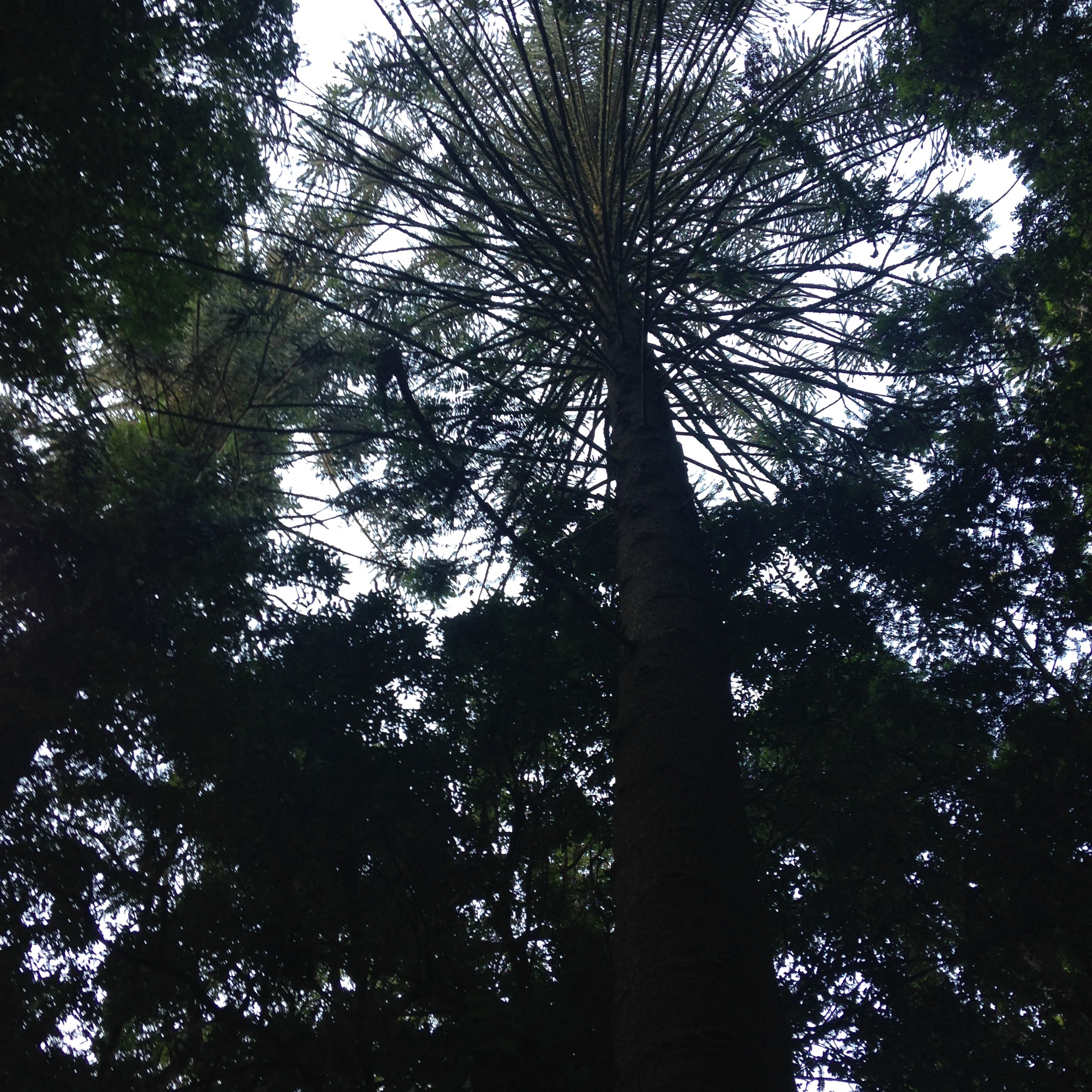

We tentatively got out of the car and walked into a resting place. I was conscious of my flip-flops and the forest floor.
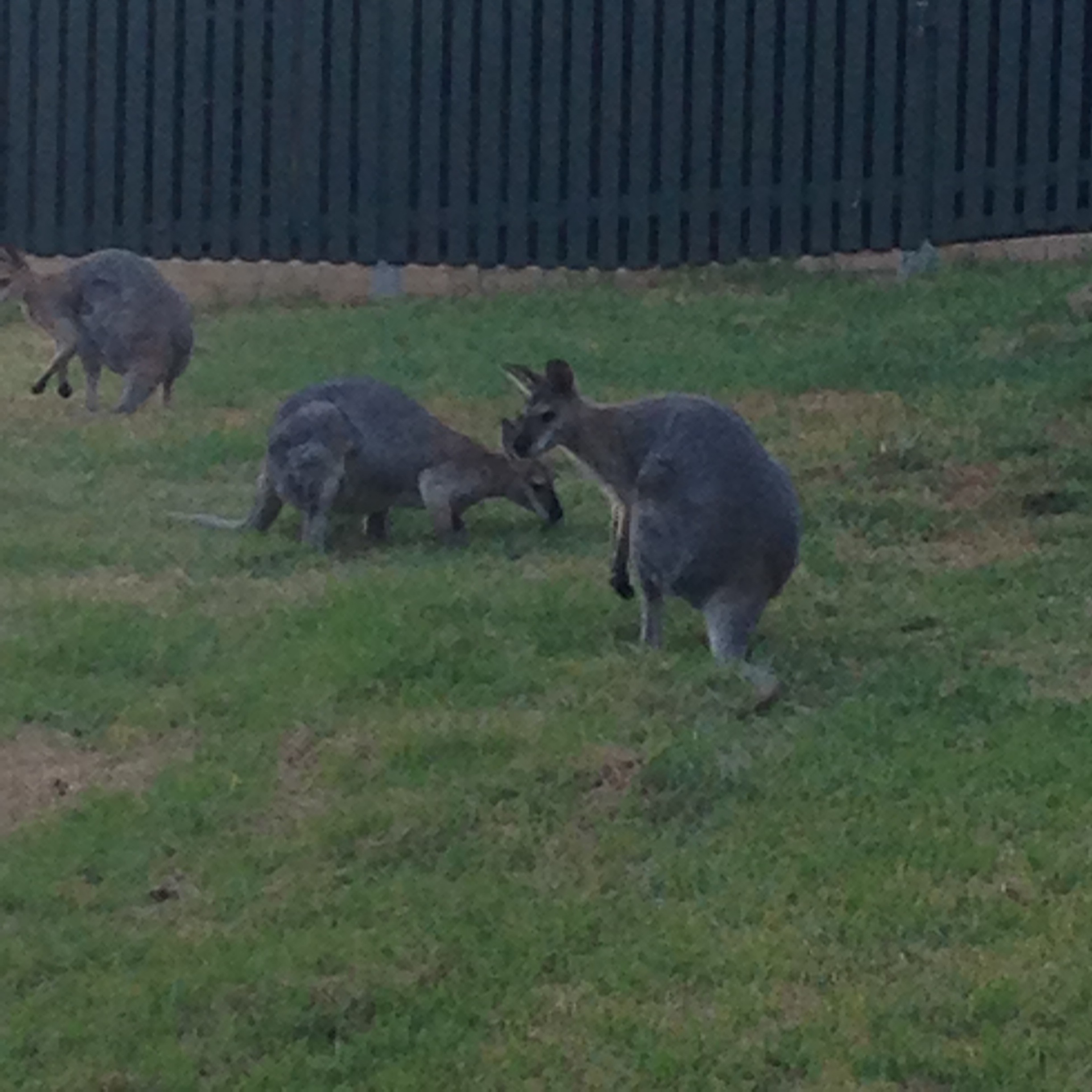
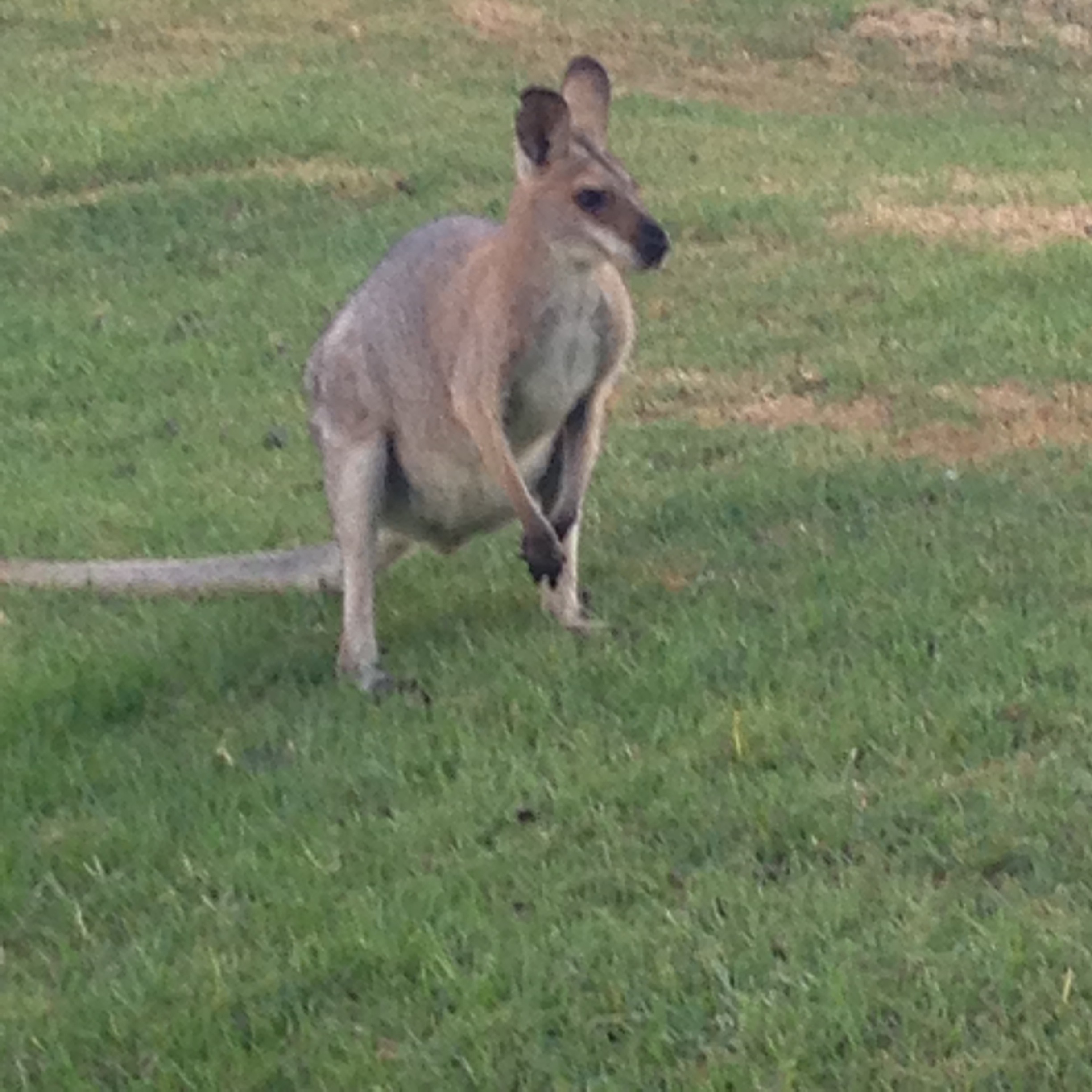
We secured a cabin for the night, complete with a barbecue, it was just so amazing. Wallabies bounced around and hung about outside our window, the birds swooped by and it was gloriously cool.
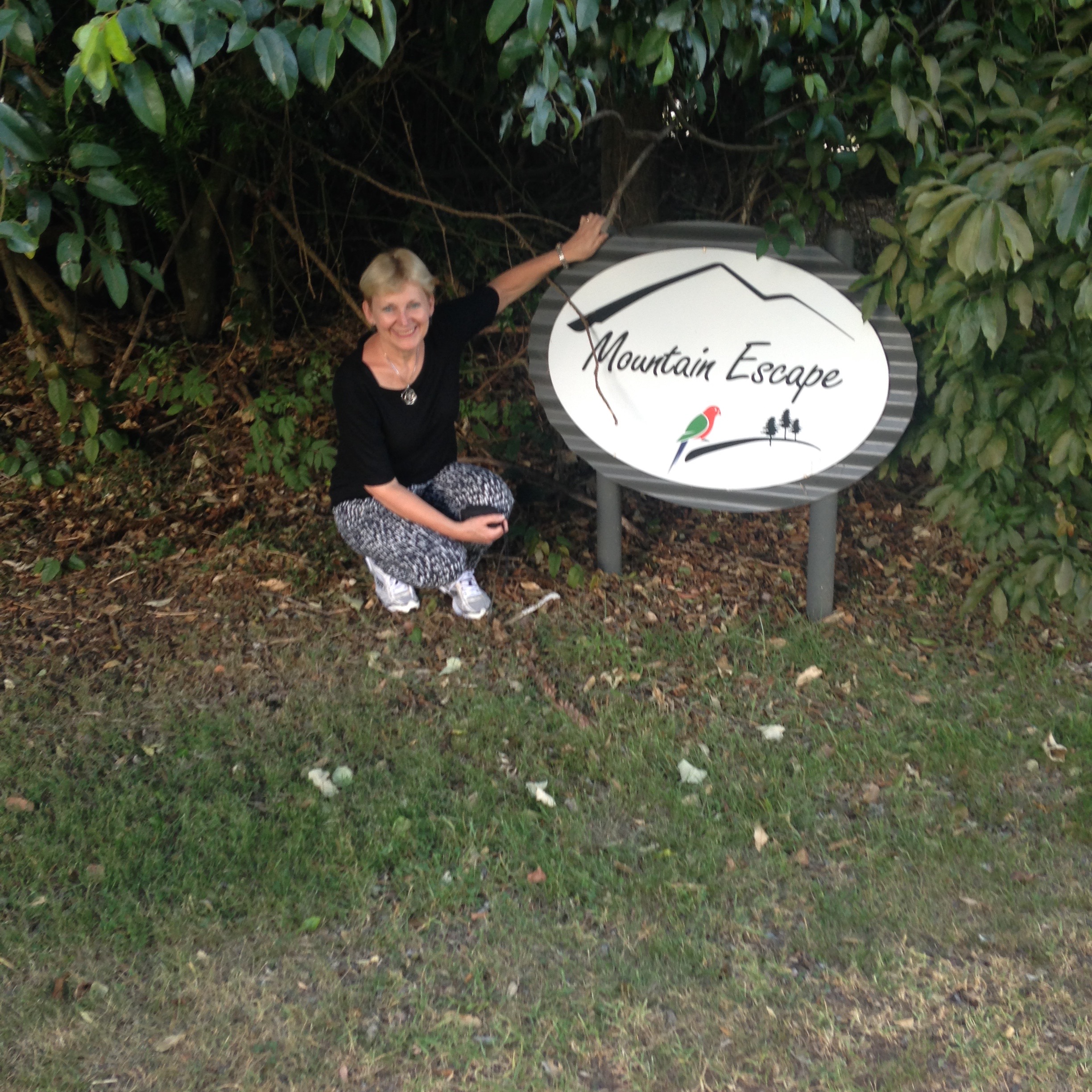

We went for a walk later, properly clad in trainers, and the rainforest was amazing, full of massive hardwoods, lianas, varieties of pine and the canopy was thick. I had just glimpsed a copy of Australia’s Most Dangerous Species on the reception desk, which cheered me up no end.
I knew that red belly black snakes, brown snakes, and carpet snakes were all lurking, not to mention the red back and trapdoor spiders.
When night fell we cleaned up after our barbeque and headed out again with a torch. We walked up the road to Fisher’s Hill, and below us the plain stretched all around. We could make out the glimmering lights of Toowoomba and neighbouring towns, and maybe the distant lights of the Gold Coast. Above the Milky Way was a swathe of stars, close enough to count, and the Southern Cross pointed us to Sydney.
We sat for ages, no torch, just blackness, listening to the stirrings of the forest. Overhead the sky was lit with a billion stars.
We headed back, our eyes more in tune with the tree shapes, when suddenly Nick turned on the torch and there was a possum, just ahead of us. He stared, then scuttled across the road and scooted up a tree and we had a good close-up view. He was so cute. Despised in NZ, made into gloves and socks, but revered and protected here in Australia.
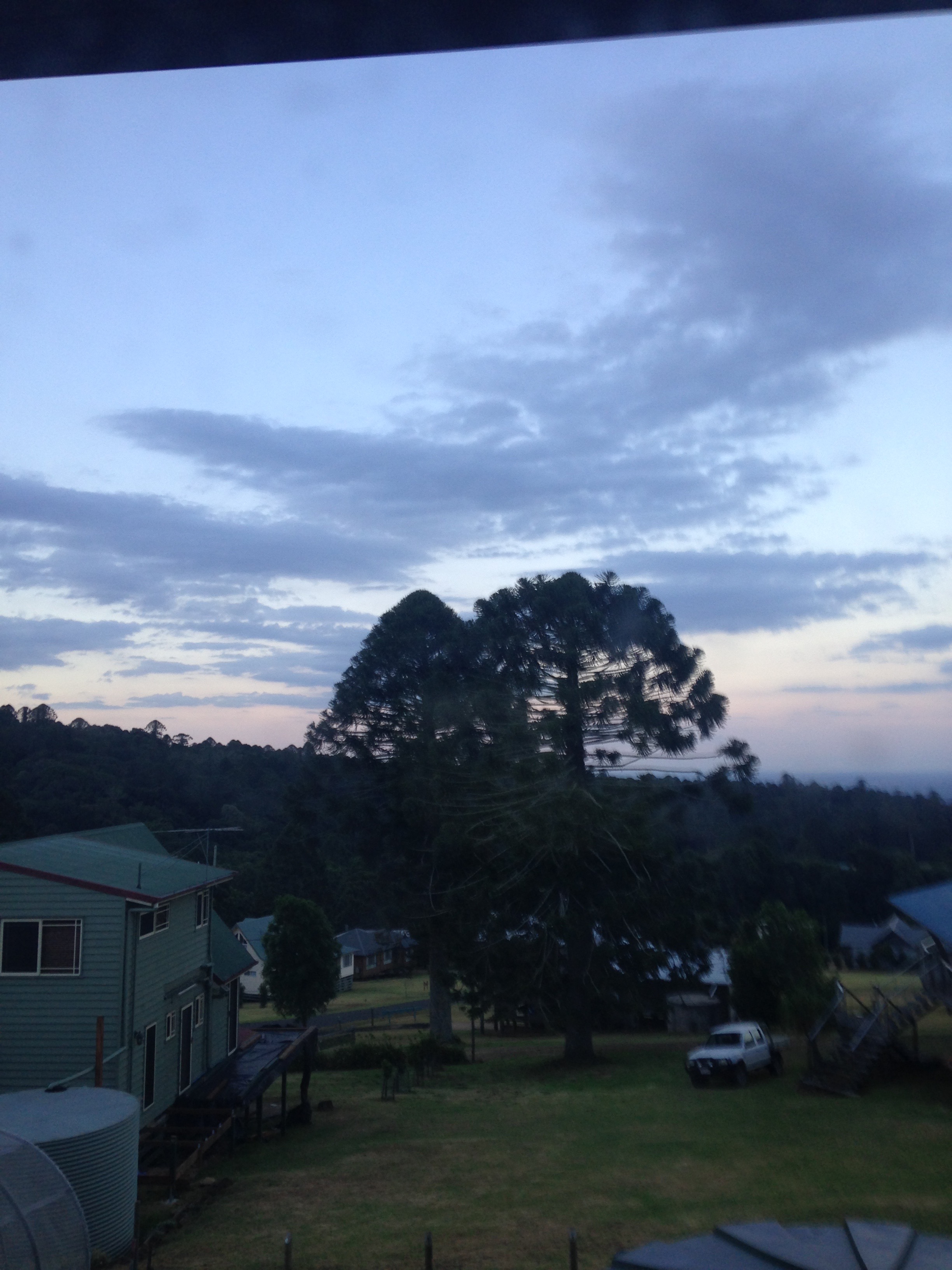
I woke to the dawn chorus of sulphur crested cockatoos, kookaburras and wallabies springing past the window. I felt very far from the Firth of Forth and the howling gales of winter.
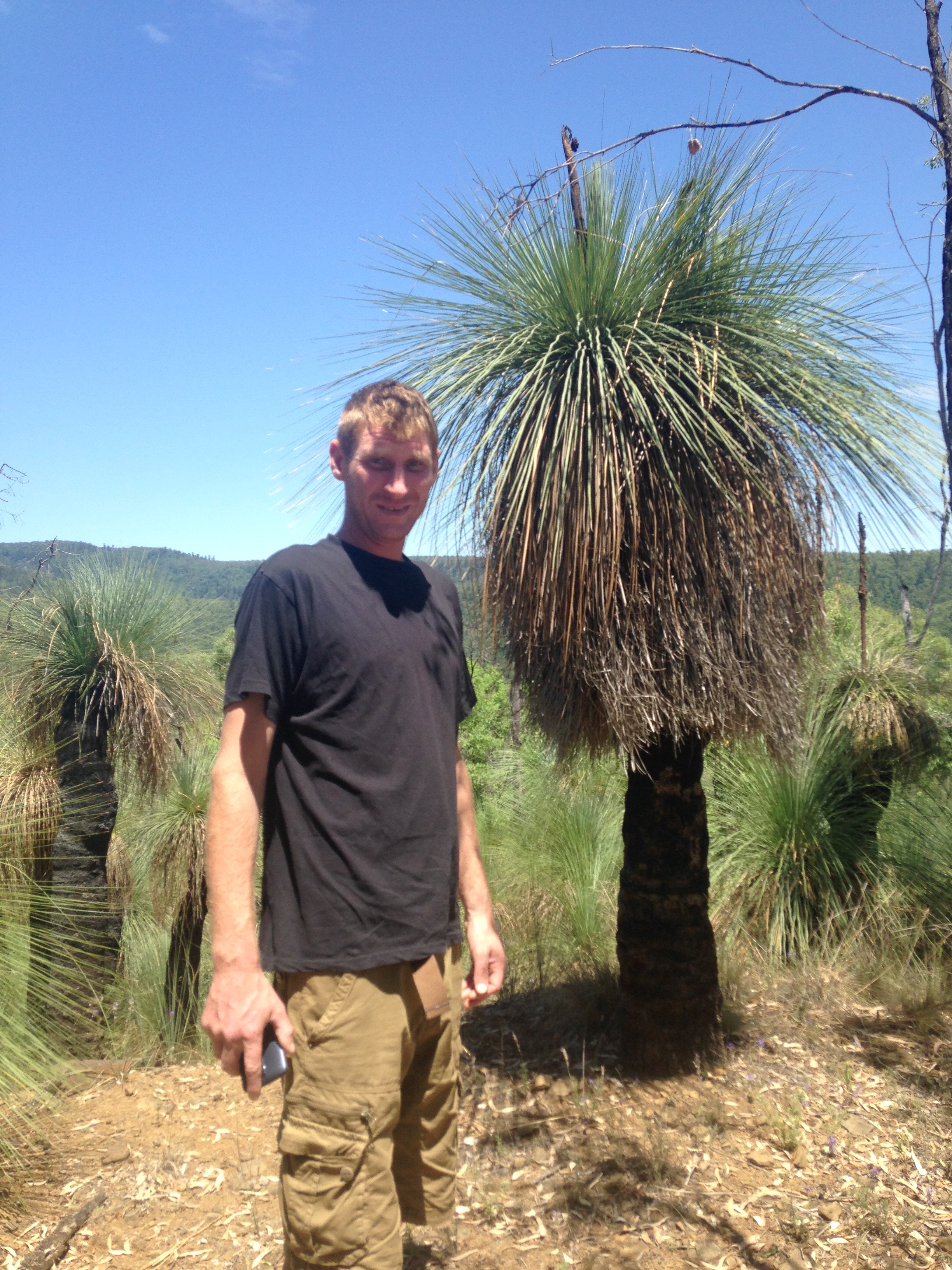
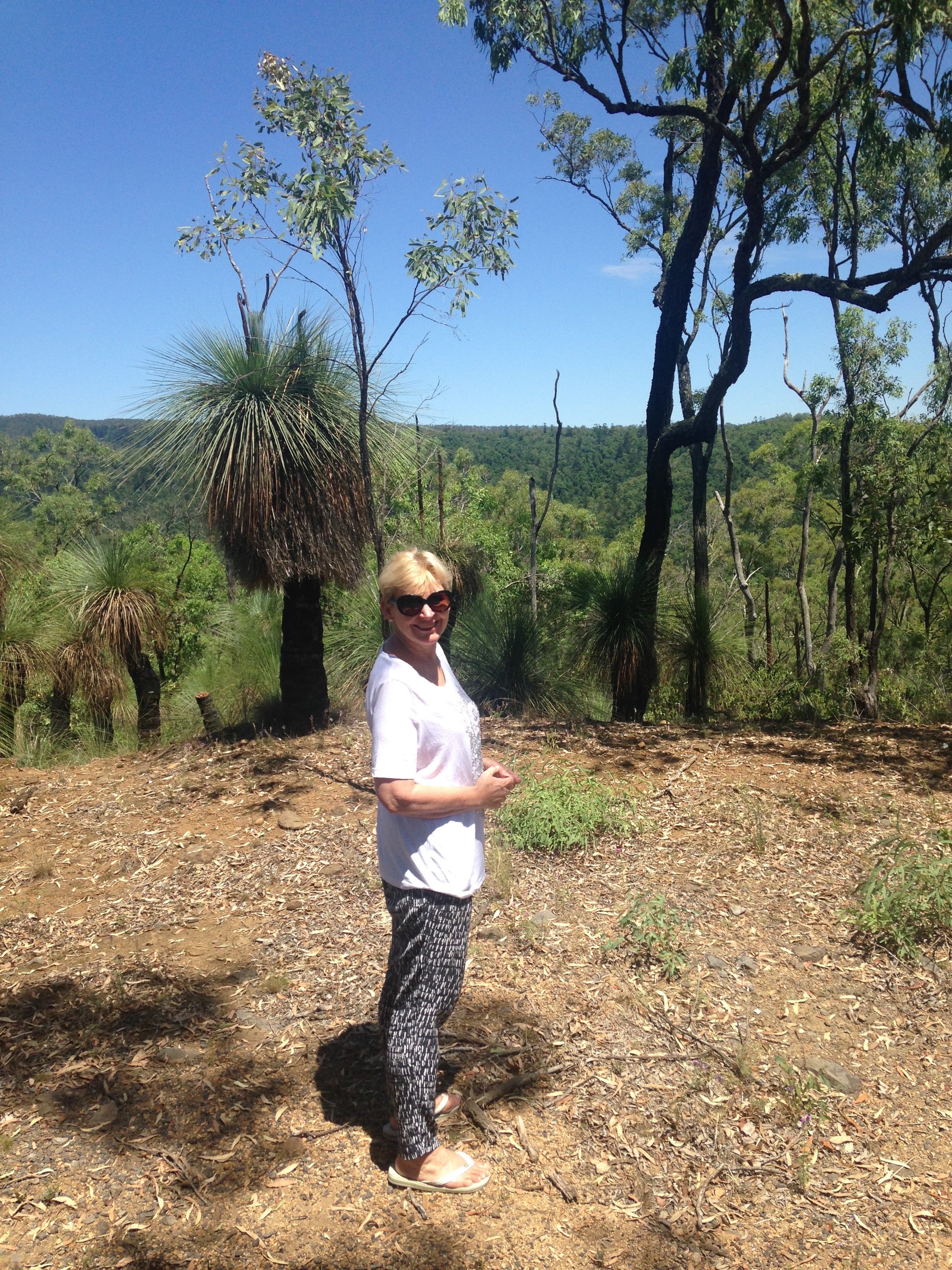
We posed beside the grass trees or as they are known ‘Black Boys’. Amazing plants, they grow only 2m a year and are about 2000 years old. I imagine they are very expensive in Garden Centres.
Part 3 – Looking for Ruth
It’s so strange how this trip has been taken up with retracing Ruth’s last steps. She died last August, and Nick and I drove through Toowoomba, past the hospital and the crematorium, and it was as though she were directing us. We made the pilgrimage to Wondai, then, full of our own thoughts, we returned from the Bunya Mountains to Brisbane, and saw the sign posts to Bribie Island where she had kept a house whilst she was in Korea. Millions of memories flooded and all the time I could see her face and hear her laugh. Was hers the bright silvery dot on the ghost detector?
We drove down the coast from Brisbane, through Burleigh Heads and Cooolangatta, Tweed Heads, and finally got to Byron Bay where Ruth had taught maths. We wanted to stay there but the place was hooching with Sweet Young Things done up to the nines and every bed was taken. We were beginning to feel like Mary and Joseph, but we ploughed on; Nick must have been exhausted but he didn’t complain. We drove round Lennox Head and past the house Ruth had lived in for many many years whilst she was teaching in Byron.
Again, the Sweet Young Things were out in force, so we had to carry on down to Ballina. At last, a motel, and they had a vacancy. We showered and slept. The heat was unbearable.
And finally we reached journey’s end for the moment: Diamond Beach.
Later…
Oh how lovely. I am sitting at the moment in a very austere budget Ibis Motel beside Sydney’s domestic airport. I have just drained the last of the brandy into a coffee mug.
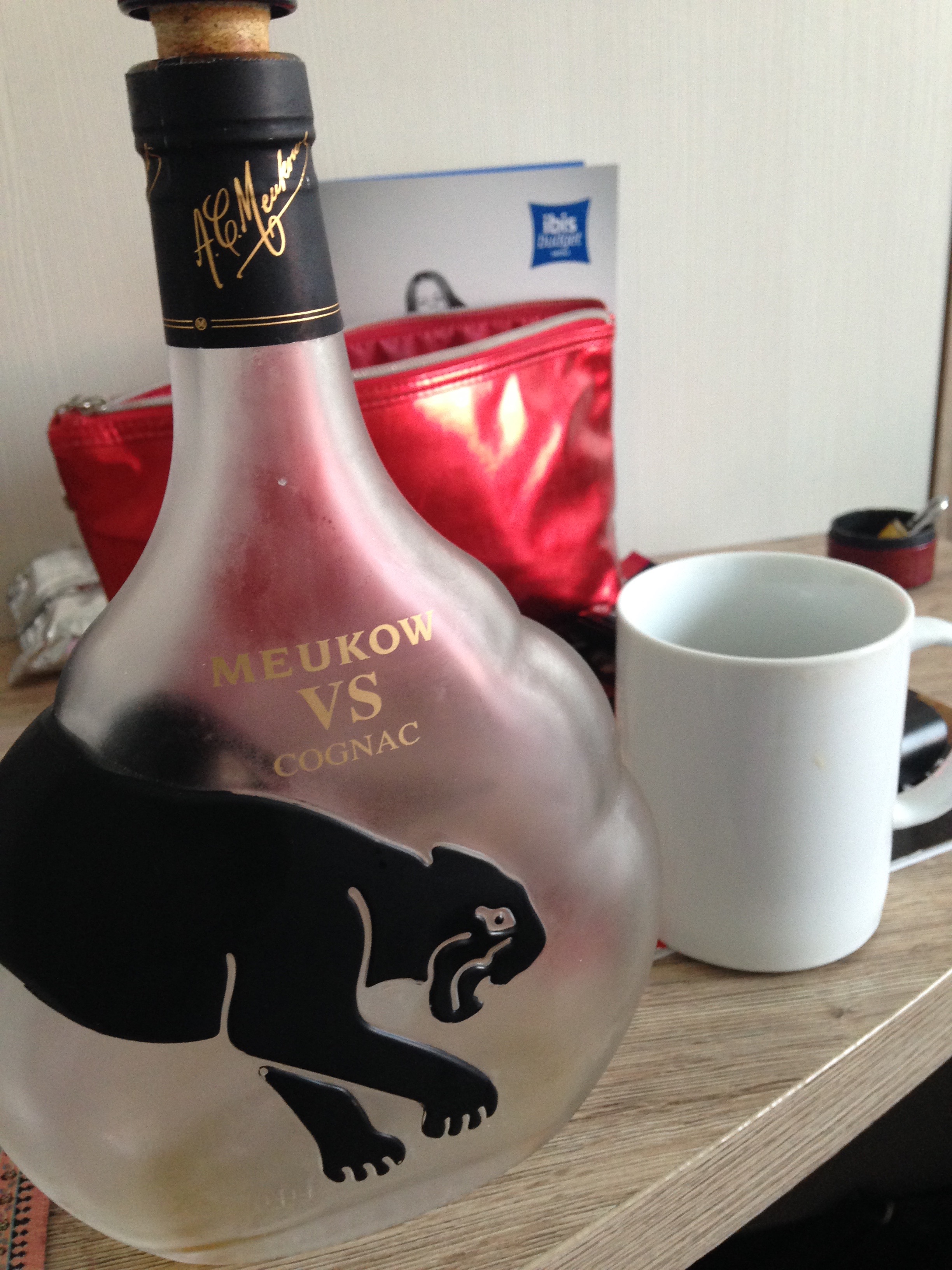
No tooth mug glasses available. Outside are helicopters and flying doctor dinky aeroplanes, and when I close my eyes, I see Diamond Beach.
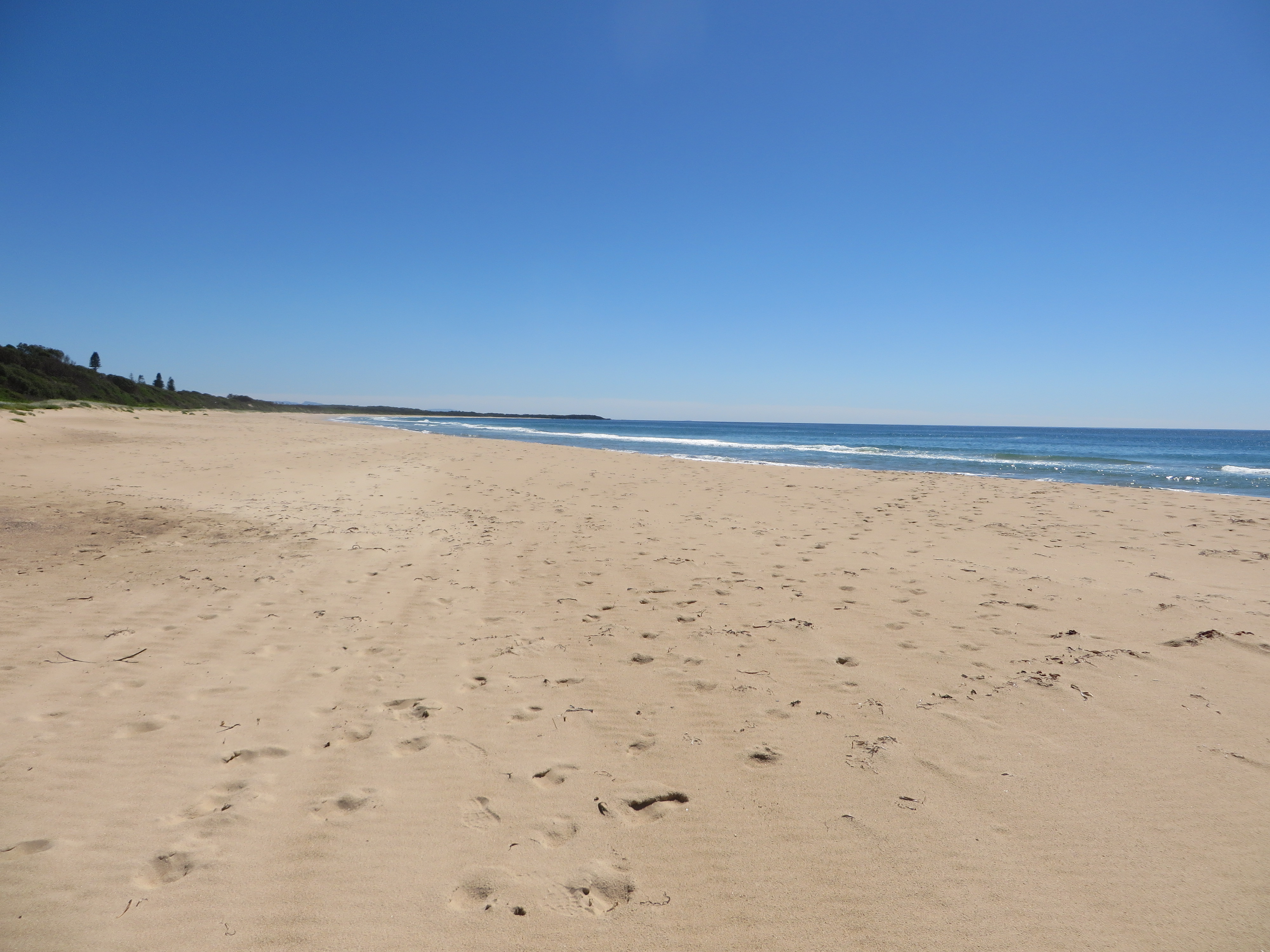
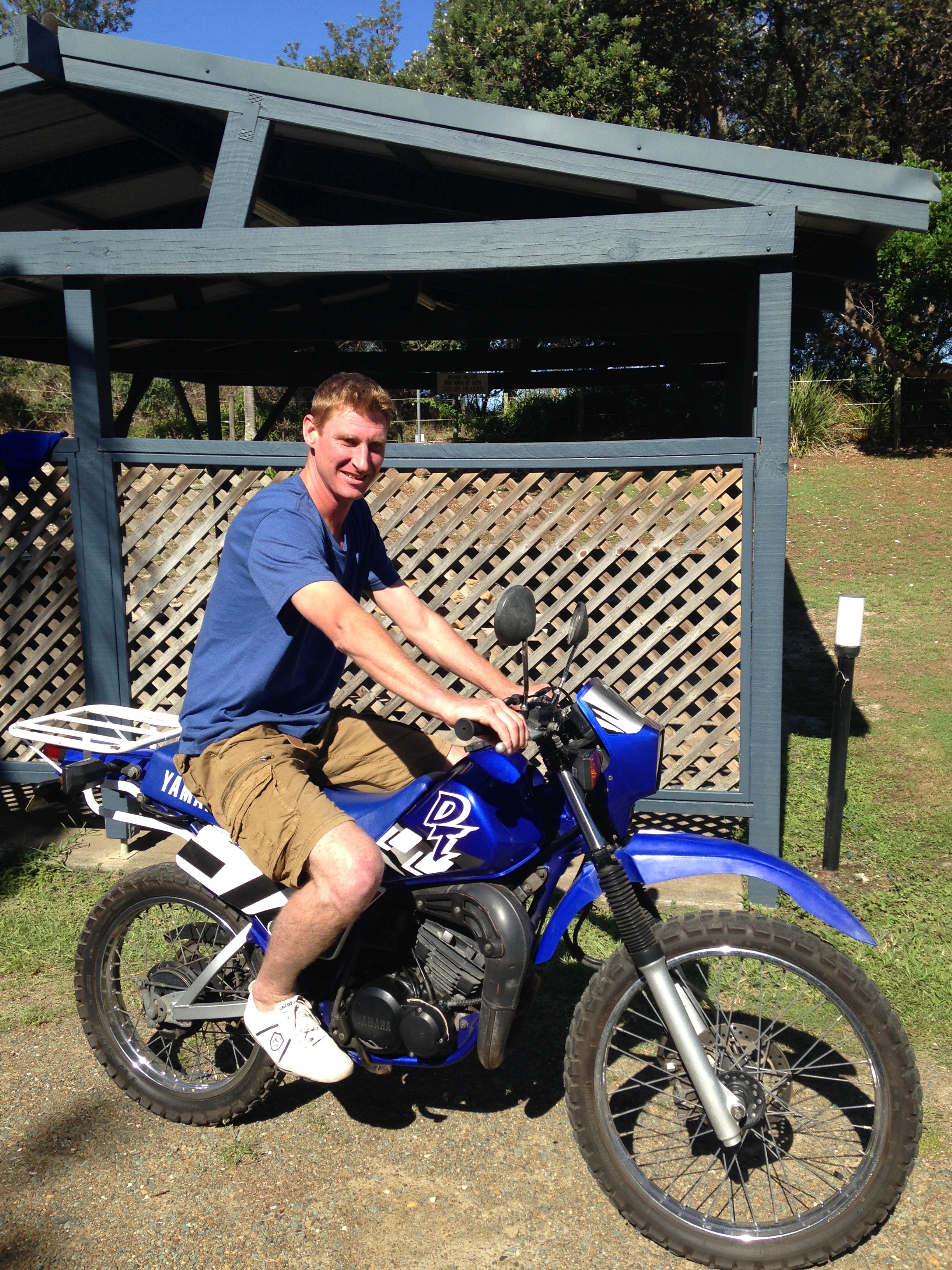
I see the endless sand, the blue sky uncluttered by any cloud, I see two dolphins synchronising their dives and a rainbow lorikeet too lazy to move as I approached. His beak was embedded deep into a bottle brush flower. It was exquisite. After nearly two thousand miles, we fished, we walked, and drank fizzy wine and Nick slept and played on Geoff’s motor bike.

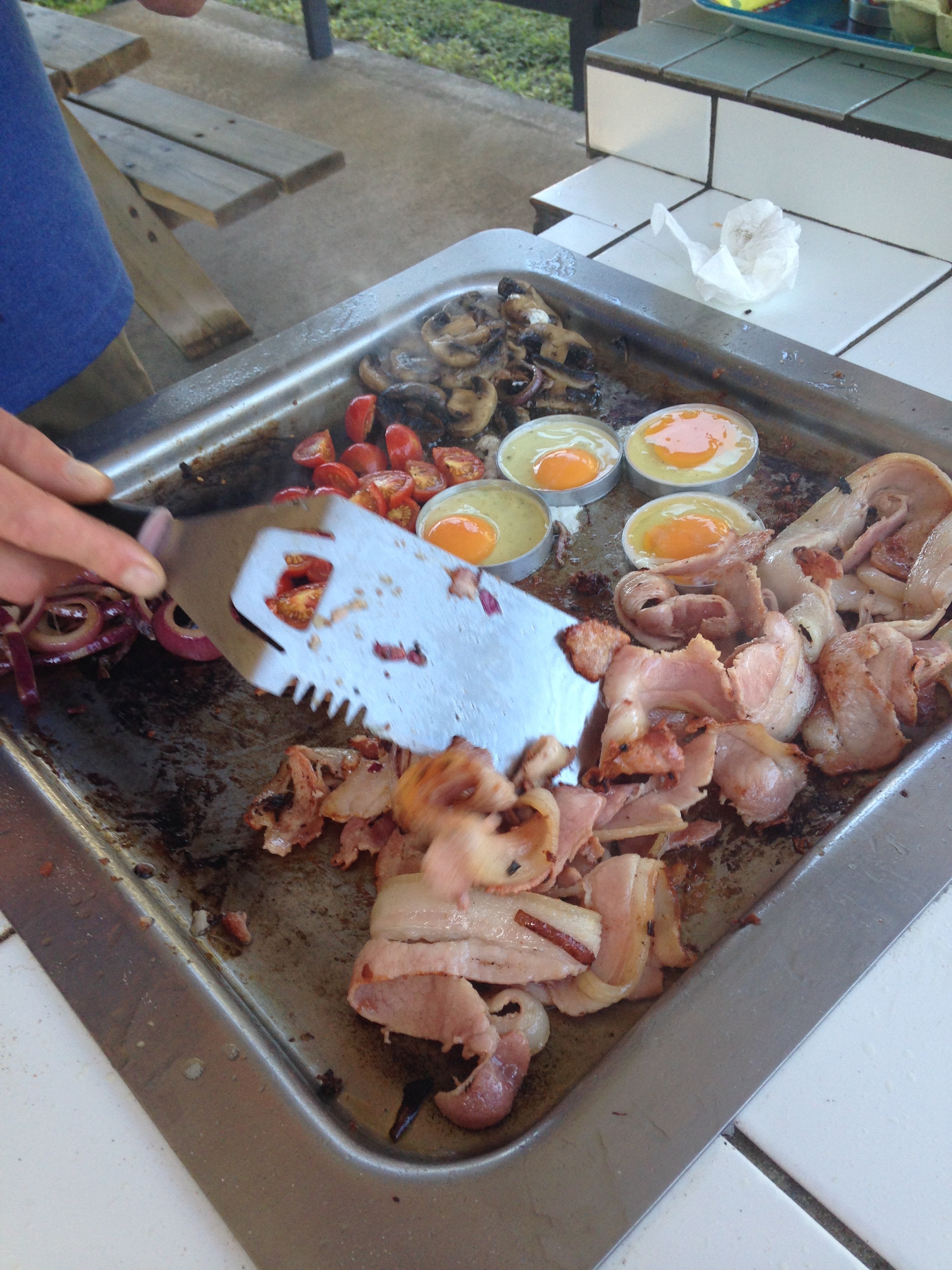
Geoff cooked up breakfast on the barbecue, and announced that ‘You don’t get to go home thin!’ We gobbled it up;

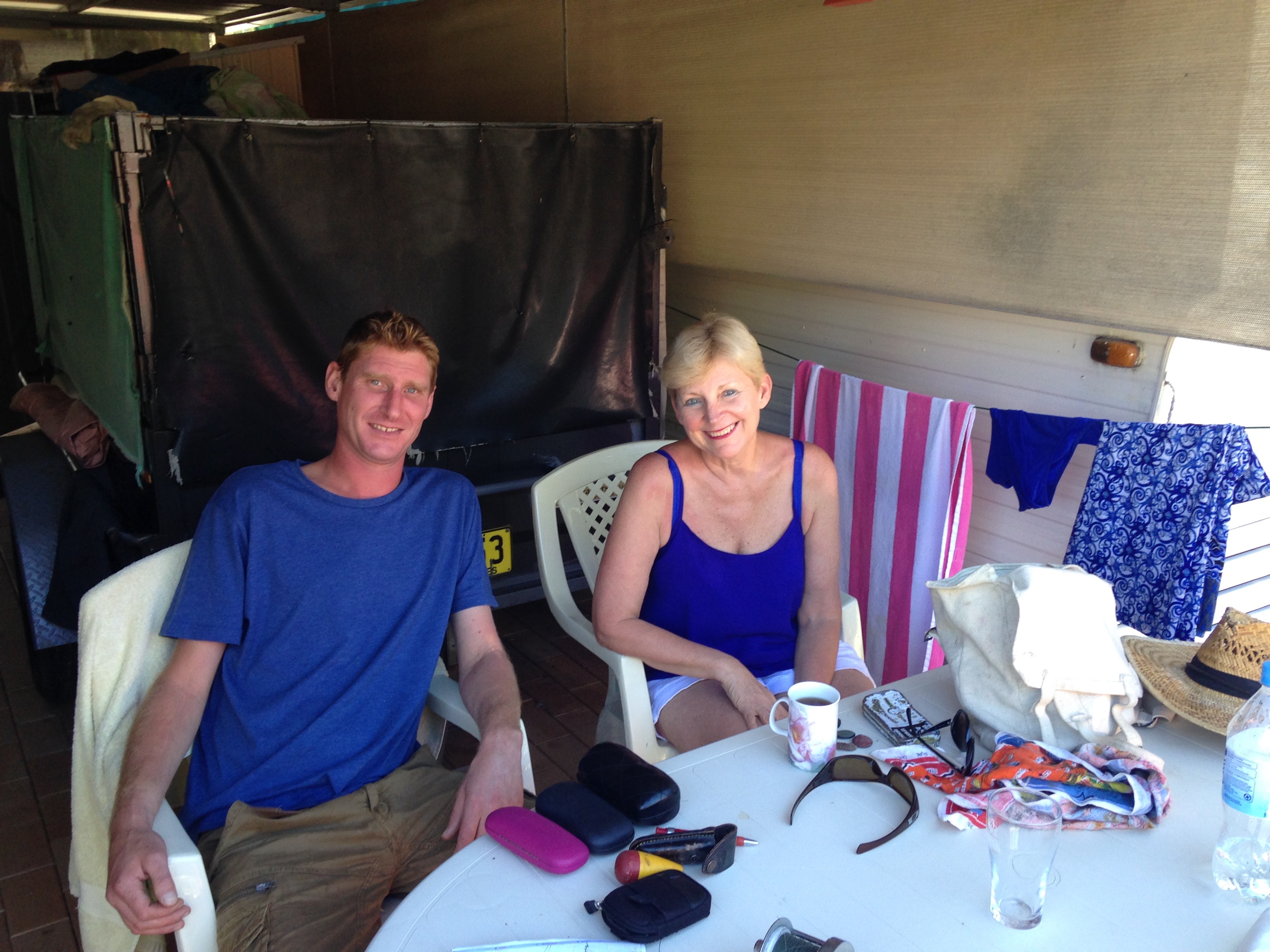
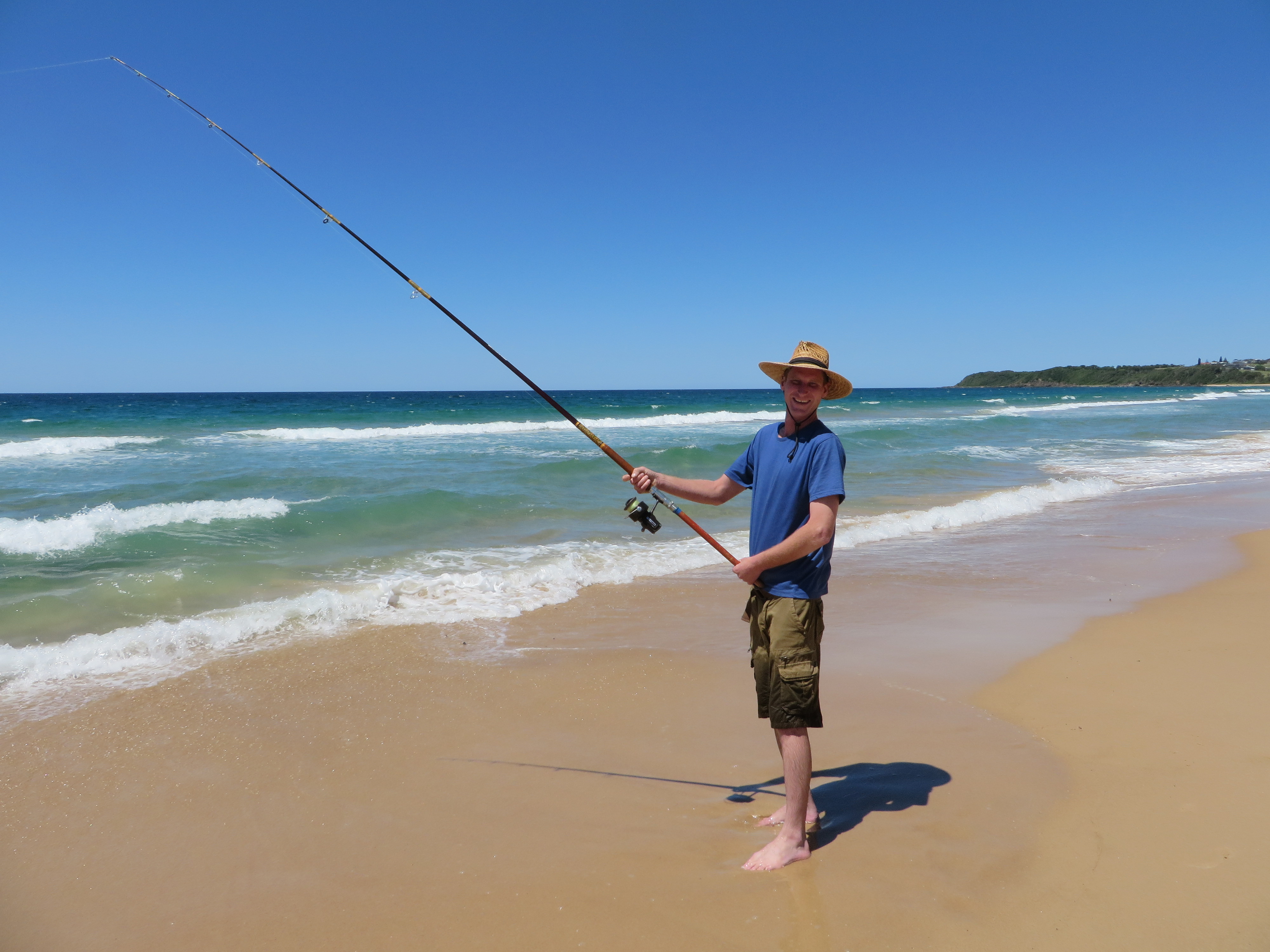
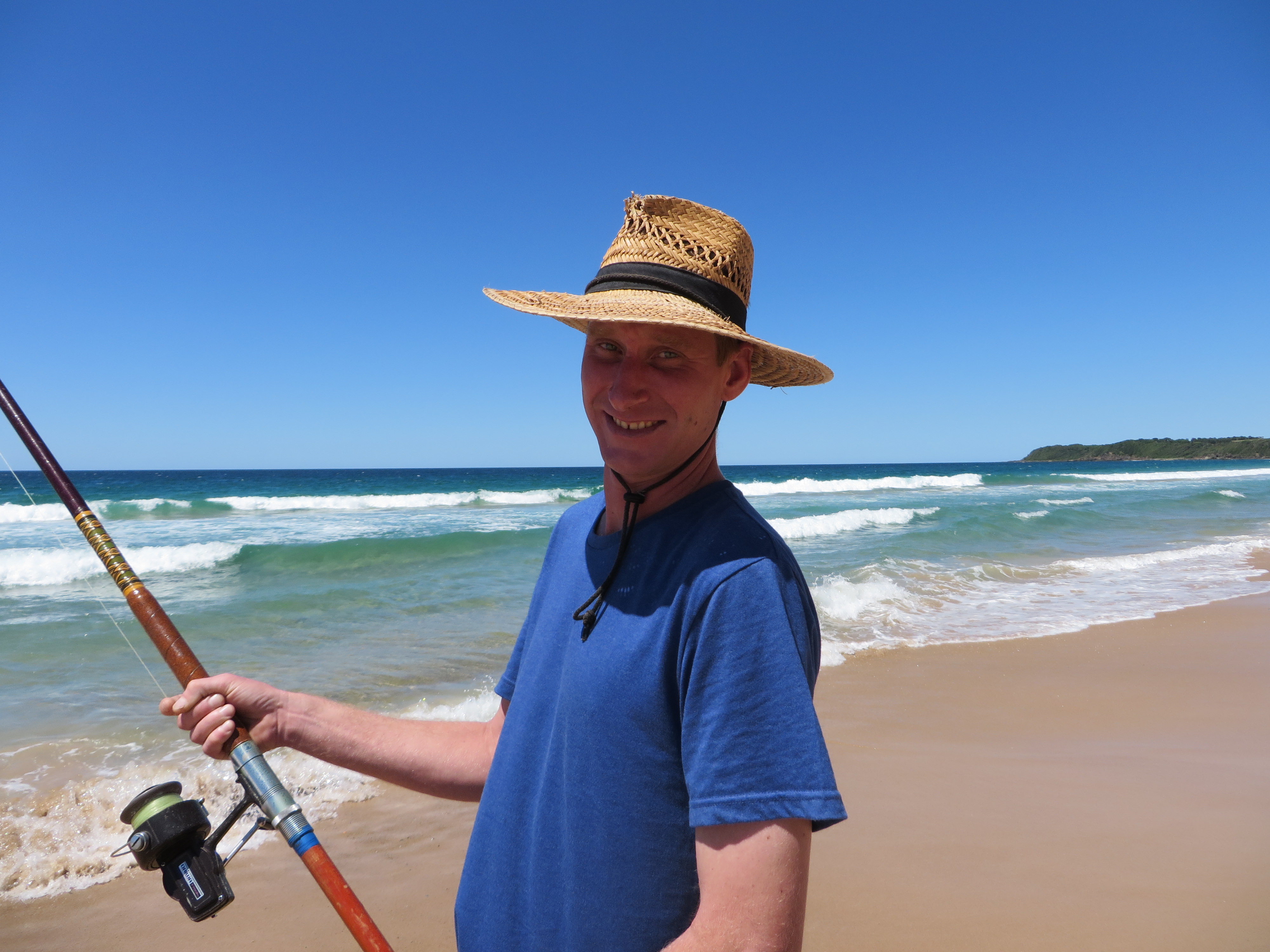
I walked for hours, catching sunburn, and they caught nothing despite casting to the waves.


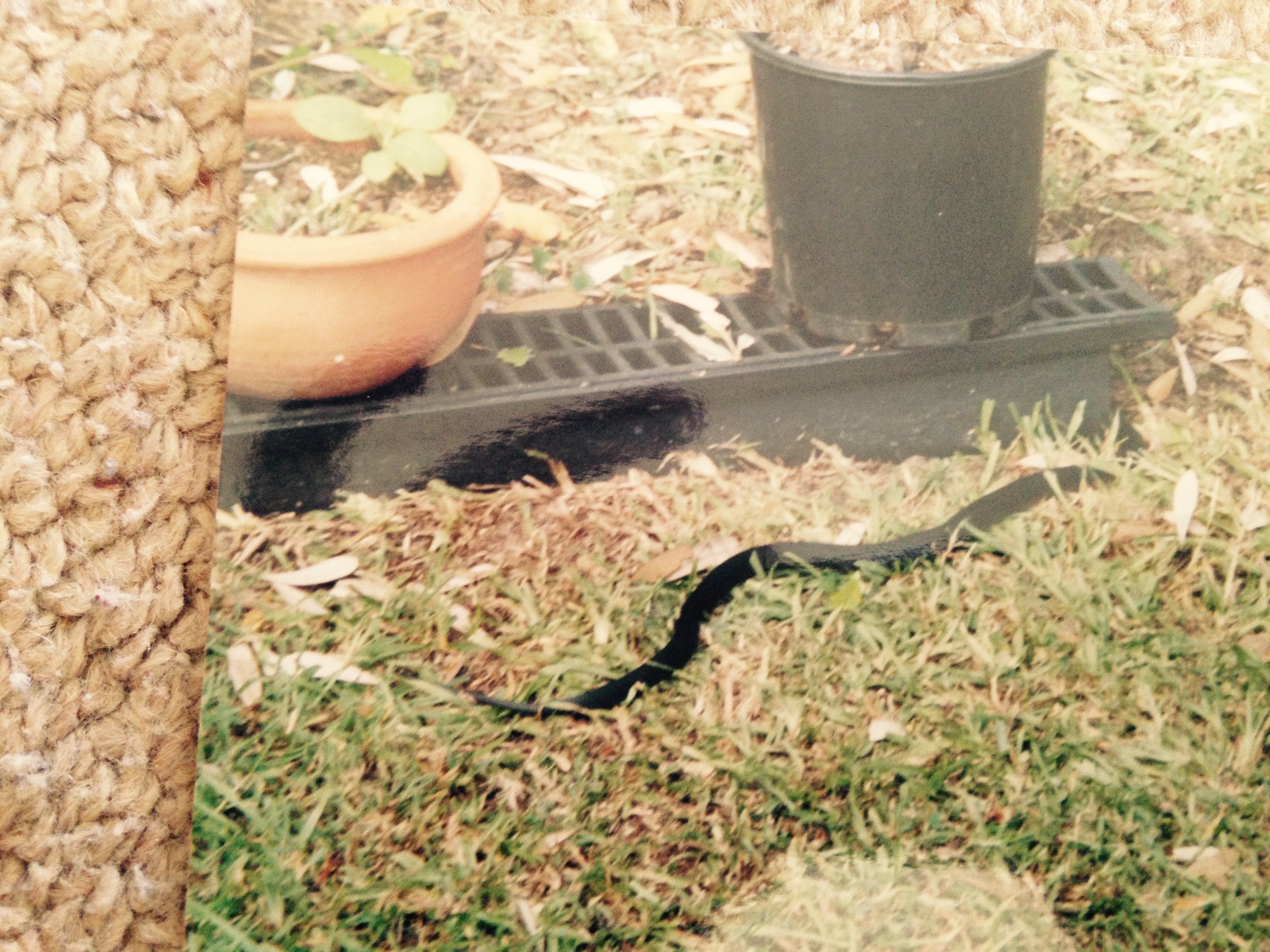
Geoff bought his first caravan back in 1999, and he called it The Castle, his retreat, and he planted a Banksia tree and native shrubs. He drove his Pearl up at weekends, and saw a python looped around his tree, and a red belly black snake block his path to the amenities. ‘You’d better move on, Mate,’ he said, ‘people like to walk along here.’ The snake obliged.
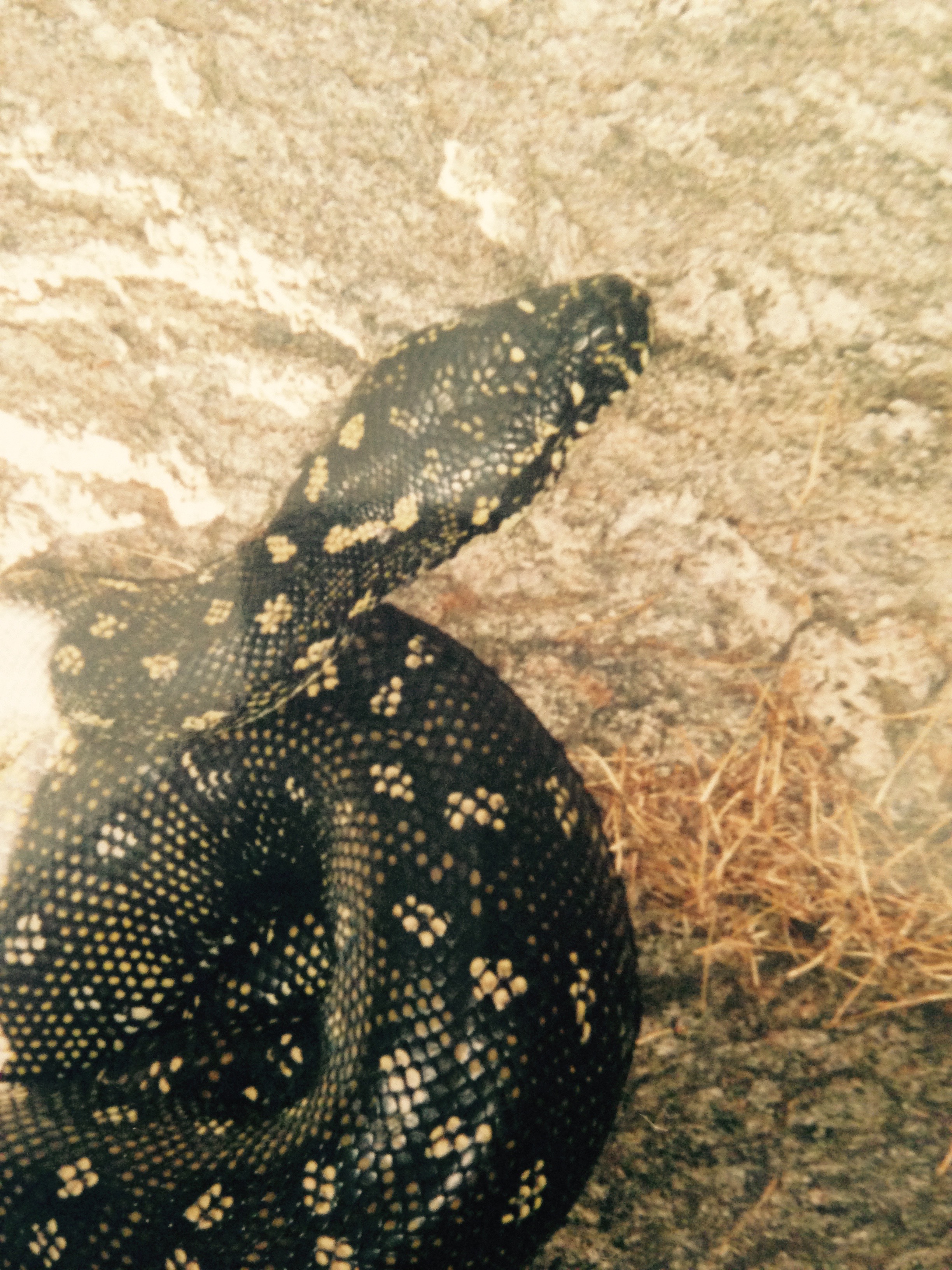
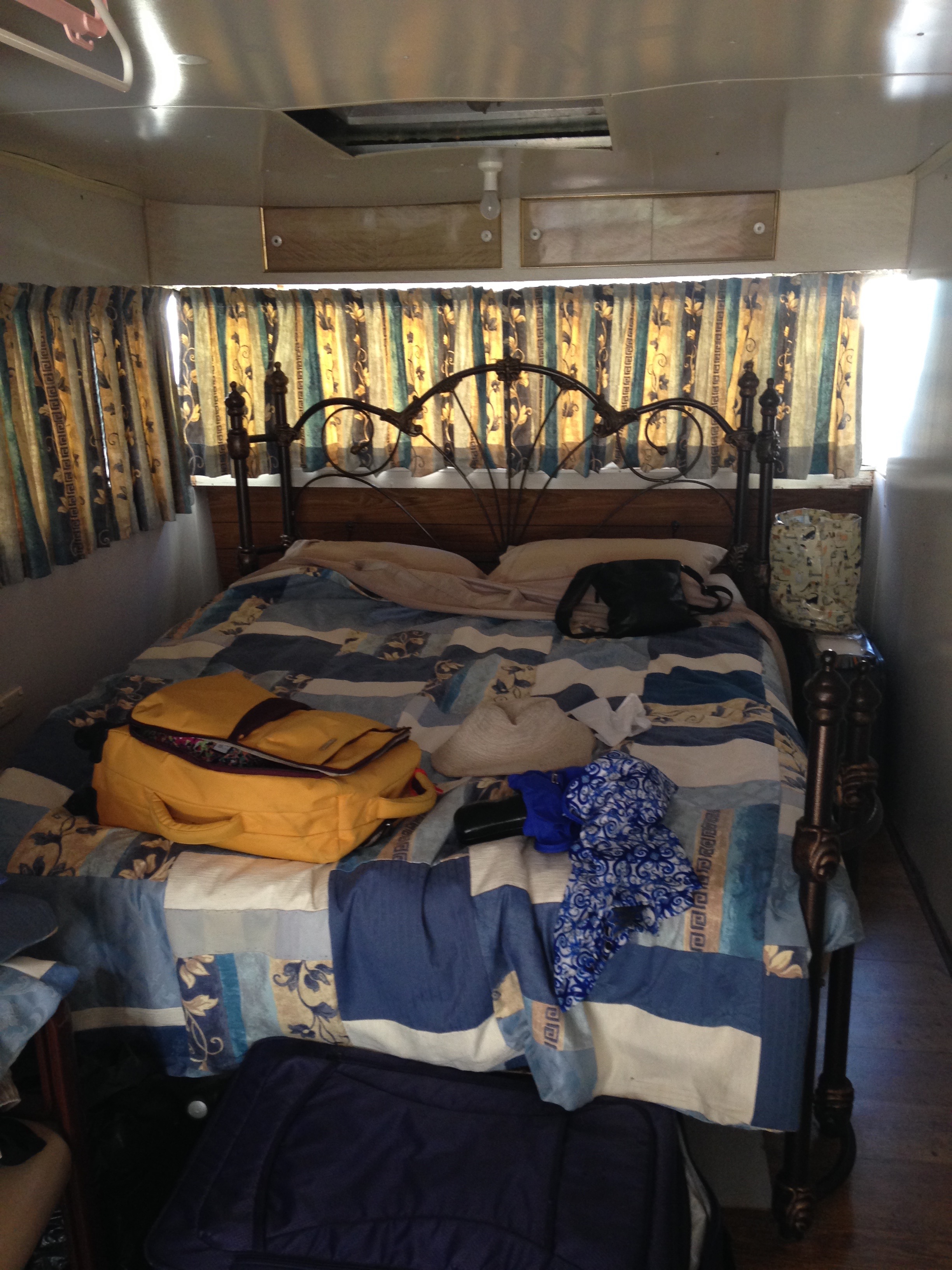
He sold The Castle and bought his second caravan which he called Layabout Lodge and that is the one that Nick and I were lucky enough to visit. I slept on a bed, worthy of a bed in Game of Thrones, there was so much ironwork!
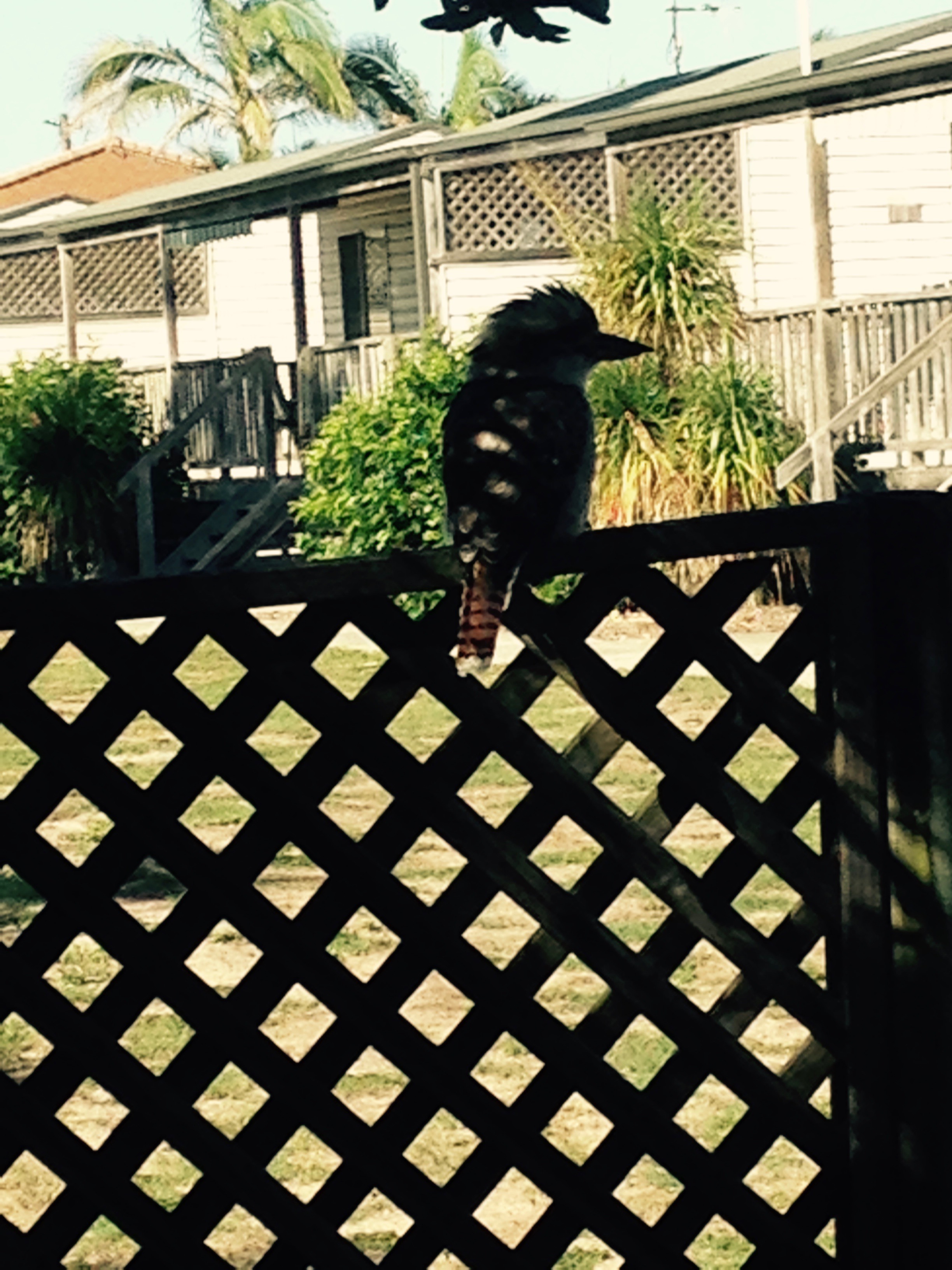
We ate fish, listened to the rush of the surf just below the sand dunes, and Geoff saw the kookaburra swoop down and gobble up some morsel.
I woke to the tribal fights of the rainbow lorikeets and the wattle birds for the rights of the paper bark gum trees. It was sad to leave this amazing place, this private beach that went on for miles. Geoff has all the stories of different seasons, of the whale and her calf that swam there for six months, the birth of pippie shells; I nearly had to be bound and gagged and forced into the car to leave.
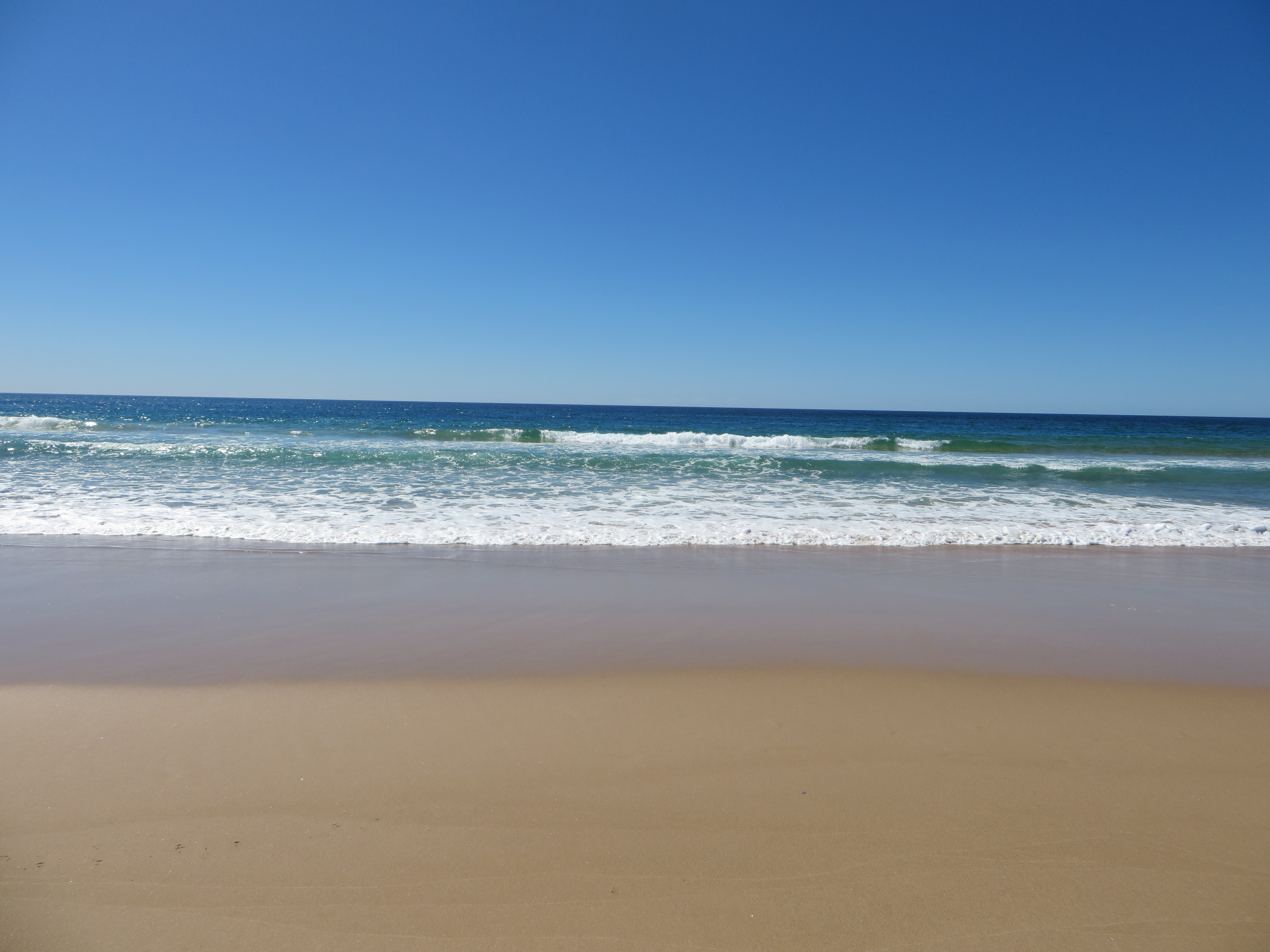
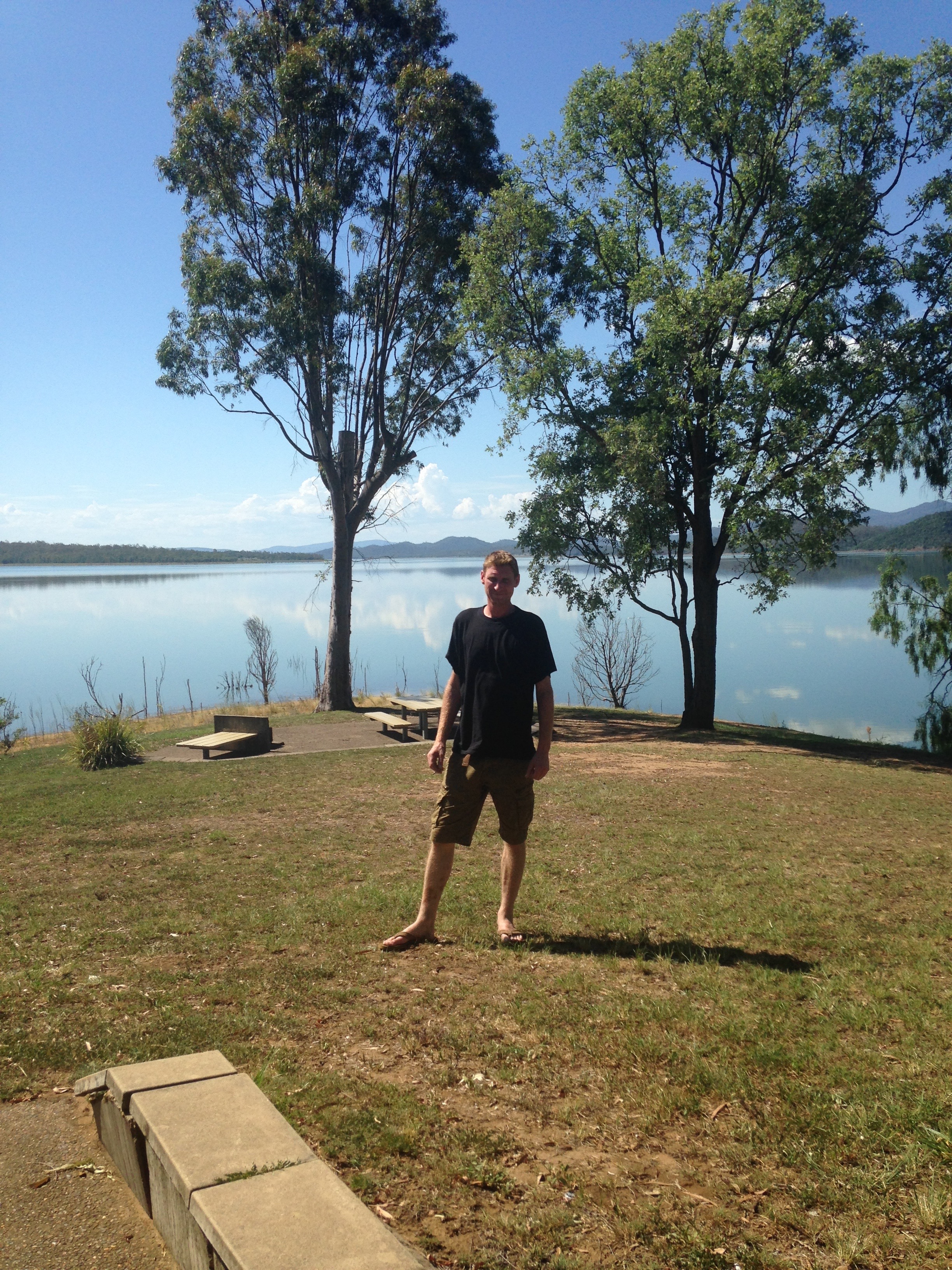
The open road, the miles of changing scenes, mountains, farmlands, ocean and suburbia and all with my son’s profile close enough to touch. It was special.

Tomorrow begins another adventure. Roll on Tasmania!

 Tales from the Gael