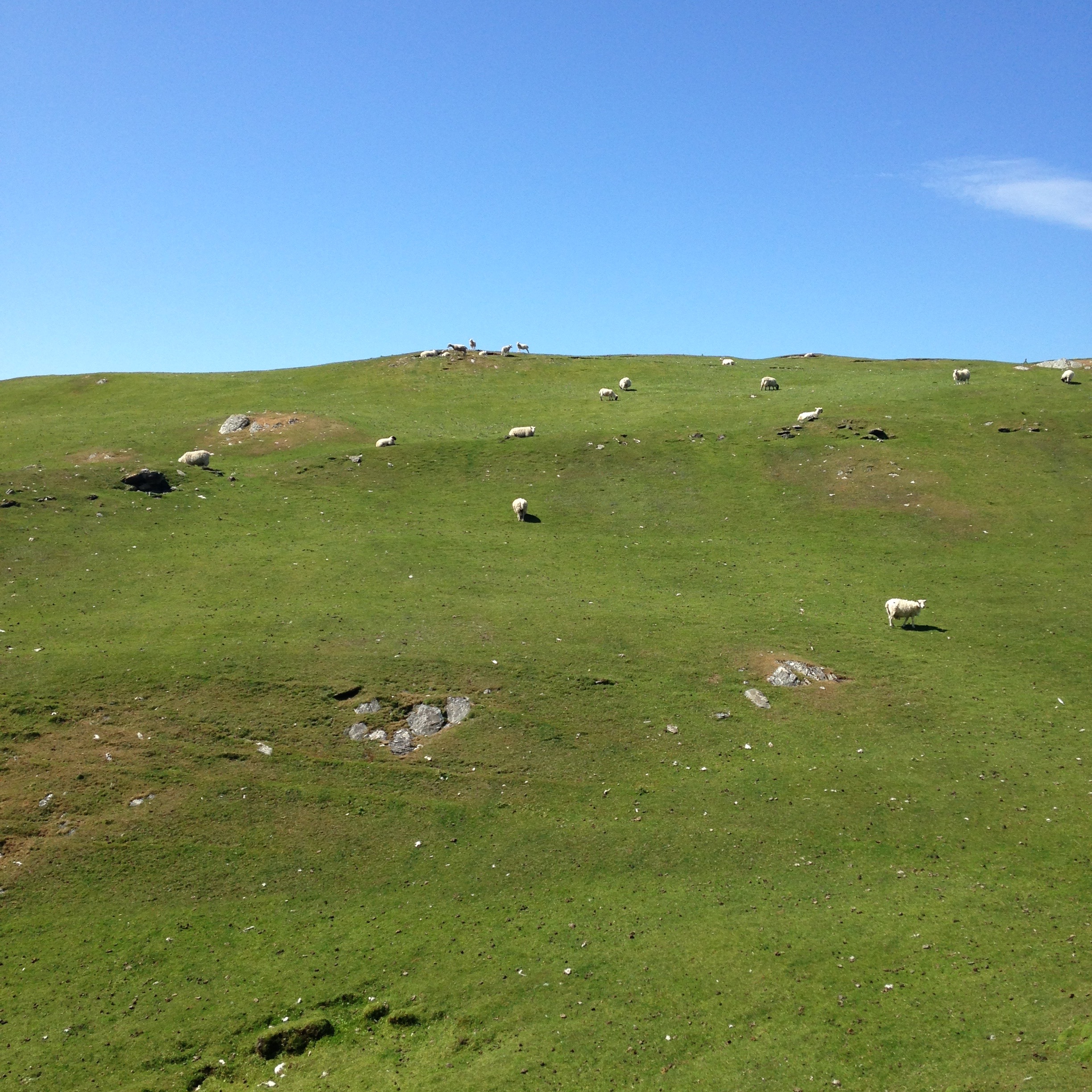
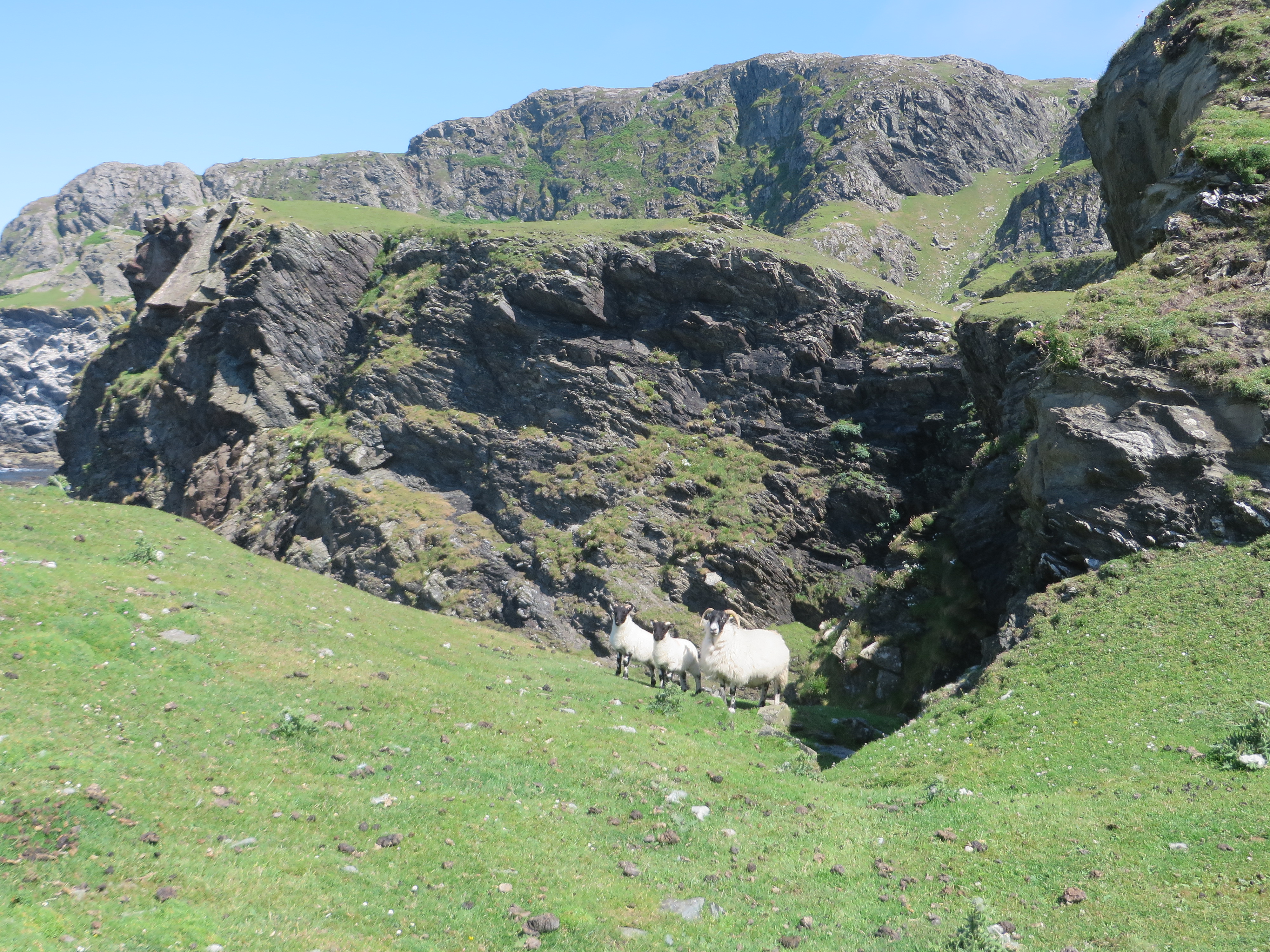
‘Surely its that quiet here that even the sheeps themselves on the hills is lonely’: A quote from the book by Lilian Beckwith, a lady who once moved to Elgol on the island of Skye and wrote a series of fun semi-autobiographical novels of life on the croft. I have been reminded of her stories a lot during our own island trip.
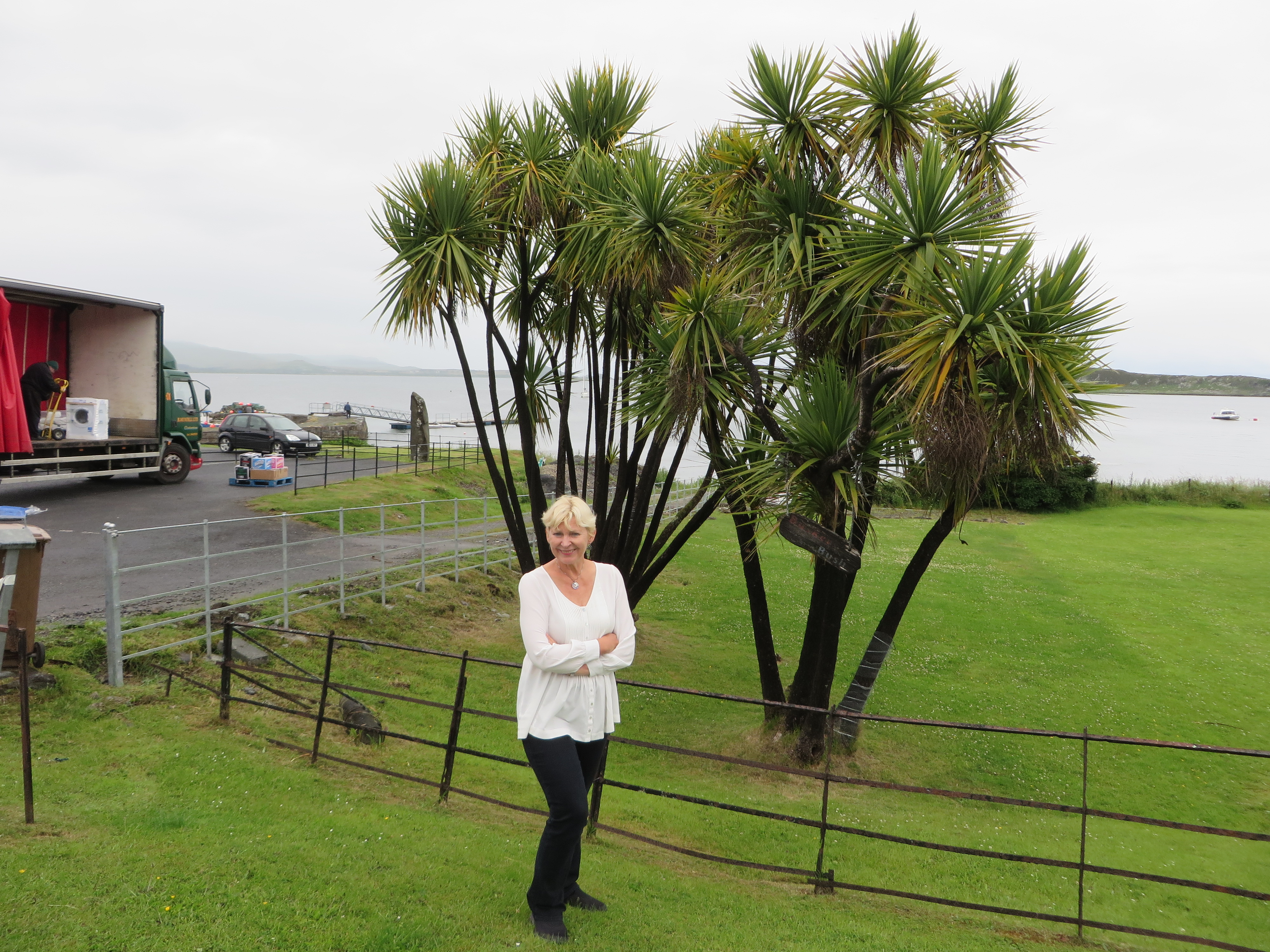
John and I arrived on the island of Colonsay, one of the islands of the southern Hebrides.
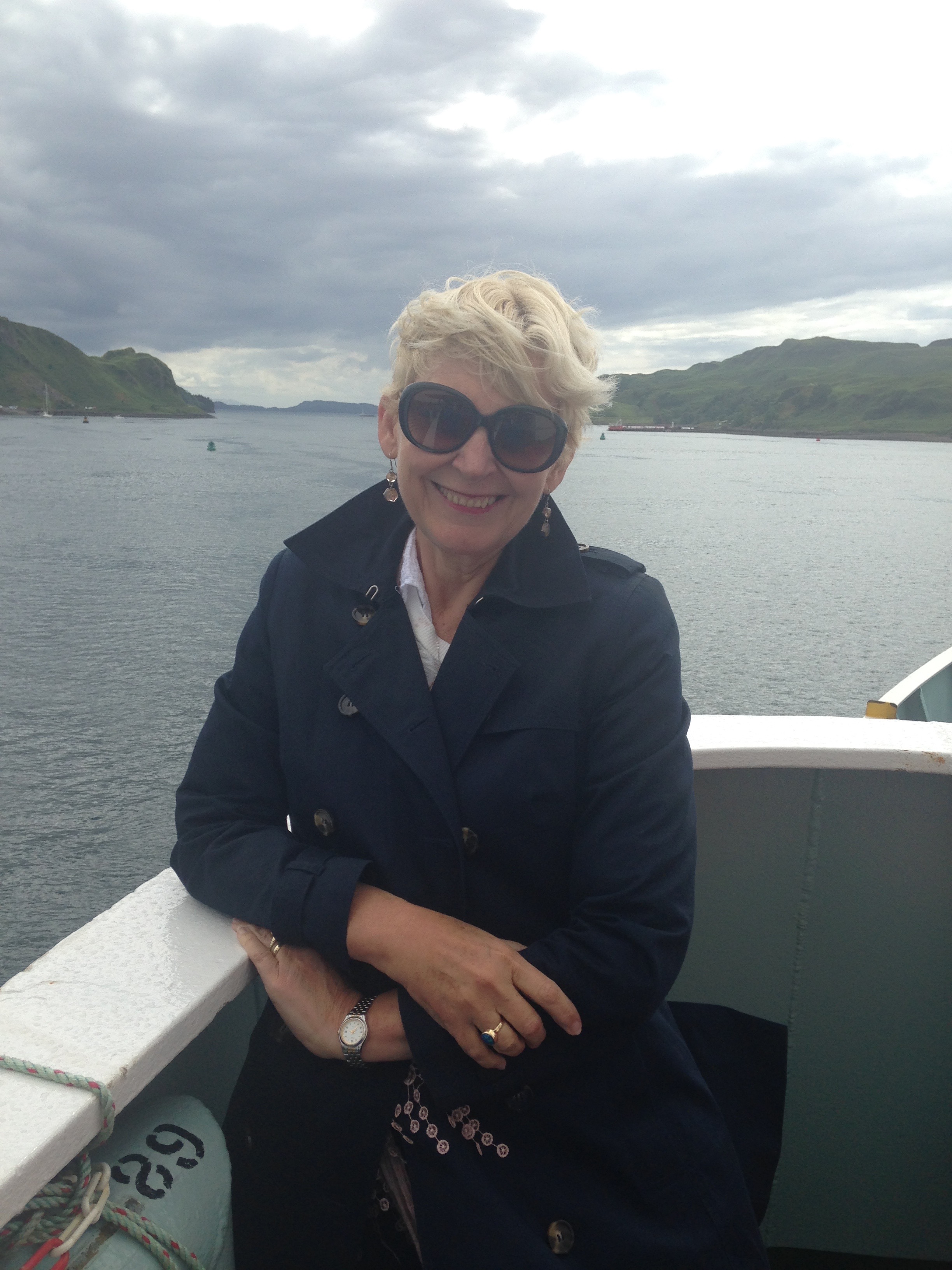

We sailed from Oban on the Caledonian MacBrayne ferry on a ‘warm summer evening’ and were met by Dilly and Derek who welcomed us into their home.

I could barely concentrate on what Dilly was saying, for my eyes were drawn to the open windows, where the view was a twinkling sea, wild grasses, wild goats and the wild Paps of Jura. At night only the rush of the sea and agitated oyster catchers could be heard.

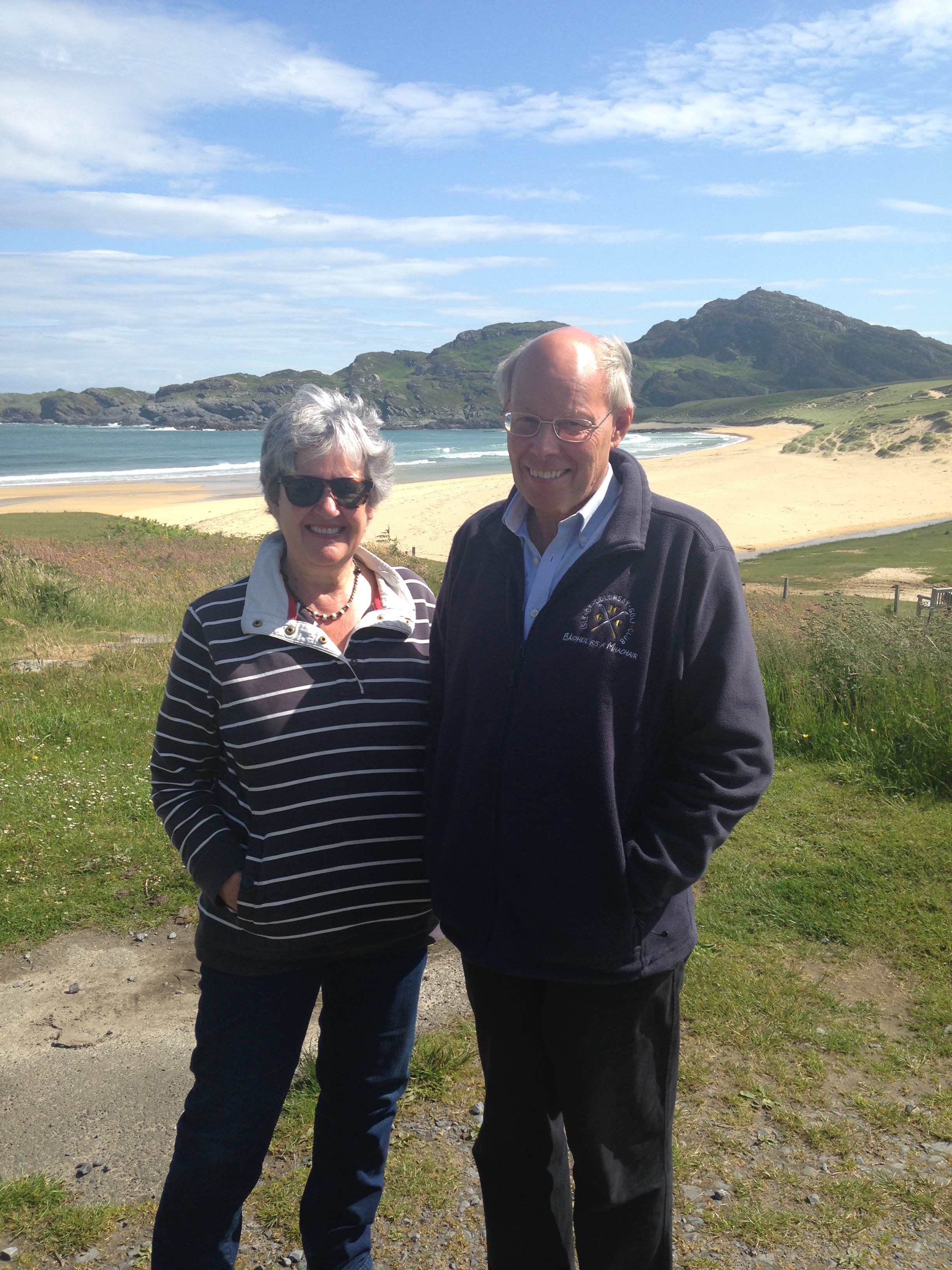
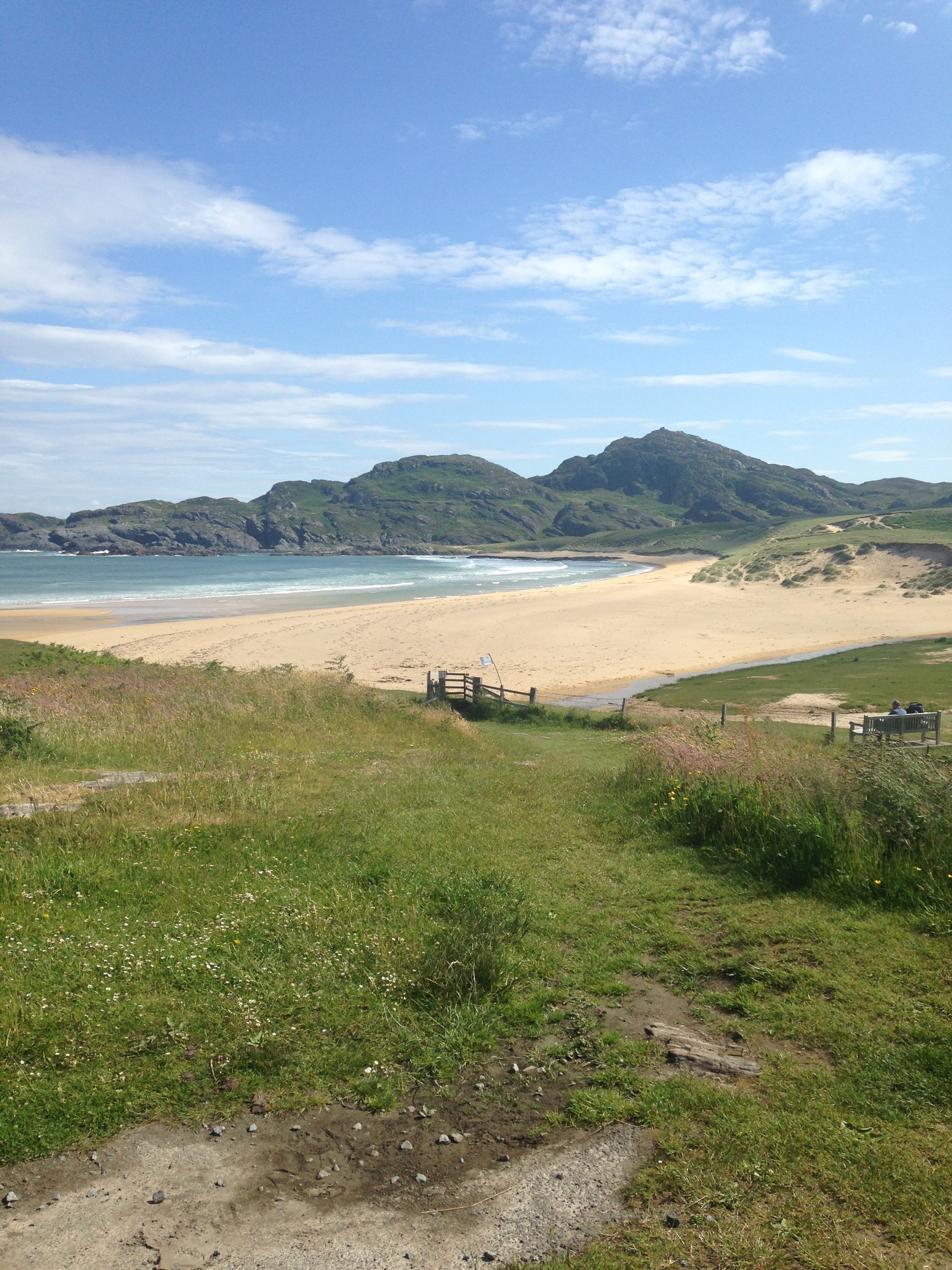
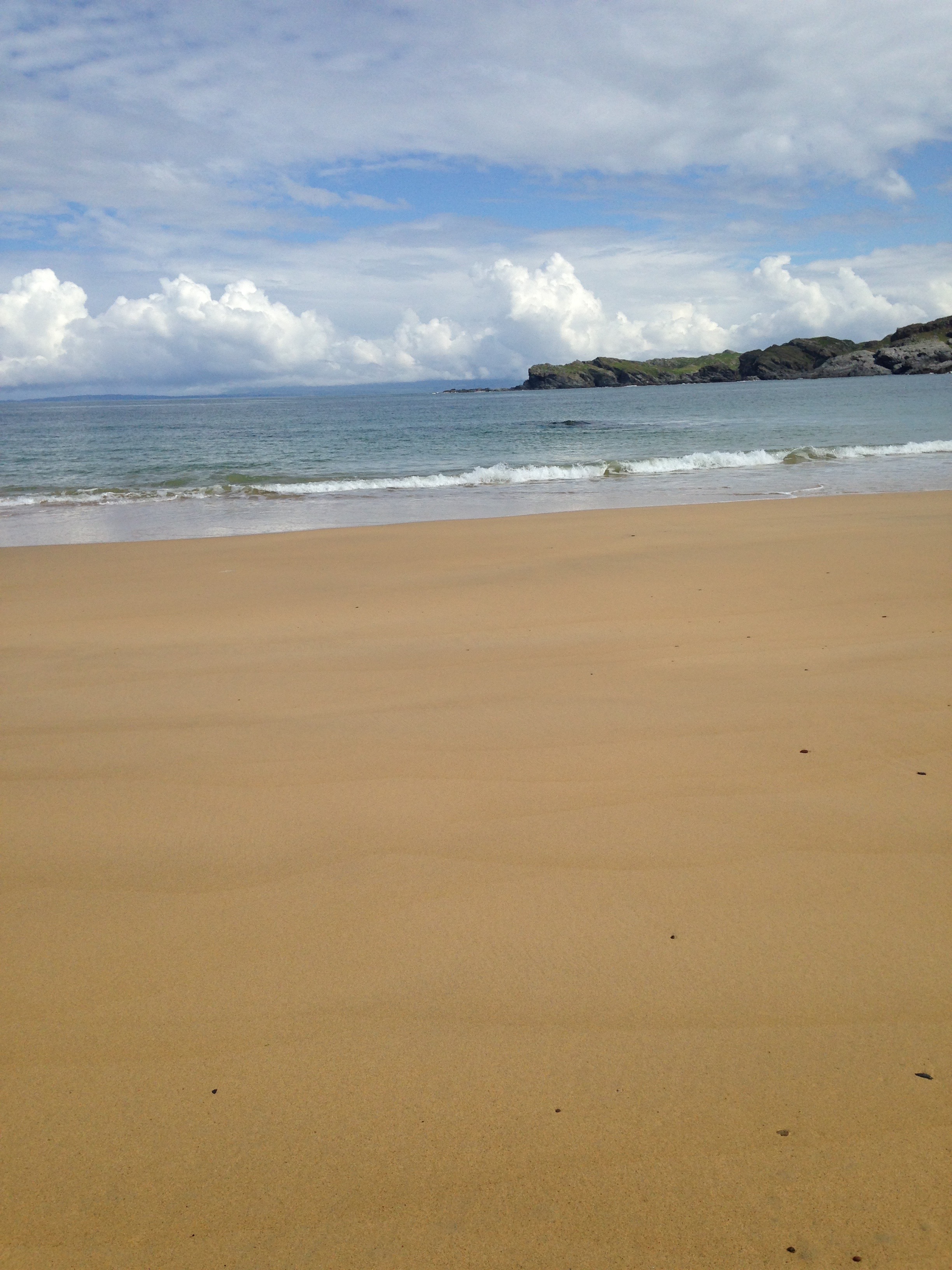
Derek drove us around the island, and we met many of the crofters, polishing their tractors, content to stop and pass the time. Kiloran beach spread below us like yellow butter, long and alluring, and totally deserted.
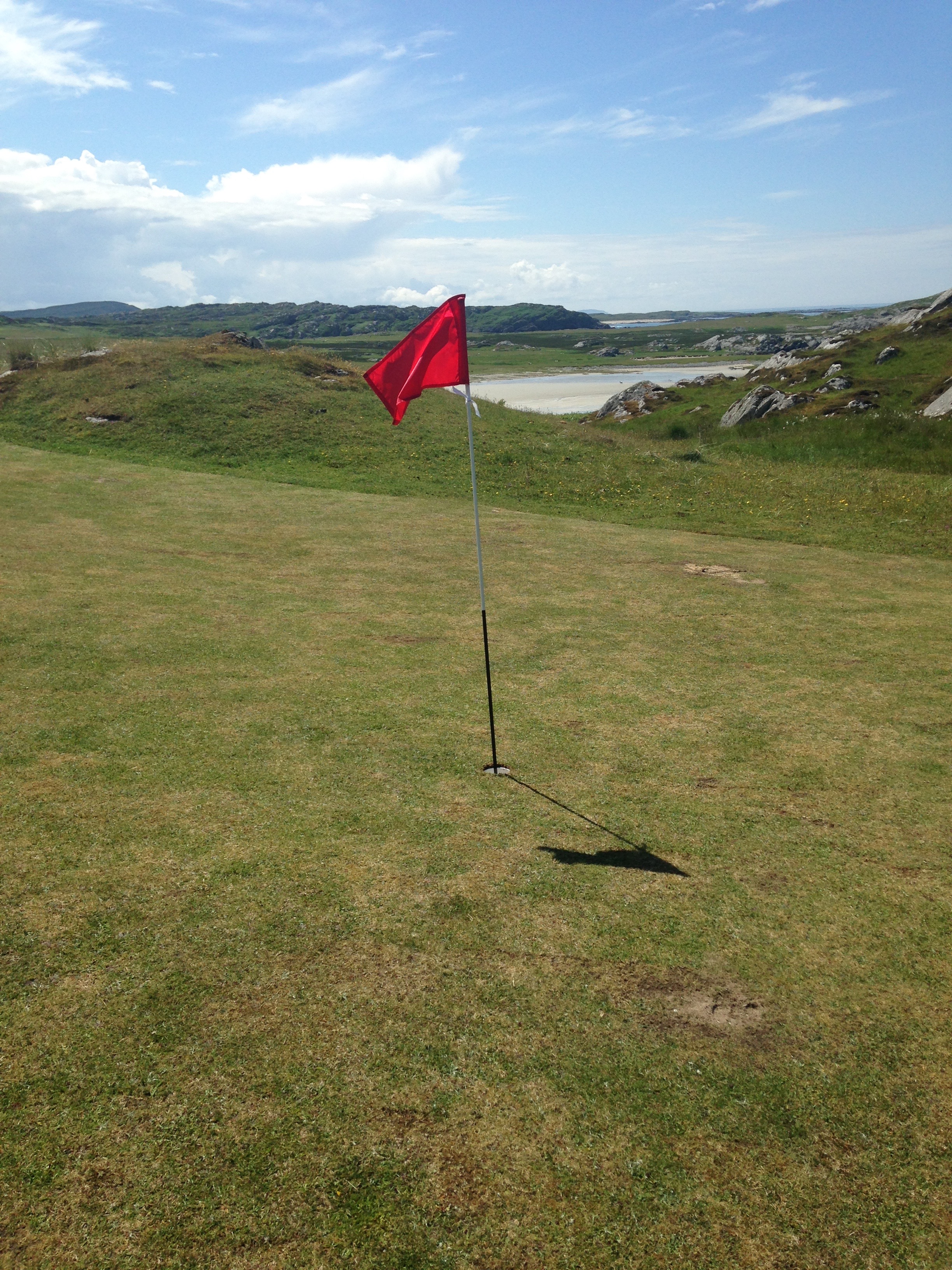
We passed the eighteen-hole golf course, where ravens are a menace, diving for the balls to adorn their nests. One crofter tried filling a blown egg with mustard to see if it would deter the thieves. Our tractor polisher used to carry a shotgun in his golf bag, and he was convinced the smart birds could recognise the threat!
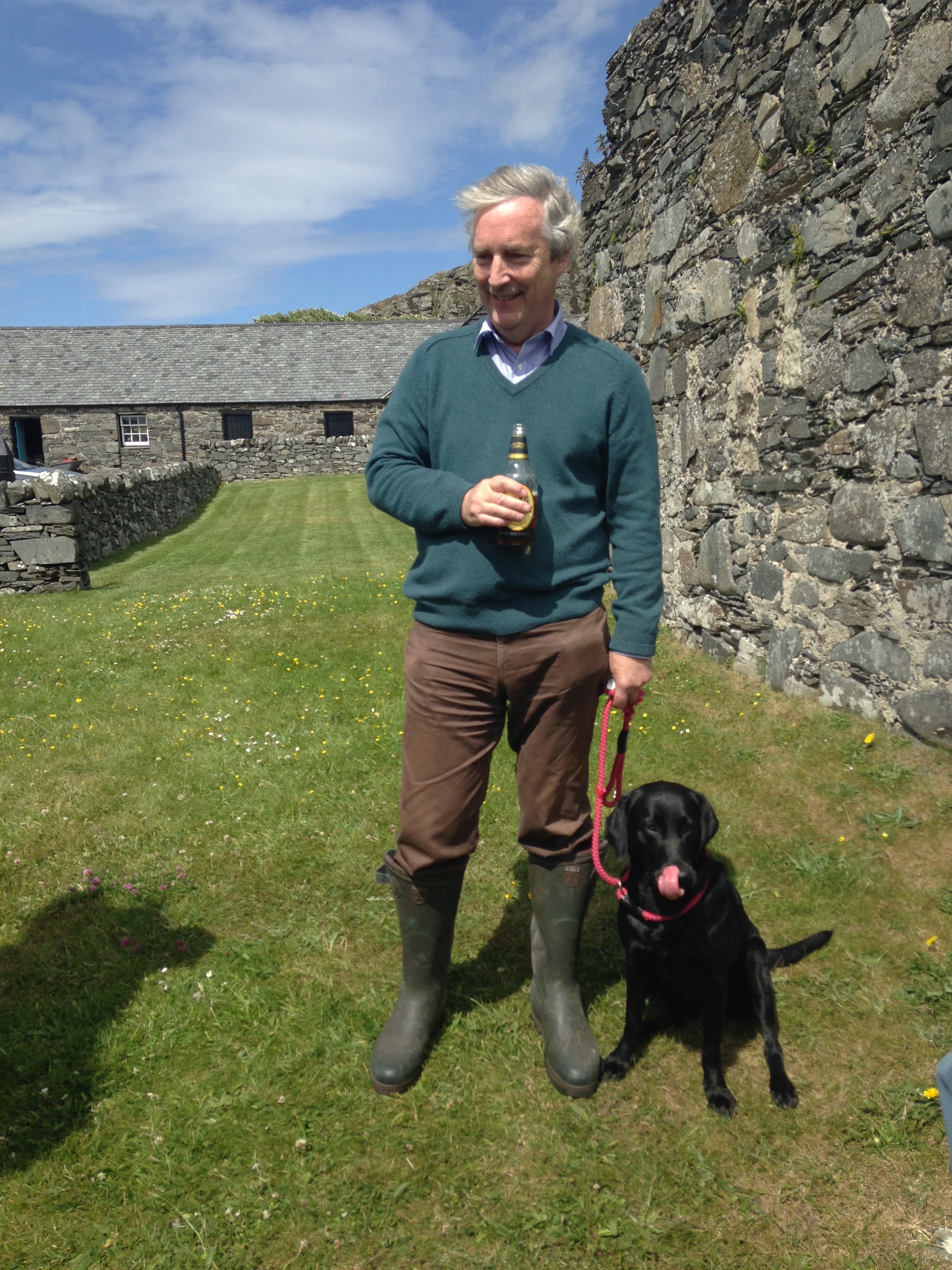
We met up with friends, one of whom was Alastair MacMorran, who together with Andrew, his twin, had spent his childhood on the neighbouring island of Oronsay. There is a window each day when you can make the crossing across the mile-long sands, and we headed to the ancient priory where we saw relics and crosses and stones.
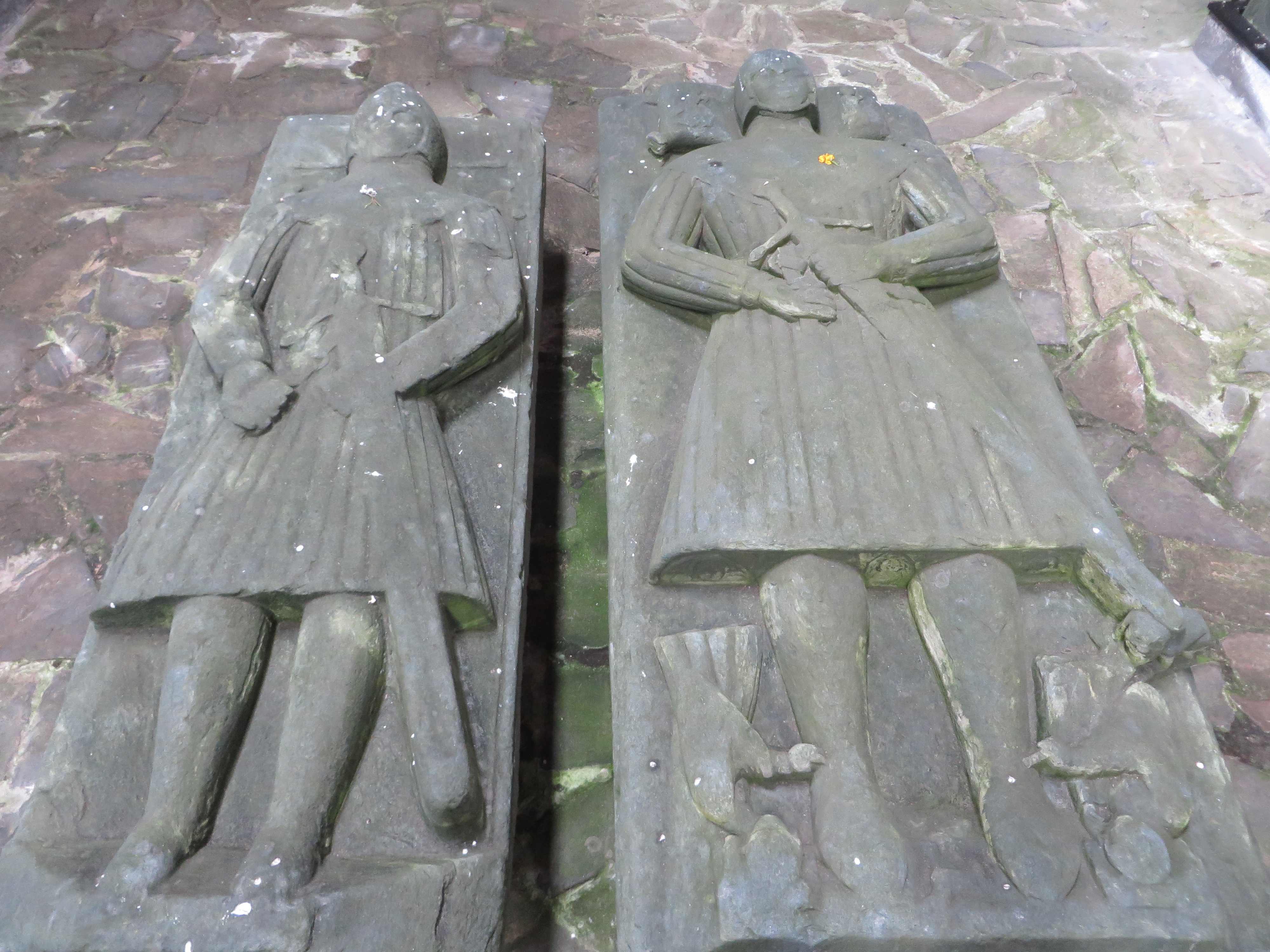

Many of these beautiful artefacts were made at the same time as Michelangelo was painting the Sistine Chapel. I ate my sandwich in the shadow of the giant cross, the markings as clear as though created yesterday, and the man of sorrows stared down.
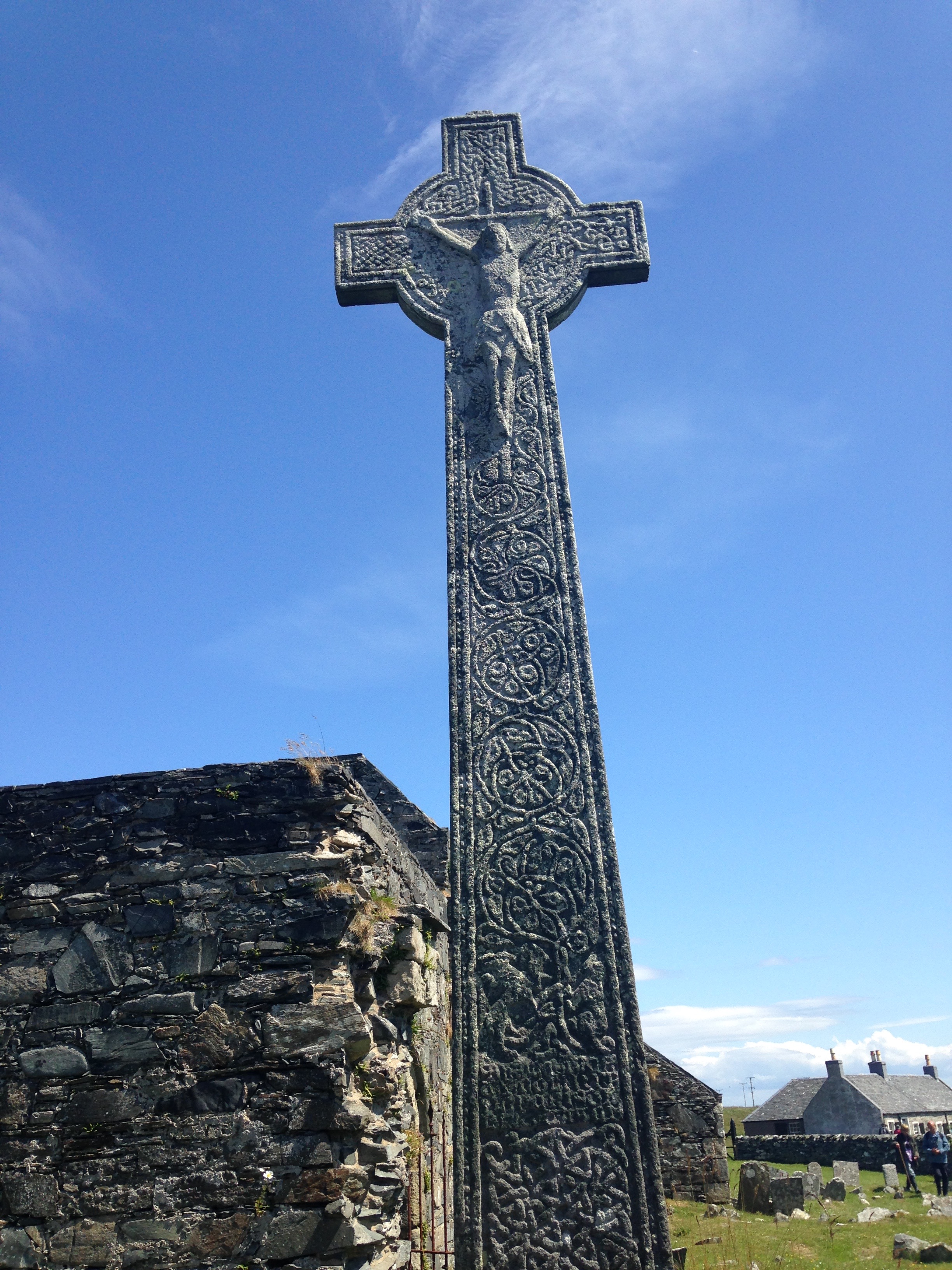
Gordon joined me and we jointly despaired at the horrors of growing older and forgetting names and so on. He said he tried to combat this by learning a song or poem every week. Suddenly, without warning he lay back on his hip and recited Joan Baez’s song, Diamonds and Rust, that she wrote to Bob Dylan. I was at a loss. The man of sorrows and I were a captive audience!

I am not an expert on birds. They flit about and to be honest unless they are magpies or robins I just see a twitch of colour and they all look much the same. But, when someone tells you a story, you might look for a splash of white, for example the wheatear got its name for having a white arse, OK, I might remember that. And the corncrake, which enjoys singing in the dead of night, keeping everyone awake, I will remember because of Alastair’s story of his granny. He remembers her shouting (but unable to actually swear) and waving her petticoats at the birds in the middle of the night, ‘Away you daughters of bitches!’
I feel a little in tune with Derek, who modestly disclaims any knowledge of wild flowers, giving himself the Indian name of ‘Knows three flowers!’
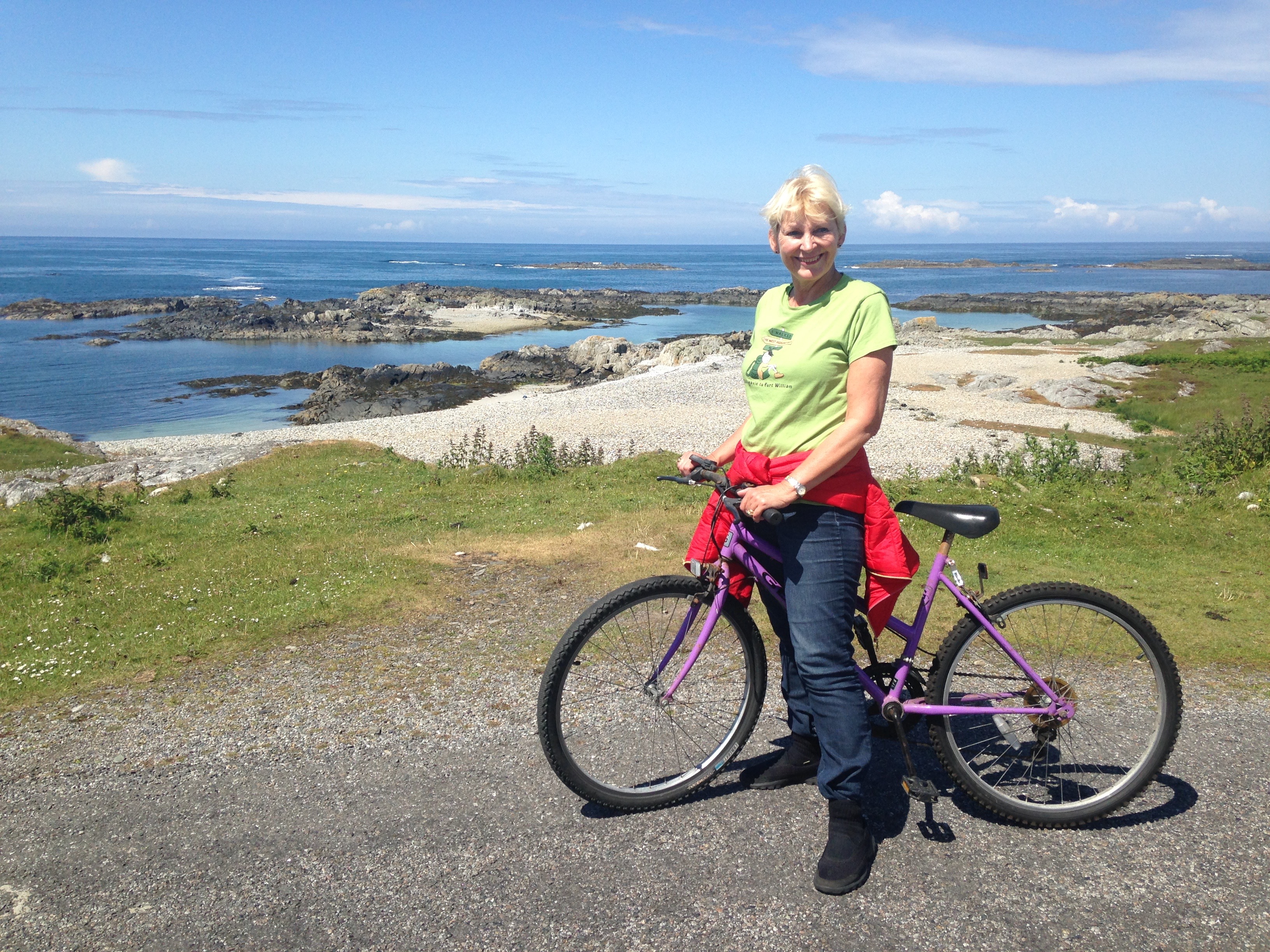
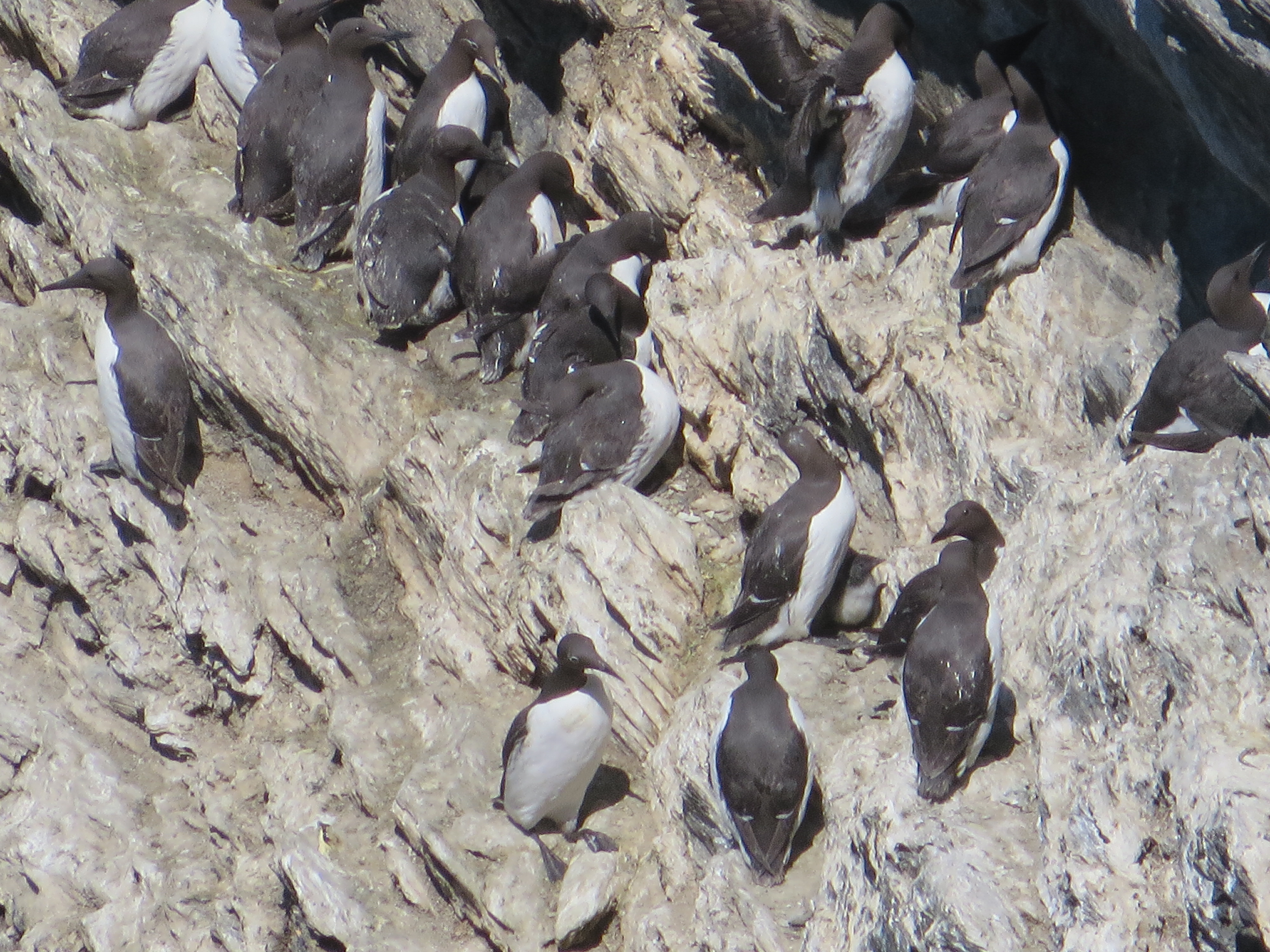
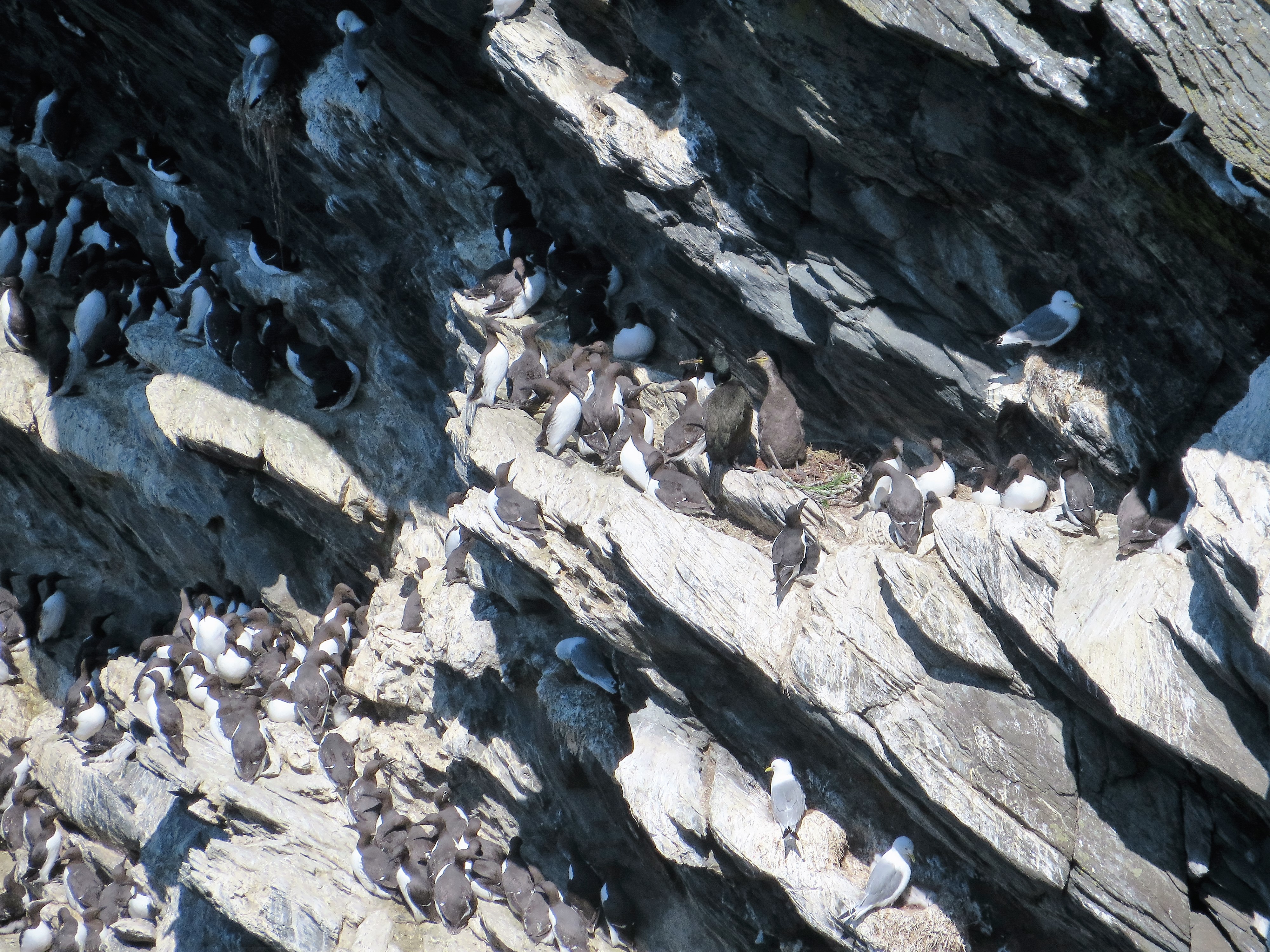
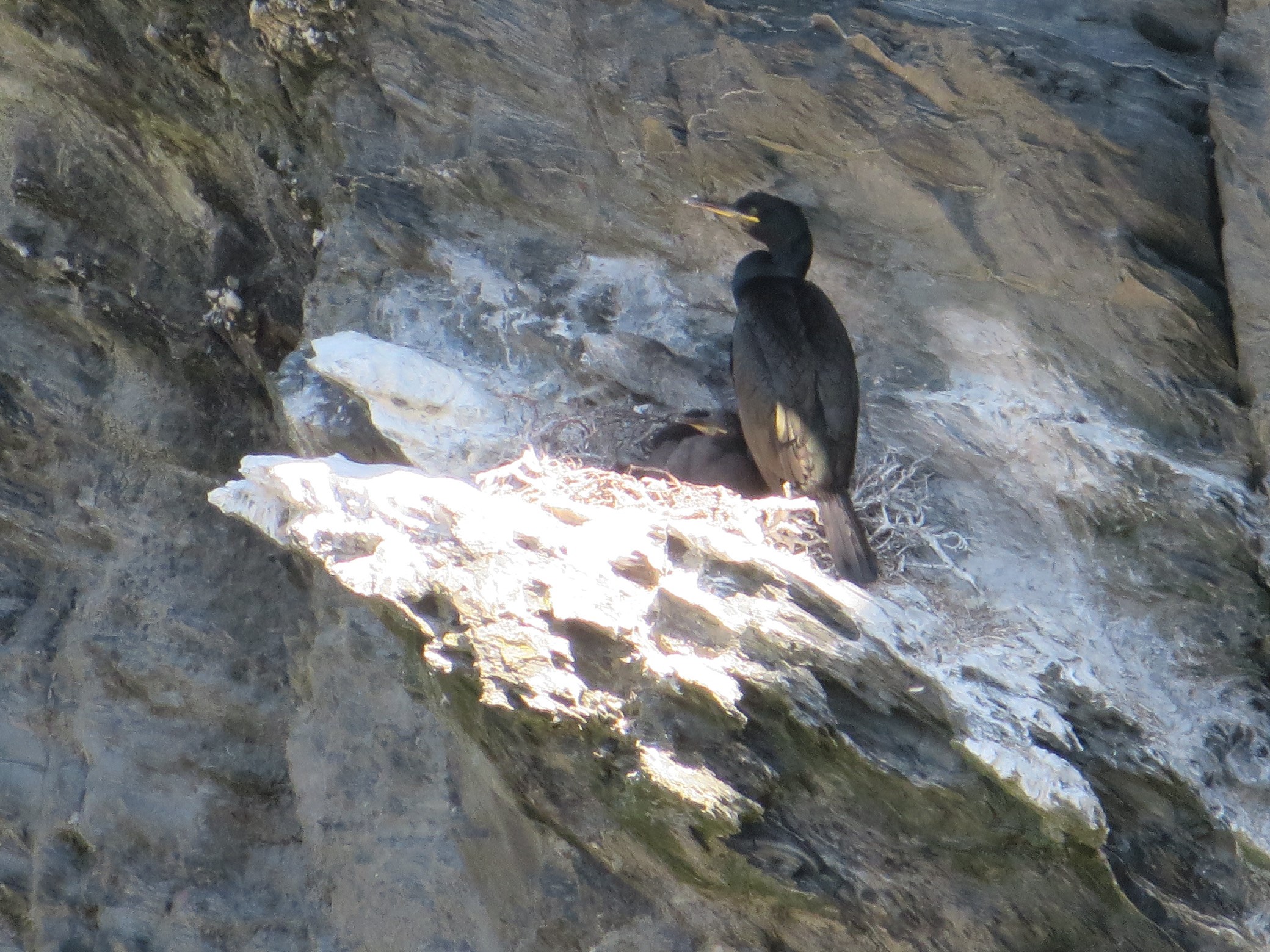
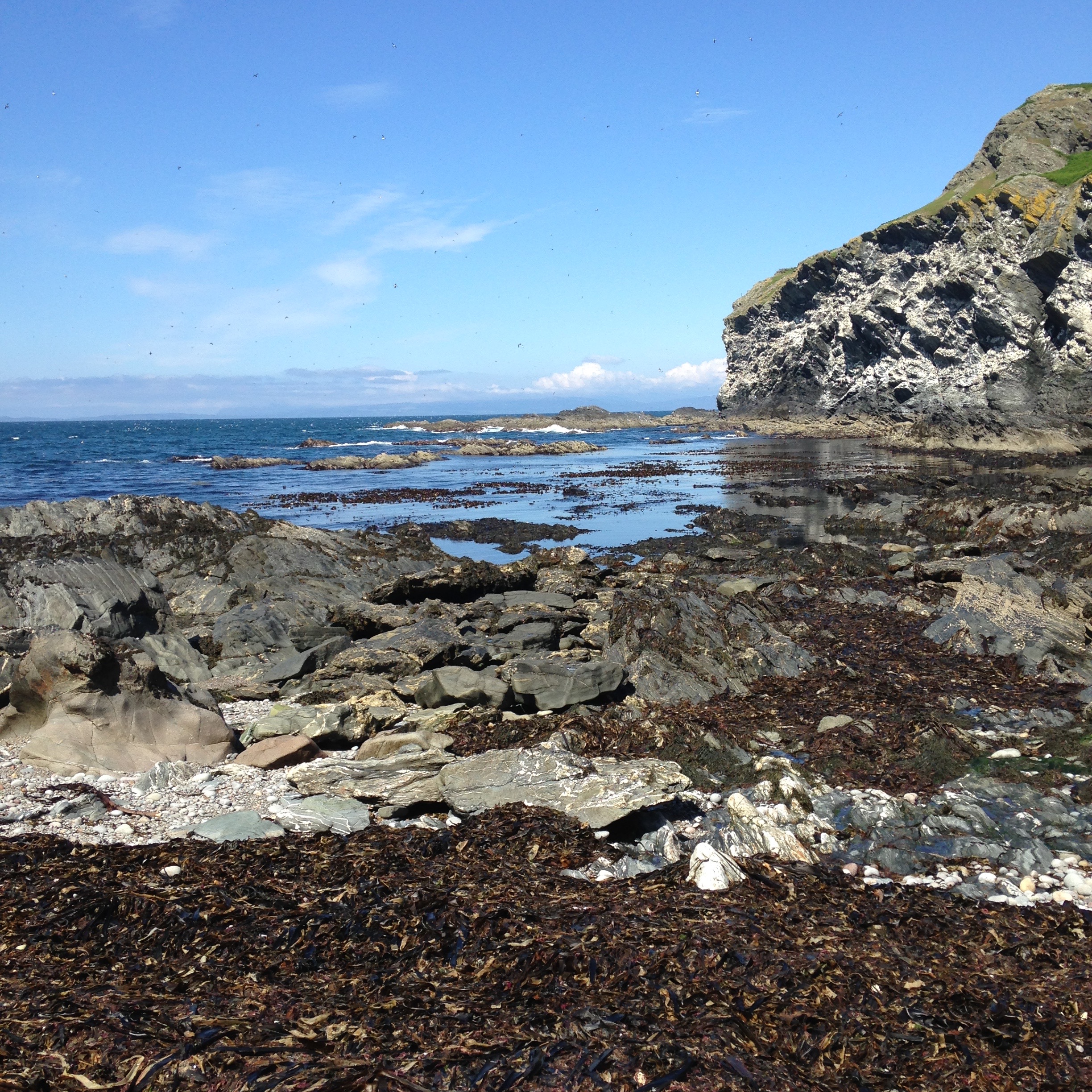
John and I cycled around the island and later went on a mission with Derek. He took us to visit the remote cliffs of Pigs Paradise. With only sheep for company we sat and watched thousands of razorbills, guillemots and kittiwakes. Above us soared the fat necked fulmars, who I now know are relatives of the albatross. The young were learning to fly, and it was unbelievable to be so close, and hear the shrieks and cries, feel the breeze, and not be watching television!
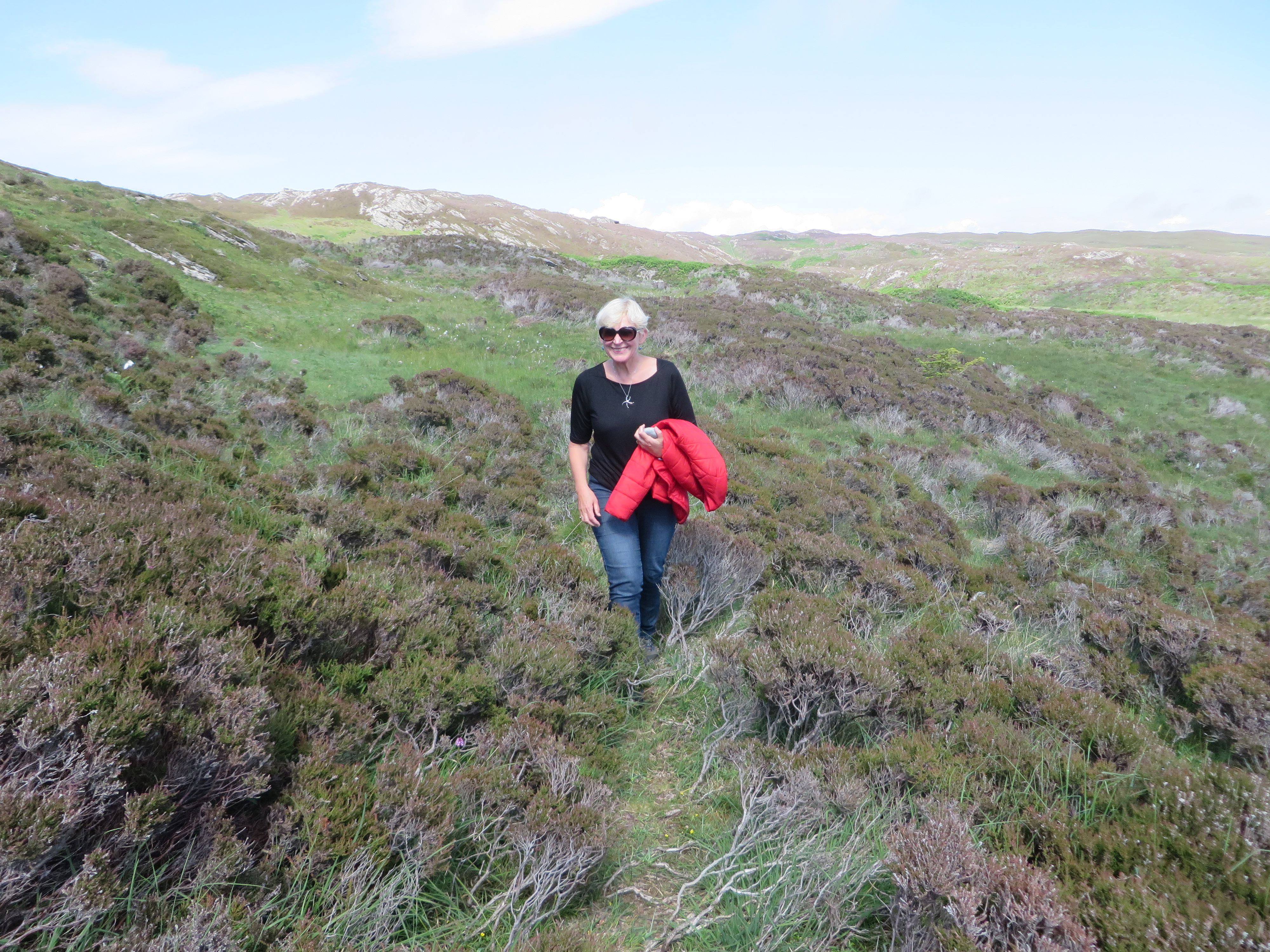

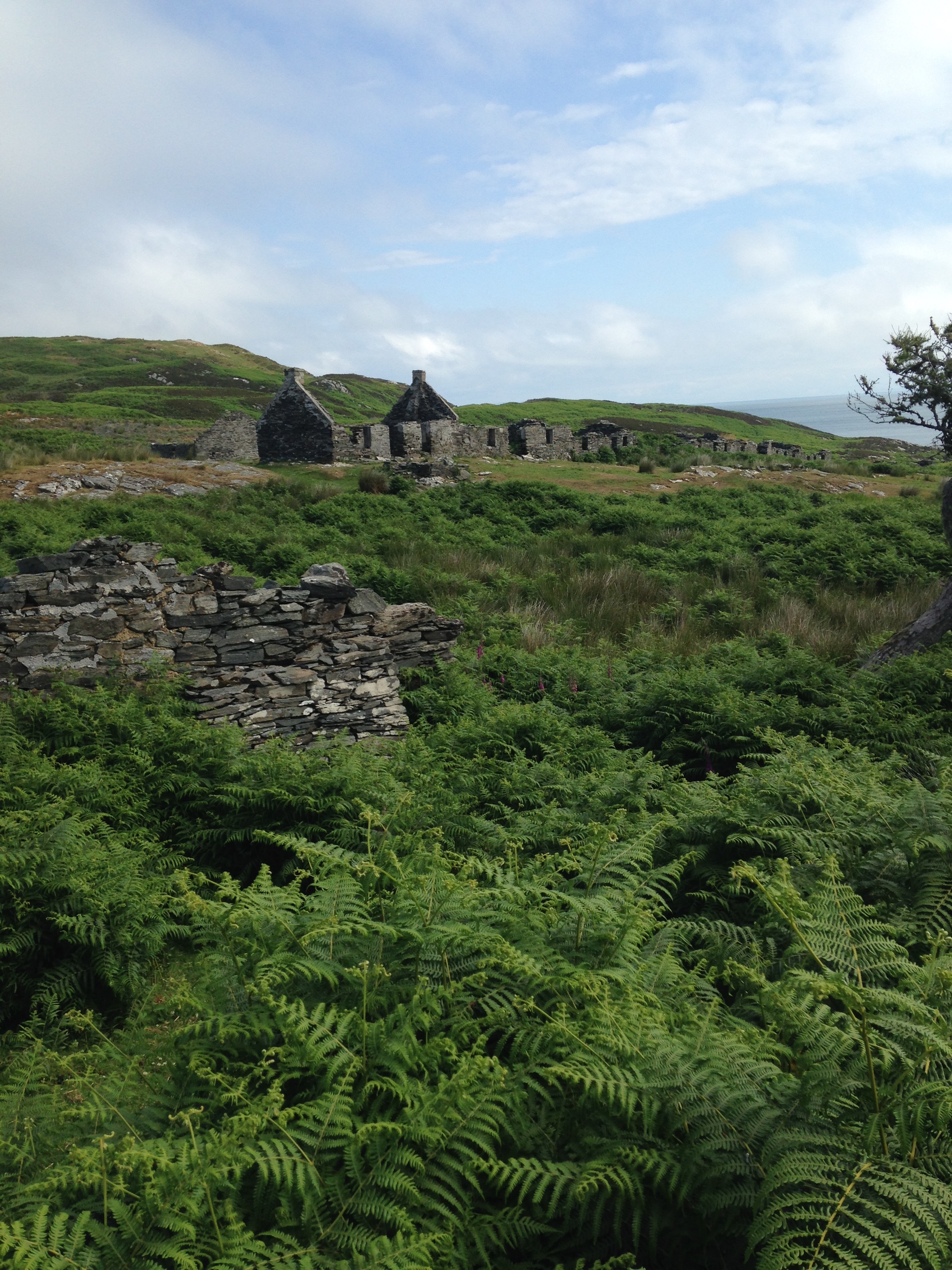
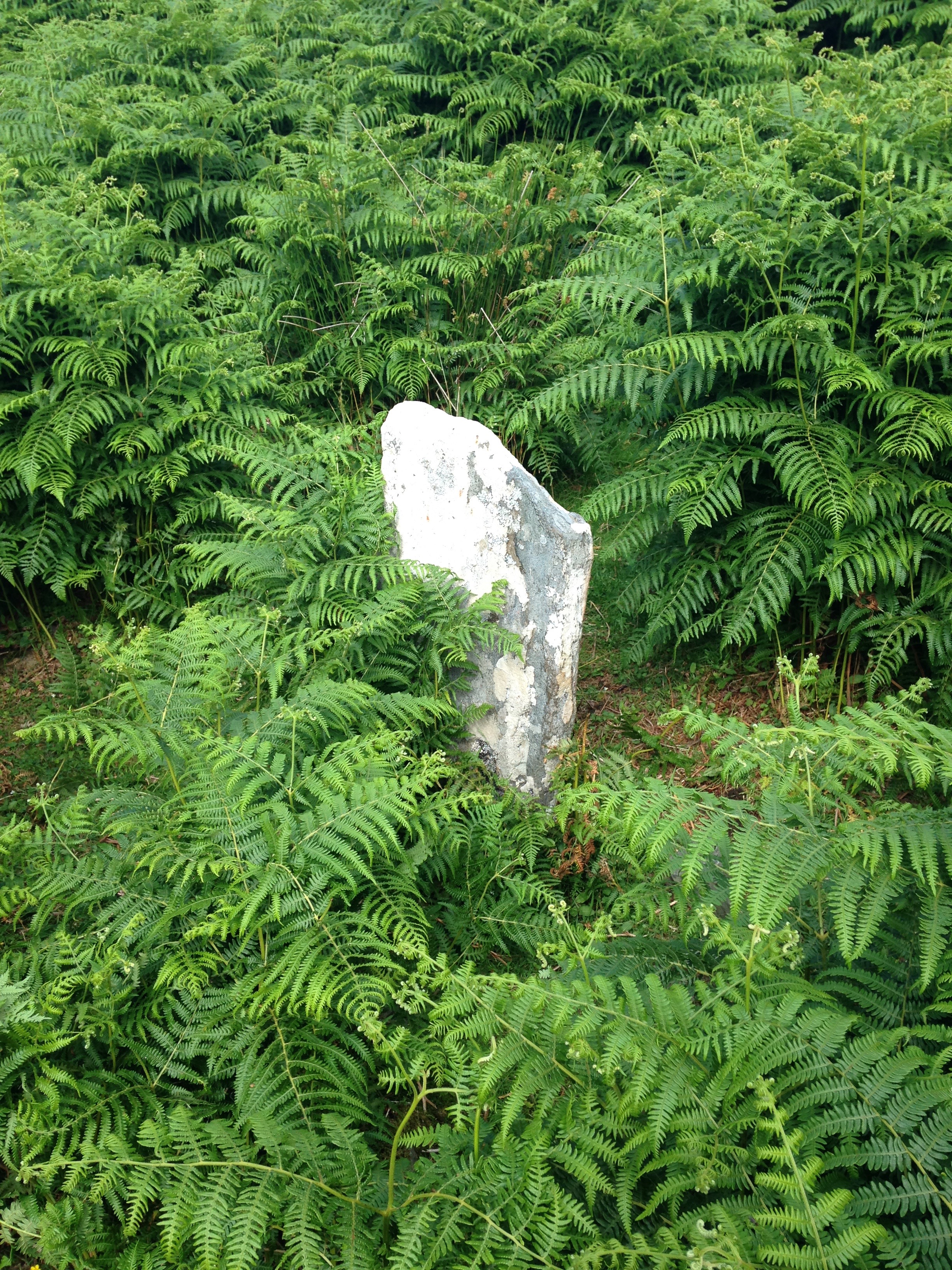
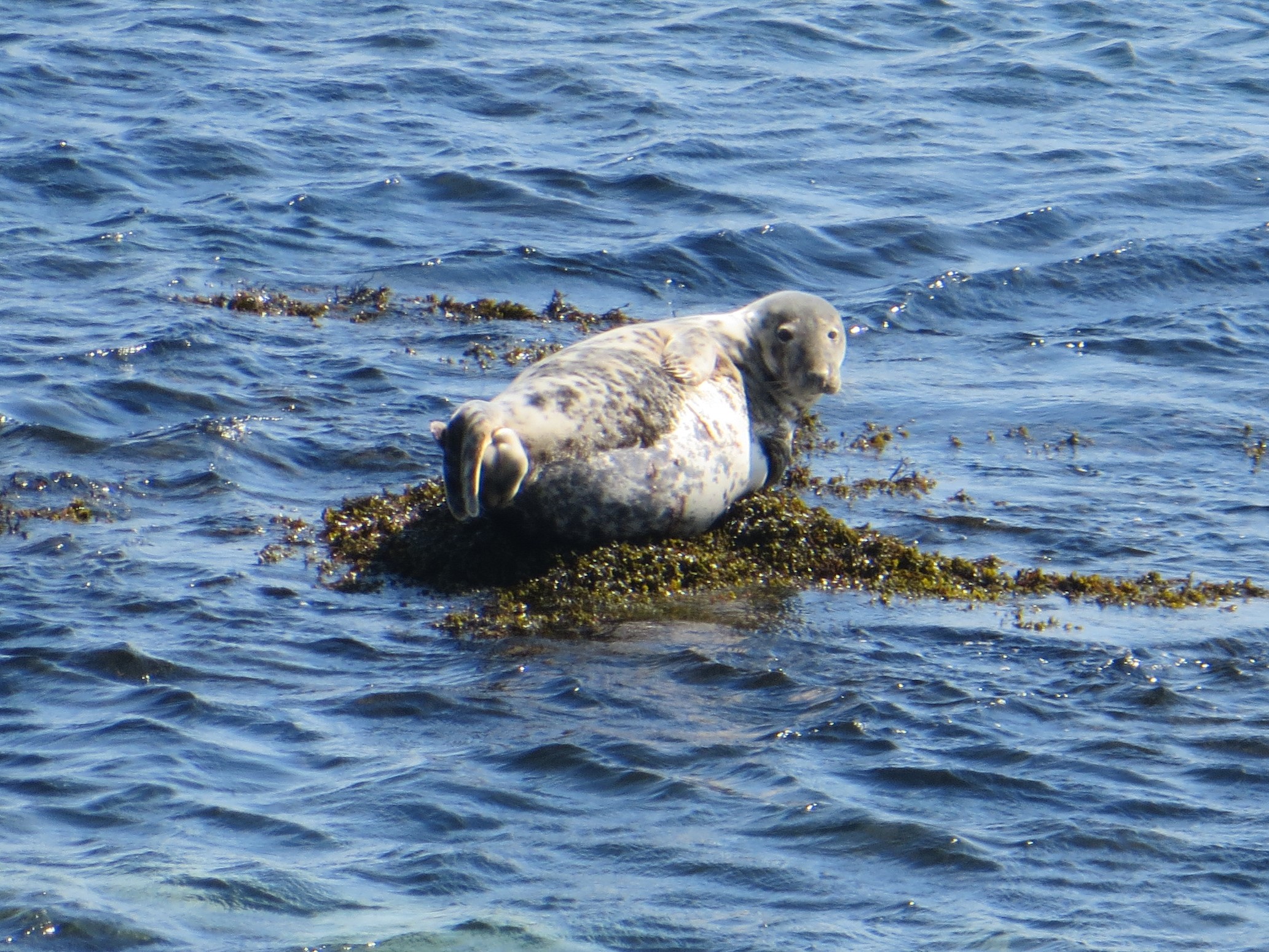
We also went on a mission to see the ruins of the once prosperous village of Glassard that now disintegrates gently amongst the bracken. Gravestones still stand a little way from the row of houses, and below is the sea, always the sea with its seals and otters and eiders and swooping gulls.

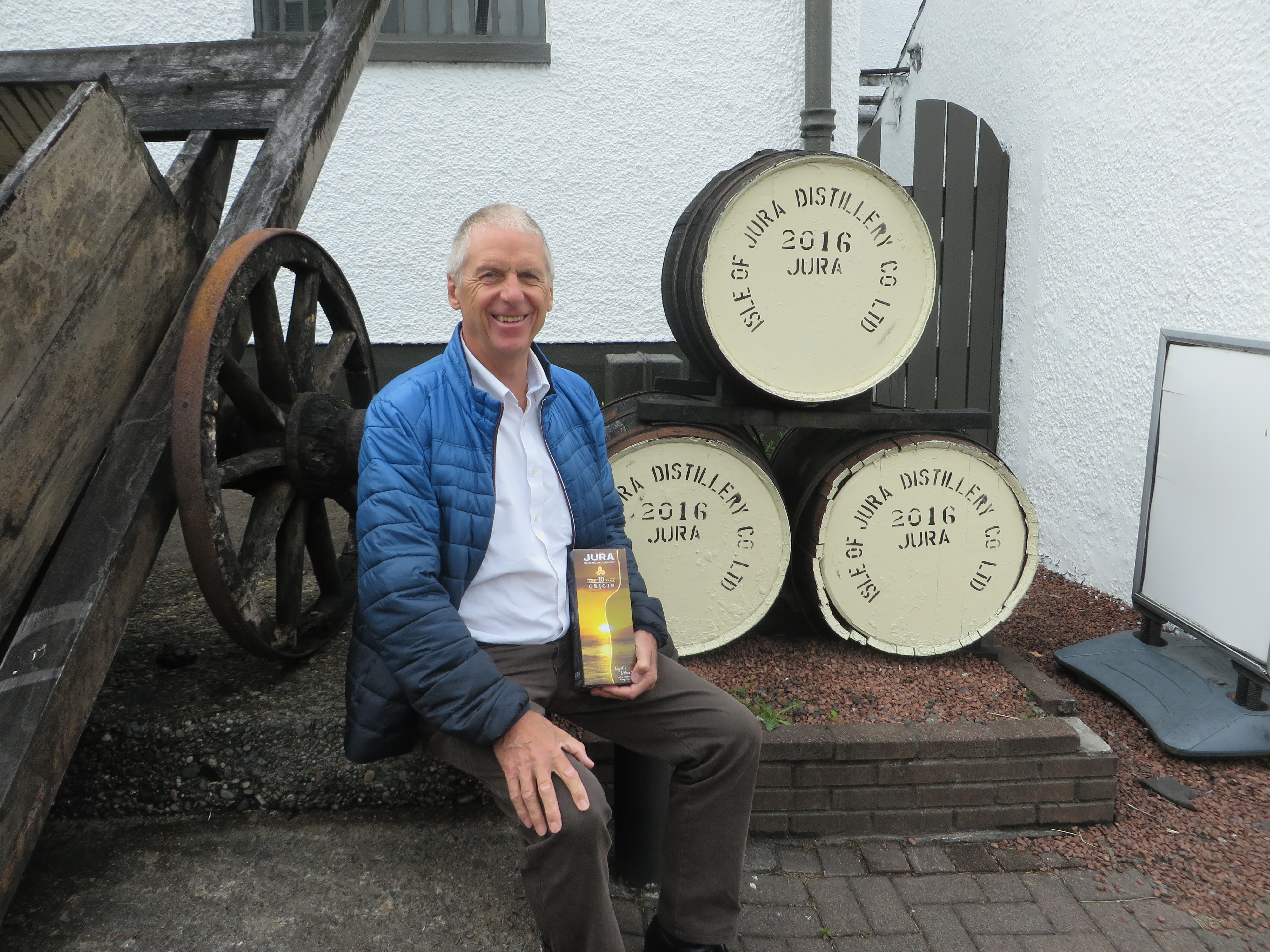
After three days we sailed away to the neighbouring island of Islay, and felt transported to a more industrious island of neat fields of barley, prosperous distilleries. We relished the Angel’s share as we visited the tiniest one, called Kilchoman.
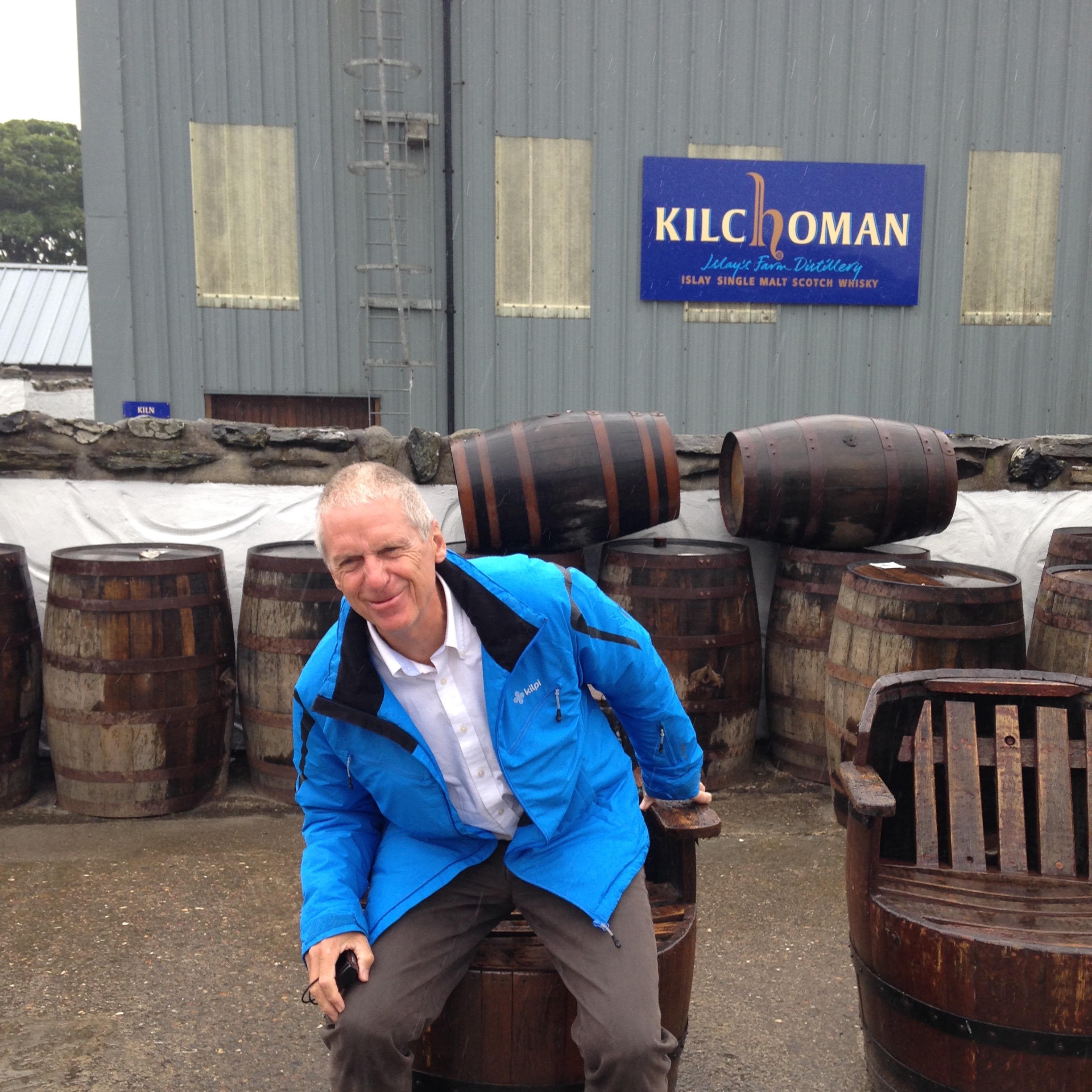

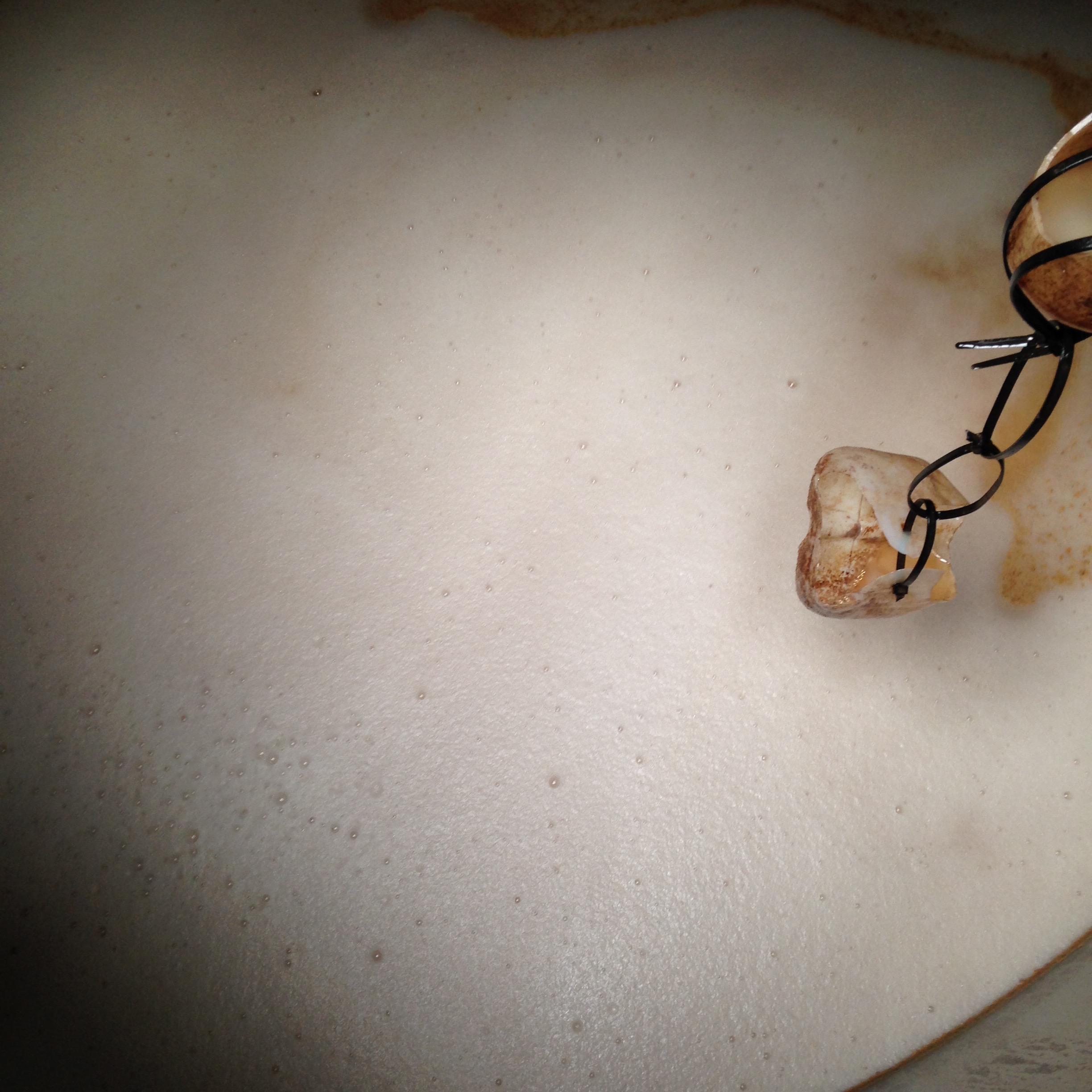

The rain was falling, and where was a better place to spend the time? We looked at copper stills, heard about maltings and washbacks and sherry butts and yeast sugars. I was very brave and sampled a mouthful of white foamy fermentation. It nearly blew my head off. Later John enjoyed the tastings of the various years, and dutifully bought a bottle to add to his collection. We later visited the more famous Laphroaig, Lagavulin and Ardbeg distilleries, and read all the various histories. I had to laugh at this description of someone’s first impressions!!

Away from the thriving whisky world we drove up the east side of the island. John ventured out of the car to sniff the fresh winds, and was immediately dive bombed by a flock of terns. Their young were nesting in the stony beach nearby and no human in his right mind should venture forth!
And finally Jura. Ah! Wild, beautiful Jura.
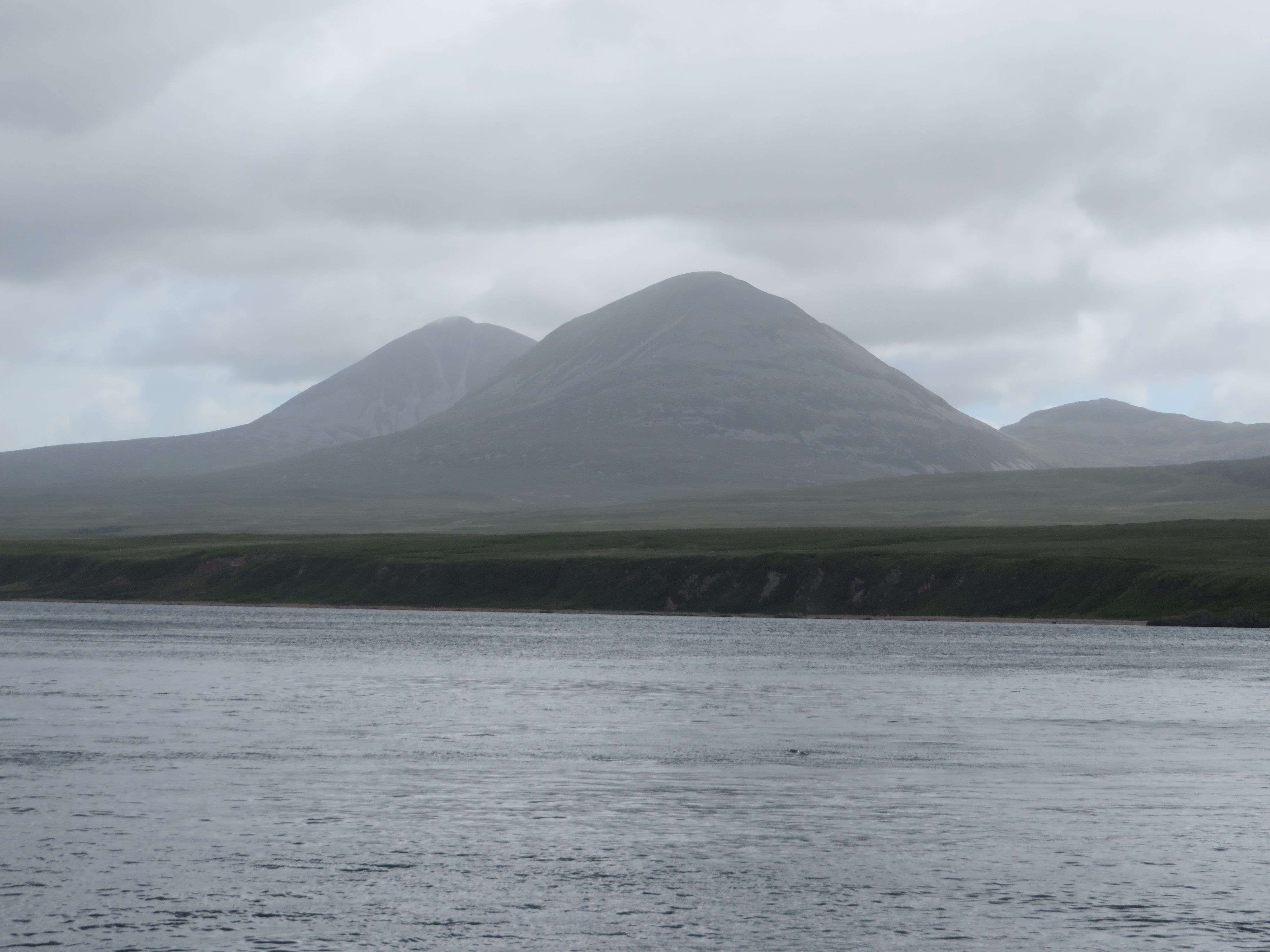
The only real civilisation is clustered around the palm strewn hotel and distillery in Craighouse.
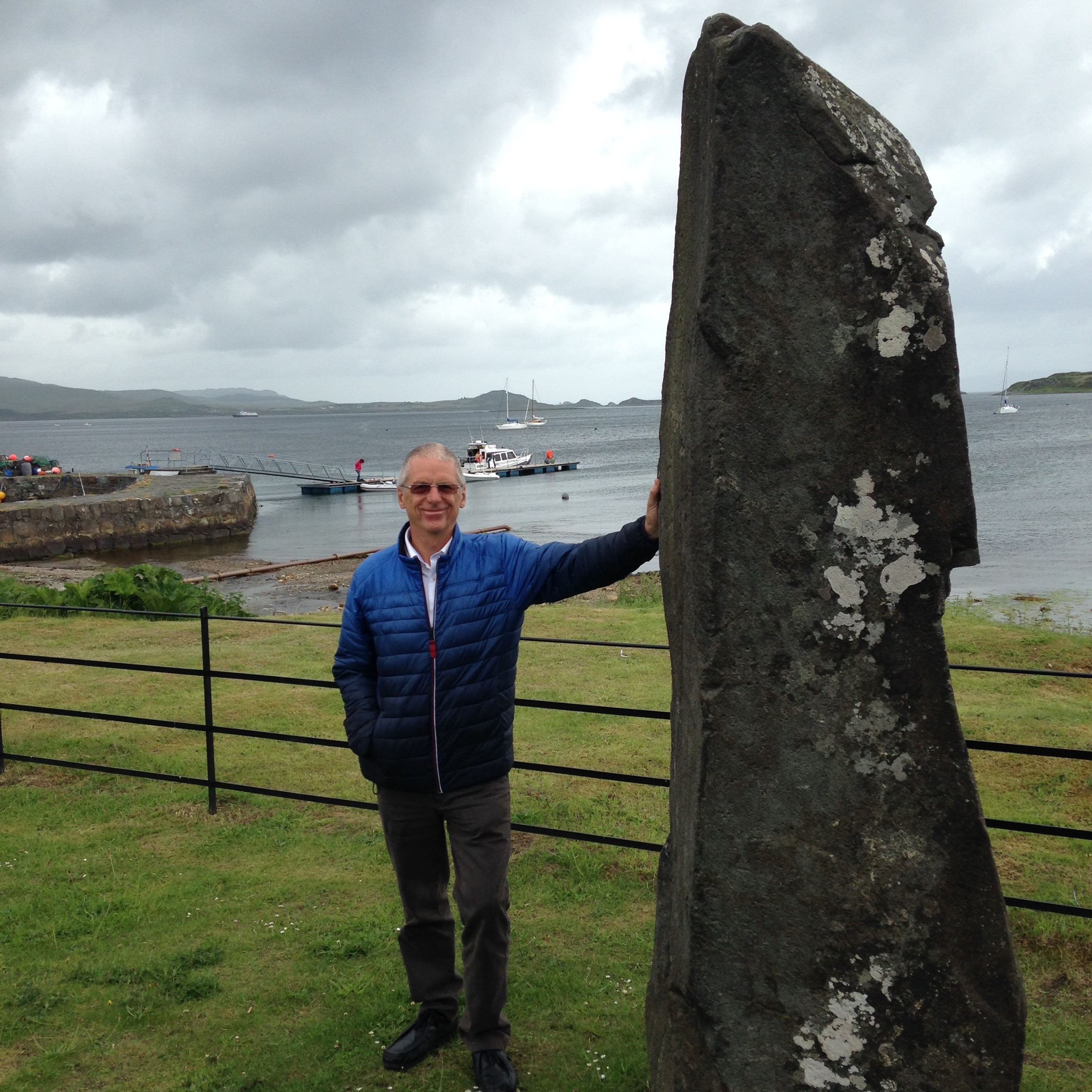
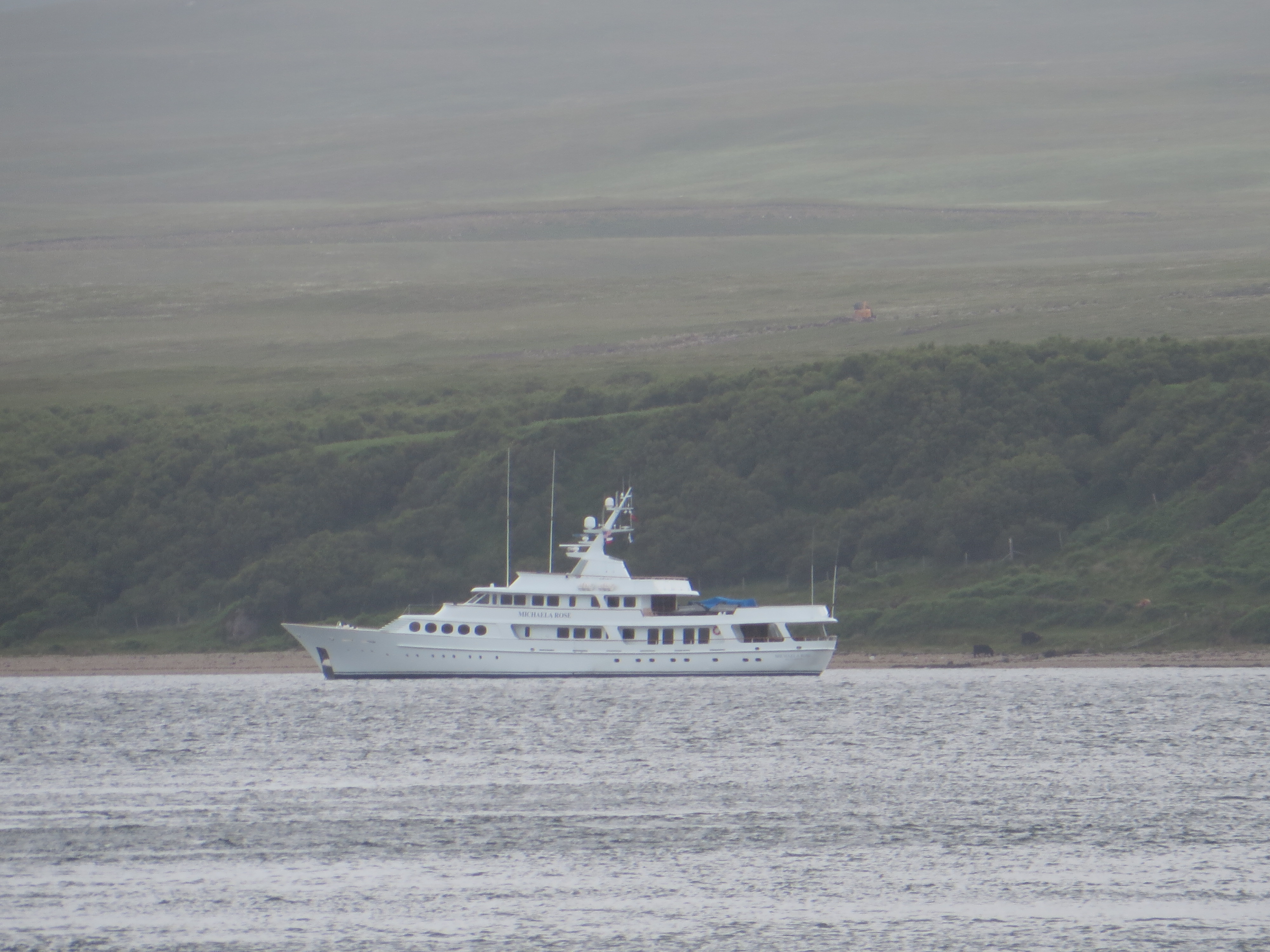
Whilst waiting for the ferry on Islay, we chatted to the school bus driver who was waiting for some Americans that were ‘doing the islands’ on a private luxury yacht owned by a Texas millionaire. From the polished silver and oak furnishings of the yacht, the visitors were going to get a rude awakening when they clapped eyes on Hamish’s bus. He had just done the school run and had to clean out the sweetie papers and what not in preparation!

But for us, after a morning coffee at the hotel, we set off on The Long Road, the only road that goes from south to north of the island. I read from the booklet entitled The Long Road, and passed snippets of information to John as he valiantly negotiated the windy single track avoiding all the pot holes.

‘This is the stream of the Water Sprite or Kelpie, and the stream runs into Loch Losguinn – Frog Loch, and now we were passing the The Round hill of the Ticks, and here is the Rock of the Leap’.
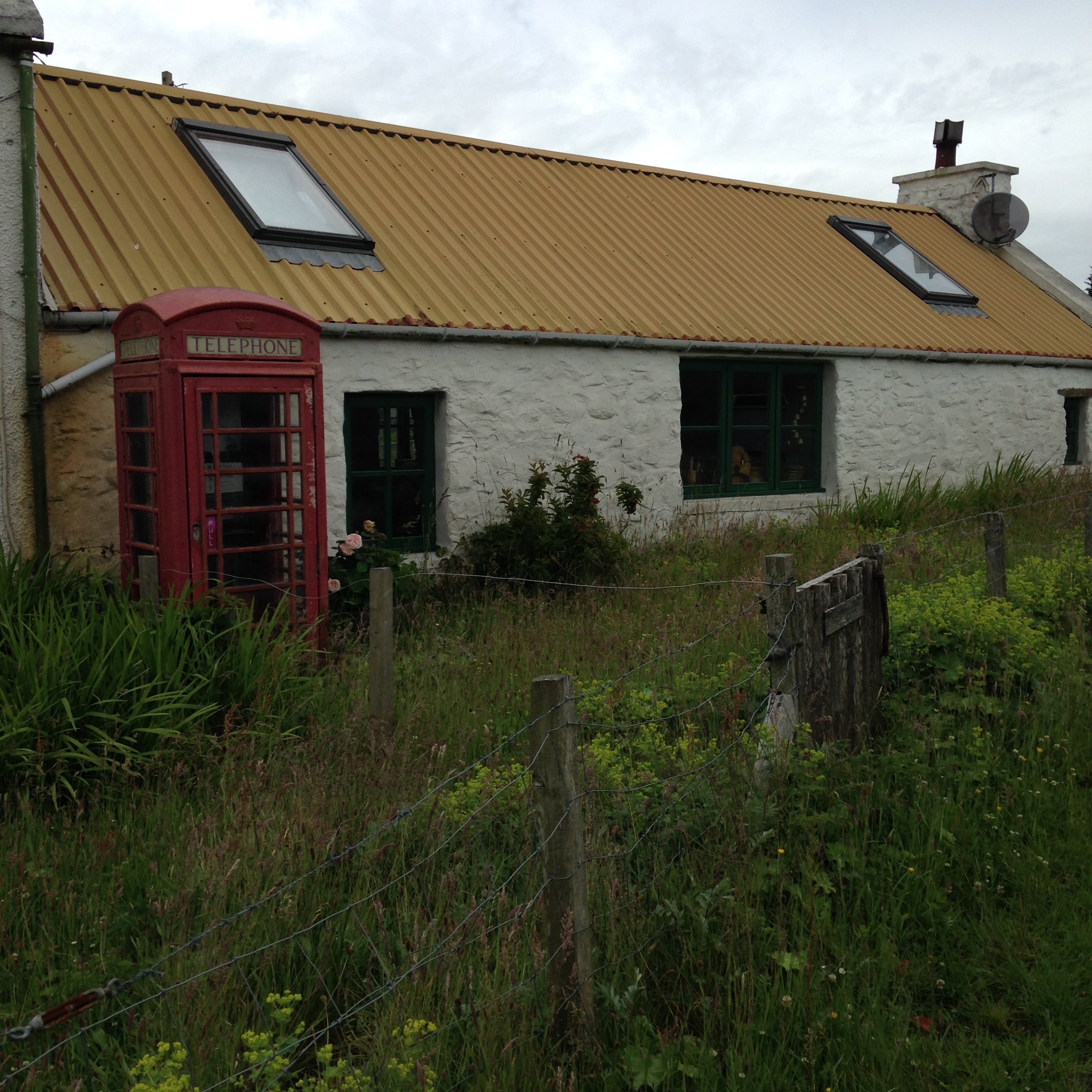
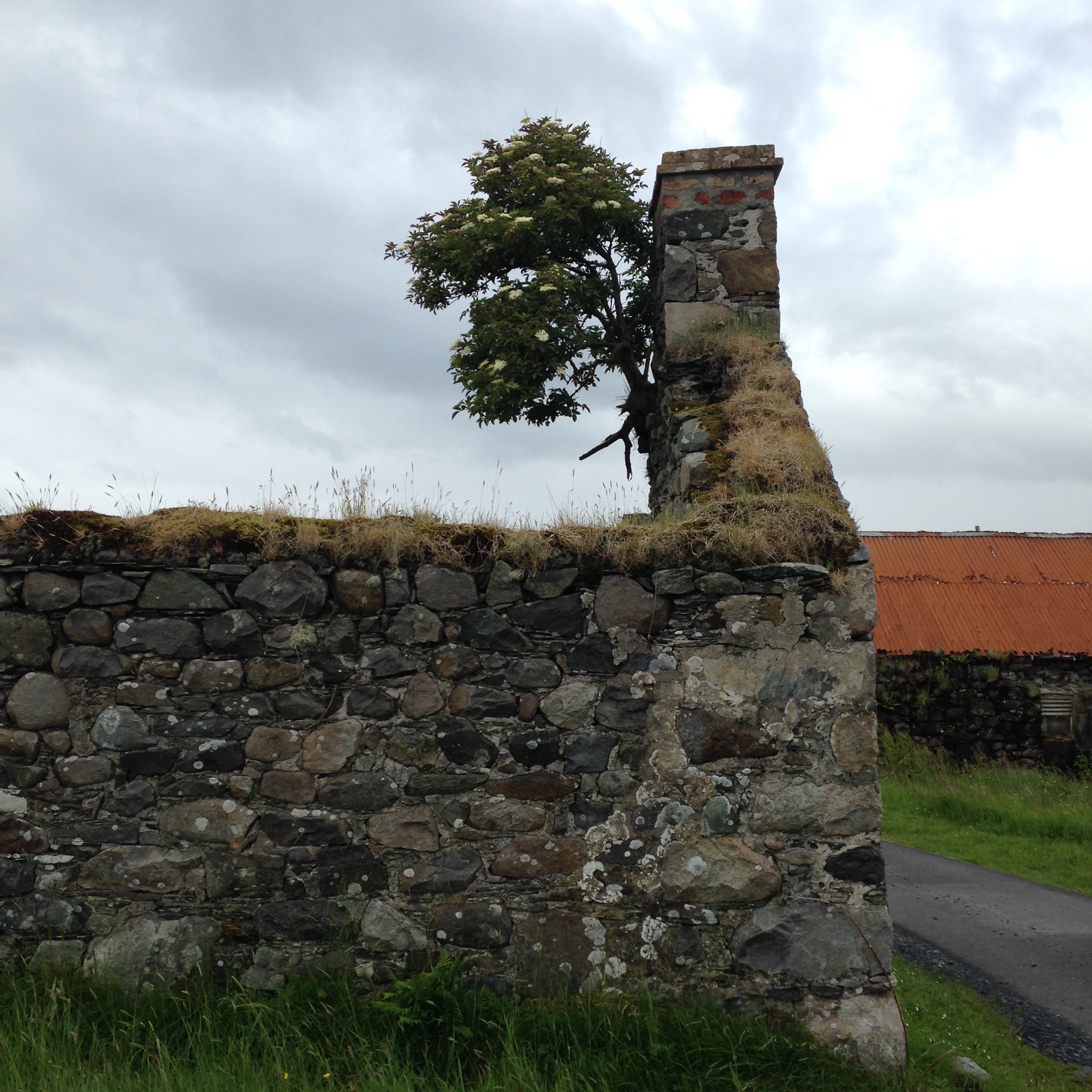
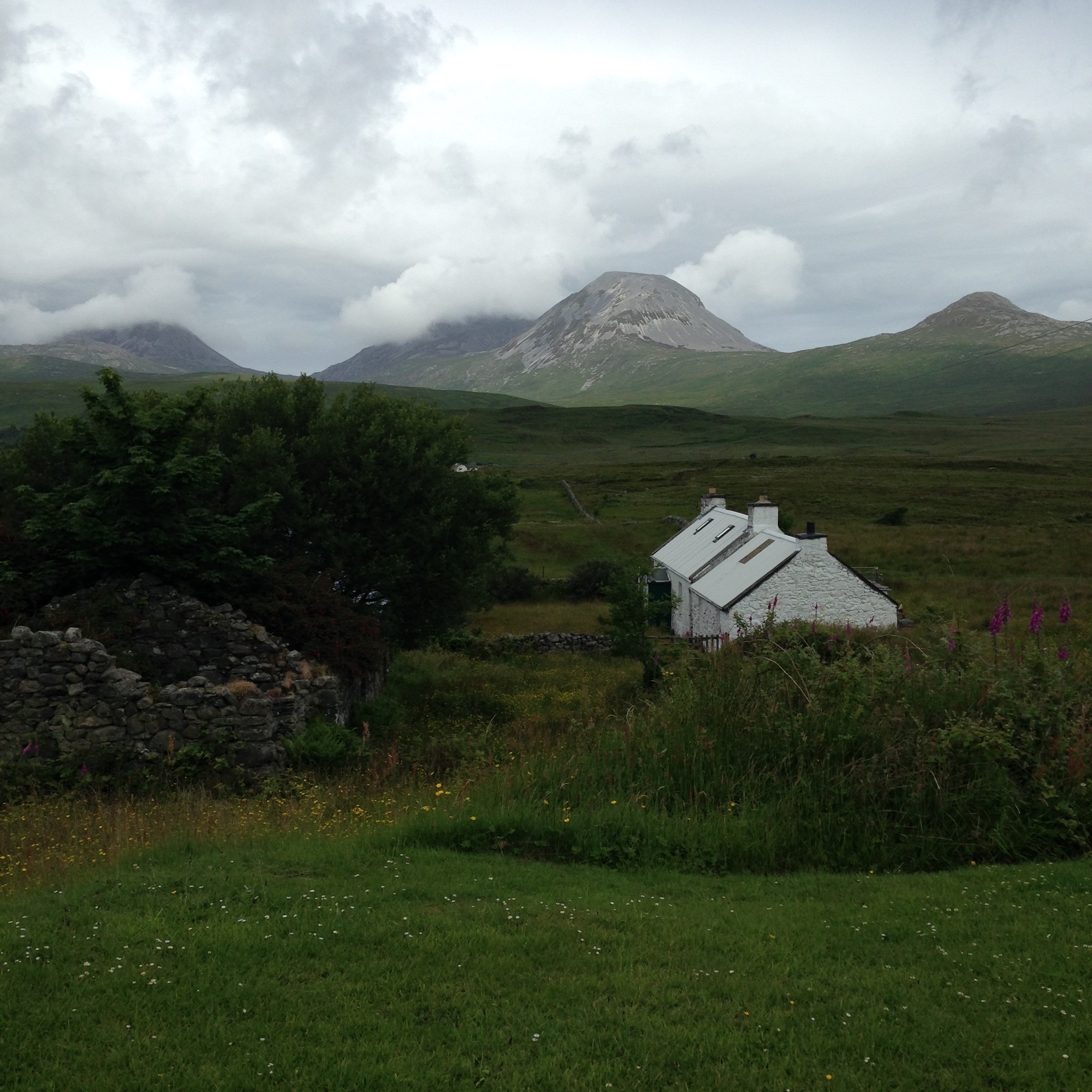
I photographed a house with its own public telephone box in its garden, a chimney with its own rowan tree, and loved the foxgloves growing beside flag lilies. The countryside was wet and boggy, swathes of bog cotton looked like snow on the hillsides, and the Paps towered above, their tops obscured by cobwebs of mist. Only the scree running down their sides looked dark and dangerous.

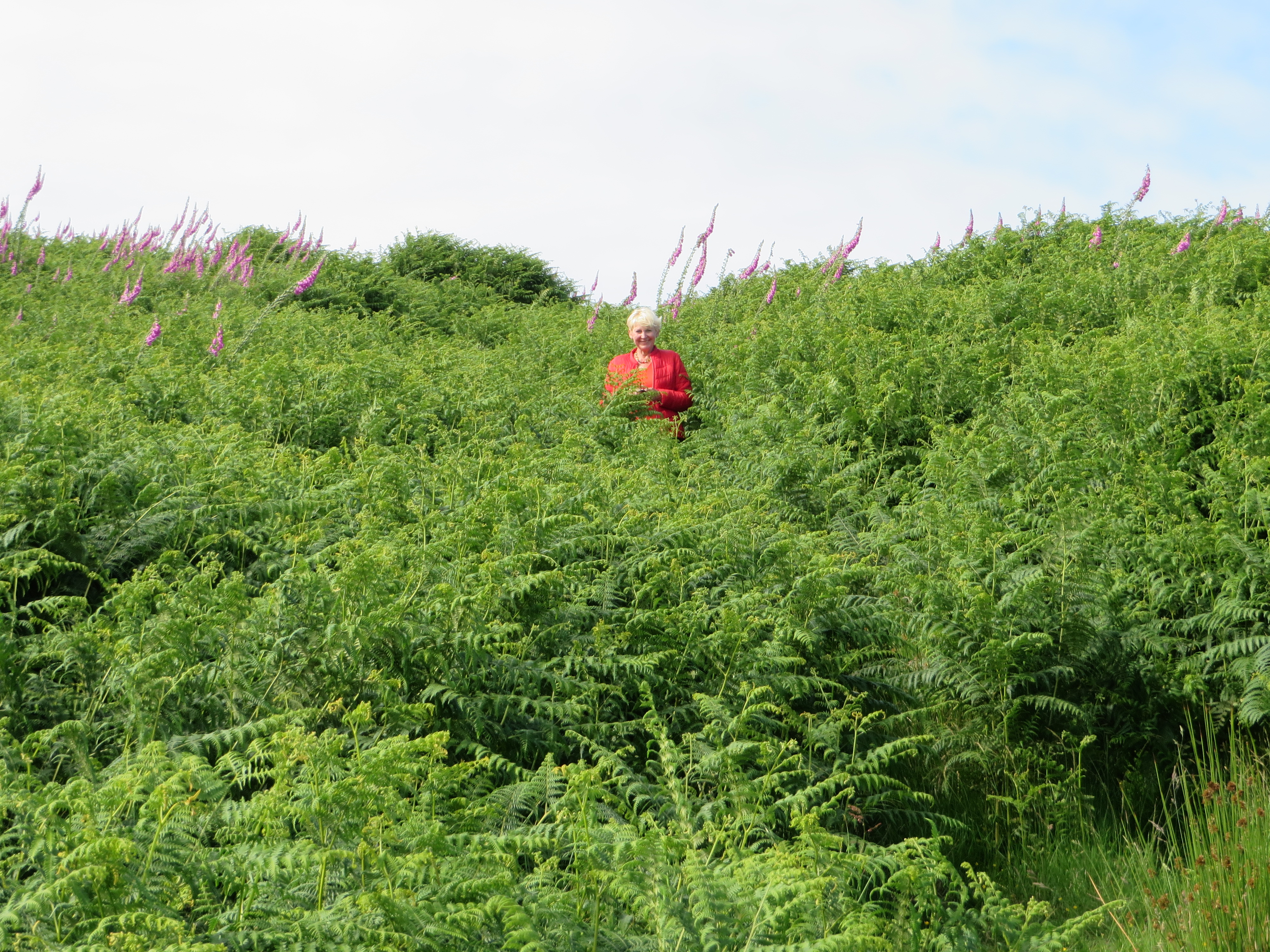
Our mission was to see George Orwell’s house at Barnhill. We had to leave our car at the end of The Long Road and do the rest by foot. Four miles of relative easy walking brought us to the house, where Orwell wrote ‘1984’, and lived there in the 1940s. It was a beautiful spot, the house looking straight out to sea, and all around the foxgloves nodded, some actually seeming to march across the hillsides.
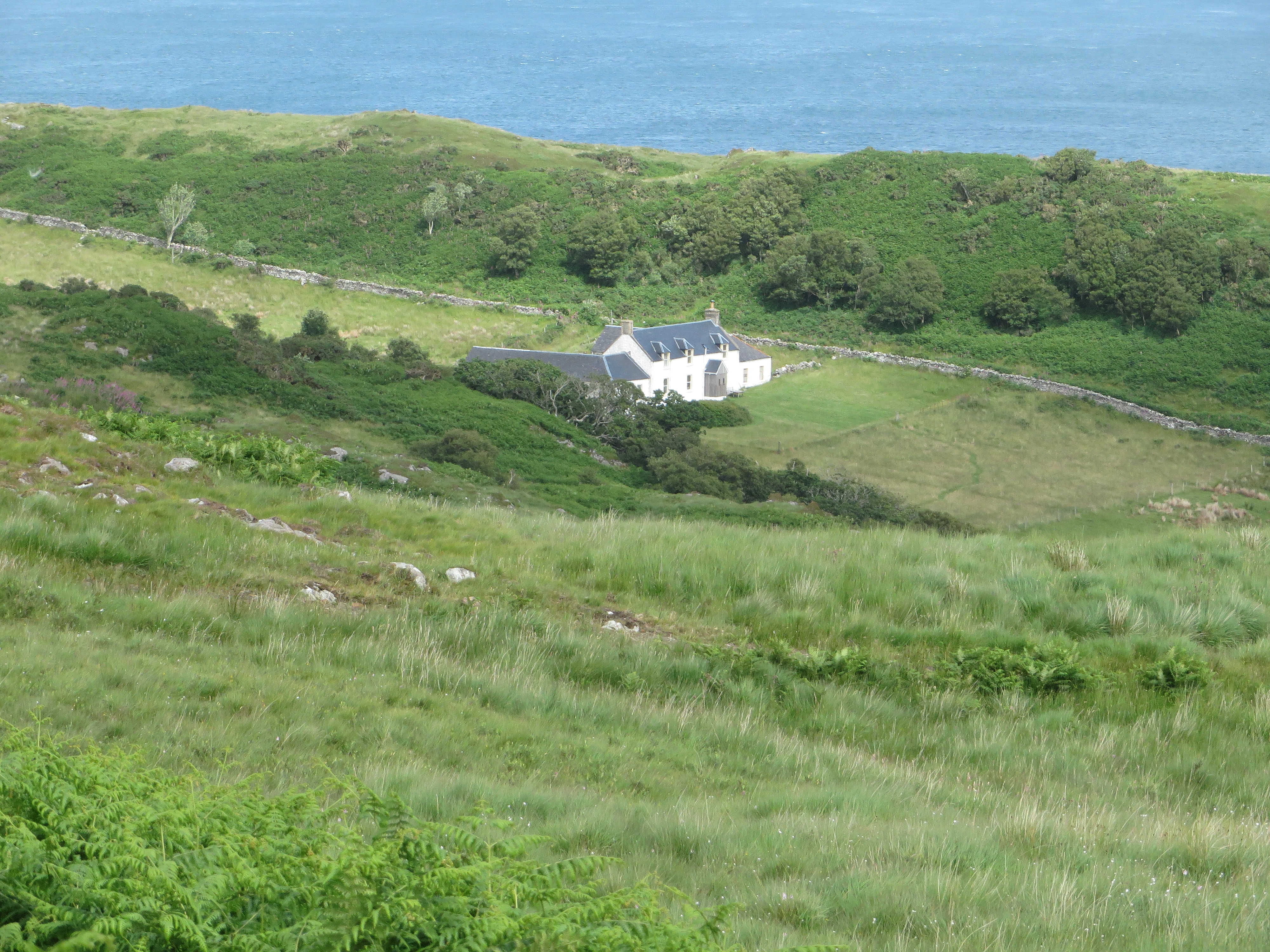
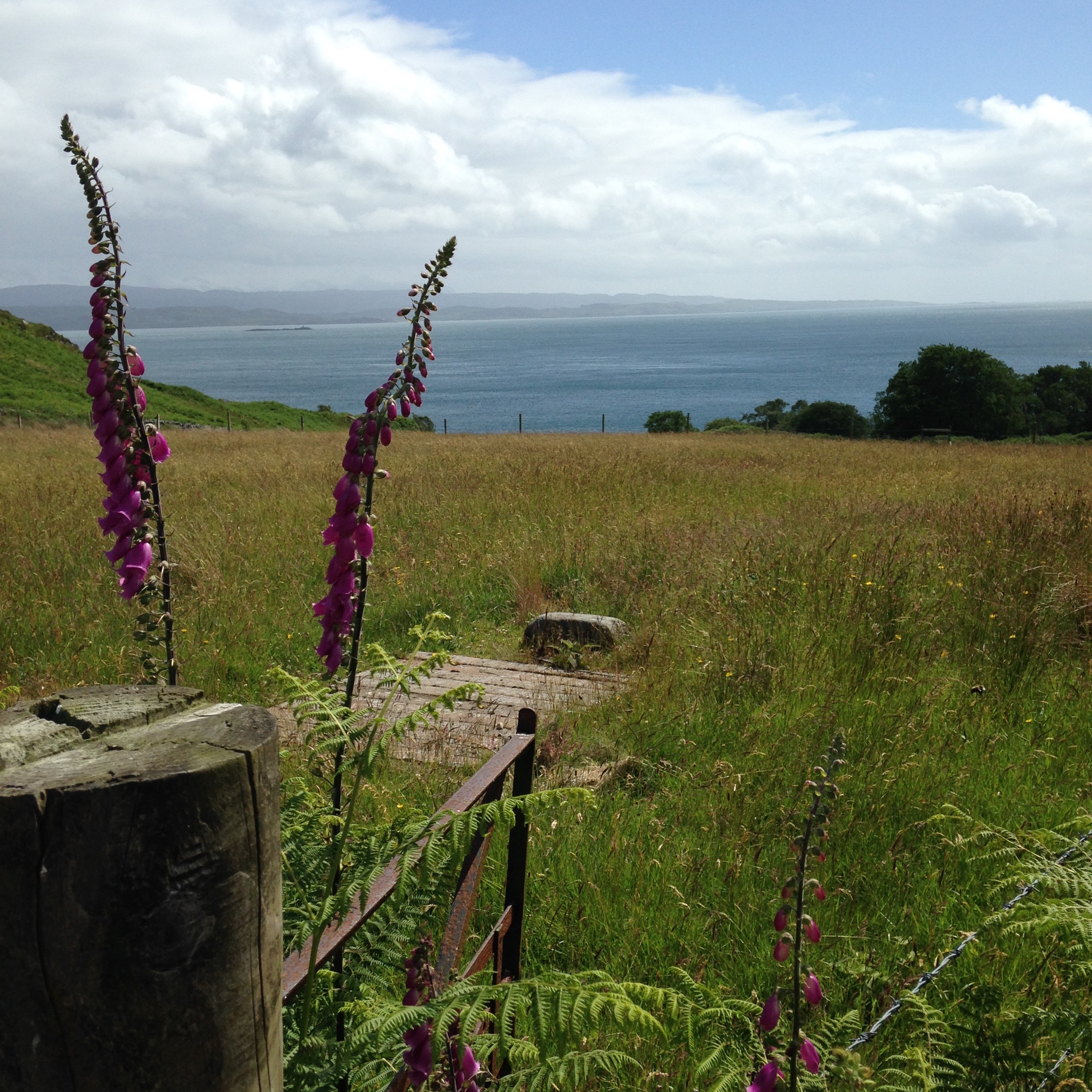
We felt fit and decided to carry on to the Gulf of Corryvreckan. It was only another three miles, and we made good time, scrambling through the bracken up to the top of the cliffs across from Scarba. No one else was in sight, the heather was starting to bloom, the way was boggy and the sea and sky were a deep blue. Finally, we reached the top of the hill and down below was the the notorious passage, classed as unnavigable by the Royal Admiralty in the 19th C. I read that ‘the tidal races through the passage combine with an underwater peak and a deep hole and can create remarkable surface effects, including a standing wave and the famous whirlpool ‘(devil’s cauldron).
Apparently George Orwell almost lost his life here when his boat capsized and he was left stranded with his son on a rock, but they were rescued by a lobster fisherman.


For us, the passage was fairly calm, and we could see no high drama from our view point. We felt vaguely disappointed. Instead we returned, now hungry and thirsty, and had seven gruelling miles ahead of us.
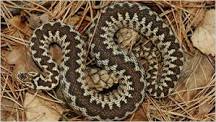
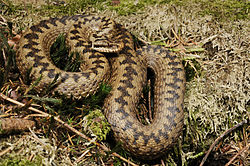
John kept up a fast pace, and I trailed behind. I was plodding along, my head down, when suddenly – just the very next step away from my foot, were two adders. Coiled and sluggish they were entwined. I froze, so close to having stood on them. I immediately lost the ability to shout or articulate, instead I think I whinnied or something, and tried to veer across the path. John came over, only in time to see the second one disappear into the bracken. Oh my Lord! – my hands were shaking and my heart was going like the clappers.
These aren’t my pictures, for obvious reasons, but I was in no state to snap!
We arrived back at the hotel, and I had my second shock of the day, as John fainted at the dinner table … he was so dehydrated. So more drama and a very reassuring kindly doctor put everyone’s mind at ease. I don’t think we will ever forget Jura!
And we are home, the world as we knew it is in meltdown, politics is bloody and ever changing. I saw a wonderful cartoon on Facebook. It depicted Pooh and Piglet walking along:
‘How did you vote?’ Said Pooh.
‘Leave,’ said Piglet.
‘I voted remain,’ said Pooh.
‘Are we still friends?’ Said Piglet.
‘Yes … yes we’re still friends,’ said Pooh.
‘Good,’ said Piglet. ‘Let’s go and get pissed.’

 Tales from the Gael