I am actually sitting in a dank hotel in a place called Mamallapuram, two hours from Chennai and on the shores of the Bay of Bengal. We arrived yesterday, and landed amazingly in the biggest monsoon downpour they have had in years. Busses were up to their middles in dirty water and after a lot of phoning about, we got a taxi to take us to our hotel. The guy was quite reluctant, but got us in the car and then we noticed he could hardly walk, he was barefoot and had a sore on his foot.
Here we are. The rest of the tour hasn’t turned up yet, planes have been redirected, and goodness knows when we will see them. Everything is wet, even the pages of our books are damp, and the air is thick with moisture. More rain is on the way.
Mumbai seen from this small hamlet is a paradise. Last night we walked up the street and found people sheltering under awnings and cows sheltering in the doorways of buildings, it was all so wet. Still a Kingfisher beer and a chicken curry did the trick and somehow we both slept like logs.
It was wonderful to return to India. Arriving at dawn in Mumbai, the streets were clear and we made an easy trip right to the heart of the city, and our taxi drew up in front of the famous Taj Mahal Palace Hotel.
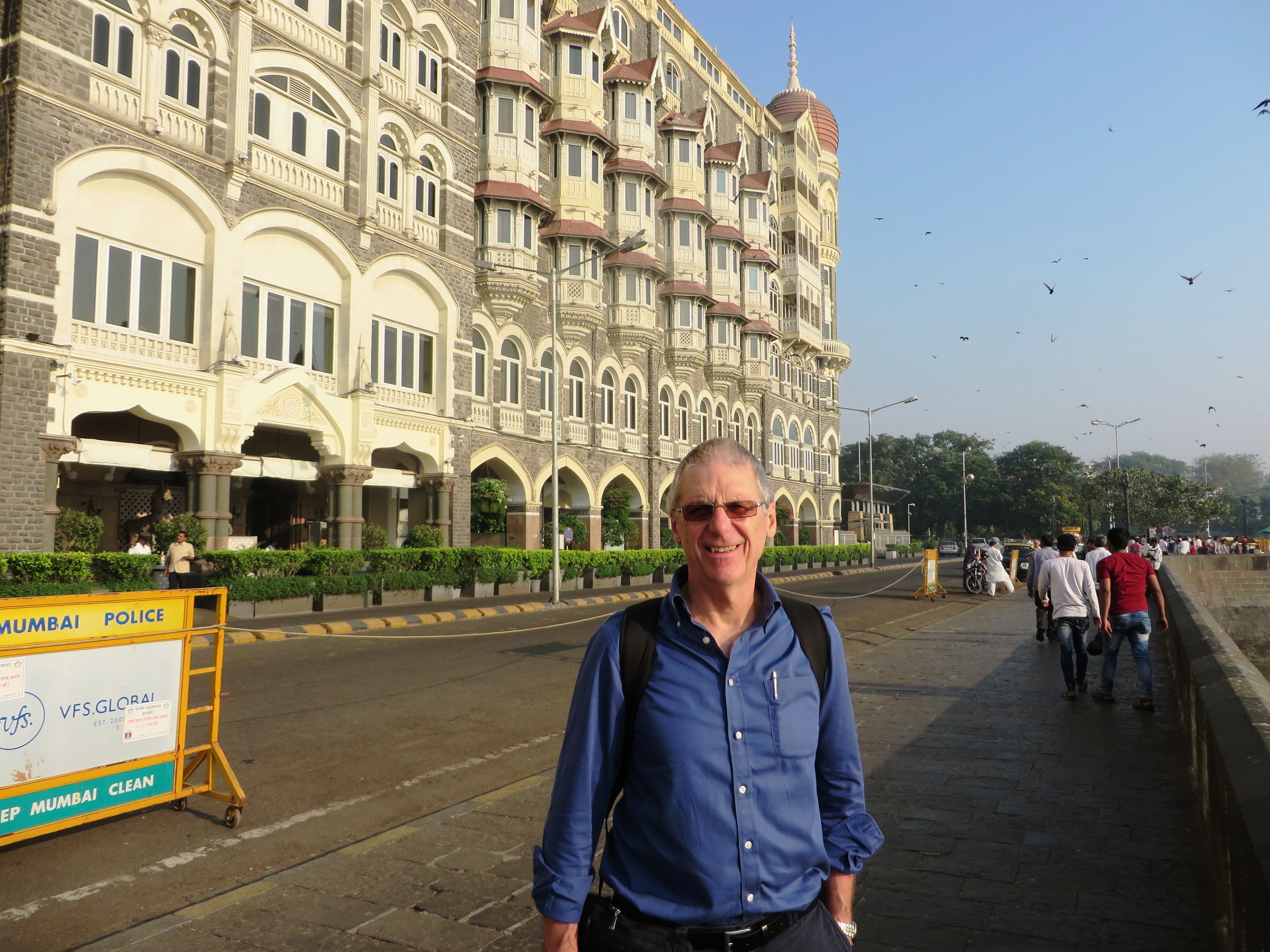
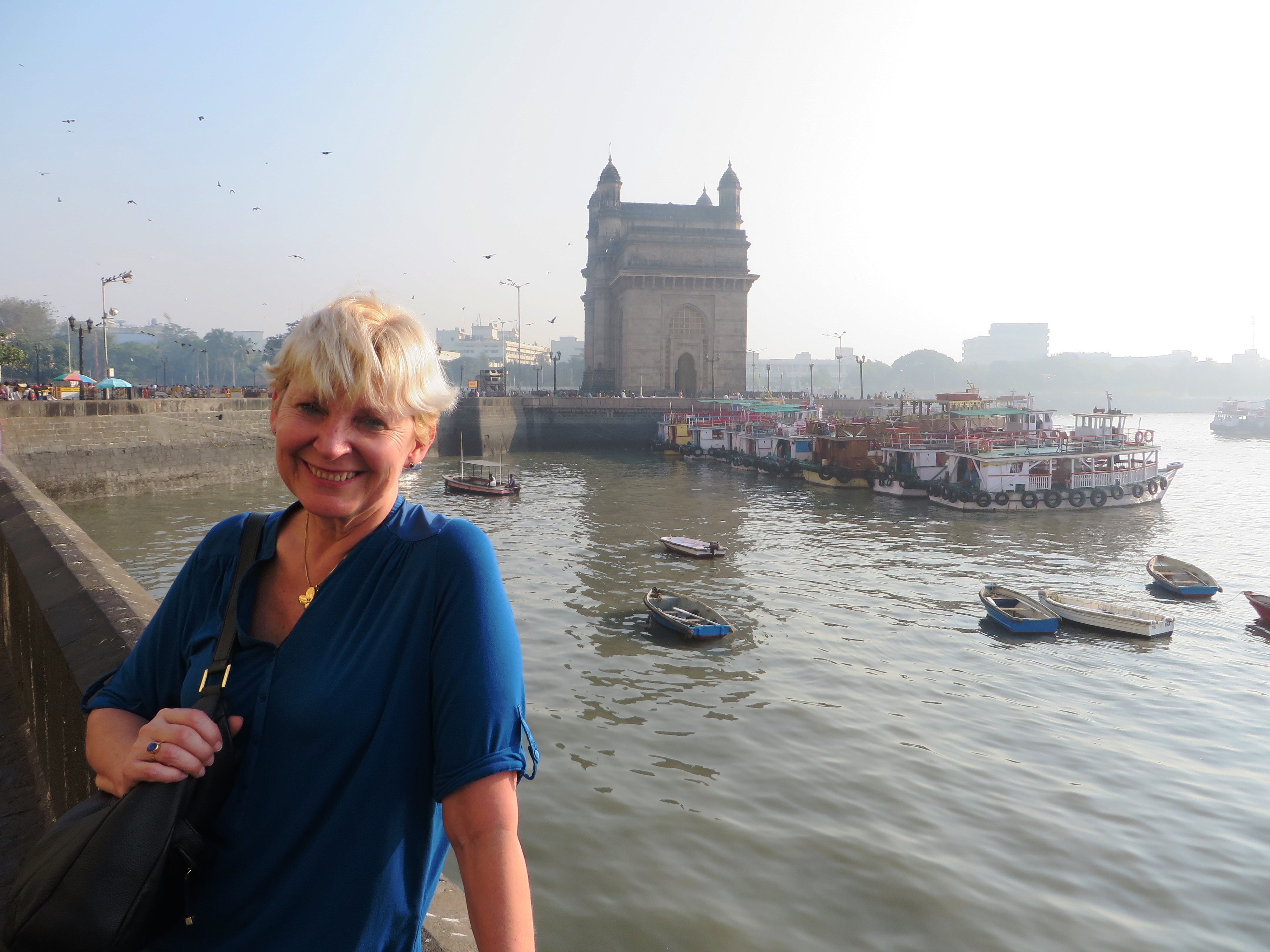
It was amazing, and so full of history. John Lennon, Alfred Hitchcock, Barack Obama and so many more have stayed there. It was easy to remain inside, eat breakfast looking out at the Gate of India, and watch the crows and kites wheel about in the skies above.


We lay by the pool, protected by a shimmering spiders-web-like netting to keep the birds out.

We did look at the city tours on offer, but apart from the famous Victoria Station that we had passed coming in, we decided we wanted to see something different.
We joined Arish on a Reality Tour of the Dharavi Slum. It is the biggest slum in India, third biggest in the world and home to a million people. 50% of Mumbai lives in slums, which by definition means ‘built on government land’.

Within this particular slum are factories conducted in tiny houses. We watched the mighty bags of plastic that are brought in by the ‘rag pickers’ (the women and children); men and boys sift through the piles, sitting on the floor organising and selecting and classifying. The pieces are washed, dried, crushed, cut and finally made into something else and sold. They say the annual production is US$650 million.

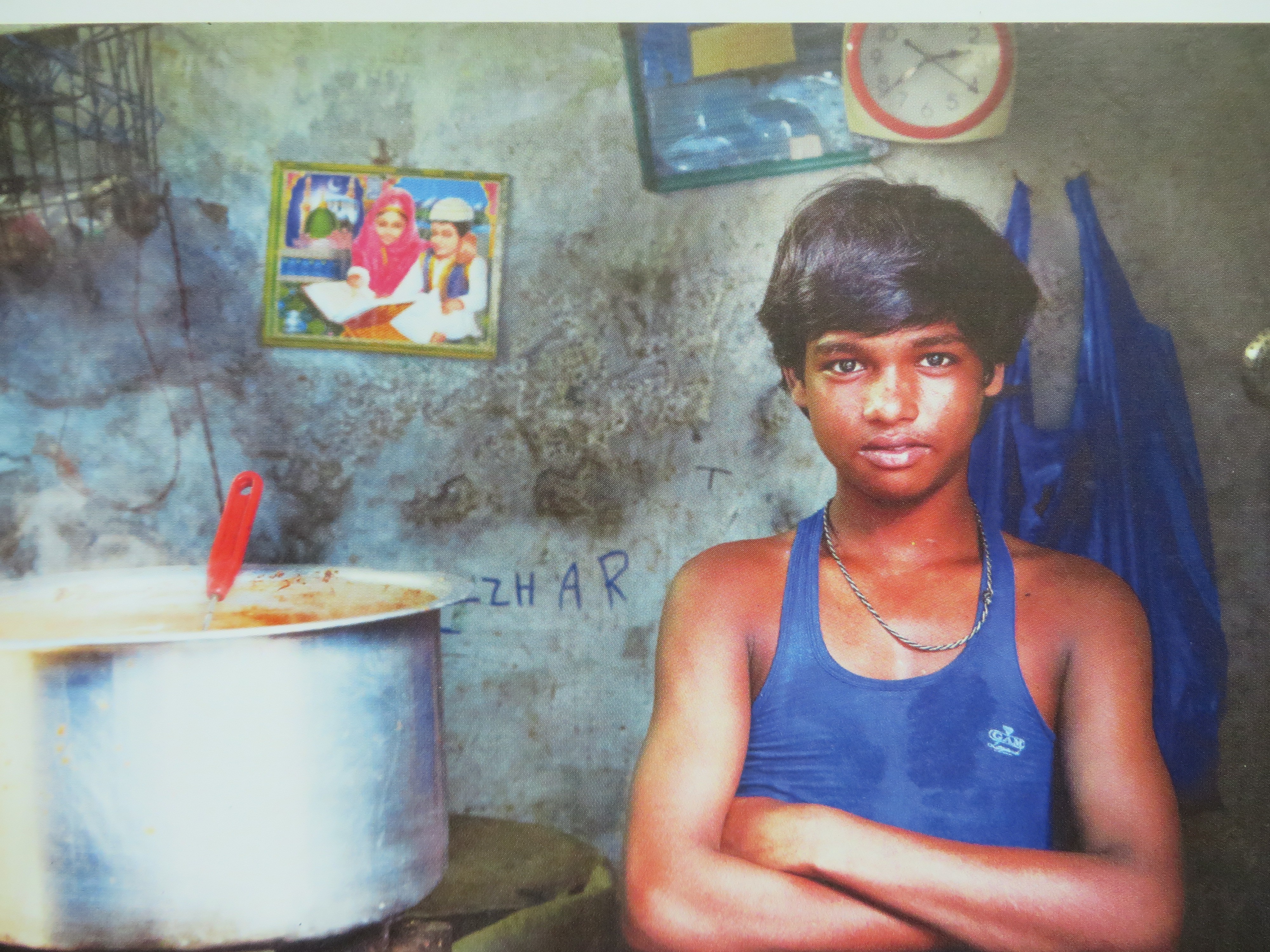
Paint tins are scoured and cleaned and refilled, aluminium is burnt and soldered and reused. When I saw the textile workers in Varanasi earlier this year I was appalled at their tiny houses, single light bulb and incredible work load, but here in the slum we saw a whole different picture. On the other side is the residential area, and we threaded our way through rooms that hold families, through tiny walkways, dirty and wet, yet inside, from what I could see, the floors were spotless, delicious smells of cooking came, and children were playing hopscotch. I had to laugh at one man, he saw us watching some plastic workers and he came out of his ‘office’ and started polishing his windows. Pity he couldn’t have hosed down the street while he was at it!
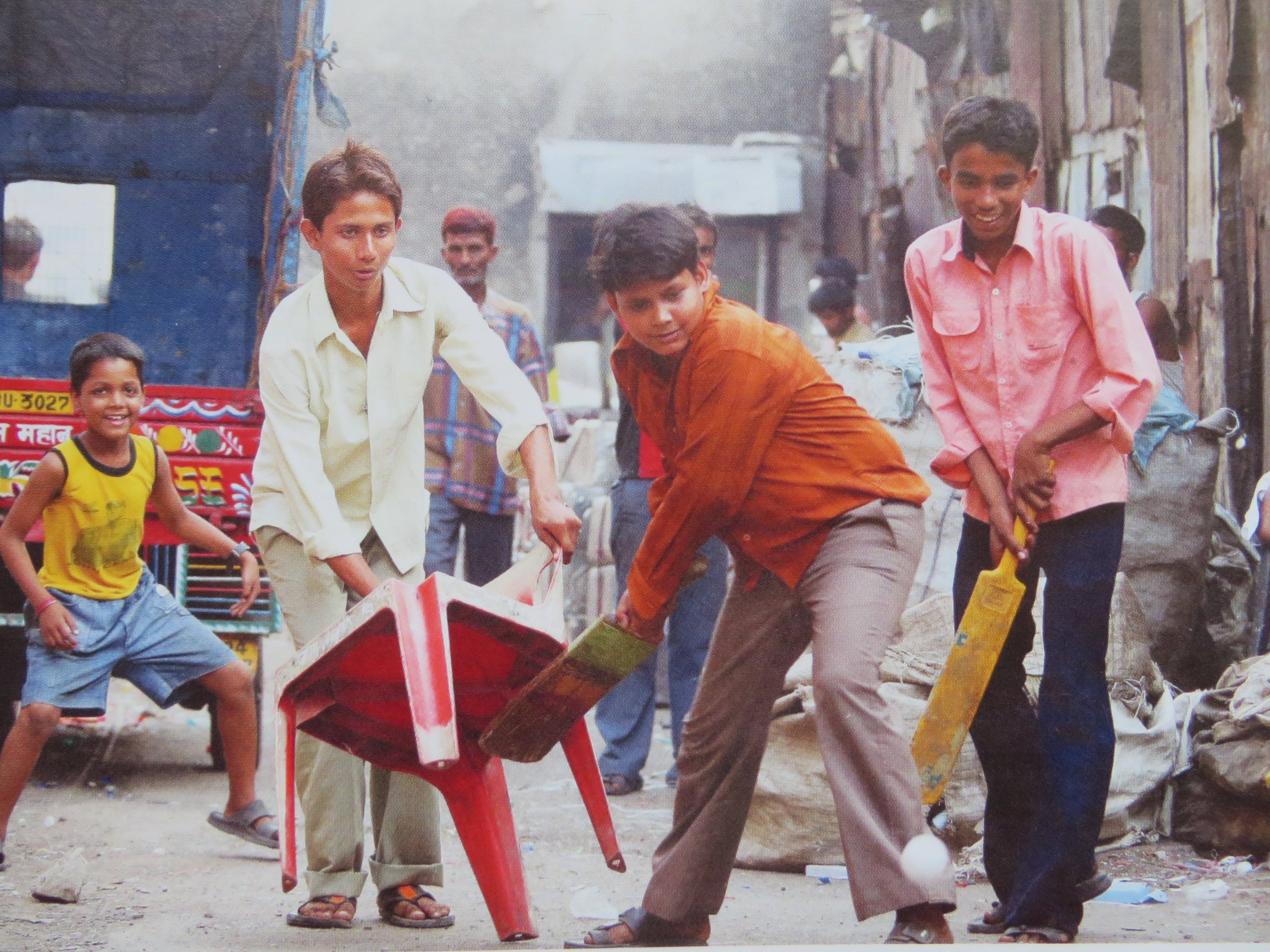

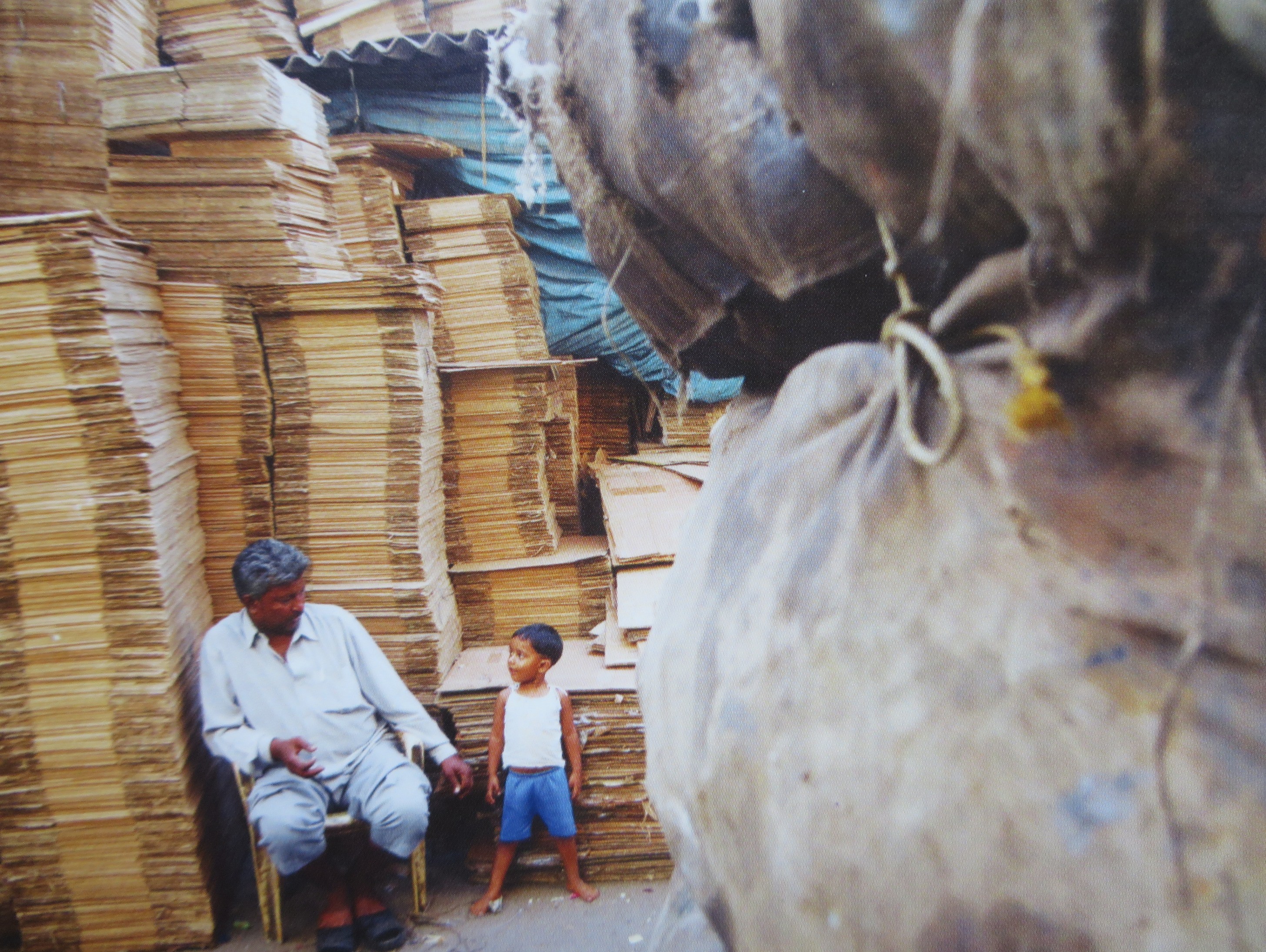

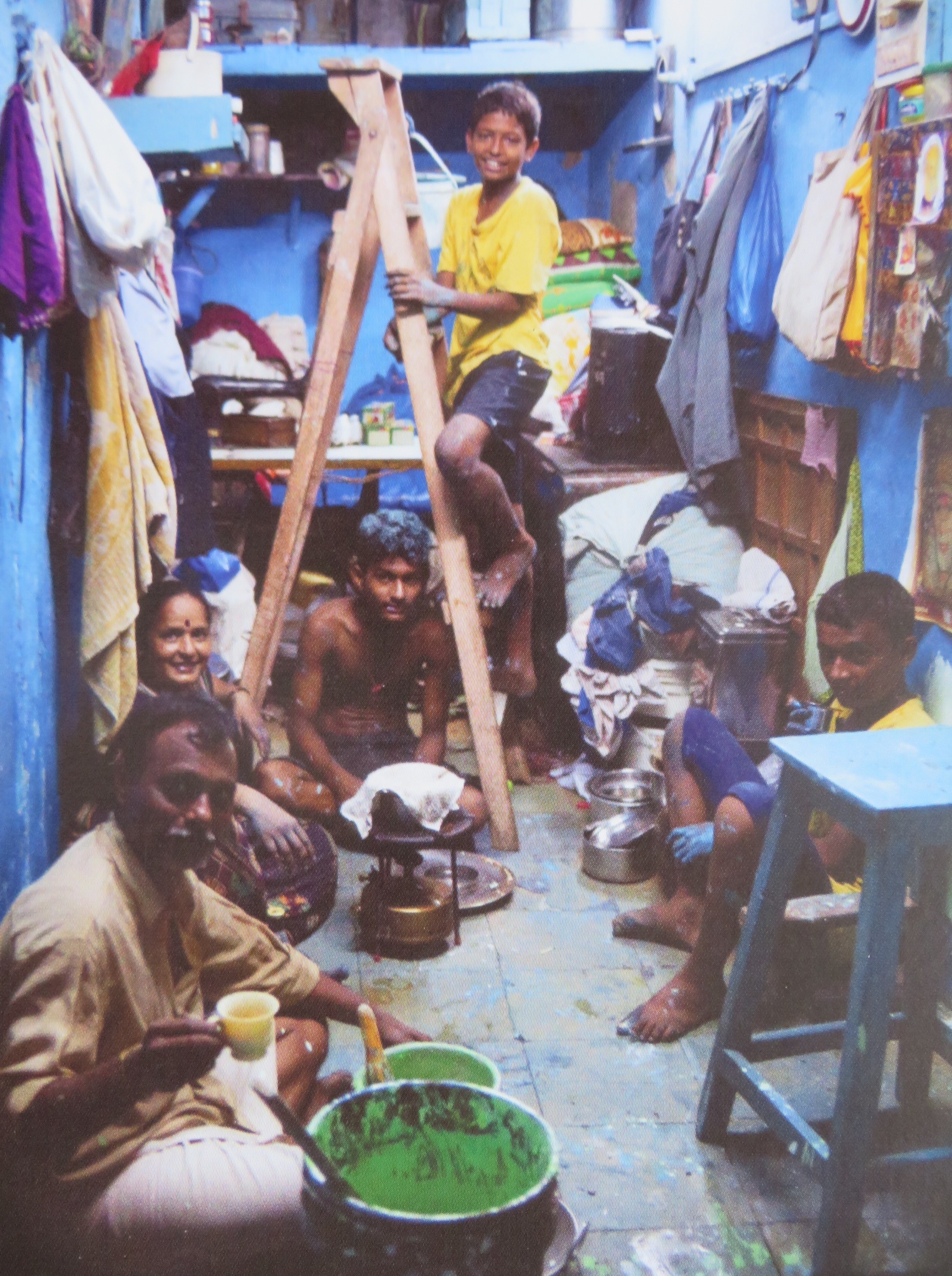
It was a revelation; cultures live side by side, in peace. There was a strong feeling of community. I could understand why people don’t want to leave.
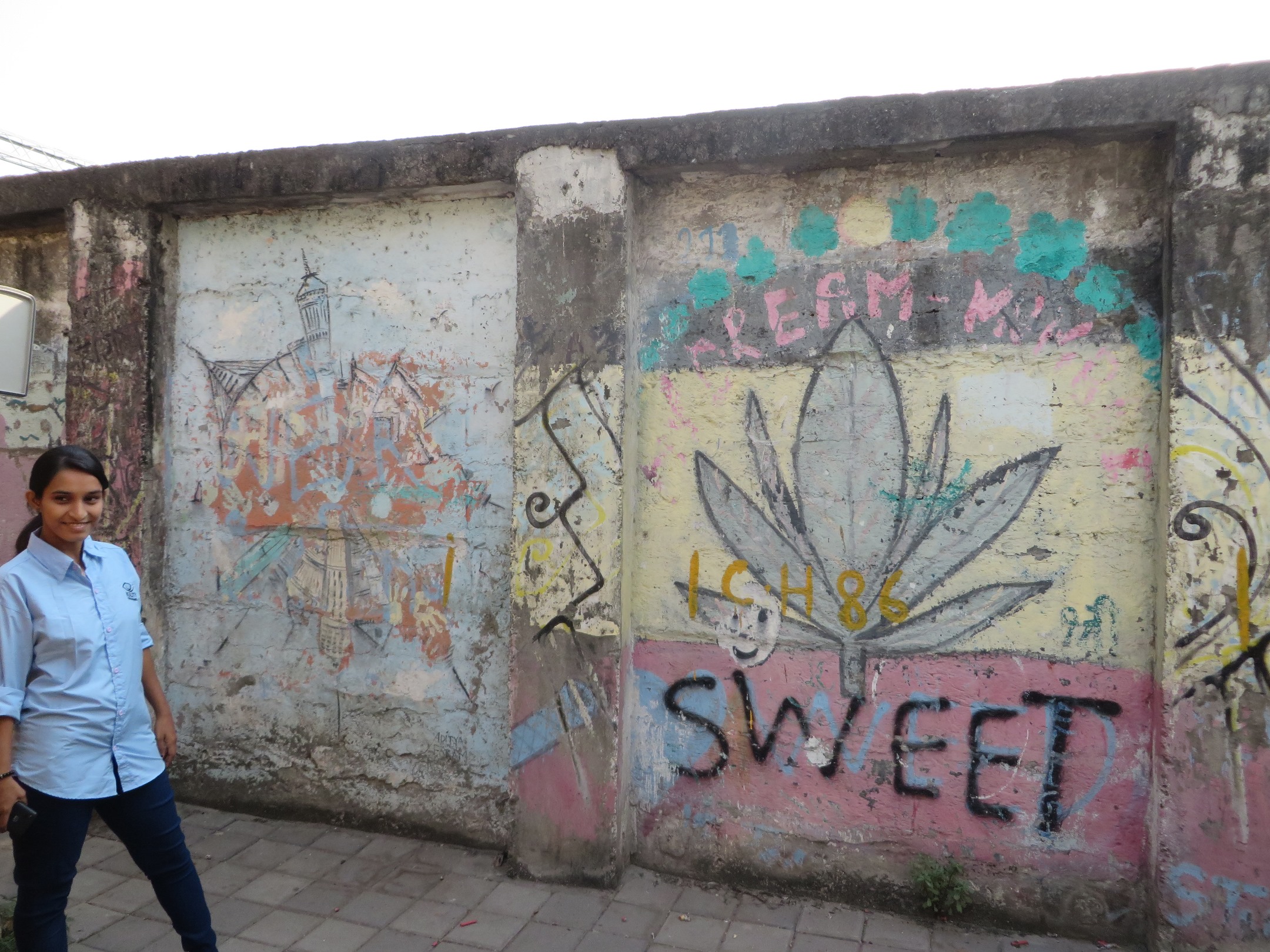
We passed the dhobi ghats where all the communal washing is performed, and sheets, towels from all the hotels are uniformly scrubbed and beaten on the slabs and somehow returned pristine and beautiful. It is a miracle and especially as Mumbai divides its water rationing to two hours either in the morning or afternoon. We also passed the Indian Wall … goes for miles and each block has its share of graffiti, a little tired, but still worth a look.

On the way back our driver, who was also a Reality tour guide, told us that he had lived all his life in Dharavi. He had entered the workshops offered by the NGO Reality, and learnt English and went to school and now was a really educated guy. He told us about the filming of Slumdog Millionaire and how impossible it was for the producers, with so many people all wanting to be in the shot! They had to do some on location but some in the studio. We passed through Crawford Street, the red light district where girls are trafficked from all over India. It is locally called The Cages, as the girls wait behind the windows. Outside tawdry imitation carriages are lined up. They are cheap sad copies of the bridal carriages tethered to white horses, used to take brides around the romantic spots of the city. Our guide said clients of the cages sometimes take the girls for a trip to Chowpatty beach. The silver of the carriages looked as tired as old crumbled chocolate wrappers.
We passed Malabar Hill, Mumbai’s most exclusive neighbourhood of private palaces. Here is where the MOST EXPENSIVE house in the world is. It is owned by the Ambani family, which now consists of two brothers. They own the Reliance Company, which has tentacles in all parts of the city and India. Our slum guide gave us such a good biography of the father, who epitomises the rags-to-riches tale, and gives Mumbai its meaning, this City of Dreams, where people can come and become so rich and famous. Daily they pour out of the trains, seeking work, and seeking their fortunes.
Our hero, Mr Ambani, was from the merchant caste and his father was a school teacher. He was a terrible disappointment to his father as he became a 10th grade drop out. At sixteen he went to Yemen and got a job pumping gas. Within a year he was made a supervisor, which was extremely unusual, as it normally takes 7 years. He came back to India and started a garment importing company. In the 1970s India was still very socialist, so Mr Ambani was quite revolutionary in that he made speeches, persuaded people to invest in his company and buy shares on the stock market. It was completely unheard of then, for working class people to invest in the stock exchange but they did, and he grew richer and richer and diversified. There is a book about him, called The Polyester Prince, which is banned in India but available on Amazon. I was intrigued about his house, this amazing place, but our slum guide said it was nothing special, just a 27 storey building and looks like an office block. Only six of the family live there but with six hundred staff. OK. I think National Geographic did a spread about it.
We were dropped off by Leopolds’s Cafe, where we had lunch.

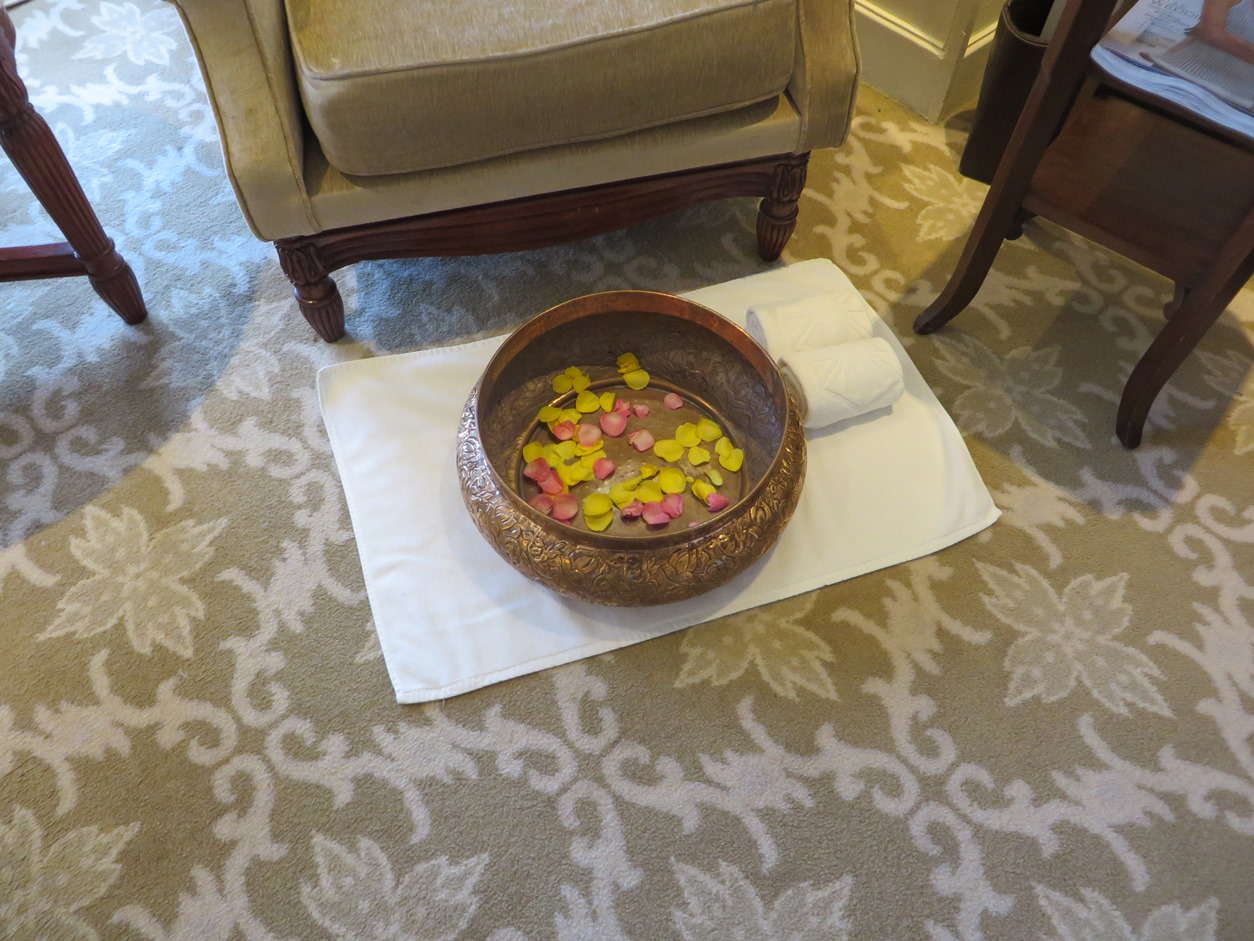
It was just as it was described in the book Shantaram, only now it is so popular that people are queuing to get in. The food was good, so we went back at night for dinner. Outside were the beggars, the homeless, the constant noise and colour and hooting. When we finally entered our hotel there was a hush – a tinkle of piano music, soft voices, and a proud lift attendant ushered us up to our floor. Our room was festooned with rose petals, and there was a copper footbath ready with special salts and creams. It was heaven on earth.
Later we watched the news, and from this wonderful hotel that had suffered such carnage in 2008 at the hands of terrorists, we heard the dreadful news of the carnage in Paris.
And now, here in Mamallapuram, the rain has ceased for a while. We may go and explore a little and see if we can find the sea. John is also keen to get a haircut and shave by the trusty barber shop guys. More adventures await.

 Tales from the Gael