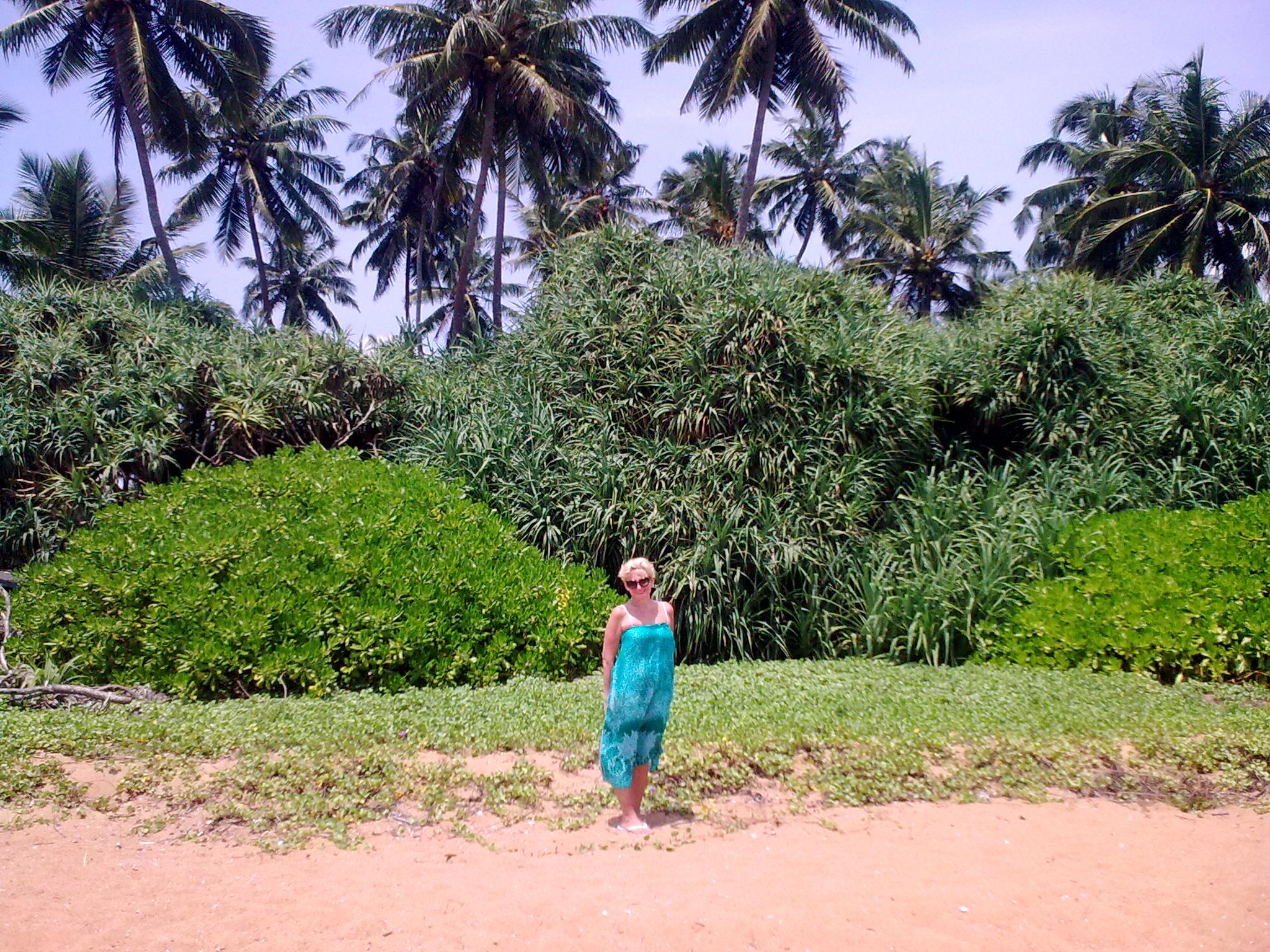
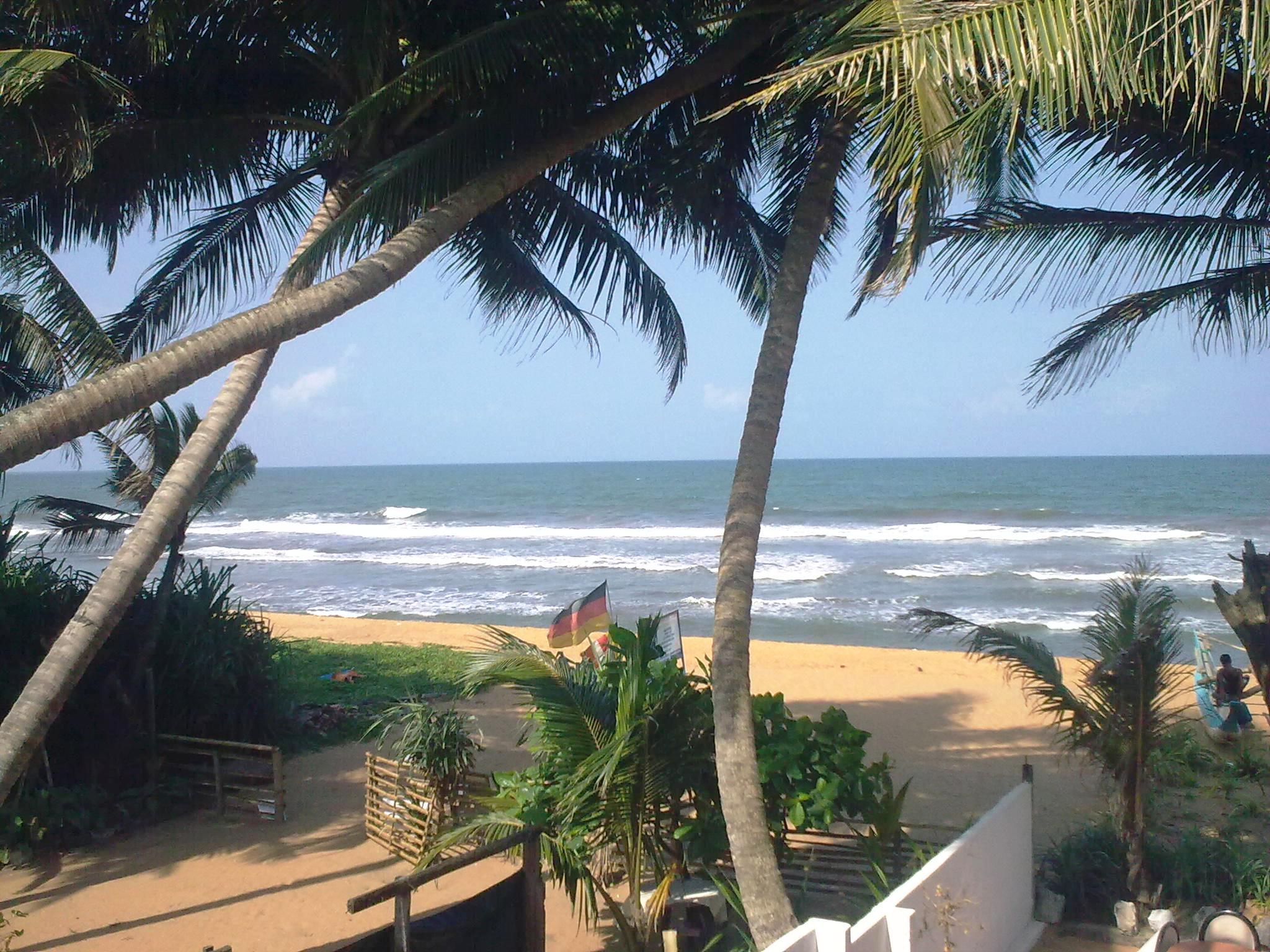
From the aesthetic creams and sandy tones of Doha, where the skyscrapers compete in world architectural designs, we landed in Sri Lanka. There is little need for man-made edifices to adorn the landscape in this beautiful island, for the colours and patterns of nature assault the eyes whichever way you turn. The jungles are full of lianas, palms, fronds, and citrus greens all hot and just dripping with moisture. Flowers as big as hand-spans intersperse with creepers and lalang grass. All the way from Colombo to Kalutara we passed a continuous ribbon of shops and dwellings. It is said that a chicken could walk along the roofs of the houses without once touching the ground. I didn’t realise we were driving for over an hour parallel to the beach until suddenly we turned and we tootled down a narrow winding alleyway and WOW there it was, the sand, the sea, the palms… immediate, on our doorstep, and we were booked in for a week!
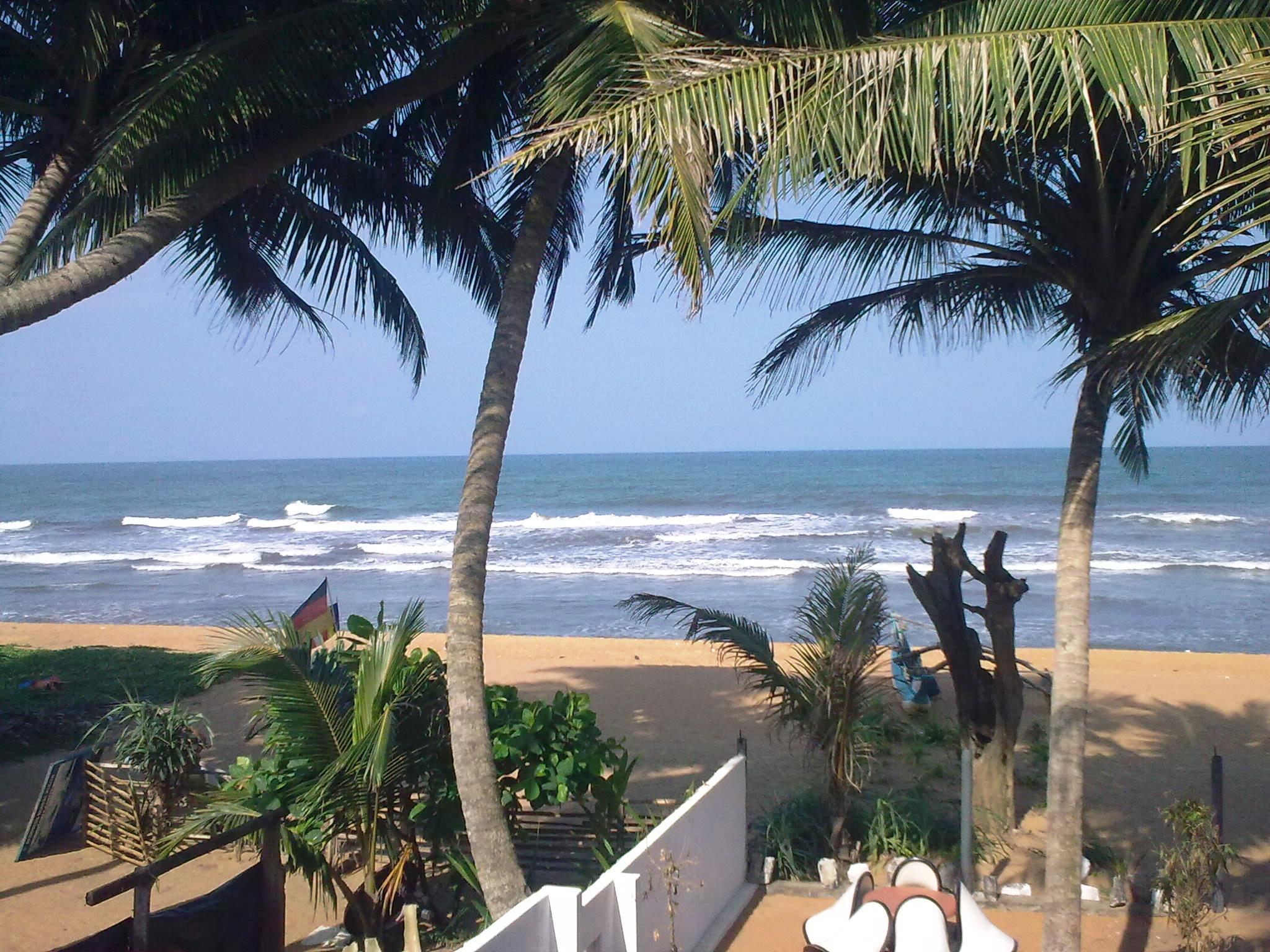





Jenny and Steve have invested in the Marigold Beach House, together with Ranjith, and it is their private haven for rest and peace.
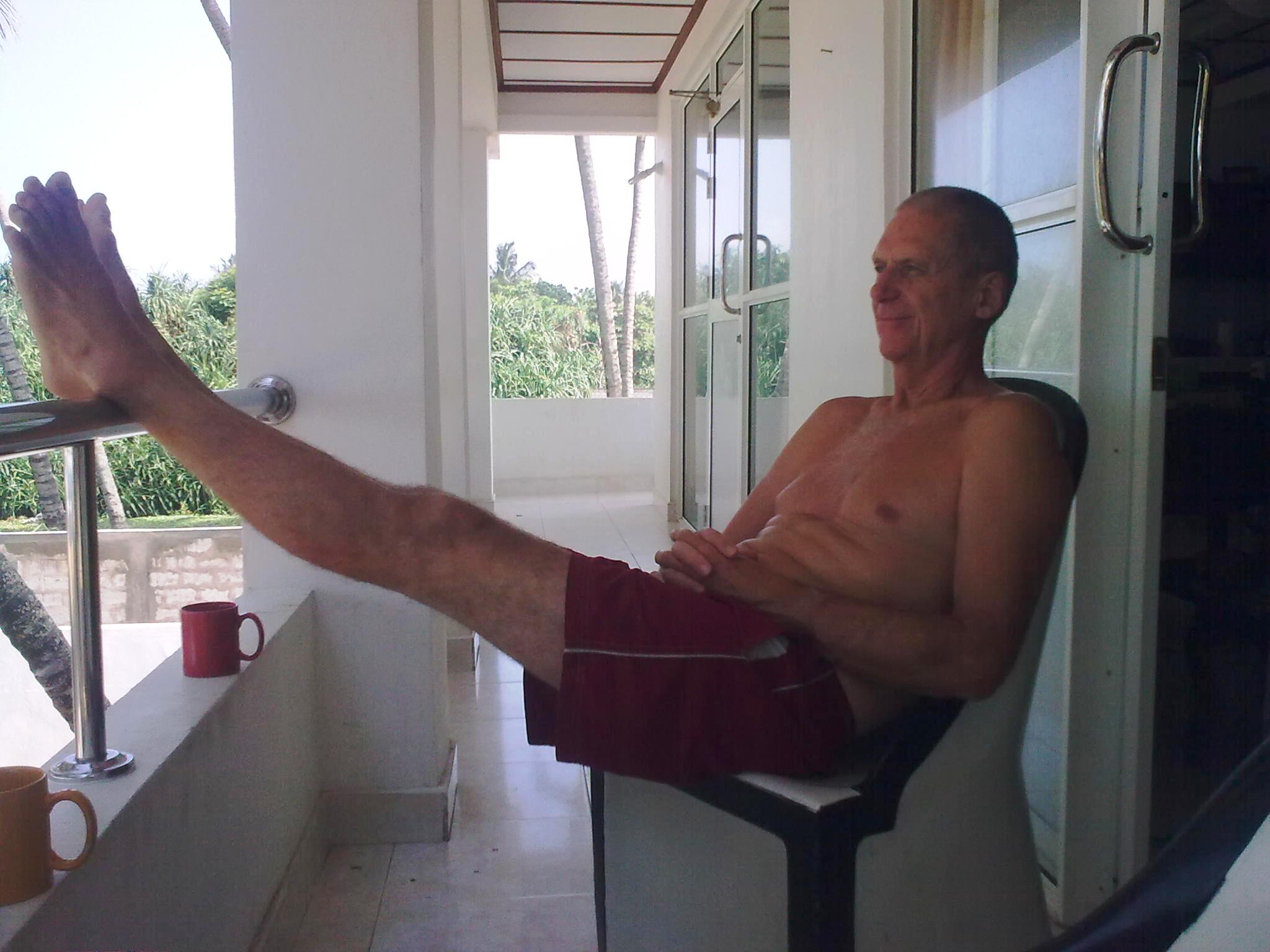
John was so tired after all the stresses at work, and it was wonderful to see him relax, to drink some beer on the balcony where we spent hours just watching the beach ‘theatre’ of small boys hurling themselves into the waves, cows meandering along, and lizards, kingfishers and butterflies darting about.
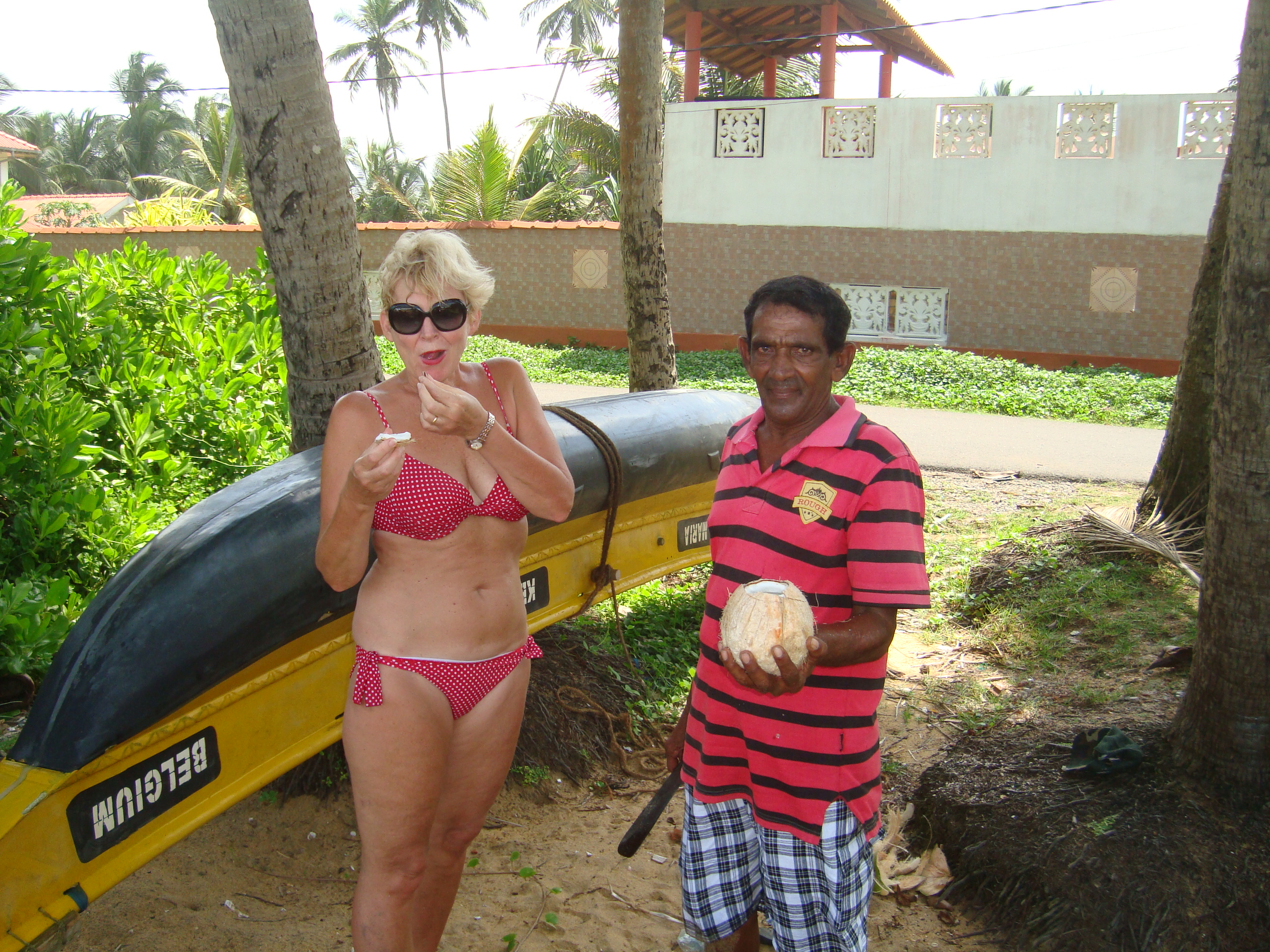
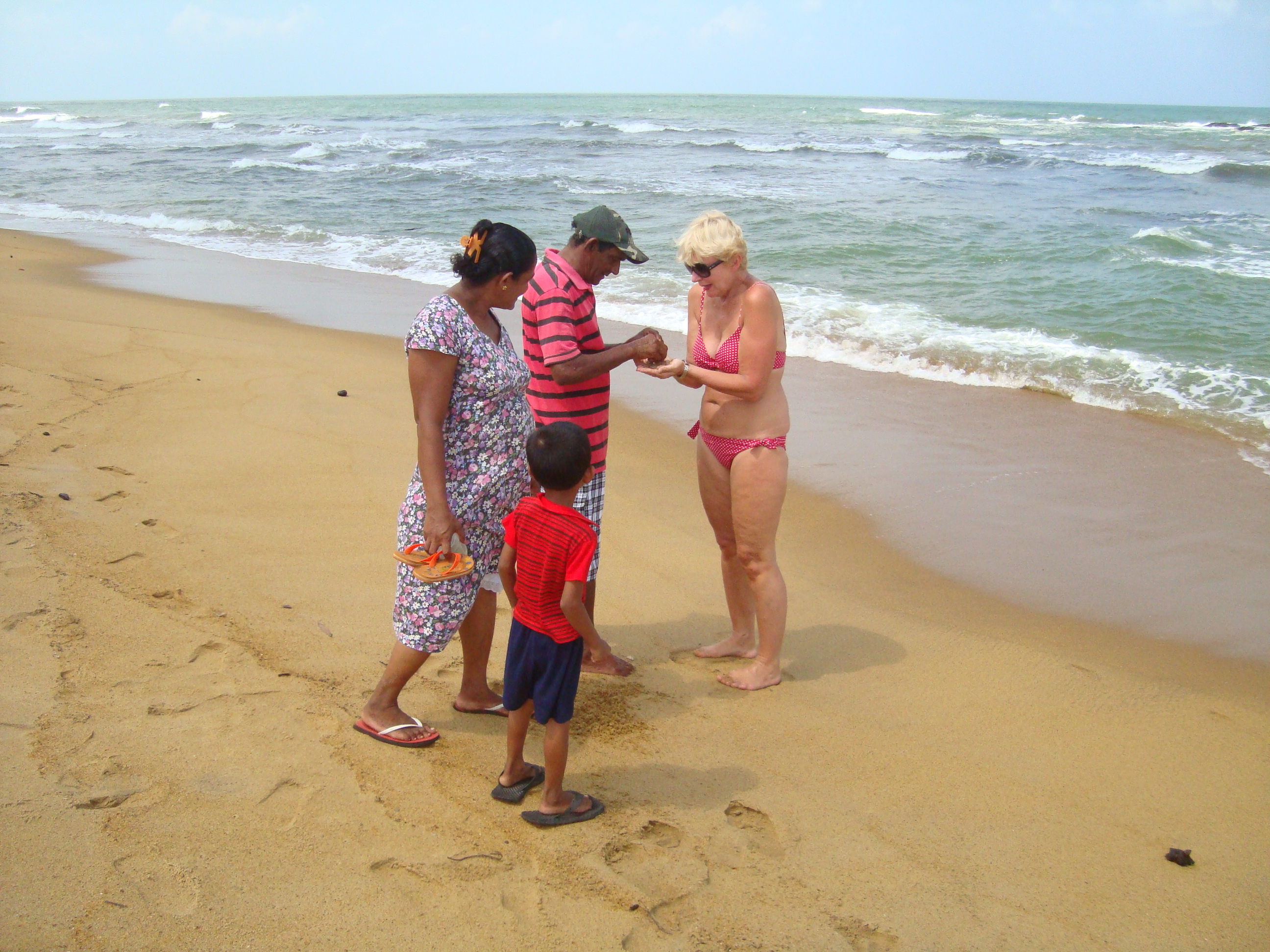
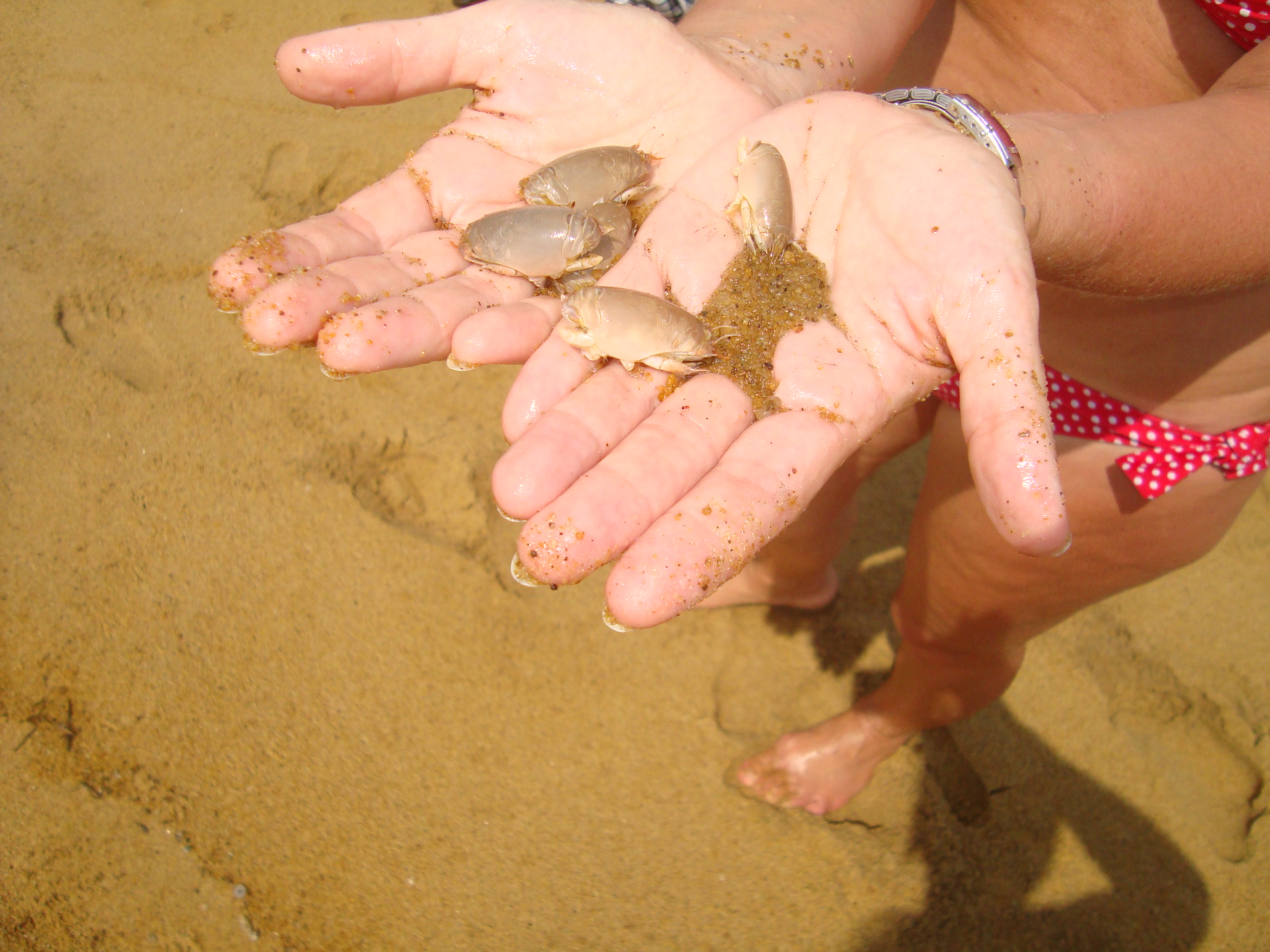
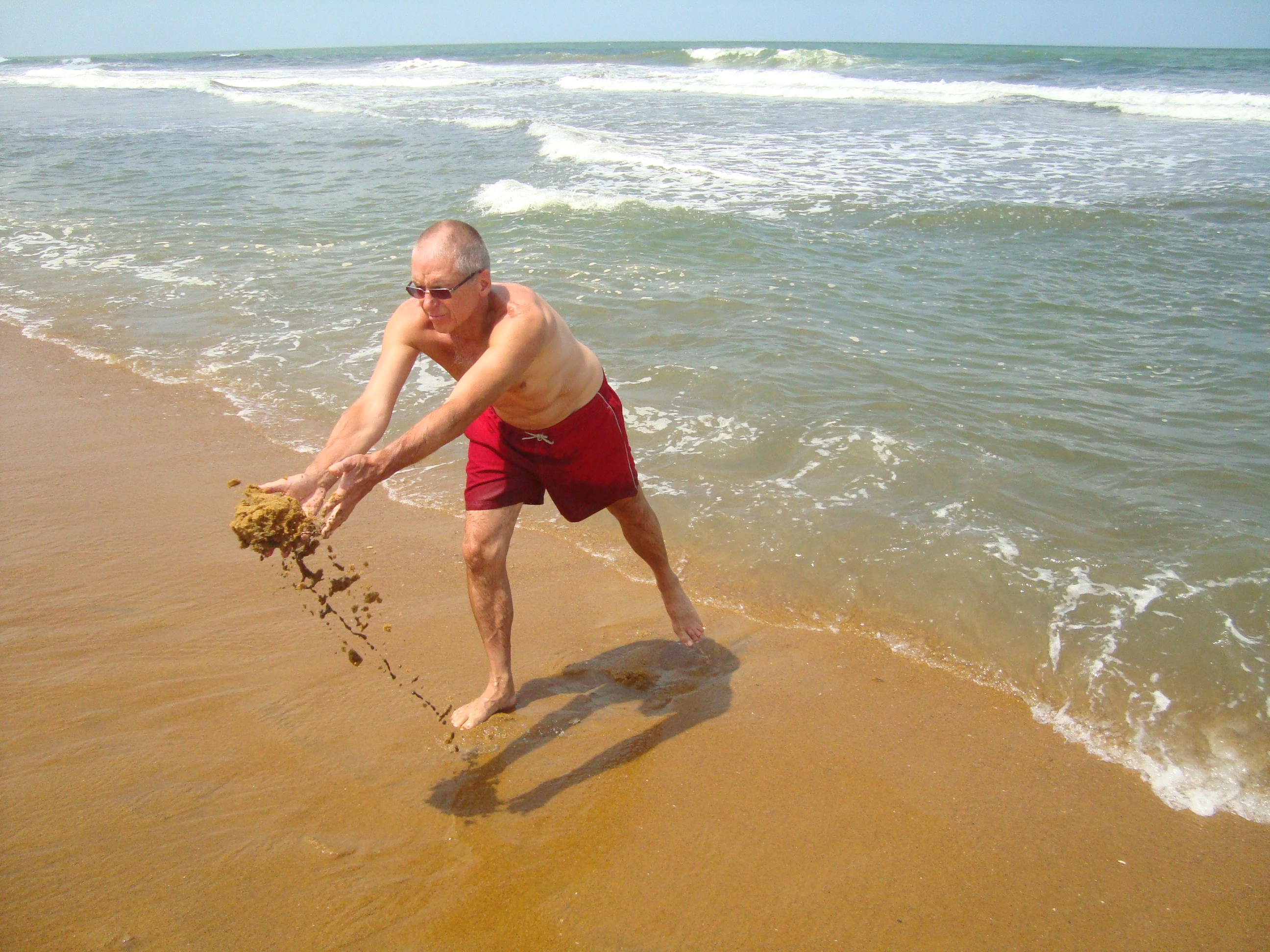
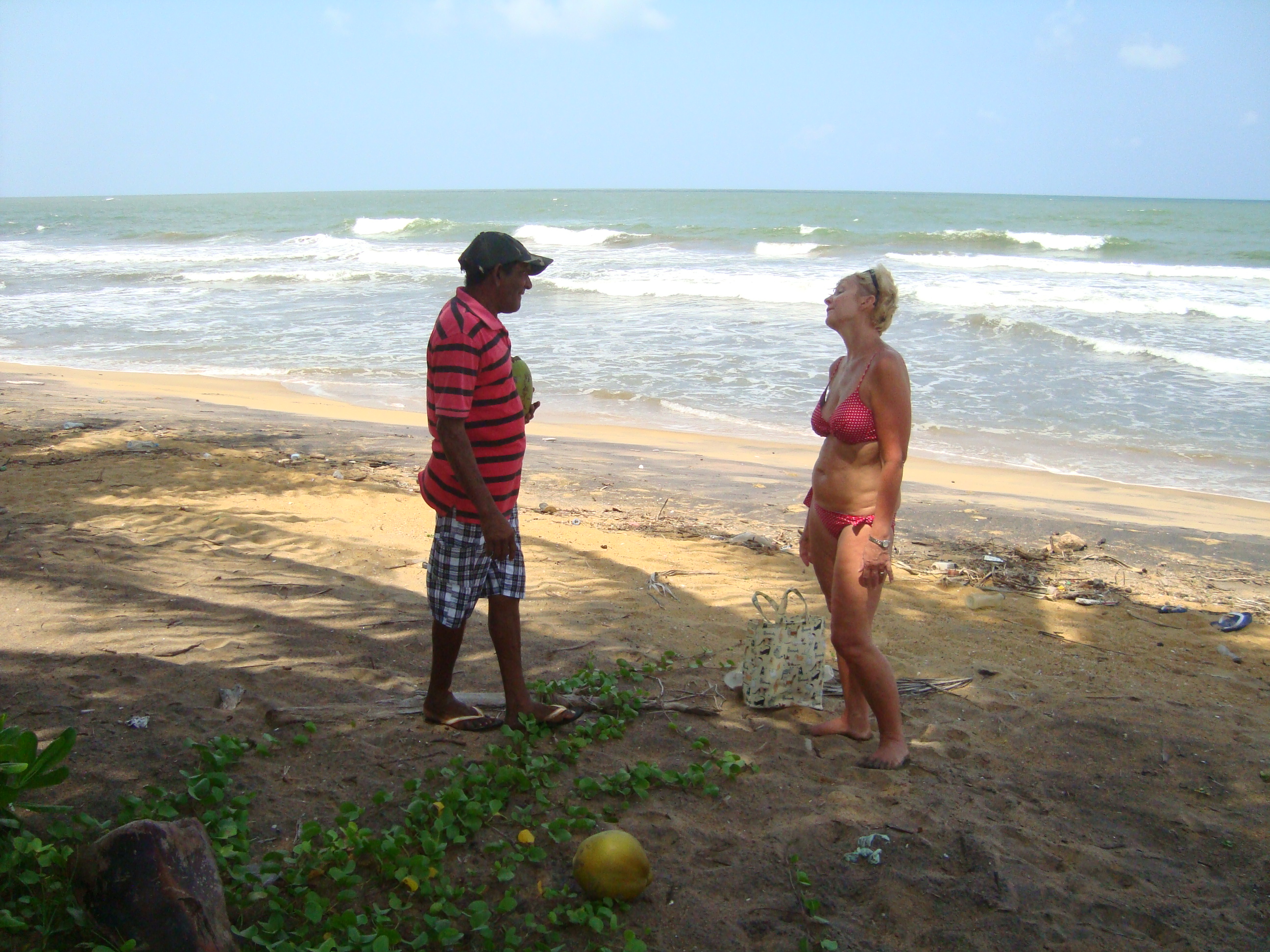
I did enjoy meeting Francis, a 54 year-old fisherman, who befriended us and taught us how to catch the crustaceans in the sand, just as the tide ebbed. He reminded me a little of my ‘James MacTavish’ from the Highland Games. A man on the lookout on how to charm the city ladies and gullible tourists with his wily charms!
Anyway, the secret is you run like mad when you see the bubbles then dig with a frenzy and soon you have a handful of wiggly little things, that you must check if they are ‘man’ or ‘woman’. It is these that the fishermen use as bait to catch kingfish and barracuda. Francis then obligingly shinned up a palm tree and cut us down a coconut. He and I chatted on as though we were at a cocktail party, and John was told, ‘You go there, and take photo!’ then we all ate and drank from the coconut… it was all so social!
We ate each night at Ranjith and Sujeewa’s house. She prepared an array of curries all beautifully laid out and the two of us ate like royalty under the watchful eye of their eldest son, Sandaru. (Sujeewa didn’t like to join us; it is their way, apparently.) We learnt about the tsunami and how Sujeewa had grabbed her sons and run like the clappers, and Ranjith climbed a tree and watched as the huge wave completely destroyed his home and his workshop. Twenty seven years of his carvings were lost in a moment. There was total devastation but no lives were lost in that particular community.
We did go on a trip down to Galle, and there we saw the monument to the people who lost their lives on the train going from Galle to Colombo. 1120 souls were lost on that train. It is hard to comprehend.
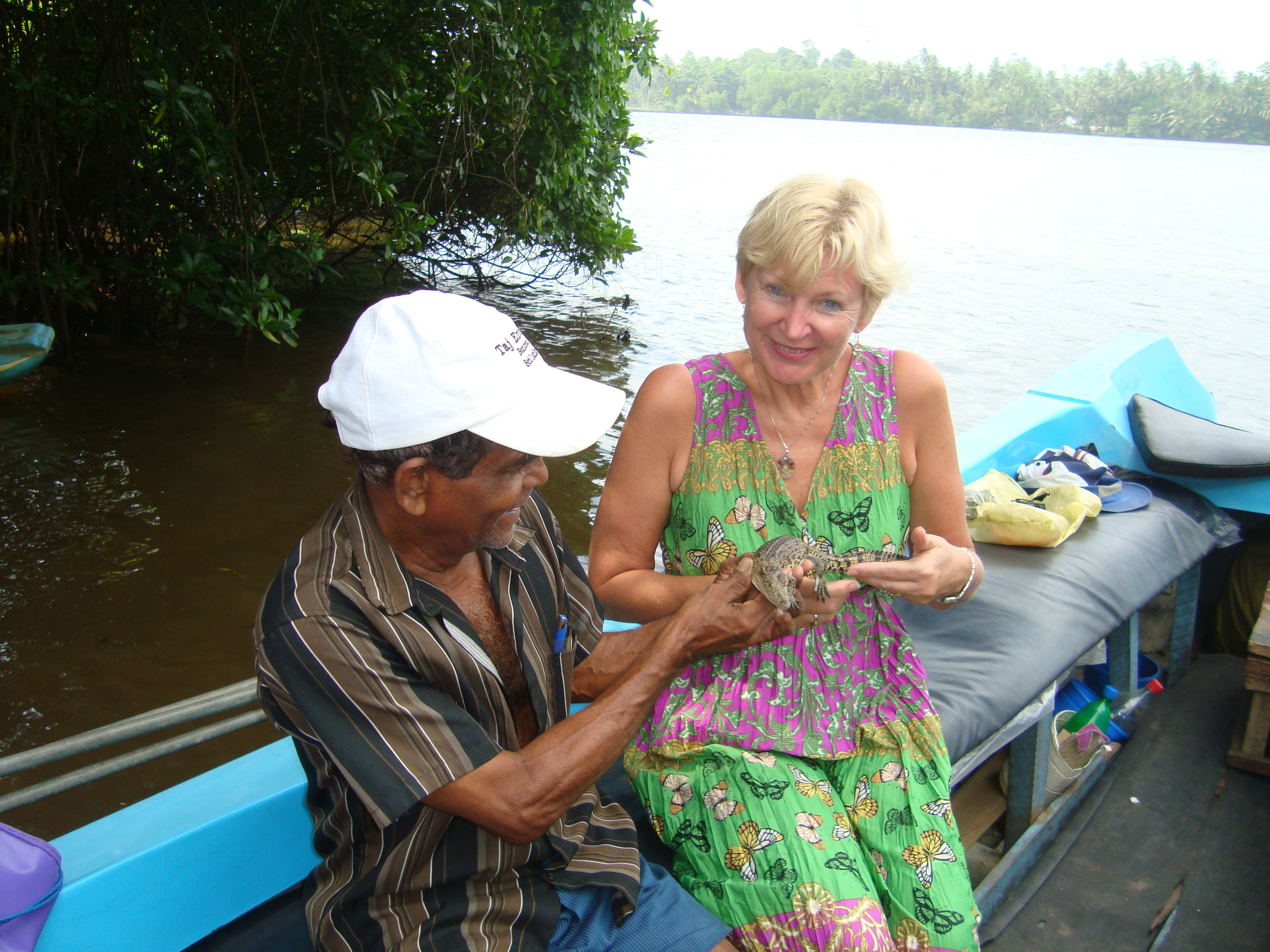
Ranjith organised for us to have a boat trip on the Bentota River. We went with ‘Fred’ and he took us through the mangrove swamps, where Crocodile Dundee, Indiana Jones, and The Bridge over the River Kwai were filmed. We saw a crocodile and John played with a baby one, whilst in the background a huge monitor lizard marched past from the long grasses behind the boat. I obligingly stroked the little croc’s tail, but wasn’t tempted to have it cavort about on my head. Leave that to the eejits I say.
We visited a Spice Garden, where the guide parroted all the facts about cinnamon, cocoa, different creepers and plants, so I obligingly bought a jar of sandalwood cream that does wonders for wrinkles apparently (but only if mixed with 15 other ingredients). I applied it, and my face froze up as I imagine an injection of expensive Botox might do… It was right, I couldn’t smile or frown, so in theory I was wrinkle-free!
We watched curlews fishing, and a sea eagle swoop down to grab a fish, we bought sapphire earrings under the watchful eye of Ranjith and the Tuc-Tuc driver. I think the jewellery shop owner thought we were mafia or something, coming in and the two ‘escorts’ sitting on each side of us, listening to all the transaction!
As the days went by, we soon got into the rhythm of the beach life, and I became an expert washing the clothes in the large red bucket as John took it easy.
We drove over the hills, where we saw houses painted in wild shades of magenta and orange, peppermint pink and acid green. We zoomed past banana trees, flowers, rubber trees and rice paddies. I was worn out from looking at all the colourful confusion; my eyes were darting about like a pinball wizard.
We drove for about 6 hours, and we passed all sorts of dwellings, poor and quite affluent, but all having the same tired looking sarongs flung over the washing lines. (That’s if they weren’t on a hedge or a rock or wherever.)
We eventually arrived in Ella, a beautiful little town in the hill country. It is surrounded by idyllic green hills blanketed in tea plantations. Here we were at last in the area where Sir Thomas Lipton almost single-handedly put Ceylon tea on the global map. We drove off the main road (the single street that meanders down from the railway station passing all the guest houses, and cafes (Curd and Honey Shop and NesCoffee) and turned up a rough track that went on for a mile and a half, and finally reached the Waterfalls Homestay, run by Australians, Karen and Martin Robertson.
Monkeys were awaiting us, the long-limbed grey langur and the toque macaque. They were swinging about and lying on the roof, admiring their profiles in the glass and stretching their legs, languorously… maybe that is where the name comes from!
More to come…

 Tales from the Gael